
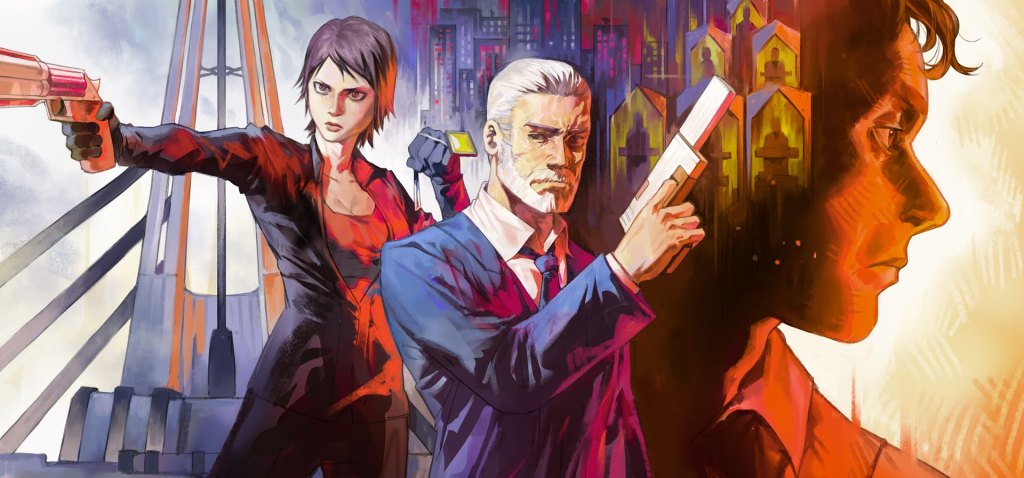
Agent 64: Spies Never Die is like the FPS games we played on the N64. In our review, we saw that it keeps the things that made them fun, and bring them into a modern game. However, getting the balance right between old-school design and modern expectations isn’t always easy.
We spoke with Replicant D6 about making Agent 64, from getting the shooting right and building missions around replayability to adding multiplayer late in development. We also talked about why some old-school ideas had to stay, while others were better left behind.

This interview would not have been possible without the wonderful people at Stride PR. Many thanks Zachery Bennett!

Getting the Shooting Right
The first thing that has to work in a game like Agent 64 is the shooting. Weapon sway, auto-aim and enemy reactions all need to feel right, but there is also a lot of small stuff that players notice without necessarily thinking about it.
For Replicant D6, the basic approach became clear pretty quickly. The harder part was getting automatic weapons to behave the way he wanted.
I knew pretty fast that I got the right approach, that’s why this experiment quickly became a full-on game project. What took a bit longer was to get the right kind of bullet spray on automatic weapons, but I eventually got it right.
Replayability Was There From Day One
Anyone who spent a lot of time with N64 shooters will remember replaying the same missions again and again. You learned the layouts, found shortcuts and tried different ways of getting through a level.
Replayability was a major component on day one. That’s one of the major appeals of that genre. Make fewer but deeper maps than in other FPS, that are varied, interesting and fun enough to revisit many times.
To encourage players to replay, I’ve made it so the maps can play quite differently on each difficulty mode. But also there are other game modes such as Contracts, Challenges and Arena that let you play the game differently. This genre is known for its near infinite replay value, and I would be remiss if I didn’t give it some too.
Different difficulty modes can change how a map plays, while Contracts, Challenges and Arena give players other ways to use the game’s systems. Paradox Mode takes that idea even further.
Embracing the Weird Stuff
Paradox Mode has more than 70 modifiers, including things such as big heads, slow bullets and no reloads. With that many options, there was always going to be room for some pretty strange ideas.
It turns out that was part of the fun.
I initially did not expect to make so many. But the list quickly grew out of proportion and I decided to embrace even the weirdest ideas. Inspiration came from everywhere and anywhere and I was happy to put in almost everything.
Rather than trying to keep the list tightly controlled, Replicant D6 decided to run with it. If an idea sounded fun, there was a good chance it ended up in the game.
Multiplayer was a much bigger challenge, though.
Online Play Came Late
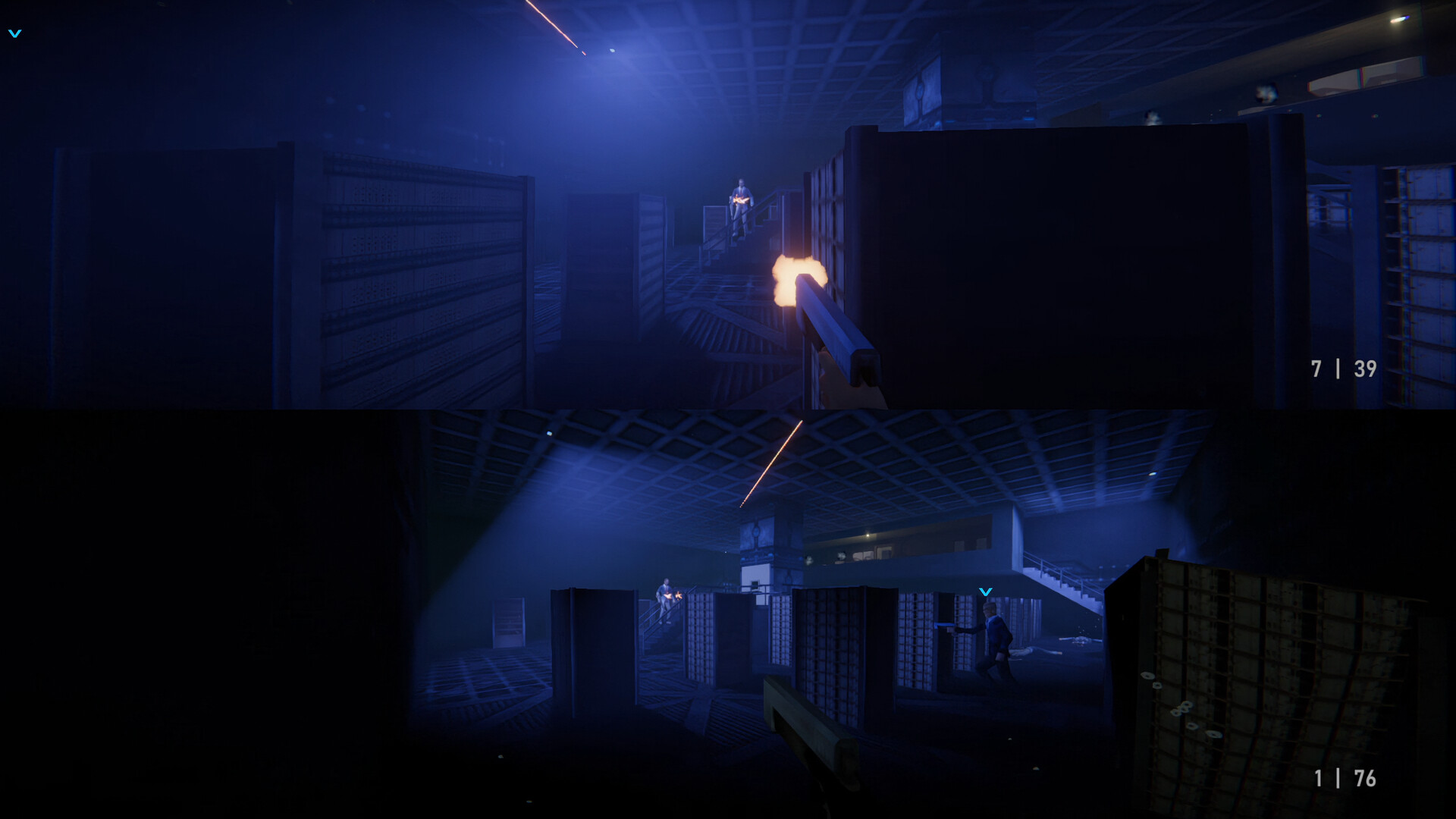
Arena supports up to eight players and eight bots, while the campaign also supports co-op. Getting all of that working was not part of the original plan.
In fact, online play arrived quite late in development.
Oh boy. The online mode became a big project all on itself.
For most of the development the game wasn’t made for online at all. It was a late addition and it was a very interesting challenge to retroactively make the game work with online play. It was difficult. I won’t do it that way ever again.
I’m very happy that I lucked out in having made game systems that were solid enough to enable online Coop on the campaign. It was a lucky coin toss here.
Luckily, the systems underneath Agent 64 were solid enough that campaign co-op was possible too.
Co-op Doesn’t Have to Be Perfect
When two players can work on different objectives at the same time, some parts of a mission will naturally become easier. After testing, Replicant D6 decided that was fine.
Well, after some tests, I simply had to accept it as it is. Coop is fun as hell and I’m fine with some parts of the game being slightly easier in that mode.
It’s a pretty straightforward approach. If playing together makes some sections easier, that’s not necessarily a problem when the main goal is to make co-op fun.
The same attitude can be seen in the game’s difficulty system, where higher difficulties can add new rooms and objectives.

You’re Supposed to Go Back
Some players might wonder whether adding extra rooms and objectives to higher difficulty levels means they haven’t really seen the full mission on their first playthrough.
For Agent 64, that’s actually the idea.
That’s the point. Encourage the player to replay and master the game to see everything!
The play-by-play of the game is fun by itself, so I expected people who enjoy that to do that on their own.
The first playthrough isn’t supposed to show you everything. Players who enjoy the game are encouraged to return, learn the maps and see what changes.
That approach is very much connected to what Agent 64 is trying to recreate. But bringing back an old style of FPS doesn’t mean copying every single thing those games did.
Not Everything From the ’90s Had to Stay
Replicant D6 was also aware that some of the things we remember fondly from older games don’t necessarily work as well today.
The goal wasn’t to change the basic design of Agent 64, but a few smaller things could be made clearer for new players.
The first thing you have to accept when making such a project, is that it won’t be for everyone. I made a few small concessions in order to teach new players how to enjoy the game (for instance the way aiming mode is locked off during the first few seconds of the game until you reach the tutorial), but ultimately the unique gameplay and structure of the game will alienate a few people, it’s inevitable.
After all, the point of this game is to purposely not follow a lot of modern expectations.
Agent 64 isn’t trying to make itself comfortable for everyone. Part of the point is to go against some of the things modern FPS players have come to expect.
There were, however, some old habits that were probably better left behind.
Making Things Clearer
Older shooters often expected players to figure things out for themselves. You might see an object in a room and have no idea whether it could be interacted with or not.
Agent 64 adds some modern help here, without changing the basic way the game works.
It’s only little things and details. For example: in most of those games, there are no contextual prompts for interactable objects. You kinda have to know or guess if something could be pressed or opened. I added prompts, it makes everything a lot clearer and less confusing.
I also made sure that objectives and briefings are extra clear on what you need to do. No more arcane or vague directions.Just, making some things clearer on what they are and what they do.
And that probably sums up the whole approach to Agent 64 quite well. The aim isn’t to turn an old-school FPS into a modern shooter. It’s to keep the old ideas while, at the same time, remove a few things that simply made those games confusing.
Did you play this gem? What’s your opinion of it?

Leave a comment