
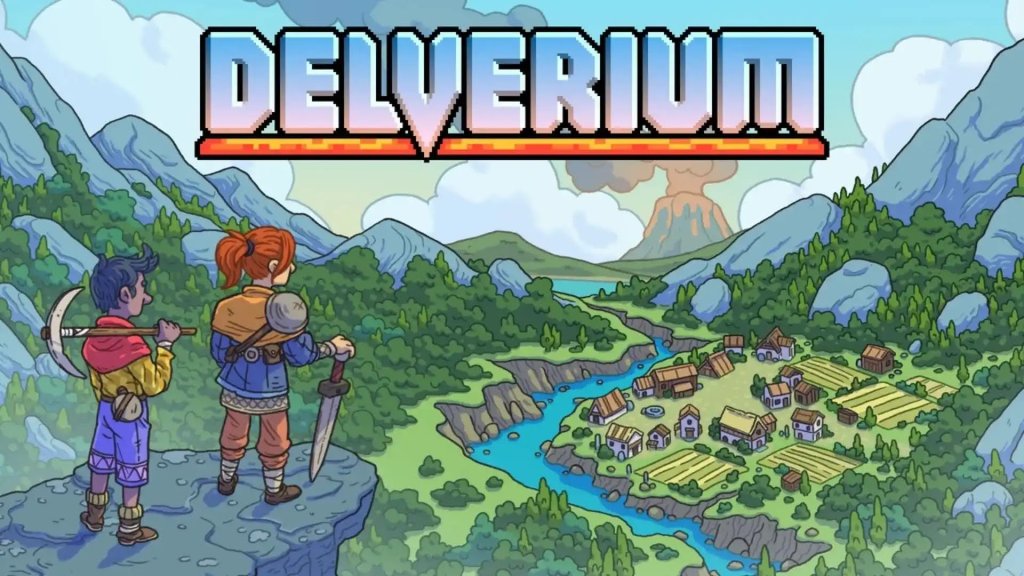
We have spent countless nights over the past decade exploring the depths of Terraria—collecting game-changing loot, fighting enemies in creative ways, and building bizarre surface mansions. Because of that, Delverium immediately caught our eye with its familiar visual style and engaging mechanics. Read on as we share our thoughts and explore why this game from Sagestone is worth checking out.
Digging in
Once you create your character, you can create your own world and decide whether you want it to be small, medium or large. You can also turn on Horde Mode, which makes the nights considerably more dangerous. Without it, the surface can be a much more relaxed place to explore, gather materials and work on your little settlement. Some players will probably enjoy that slower pace, while others might find the nights a little too quiet.
There are also options for what happens when you die. Depending on how you set things up, you can lose nothing, lose money, or lose items. We liked having that choice because it lets you decide how much punishment you actually want in your game. And from the moment we started exploring, the influence from a certain game was hard to miss.
Terraria From Another Angle
Even with its different perspective, Delverium immediately reminded us of Terraria. You walk around, gather useful materials, fight enemies, return home with your pockets full of stuff and then use what you’ve collected to make better equipment or expand your little corner of the world.
There is always something useful to pick up. We spent a lot of time simply exploring and gathering, but every now and then we’d run into undead enemies that provided another reason to stop and fight. The materials we collected could then be turned into better tools, equipment and building materials.
Building your first shelter also brings the settlement side of the game into focus. Once you have at least one proper room with a bed and a light source, an NPC can move in and start a shop. It’s a simple system, but it gives the early game a nice sense of progression. It’s an entertaining and rewarding experience where you’re slowly creating a place that other characters can become part of.
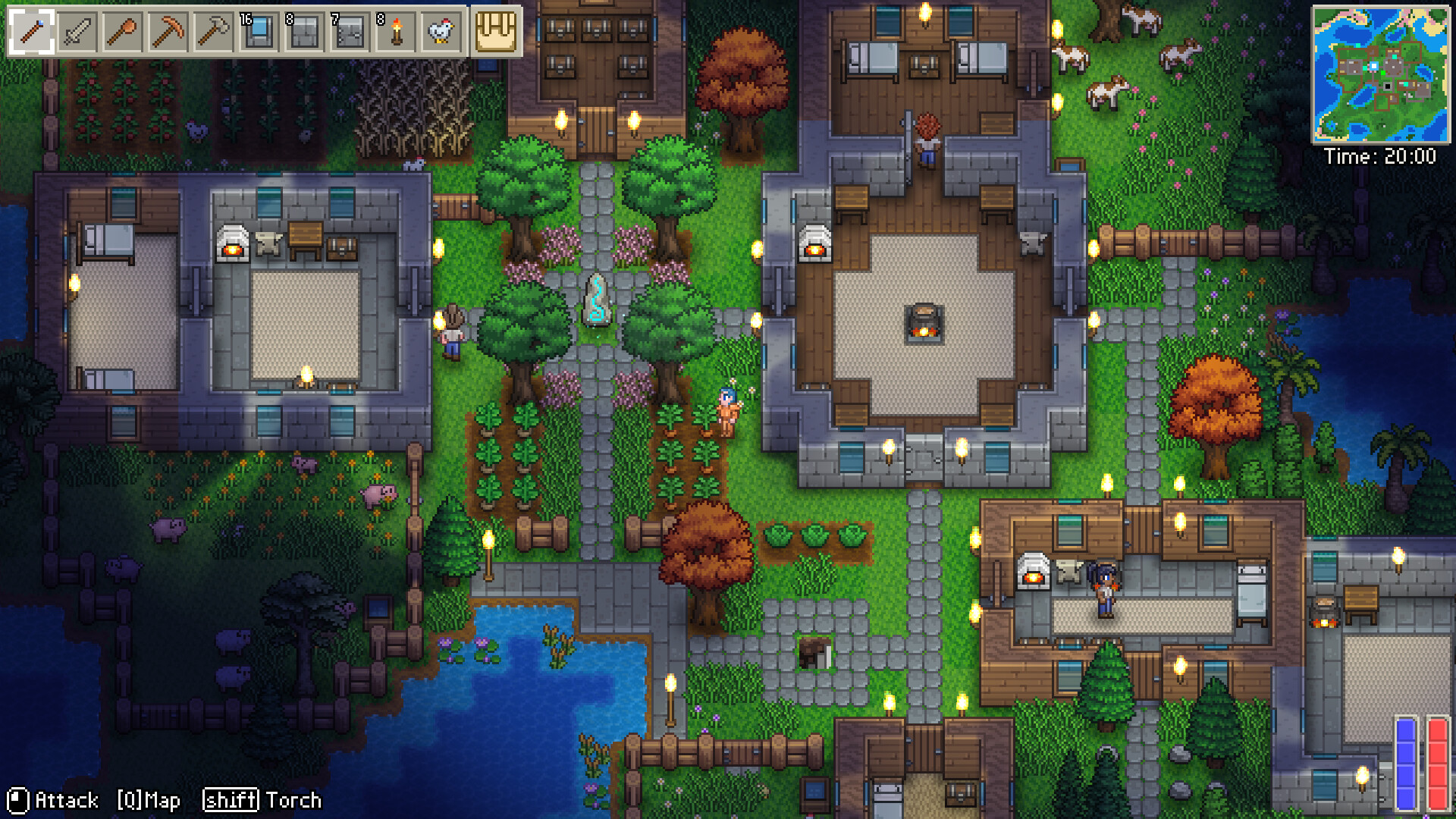
We didn’t have much time to sit around admiring our new home as we kept hearing a woman’s voice calling for help. Naturally, we went looking. After finding her and bringing her back to the surface, our little settlement had another member.
And then there were two
The first NPC opened a shop, while the woman we rescued turned out to be a talented blacksmith who could provide better tools and equipment. This is where Delverium starts showing that the settlement isn’t just decoration. As you explore further and bring people back with you, your little home becomes more useful.
The game also has farming, fishing, cooking and other systems that give you plenty to do when you’re not exploring. The full Early Access version is designed around these different ways of spending your time, rather than forcing you to constantly head into danger.
The Deeper We Went, the Better It Got
If the surface can be fairly relaxing, especially without Horde Mode, the caves are a different story.
The deeper you go, the more dangerous things become. More enemies appear, they can surround you, and suddenly that casual expedition for a few extra materials becomes a much bigger problem than expected.
Chests can contain useful materials, equipment, upgrade components and permanent improvements such as increases to your health. You can also find seeds and bring them back to the surface, where you can start working on your own garden.
The progression works in a way that constantly gives you a one reason or another to go a little further. Rarer materials allow you to make better tools and equipment, while improved tools can give you access to areas and resources that were out of reach before. It’s a highly addictive loop where you explore, collect, improve, return to somewhere you couldn’t reach before, collect something better, then go even deeper.
For us, those moments were some of the best parts of the game. We’d head into a cave looking for one particular material and come back with something completely different, whether it was an upgrade, a new discovery or something that opened up another possibility back at the settlement.
Delverium is a game that keeps giving you small reasons to continue. We took every single one with much gusto!
There Is Always Something Else to Do
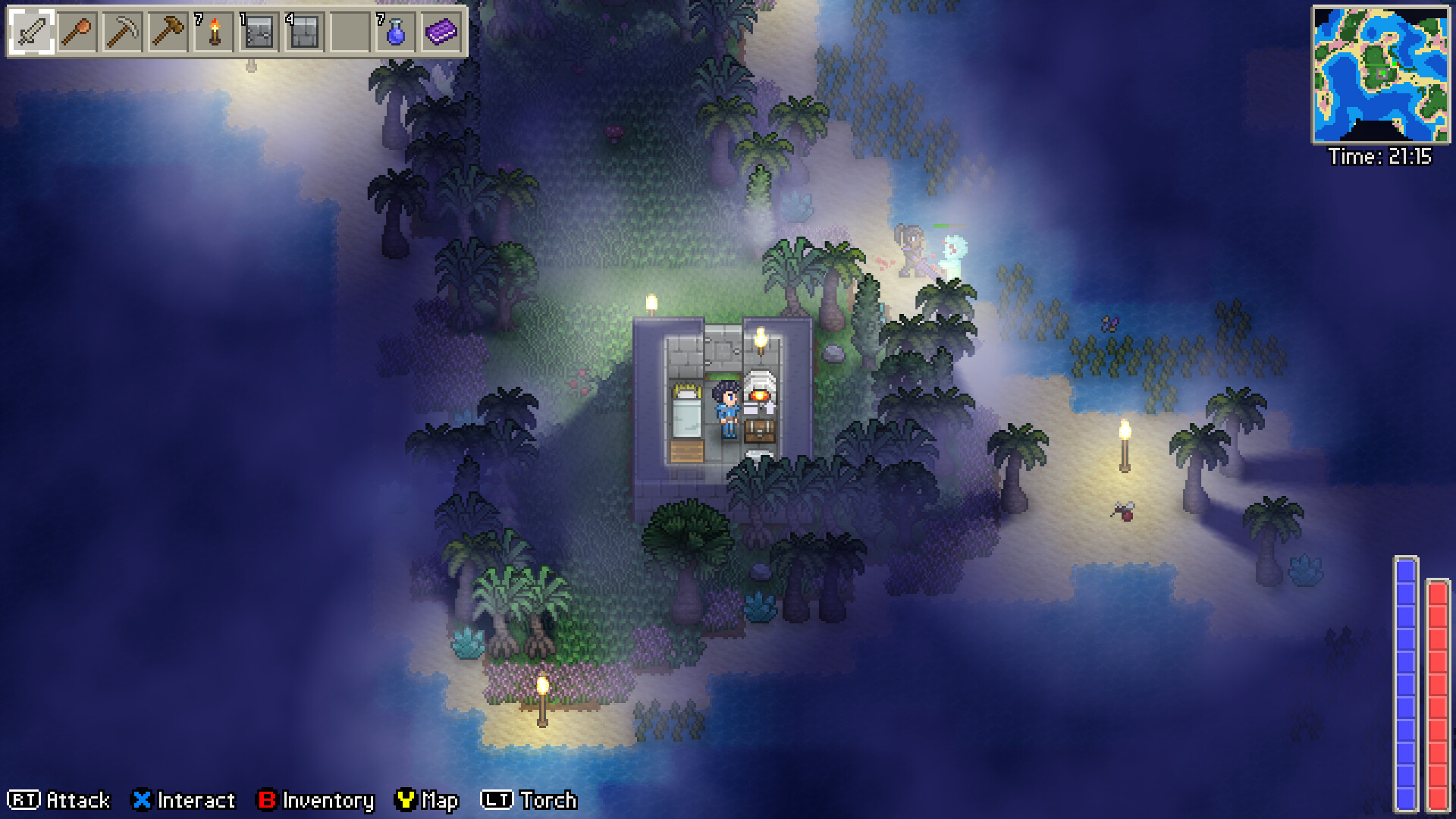
You don’t have to spend every minute underground. You can work on your settlement, look after your crops, go fishing, gather materials or simply explore. The game also includes NPCs, quests and lore, while the bigger mystery revolves around the strange “Faults” that are affecting the land. The devs are planning to add more biomes, bosses, loot, NPC options and lore as Early Access continues. You never feel like you’re walking a straight line.
One day you might decide that you’re going to improve the garden. The next, you’re gathering materials. Then someone suggests going underground and, before you realize, you’re three levels deeper than you planned to be.
The world is procedurally generated so there’s also an element of not knowing exactly what you’ll find when you head out.
Much Better With Someone Sitting Beside You
While Delverium can be played solo, this is definitely a game we enjoyed more with someone else. Our nephews love anything that has to do with Minecraft and Terraria, so getting them involved was an easy decision. It was a joy to jump into sessions together and simply go on an adventure without worrying too much about what we were supposed to be doing next. We remember plenty of nights where we kept going deeper and deeper, eventually finding a boss and convincing ourselves that, yes, we could absolutely take it.
We couldn’t.
After dying rather embarrassingly, the usual process followed. Someone was blamed. Someone else defended themselves. We laughed about it, went back to the village and started preparing for the next attempt.
Those quieter moments were just as enjoyable.
One of us could be tending the garden while another went fishing. Someone else could work on the rooms or collect materials while the others headed out exploring. We weren’t always doing the same thing, and that actually made the co-op experience better.
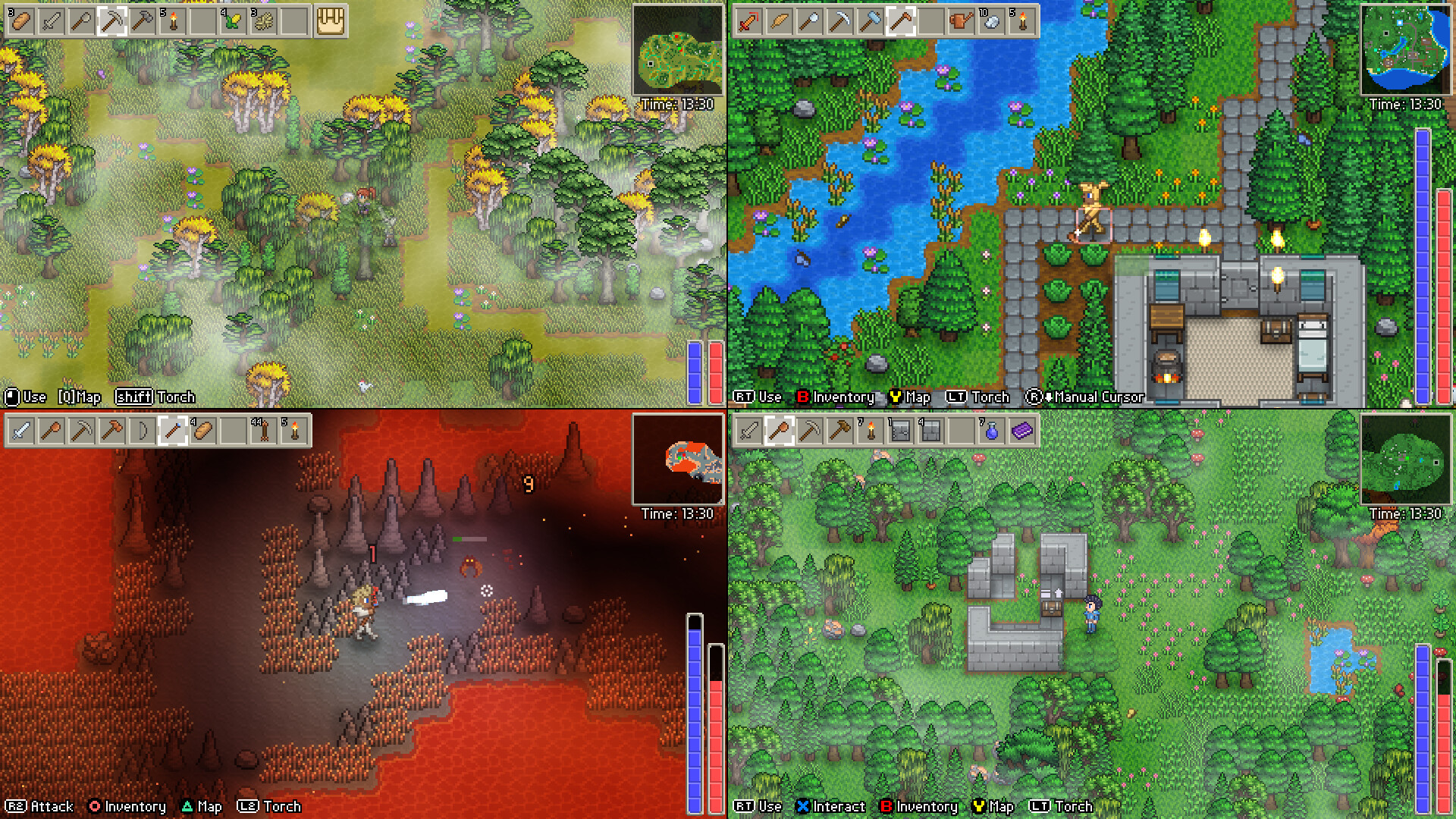
Delverium supports up to eight players online, while local split-screen supports up to four players. We hope you find someone to play this with since that’s where we got our most memorable moments.
One More Expedition
If you enjoy games like Terraria and Minecraft and have a friend or family member willing to join you, Delverium is worth keeping an eye on. It’s still an Early Access game and there is clearly more to come, but the foundation is already here.
For us, the best moments weren’t necessarily the big discoveries. They were the little stories that happened along the way: heading underground for one thing and finding something completely different, getting too confident before a boss fight, blaming each other after we died, then coming back to the village and deciding what we’d do next.
And, of course, saying that we would only go underground for five more minutes.
We never mean it.
Game: Delverium
Developer: Sagestone Games
Publisher: Sagestone Games
Genre: Survival Sandbox / Action RPG / Adventure
Players: 1–8 players
Co-op: Up to 4-player local split-screen / up to 8-player online co-op
Platform: PC
Release: September 21, 2026 planned Early Access release
Version Reviewed: Early Access / pre-release build
Status: Early Access

Leave a comment