
We’re pleased to share this guest piece by Søren Ahrensborg Kamper
From X-Wing and Dark Forces to KOTOR and Zero Company, the license has been at its strongest when developers let another genre set the rules.
Star Wars looks like it should be a genre. It has lightsabers, starfighters, stormtroopers, smugglers, Jedi, Sith and enough dramatic door openings to keep an entire animation department employed. Yet the games that last rarely succeed because they reproduce that checklist. They succeed because they first decide what kind of game they want to be. The recent Zero Company review gets at this beautifully. The reason its XCOM DNA works is not that someone replaced assault rifles with blasters. It is that the game treats positioning, action points, relationships and consequences as seriously as a proper tactics game should.
That pattern goes back decades. A trip through the complete history of Star Wars games is basically a tour through other genres wearing familiar boots. X-Wing is a space sim. Dark Forces is an FPS. Knights of the Old Republic is a BioWare RPG. Empire at War is real-time strategy. Episode I: Racer is an arcade racer. Republic Commando is a squad shooter. The license keeps changing clothes, and oddly enough, that may be the most consistent thing about it.

Zero Company works because the tactical layer is not decoration. It is the point. Image: Electronic Arts / Bit Reactor / Lucasfilm Games.
X-Wing Did Not Want to Be an Arcade Cabinet
X-Wing arrived in 1993 with a very specific fantasy: not “watch the Death Star battle again,” but “be the poor pilot responsible for keeping this thing flying.” Power had to be shifted between engines, shields and lasers. Missions asked for reconnaissance, escort work and disciplined targeting. The cockpit was not just a frame around the movie fantasy. It was an interface that made the fantasy possible.
That is a crucial distinction. X-Wing borrowed the language of PC flight and combat simulations, then translated Star Wars into that language. It trusted players to learn systems and accept failure. You were not Luke Skywalker because the script said so. Most of the time you were another pilot trying not to turn into a very expensive cloud of polygons. The result felt more authentic precisely because it was willing to be a simulation first.
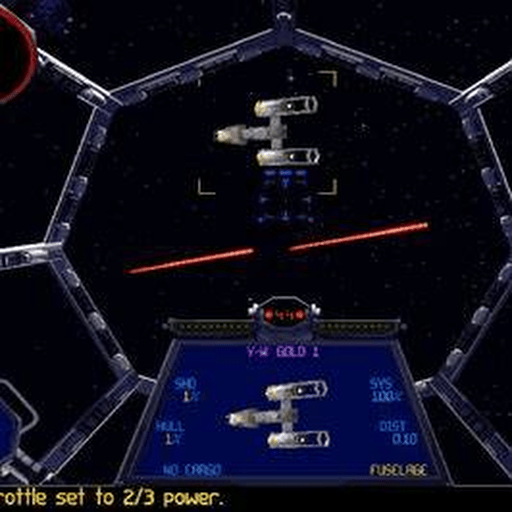
X-Wing made the cockpit, power management and mission structure part of the Star Wars fantasy. Image: LucasArts.
Dark Forces Let the FPS Do the Talking
Dark Forces made the same decision from the opposite direction. By 1995, Doom had already taught the industry what first-person shooting could look like. LucasArts could have produced a themed imitation and called it a day. Instead, Dark Forces leaned into vertical spaces, objectives, jumping, crouching and large Imperial environments that were built to be explored as levels rather than admired as sets.
That willingness to accept a genre’s logic is still visible in modern developers who deliberately preserve old FPS structure instead of sanding it smooth for everybody. The thinking behind bringing back old-school FPS design is familiar: identify what gives the form its identity, modernize what gets in the way, and do not apologize for the rest. Dark Forces did that with Star Wars thirty years earlier. Kyle Katarn mattered because the game needed a protagonist who belonged in an FPS, not because the films had an empty chair waiting for him.
KOTOR Gave Star Wars to BioWare
Knights of the Old Republic might be the clearest example of what happens when the license stops trying to supervise every second. BioWare was allowed to make a BioWare RPG. That meant party members, dialogue trees, moral choices, equipment, builds and enough conversations aboard the Ebon Hawk to make a hurried player wonder whether saving the Republic could perhaps wait until after one more argument with Carth.
The important part was not that KOTOR found a clever way to squeeze RPG systems into Star Wars. It did the reverse. It asked what Star Wars would look like when expressed through RPG systems. The Force became character development. The light and dark sides became player choice. Companions turned galactic politics into personal relationships. Four thousand years of distance from the films gave the game room to build a version of the universe around what role-playing games are good at.
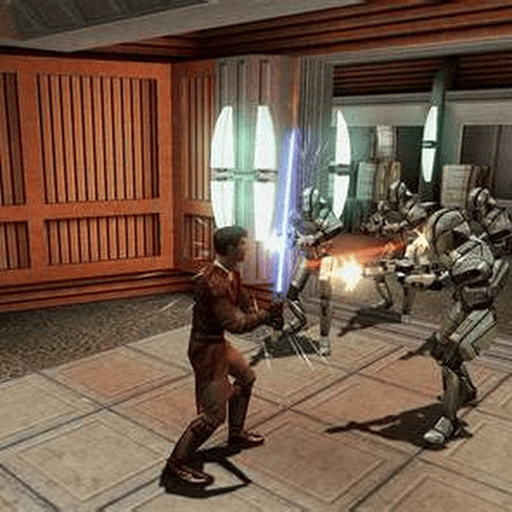
KOTOR let party-based RPG systems shape how players experienced the galaxy. Image: BioWare / LucasArts.
The Genre Can Change the Fantasy
This is why genre borrowing is more interesting than simple imitation. Moving an idea into another form can expose qualities that were invisible before. The same problem appears when POLYSTRIKE rebuilds tactical FPS ideas from a top-down perspective: once the camera changes, information, aiming and even sound have to be reconsidered. The identity survives only if the mechanics are rebuilt for the new point of view.
Star Wars has repeatedly benefited from exactly that pressure. Empire at War turns fleets, planets and armies into resources and strategic choices. Republic Commando makes clone brotherhood mechanical by forcing the player to rely on a squad. Racer reduces an entire film sequence to speed, track knowledge and the deeply scientific process of holding boost for slightly longer than common sense recommends. None of these games tries to contain all of Star Wars. They choose one fantasy and let a genre sharpen it.
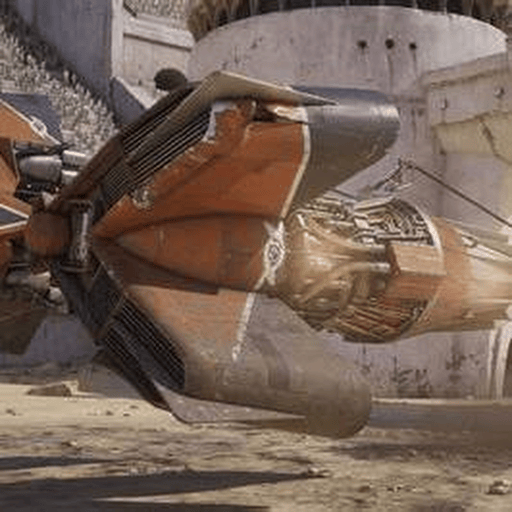
Episode I: Racer and Galactic Racer show the same principle from another angle: choose the racing fantasy, then let Star Wars make it stranger. Image: Fuse Games / Lucasfilm Games.
Zero Company Brings the Old Lesson Back
Zero Company feels modern, but its philosophy is wonderfully old-fashioned. It does not ask how turn-based tactics can be hidden so Star Wars fans will tolerate them. It asks how Star Wars can make turn-based tactics more dramatic. Cover matters. Positioning matters. Injuries matter. Relationships between operators become systems rather than background flavour. The galaxy gets stronger because the genre is allowed to push back.
There is a similar confidence in games that combine unlikely ideas without flattening either side. Canvas City turning skating into tactics works because movement itself changes how the tactical layer is designed, while Rogue Drone mixing active mining, automation and tower defense works by making each system serve a clear loop. The lesson is not that every game needs more genres. It is that a game needs to know which rules actually matter.
Star Wars Is the Setting. The Game Still Needs a Job.
The weakest licensed games often behave as if recognition is enough. Put a lightsaber on the box, add a familiar soundtrack, let Darth Vader walk through a doorway, job done. The best Star Wars games have always demanded more from themselves. They understand that a license can provide a world, but it cannot provide a game loop.
That is why the franchise has survived so many shifts in hardware and design. Star Wars does not need one definitive gameplay formula. It needs developers willing to commit to a specific one. Let the sim be a sim. Let the shooter be a shooter. Let the RPG stop for twenty minutes so somebody can explain their childhood. Let the tactics game make you regret moving one square too far. When the genre gets to speak first, Star Wars usually finds a new way to sound like itself.
About the author
Søren Ahrensborg Kamper is the editor of Star Wars: Gaming, an independent site covering the history, design and ongoing life of Star Wars video games.

Leave a comment