

Inspired by Nintendo 64 classics like GoldenEye 007 and Perfect Dark, Agent 64: Spies Never Die is a blast of a game that recreates almost every design decision from that era—including the ones that haven’t aged all that gracefully. Whether that’s a strength or a weakness depends entirely on what you’re looking for.

An old-school spy adventure
Agent John Walter is a secret operative you play as across fourteen standalone missions. Every mission drops us into a relatively new location, giving us different objectives. From stealing classified documents to hacking computers, you will also rescue hostages and eliminate enemy targets.
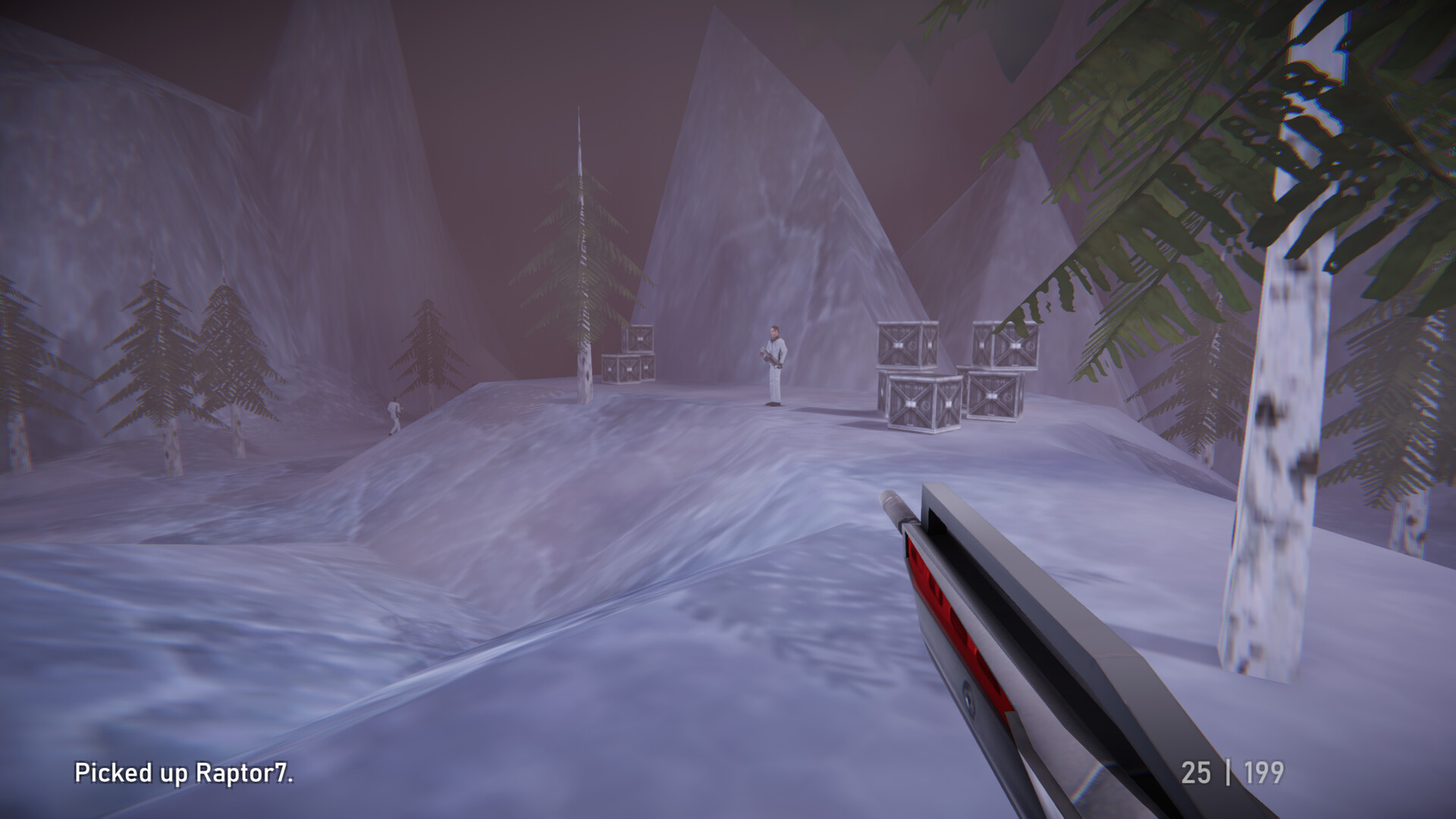
The variety of environments helps keep the campaign moving, taking us through skyscrapers, museums, catacombs, snowy military bases, and a lot more. It’s a structure that immediately brings back memories of late-night N64 sessions. Every mission can be replayed on three difficulty settings. Higher difficulties make the enemies tougher, but they also introduce additional objectives and previously inaccessible areas. Once we finished some levels on easier difficulty, it was fun to jump back in and revisit earlier stages to see what we’d been missing out on.
The campaign can also be played cooperatively from start to finish, both online and in split-screen—which, again, is how things were done back in the ’90s and how this game should be played.
Faithful to the point of frustration
The devs did their best to preserve the feel of those older shooters.
There is no crosshair by default. You can enable one, but doing so locks your movement while aiming, forcing you to stand still if you want more accurate shots. It’s authentic to the games that inspired it, but it’s also something that makes firefights feel far less responsive than modern players might expect.
The weapons themselves are satisfying enough to use, with each firearm carrying enough punch to make firefights entertaining. Still, we couldn’t help wishing there were optional modern controls, such as free aiming or a zoom function that didn’t sacrifice movement. We completely understand why these mechanics were omitted, and fans looking for an authentic experience will probably appreciate that decision. At the same time, making them optional wouldn’t have taken anything away from those wanting the original feel.
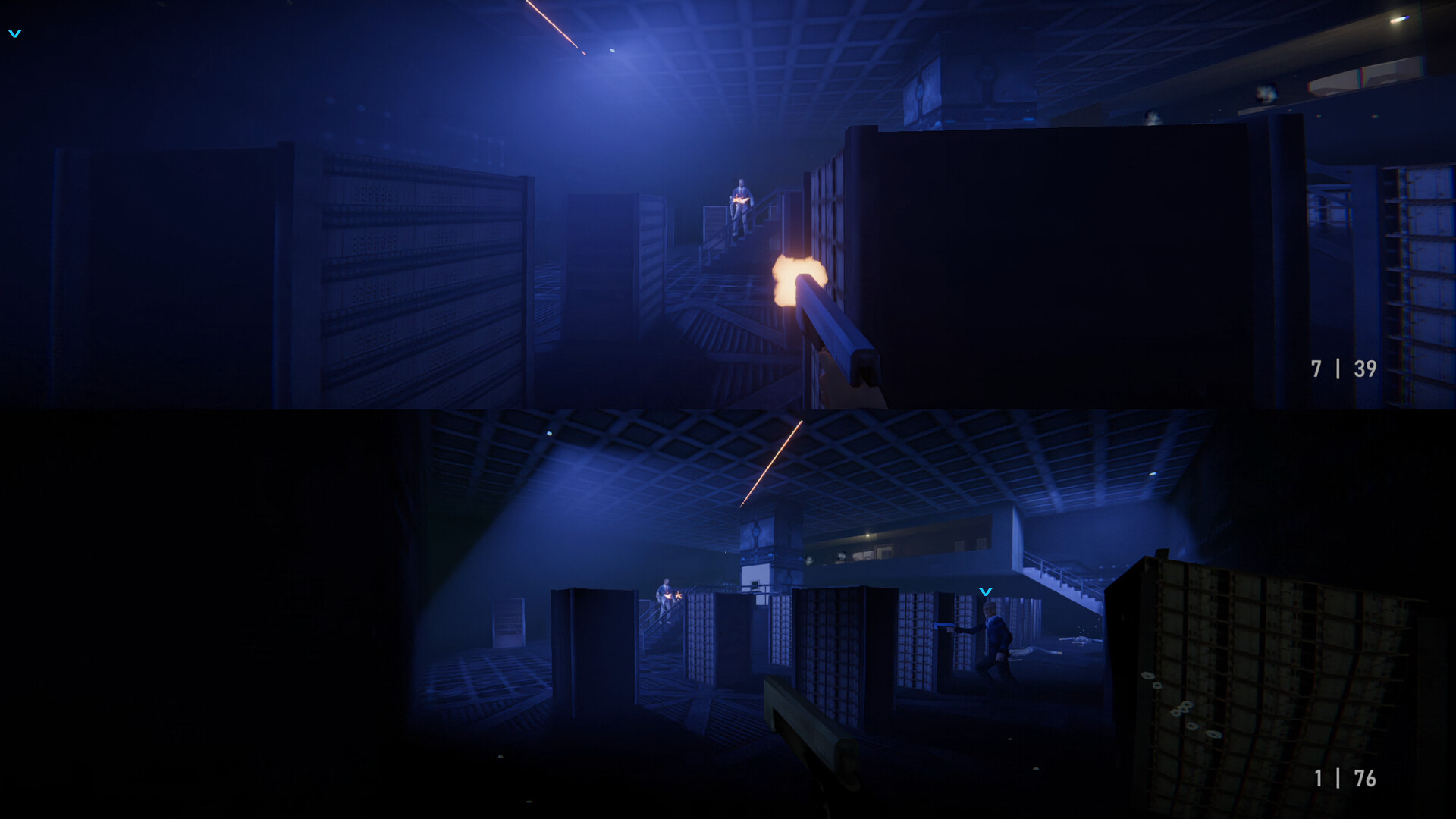
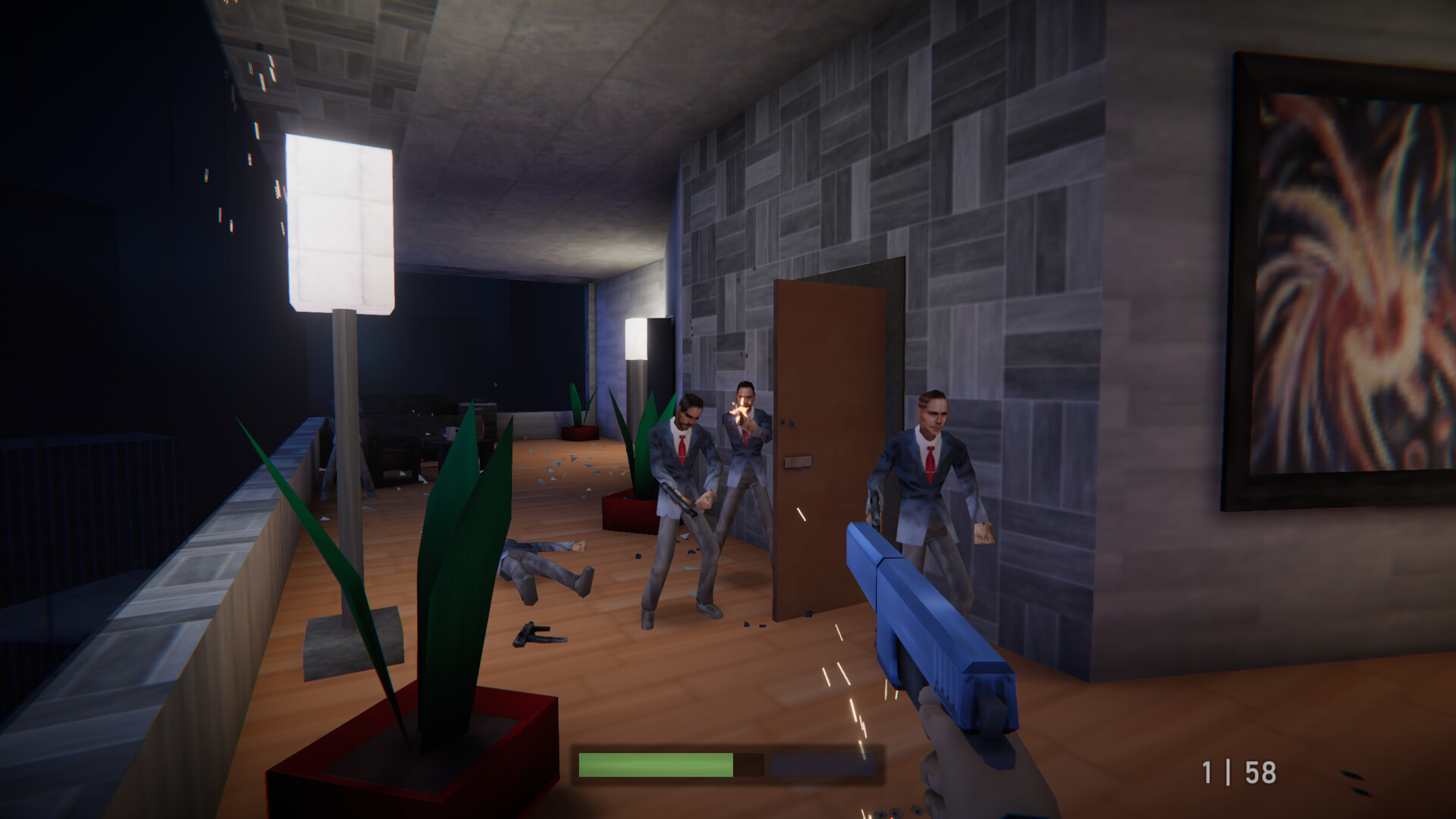
Enemy behavior follows that same philosophy. Sometimes guards rush straight at us, other times they retreat into nearby rooms or duck behind cover before firing back. Unfortunately, their accuracy often resembles a scene from a Star Wars blaster fight, with bullets flying everywhere except where we’re standing. Even stranger, enemies are perfectly content staring into empty corridors while we’re unloading entire magazines into their colleagues only a few meters away. The AI creates entertaining moments, but it rarely feels convincing.
It also doesn’t help that many enemies share the same appearance. During the opening missions, we’re mostly fighting identical agents wearing identical suits, making encounters blend together more than they probably should.
Some missions leave a stronger impression than others
While objectives add welcome variety, the level design doesn’t always do the same.
We understand that Agent 64 is intentionally recreating shooters from the late ’90s, but some environments lean a little too heavily on long, empty hallways and oversized rooms with very little to make them memorable. Wooden crates and scattered cover pieces often feel like the only landmarks breaking up otherwise plain corridors.
Later missions become more interesting as new locations and objectives are introduced, but the opening hours don’t always make the strongest first impression.
A package built for replayability
Agent 64 offers a lot of bang for your buck.
Completing time trials and challenges unlocks Paradox Mode, a surprisingly entertaining collection of gameplay modifiers. Big heads, slower bullets, instant reloads, melee disarms, and dozens of other cheats can completely change how familiar missions play. There’s also a Contracts mode that remixes objectives while combining these modifiers into fresh challenges.
In terms of multiplayer, up to eight players can battle online or locally with split-screen support, alongside AI bots if needed. Traditional Deathmatch joins objective-based modes like Briefcase and Zone, while extensive match customization lets players tweak weapons, teams, rules, and modifiers before jumping in. It feels like another love letter to classic console multiplayer.
Retro presentation done right
The low-polygon visuals immediately capture the look of late-’90s console shooters without feeling like a cheap imitation. Character models, lighting, textures, and animations all recreate that era remarkably well. More importantly, the options menu includes features that let players lean even further into the nostalgia. We especially appreciated being able to enable a CRT filter and increase the field of view, making the game feel authentic while still offering a few welcome quality-of-life improvements.
Agent 64: Spies Never Die succeeds at being exactly what it sets out to be. It’s a celebration of the Nintendo 64 shooter era, complete with all the quirks, limitations, and design decisions that defined it. If you’re looking to relive the glory days of couch co-op spy shooters, Agent 64 is the title that will bring that nostalgia back—to a fault.
8/10
Game: Agent 64: Spies Never Die
Developer: Replicant D6
Publisher: Replicant D6
Platform Reviewed: PC
Genre: First-Person Shooter
Release Date: Available Now
Reviewed On: PC


Leave a comment