
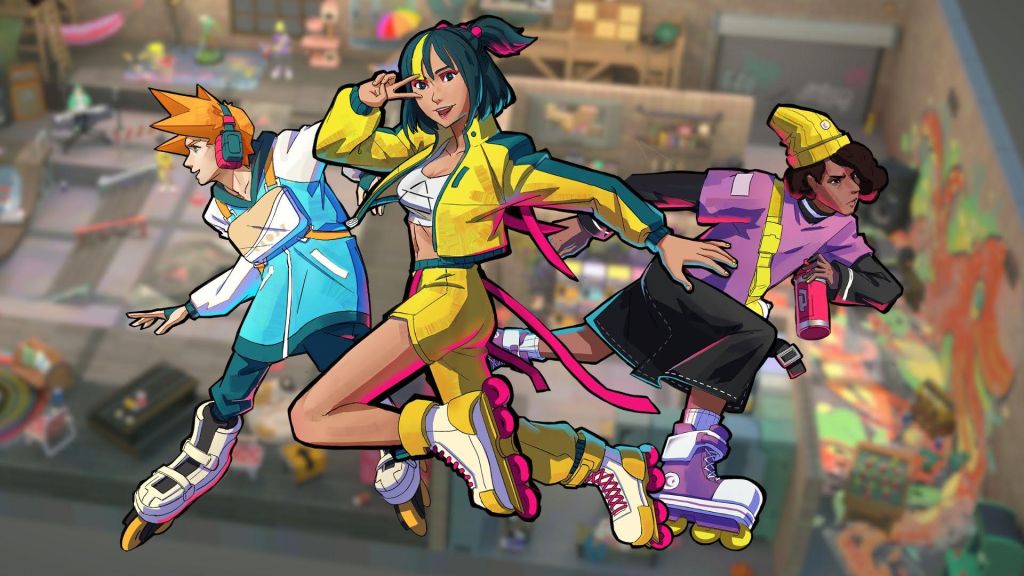
Roller skating and turn-based tactics seem like an odd combination. That combination, however, is what makes Canvas City interesting. The game takes the movement and freedom of skating and puts it into a tactical system built around turns, abilities, rails, and ramps. To make those two sides work together, Disc 2 Games had to rethink some familiar strategy-game ideas while making sure players have a reason to keep moving. But what else did they have to pay attention to? We had the privilege of asking members of the team and getting an inside look into the development of the game.

This interview would not have been possible without the wonderful people at Disc 2 Games. Many thanks Ruka Yamakami!

Turning skating into tactics
One of the biggest challenges was obvious from the start: skating is about momentum, while turn-based games are about stopping to think. The team had to find a way to keep movement feeling natural without making it difficult to understand what a character is actually doing.
This has actually been one of the biggest challenges. In a tactics game, each action needs to be clear and precise, same for movement through the world. We have done things like defining simpler abilities for on-the-go variants and some actions as well. And in some rare cases, we notice patterns in a character’s selected movement path, like going up and down a vert, and simplify it into one animation if requirements are met. It’s a complex issue that we are continuously working on.
That same idea carries over into the game’s approach to tactics. Instead of taking a familiar strategy formula and simply changing the setting, the team wanted players to approach movement and combat differently.
With Canvas City, our main goal was to present a novel and alternative way of thinking to your traditional tactics game. Giving hardcore fans something new to think about instead of just going deeper on established genre mechanics. We really wanted people to then feel free to try these new ways of moving and playing with a bit more freedom. So instead of focusing on consequences for less optimal turns, we pushed the reward side of using the game’s mechanics creatively.
Ramps, rails and choosing your abilities
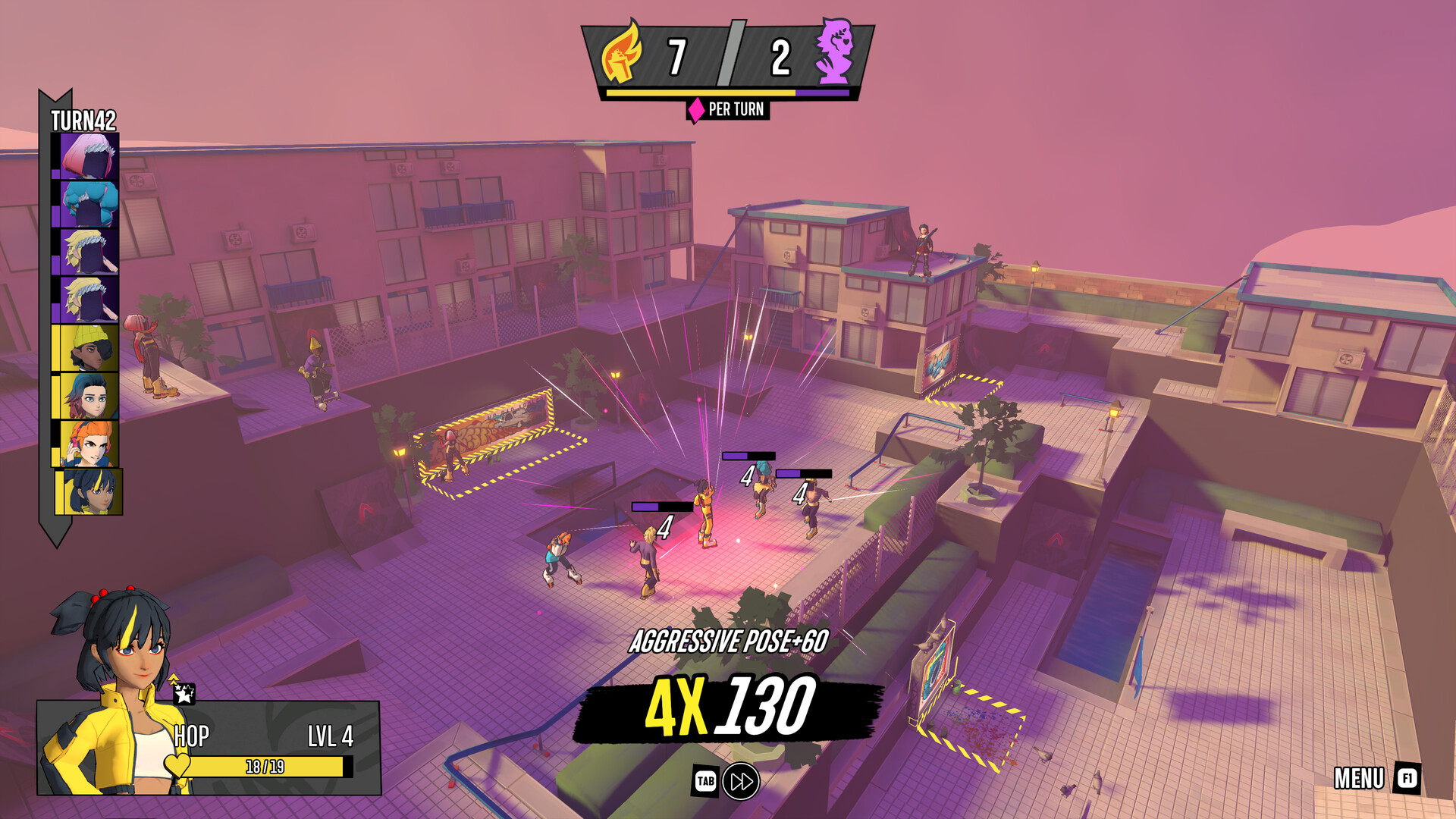
That philosophy has a direct effect on how the maps are designed. Traditional tactical games usually put a lot of emphasis on where a character stands. Canvas City shifts some of that attention to how the character gets there.
Ramps and rails give players more ways to move around the map, but mobility isn’t simply handed to every character. Much of it comes from the abilities players choose before entering a level.
With Canvas City’s mechanics, we have purposely taken some pressure off traditional tactical positioning, but then placed more of it on how you get to said position. We really wanted to push people to get creative with their use of the ramps and rails around the map and not feel too hemmed in. Then, to make sure it doesn’t really break anything or one class doesn’t feel too slow, we have moved a lot of the class’s identity onto abilities rather than having big differences in base movement or stats. So an artist may have a lot of abilities that allow them to gain more movement and use the maps’ rails and ramps more efficiently. But because it’s tied to abilities that let them do this, we restrict a player to only taking four abilities with them into a level. You will have to say give up some of your damaging abilities to have someone who feels more capable of ignoring more traditional tactical positioning in comparison to the other classes.
That four-ability limit gives the system a useful trade-off. A character that can move around the map more freely might have to give up some of their damage-dealing options to do it.
Different characters, different strengths
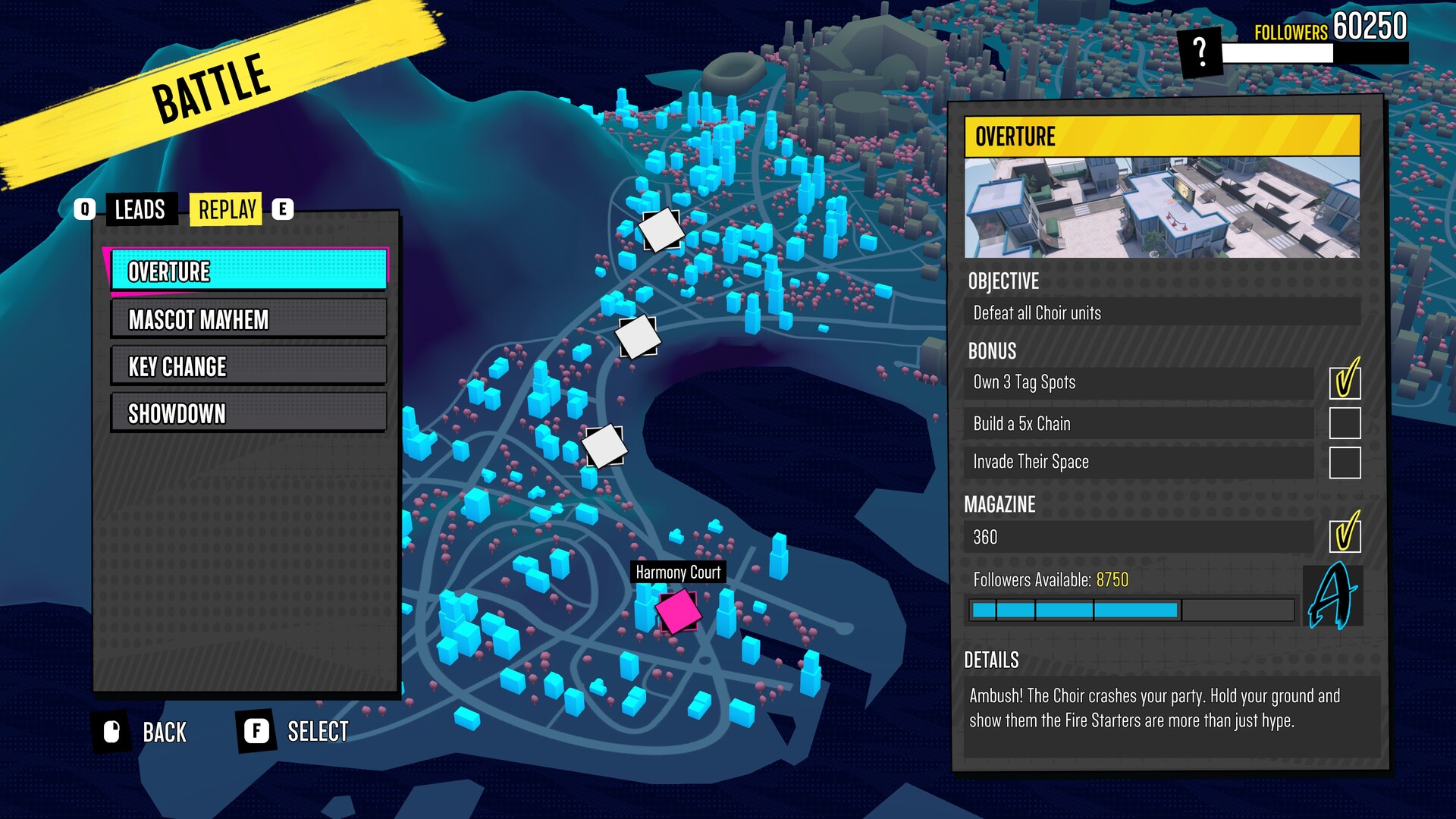
With 12 recruitable characters, three classes and more than 80 abilities, there is plenty of room for characters to overlap. The team approached that problem by giving each class four different attributes and then using the personalities of individual characters to push them in different directions.
With the 12 unique characters you recruit, they come split across three classes. Then, with each class having four different attributes they could be good at, it wasn’t too hard to divide up the abilities they received. Depending on the character’s personality, we would say one dancer should be tankier than all the rest, so in turn having less damage. We would then make sure that in the abilities we assigned them, they had more of these than any other dancer. Then for balancing these characters, past a quick math test we simply played the game a lot, until things felt about right.
It is a fairly straightforward approach: establish the role you want a character to fill, give them abilities that support that role, and then play the game until the numbers and the actual experience line up.
Making style-based combat feel impactful
Canvas City also had to solve a different kind of problem. Its battles are about style, but attacks still need to feel like they have an impact.
Why make everything realistic when you can lean into exaggerated visual effects.
Although these are battles of style, we needed characters to react to attacks as if they were taking real damage. There is some aspect of suspension of disbelief required which we encourage with VFX incorporating pop art aspects and highly exaggerated physical effects like lightning. An inspiration for this style of “combat” was Phoenix Wright, where attorneys battle each other with objections and people react as if they’d been punched in the face.
The Phoenix Wright comparison makes sense here. The idea isn’t to convince the player that these are realistic fights. It’s to make the reactions and effects communicate the impact of an attack within the game’s own exaggerated world.
Playtesting changed the way the game works
Some of the most useful changes came from watching people play. Early testers had trouble understanding that a single turn could involve several tricks and abilities rather than one movement followed by one action. That was especially noticeable among players coming from more traditional strategy games.
Yes, in many ways. Early on, we found a lot of playtesters struggled with the concept of chaining together a number of different tricks and abilities into a single turn. In particular, players who were used to more traditional strategy games would often move once, perform one action and end their turn. Over time we’ve made a number of UX improvements and made multiple iterations of our tutorial to really push people to get as much out of their turns as possible.
The tagging system also changed after playtesting exposed a problem the developers hadn’t anticipated.
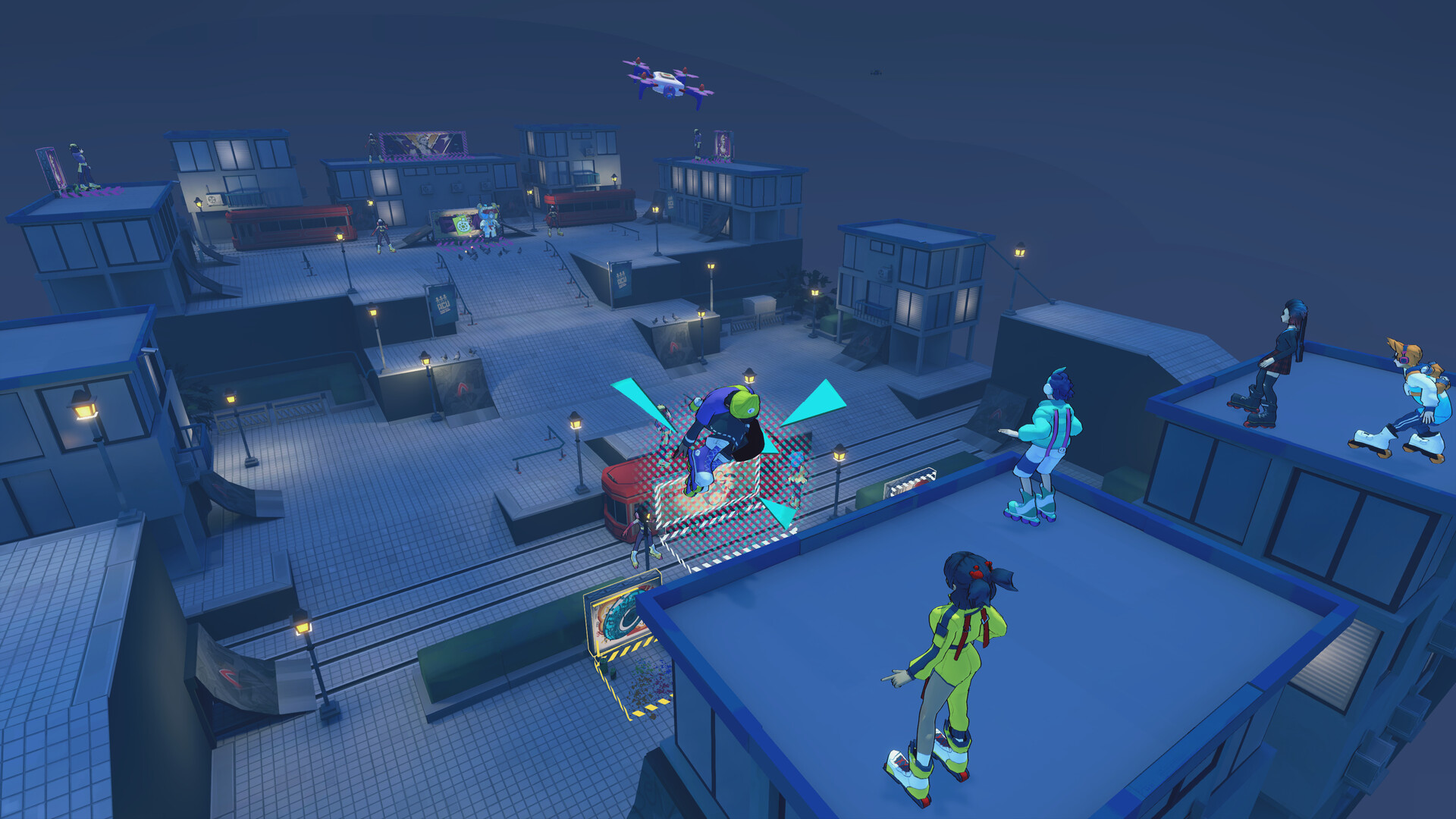
Tagging spots has simplified a lot based on playtesting. Initially you had to directly select a tag spot to tag it, but so many people were accidentally missing them that we made it an automatic action. This also reduced the number of physical actions a player needed to manually perform in their turn. Also, different sized spots initially needed multiple tags to complete them given their size, however we found this encouraged players to stand still next to them which is the complete opposite of what we wanted people to do.
That is a good example of why unconventional mechanics often need to be tested rather than simply planned. A system that looked fine during development was actually encouraging players to do the one thing the game didn’t want: stop moving.
The lesson from building something unusual
After putting all these systems together, the biggest lesson the team took away isn’t really about skating or tactics. It’s about being willing to change the things you initially think are essential to your game.
Playtesting early and often is important. It’s also important to truly listen to feedback and not be afraid to experiment with changing things you thought were core to the experience. You can always reverse the change if it doesn’t make it better.
That approach seems particularly important for a game like Canvas City. When you’re combining skating with turn-based tactics, there isn’t necessarily an established formula to follow. Some ideas will work immediately, others won’t, and some may only reveal their problems once actual players get their hands on them.
Canvas City seems like a cool and fun strategy game that is trying to make players think about movement a little differently — and, importantly, giving them plenty of reasons not to stand still.

Leave a comment