

We’ve loved XCOM for years. We can never tire of sitting in front of a tactical map and figuring out how to turn a seemingly impossible situation in our favor through careful positioning and taking risks.
Then came Marvel’s Midnight Suns, and we absolutely fell in love with the way it took the familiar ideas of tactical combat and wrapped them in something much more personal. The relationships between characters, the time spent away from combat and the way the team gradually became more effective together made every mission feel connected. To this day, those two games are in our top favorite games.
Star Wars Zero Company feels like the best parts of both games were taken, modernized and placed inside the Star Wars universe. Join us after the trailer as we tell you how we fell in love for the third time!
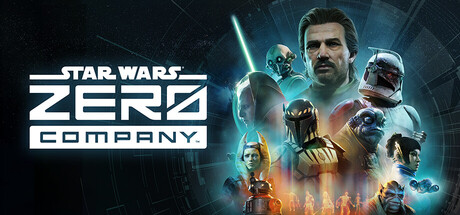
Zero Company is developed by Bit Reactor, a studio that has many veterans that worked on XCom. They have cooked a single-player turn-based tactics game set during the final days of the Clone Wars. In it, we take control of Hawks, a former Republic officer who leads a group of operators from all walks of life. We start the game struggling to come up with any funding to keep our lights on. We’re deep in depths and desperate for any job that comes out way. One of those jobs is connected to an investigation involving the mysterious Infinite Coil. It started like any other job but it quickly took a u turn and developed into something much larger having you hold the fate of the galaxy in your hands.
Building our own Hawks
The first thing we got to do was create Hawks. It’s also where all Star Wars fans will feel at home.
We could choose between six different races, male or female, and there is a surprisingly wide range of customization options. We could alter the character’s appearance and body characteristics before deciding what they would actually wear. If you are the kind of Star Wars fan who has always wanted to create your own character that looks like it walked straight out of the universe, there is plenty here to play with.
The available species give the character creator an especially nice Star Wars flavour. We could choose between Twi’lek, Togruta, Zabrak, Devaronian, Mirialan and Human, with different appearance options helping Hawks feel like our own character rather than somebody else’s protagonist.
Once we were happy with the appearance, we moved on to specialization.
There are eight standard combat specializations, including Assault, Heavy, Medic, Sharpshooter, Soldier, Scoundrel, Gunslinger and Scout, while several more specialized roles are tied to particular characters. Each specialization brings its own passive, standard and ultimate abilities, allowing us to build a squad around different approaches to combat.
We decided our female Human would be a Sharpshooter and never regretted the choice.
As someone who likes to play things from a distance, we wanted our character to attack from the shadows, remain accurate and have better opportunities for critical hits. We also picked a Longarm weapon to complement the specialization, although Hawks can use several different weapon classes.
What makes this even more interesting is that character development doesn’t stop after picking that first specialization. As the campaign progresses, operators can develop additional specializations, creating some very interesting combinations and giving us more freedom to shape the people we wanted in our squad.
XCOM, but Star Wars
If you’ve played XCOM or another turn-based tactical game, you’ll feel right at home here.
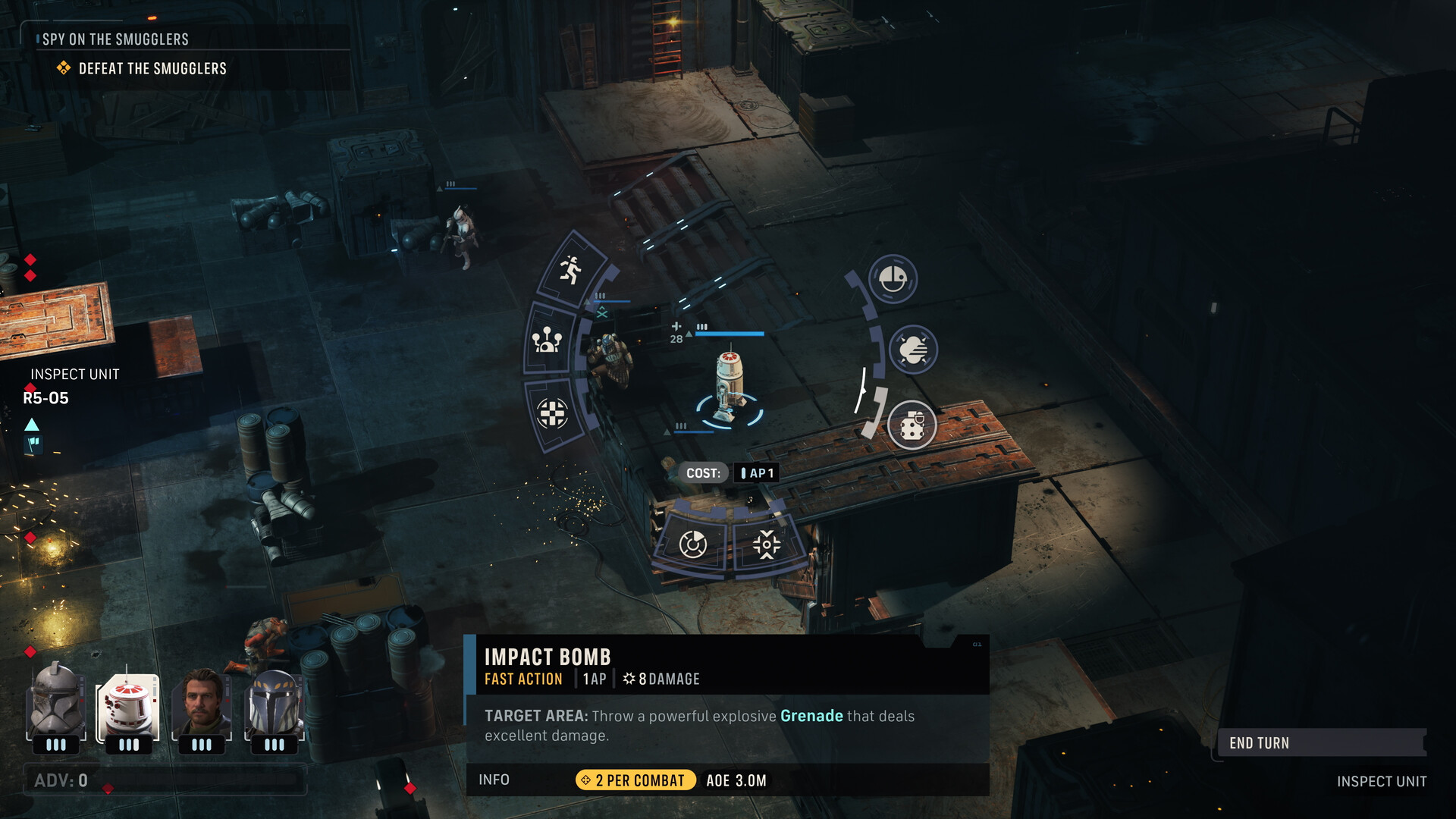
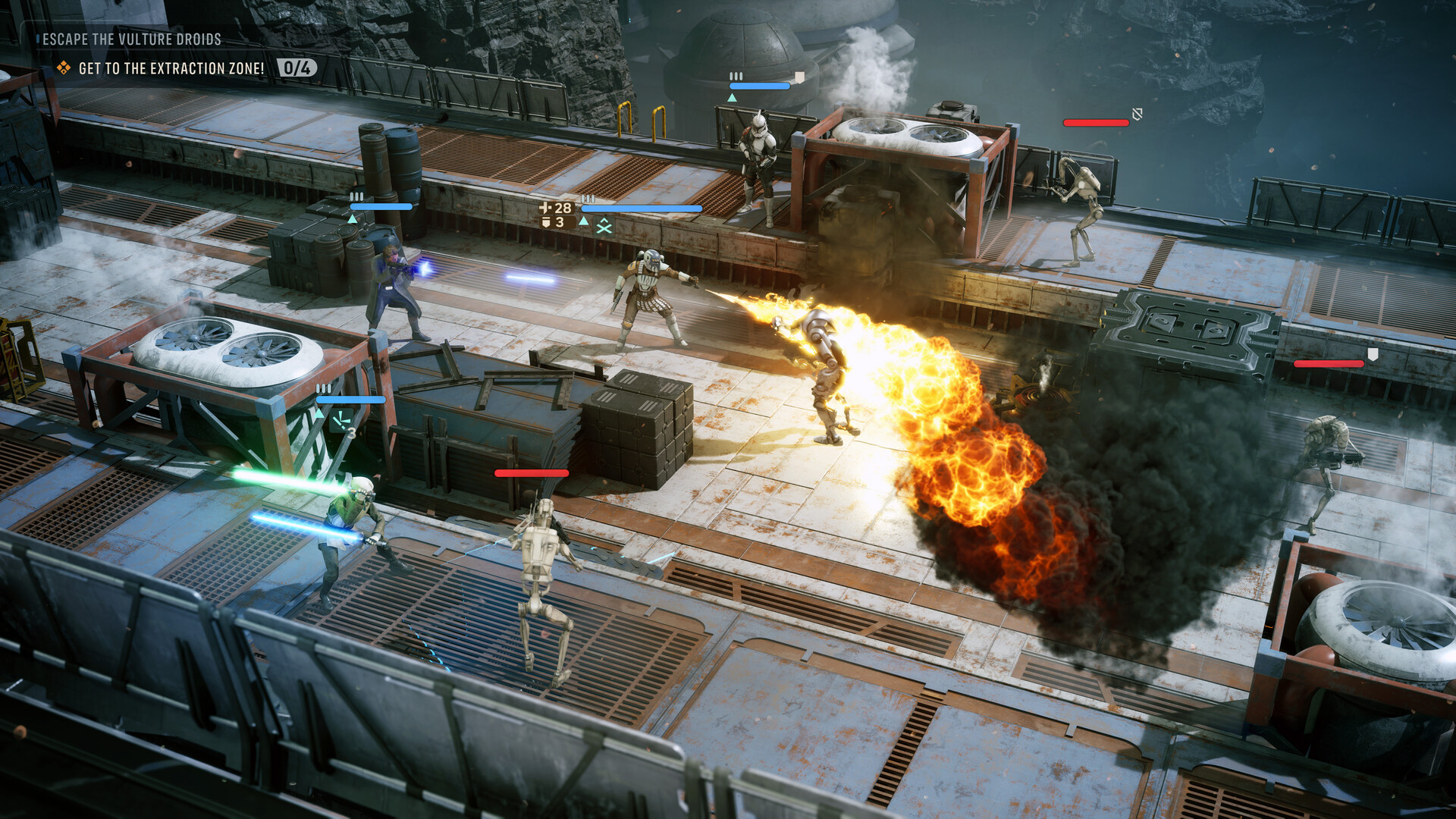
A map opens up in front of us and our job is to reposition our troops, preferably behind cover, before deciding how to spend their action points. Each operator gets three AP during their turn, which can be used for movement, attacks and abilities. Damaging enemies can also generate Advantage, a separate resource that allows us to unleash some of the more powerful abilities available to our operators. It sounds familiar, but the presentation makes a huge difference.
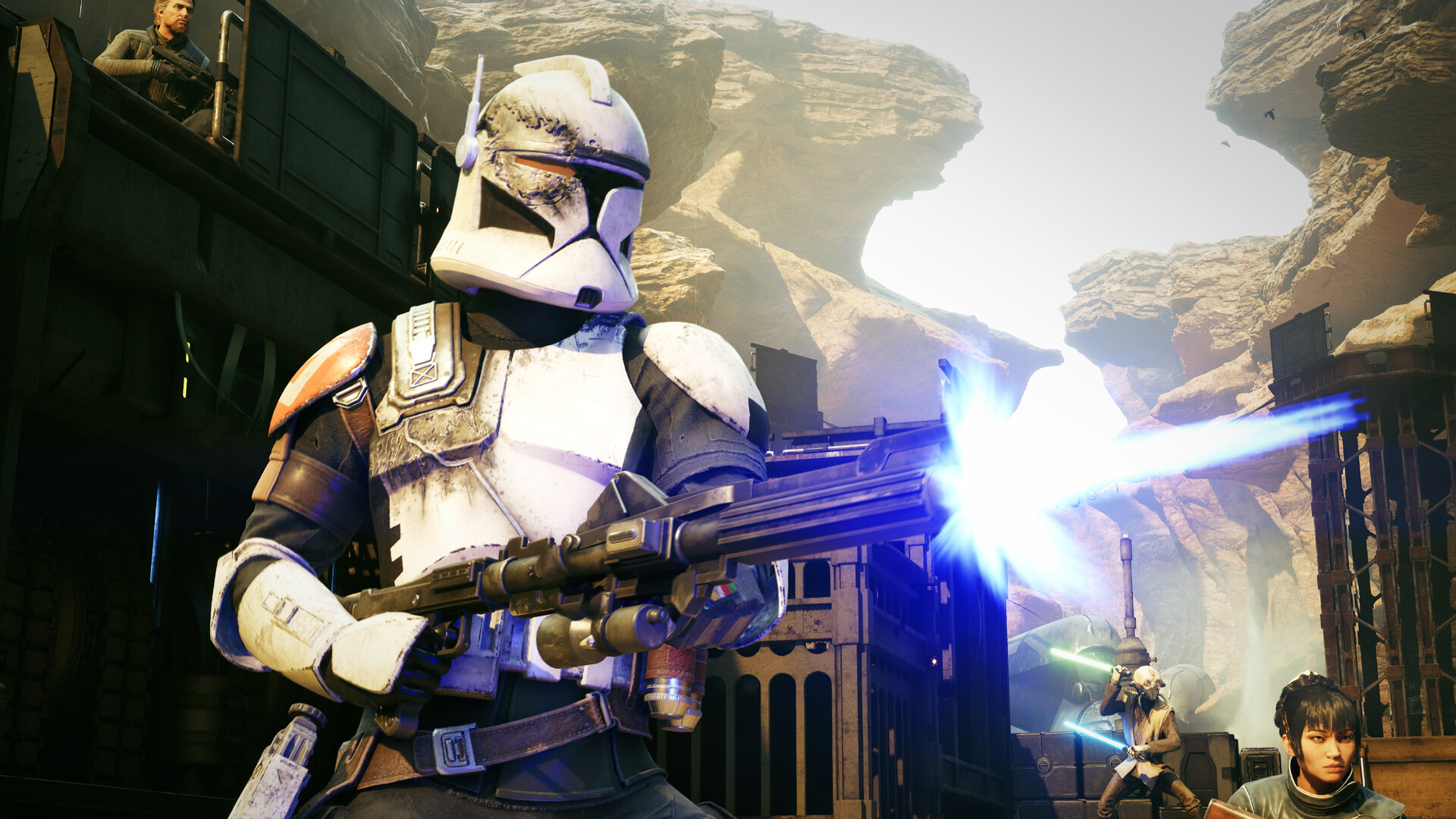
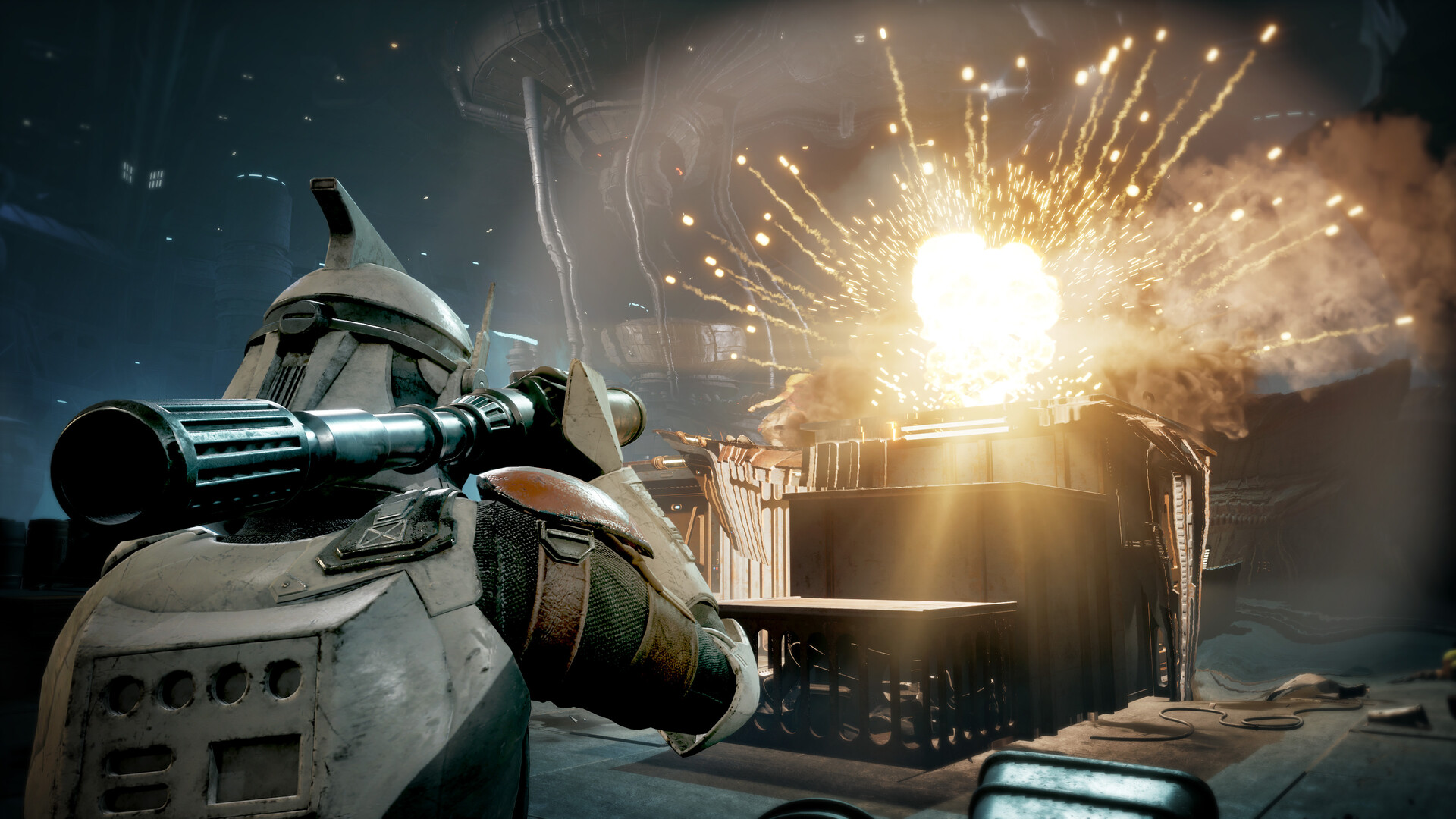
Once we pick an attack, the camera zooms in behind the shoulder of our character, giving the action a cinematic look. And every time an attack connects, it is insanely satisfying.
Blaster fire tears through the environment, sparks fly, armour gets battered and the enemy reacts before finally hitting the ground. The presentation makes even a fairly routine attack feel like something that deserves our attention.
But we’re not alone on the battlefield, and once one operator has finished their turn, we have to organize everyone else.
Cover is extremely important. Full and half cover can make the difference between surviving an enemy turn and watching one of our operators get injured. We often found ourselves resisting the temptation to simply attack whatever was in front of us. Instead, we’d move around, look for another angle, search for an opening and try to improve our chances before committing.
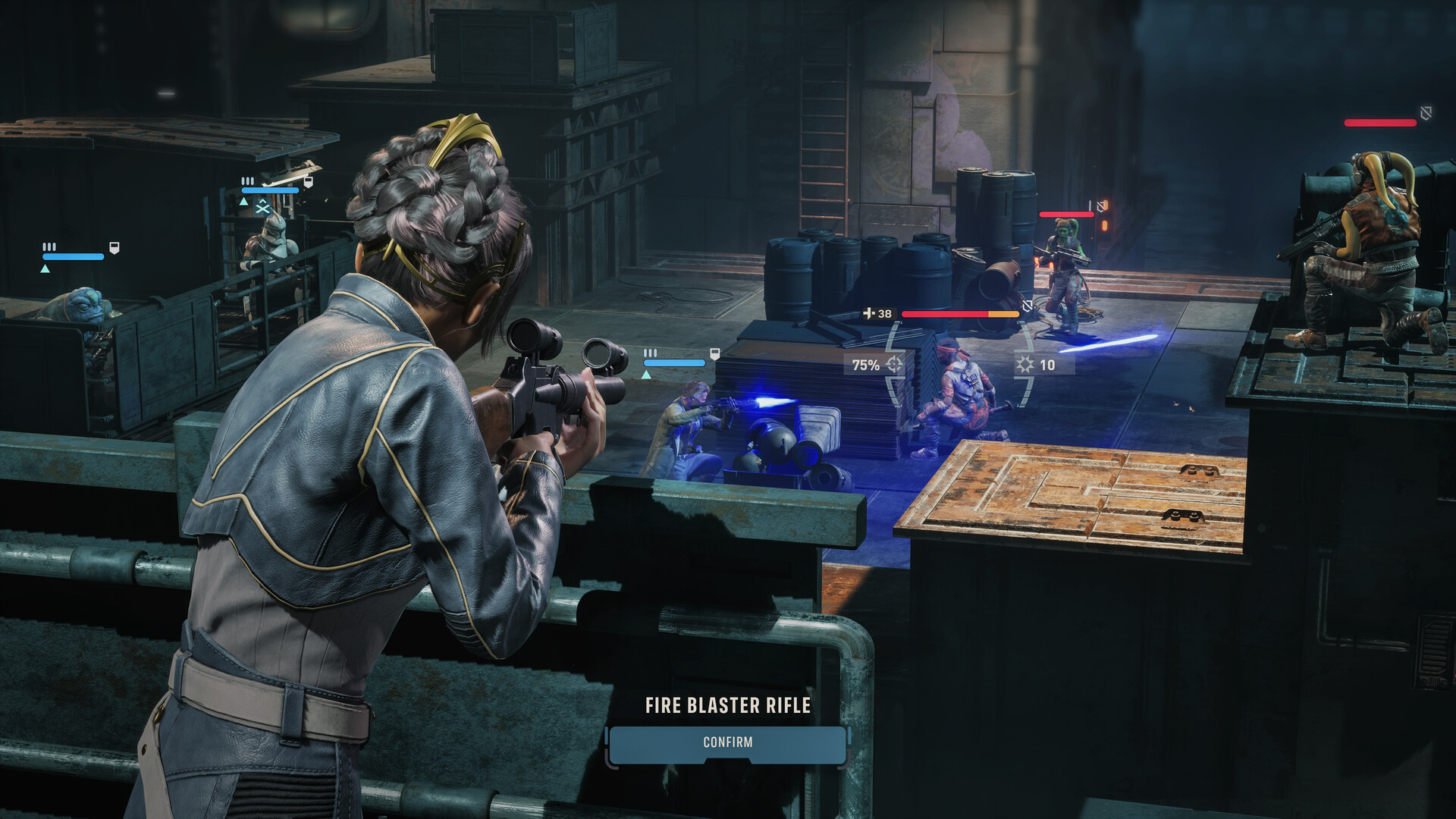
Overwatch is another important part of this equation. It lets an operator react when an enemy moves during their turn and can be incredibly useful for controlling an area. Of course, the enemy can use it too, and when an opposing unit goes into Overwatch, we have to think about how to break it before moving other members of the squad into danger.
One of the things we loved most was getting up close and personal after breaking an enemy’s Overwatch.
There is something wonderfully satisfying about rushing an exposed opponent and finishing them off at close range. Grenades are similarly enjoyable when several enemies are clustered together, especially when the resulting explosion destroys cover and leaves debris scattered across the battlefield.
Then there are Operator Activities, which allow two members of the squad to work together. Seeing one operator wound an enemy before another finishes the job never really got old. These moments are not only spectacular to watch but also contribute to the relationships between our operators. And that becomes important later.
Learning to care about our squad
Permadeath.
Every time an operator is downed, they suffer an injury. Three injuries can result in their death. The game recommends playing with this system enabled because it gives the battles considerably more weight. Sending somebody into a dangerous position means that we might lose that character. We liked that sense of danger.
It made us care more about our operators and forced us to improvise whenever somebody was in trouble. It also encouraged us to think beyond the current turn because an injured operator isn’t operating at full capacity and may need to spend time recovering in the Medbay.
At the same time, we understand that this isn’t going to be everyone’s idea of fun. Thankfully, Zero Company lets players disable permadeath and adjust the difficulty, even outside combat.
For us, though, keeping the system enabled made the campaign feel considerably more personal.
The battlefield is only half the game
Between missions, we return to the Den, our base of operations aboard a decommissioned cargo freighter. This is where we manage our people, prepare for upcoming missions and spend time with the rest of the crew.
The Personnel facility is where we spend Focus Points to improve our operators’ statistics and abilities. There is a lot of mechanical depth here, and after spending enough time developing the squad, we could feel the difference on the field.
Our operators became stronger, healthier and more capable. We could improve things such as ranged and melee damage, critical attacks, health and assistance abilities, among other upgrades.

As operators fight alongside one another and experience different situations together, their relationships develop. Eventually, they can teach each other passive abilities and unique tricks through cross-training.
We particularly enjoyed seeing two operators who had repeatedly fought together become more effective as a pair. It gave us another reason to keep certain combinations together rather than constantly picking the strongest available characters.
If two operators could benefit from backing each other up, we had an incentive to use those abilities more often because we knew that those shared experiences could eventually make the pair more effective.
It reminded us of what we loved about Marvel’s Midnight Suns. The people outside combat aren’t simply decorations between missions. They become part of why we care about going back into battle.

The numbers game
The Armory is where we manage our equipment, change weapon appearances, install modifications and equip utility items.
The modifications can improve specific statistics, while utility items give operators additional options during combat. It means there is plenty to consider before sending a team into a difficult mission.

Meet the Holotable.
This is arguably the most important object in the Den because it gives us an overview of the operations and tactical missions available during the current cycle.
And this is where Zero Company puts the most pressure on us.
Missions have limited availability. If we don’t complete them within their allotted time, they disappear. We can’t do everything and, because of that we have mixed feelings.
We understand why Bit Reactor designed the system this way. The Clone Wars are happening around us, the galaxy is constantly changing and Zero Company is supposed to be a group of people trying to keep up with events rather than magically solving every problem that appears.
It also reinforces the feeling that our decisions matter.
But we couldn’t help thinking that some players would appreciate an option to disable the time limits in the same way they can disable permadeath.
We didn’t mind the pressure too much because we’ve learned a long time ago to go with the flow and accept that we can’t see everything in a single playthrough. Still, having an outstanding debt that we needed to clear within nine cycles did wonders for our anxiety.
Every cycle that passed felt like another nail in the coffin. We wouldn’t have it any other way, though. Well, perhaps knowing there’s a toggle could have helped.
Operations, investigations and choices
We briefly mentioned Operations earlier, but they deserve more attention.
These are shorter assignments where there is no traditional tactical battle. Instead, the focus is on gathering information, making decisions and determining how an investigation should proceed.
They are handled differently from the main combat missions, with much of the action taking place through screens and choices rather than direct control.
Even so, these moments help us learn more about the galaxy and provide opportunities to influence what happens.
At certain points, we’re forced to make decisions that can have consequences later. One example involves deciding what happens to a person we’re investigating, with different choices affecting our influence in particular areas.
These sequences aren’t as immediately exciting as the battles, but they help break up the constant tactical combat and give the campaign another layer.
The enemies aren’t waiting around
Opposing forces have their own offensive and defensive abilities, and the difficulty increases considerably once stronger opponents enter the battlefield. Some enemies force us to reconsider the tactics that worked against weaker opponents, while tougher encounters require us to make better use of Advantage and our more powerful abilities.
This creates a nice little dance during combat.
We damage enemies to build Advantage, then decide whether to spend it immediately or continue building toward something more powerful. Sometimes we wanted to unleash a devastating ability immediately. Other times, holding onto that resource and waiting for the right moment made much more sense.
Battles that look fantastic
Zero Company is also an extremely good-looking game. Dust and debris are everywhere. Wind moves through vegetation and lighter objects, while blaster fire cuts across the battlefield. When something gets hit, you see the reaction. The environments react.
Cover gets damaged, pieces break away and eventually some objects can be reduced to little more than scattered debris. That means missing an enemy isn’t necessarily meaningless either. We might destroy the cover we were planning to use later.
Rain pours down over the battlefield, disturbing puddles, while heat rising from surfaces adds another layer of life to the environments.
The maps don’t feel like sterile tactical arenas.
We’ll see abandoned stands, cafés and other environmental details that suggest these were functioning places before our squad arrived and started turning everything into a war zone. Hazards can also be used to our advantage, creating some spectacular moments when the environment gets caught in the middle of a firefight.
Walking through the aftermath of a battle is almost as enjoyable as fighting it.
Once the shooting stops and we return to third-person exploration, we can see the destruction we’ve caused. Burned and damaged objects, scattered debris and fallen enemies provide a very different view of what just happened.

Exploring between battles
Outside combat, the camera moves into third person and gives us direct control of Hawks. We can explore the environments, investigate locations and look for information that can help us understand the Clone Wars and the wider conflict.
There is a rhythm to the campaign: explore, investigate, prepare the squad, make decisions, fight, deal with the consequences and then return to the Den. That rhythm works particularly well because the story and gameplay constantly feed into each other.
A Star Wars story we actually cared about
The story is well written, and the dialogue is convincingly acted, making us care about the characters and the worlds they explore.
There is a good balance between battles and narrative exposition, which helped us become immersed in the universe instead of feeling like we were simply moving from one combat encounter to another.
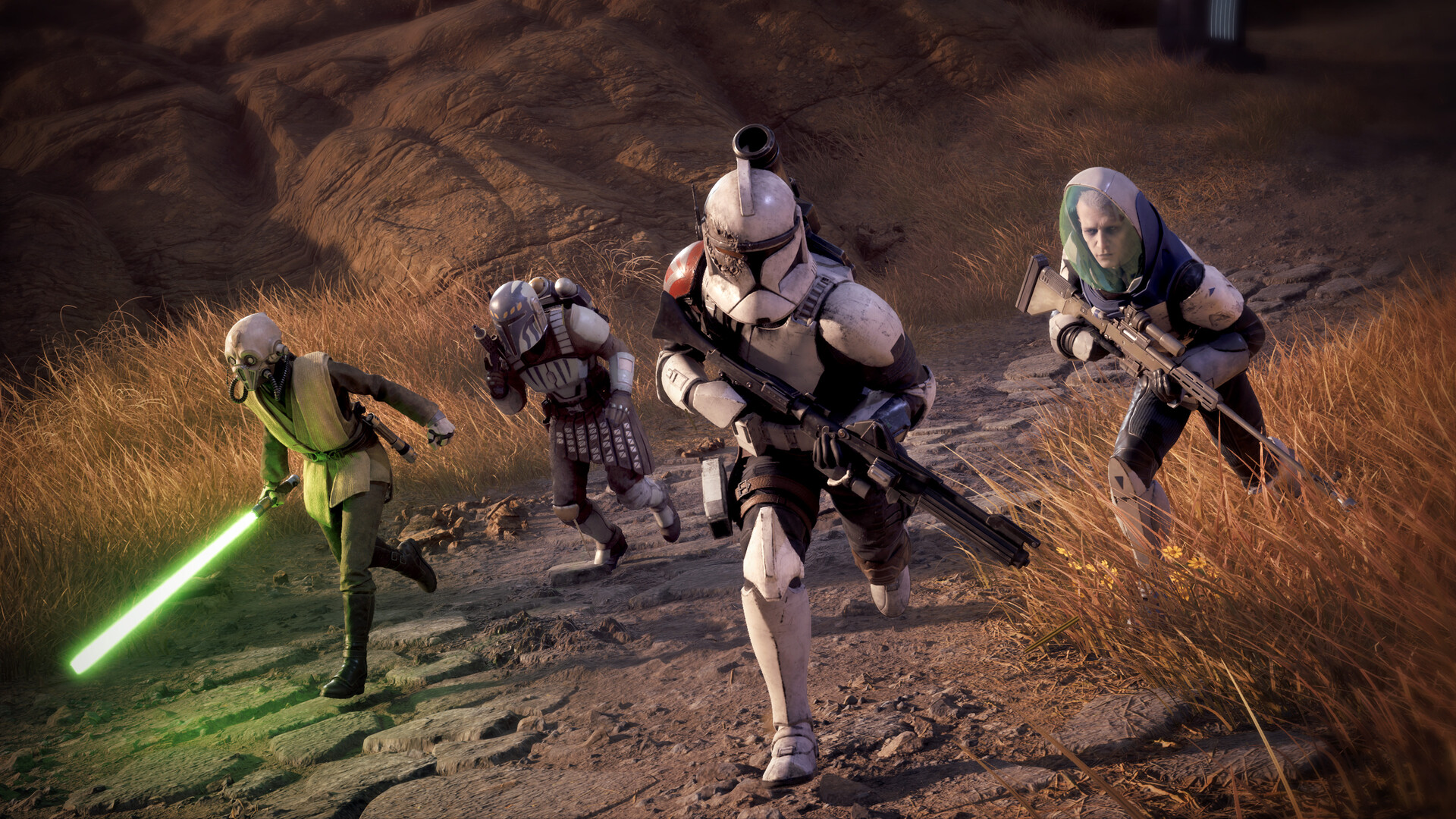
While we’re preparing missions at the Holotable, the operators will often comment on what we’re doing. Their conversations can be witty and downright hilarious, and these small interactions help make the Den feel like a place where an actual group of people lives and works.
Zero Company is at its best when we start thinking of these operators as individuals rather than collections of statistics. The bonds we build, the injuries they suffer, the upgrades we give them and the missions they survive all become part of their story.
And when somebody dies, we remember that person.
That is where the XCOM influence works particularly well. Zero Company understands that the most memorable stories often aren’t the ones the writers specifically created. They’re the stories that emerge from the systems.
A few rough edges
We occasionally encountered moments when an automatically triggered action, such as Overwatch, caused the camera to get stuck behind a wall and prevented us from properly seeing the attack. This happened rarely and usually lasted only a second, so it never became a serious problem for us.
There are also moments when the time pressure can feel more restrictive than exciting, especially when we know there are missions we’d like to experience but simply don’t have enough time to tackle everything.
Again – relatively small complaints compared to how well the different systems fit together.
A Star Wars game worth remembering
Star Wars has had plenty of excellent games over the years, but we’ve been waiting for something like Zero Company for a long time.
We’ve always thought the universe was perfectly suited to tactical gameplay. There are countless species, factions, droids, Jedi, soldiers, mercenaries and criminals that can be thrown into the same battle. The Clone Wars provide an excellent setting since the conflict is large enough to justify massive battles. And yet, it’s perfectly flexible to leave room for smaller groups of people trying to survive between the major events.
Zero Company makes excellent use of that opportunity.
It gives us the tactical combat we loved in XCOM, the character relationships that made Marvel’s Midnight Suns so special to us, and a Star Wars setting that finally feels like it belongs to a strategy RPG rather than simply having Star Wars characters placed on top of another game’s mechanics.
The customization is excellent, the combat is satisfying, the destruction makes every battlefield feel alive, and the systems surrounding the missions give us plenty to think about when we’re not fighting.
More importantly, we cared.
We cared when an operator was injured. We cared when two members of the squad became close. We cared when we had to choose which mission to tackle. We cared about the people waiting for us back at the Den.
And when a game manages to make us care about a bunch of custom-created operators enough that we start worrying about whether they will make it through the next mission, we know Bit Reactor has done something right.
Star Wars Zero Company doesn’t simply put XCOM mechanics into a galaxy far, far away.
It gives those mechanics a place where they make perfect sense.
And we absolutely loved every minute of it. It’s why we give Zero Company –


Leave a Reply