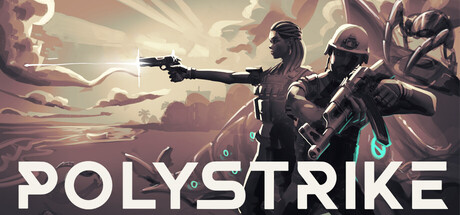
POLYSTRIKE began as a simple experiment: what would a tactical first-person shooter look like from an overhead perspective? That question turned into a viral Dota 2 mod played by over 200,000 people. Today, the project is being rebuilt from scratch as a standalone 5v5 competitive title in Unreal Engine 5.
The founder of Robin Entertainment was more than willing to join us for a chat and to explain the challenges of translating a first-person shooter to a top-down perspective, parting ways with familiar assets, and developing a competitive multiplayer game during wartime.
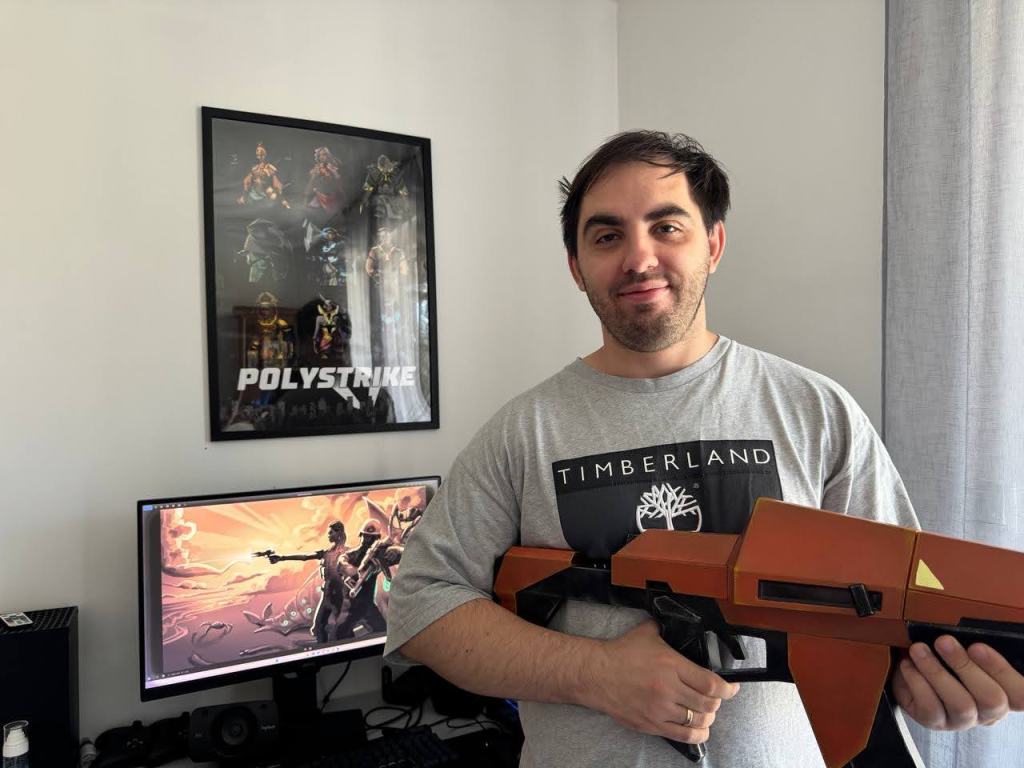
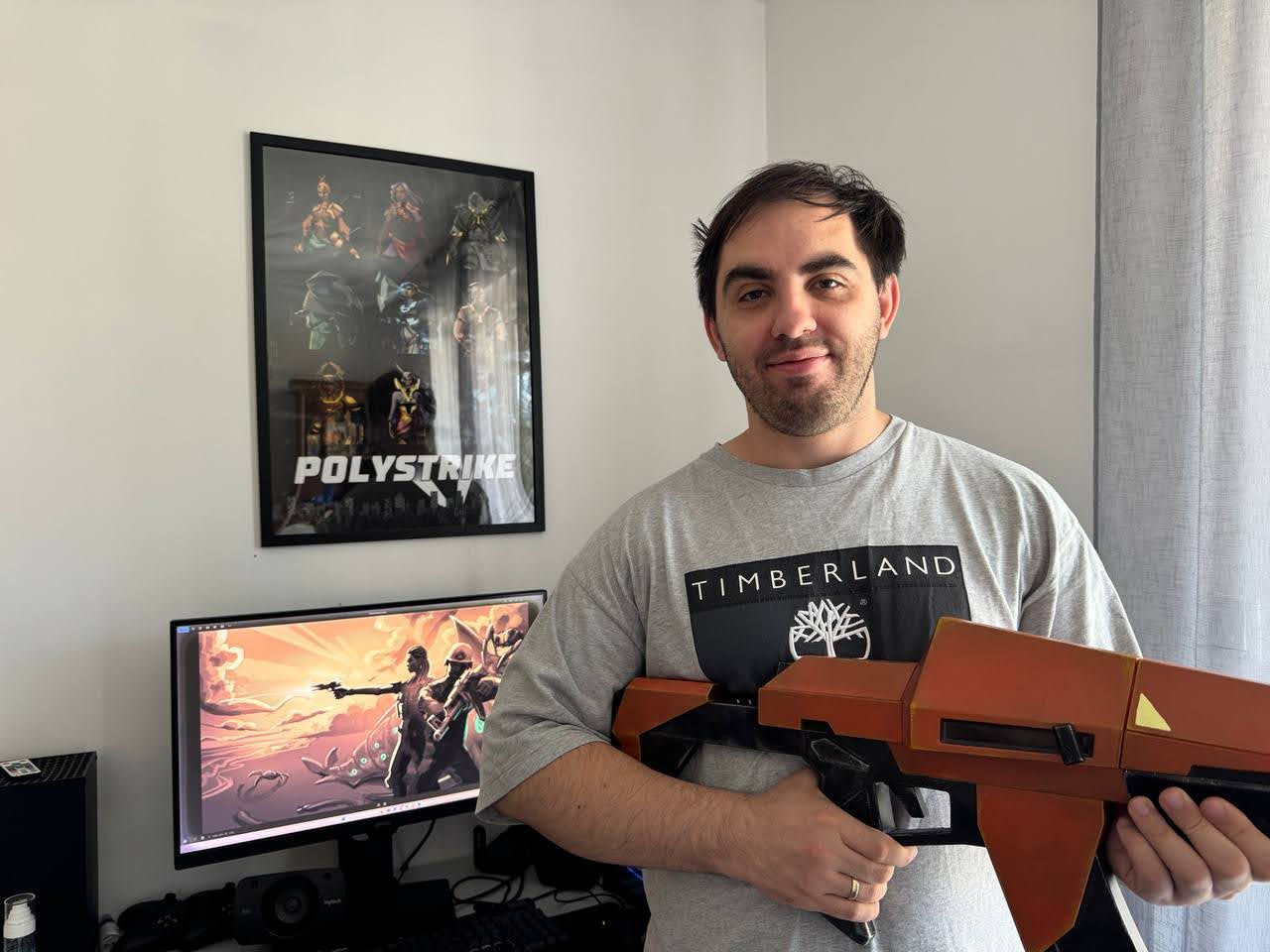
“Hi, I’m creator and founder of Robin Entertainment. The company was named after my cat, Robin. He came into my life when I was six years old and was with me throughout my entire childhood, school, university, and the beginning of my adult life. He was an incredibly important part of my life and stayed by my side for 19 years. So when it came time to choose a name for the studio, Robin Entertainment felt like the most personal and natural choice.
My role on the project: Game and Art Director, also I’m doing Level Design.” – Mark Mocherad
Leaving the Workshop Behind
Moving from a popular Dota 2 mod to a standalone game meant abandoning a massive existing player base and an established platform. However, the constraints of developing inside another company’s ecosystem eventually forced a change.
“I started POLYSTRIKE with a very simple question: would people actually be interested in playing something like Counter-Strike from a top-down perspective? It was an experiment, a way for us to test whether the core idea could work and whether players would find it exciting.
When the mod version attracted more than 200,000 players, we got our answer. But what people played back then wasn’t even 5% of what I imagined POLYSTRIKE could eventually become.
The problem was that the original foundation was built as an experiment inside Dota 2, not as an independent competitive game that we could develop and support for years. The Dota 2 Workshop heavily limited what I could do, and major updates to Dota 2 could suddenly break parts of the mod. We were building our game inside someone else’s game, which meant we would never have full control over its future.
At that point, the decision became obvious: if POLYSTRIKE was going to become the game I had envisioned, we needed to move somewhere where those limitations didn’t exist and where we could be completely independent.
The original POLYSTRIKE proved that the idea worked. Rebuilding it from scratch was about finally giving that idea the freedom to become a real game of its own.”
That early success provided the momentum to push forward, but it also created expectations. The team had to figure out how to iterate on a game that hundreds of thousands of people already knew.
“The early success definitely gave us confidence, but we never wanted to become trapped by it. Those 200,000 players proved that people were interested in the core idea of a competitive top-down tactical shooter — not that every decision we made in the original version was the right one.
So we tried to separate the idea people loved from the prototype they remembered. We kept the core: 5v5 tactical gameplay, positioning, information, teamwork and precise gunplay. But we gave ourselves the freedom to rethink almost everything around it.
The original POLYSTRIKE was an experiment. The new POLYSTRIKE has to be a game we can keep developing for many years. Sometimes that means letting go of something familiar in order to build something better for the future.”
Breaking away from the mod scene also meant dealing with the reality of using another company’s intellectual property. Valve eventually reached out regarding the use of iconic Counter-Strike assets.
“There were both legal and creative reasons behind that decision.
At one point, Valve reached out to me directly and explained that POLYSTRIKE essentially had two possible paths. We could continue making what they described as a “top-down Counter-Strike,” using elements of their intellectual property such as recognizable maps, characters and artwork, but the project would have to remain non-commercial. Or we could go our own way, remove the Counter-Strike IP and build POLYSTRIKE as a completely original game that we would be free to commercialize.
I chose the second path. I thanked Valve and decided that independence and creative freedom were much more important for the future of POLYSTRIKE.
That meant leaving behind things players already knew and loved, such as Dust II, familiar weapons and their iconic sounds, as well as several mechanics. Instead of recreating them, we began developing our own maps, factions, weapons, objectives, world and identity. Some familiar mechanics, such as crouching or jumping, will most likely not be part of the new POLYSTRIKE either.
It was difficult to leave recognizable elements behind, but ultimately it forced us to answer a much more important question: what is POLYSTRIKE when it no longer needs to be Counter-Strike from above?
What I also really appreciated was that the message from Valve wasn’t simply about IP restrictions. The person who contacted me ended the email by saying that, as a fan of Hotline Miami, they were personally looking forward to trying POLYSTRIKE. That meant a lot to me, especially at such an early stage of the project.
We have a lot of respect for Valve and still keep that door open. If they ever decide to explore their own top-down Counter-Strike experience, we’d certainly be interested in talking. After all these years, our team has accumulated a great deal of experience specifically in designing competitive top-down shooter gameplay.”
Solving the Top-Down Tactical Problem
Translating a first-person shooter to a top-down camera creates immediate design problems. Mechanics that work naturally from a first-person view require total overhauls when viewed from above.
“One of the hardest things to translate was sound. In Counter-Strike, footsteps and gunfire are crucial sources of information, while Dota 2 wasn’t designed around sound playing such an important tactical role, which made it difficult to recreate.
Gunplay was another major challenge. From a top-down perspective, we couldn’t simply copy FPS shooting. We had to rethink aiming, accuracy, recoil and movement to make shooting feel precise and competitive from above.”
In traditional tactical shooters, tension relies on restricted information—not knowing what is waiting around the next corner. An overhead camera naturally gives players too much information, a hurdle the team had to address without making the game feel restrictive.
“This was one of the fundamental problems we had to solve. If the top-down camera simply allowed you to see every enemy around a corner, much of the tension of a tactical shooter would disappear.
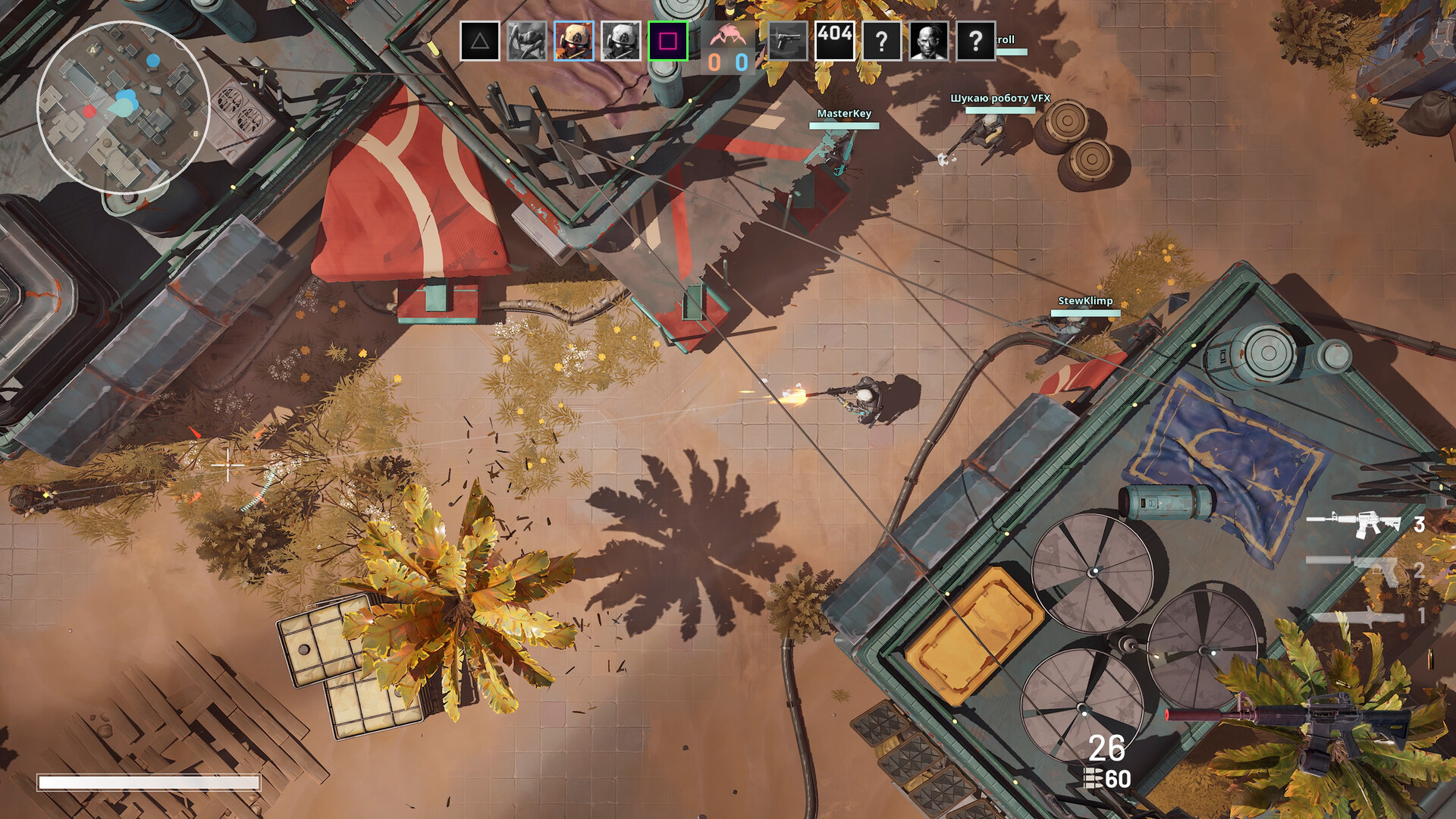
Our solution is a fairly complex personal vision system. You only see what your own character can see you don’t automatically see what your teammates see, and you can’t see enemies behind you.
Your vision also changes depending on where you’re aiming. If you focus your aim farther into the distance, your peripheral vision becomes narrower, creating a trade-off between seeing farther ahead and maintaining awareness of what’s happening around you.
Sound then becomes another important source of information about things outside your vision.
It’s a complex system, but it works surprisingly naturally in practice. I personally haven’t seen another top-down game handle vision quite this way, and I think it has become one of the mechanics that gives POLYSTRIKE its own identity.”
Building an original game allowed the team to design objectives specifically for their new perspective, rather than copying traditional bomb defusal formats. This led to concepts like the Iron Fish.
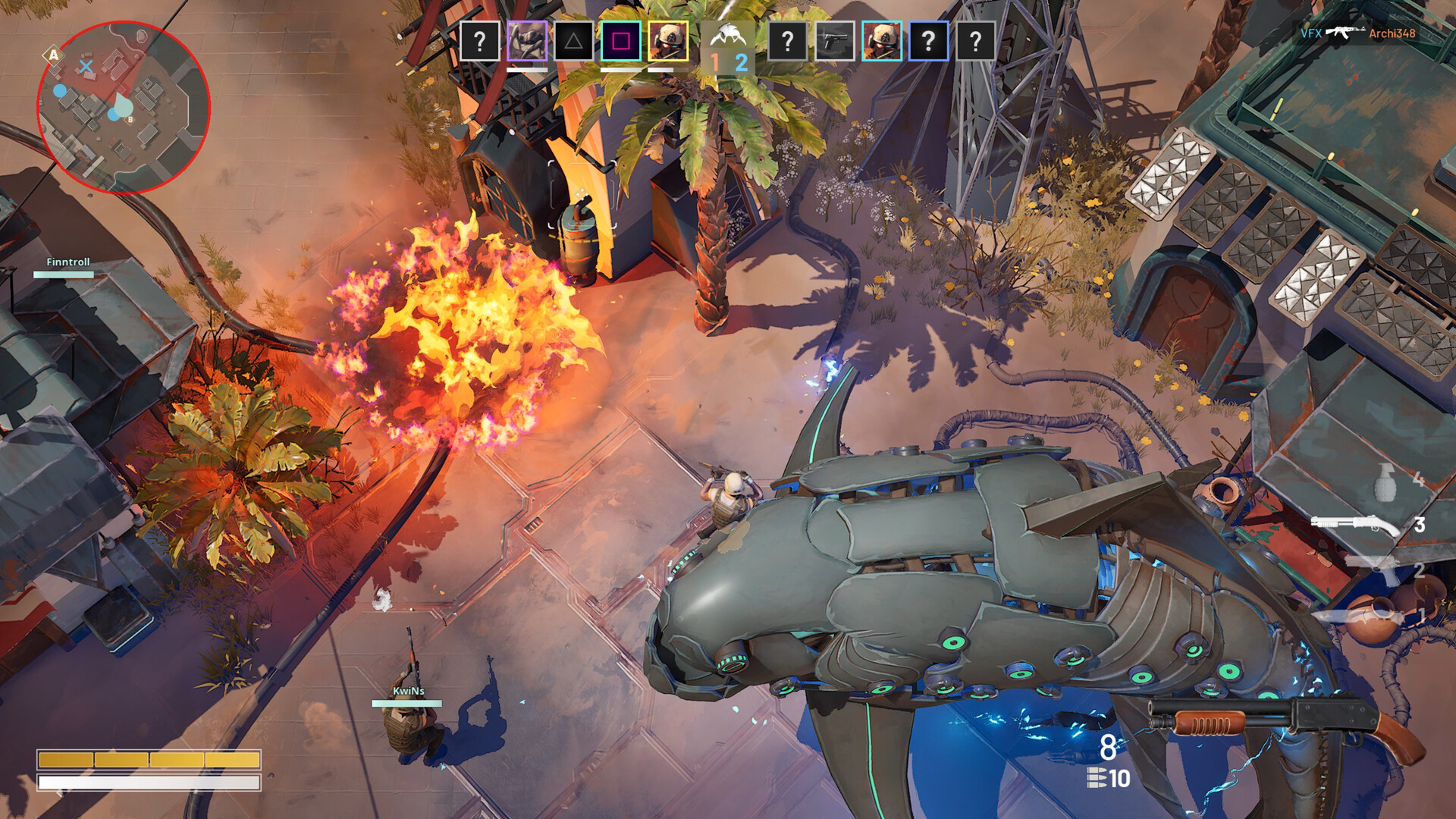
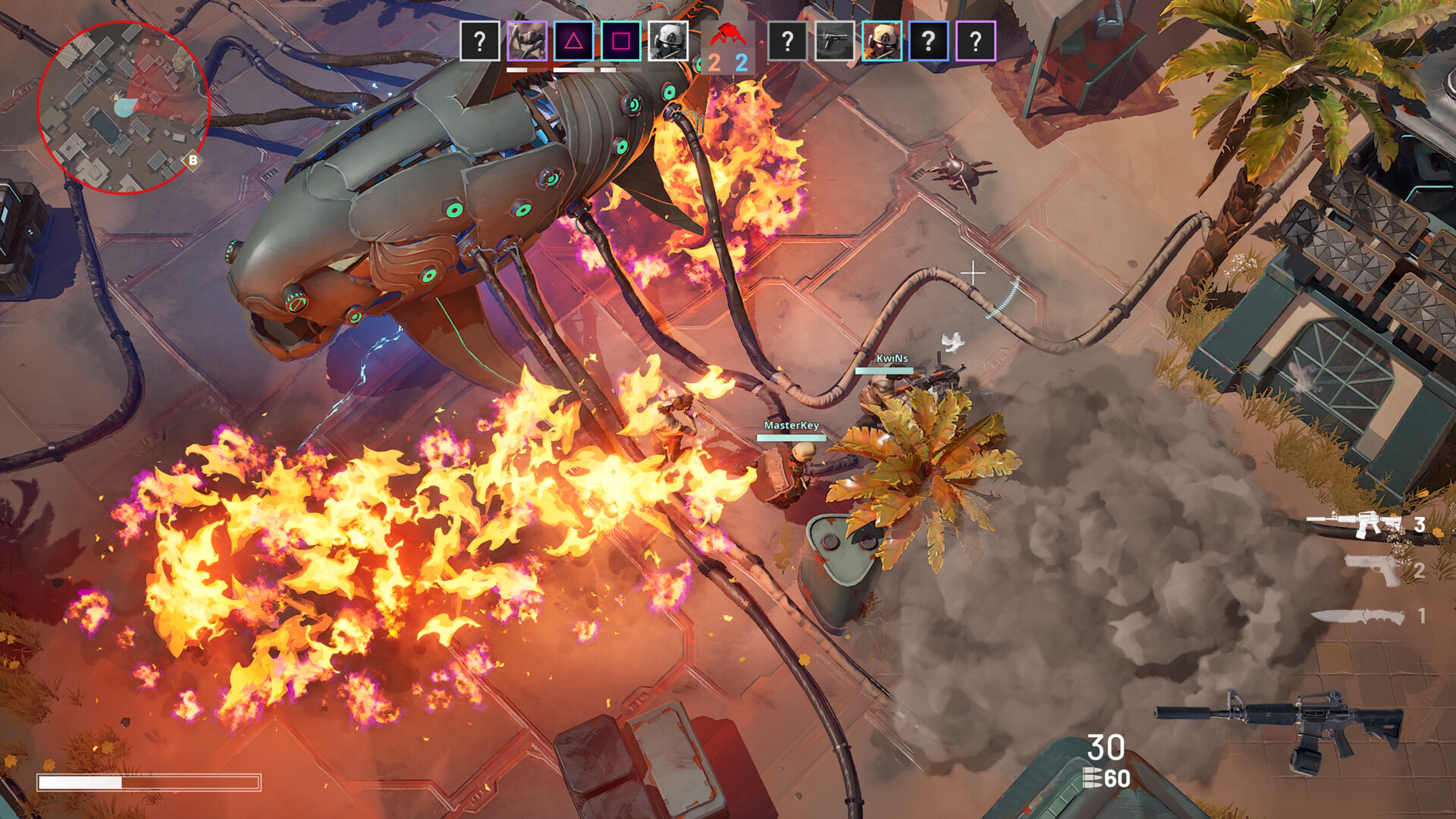
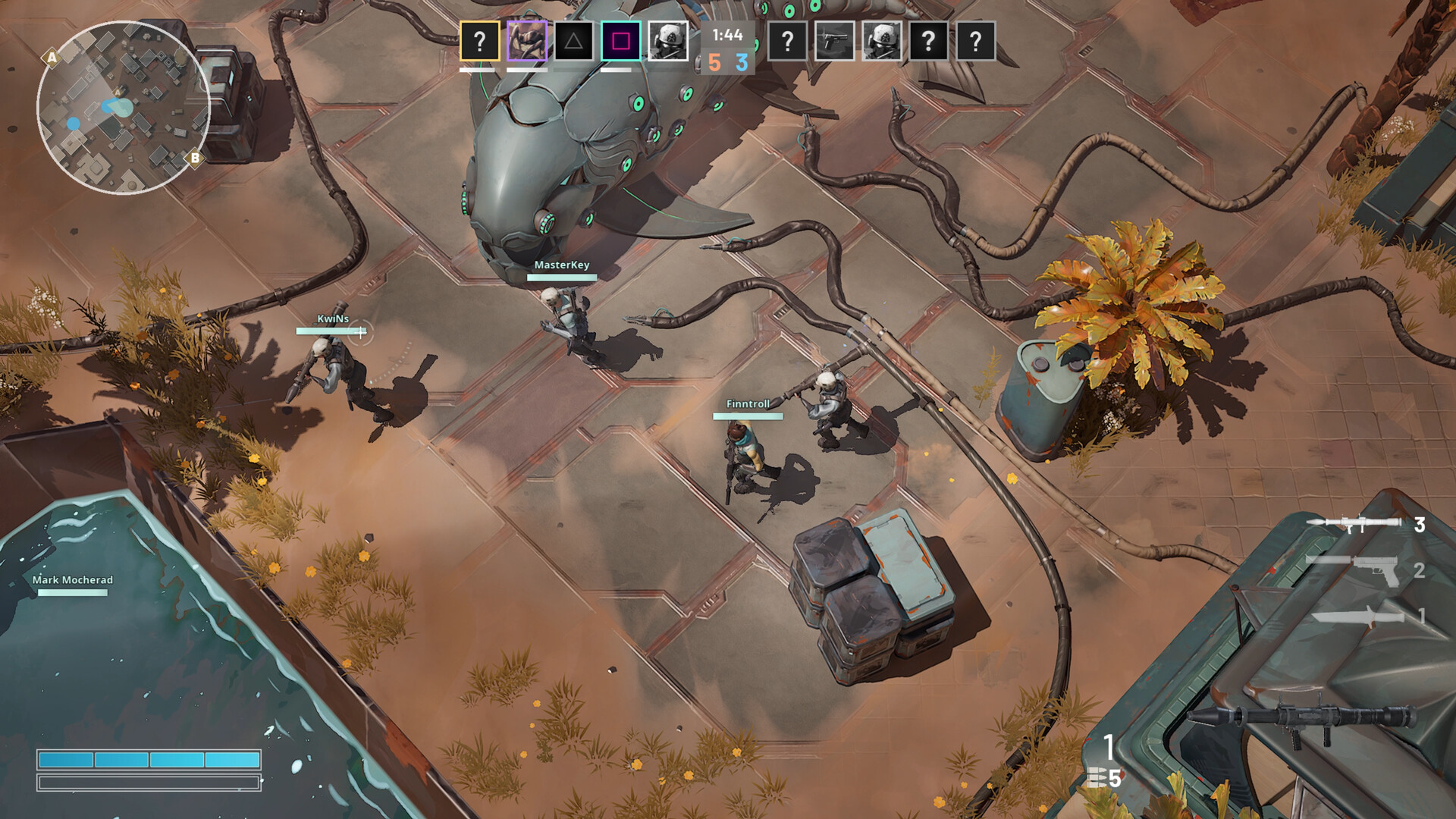
“The Iron Fish is really about taking advantage of the top-down perspective. In an FPS, a large moving objective like this could easily block a significant part of the player’s view. From above, you can see the entire Fish, understand its position and clearly read what it’s doing.
Instead of making the objective just a static point on the map, we wanted it to feel like part of the battlefield. The Fish can move, circle around, hit players and slow their movement.
For us, it’s a good example of what POLYSTRIKE can do differently using the advantages of the top-down camera to create mechanics that would be much harder to make work in a traditional FPS.”
Development During Wartime
Robin Entertainment is largely based in Ukraine. Since the full-scale Russian invasion, the team has had to develop the game under extreme conditions, fundamentally changing how they operate and manage their time.
“The war completely changed the way we think about development and deadlines. We have had team members leave development to defend Ukraine, while others have had to work through air raids, power outages and periods when simply being able to work normally was impossible.
Because of that, we learned to be extremely flexible. A deadline can always be moved; the safety and lives of our team cannot. We stopped building plans around the assumption that everyone would always be available and instead learned to adapt constantly, redistribute work and help each other when someone couldn’t continue.
At the same time, we never seriously considered giving up on POLYSTRIKE. If anything, these years made us more determined to finish it. We want to show that Ukrainian developers can create not only great single-player games, but also ambitious competitive multiplayer games that can reach players around the world.”
After seven years of work, engine changes, and pivoting from a mod to an original property, the journey has reshaped the studio’s broader approach to game development.
“POLYSTRIKE taught me that you shouldn’t hold on to a specific implementation — you should hold on to a strong idea. If the idea works, preserve it, but don’t be afraid to rebuild everything around it.
Over seven years, POLYSTRIKE has changed many times, and the biggest lesson I’ve learned is that sometimes you have to let go of years of work to give the project a chance to become something better.”
The team at Robin Entertainment is currently focused on bringing this new, independent iteration of the game to life. To follow their progress, join community discussions, and get the latest development updates, you can follow them on X at @POLYSTRIKE and join the community at Reddit.com/r/POLYSTRIKE.
[…] into another form can expose qualities that were invisible before. The same problem appears when POLYSTRIKE rebuilds tactical FPS ideas from a top-down perspective: once the camera changes, information, aiming and even sound have to be reconsidered. The identity […]







Leave a Reply