

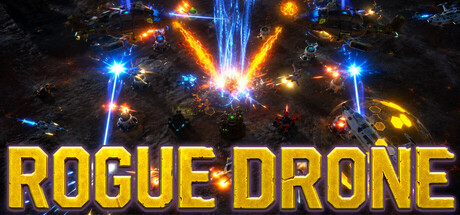
Kornelius Briedis is developing Rogue Drone, a game that combines active resource gathering, base-building automation, and tower defense. Merging these genres often leads to complex, clashing mechanics. In Rogue Drone, players mine crystals during the day and manage a shared power grid to survive automated enemy raids at night.
We spoke with Briedis about how his team approached active mining, balanced a demanding power economy, and learned to cut features that didn’t serve the core loop.
Active Mining and Time Pressure
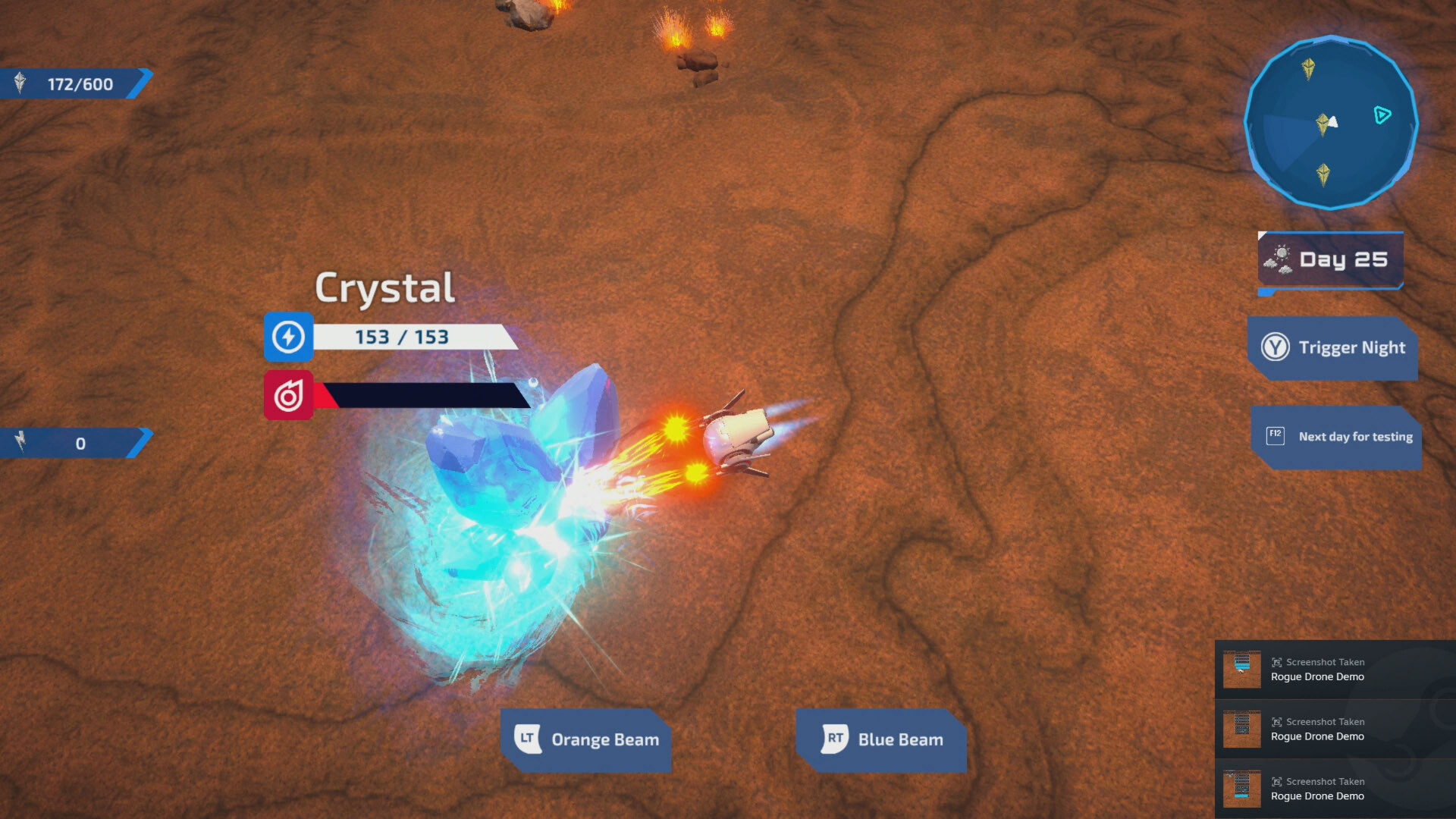
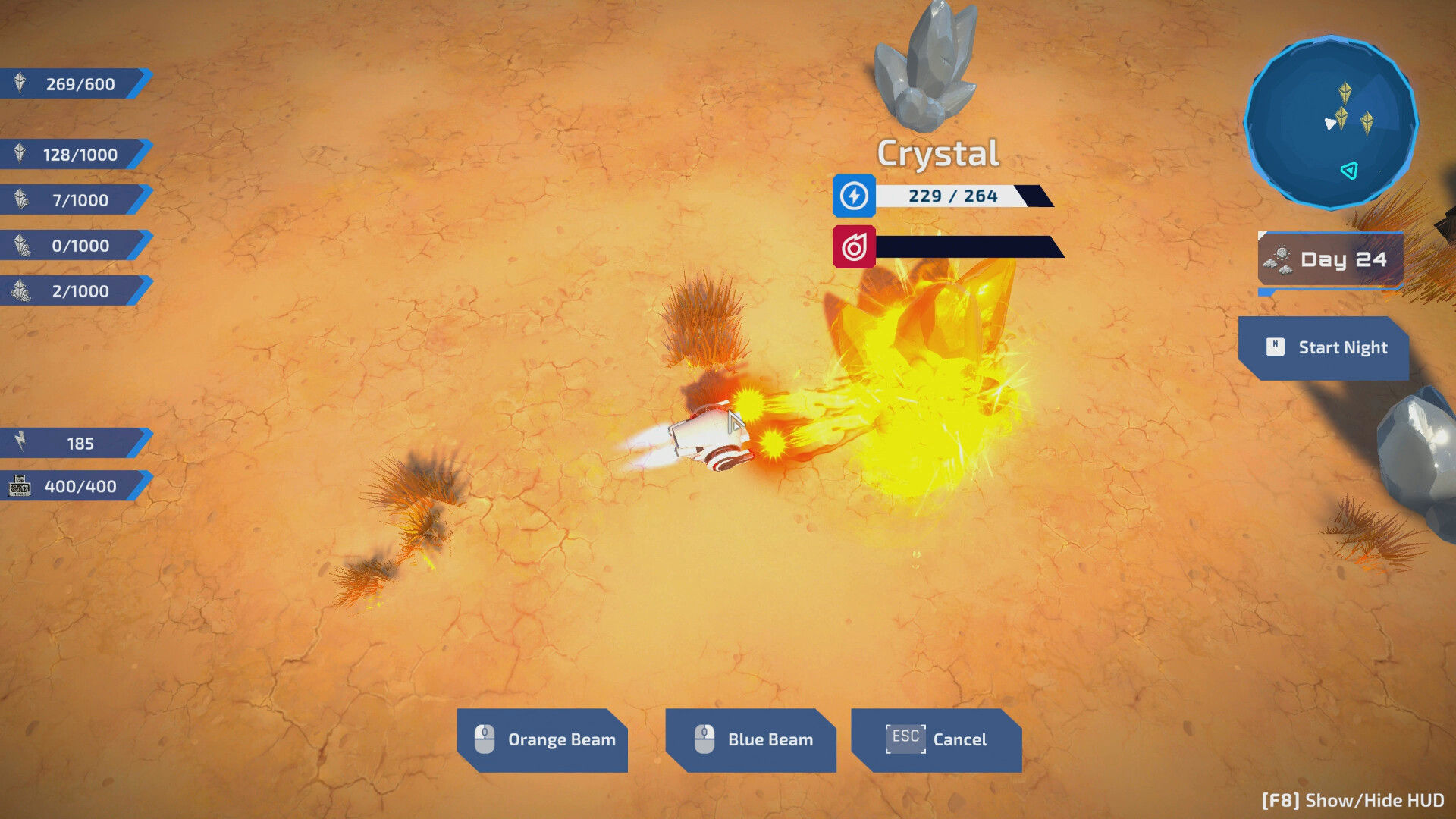
Instead of using passive resource nodes, Rogue Drone asks players to manage a real-time beam-matching system to mine crystals. Pushing the equipment speeds up the process but risks overheating and destroying the yield.
“The main reason was that we wanted mining to feel like an actual activity rather than simply waiting for a resource counter to increase.
Another important goal was creating a game that could help players enter a focused, almost meditative state. I wanted to recreate that feeling of getting absorbed in a long-term progression game, where your attention is fully occupied and everyday distractions fade away. The mining system was designed to require just enough attention and interaction to keep the player engaged, without becoming stressful or exhausting. Whether it fully achieves that depends on each player, but that feeling of focused immersion was one of the main ideas behind the game.”
Briedis notes that keeping players connected to the game’s primary resource was essential for the game’s foundation.
“Many strategy and base-building games treat resource gathering as something that happens in the background. The player makes a decision, waits, and eventually receives resources. While that works well for many games, we wanted the player to stay connected with the most important resource in Rogue Drone: crystals.
Mining is the foundation of everything else in the game. Crystals are used for construction, upgrades, and progression, so we wanted the player to have direct control over how efficiently they gather them.”
This mechanic ties directly into the game’s day-night cycle and the preparation phase.
“The beam matching system creates a risk-versus-reward decision. Mining safely gives consistent results, but players who understand the system can push their equipment further. Overheating a crystal can increase the potential yield, but it also creates danger because losing control can destroy the opportunity completely.
The Time Pressure mode expanded this idea even further. The better you mine, the longer your preparation phase can become. Successful mining extends your available day time, while overheating reduces efficiency and can shorten the time you have before night arrives.
This creates a direct connection between player skill and survival. Better mining does not only mean more resources. It means more time to prepare your defenses.
We wanted the player to feel like they are personally operating a mining drone on an alien world, not just managing numbers on a screen.”
The Power Grid and Economy
When night falls, players rely on automated defenses. A common issue in survival base-builders is the urge for players to halt their economic expansion completely just to survive the next immediate wave.
“The biggest challenge was creating meaningful choices without making any single strategy obviously correct.
A player might think: ‘Why not simply stop building my economy and convert everything into defense?’
The problem is that surviving one night is not enough. Rogue Drone is about building a sustainable operation over multiple cycles.
During the day, players need to decide how to divide their resources between expansion, power generation, defensive preparation, and future upgrades.”
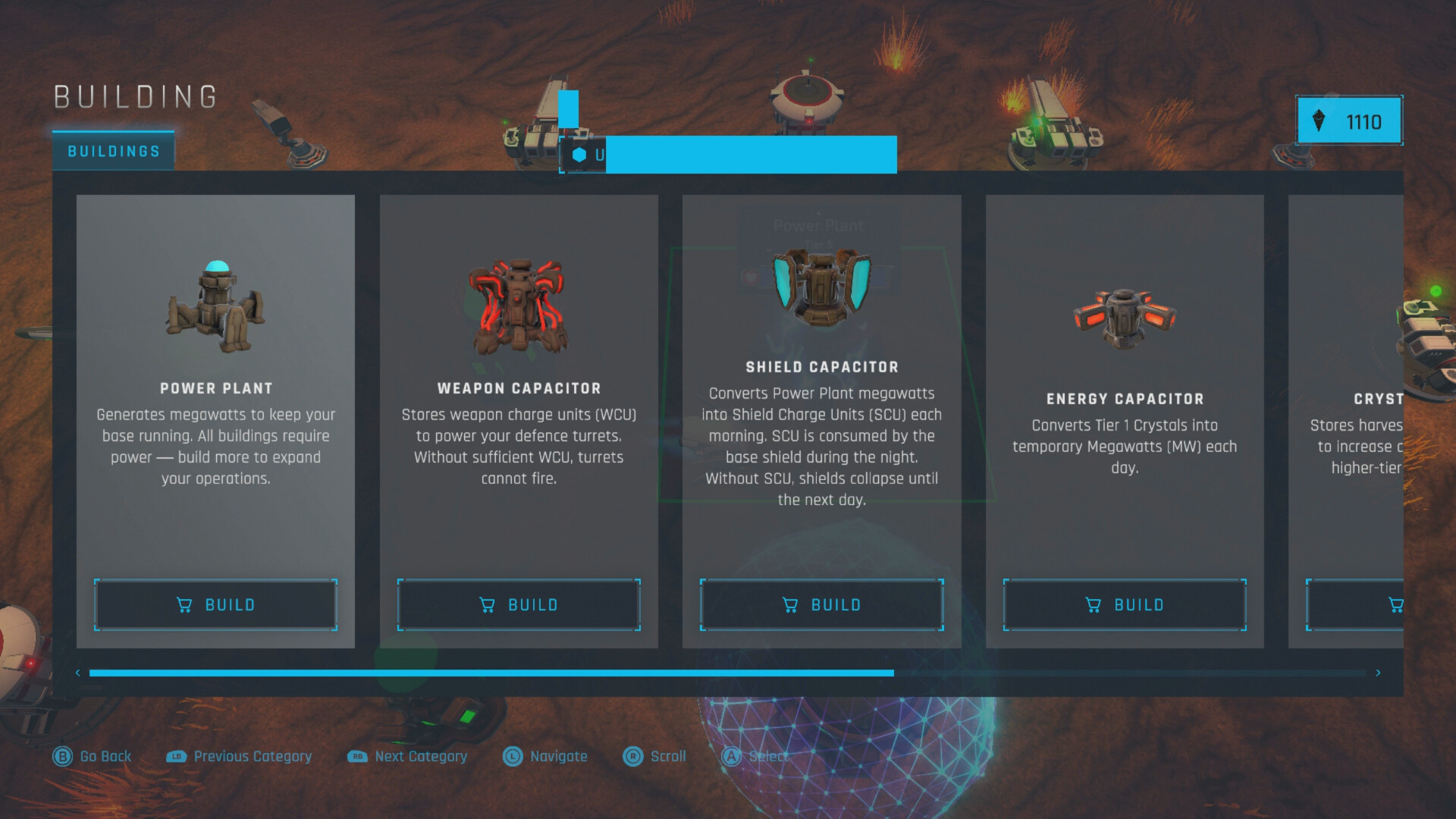
Survival relies heavily on how players route their energy through the base’s infrastructure.
“The power system creates these trade-offs. Weapon systems require WCU, shields require SCU, and both depend on the player’s energy infrastructure.
A player can prepare heavily for one night, but if they sacrifice their long-term economy, future nights become much harder.
We wanted defense to feel like an investment rather than a button that solves every problem. Turrets are powerful, but they depend on the player’s planning before the attack begins.
The result is that every night becomes a consequence of your previous day decisions.”

Players can also directly influence the difficulty of these attacks based on their daytime activities and greed.
“We also wanted players to have some influence over the intensity of future attacks. For example, beacons are protected objects that can provide valuable electronics when mined correctly using the right beam color. However, leaving them active has consequences, as they continue broadcasting signals that attract stronger enemy forces during the night. This creates another strategic choice.”
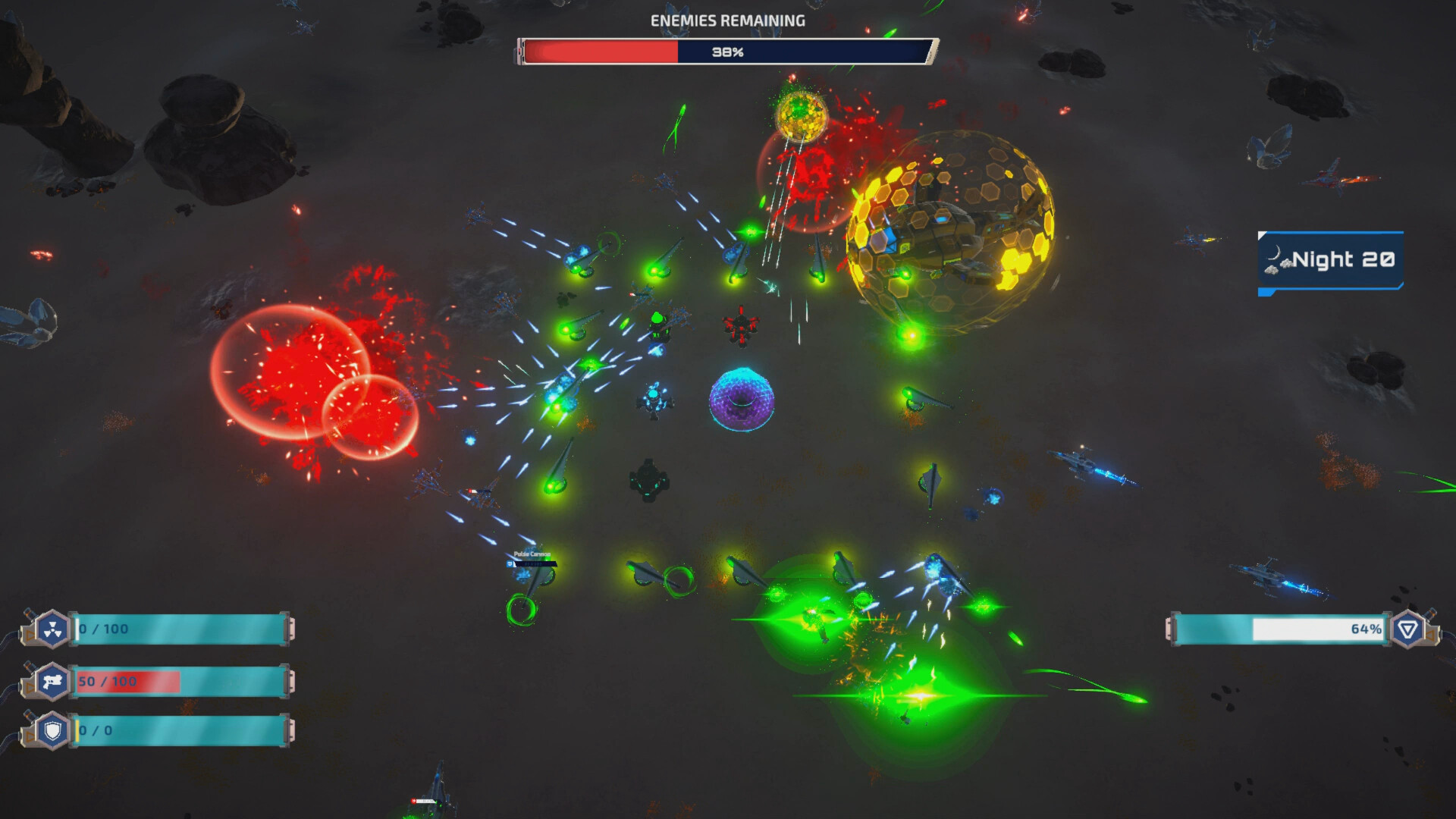
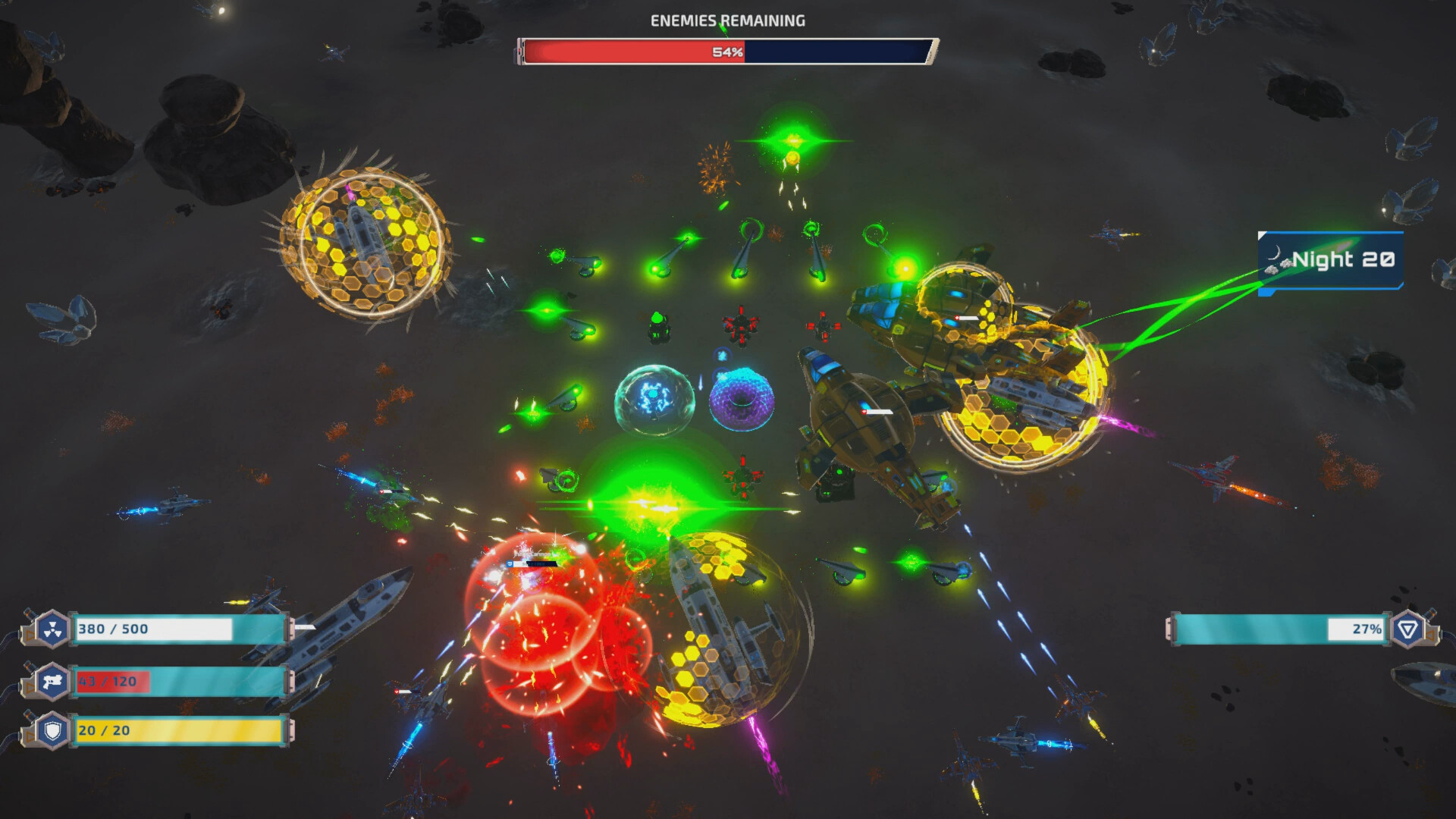
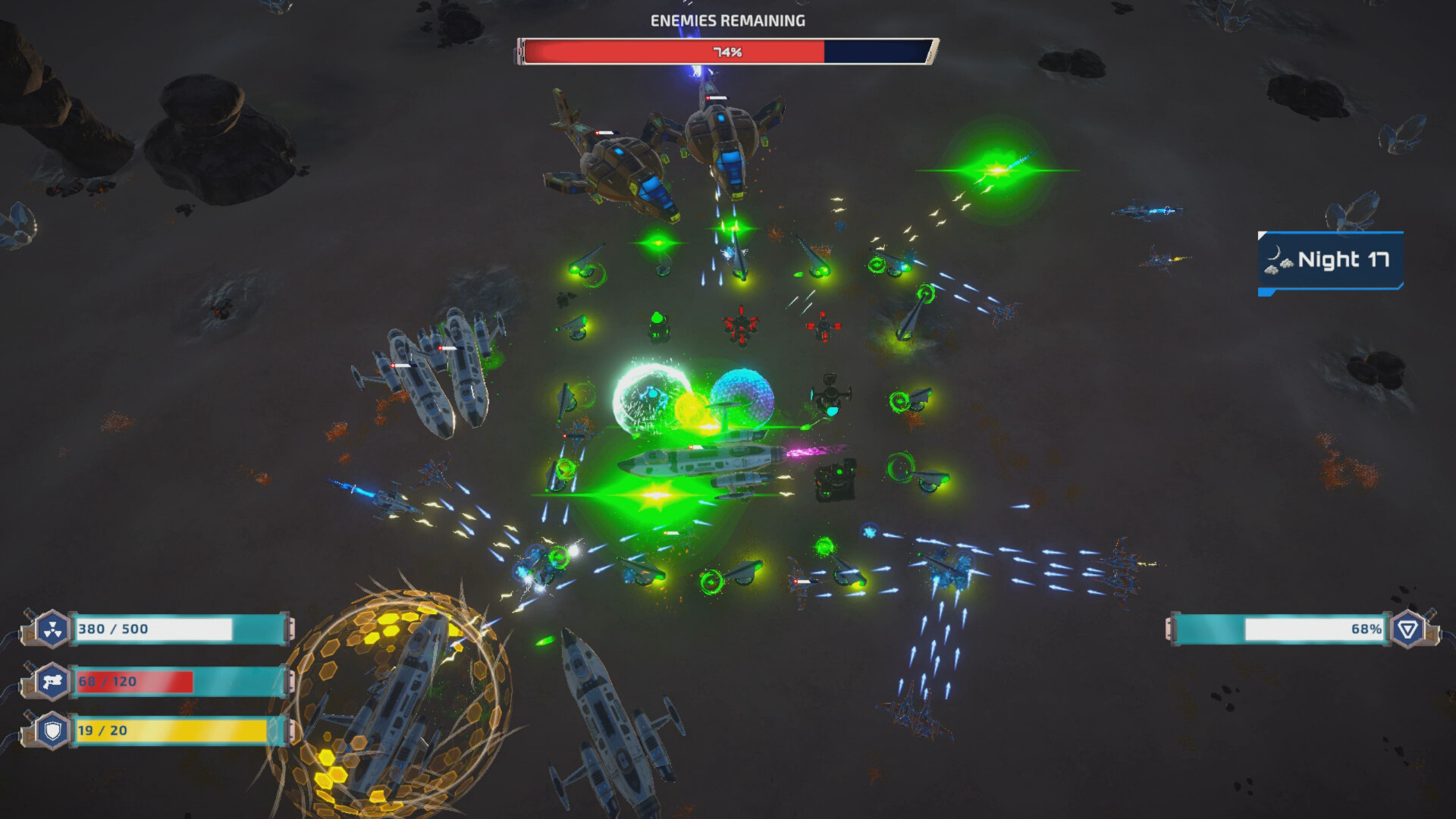
Managing the power grid when under heavy attack requires foresight. Turrets pull from the same limited grid, and failure can cascade quickly.
“One of the core design goals was making power management a strategic decision rather than a background number.
The player does not simply build unlimited defenses. Every defensive system competes for limited resources.
During preparation, players decide how much energy goes into weapons, shields, and other systems. During the night, those decisions are locked in and the base executes automatically.
The power system is also designed so that failures are predictable and meaningful. If the Shield Capacitor runs out of SCU, all shields become inactive. Weapon Capacitors are slightly different: weapons continue firing when WCU is depleted, but operate at significantly reduced power, making damage output much lower.”

This pushes players to rethink their base layouts as the game progresses and as enemies begin targeting infrastructure.
“This makes planning the available energy for each night extremely important. Players also need to think about base coverage, because enemies can attack from directions where defenses are weaker or not prepared.
Another layer comes from enemies that specifically target power infrastructure, such as Power Plants and Capacitors. Losing a Weapon Capacitor or Shield Capacitor is not only losing the structure itself, but also losing all stored energy inside it. This means relying on a single capacitor can create a major vulnerability, while multiple distributed systems provide much stronger resilience.
The limited grid system is also important because it forces players to make sacrifices. Players only have limited space and power capacity, so they cannot simply keep adding every possible building forever. Eventually, longer and more difficult nights force players to reconsider their entire base layout.
A player may start with a simple mining operation focused on gathering resources, but after many successful cycles the priorities can completely change. They may decide that certain buildings are no longer worth keeping and replace them with additional power plants, weapon capacitors, or defensive structures.”
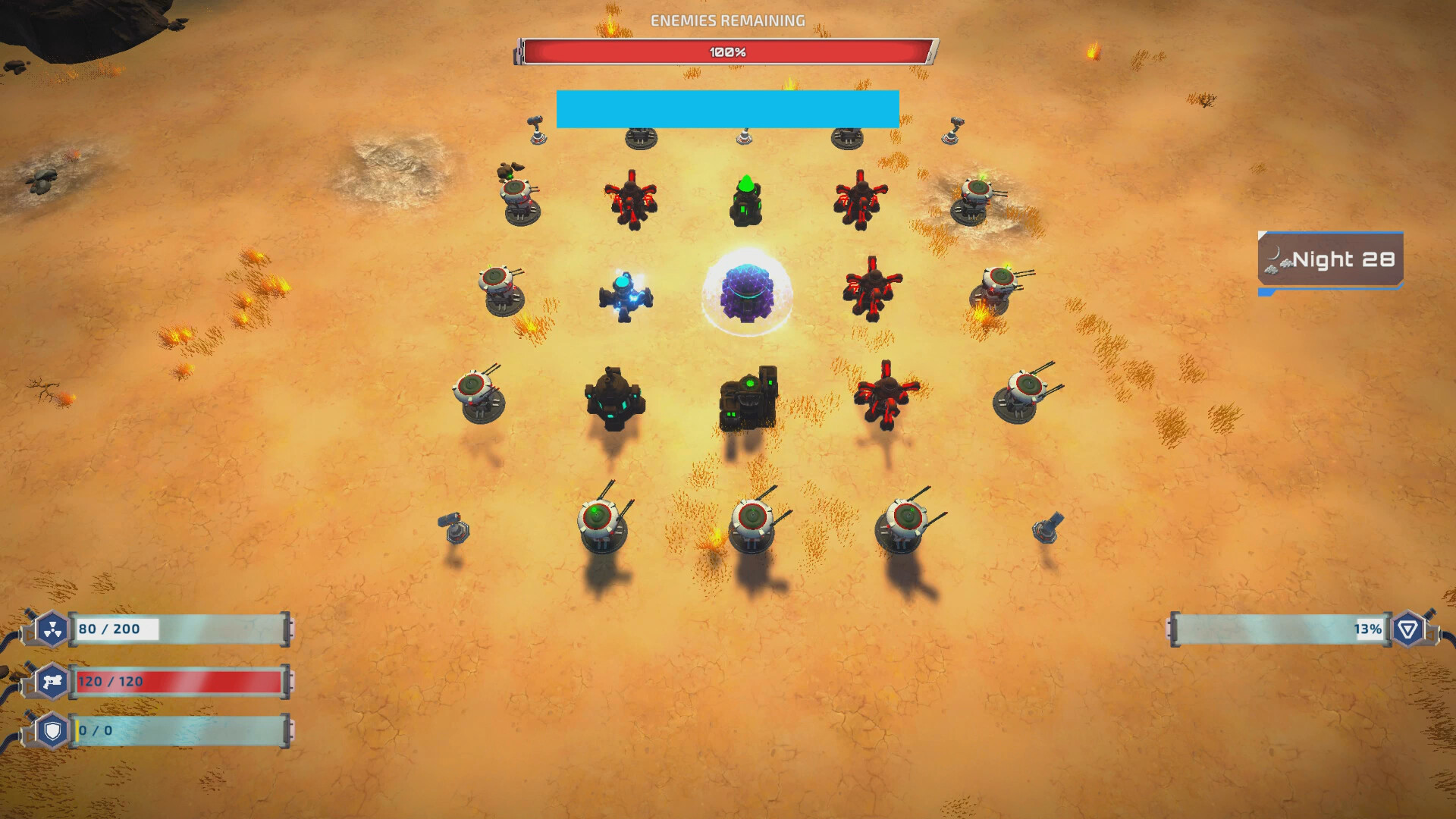
These constraints ensure that the player’s strategy evolves over long sessions.
“This creates a natural evolution of the player’s base. The layout that works at the beginning of a game may look completely different from a late-game survival setup.
Because these long-term decisions can take many hours to develop, we also added save/load functionality so players can continue building and optimizing the same operation over extended sessions.
Technically, combat is designed around deterministic simulation rather than random outcomes. The game uses fixed timing and predictable resolution so players lose because of decisions, not because of hidden randomness.
This was important because the game is about optimization. Players should be able to understand why they succeeded or failed.”
Enemy Design and Targeting UI
To test those defenses, the team introduced enemies like the Tier 5 Core Killers. Instead of just scaling up their health or damage, these units alter the behavior of the swarm.
“We wanted late-game enemies to change the way players think, not just increase numbers.
A common way to make stronger enemies is to give them more health or damage. However, that usually creates a simple DPS check: build stronger weapons and eventually you win.
For Rogue Drone, we wanted the strongest enemies to create strategic problems.
The Tier 5 Core Killers are designed as commander-type enemies. Their main goal is always the Core, and they can influence nearby lower-tier enemies, changing their behavior into a more aggressive core-rush attack.
The Core is the most important structure in Rogue Drone because it is the only structure that cannot be repaired. Once it is destroyed, the operation ends. Because of this, Tier 5 Core Killers represent the highest threat level in the game.
What makes them dangerous is not just their own strength, but their ability to change the battlefield. Lower-tier enemies that normally would not attack the Core can suddenly become part of a coordinated assault. This creates not only more dramatic night battles, but also forces players to prepare specifically for the possibility of a Tier 5 appearance.”
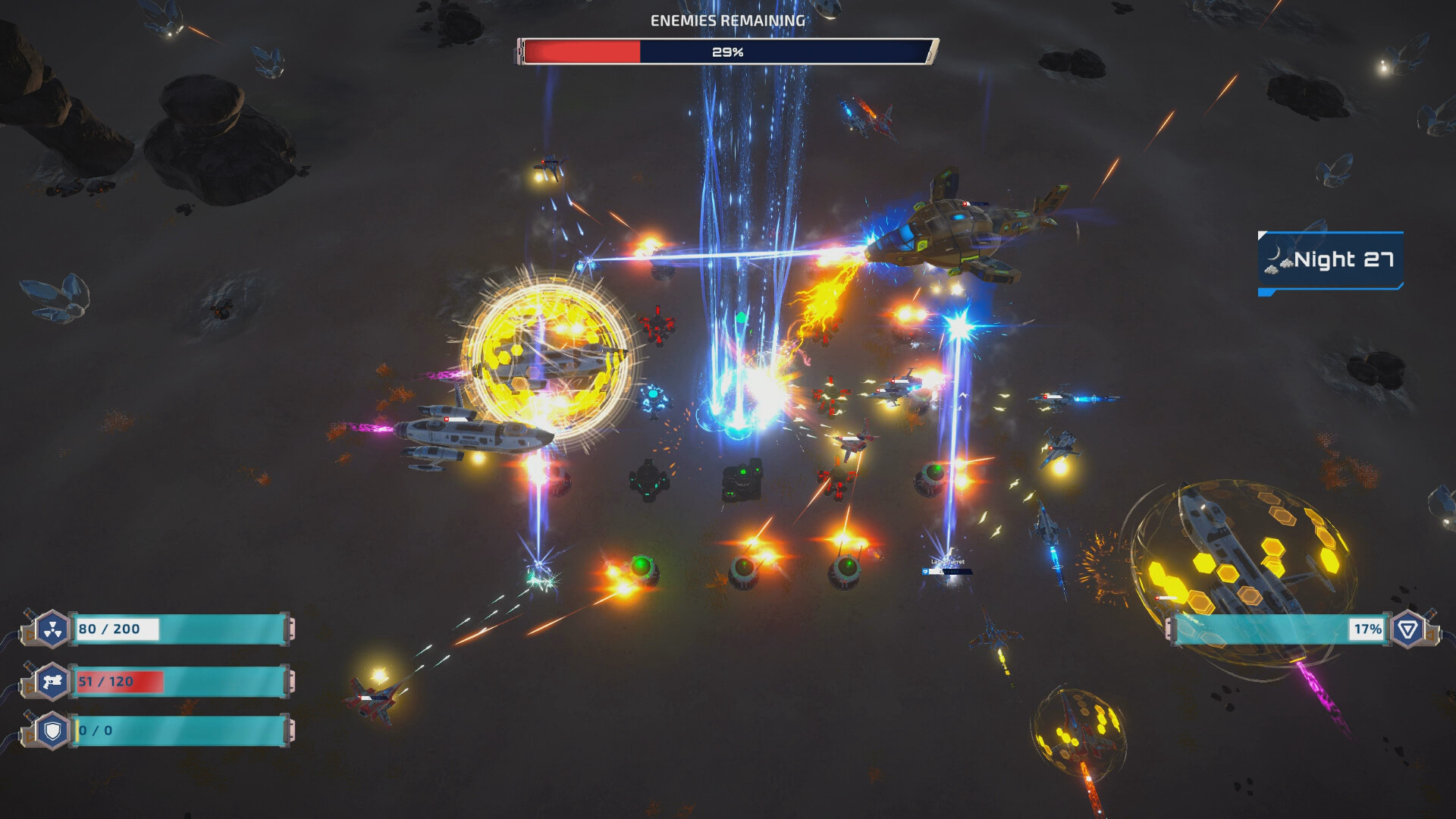
Players are given specific tools, like the Taunt Satellite, to break up these coordinated strikes.
“To counter this, we introduced defensive tools like the Taunt Satellite. It can redirect enemy attention by forcing enemies to attack it, but it does not deal damage itself. This means players cannot simply place it and forget about it. They need to carefully configure nearby defenses and make sure other turrets are prepared to protect the satellite while it performs its role.
The idea was inspired by real military structures. A commander does not need to personally destroy everything. They create pressure by changing how everything around them behaves.
This also makes every Tier 5 appearance memorable. The player immediately understands that the situation has changed and their defensive priorities need to change with it.”
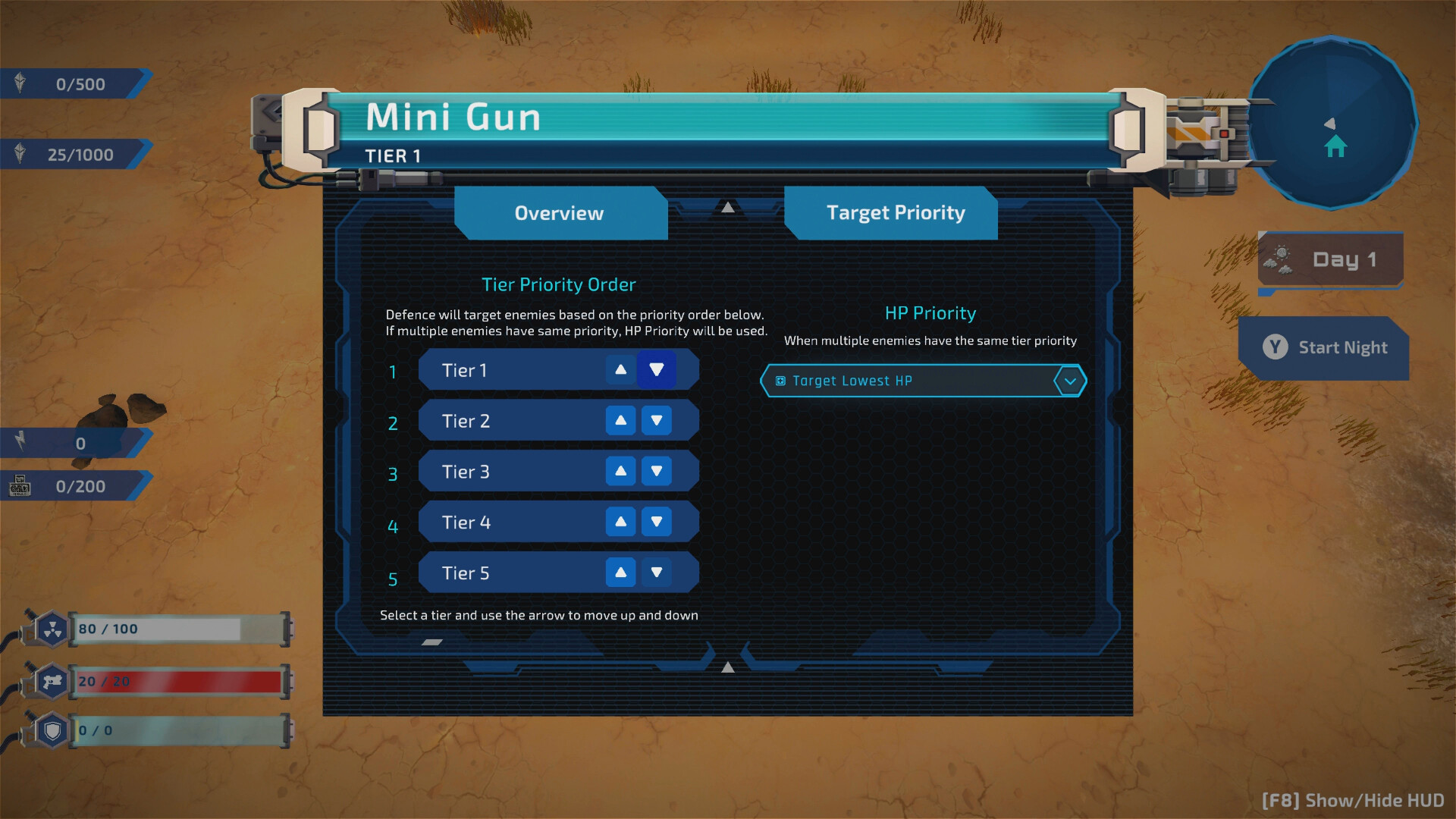
Because combat is automated, players have to establish targeting rules before the fighting starts. This required multiple iterations of the user interface.
“The targeting UI went through two main iterations. We reused the foundation from our previous game Swarm Me and expanded it with additional layers required for Rogue Drone, such as building management, weapon targeting priorities, and resource management. The biggest challenge was not adding more controls, but making sure the additional complexity remained understandable.
The important thing we learned was that automation does not mean removing decisions.
The goal was never for players to simply place turrets and watch numbers disappear. The interesting part happens before the battle, when players decide how their defense should behave.
Different turrets have different purposes. Some are designed for sustained damage, some for elite enemies, some for controlling groups, and some for protecting critical infrastructure.
Enemy types also have different priorities. Some enemies focus on buildings, some target defensive structures, and higher-tier enemies create specific threats that force players to adapt their setup.
During development, we learned that the most important thing was not adding more options, but making every option understandable.
Players should be able to look at their base and think: ‘I know why this turret is here.’ ‘I know what happens if this enemy reaches this area.’
The system works best when players feel like they designed a defense strategy, not when they are manually controlling every shot.”
To teach these mechanics without overwhelming players with text, the team opted for an integrated mission system.
“Because Rogue Drone combines several systems together, another challenge was making sure new players could understand the possibilities without overwhelming them with a traditional wall-of-text tutorial.
Instead, we created a mission system that gradually introduces the important concepts while allowing players to continue experimenting freely. Early missions guide players through the basics, such as which skills to unlock first, which buildings to construct, converting energy into WCU, upgrading structures, and refining crystals into higher tiers.
The goal was not to force players into one exact strategy, but to provide a path for players who want guidance. Experienced players can experiment and optimize on their own, while new players have a clear introduction to the systems.
For a game with many interconnected mechanics, we felt this was a better compromise than stopping the player and explaining everything upfront. The player learns by doing, while the missions provide direction when they need it.”
Cutting Mechanics and Feature Creep
With so many overlapping systems, some ideas had to be scrapped to keep the core loop intact. Briedis points to a planned ammunition factory as a prime example of a feature that failed in practice.
“Yes. One example was the ammunition factory and ammunition storage system.
Initially, we considered adding projectile-based weapons that would require players to manufacture and manage ammunition. On paper, this sounded like a natural fit for a game focused on automation and resource management.
However, during development we realized that the game already had an important resource management layer through energy, Weapon Capacitors (WCU), and Shield Capacitors (SCU). Adding another production chain would increase complexity, but it would not create enough new strategic decisions to justify the additional development and balancing cost.
This reinforced an important lesson: a feature cannot exist just because it is interesting by itself. It has to support the main gameplay loop.
Rogue Drone has three connected layers: • active mining during the day • economic decisions and base expansion • automated defense during the night
Every mechanic needs to strengthen the connection between these layers. If a defensive option completely removed the need for preparation, it weakened the day/night structure. Likewise, if a resource system created too much passive income, it reduced the importance of mining.
The final systems were built around making every decision connect back into survival.
The best mechanics are the ones where players immediately understand the relationship: ‘I mine better, so I build better.’ ‘I build better, so I survive longer.’ ‘I survive longer, so I unlock more possibilities.’”
This philosophy became the team’s main defense against feature creep.
“The biggest lesson we learned is that every feature needs to justify its existence by creating a meaningful decision for the player.
During development, it is very easy to add systems because they sound interesting. A new resource, a new building, a new enemy, or a new upgrade can all be exciting ideas individually. However, every feature has a real cost: development time, testing, balancing, and resources that could have been spent improving existing systems.
Because of that, every new idea had to answer two questions: ‘Does this improve the player experience?’ and ‘What decision does this create for the player?’
For Rogue Drone, we focused on making every system support the same core loop: Mining affects resources. Resources affect construction. Construction affects defense. Defense affects future survival.
The systems are connected because each one creates decisions in another system. Mining is not just about collecting resources, and defense is not just about surviving waves. Every choice affects the next stage of the game.
I think this is especially important for indie developers dealing with feature creep. A smaller number of interconnected systems usually create a stronger experience than many separate mechanics that do not influence each other.”
Expanding the Universe
Rogue Drone shares its universe with the studio’s previous title, Swarm Me, acting as a mechanical and narrative continuation of that game’s story.
“Rogue Drone started from a simple idea: what if the player was responsible for building an automated mining operation on a hostile planet?
From there, the game grew into a combination of resource management, optimization, and defensive strategy. However, Rogue Drone is also connected to our first game, Swarm Me, and continues the story in a completely different genre.
Swarm Me on Steam: https://store.steampowered.com/app/4033100/Swarm_Me
In Swarm Me, players control a lone drone trying to escape the laboratory where it was created and released for testing. It is a high-pressure survival game focused on escaping overwhelming enemy forces, featuring huge enemy swarms, traps, and multiple game modes. Players can choose between traditional weapons with ammunition drops, a mode where ammunition also functions as health, or a no-weapons mode where survival depends entirely on traps and special tools.
While Swarm Me was designed around constant pressure and immediate decisions, Rogue Drone explores what happens after that escape. The drone has survived and found a place where it can build a new settlement.
The connection between the games is that the player is still the same escaped drone. In Swarm Me, enemies are constantly trying to reach and destroy the player directly. In Rogue Drone, the threat changes: enemies no longer hunt the drone itself, but instead attack the settlement and the Core, the structure that controls the drone’s future.
If the Core survives long enough, it can eventually take control of more drones, which creates a major threat for the organization that created the player. Their solution is to send ships every night to destroy the settlement before the drone can become independent.
The two games intentionally have very different feelings. Swarm Me is about surviving the next few seconds, where one mistake can instantly end a strong run. Rogue Drone is about long-term planning, where a mistake may not destroy everything immediately, but can create problems that become impossible to overcome many nights later.
Ultimately, both games explore the same idea from different perspectives: a drone created as a tool trying to survive, adapt, and eventually control its own future.”
Rogue Drone illustrates the challenge of merging distinct genres, but it also provides a blueprint for how to do it effectively. By focusing strictly on a central loop—where mining fuels construction, and construction dictates survival—Briedis and his team managed to weave complex mechanics into a cohesive experience. For developers and players alike, the game serves as a reminder that the best design choices are often the ones that force meaningful decisions, rather than just adding more mechanics to manage.

Leave a comment