
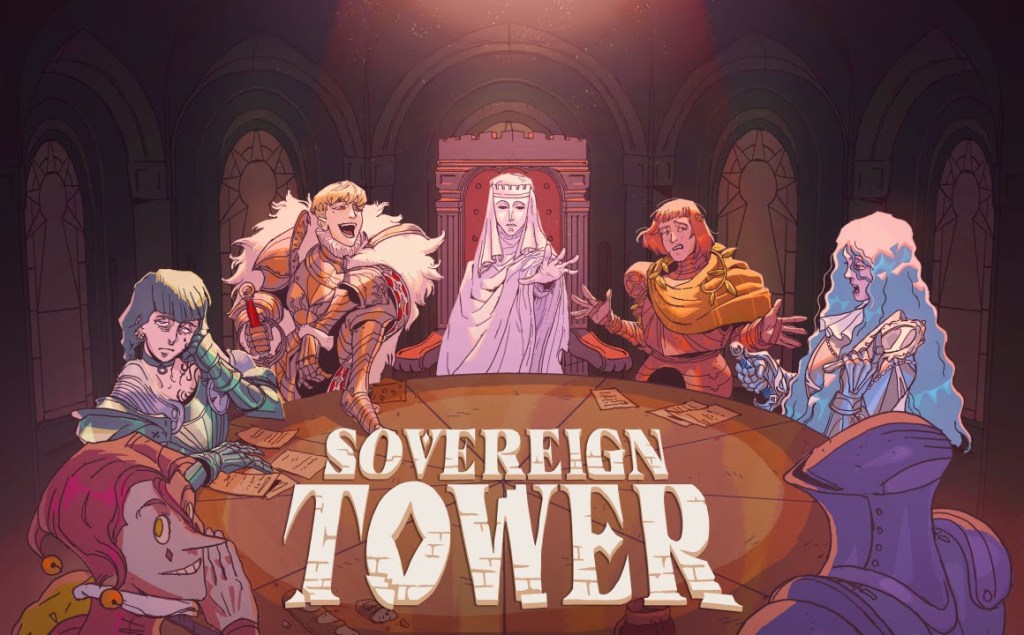
Sovereign Tower combines several different ideas in one game. It uses hand-drawn visual-novel presentation, point-and-click interaction, management systems and branching timelines, with time travel giving players new ways to approach quests and discover information. Gobert, Creative and Art Director at WILD WITS, says that one of the hardest parts of development was not getting the individual systems to work, but designing quests that could still make sense when players approached them with different information.
This interview would not have been possible without the wonderful people at Renaissance PR. Many thanks Rebecca Nicol!
We spoke with Gobert about how the team handled time travel, why some of the game’s information is intentionally difficult to understand, how the tone changes as the story progresses, and what the team learned from working with a large cast of characters.
Time Travel Without Making It Mandatory
Time travel is an important part of Sovereign Tower, but players are not forced to use it to find every possible option. The game also gives players information about things they missed, which can make those options easier to find on a later attempt.
There are actually very very few options that are exclusive to the time travel mechanic, most options can be found using different requirements and series of choices. However, by design we make sure to give the information that was missed by the player at the end of a given questline, so that these options are easier to find when replaying the sequence. If you don’t travel too much, you’ll have many new options that will be accumulated in your previous runs, allowing for many new discoveries.
So the player is never forced to use the time travel to find options, it only makes it easier for the player who do time travel.
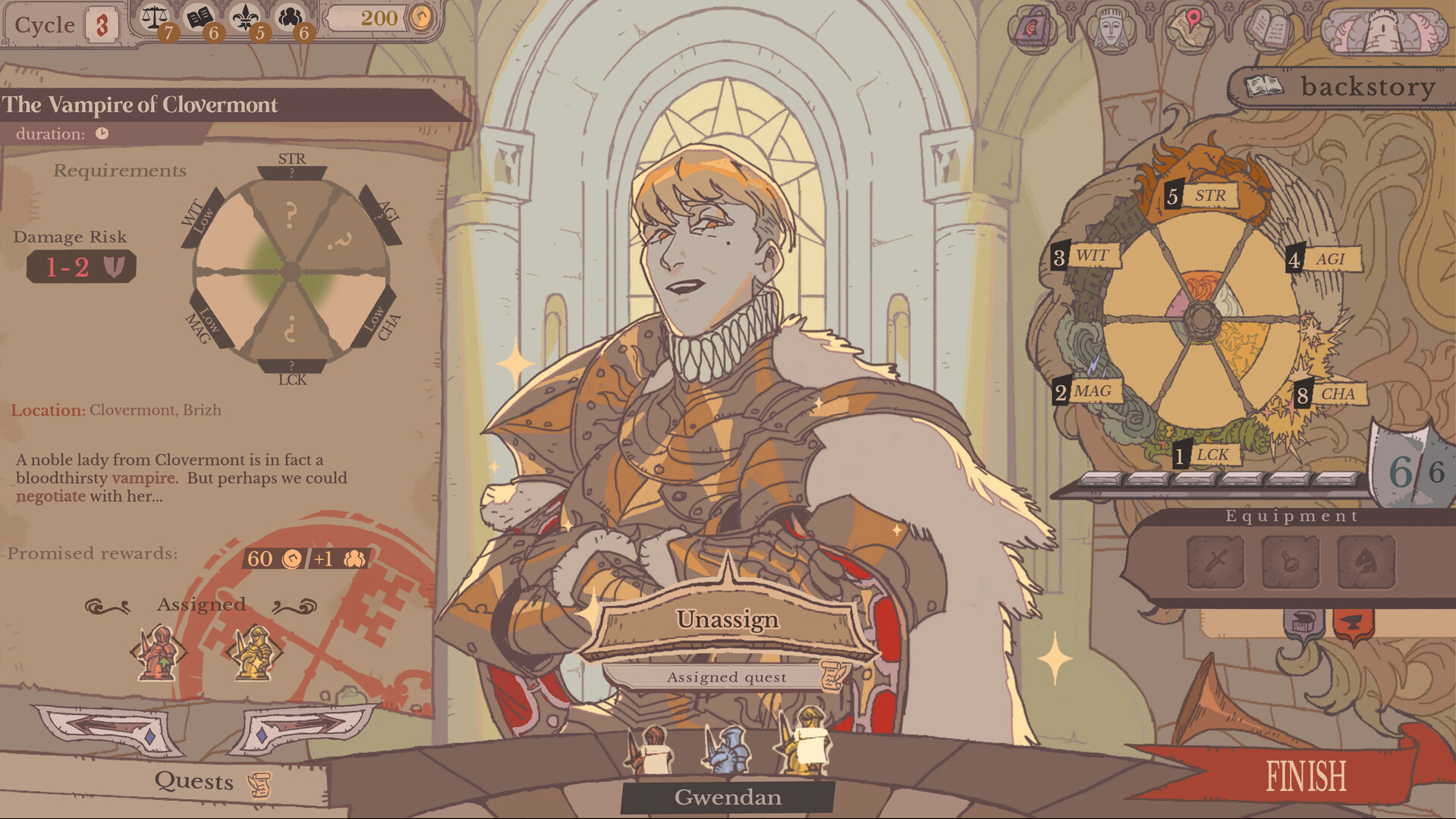
That also applies to the way the game handles secrets. How did you design the information system so that discovering a secret would feel like something the player could actually use rather than simply another piece of narrative trivia?
We didn’t, we purposely made it opaque so that the player would either have to experiment with the time travel to find the new options, or use their own assumptions about some specific possibilities.
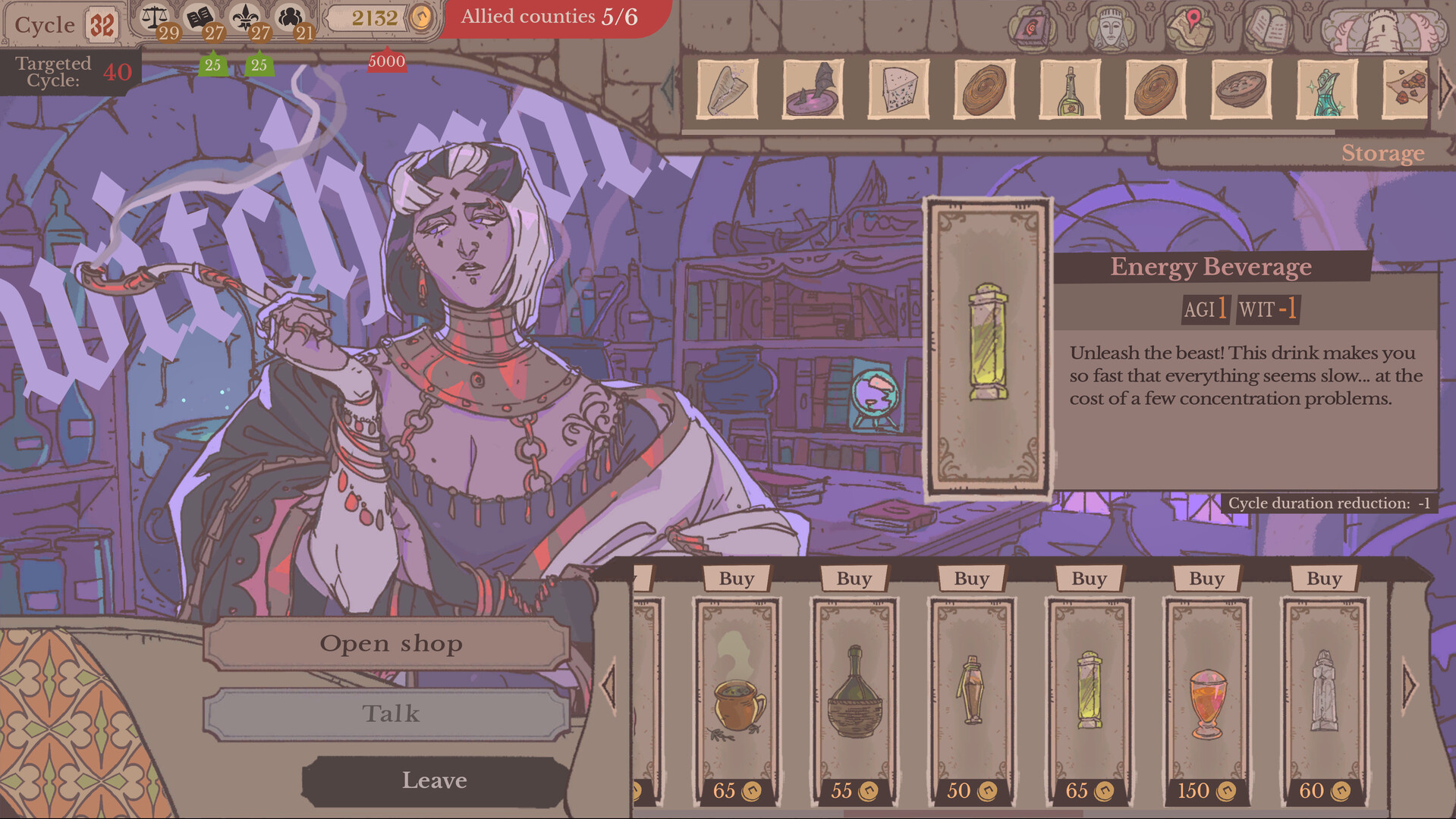
This approach created a different kind of challenge during development. The main problem was not making the mechanics function together, but creating quests that could account for players knowing different things at different points in the story.
Designing Quests Across Different Timelines
According to Gobert, the difficulty came from the design of the quests and storylines rather than from technical problems with the game’s systems.
There aren’t many issues with the mechanics of the game and more problems with the actual design. What’s really hard is figuring out how to design quests and storyline which can be done at different times, and with different levels of information because of time travel. There aren’t any easy fixes other than to be very thorough about the way we design the game and its plotlines.
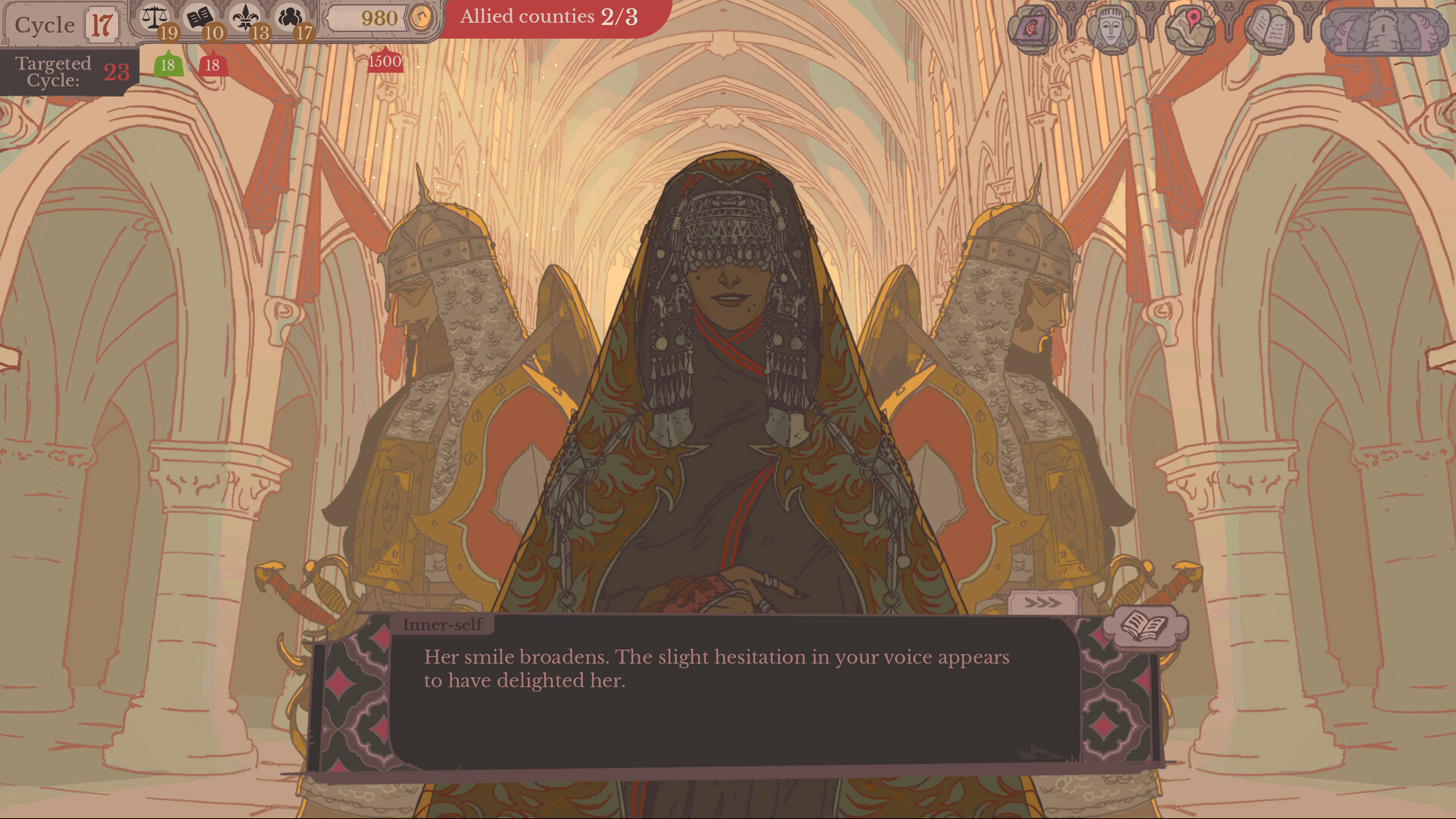
The team also had to keep an eye on how powerful certain combinations of abilities and traits could become. During development, were there any Knight abilities, personality traits or quest combinations that proved too powerful or too predictable and had to be redesigned?
Yes, originally we had a few traits that would boost the success rates based on the knight’s level in specific statistics, but these kinds of traits were mostly nerfed or cut because they were way too strong!
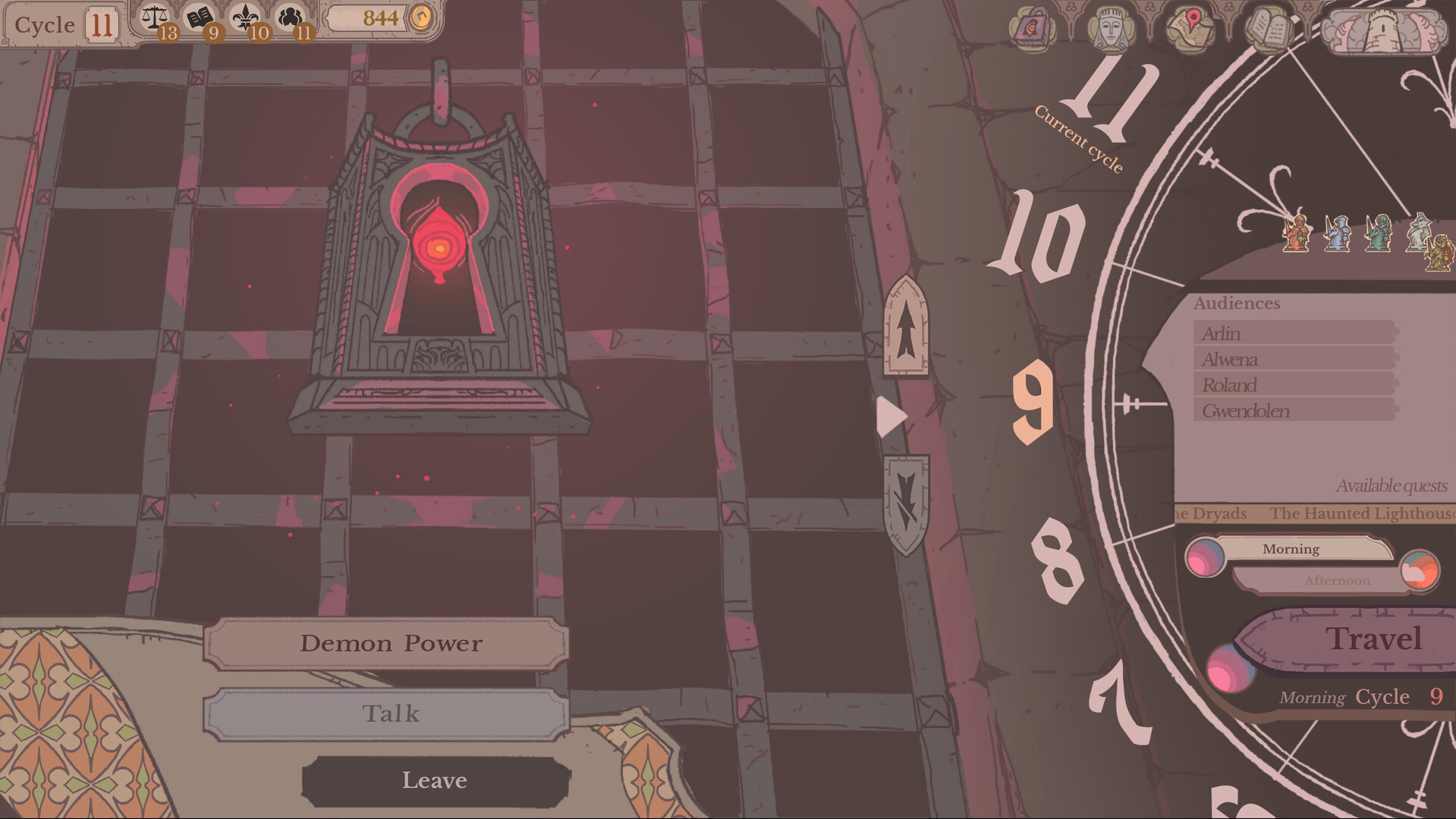
The tone of the game presented another question. Sovereign Tower can be funny, but some of its decisions have more serious consequences. Rather than setting a strict point where the game would stop being comedic, the team allowed the tone to change as the story progressed.
We do not have any clear cut “line” where we define where something has to be serious, but in general, the more the game progresses, the more serious the tone becomes, and that is also true for the characters’ affinities. By the end of the game, you’ll encounter some more dramatic and serious plotlines that the game tries to respect with its own seriousness. Although humor is very subjective, we also have to accept that every player is going to feel differently about some joke options.
Giving Players More Context
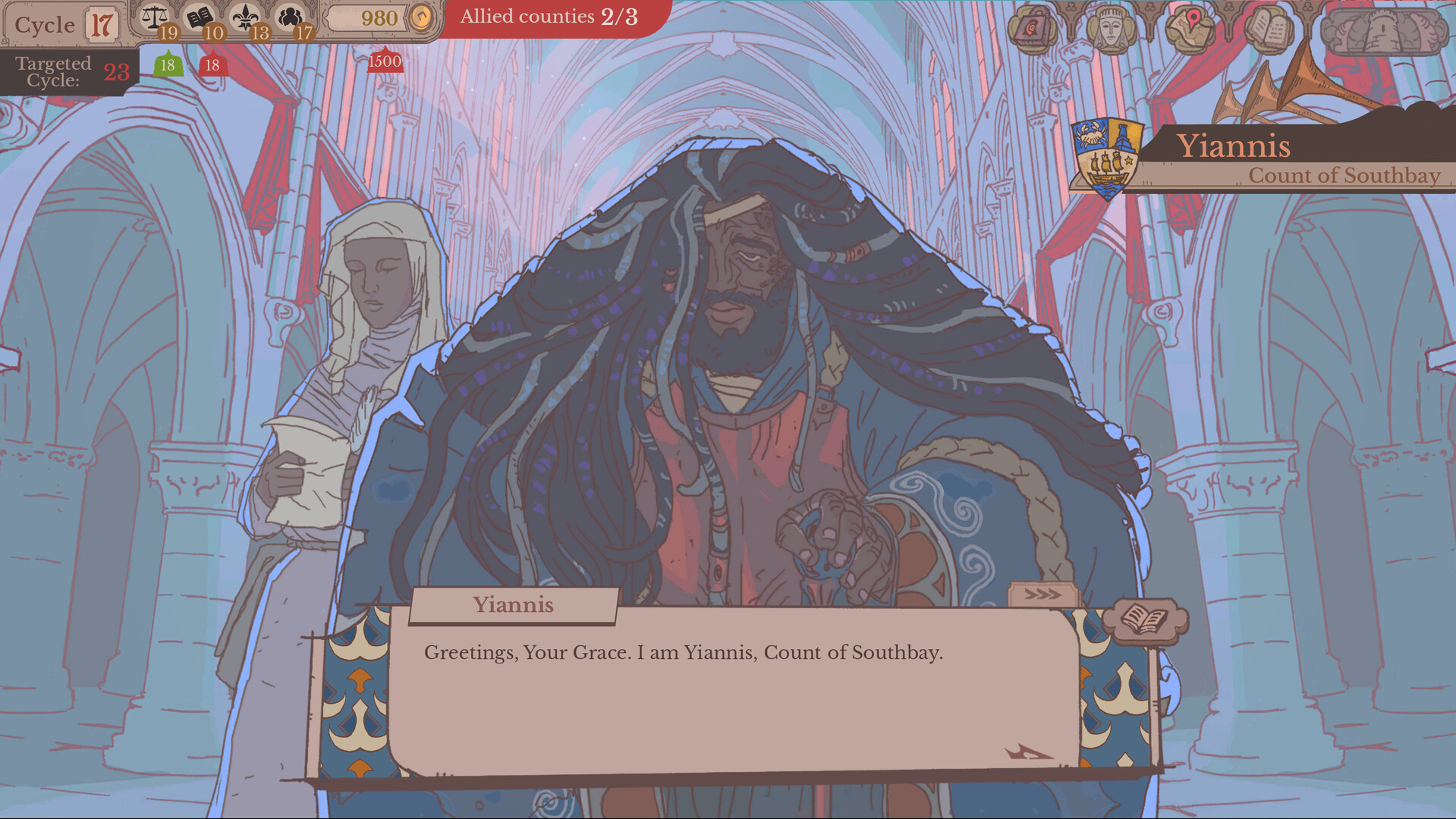
Sovereign Tower’s opening also became more substantial, with the addition of a more detailed Act 0. This was not something added because of negative feedback from players. The team had already planned to give players more information about the setting and their role in it before the game’s release.
We had already planned a more precise “act 0” before the game’s release so we didn’t have to base it on the player’s feedback. We really wanted to give more context on who the player was playing and what the tower represented in the game’s universe to make the experience a little more special.
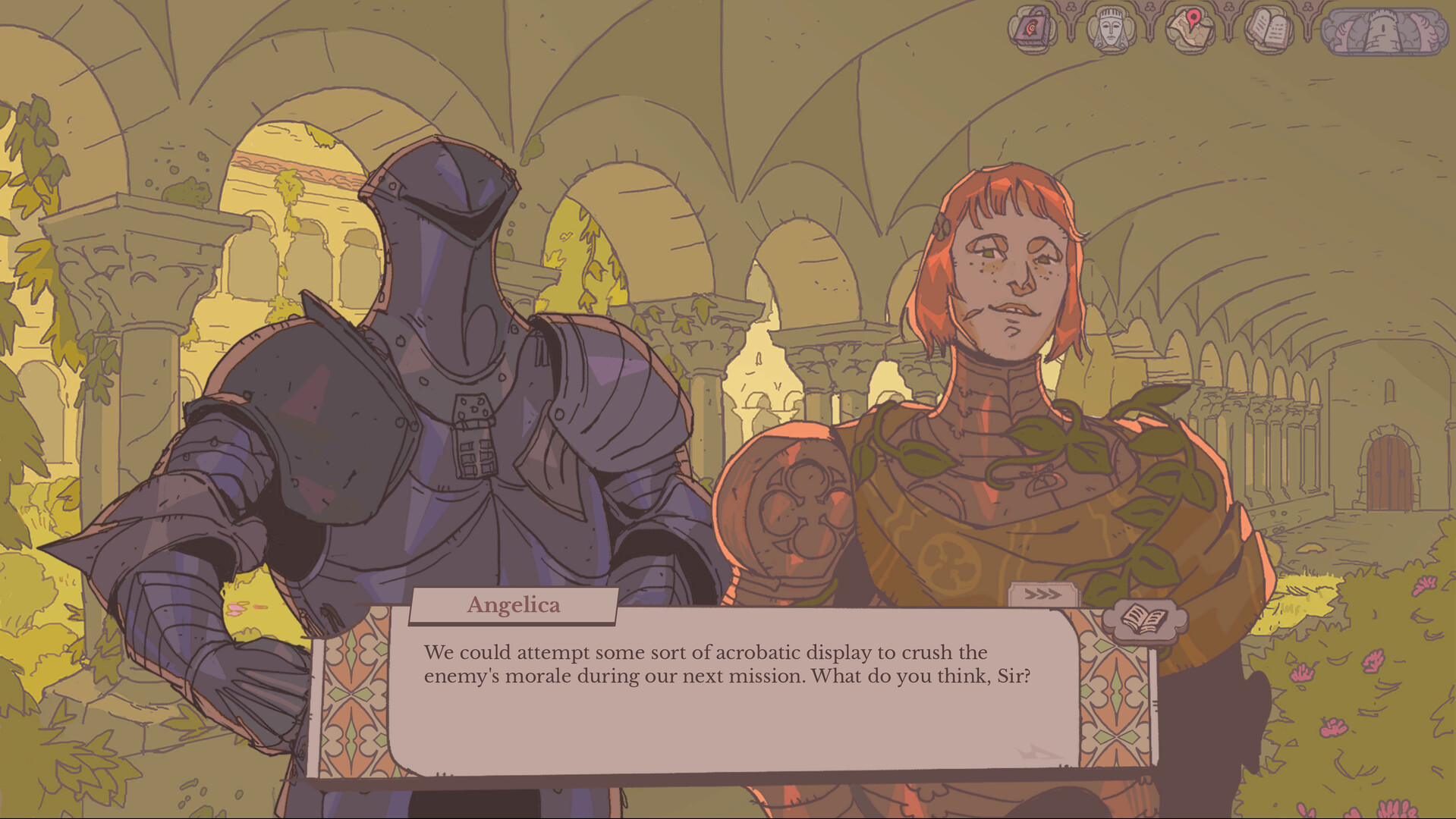
The game also has a large number of characters, each with their own stories. Looking back at the project, Gobert says the team might have been better served by focusing on a smaller number of visiting characters and developing them in greater detail.
Like our previous game crown gambit, we try to have a very well defined and expansive world building, with many characters with their own little stories. We had a lot of fun designing all of these characters, but we often feel like we should have worked on a smaller cast of visiting characters to flesh them out a little more.
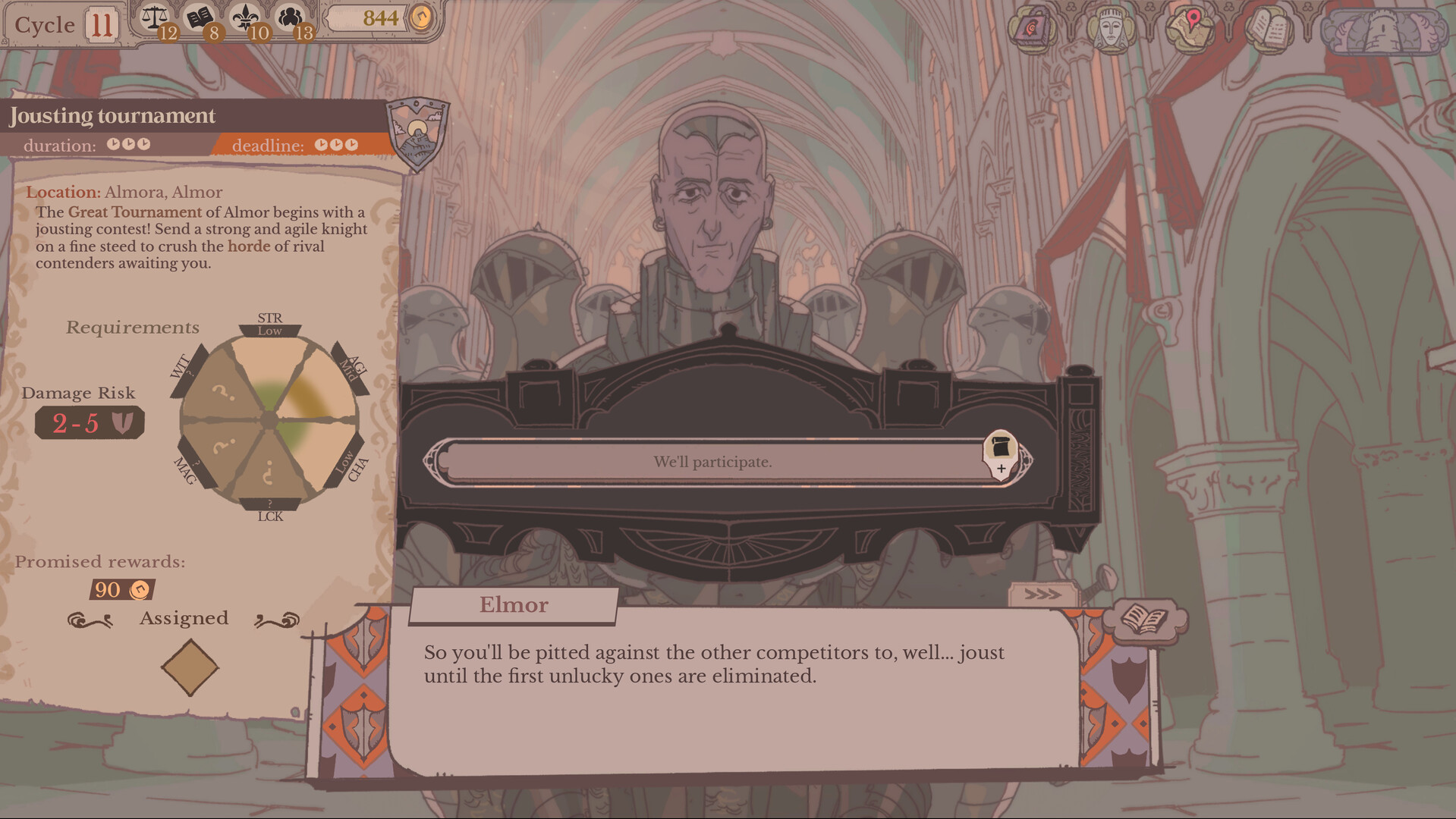
That is one of the main lessons Gobert takes from working on Sovereign Tower. The team enjoyed building a large world and filling it with characters, but a smaller cast could have given them more room to develop individual stories.
The team also credits its community, which has continued to create fan content and discuss the game.
We take every opportunity we can get to thank our very active and dedicated community! With its many fan creations and discussion, we are very thankful for the commitment and hope many others will feel inclined to join them in the future!
For a game built around revisiting decisions and looking at familiar situations from a different point in time, that sense of community adds another layer to Sovereign Tower. The game may leave some of its systems for players to figure out on their own, but the conversation around it continues to grow outside the game as well.

Leave a Reply