
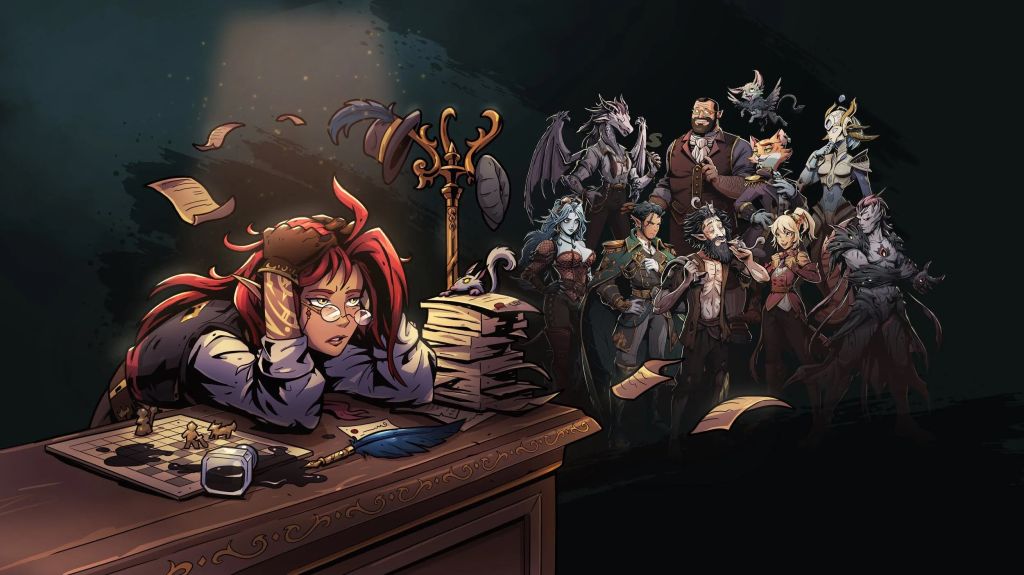
We like to think we’re well informed about upcoming games. We spend weeks, sometimes months, digging through announcements, showcases, demos and Steam pages to see what’s just around the corner. And when something looks especially promising, we keep an even closer eye on it.
Ledgerbound was an anomaly.
Not being on our radar bothered us more than we’d like to admit. It simply appeared on launch day, and for the life of us we couldn’t figure out how we had missed it. Looking at the trailer afterwards, it checked practically every box we have for an outstanding RPG. Tactical combat? Check. Heavy emphasis on storytelling? Check. Romance? Great voice acting? A wonderfully strange sense of humor? Check, check and check.
Once we managed to get hold of a review key—huge thanks to Future Friends Games—we wasted absolutely no time playing the game and seeing what’s what.
It turned out to be everything we hoped it would be and then some.
Ledgerbound is funny, romantic, surprisingly heartfelt, packed with memorable characters and wrapped in one of the most distinctive visual styles we’ve seen this year. Its tactical battles are exactly the kind we enjoy: layered, demanding and wonderfully goofy at the same time.
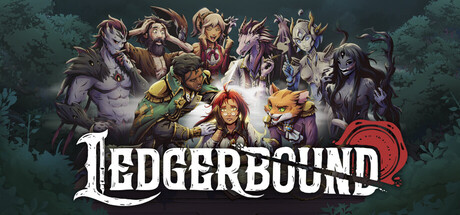
You’re playing as an insurance adjuster whose job is to deny heroic life insurance claims by defeating the same ancient evil that killed legendary adventurers. Yup, it’s exactly the kind of absurd setup that we go for.
One of the Best Narrators We’ve Heard
From the very first minutes, when the narrator enthusiastically starts explaining the world with unmatched gusto, we knew this wasn’t going to be an ordinary RPG.
The obvious comparison is The Stanley Parable, and that’s high praise. We didn’t think another narrator could stand shoulder to shoulder with that game’s iconic performance, yet Ledgerbound manages it like a champ. Whether it’s breaking the fourth wall, making a perfectly timed sarcastic remark or commenting on our questionable decisions, the narration constantly adds something extra to the scenes that he partakes in.
The narrator is just one of the many characters.
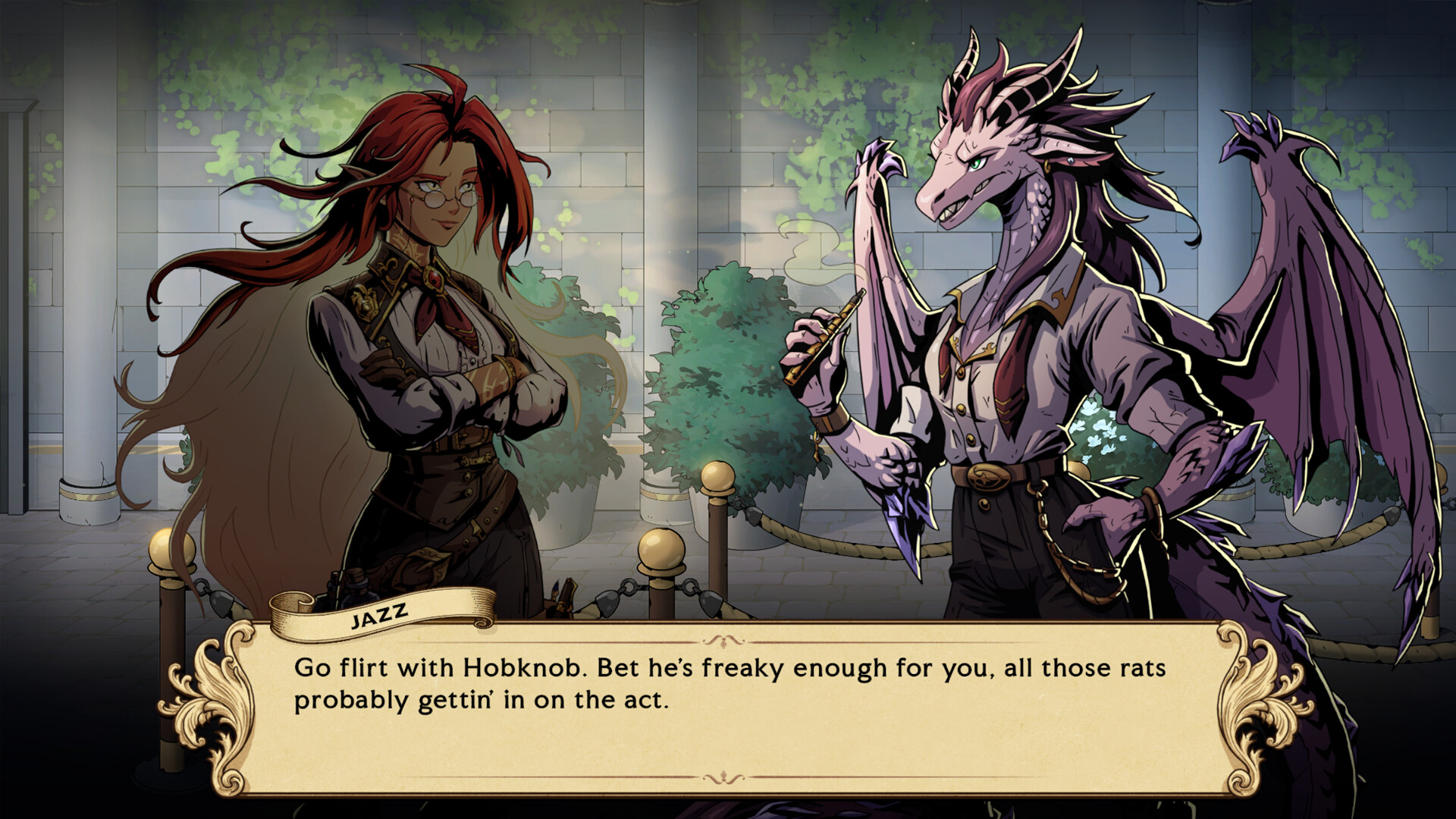
The writing never made us feel like we were simply clicking through dialogue trees. It felt like we were living alongside these wonderfully eccentric people. Every conversation flows naturally, every joke lands because it’s built around the personalities involved, and every emotional moment feels earned.
The voice cast deserves enormous credit for that. With names like Matthew Mercer, Ben Starr, Stephanie Kerbis, Travis Willingham, Erin Yvette and Jeff Leach, expectations are naturally high, yet somehow they still manage to exceed them. Every actor breathes life into their character, giving them unique mannerisms, personalities and emotional depth. We’d happily spend dozens more hours with this cast, although admittedly we’d rather avoid sharing a room with a few of them.
Some of the dialogue had us laughing so hard we needed to pause the game. Others surprised us with how sincere they became when we least expected it. One of the earliest exchanges between Rayna, Elwina and Brogan had both of us giggling, exchanging awkward looks, and then bursting into laughter.
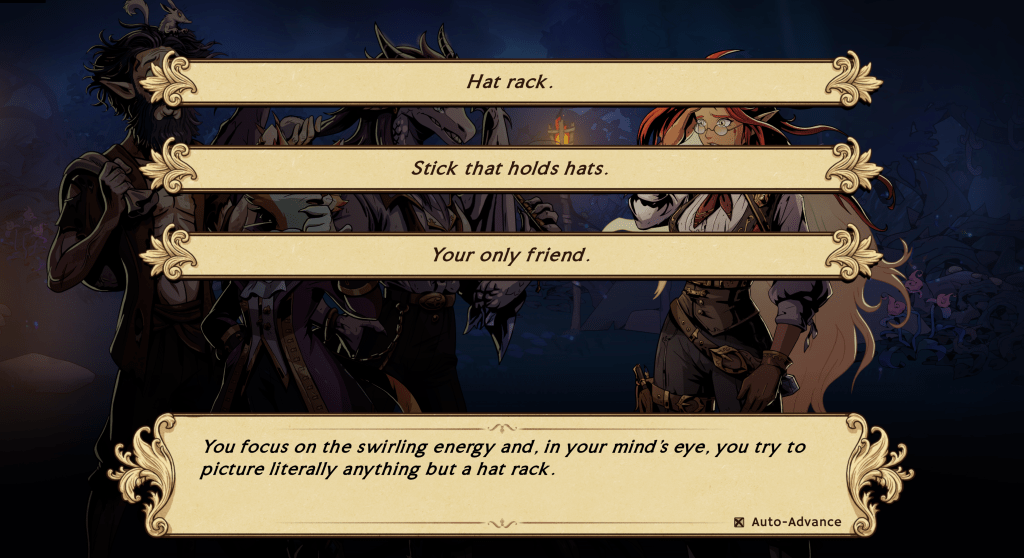
If you’re someone who enjoys narrative-driven RPGs, Ledgerbound is about as good as it gets. Even if tactical combat isn’t usually your thing, we’d still recommend experiencing everything surrounding it. Well, now that you’ve realized that this is less of a review and more of a love letter, let’s move on to…
Relationships Worth Caring About
One thing Ledgerbound does remarkably well is making conversations matter. Trust us, we have more to say.
During downtime you’ll often have opportunities to spend time with your companions. Every activity consumes part of your limited schedule, forcing you to decide whether you’ll strengthen relationships, improve your combat abilities or simply look after your own wellbeing. Burnout is a real mechanic, and trying to do absolutely everything isn’t an option.
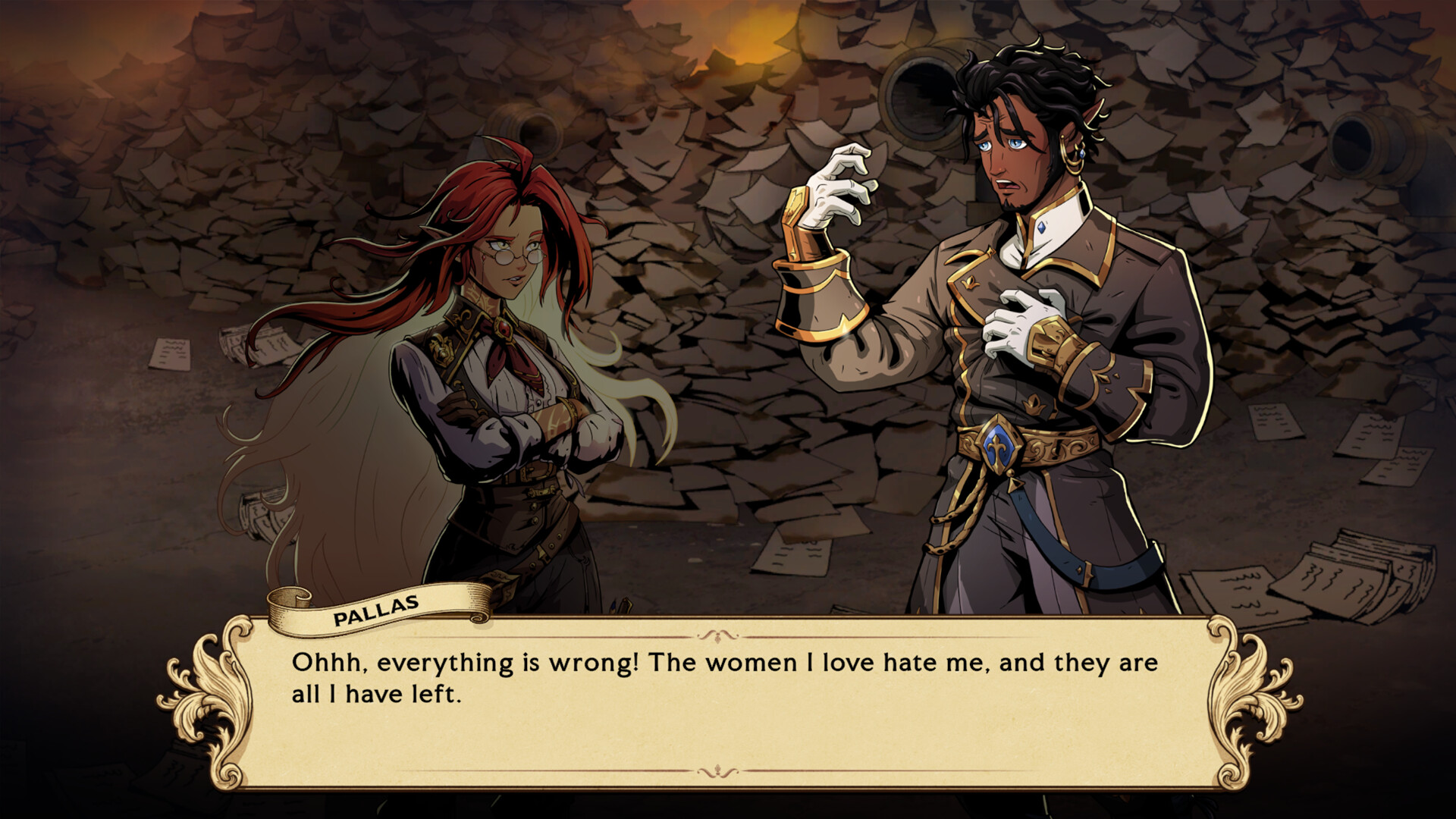
A lot of the conversations, in and out of the downtime, present multiple dialogue choices, and we can’t stress enough how differently they can play out depending on what you say.
Trying to flirt might backfire spectacularly. A joke you thought would lighten the mood could end up offending someone instead. Characters aren’t simply waiting for you to select the “correct” dialogue option—they all have their own beliefs, morals, insecurities and personalities. Some appreciate honesty, others confidence, and a few seem to enjoy complete chaos.
Those reactions slowly teach you who these people really are.
That made every successful friendship or romantic moment feel earned rather than scripted.
And yes, this absolutely earns its Mature rating. There’s plenty of swearing, lots of innuendo and enough spicy dialogue to make us raise an eyebrow more than once. The writing certainly doesn’t shy away from adult humor.
Stylish Without Ever Being Distracting
The character designs are packed with personality, while the subtle animation work constantly keeps everyone feeling alive. Gentle swaying, blinking, nervous hand movements and expressive body language add so much to conversations without ever distracting from what’s being said.
The backgrounds are detailed enough to establish atmosphere while keeping the focus firmly on the characters. During battles, environments come alive with glowing lanterns, drifting debris, birds flying overhead and insects buzzing around the battlefield. It’s full of small touches that quietly make every location feel believable.

Tactical Combat That Rewards Creativity
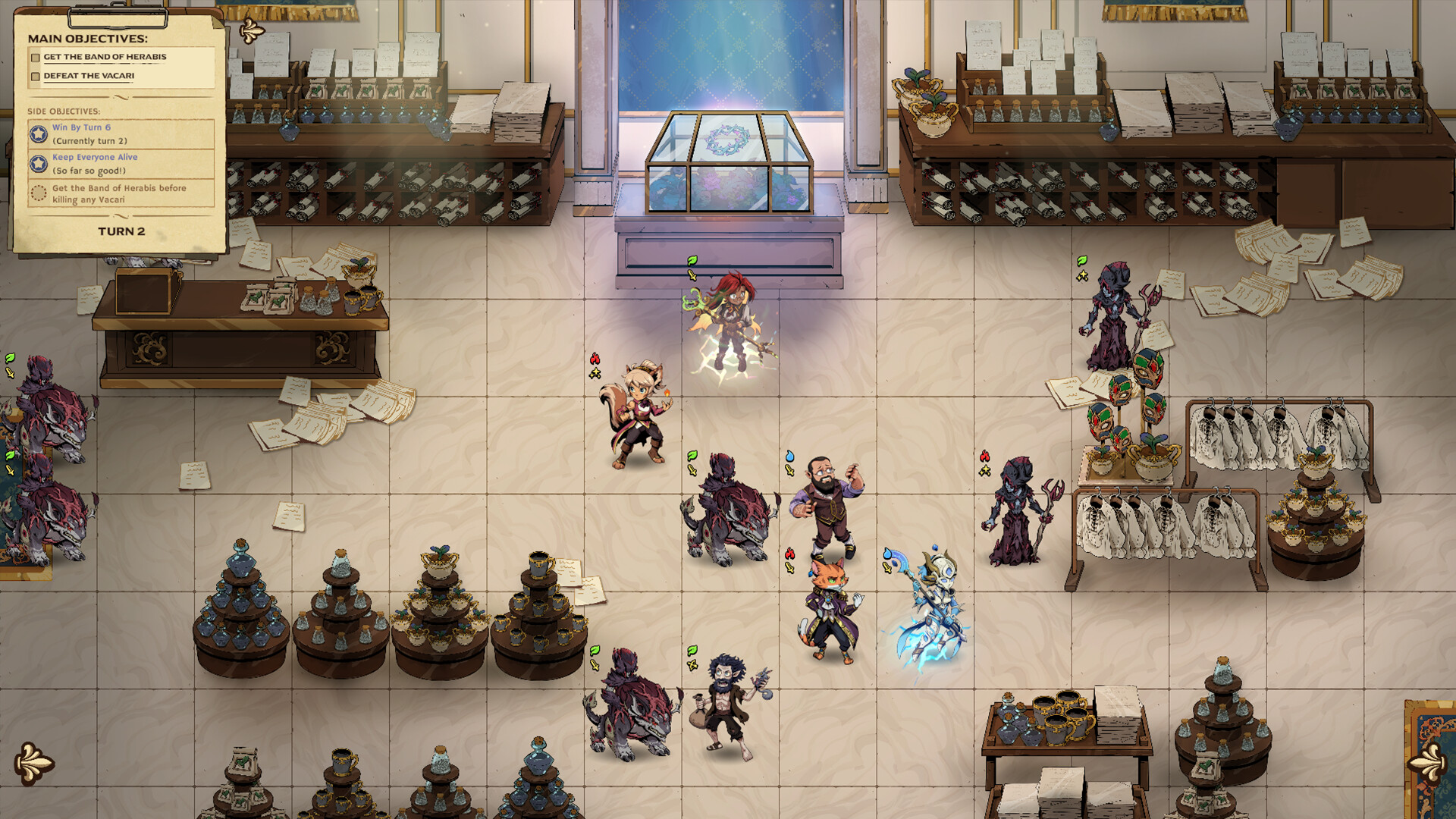
The combat follows familiar turn-based tactical RPG principles, but there’s enough depth here to keep encounters engaging from beginning to end.
Every character has unique strengths, weaknesses and abilities. Once movement points are spent, you can finish a turn by activating powerful skills that prepare ambushes, challenge enemies into attacking you, refresh cooldowns or create opportunities for another party member. The real fun comes from combining them.
One character might shove an enemy directly into another character’s prepared ambush for devastating damage. Others specialise in positioning, crowd control or setting up powerful follow-up attacks. Experimenting with different party combinations became one of our favourite parts of the game.
Whenever attacks are launched, the game cuts into stylish combat sequences that make every hero look like an absolute legend. Critical hits are especially satisfying, with flashy animations that never overstayed their welcome. No matter how many times we saw them, they remained exciting. There’s plenty of strategy beneath the spectacle too.
Every character belongs to an elemental affinity such as Fire, Water or Earth, making elemental advantages incredibly important. Water overwhelms Fire, Fire crushes Earth and so on. Adding another layer are Lunar Rifts scattered across battlefields. Standing on one that matches your element grants useful buffs, while occupying one tied to an opposing element weakens you instead. Positioning quickly becomes just as important as dealing damage.
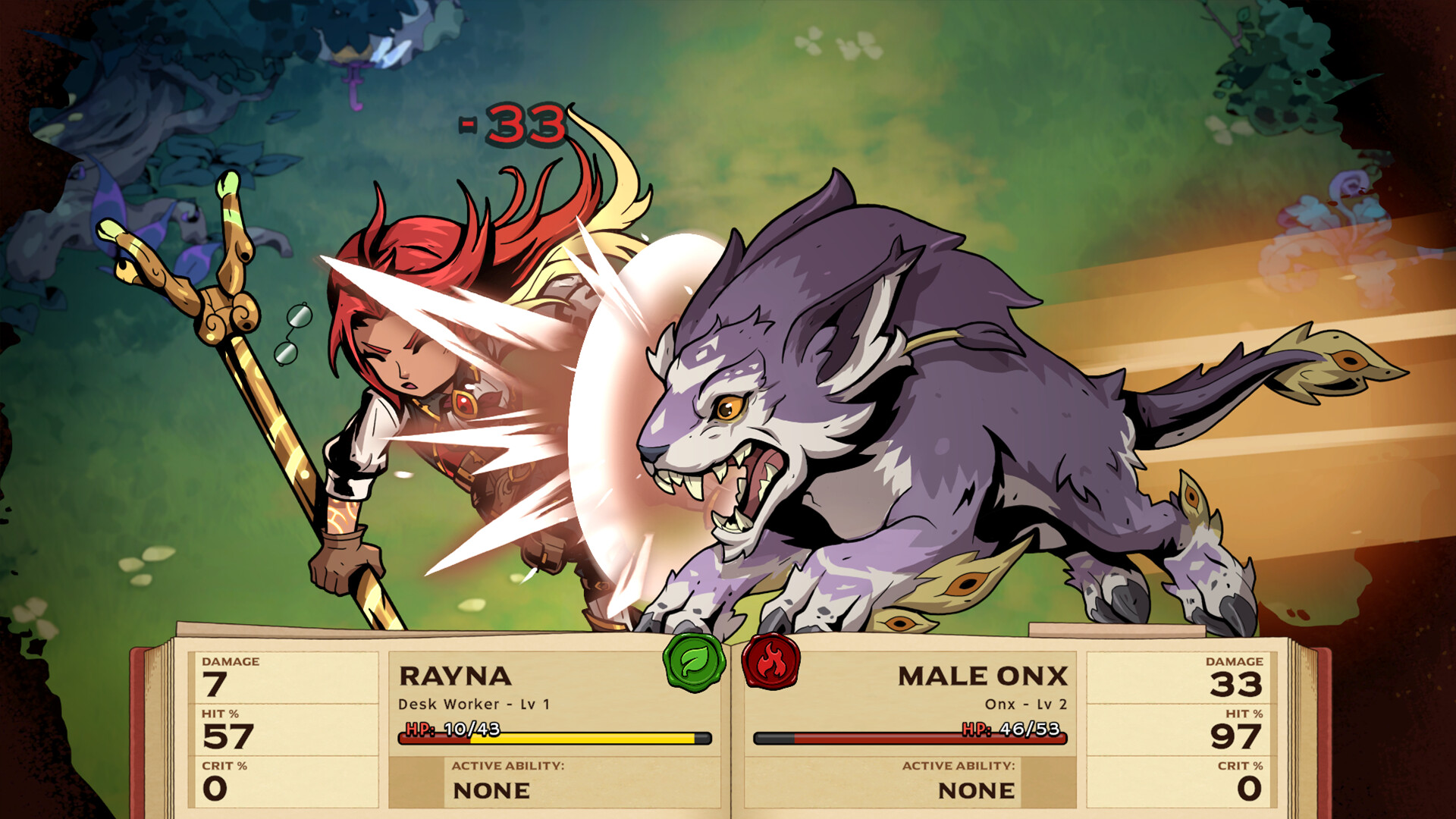
The game can also interrupt battles with short narrative moments that explain changing objectives or provide additional context. Normally this would feel intrusive, but Ledgerbound manages to weave these scenes naturally into each encounter.
Failure Has Never Been This Entertaining
One of our favourite ideas in the entire game appears when replaying battles. Every encounter contains optional objectives. Miss one, and you can try again. Only the replay isn’t simply a restart.
Instead, every hero is replaced by hilarious cardboard cut-outs that look like children’s handmade toys. The story is retold as though someone is trying to remember what happened, with a single narrator enthusiastically performing every role while taking increasingly ridiculous creative liberties.
It’s brilliant.
Rather than feeling like we’re replaying content, it feels like we’re watching someone’s exaggerated version of previous events. The visual presentation completely changes, the narration becomes even funnier and suddenly an ordinary retry turns into one of the game’s biggest highlights.
Complete every optional objective and you’ll earn certificates, increase shareholder value, unlock useful vouchers and gain access to additional equipment. It’s a clever and so far, unseen way of encouraging replay without making it feel like busywork.
Living With Your Decisions
One design decision we had mixed feelings about is the save system.
There’s no manual saving. Every meaningful action automatically saves the game, leaving you to live with whatever consequences follow.
We completely understand why the developers chose this approach. It reinforces the importance of every decision and prevents players from endlessly reloading conversations until they achieve the perfect outcome.
Still, we would have appreciated having manual saves as an optional accessibility feature. Not because we wanted to undo our mistakes, but because there were several moments we’d happily replay simply to experience them again.
Thankfully, the generous difficulty options mean everyone can tailor combat to their liking. If you’re mainly here for the story, romance and comedy, the easier settings accommodate that perfectly. If you’d rather earn every victory through careful planning, the harder modes absolutely deliver.
One of the Year’s Biggest Surprises
Ledgerbound completely blindsided us. What looked like an amusing tactical RPG quickly turned into one of the funniest, smartest and most charming adventures we’ve played this year. Between its outstanding voice acting, razor-sharp writing, memorable cast, satisfying tactical combat and wonderfully bizarre sense of humor, it’s incredibly easy to lose yourself in its world.
More importantly, it never forgets that games are meant to be fun. Whether it’s making us laugh through fourth-wall-breaking narration, stressing us out during a difficult battle, awkwardly navigating a romance or replaying an encounter with cardboard heroes, Ledgerbound constantly found new ways to surprise us.
We still can’t believe this game somehow slipped under our radar. We’re insanely glad it didn’t stay there.

Game: Ledgerbound
Developer: OmniMegaSuperCorp
Publisher: OmniMegaSuperCorp
Platform Reviewed: PC (Steam)
Genre: Tactical RPG / Narrative Adventure / Dating Sim
Release Date: 13 Aug, 2026
Modes: Single-player

Leave a Reply