
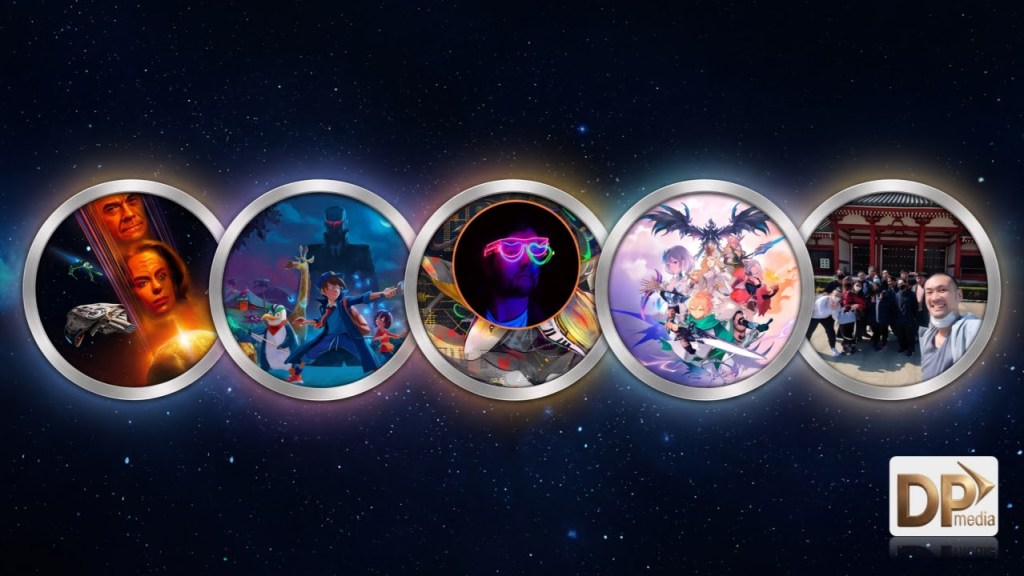
Welcome to the second edition of the Dev & Play Media newsletter.
Before we get to the games, I just want to say thanks. Over at Linkedin, we crossed 100 subscribers this week! Watching this list grow so fast has been great, and I really appreciate you taking the time to read this.
Our small team wants to celebrate the occasion, and what better way than with a game? Thanks to Hound13, we’re giving away one copy of Dragonsword: Awakening! All you have to do is leave a comment below—say whatever you like. At the end of the week, we’ll randomly pick one winner and send them the game! If you’re on LinkedIn, we’d also really appreciate it if you subscribed to our newsletter.
We ran a bunch of interviews over the last two weeks with developers working on vastly different stuff. While I was editing the transcripts, one thing stood out: they all gave out some genuinely great advice. Whether they’re keeping a 16-year-old MMO alive or making a cozy game about donuts, the realities of game development are pretty universal.
Sixteen years is forever in live-service games. Over at Cryptic Studios, keeping Star Trek Online running means they are currently tearing down ancient code to rebuild “The Ultimate Klingon” story arc.

Messing with a two-decade-old framework based on a 60-year-old IP sounds like a nightmare. You have to balance a veteran player base against established franchise lore. We asked Executive Producer Thomas Marrone how they keep a community happy for that long, and he pointed straight to how developers treat their players.
“I have noticed that sometimes game developers have an adversarial relationship with players akin to the punitive dungeon master of classic D&D. There’s a temptation to feel like you’re smarter than players or ‘know better.’ It’s a dangerous mindset to have and can create a situation where a sustainable equilibrium is ruined by designers or product managers who think they know better.” – READ THE FULL INTERVIEW!
It’s an easy trap to fall into—forgetting the actual people playing your game. That applies to pretty much any creative field, not just games. Big thanks to Thomas, the Cryptic Studios team, and Lauren Treon at Sandbox Strategies for the chat.
On a completely different scale, we talked to Yangyang Mobile about High Times.
It’s a dating and cooking sim centered on a donut shop, but the hook is that the pastries are your dialogue choices. You serve specific flavors to help customers deal with heartbreak, anxiety, and strained relationships.

Writing a branching story for over 30 characters using donuts as a conversation mechanic is a lot of work. Writers Carlos Valdes and Vesper Fox were upfront about the scope of it all.
“Don’t go full ham and commit to this many characters because my god there were so many moving parts and there were just so many scenes to get done… But in all seriousness, for a narrative experience, start with the characters. Personal growth, eccentricities, fears, hobbies—so much of this story started from the simple question of ‘What makes this person relatable?’” – READ THE FULL INTERVIEW!
We love that they grounded a complicated game mechanic right back into basic character writing. It’s easy to get bogged down in systems, but if the cast doesn’t click, none of it matters. Thanks to the Yangyang Mobile team and Vincent Gallopain at Not A Shark Company PR.
Handing over control to the players comes with its own headaches. Night Zookeeper’s ambitious new multiplayer game, Wilds, asks players to literally draw their characters from scratch.

The game’s engine then translates those flat, unpredictable doodles into rigged 3D models. It’s a massive technical swing that completely decentralizes the game’s look. Co-founder Joshua Davidson told us that letting players draw the world is a core philosophy for the studio, but it comes with a catch.
“In a world where anyone can go from imagination to reality faster than ever before, inviting players into your game design might be the only way to truly reflect their world. That said, a game design is still an engine that needs to be tinkered with and built for fun. Therefore, my only advice would be to know your game really, really well so that you can open up the parts that make sense to other collaborators, without breaking the core experience.” – READ THE FULL INTERVIEW!
User-generated content only works if the core game loop is actually fun to play first. Thanks to Josh, the Night Zookeeper‘s crew, and Rebecca Attard-Phillips at BOOST COMMUNICATIONS.
Building that core loop is exactly what the DragonSword: Awakening team focused on.

This is a huge Unreal Engine 5 action RPG with 19 tag-team characters and custom toon shading optimized for handhelds. Getting all of that to run seamlessly in an open world was a massive headache for the studio.
But when we asked about their hardest lesson, it had nothing to do with rendering or engine tweaks.
“The bigger the scope of a project… the riskier a ‘build now, polish later’ approach becomes, because the amount you’ll eventually have to revisit grows exponentially. Our advice to other developers preparing something similar would be: don’t rush to build flashy content first. Invest the time upfront in solidly designing your initial terrain layout and the relationships between characters.” – READ THE FULL INTERVIEW!
You can’t out-program bad planning. The urge to build the flashy stuff first is real, but technical debt will eventually catch up with you. Thanks to the team for the interview (and for delivering a game we ended up giving a 10/10).
Finally, we looked at the fear of starting in the first place.
OFFBEAT by Whetstone Games is a digital audio workstation disguised as a tycoon game. You repair gear and do weird client jobs, but you’re actually just learning how to produce real music without the awful, dense menus of standard software.

Studio Head Ed Sibley 🔜 Gamescom built it to help people overcome the intimidating learning curve of music tech. He had a great perspective on the creative struggle.
“I am a great believer that perfectionism is the enemy of progress, and yet when it comes to making art, people can often get hung up endlessly redrafting the beginning of their great work and never make it to the middle. In this valley, we lose geniuses.” – READ THE FULL INTERVIEW!
‘In this valley, we lose geniuses.’ That’s rough, but it’s true. Just getting a draft out the door is always better than getting stuck trying to make something flawless on the first try. Thanks to Ed and Anni Valkama at Pantaloon.
That’s it for this month! Thanks again for 100 subscribers. If someone forwarded this to you, consider subscribing to get future interviews straight to your inbox.
Catch you next time, happy gaming!


Leave a comment