The digital audio workstation—or DAW— can be a major roadblock for aspiring musicians. Modern music software offers limitless creative potential, but it can be scary staring down a dense interface packed with digital dials, endless menus, and complex routing pathways. We’ve tried and we know how frustrating it can be.
Ed Sibley, Studio Head at Whetstone Games, wants to fix that with OFFBEAT. The studio’s latest project may look like a charming tycoon management game where you run a recording studio. Underneath, it’s a fully functional music production suite cleverly disguised as a video game.
With OFFBEAT, Whetstone Games try to tie the intimidating process of audio engineering to the familiar and rewarding progression loop of a management sim. It’s a game that, in a way, tricks players into learning how to produce real music. Sibley kindly discussed the challenges of gamifying a complex skill, the technical challenges of building a digital audio engine from scratch, and why the best way to make great art is to stop trying to be perfect.
This interview would not have been possible without the wonderful people at Pantaloon. Many thanks Anni Valkama!
Learning by Stealth
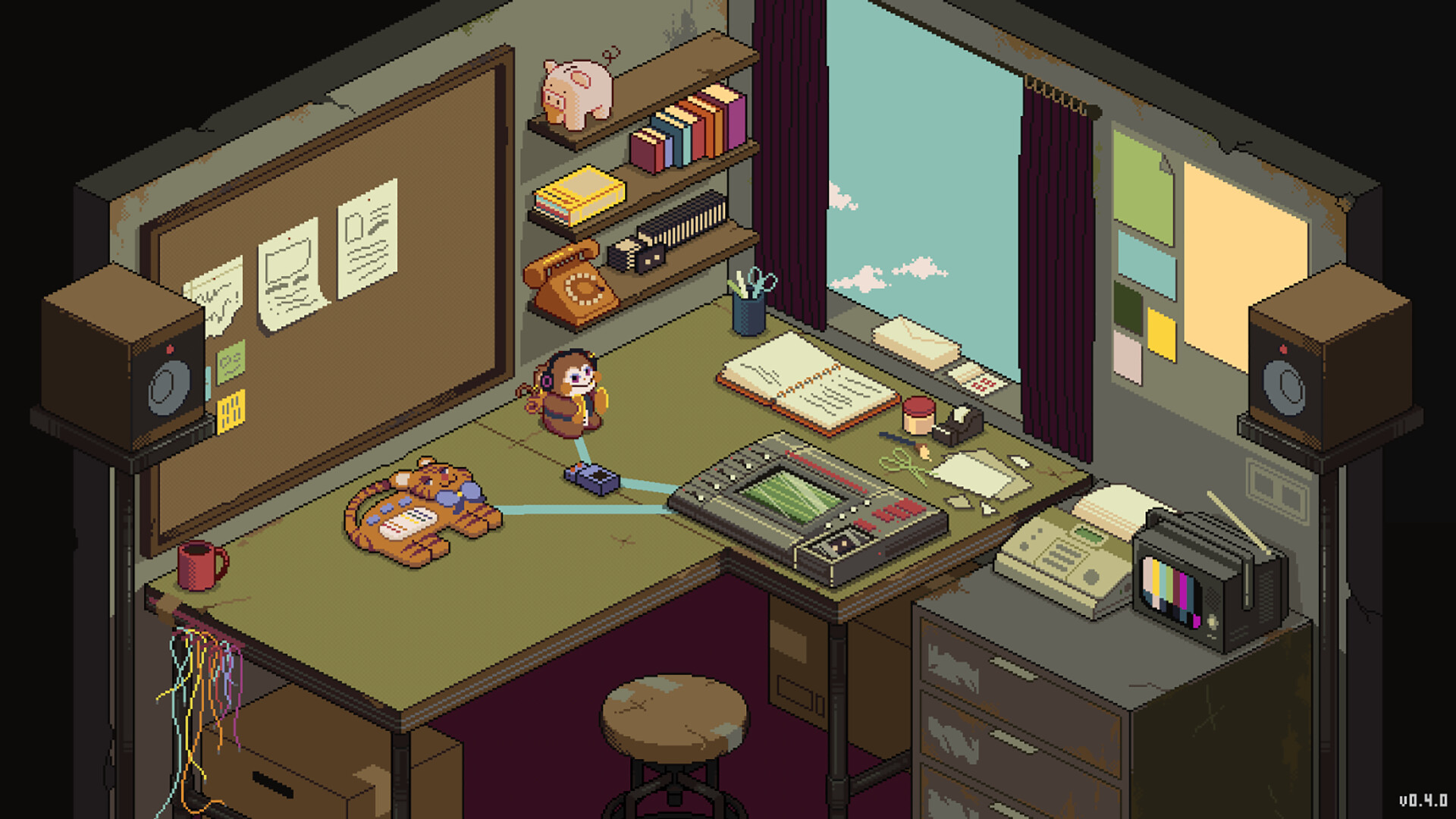
The core loop of OFFBEAT revolves around purchasing physical equipment, modifying it, and plugging it all together to create unique sounds. It fits naturally into the management genre, mirroring the real-world progression of building a home studio piece by piece.
The primary design goal of OFFBEAT has always been to create a game which, by stealth, teaches players about composition and audio production. I started getting into home recording a few years ago, and quickly fell down a rabbit hole of gear.
“I have a particular love of vintage audio equipment – an Akai S3000XL from the mid-90s is the centerpiece of my home setup. Early in OFFBEAT‘s life, when I was cooking the idea with Jamin from Pantaloon, we liked the idea of building a gameplay loop around purchasing equipment, modding and upgrading it to make it your own, and using it to make strange music. Music production is a notoriously complex hobby, as the rat’s nest of cables behind my desk will attest. And yet, tycoon and simulation games excel at teaching the player how to solve increasingly-complex problems via a gradual escalation of tool sophistication. It was one of those ideas that almost seemed so obvious in hindsight that it was a wonder nobody else got there first.
By allowing the player to gradually upgrade their studio setup from simple beginnings, we could use the progression curve of a tycoon game to teach players real composition techniques and real production methods. I still can’t quite believe nobody else has thought of putting the two together in quite this way! In any case, what this creates is an accessible entrypoint for players who’ve always wanted to learn how to make music, but have lacked a way in. There’s a sense in which we’re appealing to a similar consumer-market as brands like Teenage Engineering and Arturia, who make professional audio equipment intended to spark the imagination of more casual home producers.”
To keep the game approachable, the development team made deliberate simplifications, streamlining the often-frustrating reality of studio wiring while carefully guiding the player’s attention toward the game’s core sequencer.
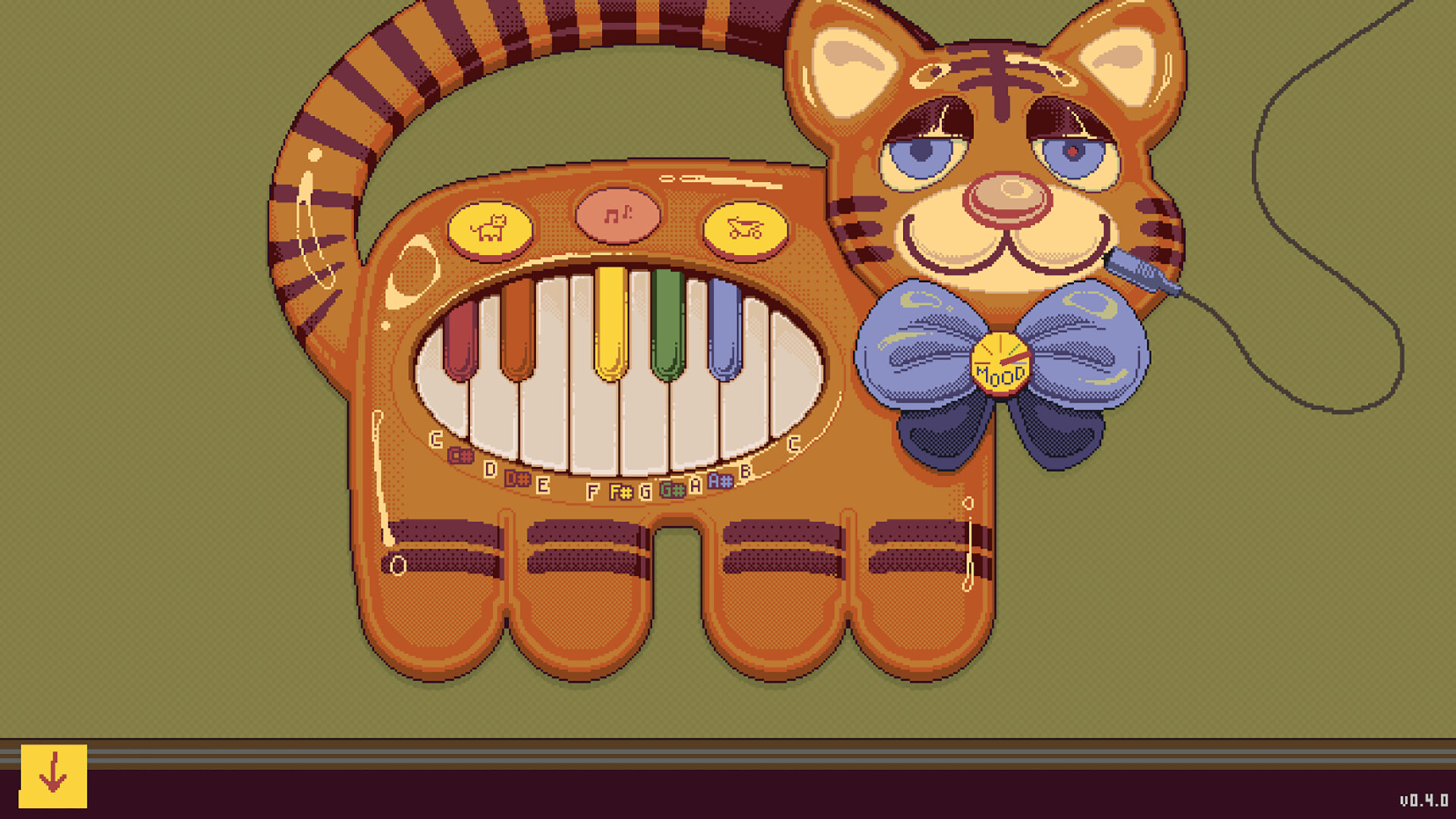
“In terms of UI trickery to hide complexity – the most magical and unrealistic thing in our game is that a single cable carries power, sound and control data. I wish somebody would invent a miracle cable which could do all three. I’d rewire my house with them. But more earnestly, it’s really important to us that the game lets you plug your equipment in and straightaway start making music with it. In early builds of the game, we found that players often didn’t understand that the sequencer is the true heart of the game, and that playing the instruments directly isn’t the intended way to think about composition. That’s why we built the game’s onboarding in the way we did, starting the player off by looking at the sequencer first, as soon as the cat’s been plugged in – a moment which teaches them that the sequencer itself is what tickles the ivories.”
Lowering the Stakes
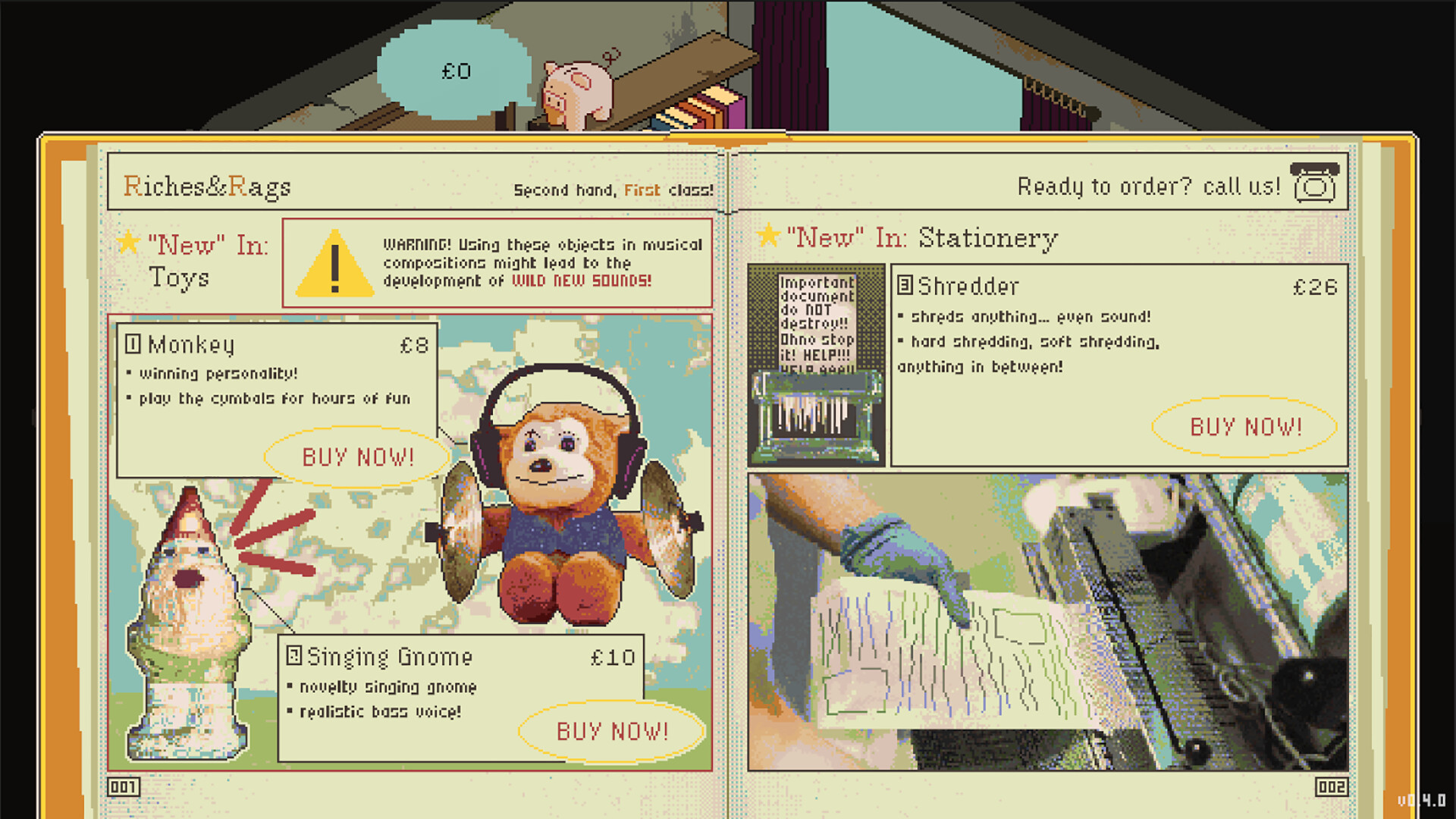
Even with an approachable interface, beginners still face a massive psychological hurdle. Staring at an empty timeline often leads to an obsession with creating a masterpiece right out of the gate. To combat this paralysis, OFFBEAT assigns players highly specific, often absurd client jobs to give their music immediate direction.
“Something that constantly upsets me is when you meet someone new to composition and recording who tells you ‘I’ve got one song, I’ve been working on it for six months, and soon it’ll be ready to start showing people’. I am a great believer that perfectionism is the enemy of progress, and yet when it comes to making art, people can often get hung up endlessly redrafting the beginning of their great work and never make it to the middle. In this valley, we lose geniuses. It’s a problem, of course, exacerbated by the internet. I think that for a lot of young people in particular, they’re constantly exposed to the work of more mature artists (in all fields) who share constantly on social media, and this leads to a kind of low-self-esteem trap.
So! Our question becomes, how do we get people out of that valley? And I think the answer is to create a context where the individual tasks that the player works on feel silly. By the end of the current build of the game, the player’s completed 22 tasks, of which about half have an absurd premise – national anthem for cave dwellers, uplifting motivational office music, ghost wedding soundtrack – and the bite-size daft nature of the jobs (hopefully!) creates a context for the player to rattle through them without getting too self-conscious. And yet, by the end, they’ve written a whole load of songs and practiced a whole load of different techniques. That’s how you get good at art.”
Fluency Over Theory
Sibley’s approach to lowering the stakes extends directly to how the game handles formal music education. As an ESL teacher, I’ve seen firsthand how focusing too heavily on complex grammar rules early on can paralyze a student; true fluency begins with playful, occasionally messy conversation. Drawing from his own professional background, Sibley applies that exact same philosophy to musical literacy.
“I used to work as a teacher, and I often found that explaining a concept in simple conversational language was more effective than bamboozling pupils with terminology. My earnest belief is that music theory knowledge doesn’t help you write music. The book on the desk is intended to suggest techniques and shortcuts, and to provide inspiration. If players want to learn formal music theory, the internet is full of tutorials which they can find in their own time. My priority is just to get them writing music in the first place. Chord theory and modality and secondary dominants can come later.”
This educational ethos meant stripping away the rigid pass/fail mechanics that often dominate puzzle and simulation games, allowing players to dictate their own pace.
“Oh, goodness, I don’t know. The main thing has been ‘avoid contexts in which the player feels like a failure’. At one point the game had far more of a puzzle mentality, where you’d be forced to stick with a job until you’d worked out how to make some particular sound. But actually, trading momentum off against teachable moments is wrong. People should be rewarded for making a track that they feel proud of, regardless of whether it has a thudding kick or not. We could have saved some headaches if we’d worked that out sooner. Modern educational theory is all about continuous assessment, and I’m not really qualified to say whether I think that’s right in the classroom or not (although I instinctively dislike it). But certainly our experience is, if you’re making a game where ‘learning’ is a mechanic, you want to give the player a long leash and plenty of time to fiddle about. And when they tell you they’re ready to move on, it’s fine to just take that at face value.”
A Game First, A Studio Second
Despite its robust educational core, Whetstone Games knows that leaning too heavily into the “edtech” label is a quick way to alienate their audience.
“Nobody’s excited by an educational tool! I’ve always been very clear that we’re making a game first and foremost. Not a DAW, not an edtech product, but a game. It’s very old now but my entire direction in life was changed when I read this rockpapershotgun piece back in 2013. The salient line is ‘It really seems like if I call a thing I did a poem people say “that’s nice, dear” and pat me on the head like I’m precious. If I say I made a game I get READ.’ I don’t feel as though I’ve merged beatmaking with education – I feel like I’ve created a game that makes a virtue of its similarities to both. But it has to work as a game first.”
This firm stance has occasionally put the team at odds with veteran music producers who stumble into the game expecting a limitless sandbox.
“Since early playtesting it’s been the case that more serious music-type people come to the game with a different set of expectations to the more beginner-minded folks who I think are our primary audience. Our feedback has consistently fallen into two camps – one group want parameter locks and 909 kicks and 303 acid lines, and the other group want the game to move slower. I’m really pleased if experienced producers have a good time in our project, but a lot of the time the features they’re requesting are things we’ve deliberately left out in order to produce a cleaner UX for beginners, and those are the people for whom the game really needs to work.”
The Constraints of the Analog Era
To naturally restrict the player’s options and maintain that clean user experience, the game anchors itself in a specific pre-digital era. By giving players tactile, limited hardware, OFFBEAT turns technological limitations into creative assets.
“The game’s (somewhat fuzzy) time period was chosen because it’s the era before computers. The Intel Pentium 3 chip came out in 1999 and marked the beginning of the home-computer-powerful-enough-to-run-audio-software. Physicalizing our audio tools is a way to make them simpler and more playful, but it also lets us bring in constraints which do double duty as healthy creative limitations and guardrails. The modern DAW is stuffed full of menus and features and buttons (I have over 800 hours in Reaper and I couldn’t tell you what half those buttons do) and that’s off-putting. By making our audio tools discrete and physical, we get to be playful but we also get to make a benefit of their simplicity. Of course there’s no overdubbing or parameter automation – it’s a tape recorder! It has four buttons! That’s all you ought to need!”
Under the hood, recreating that physical audio space within a game engine is a massive undertaking. To make it work, the studio turned to an appropriately vintage solution.
“Ah, well the secret there is that we use a somewhat arcane audio backend called PureData, which is also a relic of the 90s. I wrote about this on our blog recently (the other posts in there might be useful too). It’s still a bit of a bastard to figure out (I spent most of this afternoon trying to debug an upcoming instrument) but it’s open-source, well-tutorialised and very reliable. It asks the programmer to do a lot of heavy lifting – we’re implementing synthesizer audio pathways from nothing, over here – but it’s really powerful. Other games have used it, most notably Fract OSC, but I think we’re the first game to build a whole composition suite in it.”
Building out this custom architecture means designing synthesizer pathways from scratch, a process that still brings daily challenges.
“Haha, ask me tomorrow about scrapping instruments because theyre unstable. This audio looper I’ve been working on today has been a massive headache. But I would say in general, the game’s been very measure-once-cut-once, so far. We haven’t had to scrap any content due to audio restrictions.”
The ultimate payoff for all this custom technical work is the game’s export feature. Once players assemble a track, they can bounce it down to a real WAV file, free of any digital rights restrictions. For Sibley and the rest of the team, giving players total ownership over their art is the final, crucial step in turning gamers into musicians.
“In terms of why it’s important that players own their music – there’s obviously the marketing angle (it’s a cool selling point!) but I also believe that if someone writes a tune, they should be allowed to do whatever they want with it. I am very excited to hear about tracks made in OFFBEAT showing up in other media in future.”
[…] “I am a great believer that perfectionism is the enemy of progress, and yet when it comes to making art, people can often get hung up endlessly redrafting the beginning of their great work and never make it to the middle. In this valley, we lose geniuses.” – READ THE FULL INTERVIEW! […]






Leave a Reply