Sixteen years is an eternity in the world of live-service games. For the development team at Cryptic Studios, keeping Star Trek Online thriving has meant constantly balancing the demands of a massive, evolving player base against the technical realities of an MMO originally built in just 18 months. Now, with the release of the Undiscovered update, the studio is tackling one of its most ambitious projects yet: completely remaking the game’s beloved “The Ultimate Klingon” story arc while simultaneously launching an entirely new procedural exploration system.
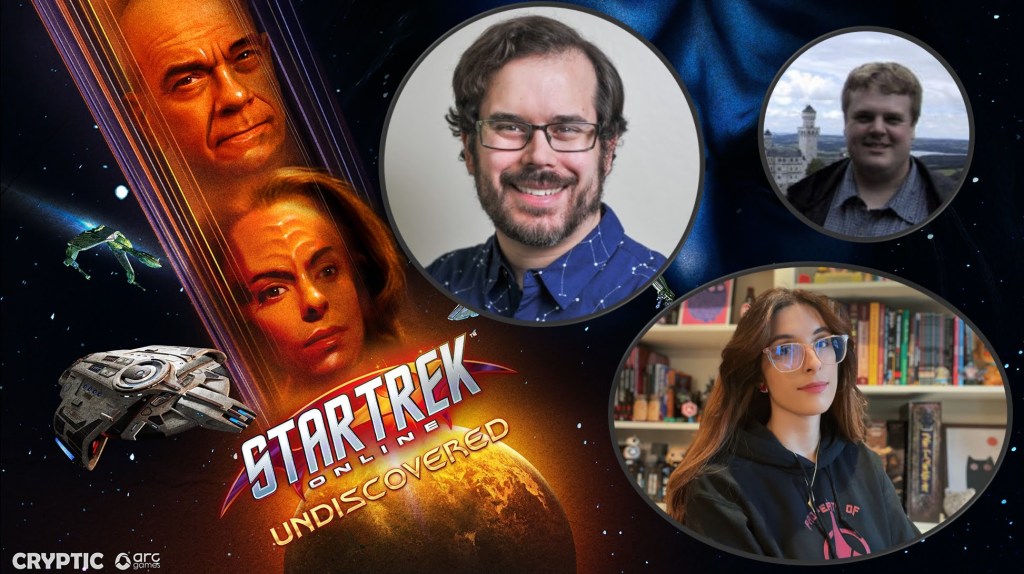
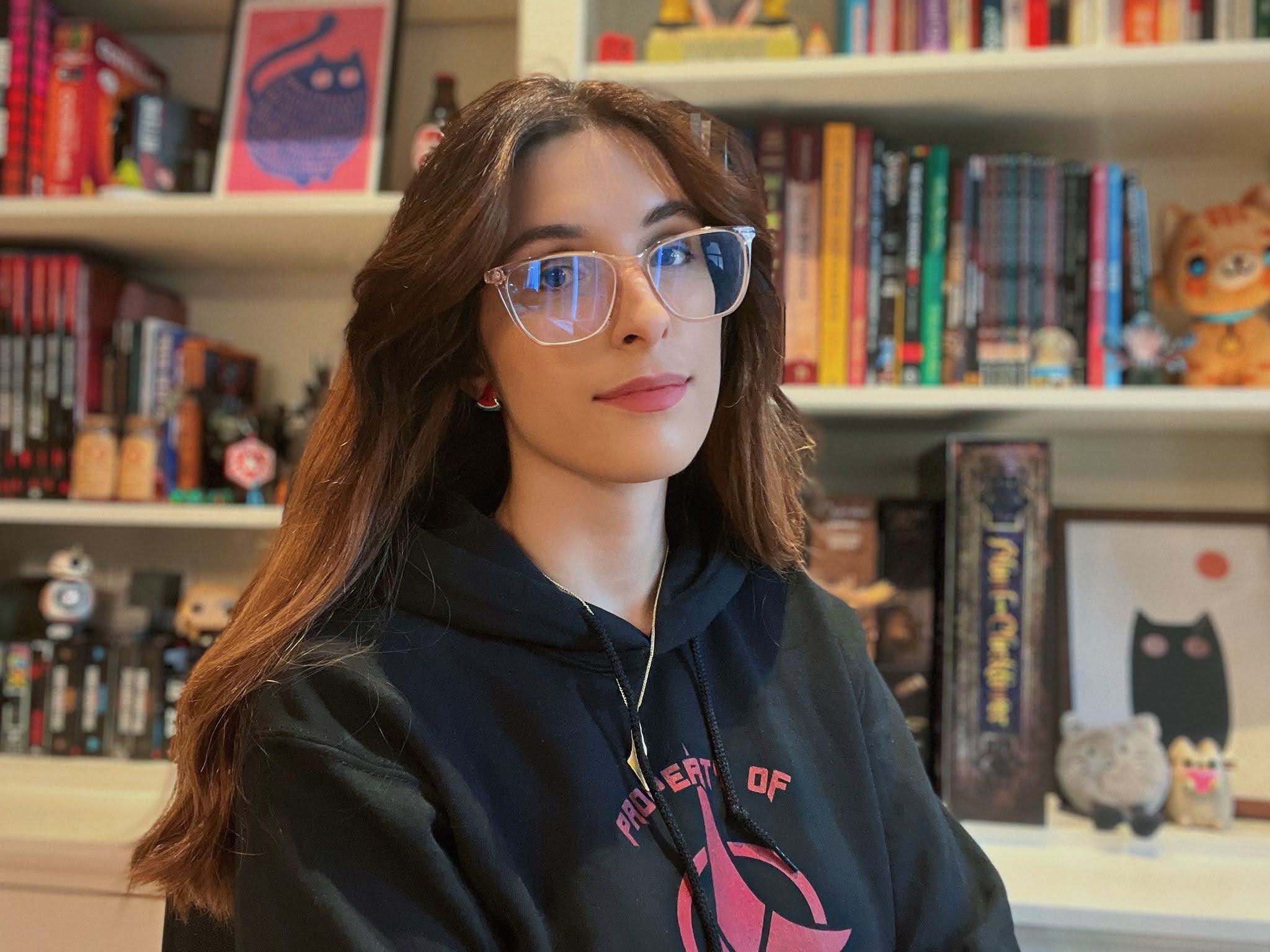
To understand the sheer scale of modernizing a nearly two-decade-old framework, we spoke with Executive Producer Thomas Marrone, Lead Designer Jeremy Randall, Content Designer Arina, and Senior Narrative Designer Flo McQuibban.
Their insights offer a rare look at the realities of long-term game development. From the dangers of touching ancient code and the delicate art of collaborating on an established 60-year-old IP, to the hard-learned lessons of managing a passionate community, the team opens up about what it takes to rebuild a digital galaxy.
This interview would not have been possible without the wonderful people at Sandbox Strategies. Many thanks Lauren Treon!
Tearing Down the 2010 Foundation
When a development team decides to overhaul legacy content, the immediate challenge is the underlying technology. “The Ultimate Klingon” has been in the game since its earliest days, and updating it required a harsh assessment of the existing architecture. For the design team, attempting to salvage the 16-year-old code was simply too dangerous.
Arina, Content Designer: “The original content had already been revamped several times, and once we had decided to go for more than a remaster, it was clear that attempting to work with the legacy code could potentially cause more harm than benefit to our work. So the only right thing to do was to (re)build the maps and mission logic from scratch.
We wanted to re-use as many assets as we could from the old content as possible, as a tribute to the team who originally worked on it and to the nostalgia player who experienced the content when it was originally released. At the same time, we wanted to make it feel fresh, and really shine a spotlight onto all the different eras of Star Trek this story touched upon.
Data and assets aside, because this story unites so many threads from different eras and we have several factions players can choose from, we wanted to bring this content to all of them. As a result, we needed to make sure to tell a story that worked for our players no matter if they are a reliable Human Starfleet Officer, an honorable Klingon warrior, a Liberated Borg, a Ferengi following the Rules of Acquisition, or any other Captain they choose to be in Star Trek Online. We wanted to include as many of these player-made choices and offer as much variety as possible. This usually involves a lot of planning early on, on the content and narrative side alike.”
While the content designers built new maps, the writing team faced the challenge of preserving the lore. The overhaul was viewed as an opportunity to modernize the script while retaining its historical value within the game.
Flo McQuibban, Senior Narrative Designer: “There are development risks associated with a complete narrative overhaul, that’s for sure. Fortunately, I think the rewards outweigh those risks. In terms of the game writing, this overhaul allowed us to modernise the story but keep it very referential, both to the existing removed content and the Star Trek IP.
For this release, Arina and I were co-narrative owners in that she kicked off pre-production and story pitching, and I picked up her story beats and turned them into game writing. We worked together to include dialogue from the original missions, turning them into ‘found footage’ data logs instead and preserving the original voiceover work – polished by our Lead Sound Designer, Chris Perucchi. This did require a lot of investigative work, but ultimately meant we could save a lot of existing content too.
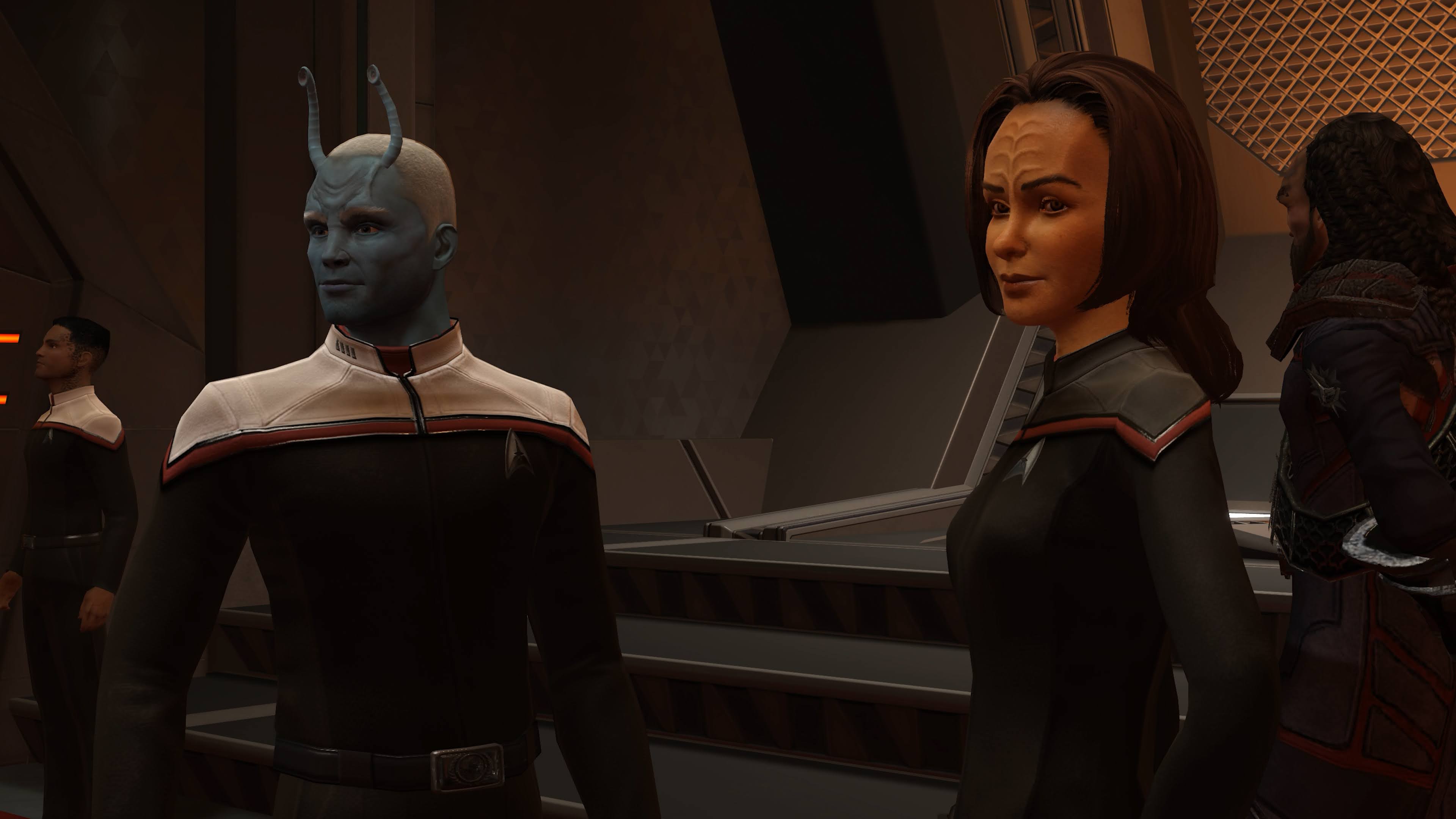
The rewrite also accounts for the shift from Federation-specific mission to a mission available to all, and adds a considerable amount of species-specific dialogue, options that refer to your crew, and more. The writing intends to inject a greater degree of immersion into an existing story, add emotional depth to the heroes and villains, and build on the backstory of important current timeline characters players know and love, such as Captain Shon and Captain Kagran, the episode’s mission-givers. To me, that’s a risk worth taking.”
Ultimately, making a clean break from the old systems freed the team from stepping into unforeseen technical traps and allowed them to introduce entirely new mechanics.
Jeremy Randall, Lead Designer: “A lot of this was handled by tearing it apart and rebuilding it from the ground up!
We built entirely new maps, new mission logic, new unique NPCs, and all new scripts, from scratch, rather than contend with the old content that’d already gone through multiple internal revisions over the years. We decided very early on that this would be the best approach, rather than risk stepping into any unforeseen traps that might come up by trying to massage an existing and age-ripened piece of content into a more modern state.
This methodology of building it up from scratch was made easier to execute thanks to our decision to change a lot of the locations and characters involved in the story, in order to mesh better with the rest of the modern game. And as soon as this was a decision we made, we began to embrace the total rebuild, as we realized that it would allow us to take something old and beloved by many veteran players, and give them a simultaneous helping of nostalgia AND novelty. Something both old and new again, which is very fitting for content releasing during the 60th Anniversary of the Star Trek IP!
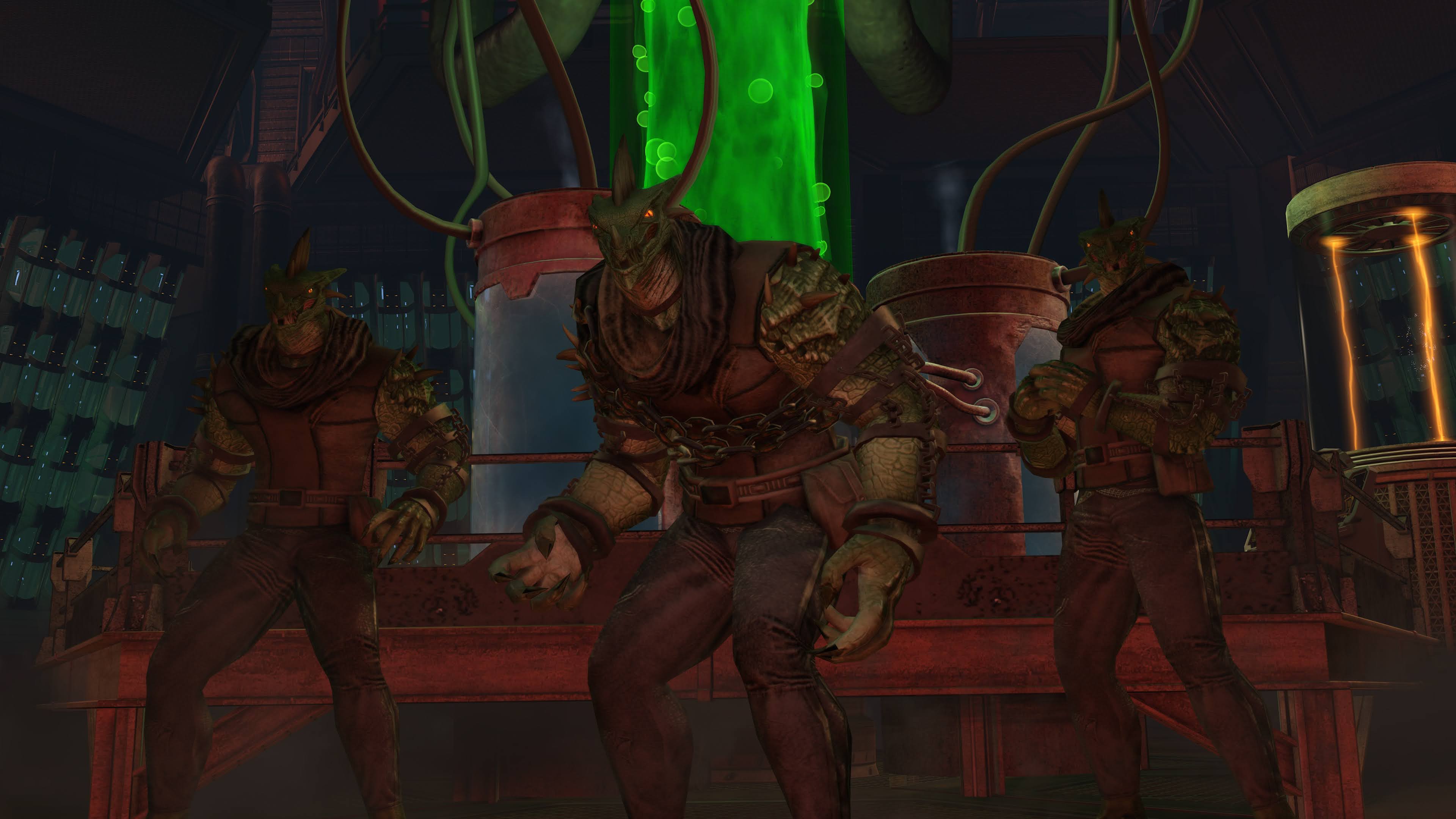
Not everything is brand new, though. We were able to make some clever re-use of certain existing assets – fighting Klingon and Gorn enemies that already existed in the game, and re-using Klingon-themed interiors – while making sure to dress them up with new mechanics and fresh coats of polygons. Even with these, we made sure not to take anything for granted, and also re-learned the lesson along the way that even established code and assets can’t always be trusted!”
Confronting Past Design Choices
Game design philosophies have shifted dramatically since 2010. Rebuilding older content forced the team to directly address outdated mechanics, awkward pacing, and character portrayals that haven’t aged well. Reimagining content means confronting past design choices that might not have aged well. Was there a specific mechanic, narrative beat, or pacing issue in the original Klingon arc that the team universally agreed had to be thrown out or completely overhauled?
Arina: “One of the most important parts of the overhaul for me was giving B’vat as well as Amar (Noonien) Singh more room to reveal their motivations and reasoning. While B’vat is a recurring villain, existing content sadly didn’t give us a chance to really understand what drives his actions through gameplay. Looking back at this older content in 2026 really shines a harsh light on the technical limitations the team were subjected to back then. I don’t think it’s fair to measure the original content against the possibilities we have today, but replaying the original missions now felt almost formulaic, repetitive at times, sometimes unimpactful or out-of-sync with the story, and some NPCs could come across as a little robotic or non-responsive to player actions.
We wanted to remake this and turn it into a multi-layered story with villains who feel brilliant and threatening, emotional moments, and beats that spotlight some of our original characters like Captain Shon, Captain Kagran, or President Okeg. We wanted the places to feel real and the conversations to be impactful.”
Modernizing the narrative also meant updating the treatment of legacy characters. In the original version of the arc, Miral Paris was subjected to classic damsel-in-distress tropes, an approach the writers were eager to correct.
Flo McQuibban: “I remember early on in our pre-production talks, one story beat that Arina and I were really keen on changing was the agency Miral Paris is afforded during the mission. In the original content, she is in many ways abducted by B’vat, which is shown in a cutscene as her walking alongside him on the Gateway Planet to head through a time portal. We were both keen to step away from the damsel in distress narrative, not only because we found it outdated, but because it didn’t seem to fit the character.
Miral is an assertive, partly Klingon, Chief of Security stationed on an important starship. She’s powerful, determined, and smart, and we felt that she’d at the very least fight back some more. We got that impression from her dialogue in the Star Trek Online mission ‘Delta Flight’ as well, where she pokes fun at her father and mentions her own capabilities. Because of this too, we decided to make her time travel intentional and her own choice – she goes after B’vat to stop him instead of being forced to follow along.
Not only does this make the character and story more compelling, but we’re sending an important message. Star Trek Online and Star Trek in general has and wants strong female leads who make tough calls and put themselves on the line, like most Starfleet officers would. Of course, we have the massive benefit of retrospect – I’m sure the original developers of this mission would agree and would probably also be making the same rewrites as we are if they had the opportunity to do so today.”
From a gameplay perspective, smoothing out the early-MMO pacing meant replacing mundane tasks with story-driven action and allowing players to see pivotal moments unfold directly.
Jeremy Randall: “The original mission had the player performing some very mundane and ultimately non-sequitor tasks, such as defusing multiple bombs placed outside of an embassy. But that didn’t cancel the peace conference, for some reason? Makes no sense if you scrutinize it, and isn’t addressed in the text.
With this remake, we still have intrigue at a peace conference, but we put it out into the open how the important characters would respond to the things happening around them – why we make choices to take risks in the face of danger – instead of just hand-waving our way past it all. Important conversations with important people is a very Star Trek thing to engage with.
There were also multiple highly impactful story beats in the old episode arc, that – due to technical and process constraints of the game’s original rapid release process – ended up relegated to text retellings of those events that largely happened ‘off screen.’ It was a very ‘tell don’t show’ method of incorporating important plot points into an episode, and it resulted in the player lacking a lot of agency for those important beats.
As for pacing, we’ve learned a lot over the years about our current players’ expectations, and how best to mix dialogue, combat, and other gameplay elements. We’ve included what feels like the right amount of story-justified conflict and combat, without any of it feeling as though it’s been shoehorned into the mission just to ‘spice up’ an otherwise long or tedious section. But we’ve also included an optional stealth section for players that would prefer to avoid combat, and other mechanics that have you dodging security sweeps, and hunting through old data logs to uncover the enemies’ secrets. These elements have all been combined to make the new mission far more tense and intriguing than the original mission which mostly had you bombastically leaping from one combat to the next, slaying Klingon and Gorn by the dozens, between moments of long, drawn-out exposition.”
Bridging Voyager Lore and 2409
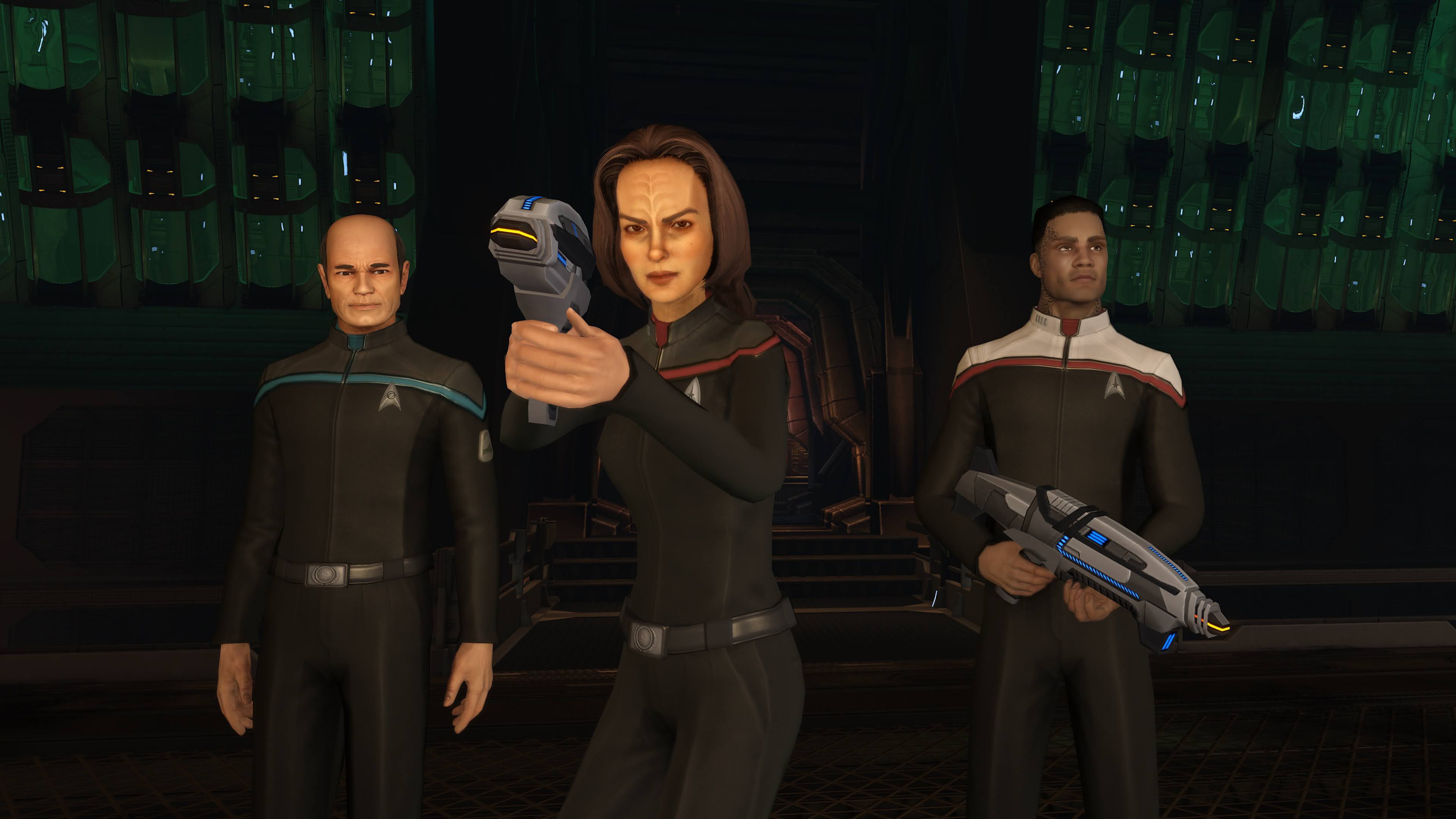
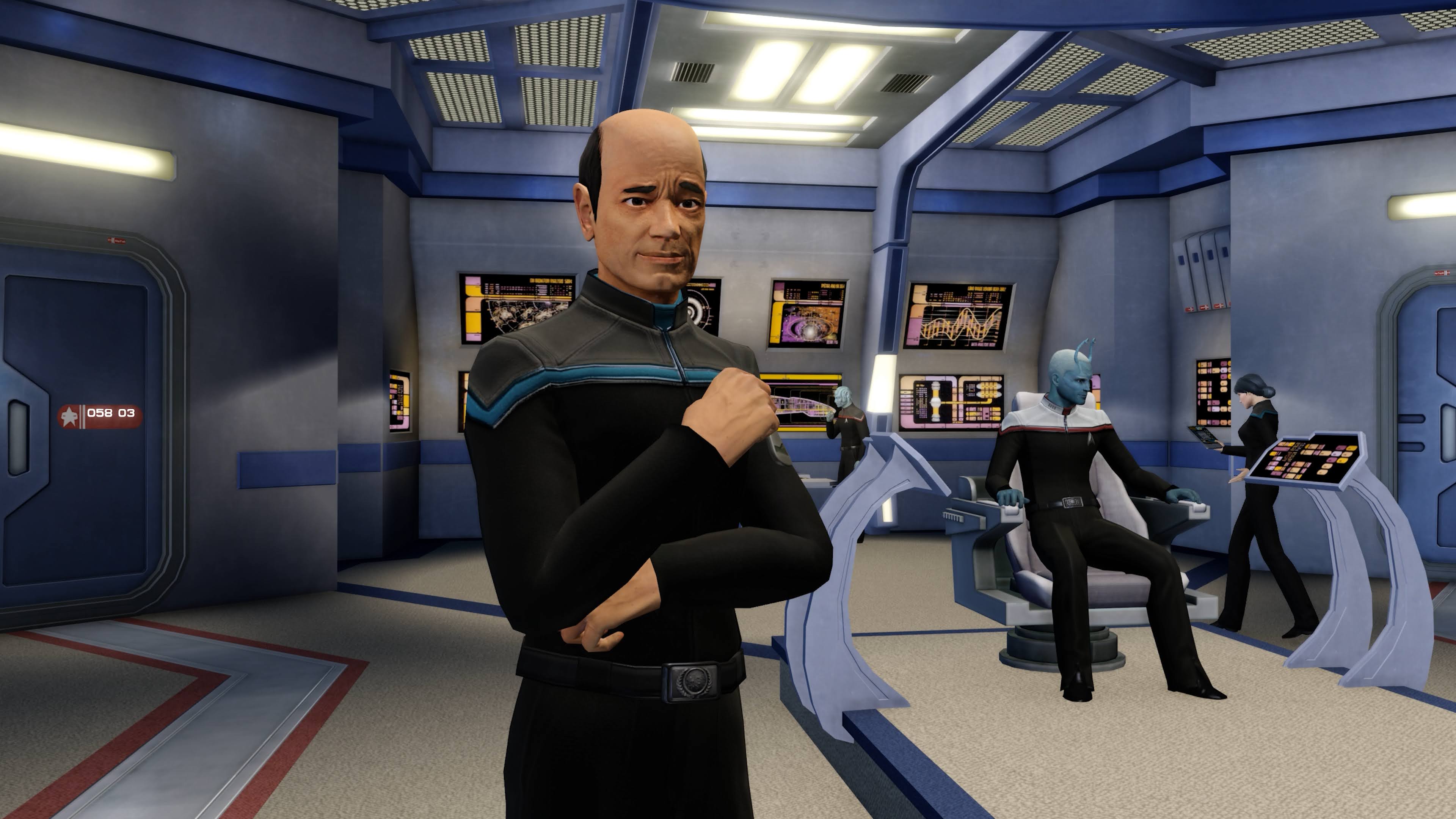
The centerpiece of the Undiscovered update is “The Kuvah’Magh,” an episode that relies heavily on the return of Star Trek: Voyager actors Robert Picardo (the Doctor) and Lisa LoCicero (Lieutenant Miral Paris). Integrating their characters into the 2409 timeline required deep research to ensure consistency across the franchise’s history. Looking at the new episode, “The Kuvah’Magh,” you brought back Robert Picardo and Lisa LoCicero. From a narrative design perspective, how do you write a mission that seamlessly bridges classic Voyager lore with the current state of 2409, while making sure the gameplay loops feel fresh to a 2026 audience?
Arina.: “As a fan of Voyager I was re-watching the series anyway. So the timing for reimagining this content was perfect. The next important step was to play through the original content and all missions related to it to understand where it belonged in 2409, what led to the events happening there and the consequences they had. It was important to understand the impactful beats of the original story and identify parts we could strengthen or explore further. As well as pinpoint where we could reinforce the connection of this story from 2409 with other Star Trek lore from movies and other series.”
The pre-existing lore surrounding Miral Paris provided a natural bridge between the television series and the events of the game.
Flo McQuibban: “Bridging the gap between Voyager lore and 2409 Star Trek Online lore was actually one of the easier challenges of this release – the Kuvah’Magh episode is based off of the Voyager episode by the same title, in which the Doctor sets out to use Miral Paris’ genetic material to cure a group of Klingon pilgrims of a fatal disease they call the nehret. The cure being successful is what leads to Miral Paris becoming the Kuvah’magh, a contentious figure culturally-speaking amongst Klingons of the Empire.
Most of my pre-production process when it comes to worldbuilding and game writing is focused on research and cross-departmental collaboration with the primary content design stakeholder, in this case Arina. For this release, as Arina already stated, she and I rewatched critical Voyager episodes featuring the Doctor (Robert Picardo) and Miral Paris (Lisa LoCicero), as well as all the Star Trek films. We also replayed all of the Star Trek Online missions we intended to remaster.
It was important that we understood the characters in the bi-fold context of the story we wanted to re-tell: how to achieve peace between the Federation and the Klingons with a nod to Star Trek VI, and the role of Miral Paris as the prophesied but contentious Kuvah’magh in Klingon spiritual discourse and therefore also the importance of her genetic material. Those were the non-negotiable story beats, and our mission is centred around the evil forces that try to thwart both of these core pillars.
Miral Paris was already part of the original Klingon War story arc, so naturally we were excited to get the opportunity to bring Lisa LoCicero onboard for this content drop. Including Robert Picardo as the Doctor really made sense – he’s Miral Paris’ godfather, he has studied her genetic material, and he also pioneered research on Species 8472 who the Federation and Klingons are both fighting against in 2409.”
For the design team, the focus was on identifying the most impactful nostalgia pillars from the original missions to anchor the new narrative framework.
Jeremy Randall: “The first step we took as a team, was to scour the pre-existing story arc for what we felt were the most important story beats, and moments of nostalgia that we felt had the most impact, and that we’ve heard mentioned by players over the years when they have talked about these missions. Once we had stock of those pillars, it became a relatively straight-forward (but not easy) task of creating connective tissue between them that would solve some of the noted shortcomings of the original mission structure.
The choice to expand on that prophecy was one of the most important aspects of the original storyline that we made sure to hold onto, and by extension it made the choice of bringing back Robert Picardo an obvious one, and we’re so thrilled he agreed to join us again to reprise this role!
The setting and timeline was also deemed very important, and Miral’s prophesied role seemed to fit best into the backdrop of the game’s early war between the Federation and Klingon Empire. And with that backdrop, it became an opportunity for us to introduce characters from STO’s rich lore – Captains Shon and Kagran, and President Okeg, as well as others! – to help bridge the story to the living, breathing world that we’ve established in the wider game, over the years.”
The Reality of IP and Live-Service Management
Navigating strict licensing guidelines for 16 years has given the Cryptic team a distinct perspective on honoring a franchise that is currently celebrating its 60th anniversary. Executive Producer Thomas Marrone notes that succeeding with a major IP requires looking past mere trivia. Our question: How do you navigate those creative boundaries when altering legacy stories, especially during a milestone like the franchise’s 60th anniversary?
Thomas Marrone, Executive Producer: “Making a game based on an IP can be a double-edged sword. If you get it right, you have an audience of passionate fans ready to evangelize your game, and a potential well of customers who might not’ve played your game but for the IP. But if you don’t execute well, early adopters will warn potential players away and treat your game like a broken promise.
We love Star Trek, and over the course of the game’s 16-year history, we’ve been able to build a great relationship with Paramount that is very collaborative and supportive. Star Trek Online earned the incredible distinction of being a licensed product that has actually fed original artwork back into the canon when our Enterprise-F design appeared in Star Trek: Picard.
But how did we earn that trust? Obviously we started as fans of the thing we were making. But it isn’t enough just to know all the facts and trivia. To work with an IP, it’s crucial to understand WHY people love it the way they do, and to build on the emotional pillars of the IP they connect with. Star Trek is about curiosity, determination, diversity, and optimism. If you can hone in on the things in the DNA of our partner’s IP, and use those pillars to inform your choices, you will be able to quickly build that trust.
On a more practical level, it is, of course, still very important to also remember the trivia and the details. They aren’t a restriction, they are a gift! The IP is a big part of why people are showing up for your game, and if you do right by that, fans will evangelize for you. I am thankful every day that just by faithfully recreating something we saw on Star Trek, I know our players will love it. But you have to have both the ‘soul’ and the ‘details’ right to really connect with the fans of an IP.”
Beyond honoring the canon, maintaining a healthy game ecosystem over nearly two decades relies heavily on cultivating genuine empathy for the player base. Keeping a live-service game relevant and populated for nearly two decades is a rare feat. For independent or AA teams out there currently building or maintaining their own multiplayer games, what is the single biggest lesson your team has learned about community retention and managing technical debt over time?
Thomas Marrone: “Having people on the team who are passionate about the game and play it themselves is crucial to having empathy with your player base. Collecting feedback (in a healthy, productive way) is obviously also critical, but being able to compare that feedback to your own personal experiences as a player is invaluable.
Communicating with your players is important. I mentioned a healthy, productive feedback loop. It’s good to be honest, it’s good to communicate frequently, even if all you’re saying is ‘I hear you,’ but that has to come from a place of care and sincerity, and you have to make sure that your actions align with your words.
Respecting players’ time and money is important. That doesn’t mean you can’t take big swings, or charge a lot for a particular item, but be sure how they perceive the value of your offering matches up with what you’re expecting them to pay. Especially for live-ops games, it’s important to remember that there are whole entire games players can get on Steam for the same cost as a single microtransaction. So ideally whatever you sell to keep the lights on is bringing a good value.
Early in my career I always got frustrated that whenever we delivered something players had been asking for, they immediately started asking for something new. Nowadays, I realize how much of a gift it is to have people interested in what I’m making who are willing and eager to tell me exactly what they want to buy.
That said, of course you need to factor in metrics and your own skill, judgement, and experience. But I have noticed that sometimes game developers have an adversarial relationship with players akin to the punitive dungeon master of classic D&D. There’s a temptation to feel like you’re smarter than players or ‘know better.’ It’s a dangerous mindset to have and can create a situation where a sustainable equilibrium is ruined by designers or product managers who think they know better.”
Building the Fleet: Ships and Tools
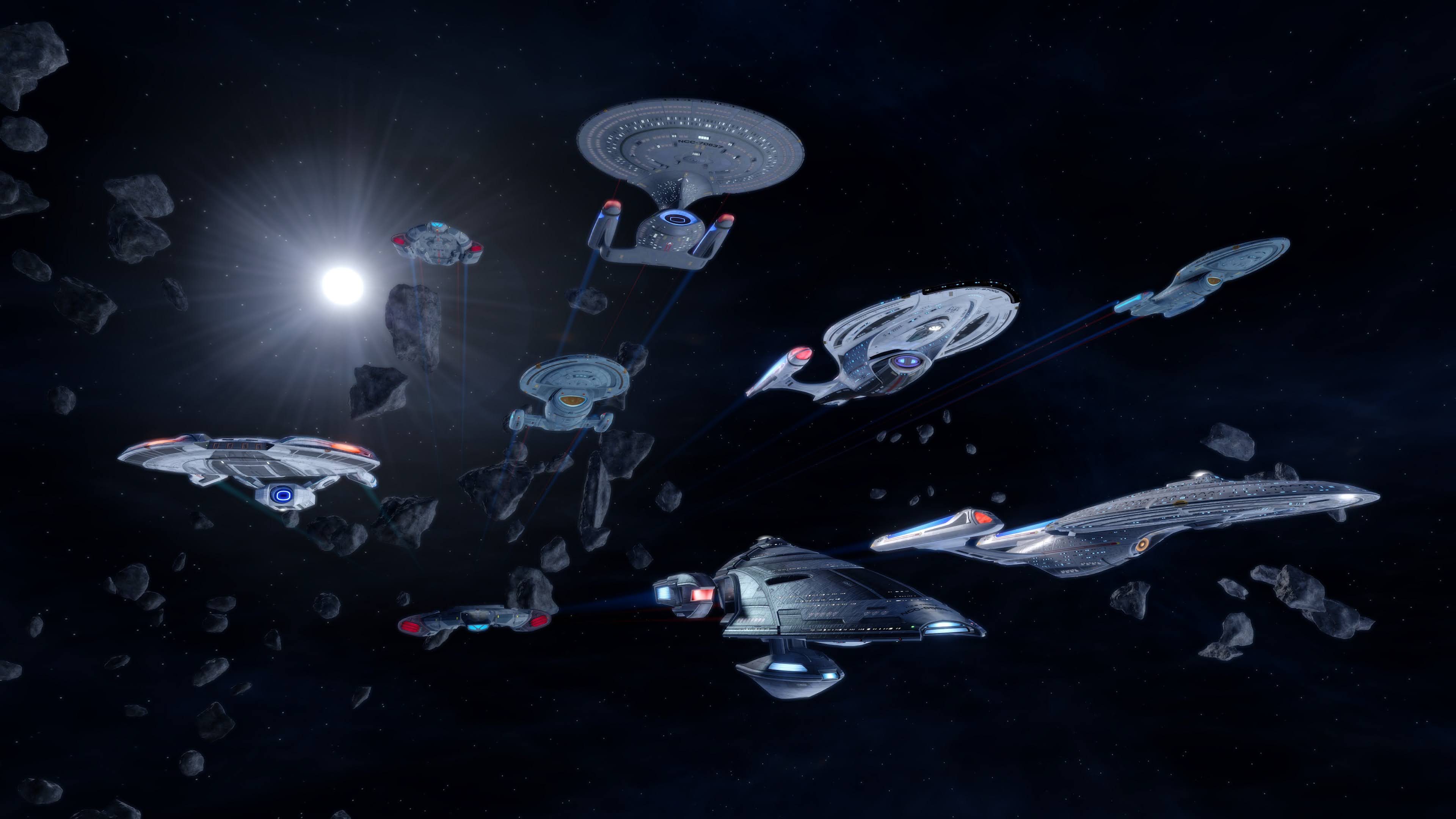
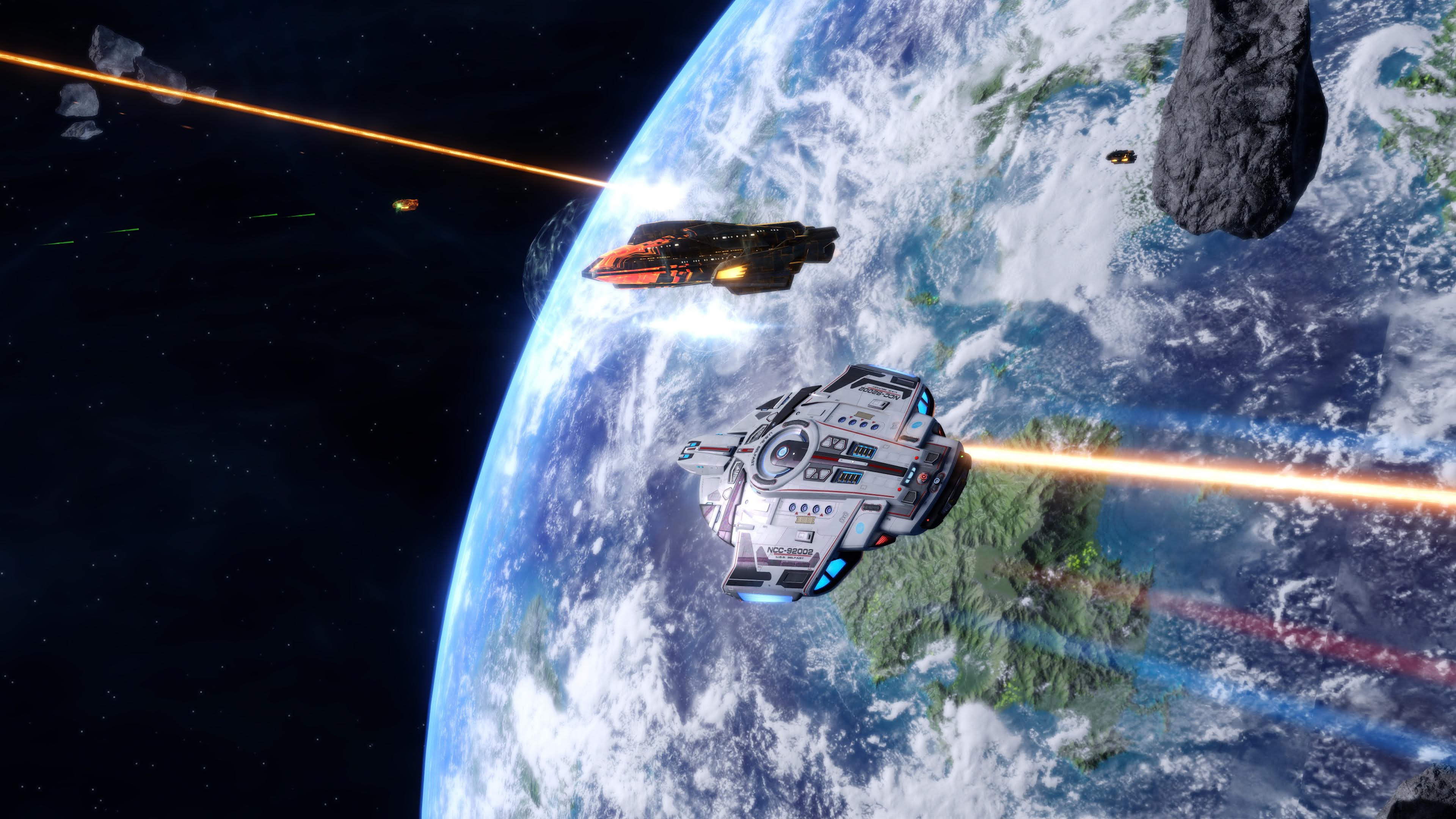
A major highlight of the Undiscovered event is the K’Vort Temporal Flight Deck Raptor. Designing a massive warship that appeared in both Star Trek: The Next Generation and Star Trek: Lower Decks required blending distinct visual styles into a cohesive set of in-game abilities, functional in-game stats, experimental weapons, and consoles like “Hunting Pack Escorts”?
Jeremy Randall: “With any starship we introduce to the game, we always go through a period of research and info gathering. While we primarily lean on canon sources, we’re not afraid to delve into novels, comic books, technical manuals, and more, all in search of inspiration for what our ships do, and how their identities play out.
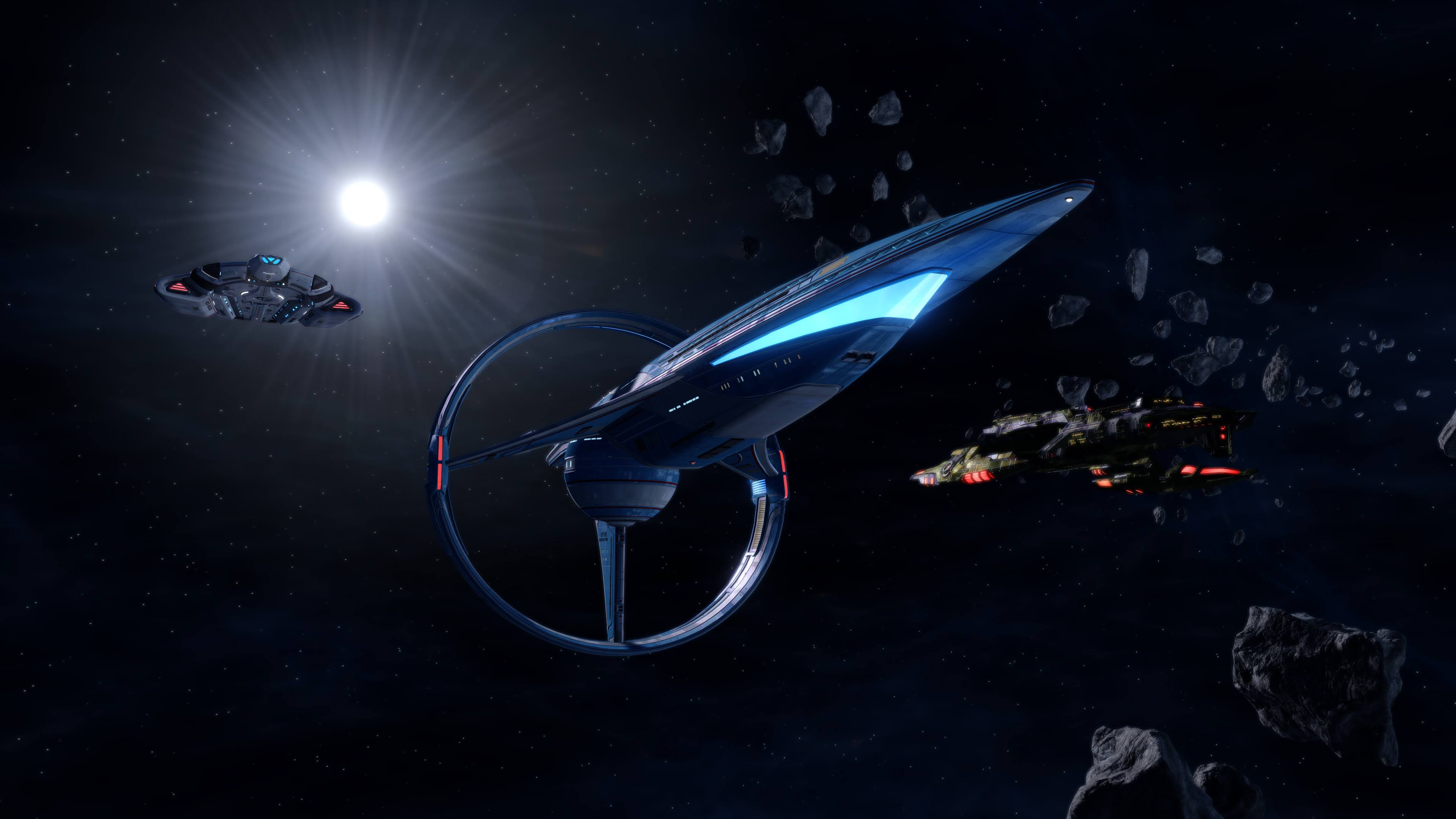
For the K’Vort in particular, we first made the call to bridge two parts of canon into one, using this ship: the old upsized B’Rel Birds-of-Prey seen in TNG episodes (which were referred to by fans and semi-canon sources as the ‘K’Vort’) and the larger custom cruiser flown by Relga in Lower Decks (which did not have a class name listed). The appearance of Relga’s cruiser-sized Bird-of-Prey acted as perfect justification for us to embrace it as a retcon of the original K’Vort, thus merging these two ship types into one beautiful beast of a starship. We even managed to include classic B’Rel-like customization options, for players preferring something more akin to the classic TNG appearance of this ship, to further justify this confluence of designs.
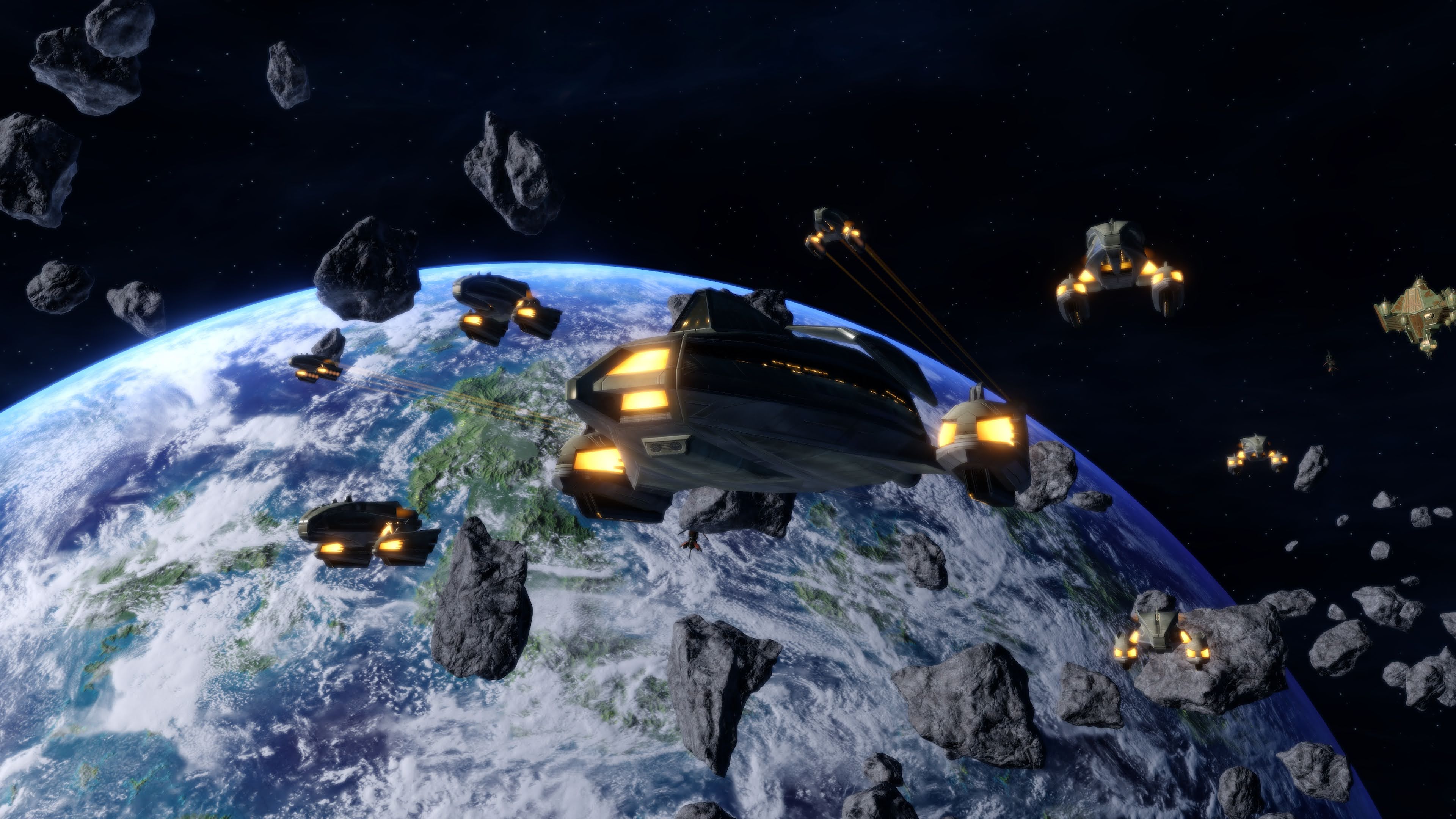
Across all of the K’Vort’s appearances on screen, our team was struck by one obvious consistency – it was never alone. The ship always appeared either in a pack with other K’Vorts, or accompanied by two or more smaller Birds-of-Prey. Once we’d taken notice of this, we decided immediately to lean into this as a core part of its identity. This decision evolved into multiple aspects of the ship: Its ‘Hunting Pack Escorts’ console which summons two powerful and capable Bird-of-Prey escorts, as well as the inclusion of a Hangar Bay that would allow the ship a permanent escort of Birds-of-Prey using our existing Carrier class mechanics.
Once we’d made those design decisions, a lot of others just naturally fell into place. The ship’s larger size, but decidedly raider-like shape profile, led us to give it appropriate stats for a heavier class of ‘Raptor’ vessel (essentially a Klingon counterpart to the Escorts and Destroyers of the Federation). And the Klingon identity in STO is closely tied to Disruptor energy effects, which led to the introduction of a new Disruptor-based Experimental Weapon that further accentuates the ship’s aggressive, forward-facing attack posture.
All-in-all, the ship is a wonderfully cohesive package, and we have the depth and flavor of the Star Trek IP to thank for giving us so much inspiration on her design.”
Implementing such a complex starship is vastly easier today. When you look back at the development tools you had in 2010 versus the internal engine tools and pipelines you have today, what is something that used to take weeks to code, map, or animate that your team can now handle relatively easily?
Thomas Marrone: “We’ve done a lot of work on our ship pipeline to make the process of importing starship art into the game much easier than it used to be. On the back end, starships are ‘costumes,’ just like our characters. (This nomenclature is rooted in the fact that the first Cryptic engine games were superhero games!)
But anyway, just like a piece of character art is a costume broken up into several pieces like head, ears, chest, arm left, arm right, etc… our starship models are also imported into the game in pieces like ‘saucer,’ ‘hull,’ ‘nacelleR,’ ‘nacelleL,’ etc. This allows us to use the same character art technology that we used in Champions to let people customize their hero to customize their starship in Star Trek Online.
So for that to work, there’s a LOT of scripting that has to happen for the game’s costume system to properly interpret all the pieces of a starship and how it fits together. A few years back, one of our tech artists made an awesome script for 3Ds Max that was able to look at the actual 3D model of the ship and automatically build all of those script files for the artists. This drastically reduced the amount of time it took to import a new starship model into the game.”
A Procedural Galaxy
Alongside the narrative overhaul, Undiscovered transforms Sector Space—the game’s open-world travel layer—with Deep Space Encounters. Mechanically, how does the game’s backend engine determine the combination of objectives, environments, and enemies on the fly so it doesn’t feel like a repetitive grind? How did the engineering team balance random gameplay loops with a genuine sense of purposeful exploration across the Alpha, Beta, and Delta Quadrants?
Jeremy Randall: “I’ll give credit to my talented team of Content Designers for having come up with a workable solution to this. It might surprise some readers to hear that every Deep Space Encounter takes place on an instance of the same map.
The first step is that the ‘doors’ that you interact with in Sector Space do some amount of randomization when they are created, they make a few choices about information that will be passed to the instanced map that the player will enter. In this way, we’re able to pre-determine some primary characteristics such as which Mission Type of the DSE that the player will enter, and which Quadrant they are located in. When a player interacts with that ‘door’ the info gets passed to their character container and temporarily stored, so that once they transfer to the instanced map, the map can run logical checks against those flags in order to know what to start building out.
There are additional layers of choices made at this point… Upon loading into the map, there are 5 variants available from each of the 3 Mission Types, each with bespoke logic, objectives, text, and voiceover, for a total of 15 distinct missions the players can be sent to complete. Once the mission is determined, the map then references the Quadrant info that was also passed in by the door, in order to determine which Enemies (and maybe Allies) will be spawned, so that they are appropriate to the region of space the player came from.
And once all of those gameplay elements have been chosen from the tables we have built for them, there is yet another layer of randomization that happens, in order to set up the environment in which the Deep Space Encounter will take place. These environments were curated into ‘themes’ by our artists (mostly based on color), so that they feel like cohesive locations that could actually exist in a Star Trek galaxy, but without feeling so identifiable as to be a specific, static location. This last step took some careful art direction, as we wanted to make sure it never felt like a ‘gray soup’ of randomized elements, but instead felt like a custom, bespoke experience that was built for the player to engage with.
None of the techniques used in this way were technically brand new to STO, but combining so many of them into a single feature definitely elevated their use in practice, and taught us a lot along the way about the importance of excellent planning, prototyping, and early involvement from all stakeholders.
The real heavy lifting related to both art and coding for this release has come from the many UI elements we’ve added as connective tissue, to bridge the experience from one DSE to the next. Sector Space – STO’s open world travel layer – has had a facelift in terms of UI iconography, and we’ve introduced a robust new Compass UI element to players’ HUDs that helps bring a sense of exploration and life to Sector Space. In addition to this, we have timers added to help players know when DSEs will cycle (re-randomize), and a Featured Quadrant bonus that guides players to participate in DSE content together in order to increase the tier of rewards received by playing this content. All of these features have come together to help make sure that DSE content feels connected to the rest of STO, as well as to help revitalize Sector Space into more of an active part of the game, instead of just something you AFK through while traveling to your next mission.”
The Magic of Hindsight
Looking back at the game’s frantic 18-month initial development cycle, the team remains highly aware of the foundational limits they are still navigating today. When asked what could have been built differently in 2010, the answer points directly to the sheer complexity of the modern game.
Jeremy Randall: “As some of you might know, the development timeline leading up to the initial release of STO more than 16 years ago, was extremely tight – the whole game was built and shipped in around 18 months, from scratch. So when you ask a question about what could have been done better, or with greater foresight, the list is realistically quite long. That said, our ongoing success has given us a lot of opportunity over the years to improve, streamline, optimize, and update many core aspects of the game’s performance, including notable improvements to lighting and overall graphical fidelity capabilities.
That being said, with the magical gift of hindsight, I do still have two wishes:
The first is that of an in-game player-accessible item database, or wiki-like structure, which would be capable of housing references for all of the myriad items, traits, officers, ships, skills, and so much more, which all factor into the incredibly complex build structure of the modern game. If we’d known how complex the game might become, building a foundation to support players’ ability to attain knowledge that would help them navigate the maze of synergies and bonuses would have been an incredible boon to the modern game. Imagine seeing a ship or weapon that you’d like to learn more about equipped on another player, and being able to inspect their loadout and follow a link to an in-game database that could tell you not just what that item is, but also how to obtain it. It wouldn’t be impossible to build something like that for the modern game, but doing so in an age where the game had far fewer interlocking pieces would have made standing up the systems and framework for it a far less Herculean lift than it would be these days.
The second wish would be building a better Tailor interface for our extremely robust costume and uniform customization. We have so many incredible options for how you outfit your Captain and Crew in STO, but the interface used to find and equip them leaves a lot to be desired. And, like the aforementioned wiki database, building something capable of supporting everything that now exists would’ve been a much more feasible task back when we were first laying the groundwork for what the game would become. Our brilliant artists probably spend more time flagging data objects, setting up names, sets, and permissions, than they actually spend making art, which could be considered a mis-use of their talents! I would love to have had the opportunity to spend more time upfront planning this out, instead of doing the best with what we had.”
As Star Trek Online sails past its 16-year milestone alongside the wider franchise’s 60th anniversary, the Undiscovered update stands as proof of how far the game has come. As long time fans for the MMO, we’re happy to see that the studio still works on balancing nostalgia and complex modernization, showing deep respect for both their players and the lore.
[…] “I have noticed that sometimes game developers have an adversarial relationship with players akin to the punitive dungeon master of classic D&D. There’s a temptation to feel like you’re smarter than players or ‘know better.’ It’s a dangerous mindset to have and can create a situation where a sustainable equilibrium is ruined by designers or product managers who think they know better.” – READ THE FULL INTERVIEW! […]






Leave a Reply