
Galin remembers a particular problem with the old zombie mods in Counter-Strike: Source: nobody wanted to be the zombie. Shooting the infected was great fun, but being the target of all those bullets was another story. With Disbond, the multiplayer shooter he’s developing under Bozz Studio, he wanted the infected players to have just as much to look forward to as the survivors.
That meant giving both sides classes and abilities that could change the course of a match. It also meant dealing with the sort of trouble only real players can create. We spoke with Galin about the balancing, the barricades people have used to break his maps, and how he’s managed to build the game alongside his day job.
Making Us Want to Be Zombies
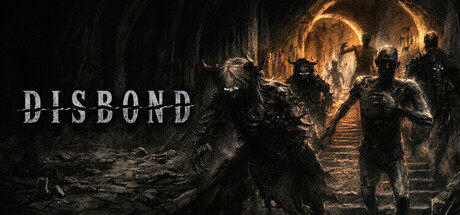
People hated being zombies because (in my opinion) the gameplay loop was not rewarding. It was fun shooting zombies as a human, but not so fun being shot as a zombie so everyone was rushing for the round to end, because they wanted to be humans. Here I gave the humans and the zombies separate classes, which aim to bring balance and different gameplay mechanics and skills into the game (not just running and shooting :D).
For example there’s the grenade planter human (who’s equivalent is the crawler zombie) – they are your speedster class that moves fast, jumps higher and has a dash. It’s more oriented towards people that like speed at the cost of health / survivability. There’s also a tank zombie called the smasher who can grab other zombie players and use them as a zombie shield :D And he can also throw them at other people. There’s the demon zombie which can disguise itself as a human (people loved that!) and that way get close to the survivors and infect them. Screecher zombie has a blind ability where it blinds any human in its scream radius for 5 seconds, and the newest zombie, the forsaken, can raise zombies from the ground which start charging at the nearest human and can instantly swap places with them.
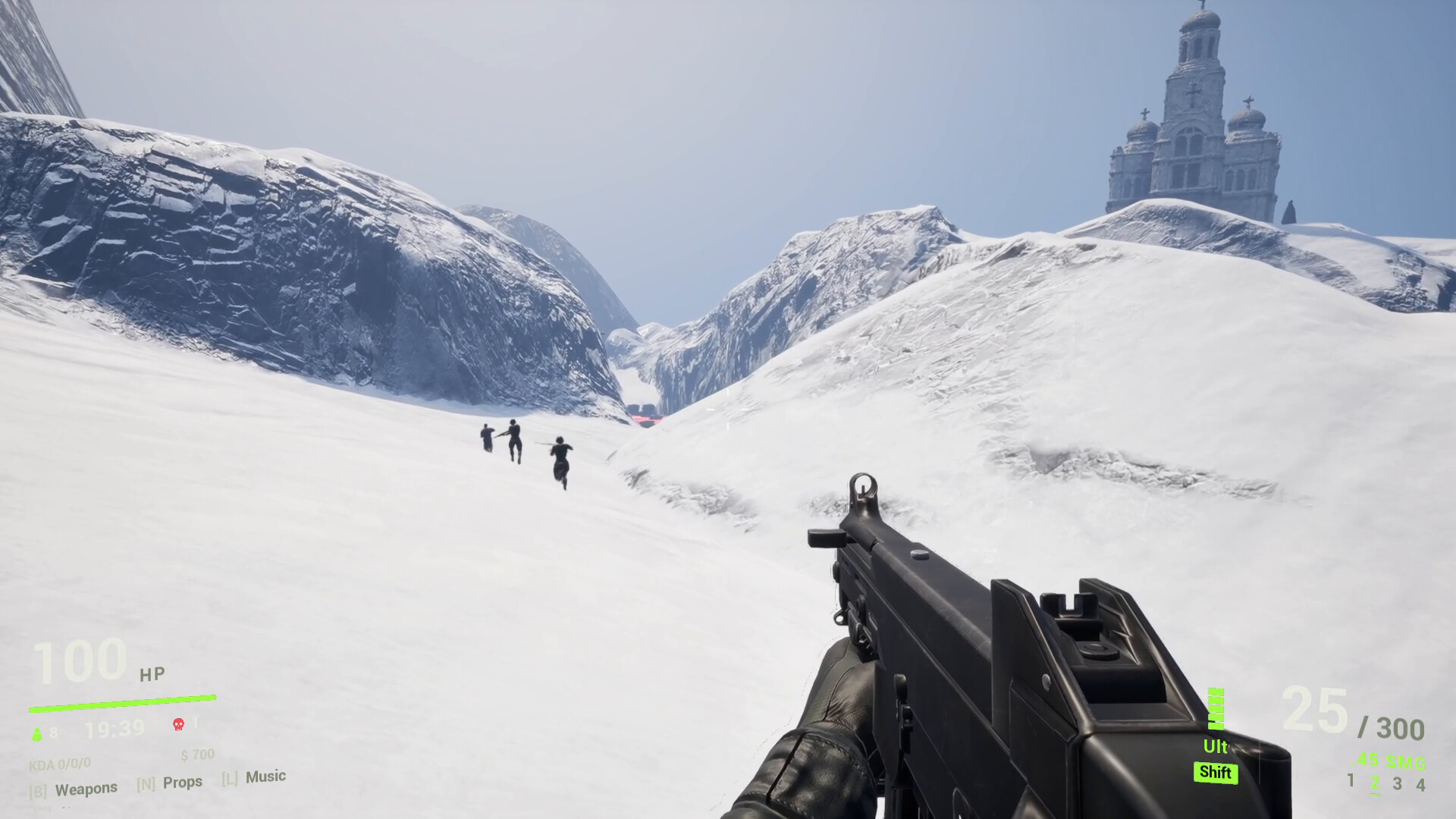
All those abilities need room to matter, but Galin doesn’t want a match to begin with everyone standing around waiting. Humans get a brief head start to buy weapons and find somewhere to defend. That window used to be twice as long.
Initially I envisioned it to be 40 seconds, though through gameplay tests I found out that this removed tension from the game and created a lot of waiting time. So far 20 seconds is the sweet spot that gives players enough time to buy their weapons for the round and start barricading or positioning themselves. It does create a lot of tension, as you have to be quick on your feet!

When Barricades Become Ladders
We were particularly interested in the objects players can buy and place around a map. They’re useful for blocking an entrance, but nothing stops a determined zombie from finding a different use for them. For Galin, this freedom created both funny moments and some very real technical problems.
Yes, of course! It broke the game in so many ways! Players could initially spawn a prop anywhere, which if placed inbetween the barricade would then push away the barricade and break it. Then I added a condition where the prop can only spawn as long as there’s nothing obstructing its spawn point. Also for quite some time I was noticing performance issues and couldn’t really figure out why, until I randomly tested the props and found out that they were simulating physics at all times, drastically increasing the calculations. So I did a very simple but effective fix which enables physics individually per prop only when it’s being interracted with. Gameplay wise there’s 0 difference, as they act the same way, but performance wise it’s huge!
Also players have been very creative in breaking the game with these props. As long as you’ve stacked enough ingame cash (by killing zombies, of infecting humans) you can buy and place a lot of props. This allows you to reach places you were never meant to reach and it’s always funny when I see somebody breaking the game this way!
Also I’ve seen zombies use them to reach places which they were never meant to reach. For example going on top of a roof which is otherwise inaccessible and then flanking the humans, jumping behind them or on their head without them expecting it.
A barricade that turns into a route onto a roof is bad news for the humans hiding below it. From the developer’s side, though, those surprises are also useful evidence of what players can do with a system. Galin has been running play sessions several times a week, and balance remains a moving target.
Balancing is an ongoing topic. I’m doing play sessions 2-3 times per week and thanks to all the playtesters and people with early access we’ve managed to reach a sweet spot. However as it’s a multiplayer pvp game, fully balancing it will take more play sessions.
I’ve been doing these play sessions for the past 4 months and everytime we find something new to tweak and experiment for the next one. I’m receiving a lot of feedback and input from players and I am using it to improve the game and make it more fun!

A Multiplayer Game After Working Hours
Keeping a PvP game running well is demanding enough for a team. Galin has been doing most of the development himself, although he is quick to credit the friends and family who helped him with music and interface design. Finding time for the project has been another challenge entirely.
Even though I’m a solo dev I’ve received a lot of help from my friends. For example my brother and his band produced the music for the game, another friend did the UI / UX. I wouldn’t have been able to do those things on my own.
I would say the biggest challenge I’ve faced is juggling my spare time between my daytime job (I still need to pay the bills :D), creating the game and spending time with my girlfriend and friends. I’ve been pretty obsessed with building the game over the past 1 year and a half and my girlfriend is not really happy about it!
Also map creation! Creating a map in a way that’s enjoyable, not repetitive and stimulating for the player takes a lot of time and overthinking. And also outside input helps a lot too!
And of course I’ve encountered so many technical obsticles, but at this day and age there’s a solution for probably every problem you can face in game development. With a little bit of research and perseverence every technical obsticle becmes a quest that helps you level up :D
His account of building Disbond is funny, but there’s a familiar problem beneath the jokes: it’s easy for an ambitious hobby project to take over your evenings. The game also favours player skill over unlockable advantages, so Galin has been spending his time on how matches play rather than on rewards that give experienced players a permanent edge.
Would He Start Again?
After nearly two years of work, we asked Galin whether knowing what he knows now would have changed his decision to begin. His answer was rather revealing.
Great question! When I first started it 2 years ago I didn’t even know what I was getting myself into. It started as a hobby project and I was pretty naïve. If I had known how hard it was I probably wouldn’t have started. However, knowing what I know now, I can say that this is the best time to make a game. There’s just so much information and help you can find on the internet and with enough dedication and willingness to learn it’s possible!
We’d like to thank Galin for taking the time to speak with us. We’re glad he hasn’t given up on Disbond, and we hope his players keep discovering unexpected tricks in the maps — preferably without giving him too many more technical headaches.
Disbond is in development for PC. A Steam demo is available, with playtest access also listed on its store page.


Leave a Reply