
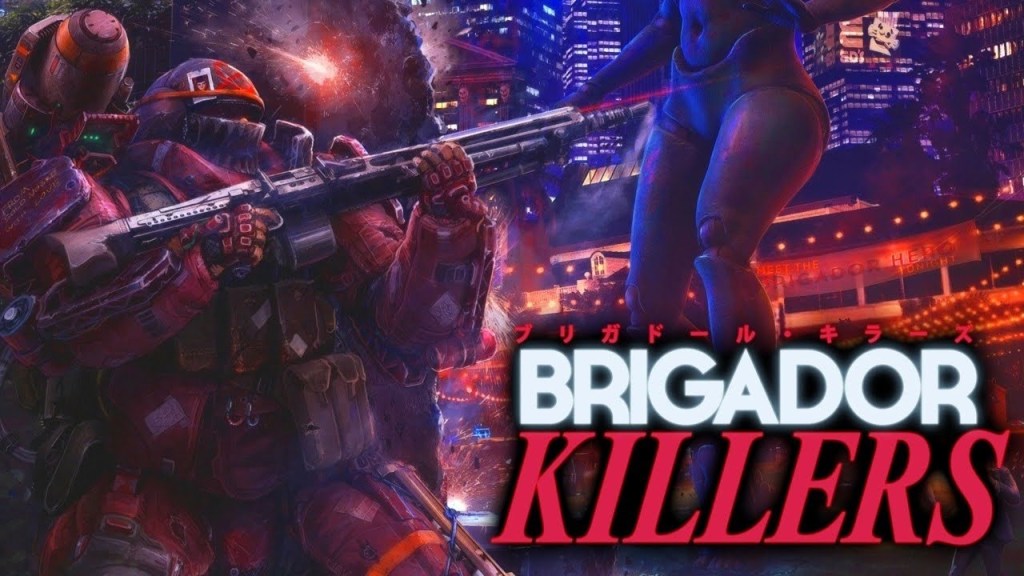
After seven years of development, Brigador Killers is finally out. Can the isometric view, dense industrial cities, heavy machines, and constant threat of destruction live up to the first game? Aside from climbing into a machine and turning a city block into rubble, we can leave the vehicle, fight on foot, search for equipment, salvage vehicles, and gradually build an arsenal of our own. It’s a much bigger game, but it’s currently in Early Access, and not all of it feels equally settled yet.

A different kind of Brigador
In Brigador Killers, you lead a group of survivors looking for the people responsible for what happened to their home. The story takes place after the events of the first game, and as someone who played quite a lot of the original, we appreciated how fluid the narrative transition is—and how, to freshen things up, the setting is approached from a different direction.
There is plenty of lore if that’s your thing alongside the raw action. The environments do a good job of filling in the gaps; what we don’t learn from a conversation, we can piece together by reading location details tucked away in the world.
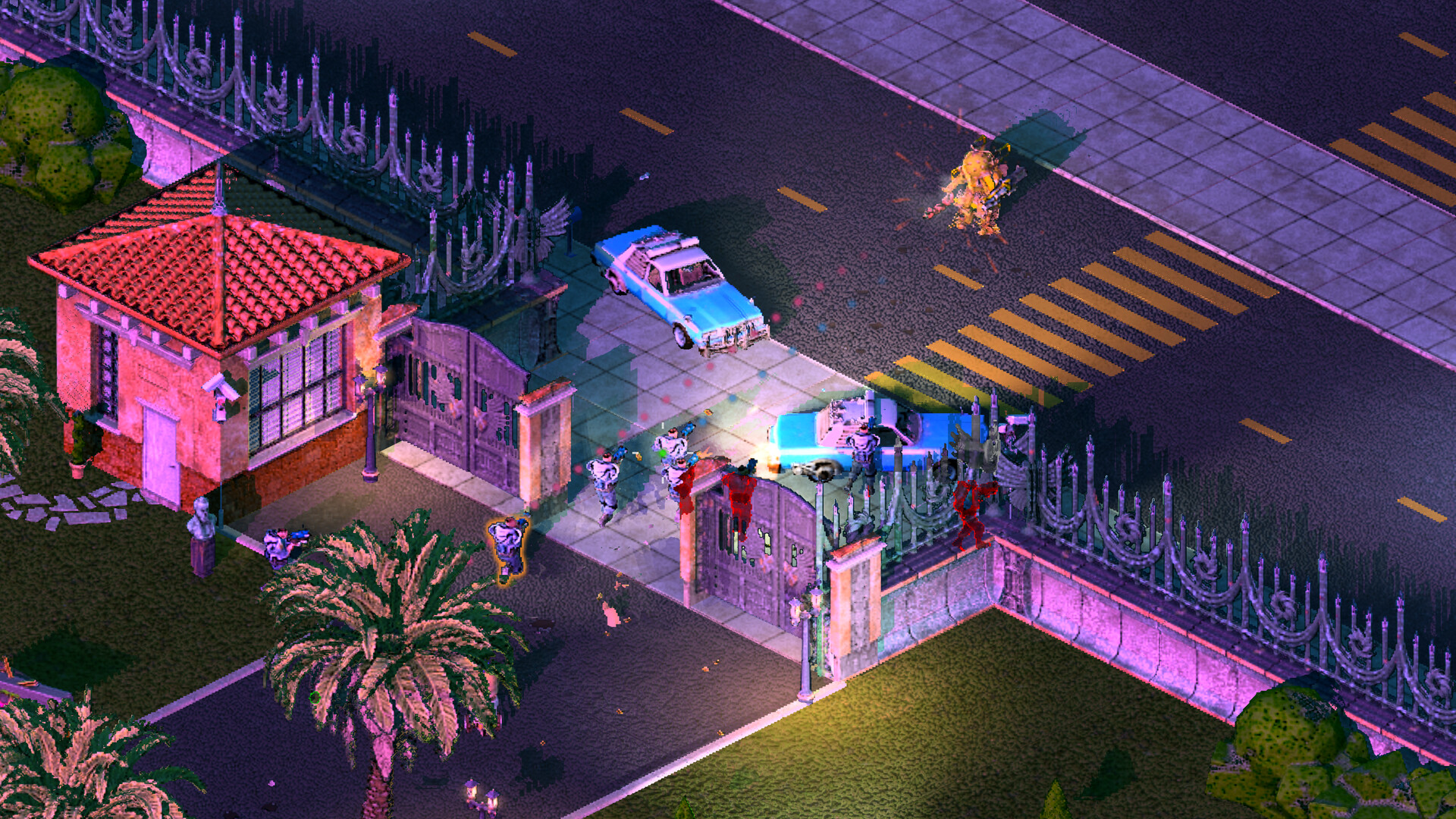
The opening, however, forces us to crawl before we walk. We aren’t handed a powerful machine, patted on the back and sent into battle. We’re forced to scrape together whatever we can find while learning just how badly outmatched we are. Sure, it fits the story, but it also makes the early stages of the game feel considerably rougher than what the demo led us to expect.
On foot and behind the controls
As mentioned, you can also fight on foot. The original Brigador had a special charm that made us feel powerful yet vulnerable at the same time—like operating a glass cannon. We had enormous machines at our disposal, but the game didn’t shy away from punishing careless movement. Killers adds another layer to that formula by letting us leave those machines behind entirely. Out on foot, you’re all glass and no cannon.
Outside the machine, we had to pay closer attention to where we were standing, what was around us, and how much damage we could take. Cover, movement, and positioning matter so much more.

The different vehicles we find and use change how we approach a mission. The ability to salvage them gives exploration a real practical purpose. Many a time we came across a vehicle that looked useless at first, but instead of leaving it behind, we entertained the idea of bringing it back to the garage, stripping it down, and using it as the foundation for something better.
We loved the feeling of gradually building our own collection rather than simply unlocking a linear set of upgrades. It felt a lot more personal and meaningful.
Beyond salvaging parts, the garage allows you to fabricate equipment and expand your arsenal. Nearby, there are merchants to visit and new upgrades to construct.
The combat can be fantastic
Once hell breaks loose, the game really flexes its destructible environments. It’s a joy to watch a carefully constructed part of the city come apart. There’s no need for scripted spectacle—the heavy sound design and visuals do all the heavy lifting.
That said, the difficulty curve can feel uneven during the early campaign. Managing manageable enemies can suddenly pivot into encounters where our equipment feels completely inadequate. It’s a jarring slap in the face that bruised our egos on several occasions. We don’t want to spoil too much because we want you to experience it firsthand, but there were times the game asked us to be careful and tactical, only to throw us into situations where everything happened too quickly for that approach to work. It doesn’t make the combat bad, just unbalanced.
Check the demo?
Before financially committing to the game, you should definitely check out the demo. It’s a solid showcase of the game’s best ideas, letting you freely experiment with vehicles, destruction, on-foot combat, and garage systems in a concentrated package. If you realize it’s your cup of tea, you can jump over to the Early Access version, which expands the campaign significantly. Just keep in mind that the game is far from finished, and you will run into unrefined areas.
If you’re coming to Brigador Killers expecting more of the exact same thing you loved in the first game, you might be surprised by how different it feels. We were in that exact boat, and we loved what we found. It’s a promising title that needs a bit more time in the oven to iron out the kinks in on-foot combat, salvage, fabrication, and progression.
Underneath the unfinished edges, there is something deeply satisfying. Once all these pieces settle into place, Brigador Killers is going to be something great!

Leave a comment