At first glance, Book & Hornlooks like a relaxing fantasy retreat. Wrapped in warm pixel art and gentle audio, it promises a charming adventure featuring a cauldron, a witch, and her half-demon apprentice. Scratch under the surface and you’ll also find a engaging hybrid that mashes together lane defense, roguelite progression, and real-time crafting. It seems like a fun title where you gather raw materials on the fly and brew specific potions to fend off escalating waves of enemies. Talk about creating a frantic balancing act between two entirely different playstyles, eh?
Blending so many distinct mechanics into a single, cohesive loop is a massive design challenge. To find out how they pulled it off, we spoke with the development team at Gimni Games about the dangers of cognitive overload, the delicate math behind random number generation, and how taking inspiration from both Dota 2 and Angry Birds helped them build one of the year’s most unique multitasking experiences.
From Prototype to Multitasking Hybrid
The complex web of systems present in Book & Horn wasn’t there from the beginning. In fact, the project started as a highly focused experiment before expanding into the multi-genre hybrid it is today. That organic growth ultimately shaped how the studio approaches teaching players the game’s overlapping mechanics.
“Actually, before we made this hybrid system, we only had the crafting mechanic. There was no gathering, no lane defense, nothing else. It was just a crafting mechanic prototype. As development went on, more and more ideas came up. We added the gathering mechanic, birds, random events, minibosses, bosses, map conditions, and many other systems. It all grew from that one simple prototype. For player feedback, it honestly wasn’t that difficult. The only thing some players weren’t sure about was what to do right after starting the game. So we added simple instructions like ‘Press Q, W, E to place ingredients’ and ‘Press Space to cast a spell.’
After that, they usually figured everything out on their own. That’s the approach we like, it was called ‘ghost tutorial’ Give players a simple instruction to get started, then let them learn naturally as they play instead of making players read a long wall of tutorial text. For other game developers out there, one question has always stayed with us from our senior highschool professor: ‘What makes it different from the others?’ or ‘If it’s the same as everyone else’s, what makes yours better?’ That mindset has really pushed me to keep creating unique ideas instead of copying what’s already out there.”
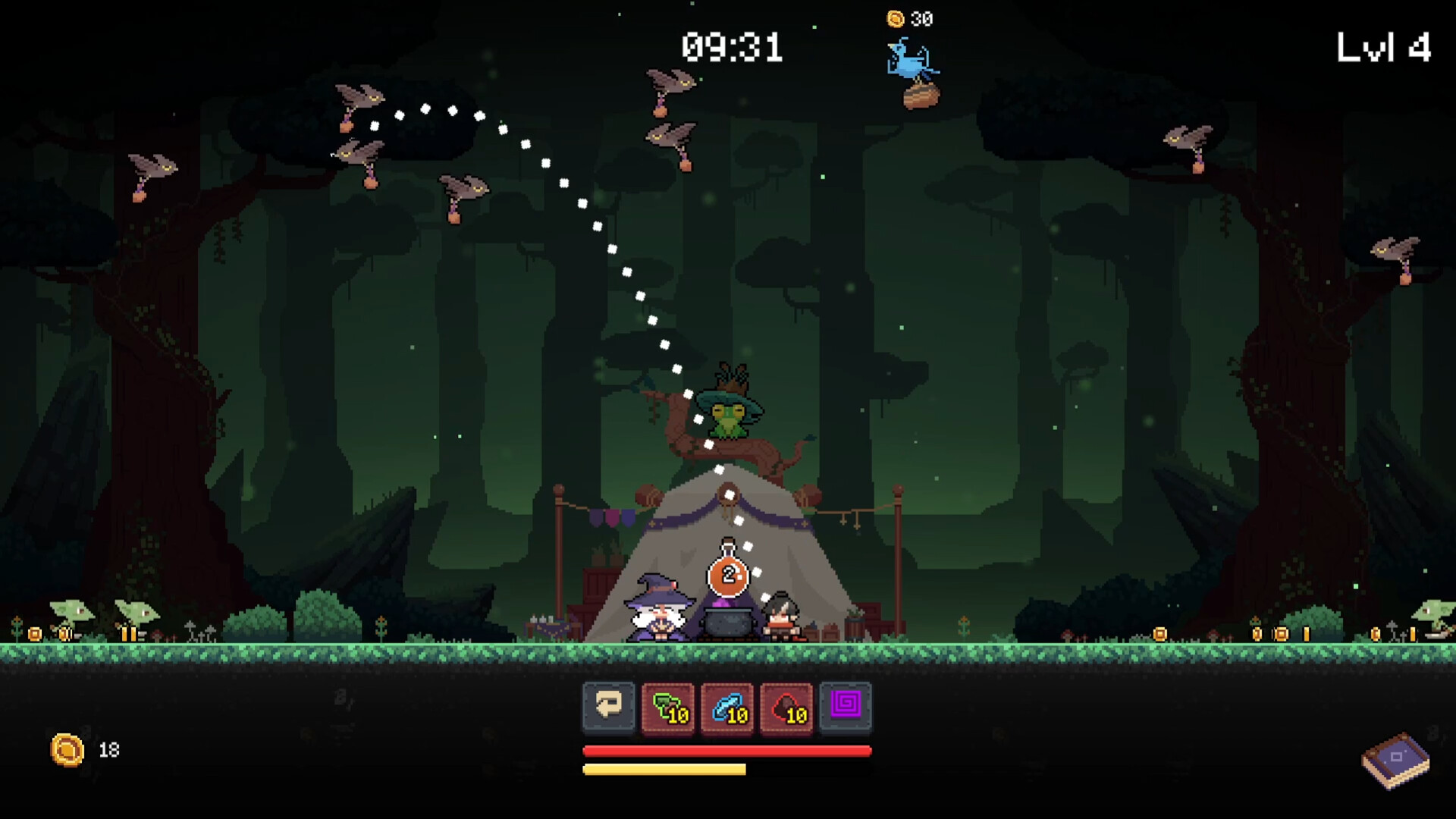
One of those unique ideas is the dual-character setup. During a defense wave, players don’t just sit back and watch; they have to actively control the apprentice to gather materials while managing the witch’s spellcasting. Finding the right input method for this gathering phase required some trial and error, eventually leading the team to look outside the lane-defense genre for answers.
“So far we have not discarded any map conditions, but we did discard some ideas we have for the game. For example, we originally planned for the gatherer to be controlled with WASD instead of the mouse. The player would have to move around to collect materials, then return to the center before they could craft again. However, we felt that this took too much time and required too much effort from the player, so we discarded the idea. We thought, what if you could simply drag the gatherer to collect materials instead? From there, the idea kept evolving.
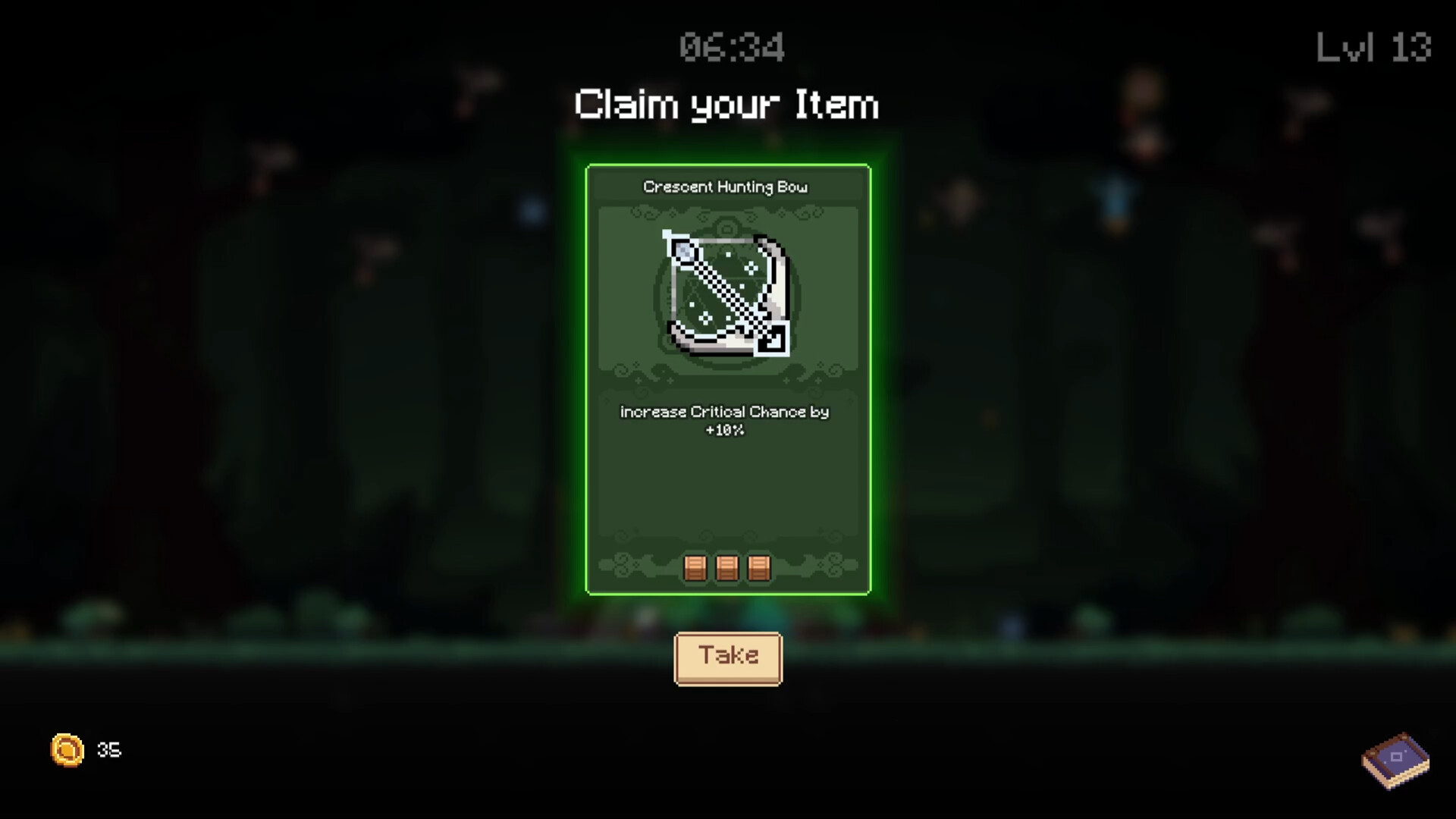
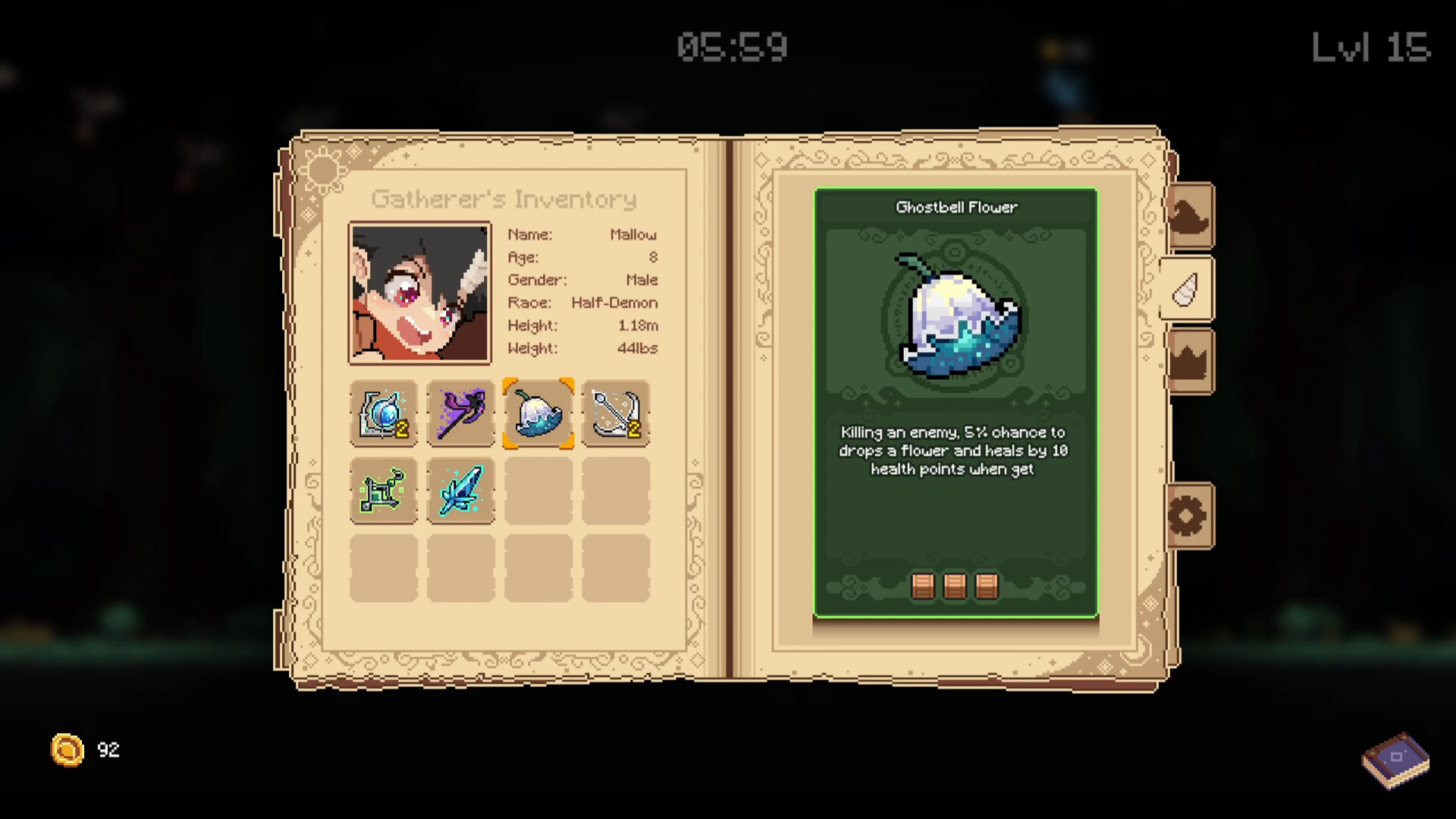
We came up with the concept of the gatherer catching birds that deliver materials, and that’s how the mechanic gradually developed. One of the inspirations for this mechanic is from Plants vs. Zombies, where you gather sun and build your defenses on different lanes. However, our approach is a bit different. Instead of simply clicking on materials, we took inspiration from Angry Birds by requiring players to hold and drag to move their character toward the materials. We chose this approach to make resource gathering more skill-based rather than relying on random chance drops and quick clicking. We also originally had Demon Cards, but when we decided to add multiple playable characters for the game (spoiler), the concept no longer fit some of the characters. So we changed them to items instead. They serve the same gameplay purpose, just with a different theme.”
Even with streamlined controls, managing two active roles in real-time runs the risk of overwhelming a player. To prevent that, the studio relied on a highly deliberate pacing structure.
“One of our goals was to make both characters feel equally important at all times. To prevent players from becoming overwhelmed, we kept every interaction very simple. Gathering only requires moving and catching birds carrying materials, while crafting takes place at the center, where the player focuses on casting spells. We intentionally kept the difficulty low at the beginning because new players are not yet familiar with the game’s mechanics. This gives them time to learn the controls, understand the roles of both characters, and become comfortable with the gameplay.
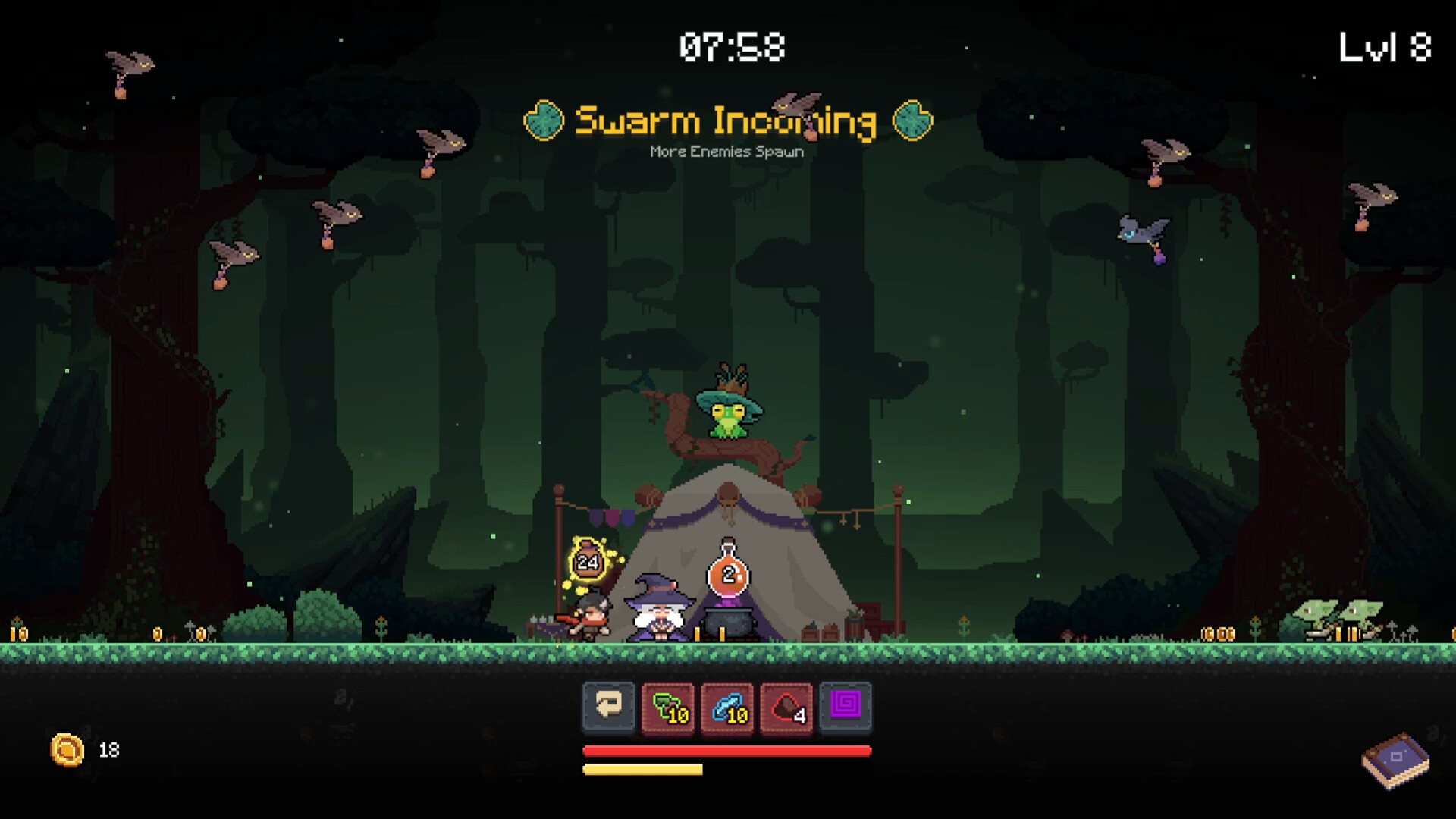
If they were immediately faced with too many enemies or too much pressure, they could easily become frustrated before having a chance to understand how everything works. As they become more familiar with the game, the difficulty gradually increases by introducing more enemies, events, map conditions, minibosses, and bosses. This creates a steady learning curve from ‘How to play this game?’ to ‘What card should I get next time to overcome this obstacle?’”
The Magic Number
Once materials are gathered, players shift their focus back to the cauldron. Book & Horn utilizes a strict three-ingredient recipe system to generate attacks. It’s a fast-paced mechanic that rewards memory and quick fingers, heavily inspired by one of multiplayer gaming’s most notoriously complex characters.
“The crafting mechanic was inspired by Dota 2’s Invoker, who combines Q, W, and E to create a total of 10 different skills. And yes, we considered using more or fewer ingredients, but adding more would create too many combinations, making the system overwhelming and difficult for players to remember. That’s why we settled on a total of 10 skill combinations.”
Balancing the Scales of Roguelite RNG
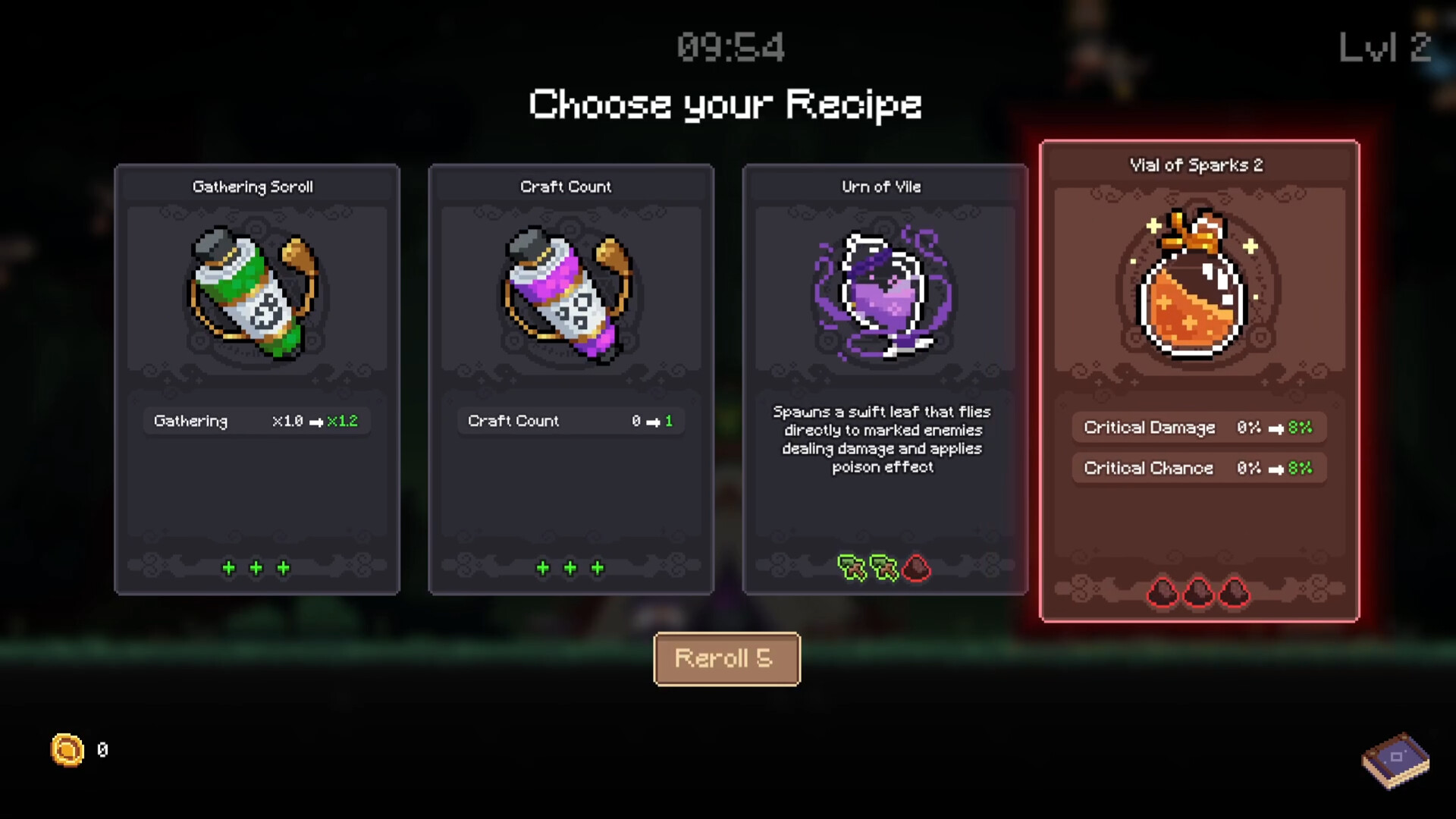
Because the game incorporates roguelite elements, players have to adapt to random power-ups and scroll rarities on the fly. In traditional lane defense, players rely on predictable patterns, but Gimni Games leaned into unpredictability to ensure longevity.
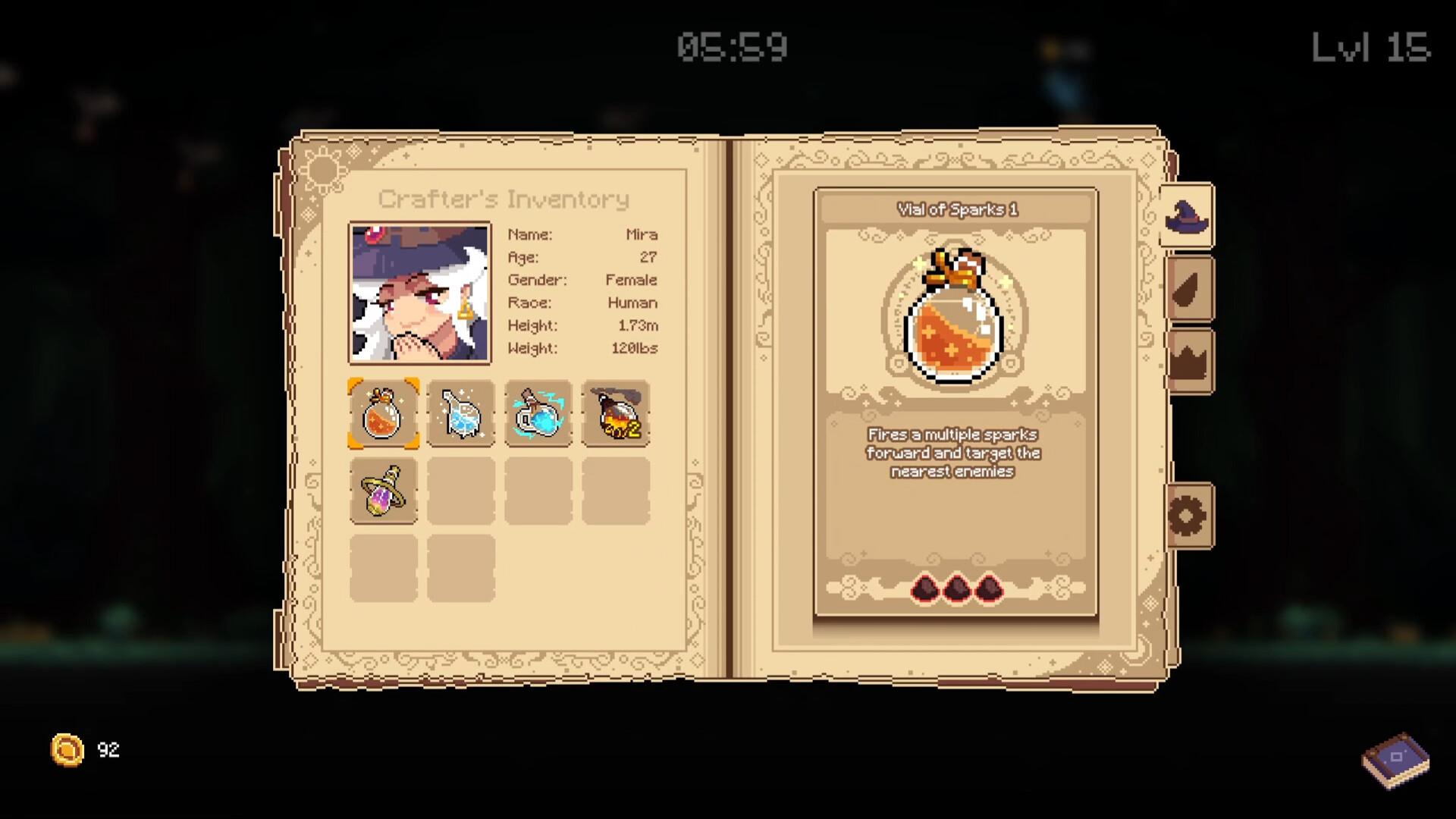
“We wanted every run to feel different instead of encouraging players to use the same strategy repeatedly. They are still balanced because getting a Common card doesn’t automatically put the player at a disadvantage. Every card has its own value, and its effectiveness depends on how players build their run and adapt to the challenges they encounter.”
That randomness could easily become a point of frustration, particularly when factored into the game’s global leaderboard. However, the developers stress that while luck might alter your toolkit, it won’t dictate your final score.
“As mentioned earlier, common, rare, or whatever rarity your card, the rarity doesn’t decide if you’ll have a good run or not. It just changes the options available to you. A highscore comes down to the player’s decisions: building good synergies, crafting efficiently, avoiding wasted resources, and defending the lanes well. Your build and how you adapt during the run matter much more than getting lucky. RNG is just a byproduct. Sometimes it gives you stronger options, sometimes less effective ones, but it’s the player who makes the most of what they’re given.”
To further shake up a run, players will also encounter sudden mid-wave events that alter the state of the board. Rather than viewing these as unfair interruptions, the studio designed them as tests of a player’s adaptability.
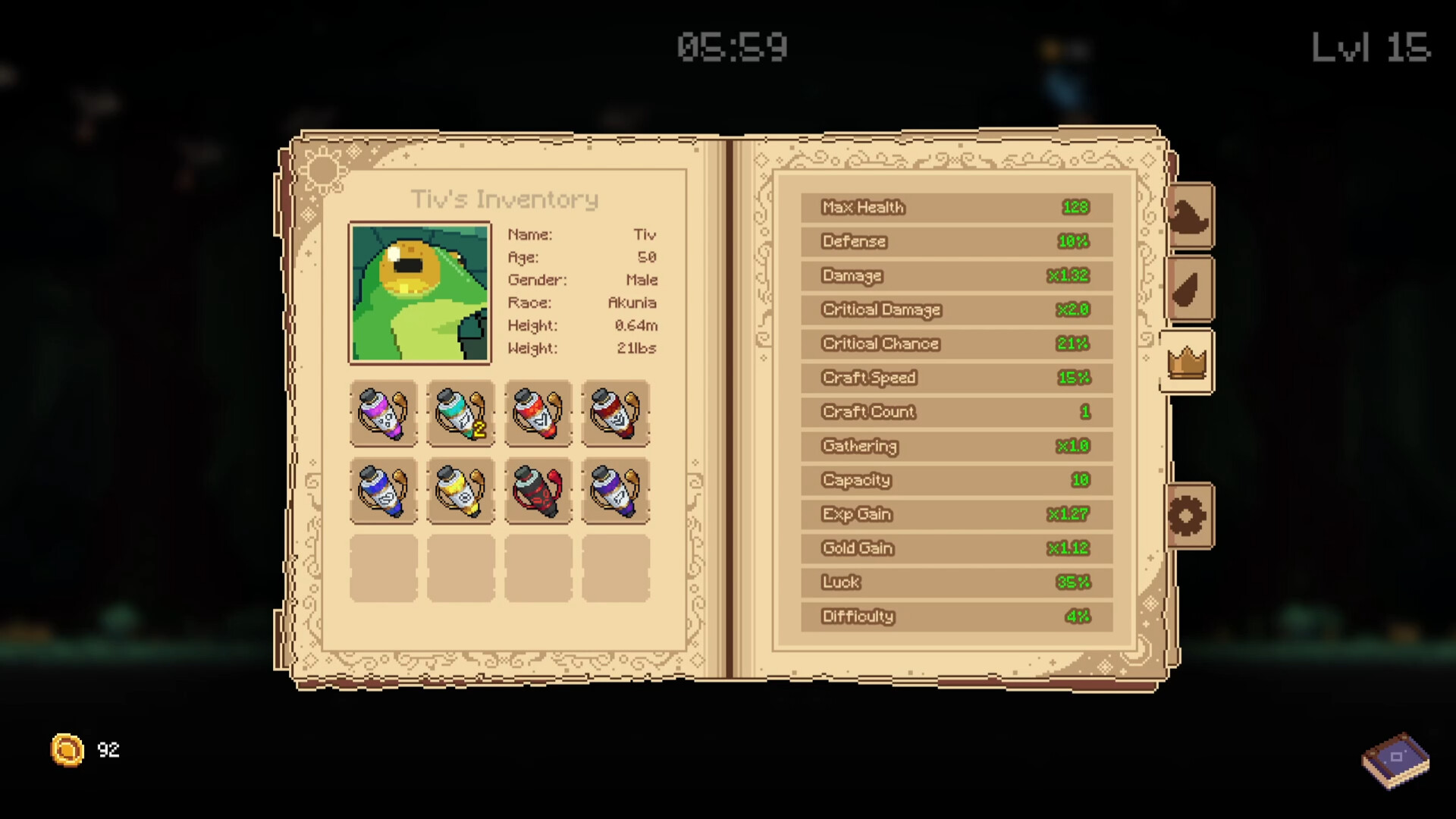
“We wanted events to be unexpected moments that make each run memorable. Triggering them during gameplay creates exciting situations where players have to quickly adapt instead of simply preparing in advance. At the same time, we made sure they remain fair. Events are designed to change the player’s priorities rather than punish them instantly. Players also receive a warning beforehand, such as the frog (Tiv) notifying them about an upcoming event, giving them enough time to prepare.”
Earning the Nightmare
To give players a concentrated dose of this escalating chaos, the game’s demo drops them into a brisk 10-minute run that caps off with an intense “Nightmare” phase.
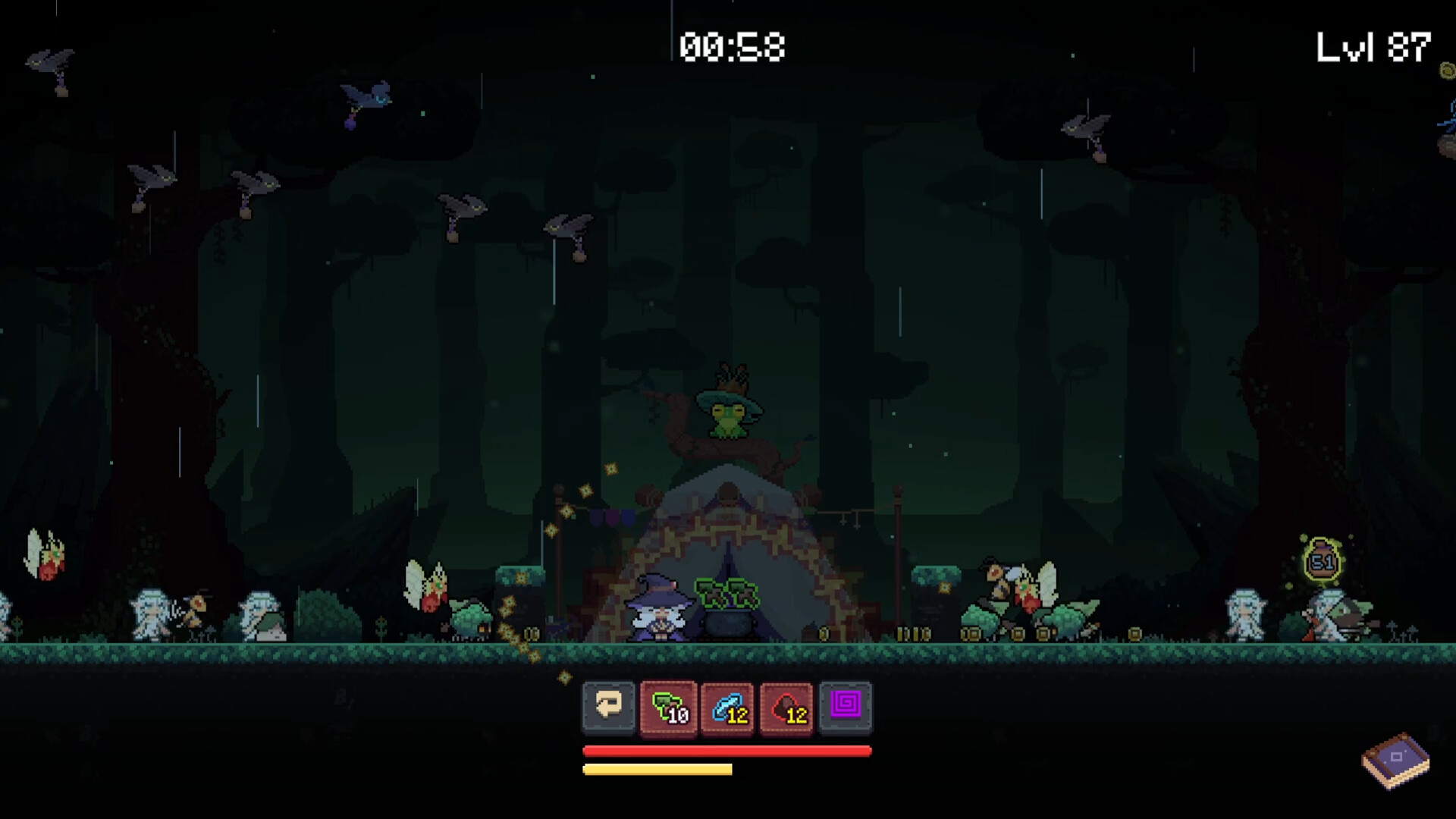
“We believe 10 minutes is already a significant amount of time for someone trying our demo for the first time. We wanted every run to feel enjoyable, rewarding, and satisfying within that time while also making players feel they could perform even better on their next attempt. That’s why Nightmare mode gradually increases the enemies’ health, damage, and movement speed. Its purpose is to provide an endless challenge where players can chase higher scores and see how long they can survive.”
Despite the inclusion of a frantic, endless survival mode and a heavy emphasis on real-time multitasking, Gimni Games still fundamentally views Book & Horn as a relaxing experience. It is a game built on the idea that mastering chaos eventually brings its own kind of peace.
“We made Book and Horn to be both mechanically engaging and relaxing. As you progress, the game becomes more intense with new enemies, events, map conditions, and bosses. However, this is balanced by the game’s warm pixel art, colorful spell effects, gentle music, and charming world, which help maintain a cozy and comfortable atmosphere. On top of that, the more you play, the more familiar you become with the game’s mechanics, playstyles, and strategies. As you learn and memorize them, the game gradually feels easier, making the overall experience even more relaxing.”
Gimni Games is creating a compelling loop where the initial panic of multitasking slowly gives way to a satisfying rhythm. Book & Horn can prove that forcing a player to split their attention doesn’t always lead to stress; sometimes, finding order in the middle of chaos is the most relaxing thing of all, which is something we look forward to finding out once the game releases.




Leave a comment