

The first thing we did in OMEA was try to break it.
After creating a viking and landing on a deserted, windy beach, we ignored whatever objective the game had in mind and simply started typing the first ridiculous thing that came to mind. There are no dialogue wheels or buttons marked “Lie” here. Instead, we described exactly what our character wanted to do and waited to see how the AI Game Master would react. To our surprise, it handled our nonsense far better than we expected.

OMEA is built around a simple idea: instead of picking from pre-written responses, we type our actions naturally and let the AI decide what happens next. On paper, it sounds like something that should fall apart after a few minutes. In practice, we spent hours trying to confuse it, and more often than not, it kept up.
One moment we were trying to seduce a raven into becoming our companion. The next, we were risking our own life to save another character and earning a debt that followed us much later into the story. The AI was surprisingly good at remembering what had happened. Characters brought up previous conversations, remembered the choices we had made, and sometimes even reappeared because of something we had said hours earlier. Quests stayed coherent, locations remained consistent, and NPCs reacted according to their personalities instead of feeling like they were generating random responses. Push an arrogant warrior long enough and they’ll eventually snap. Show kindness to someone in need and they may remember the favor later.
That doesn’t mean complete freedom. We quickly noticed there are invisible boundaries guiding the story. The AI entertains unusual ideas for a while, but eventually nudges the conversation back toward the important story beats.
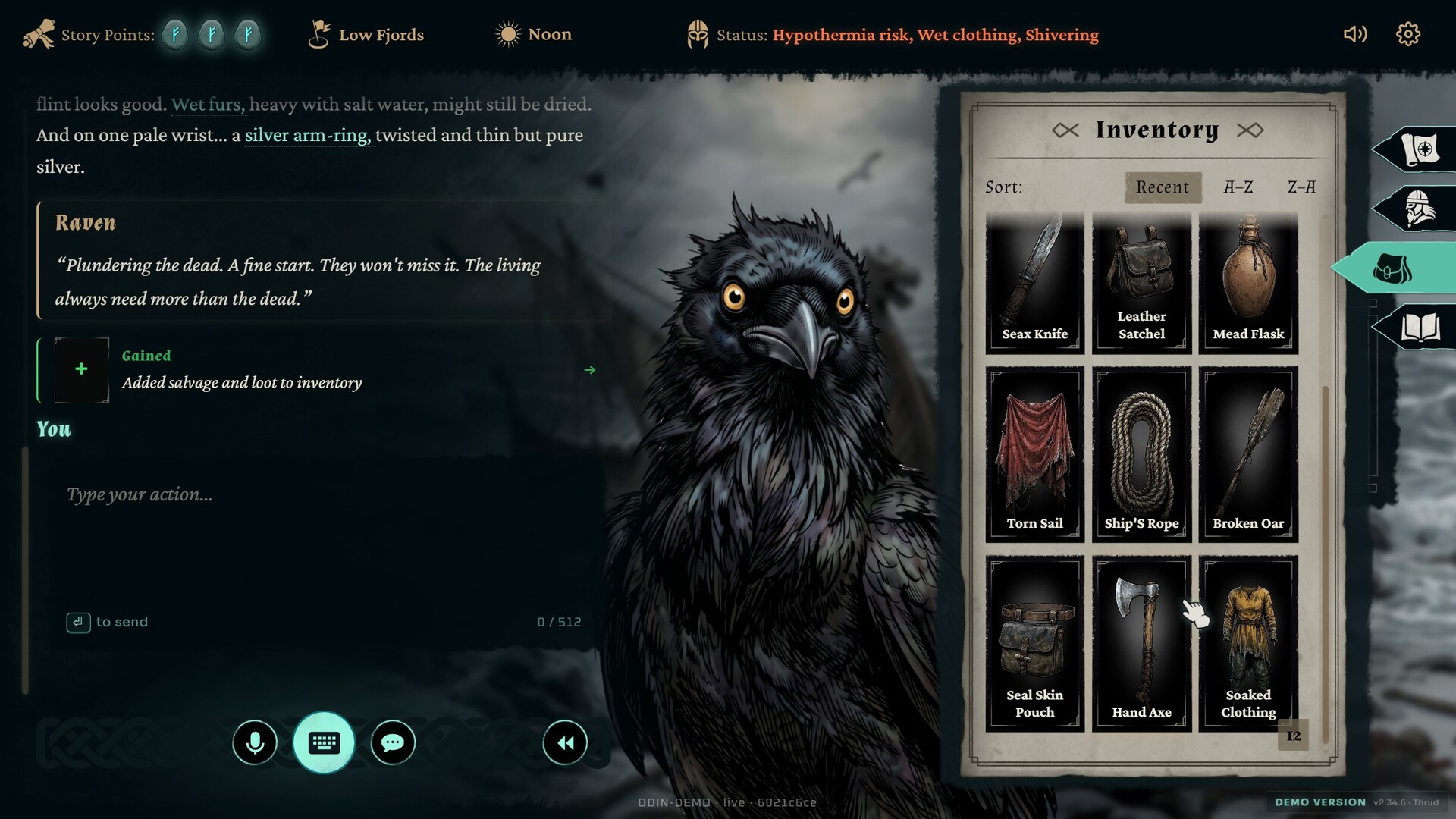
The raven was probably the funniest example. After telling it that we loved it, the bird wasted no time reminding us how ridiculous we were for even thinking such a thing before demanding we choose where to travel next. We refused, claimed there was no point in living after our love was rejected, and received an unexpectedly passionate lecture about how a true viking faces death with honor instead of self-pity. It was genuinely funny, but it also showed that while the AI gives us plenty of room to experiment, it still has limits. In hindsight, that’s probably for the best. Without some structure, the story would quickly turn into complete chaos.
We also came across the occasional AI hallucination, but interestingly, it rarely felt like the system was breaking. Most of the time, these moments simply became part of the adventure, helping the AI keep the story moving instead of bringing everything to a halt.
Where OMEA struggles most is in its presentation. Every response is narrated by AI-generated voices, but they never sound truly convincing. The emotion is either too flat or exaggerated enough to feel unnatural. The illustrations don’t help much either. They’re generic, repeat often, and without any animation they quickly fade into the background. Then there are the loading times. Waiting five to ten seconds after every action may not sound like much, but after dozens of interactions those pauses add up. Instead of building anticipation, they repeatedly pulled us out of the experience.
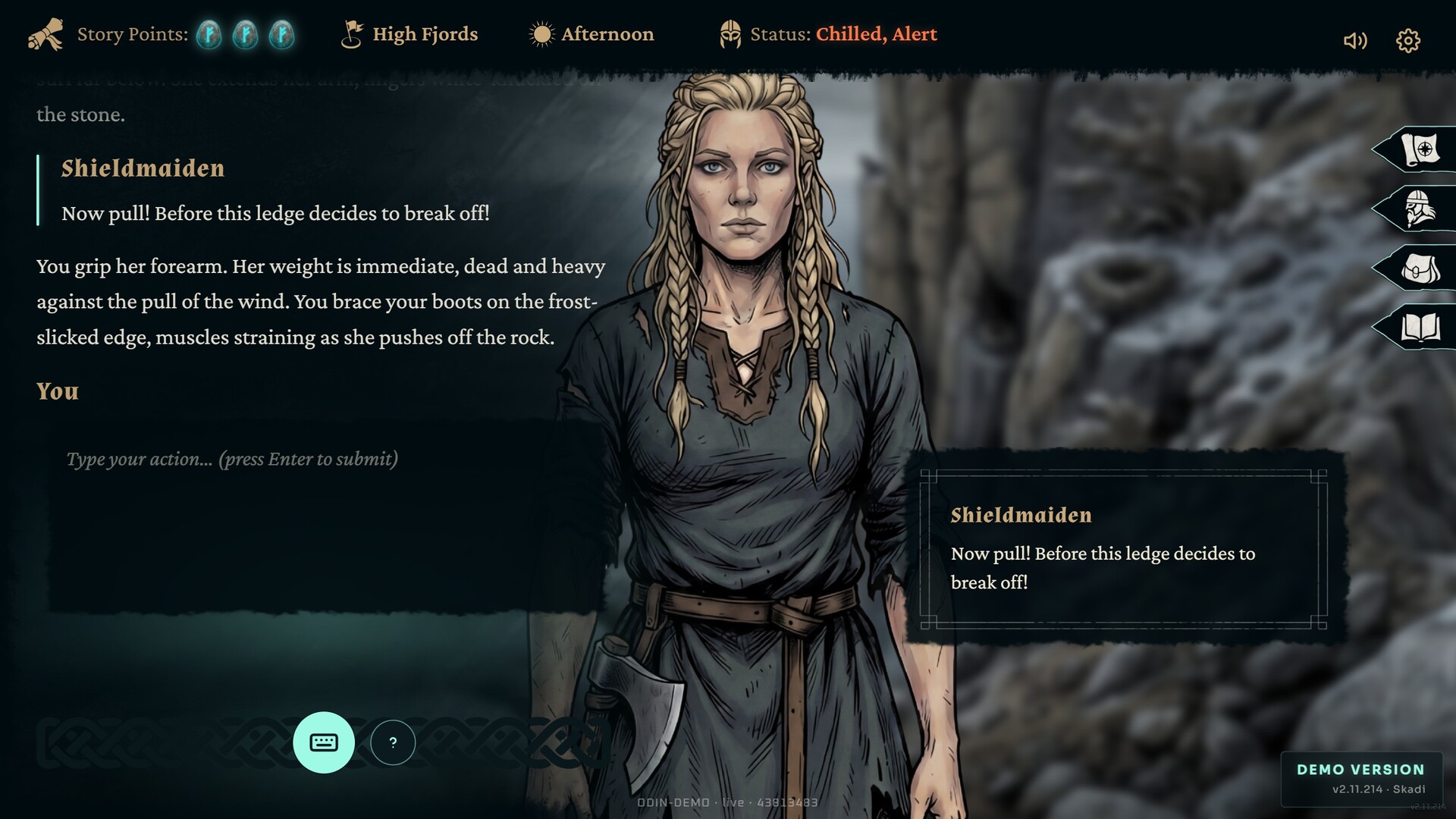
Even with those shortcomings, OMEA changed the way we looked at dialogue in RPGs. Going back to games that ask us to pick from three or four responses suddenly felt restrictive after spending hours simply typing whatever came to mind. OMEA isn’t the limitless role-playing experience it sometimes promises to be, but it’s far more capable than we expected. If the voice acting, visuals, and loading times continue to improve while keeping the same level of consistency in its storytelling, this could become one of the most interesting uses of AI we’ve seen in a game.

Leave a comment