
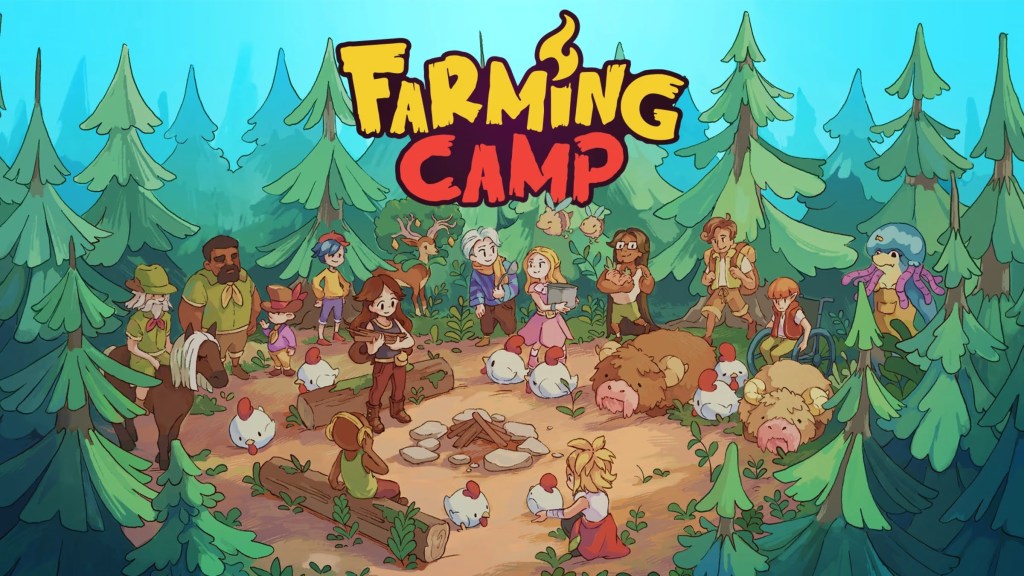
Farming games are all about growing crops, taking care of animals, fishing, talking to the locals and slowly building our little corner of the world. Innerfire Studios’ game combines farming with points, team-based chores, minigames, relationships and a strict daily schedule. It does that and more. It keeps the cozy side of the experience intact. We spoke with Rafael Magnino, Project Manager at Innerfire Studios, about how the idea came together, how the companion system changed during development, what the team learned from playtesting and why time management ended up becoming the engine behind Farming Camp.
Making competition work in a cozy game
Surely you’ll agree that putting a points-based competition into a farming game can easily turn something relaxing into a race to find the most efficient way of doing everything. The interesting part here is that Innerfire Studios didn’t want players to feel like they had to treat every day as an optimization puzzle. Competition was there to make the different parts of the game work together rather than push players toward one specific activity. Why did you choose competition as the main structure,
and how did you stop the scoring system from making the game feel too focused on
optimization for a cozy experience?
The competition was designed not only to make farming more dynamic but also to bring the farming mechanic closer to the social elements of the genre, instead of farming and social being islands only bridged by presents.
This also greatly helped to balance the coziness with the competition by providing more options for the player to play: they can opt to focus only on the mechanics they really like, be it the farm or fishing or talking, and still not be punished by their playstyle due to Alessandra’s team working for them.
A player can be as optimal or laid back as they like and still have a chance to win.
That idea of letting players decide what they want to spend their time on is also closely connected to the companion system. If we don’t feel like spending the whole day looking after the farm, somebody else on the team can take care of some of that work.
The companions went through a lot of changes
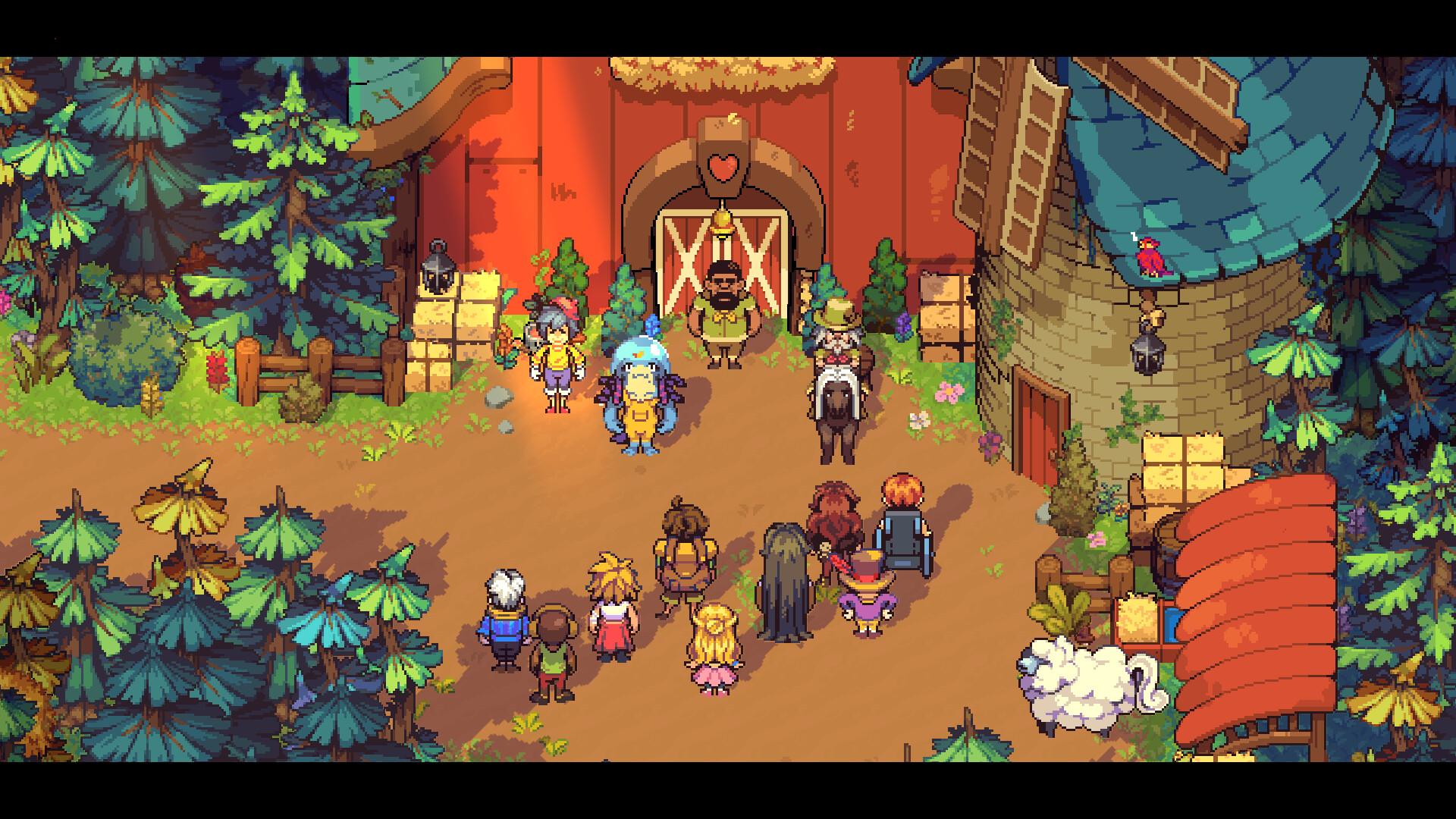
The two other young farmers are there so that players can assign them chores. Figuring out exactly how much they should be able to do turned out to be one of the game’s more complicated systems. How did you decide which tasks could be delegated, and how much autonomy did you want these companions to have? Did you have an earlier version where they behaved differently?
Oh, it went through a number of revisions! We knew we wanted it to be a main pillar of the game, and so it should be entangled with any major mechanic, but it also shouldn’t become an auto-win button, taking any friction away from the competition.
“Should the NPCs refuse certain chores?” we asked ourselves. We thought about personality quirks, chore preferences: “Mike may hate animals, so he will not do the animal chore, but he could do it if he likes you… Do we need a friendship system? But is it a fun, interesting thing to have?”
Ultimately, it became the Companion System present in the game. They have personalities, but will do any work as long as you don’t repeat them. And they will do the chores better if you spend time with them. Not because they are now a better farmer, but because they like you more or feel they owe it to you.
We particularly like the reasoning behind that final part. The companions don’t become better farmers because of some arbitrary skill level. Spending time with them changes how they approach the work because of their relationship with Alessandra. Talk about giving social mechanics a practical purpose without making the characters feel like nothing more than upgraded workers.
Playtesting showed that everyone plays differently
With farming, fishing, animal care, missions, classes, minigames and social activities all asking for our time, there was always going to be a question of what players would actually choose to do when given the freedom to decide for themselves.
What did playtesting teach you about how players actually prioritized these activities, and did you have to change the daily schedule or rewards because of that?
It was really varied. We had players who spent their days with the NPCs while delegating the chores to the companions. Farm players, animal care players, fishing, etc.
Apart from specific mechanic details, like how many points a crop should be, our main takeaway was to make the “spending time” with NPCs more worthwhile. Not only mechanically, but also narratively.
A conversation had to feel worthy of the time spent on it, and we saw that not all topics had the same weight. This leads to a lot of conversations losing their “pass time” function, even if the companions or Alessandra could level up through them, to dialogues that originally didn’t pass the time, but were more worthy.
That makes a lot of sense in a game where time is always moving forward. If talking to somebody takes up part of the day, the conversation has to feel like it was worth giving up whatever else we could have been doing. It also explains why the social side couldn’t just be a collection of conversations that exist because farming games are expected to have NPCs to talk to.

A little chaos goes a long way
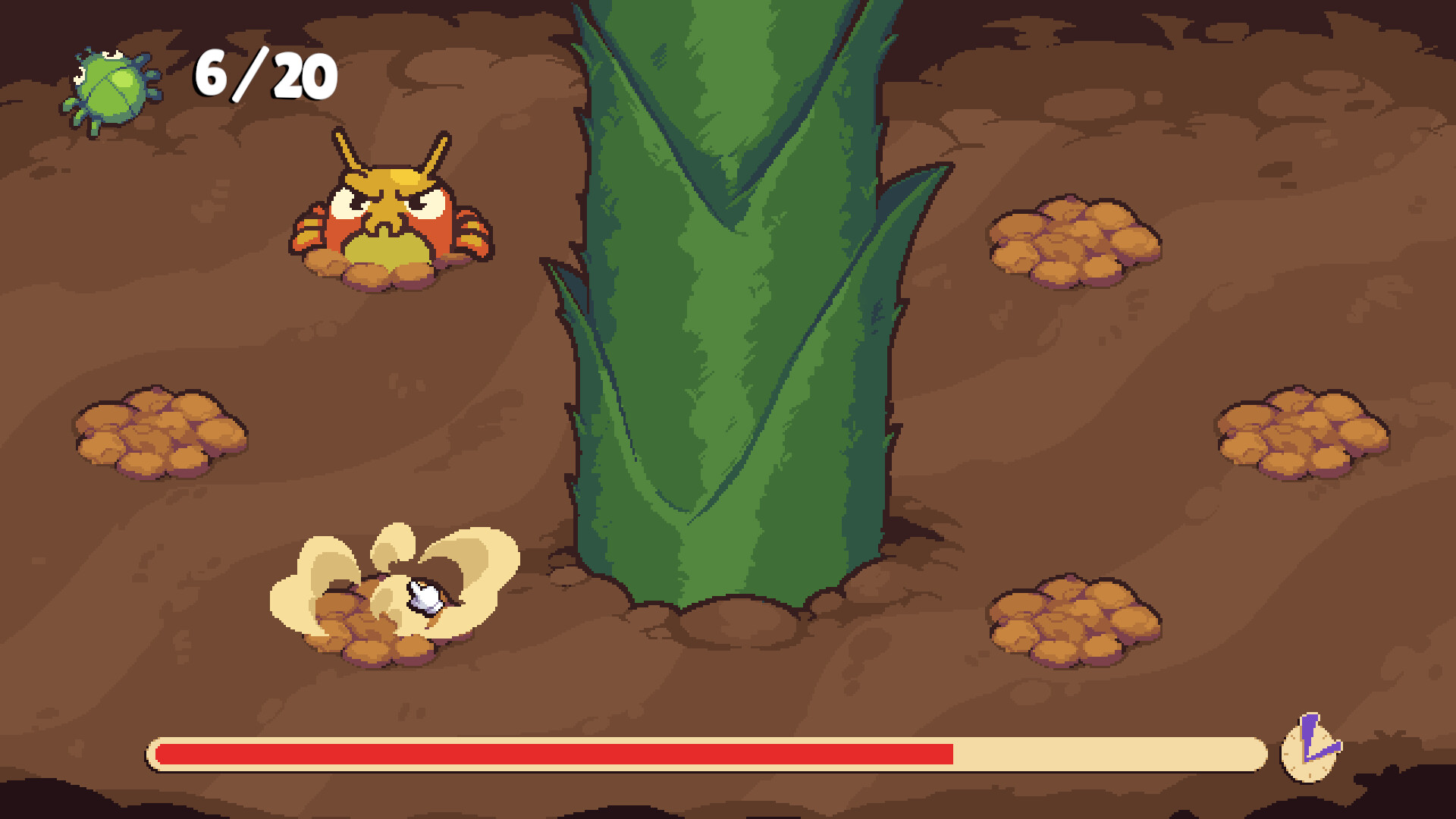
The minigames are another way the devs wanted to keep the daily routine from becoming too predictable. Removing pests, chopping wood and cooking all give the player something different to do, but they can also create opportunities to earn more points or deal with something unexpected. What role did you want these minigames to play in the farming loop, and were there any ideas you ultimately cut because they didn’t fit the pace of a camp day?
We wanted some surprises to happen throughout the game, a chance to get more points, or for things to go haywire. We thought of these for all main mechanics, and there was actually a scrapped minigame for the social aspect. You could play a quick game of cards to get more points or bet on the homework with different teams, but it didn’t quite fit the vibe. It would be a lot of work to balance each team’s playstyle too, and we saw that it wasn’t worth it.
The cut social minigame is an interesting glimpse at how many ideas can end up on the table during development. Playing cards or betting on homework sounds like the sort of thing that could have been fun, but if it required balancing every team’s playstyle and added a lot of extra work, leaving it out was probably the more sensible choice.
Turning workers into characters
There was another interesting change during development. The companions originally had much more straightforward mechanical roles. One was the farming specialist, another was focused on animals, and so on. As the system developed, those roles became less rigid and the personalities became much more important.
This cycles back a bit to the second question. When they were designed, Mike, Rey, and other possible teammates had specific roles in the player’s team: the farming guy, the animal girl, etc. As we these roles collapsed into the present companion system, we mixed their mechanical function with their personalities and turned it up to the max. For example, Mike went from a more secluded boy who prefers plants to a more nuanced kid who you could see is trying to be a farmer for the wrong reasons, and so he cannot fully commit.
That change seems important because it stops the companions from feeling like different versions of the same gameplay tool. Their personalities can influence how we see them, while their mechanical usefulness gives us another reason to spend time with them.

Meeting Alessandra before she became the Evertree Farmer
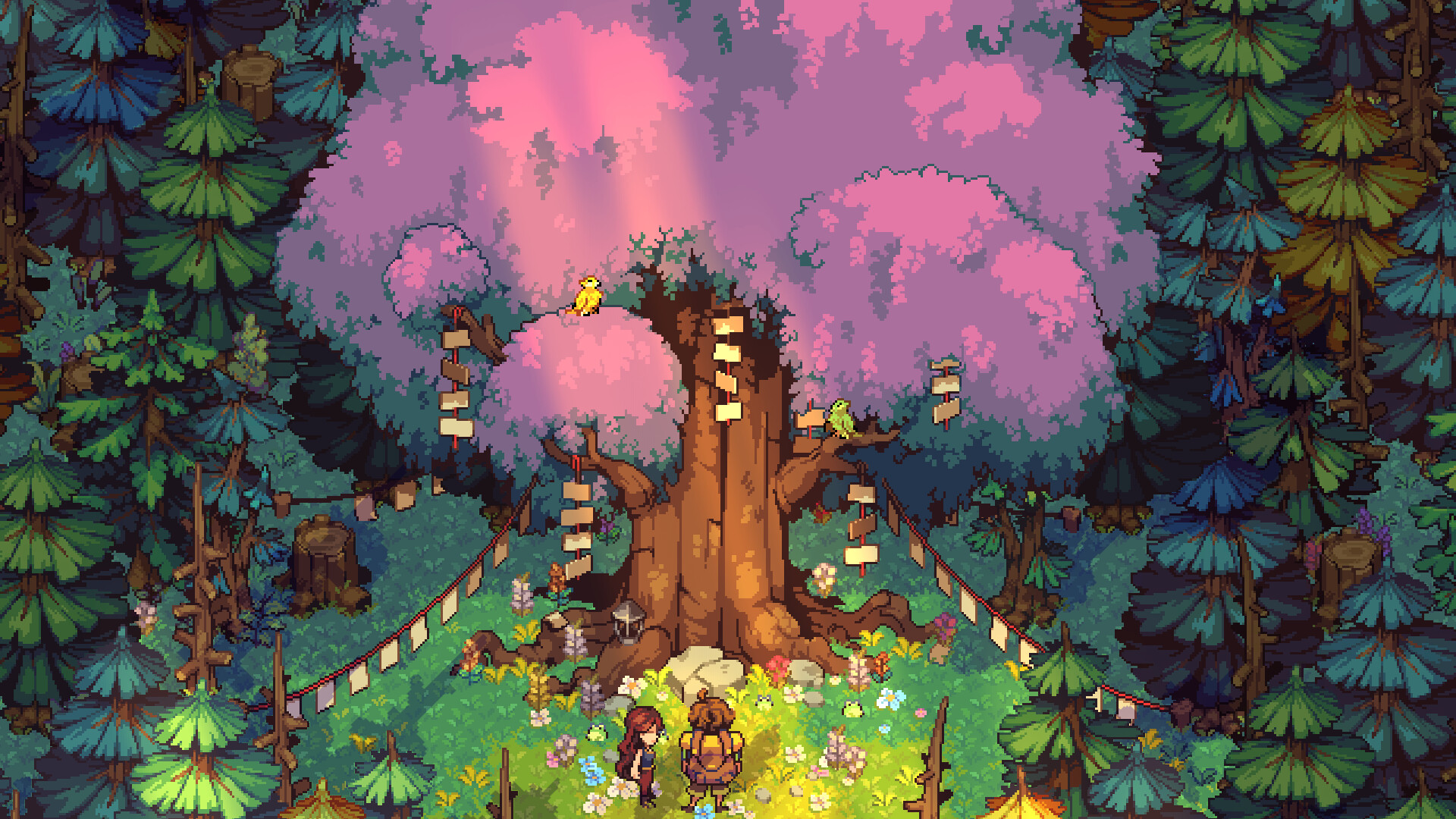
The story also gets to do something that isn’t always possible in a prequel. We already know where Alessandra eventually ends up, so the game can concentrate on the person she was before becoming the renowned Evertree Farmer.
It helped visualize how the camp molded her. We had this idea that she and the other kids would be part of a “great generation”, but only she “made it” in the farming life. These raise questions such as “What happened? Why only her? Did something happen at the camp? Is there a reason, maybe a nefarious one, for everyone to “fail”, but her?” And these questions built up a path to develop a lot of character arcs in the game.
If all of these kids were supposed to become part of a great generation but Alessandra is the one who eventually succeeds, there is naturally a lot to discover about what happened to everyone else.
Making a 2D world readable
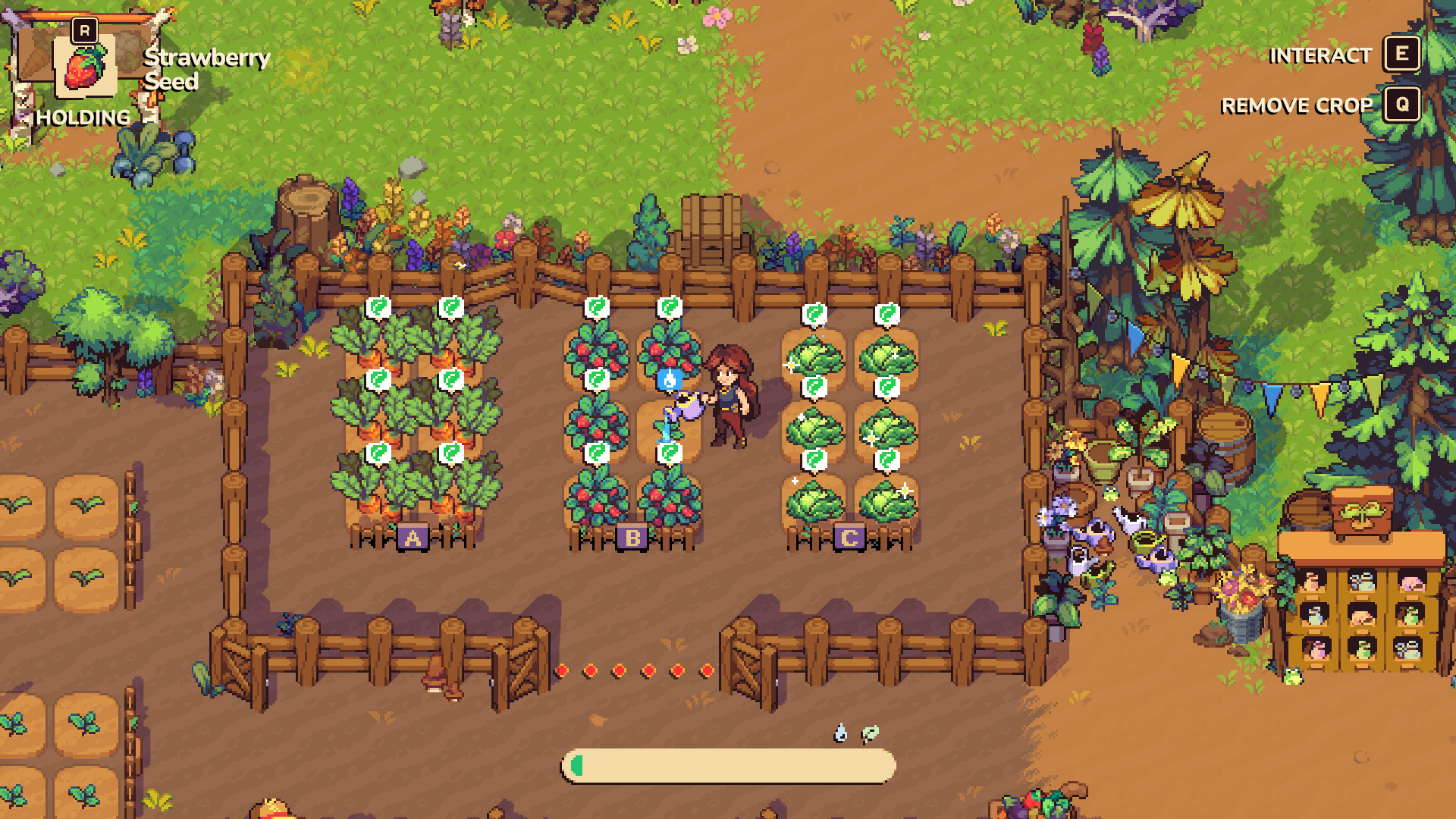
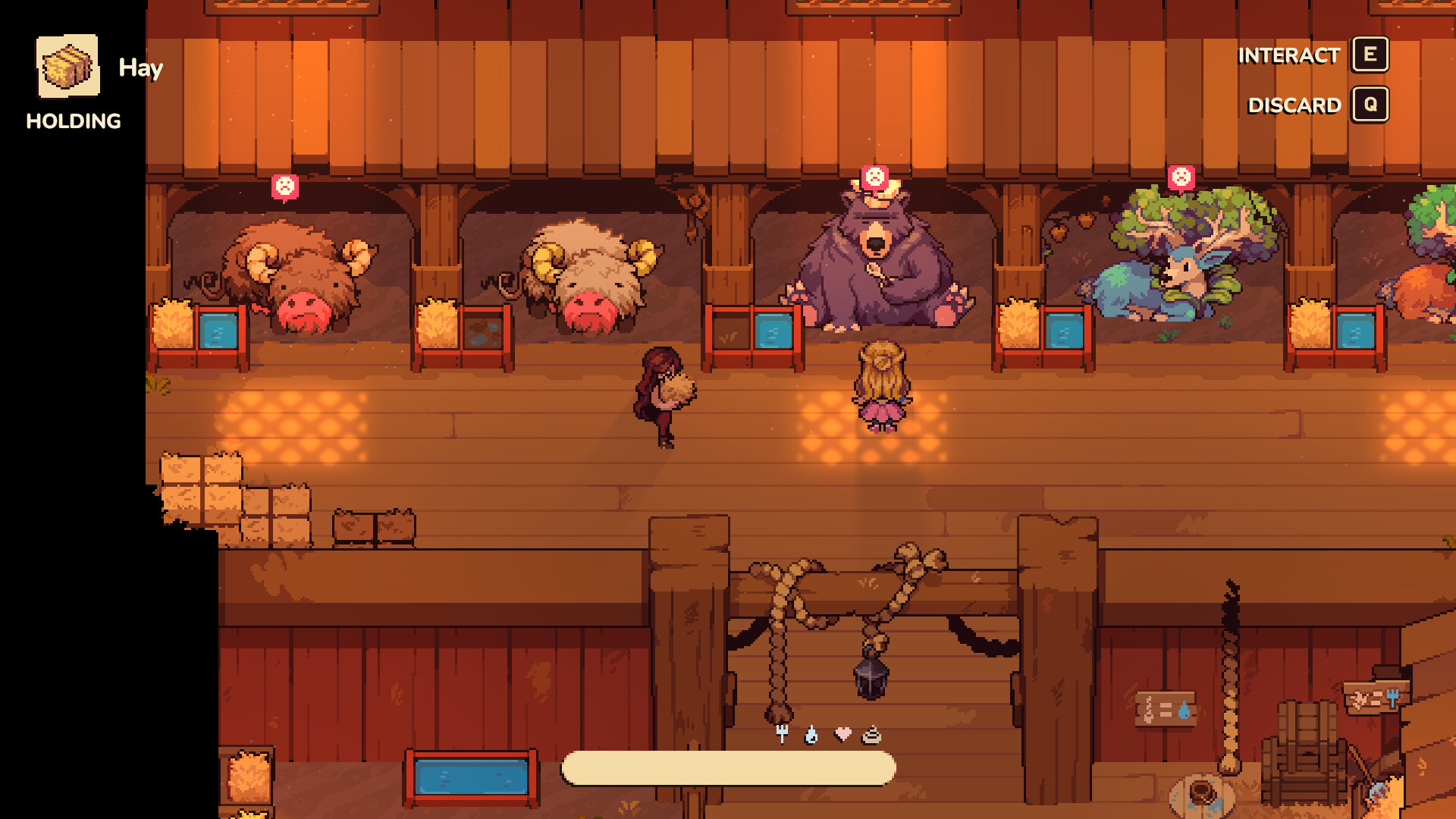
The hand-drawn 2D top-down presentation also created some practical problems. We aren’t always going to see the entire map, and characters can move around and block things that were visible a moment earlier. For a farming game where we constantly need to know what needs attention, that can become a real problem.
We wanted to tell as much as possible through visuals, but since it is a 2D top-down game, that meant the player wouldn’t always see the whole map, or maybe an NPC could block some visuals after they change locations. One of the answers we found was to make the objects and animals tell what they needed, water or pets, instead of looking for clues in the map, such as dry land or a sad cow face.
So, it seems like rather than making us search the environment for clues, the things that need our attention can communicate that directly. That also fits nicely with the game’s overall approach.
Time is what holds everything together
After combining farming, chores, relationships, competition and all the other systems, Magnino points to one thing that developers working on similar games need to understand above everything else: time.
Keep in mind that the time management is definitely going to be the centerpiece of your game experience. It will add tension and drama, and it has to shake things up as time moves forward. Be sure to know how each mechanic will affect it and vice versa. It will be the engine in which your game design will run, and you should know it like the back of your hand.
Every activity is competing for the same limited resource, so the daily clock is what makes the choices matter. Whether we spend the afternoon farming, fishing, talking to our companions or leaving the chores to somebody else, the clock keeps moving, and everything else has to work around it.

Leave a comment