
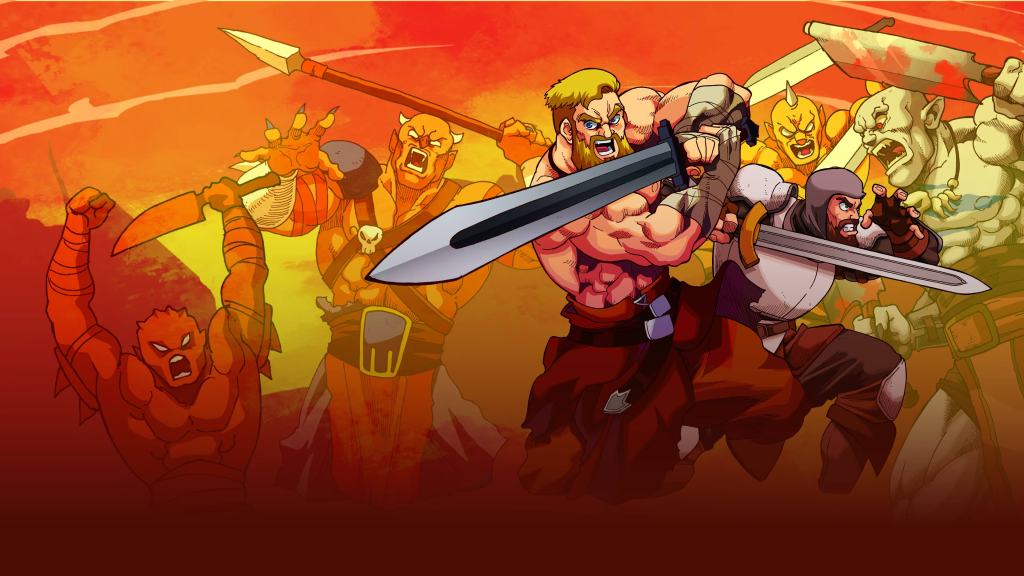
If you’re delving into game creation, then you’lle most likely agree that there’s a big difference between making a game that looks old and making one that actually feels like it came from the arcade era. When you add 3D models, modern widescreen displays and faster movement into the mix, keeping that old-school character becomes even trickier. Marcel Bernardi was involved in solving exactly those problems, working on everything from the way characters are shaded and animated to how combat, magic and movement fit together in Blades & Battles.
We talked with Bernardi about the decisions behind the game’s visual style, why some old-school ideas needed a modern touch, how much playtesting goes into balancing a beat ’em up, and the mechanics the team still isn’t ready to give up on.
Making 3D Look Like Pixel Art
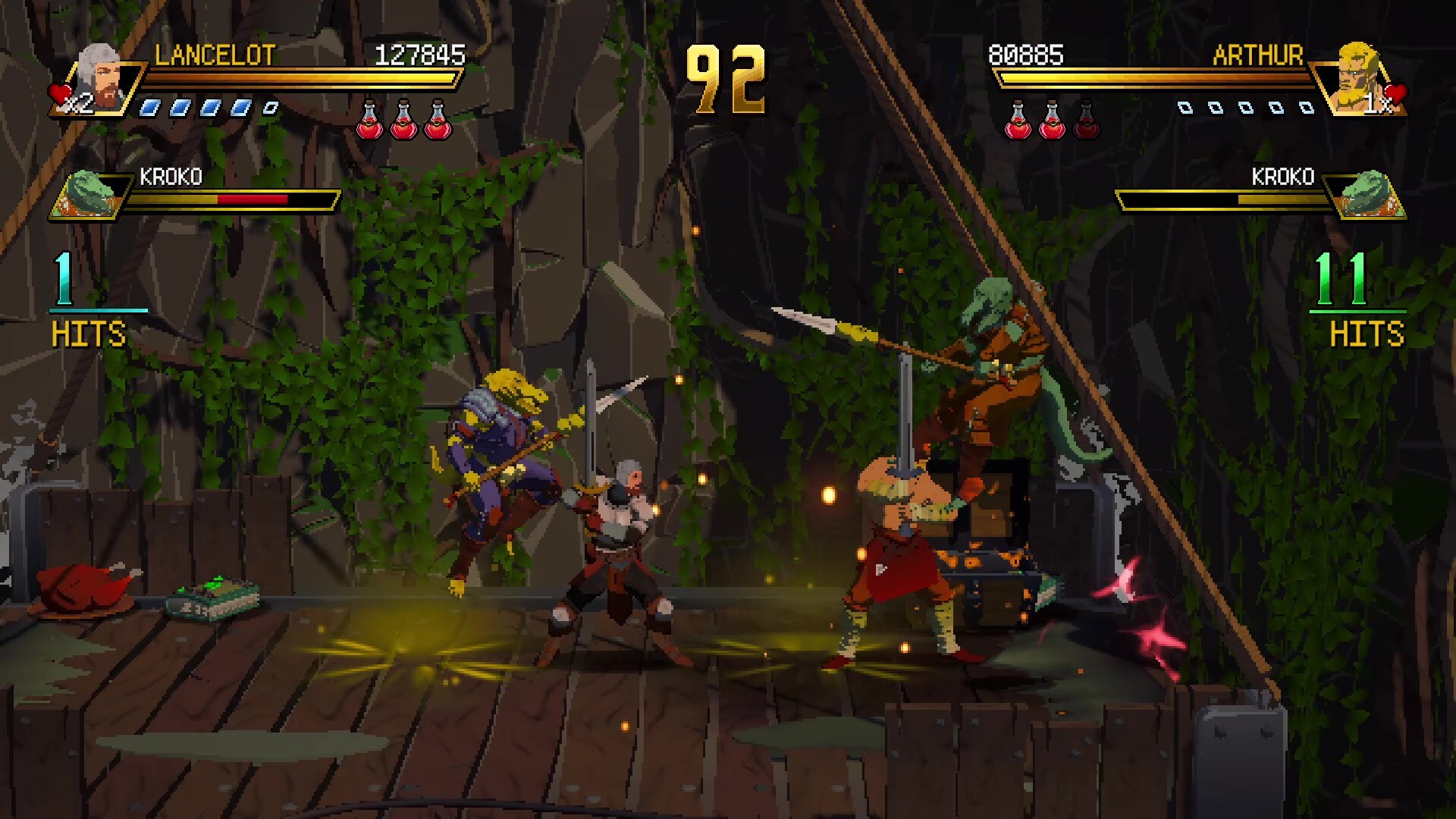
Blades & Battles’ visual style starts with a slightly unusual problem. The characters are 3D, but they’re supposed to sit comfortably beside the look of classic pixel-art games. Simply putting a pixel effect over modern 3D assets wouldn’t necessarily get the job done.
The team instead had to control how colour, lighting and animation behaved before that final pixelated presentation was applied.
“For the shading, we have a flat color texture and lighting, to ensure that the model won’t surpass the desired colors, this way we’ve total control over the color, highlight and shadow colors. For the animation, that’s where we really dive into the keyframes mindset, all the animations were thought like it was 2D animation, so we’ve only the keyframes, there’s no interpolation or in-between. The simple part is the pixelated look, it’s a camera shader to bring all what has been said to a lower resolution.”
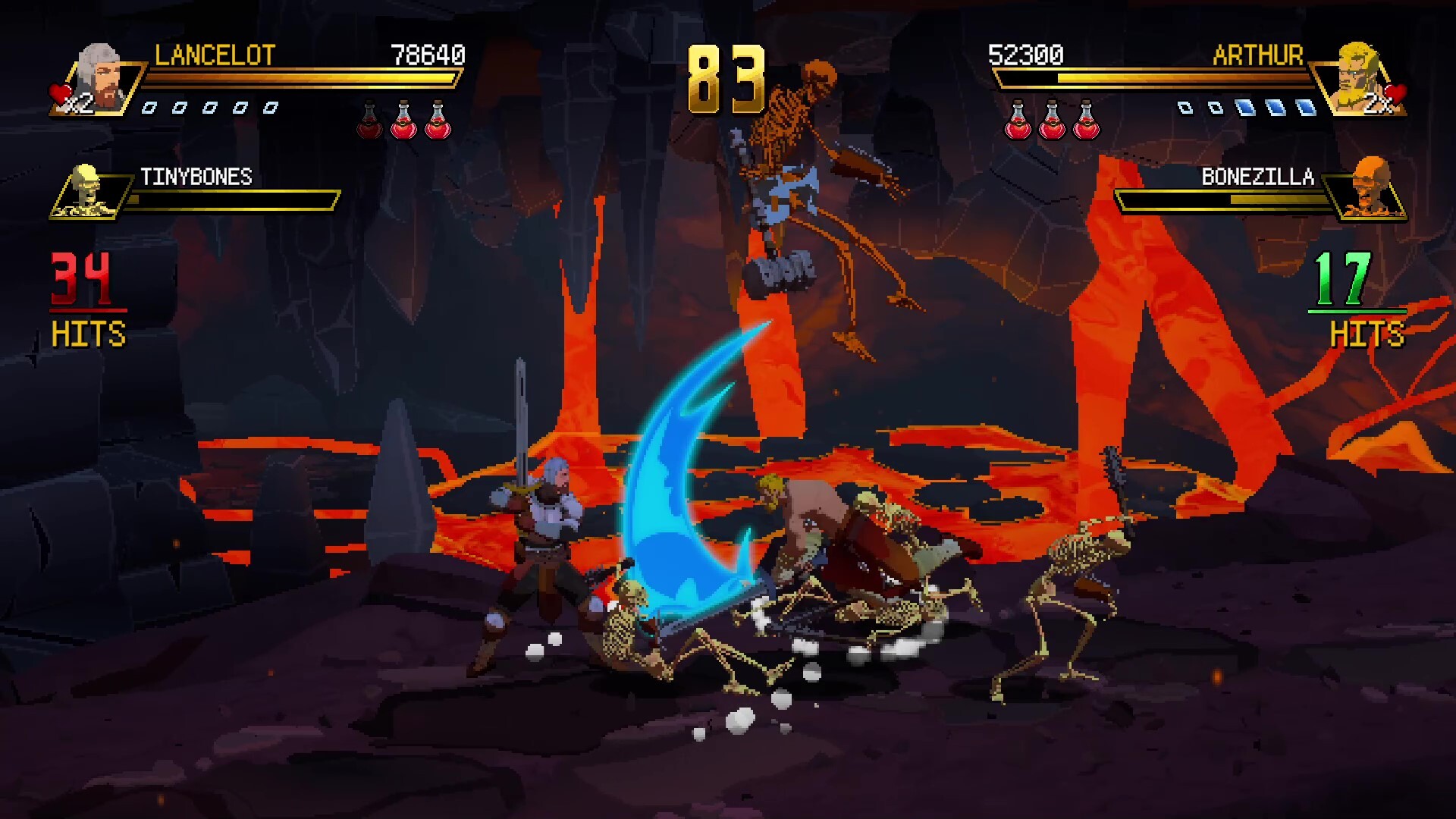
The decision to approach animation through keyframes is especially interesting. Traditional 3D animation often relies on interpolation between poses, but here the team wanted the movement to behave more like 2D animation. That helps keep the deliberate, stepped feel associated with the game’s retro inspiration.
Building Combat Around the Arcade Feel
The same approach carried over into combat. There was no need to reinvent the basic language of the beat ’em up, but the team still had to make sure attacks and animations felt right in a 3D environment.
“All the animations and hits, were thought like a fighting game, and a more ancient arcade beat’em up. To be honest, the real difference between the players came at a later stage, when the designs were more defined, and especially all animations and mechanics tests were already finished.”
That last part is worth highlighting because it shows how much of the character design came together through development. The differences between the playable characters weren’t simply locked down at the beginning. They became clearer once the animations and mechanics had been tested and the designs had taken shape.
For a genre built around repeated encounters, those small differences matter. If every character handles the same way, the choice between them quickly becomes little more than cosmetic.
Some Old Ideas Needed to Move Faster
Movement was one area where copying the arcade experience too closely simply wasn’t going to work.
The older games were built around 4:3 displays and lower frame rates. Modern players are looking at a much wider screen, and that changes how quickly characters can move through the space and how much room they have to react.
“Definitely the movement. Old arcade games run on a 4:3 screen with lower fps, to bring a more modernized movement, we have to make the characters walk and run with more speed, also the dash was fundamental to a modern 16:9 screen space. And honestly, it’s very good for combat as well.”
The dash is a good example of a change that serves two purposes. It helps the game feel more natural on a widescreen display, but it also gives the combat more movement options.
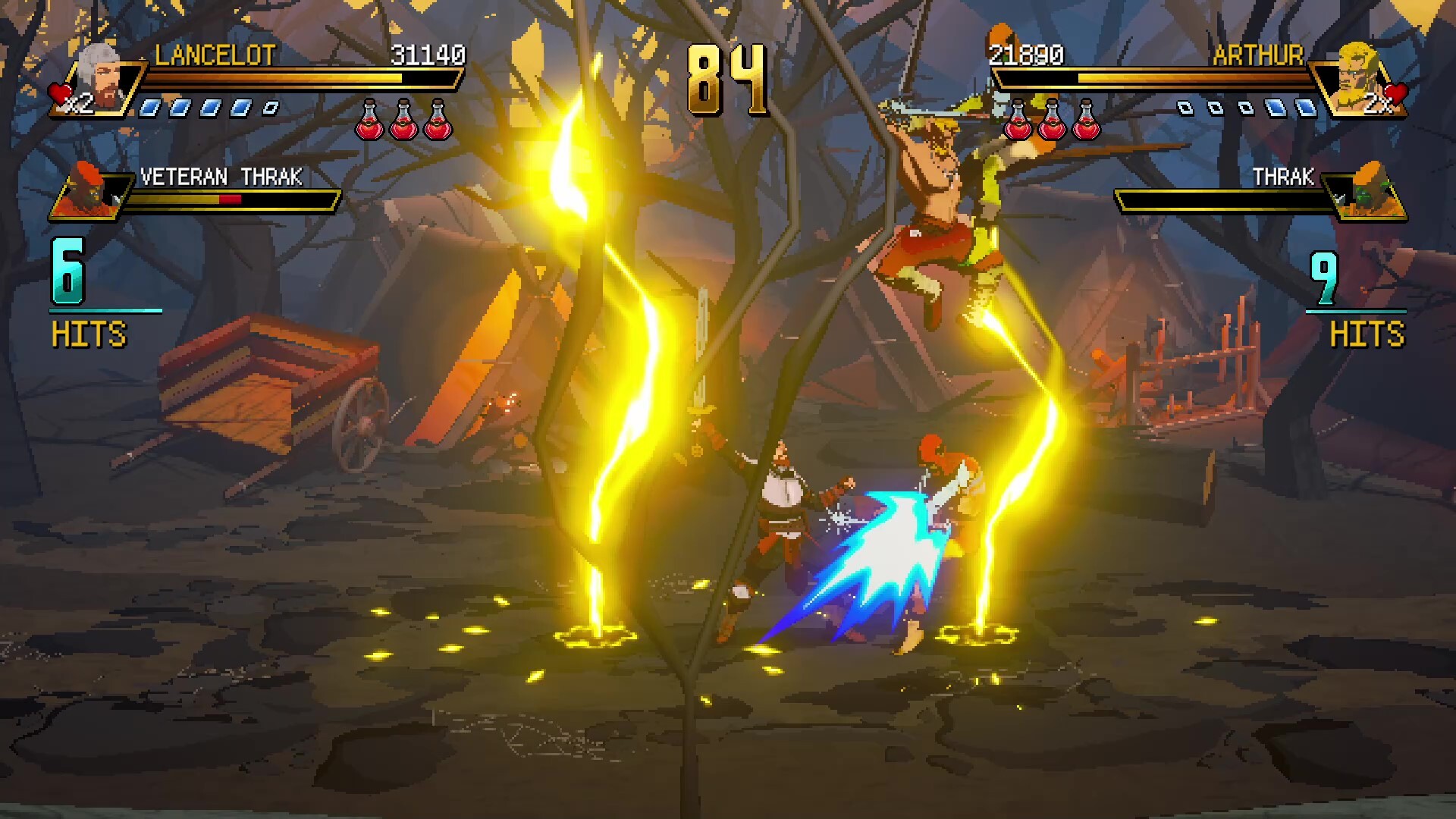
That seems to have been an important part of the team’s approach: keep the parts that make the game feel like an arcade beat ’em up, but don’t be afraid to adjust something when the way we play games has changed.
Magic Has a Job to Do
Magic could have been treated as an emergency tool for clearing a crowded screen, but that’s not really what the system is about.
“It’s integrated with our combo system. The only screen clearing move, it’s the ones with the potion, which need to be collected as drops. The magic, it’s more a long distance hit, without much damage, but it can keep the combo going as long as the player dominates the distance of the blows.”
That makes magic more useful as part of the normal combat flow. It doesn’t simply replace the melee attacks or become something to save for a difficult encounter. Instead, players can use it to maintain a combo from a distance, provided they can keep control of the spacing.
The potion attacks have the much more familiar screen-clearing role, but even those are tied to drops rather than being freely available whenever the player needs them.
Everything Starts With the Controller
Local co-op also brings another practical consideration into the design. If players are going to be sitting next to each other with controllers, the entire combat system needs to work comfortably from those inputs.
For Bernardi’s team, that wasn’t something they had to retrofit later.
“We have internal politics, all our game NEED to be fully controller playable, so I can tell the all the ideas were originally conceived with the controller in mind.”
It’s a simple rule, but it can have a big effect on how a game’s controls are designed. Here, the controller wasn’t just one of several ways to play. It was part of the thinking from the beginning.
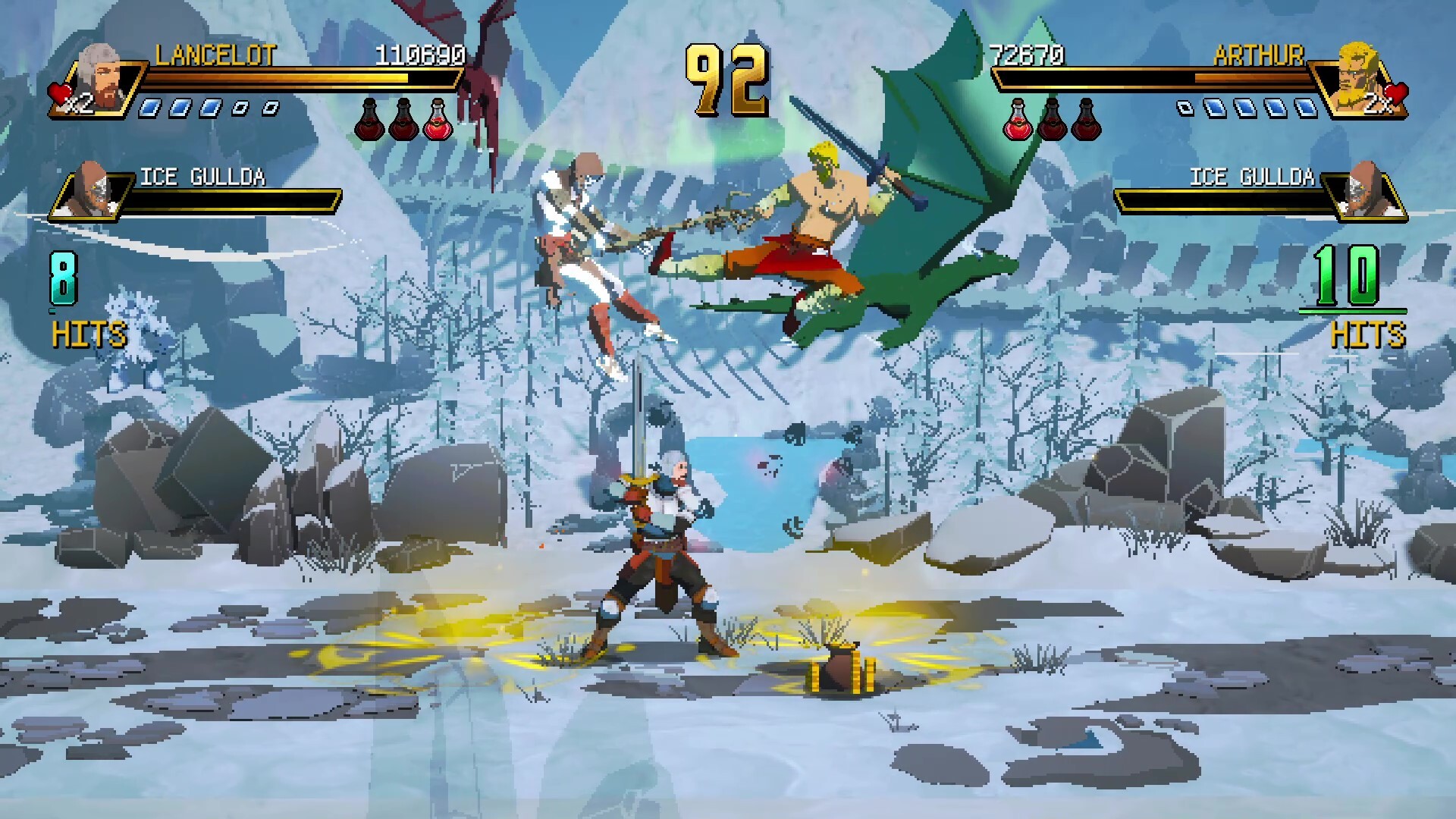
That also means the combo system and spell controls have to fit naturally onto a gamepad without making the player think too much about which button does what in the middle of a fight.
The Level Isn’t Finished Until People Play It
Beat ’em ups can be deceptively difficult to balance. Enemy placement, spawn timing and the amount of space available all have to work together. Get any of those wrong and the player can end up doing the same thing over and over again.
The team starts with a plan, but that plan doesn’t survive contact with the first proper playthroughs.
“That’s a constant when building a beat’em up, and I really think that this kind of balance it’s the essential flavor of all beat’em ups. We’ve an initial idea, but I can be honest when saying, that this kind of planning is discarded in the first playthroughs. The real balance comes with a lot, and I mean a lot of playtesting.”
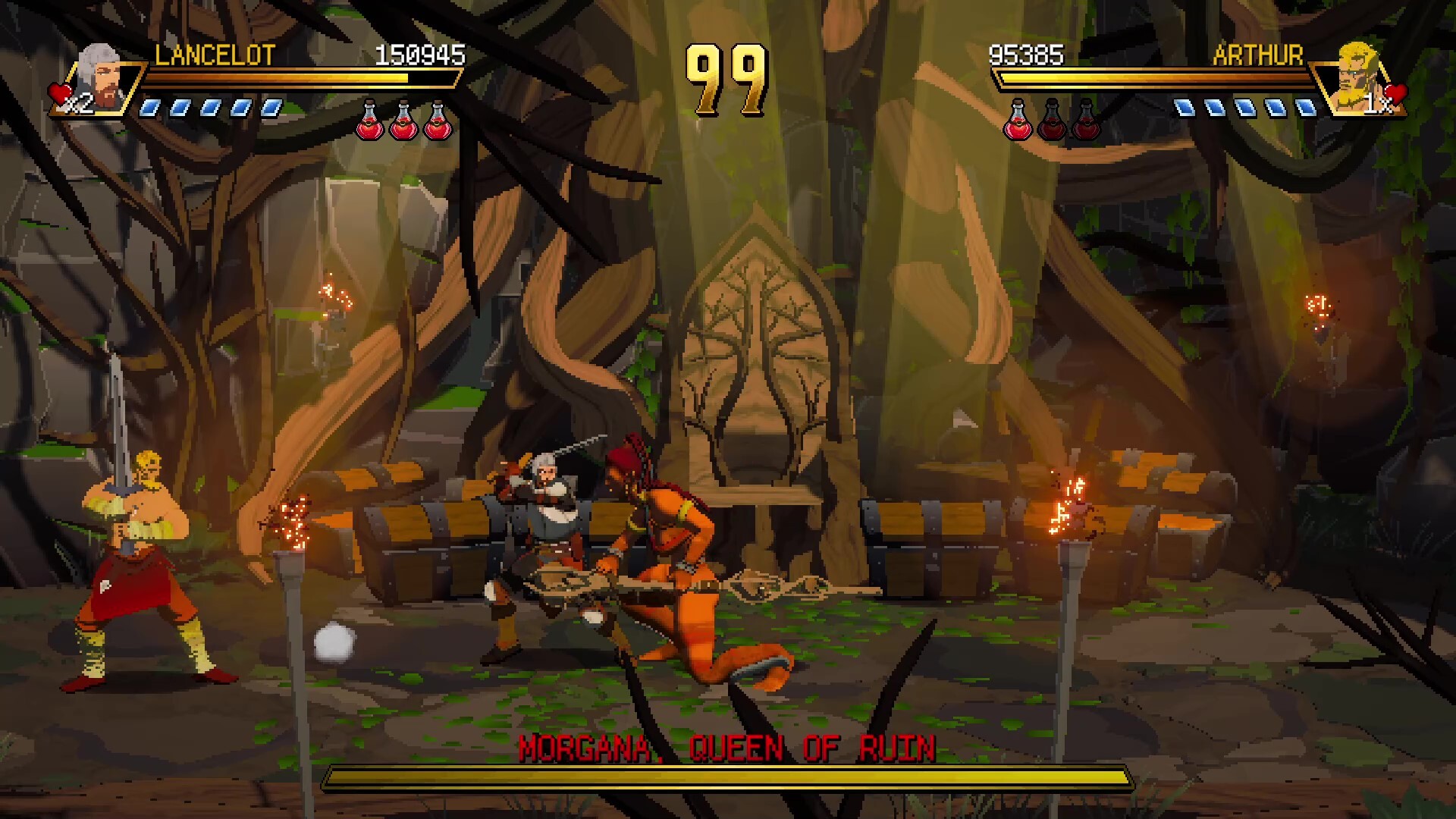
That makes sense for a genre where timing and enemy behaviour can completely change how an encounter feels. Something that looks fine when building a level can become boring, frustrating or simply too easy once it’s played repeatedly.
Some Ideas Just Didn’t Work
Not every mechanic survived that process. Some ideas that sound perfectly reasonable for a beat ’em up became much harder to make work once the game moved into 3D.
“There was a lot of ideas that didn’t work well in this 3D beat’em up, like grabs and throwing, but it’s the kind of mechanics that we won’t give up so easily, and sure will be more worked on on our future products.”
It’s also a nice reminder that cutting something from one game doesn’t necessarily mean abandoning it completely. Grabs and throwing didn’t fit this project in their current form, but Bernardi clearly sees potential in them for future games.
That kind of experimentation is part of the process, especially when a mechanic that worked naturally in an older 2D game has to be reconsidered in a 3D space.
Knowing What to Keep
After going through all those decisions, the biggest question is probably the simplest one: how do you make something nostalgic without letting nostalgia get in the way of actually making a fun game?
Bernardi says that figuring out that line was one of the most important parts of the development process.
“We must be very clear what’s a pure nostalgic feeling to a real fun gameplay, even to newer audiences. Since from the beginning, we’ve the clear idea that the gameplay must be fun, and what worked years ago, definitely won’t work nowadays, but they can be close. Deciding what must be modernized and what not, was one of the most crucial decisions in our pipeline. I truly believe that we reached a good common ground, but we have very clear in our minds, that’s a lot more to be done and improved. To other developers that really love the arcade feeling, don’t be afraid to test it out to show out there what you guys have in mind. I can assure you, that’s a lot of us that will love to play this “neo retro vibe” games.”
That probably gets to the heart of the whole project. There are plenty of old arcade conventions worth bringing back, but some things worked because of the hardware and displays of the time, not because they were necessarily better.
Faster movement, a dash, controller-first controls, combo-focused magic and a lot of playtesting are all ways of bringing that old arcade feeling into a game made for a very different audience and very different hardware.
And if Bernardi’s idea of a “neo retro vibe” catches on, there should be plenty more room for developers to take those arcade foundations and see what happens when they stop treating the past as something that has to be copied exactly.
Interviewee
Marcel Bernardi
Follow Marcel Bernardi on X

Leave a comment