Reap and Rush brings a refreshing energy to roguelite games. The combat is satisfying, trying out different skill setups is a ton of fun, and the short story moments give us a nice break from the action.
We enjoyed our time with the game so much that we were very grateful for the chance to sit down and chat with developer YangZhong. Stick around after the trailer to see how the team managed to blend Chinese underworld mythology, fast-paced action, and all the unexpected things players do.
This interview would not have been possible without the wonderful people at PR Hound. Many thanks Derek Reeve!
Diplomacy in a Bloodbath
Putting non-combat resolutions in a hack-and-slash game is a massive risk. We asked YangZhong how the studio prevented these diplomatic moments from killing the game’s momentum.
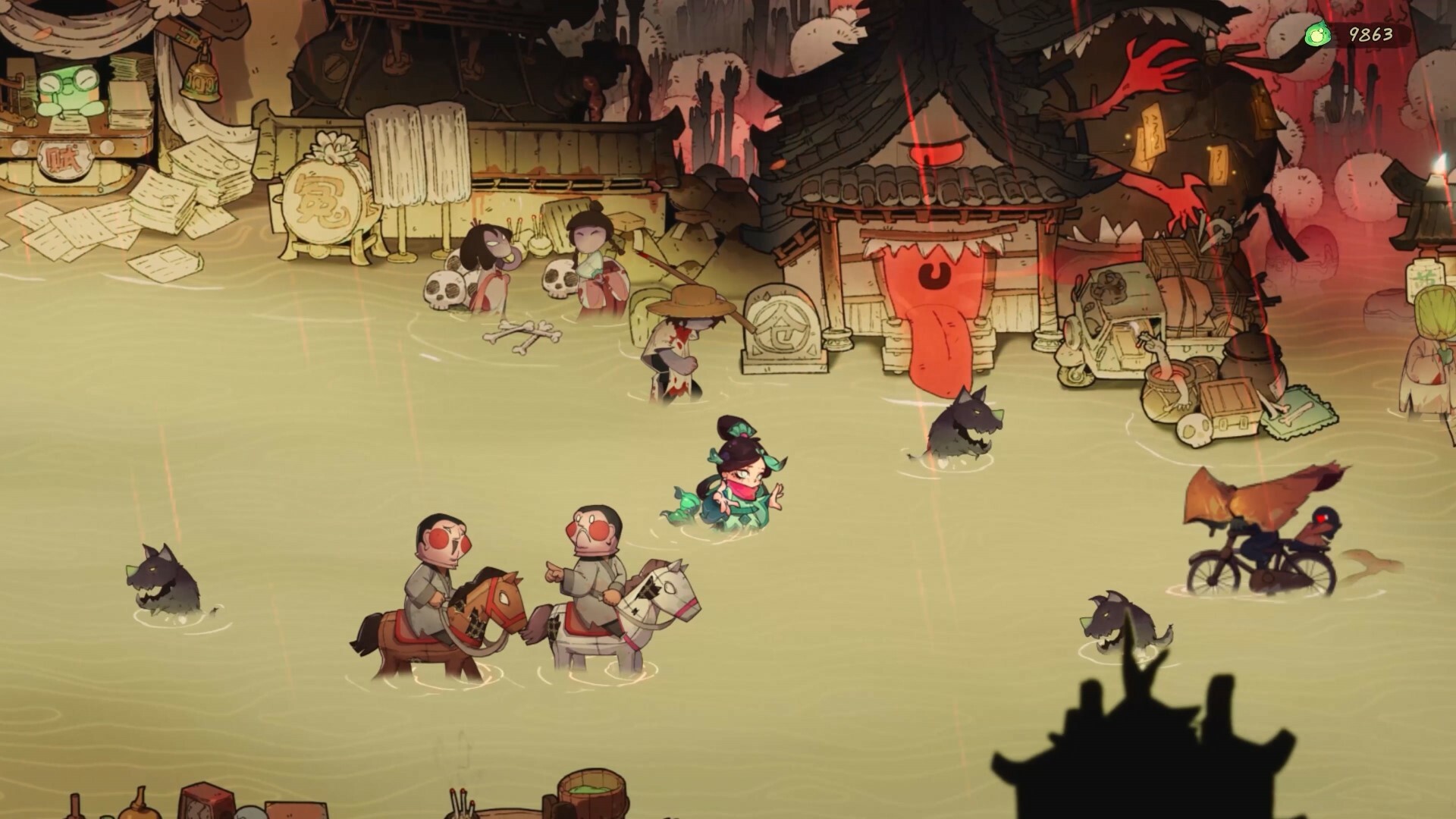
“From the initial concept phase, we intended for players to step into the shoes of a Soul Reaper (Yin Chai). Since their primary duty revolves around guiding departed souls to the afterlife and resolving supernatural incidents in the mortal realm, we wanted to expand the gameplay branches by incorporating paranormal events and demonic entities. We felt this was a natural, thematic extension that aligns seamlessly with the game’s world-building.
To prevent these elements from disrupting the core gameplay loop, we ruled out mechanics that would halt player movement or require heavy cognitive load. Instead, we designed these events around the primary hack-and-slash loop. This allows players to effortlessly assist NPCs while engaging in combat, stress-free. Simultaneously, these incidents add variety to the game’s challenges and enrich the overall player progression economy.”
Instead of freezing the action for text menus, the team let players resolve quests mid-swing, preserving the chaos while expanding the world.
The Auto-Loot Pivot
Keeping that chaos moving wasn’t always easy. During the Demo phase, players complained that manually picking up loot ruined the pacing. The team had to weigh their original economic design against a universal auto-loot system.
“Early on, we thought of loot as a crucial reward—a piece of “candy” for the player. But during playtests, we found that the fast-paced gameplay didn’t give players enough breathing room to distinguish good loot from bad. The constant need to kite and dodge meant players simply couldn’t pay attention to drops or recognize their rarity on the spot.
We also got a lot of feedback from players saying that rewards shouldn’t feel like a chore. So, we added a global auto-pickup system, while keeping traditional loot drops for high-stakes moments like boss fights and special events where players naturally focus up.
Implementing global auto-pickup brought its own challenges. If it triggered too fast, loot never had a chance to pile up on screen, making the environment feel dry and bare. It also clashed with the “pickup radius” attribute, sometimes making both mechanics feel a bit useless. Despite these bumps in the road, we ultimately consider global auto-pickup an absolute must-have feature.”
This willingness to adapt to player habits extends to combat. In a game built for constant motion, players inevitably discovered ways to create stationary, tanky builds. Rather than nerfing these loadouts, YangZhong sees them as a win for player agency.
“ZY: We believe a game can rarely be defined solely by its developers. While we certainly provide the foundational gameplay paths, our hope is that collaborating and bouncing ideas off our community will yield content that far exceeds our initial expectations. We see this as a positive—and even something that should be actively encouraged. As for balance, our current philosophy prioritizes fun and engaging gameplay over strict balancing, especially given that the game currently lacks competitive modes or a reliance on fair-play narratives.”
Balancing Culture and Mechanics
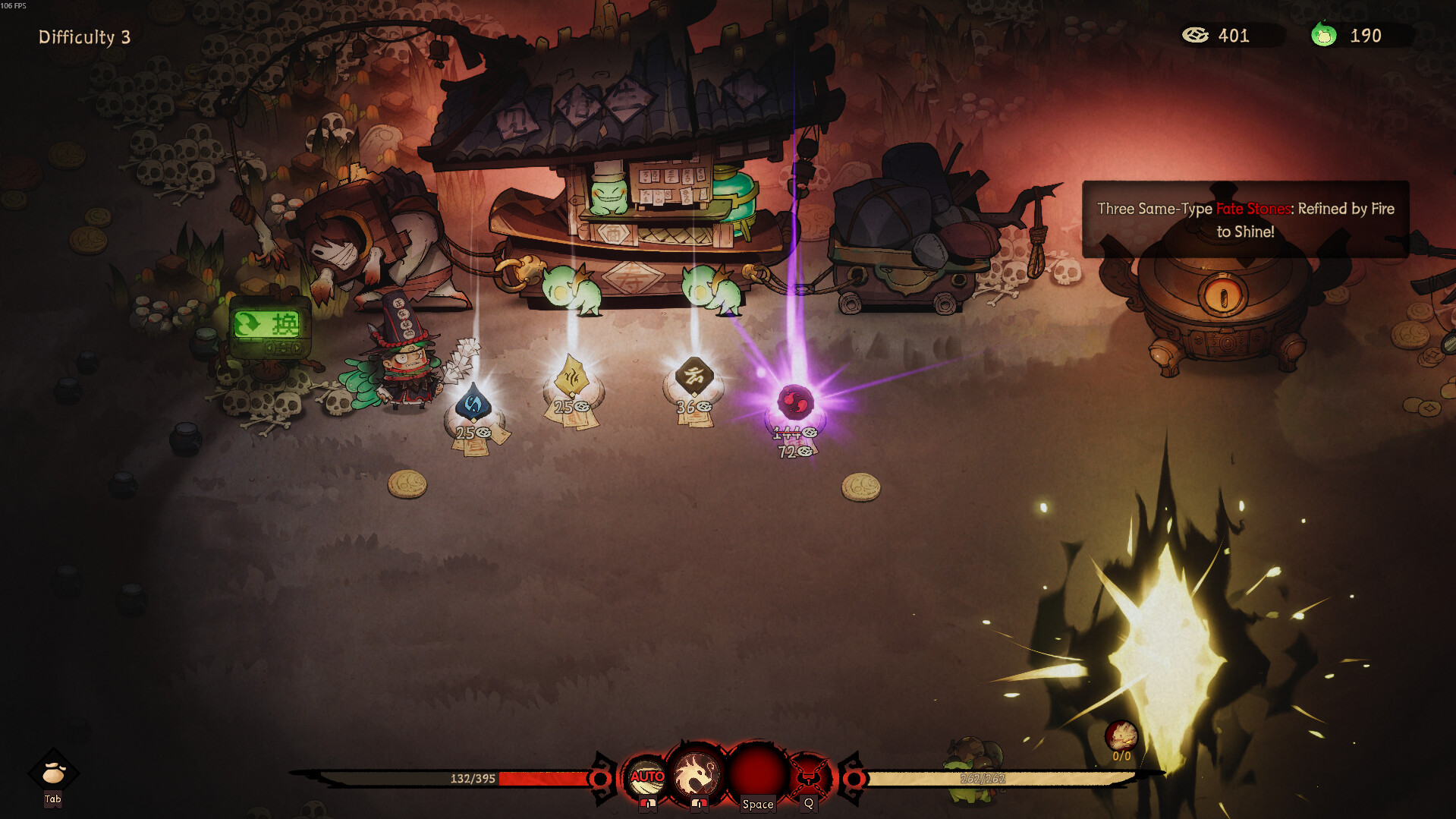
Reap and Rush uses traditional paper crafts (通神纸扎) as run-altering items. It’s a great cultural tie-in, but blending real-world practices with strict game math comes with unique headaches.
“ZY: The design here is rooted in the Chinese tradition of burning joss paper and paper crafts for deceased relatives. The original concept was based on visiting descendants in their dreams to ask for aid from the mortal realm, giving the system a strong cultural backing during development. We even produced gacha animation sequences for it, though we ultimately dropped them.
Post-launch, however, we identified several design issues. For example, players tend to dump resources into just one or two specific stats, rarely investing in survivability. As enemy damage scales up in later stages, this leaves players facing severe survival bottlenecks. We’ve tried to offset this by embedding passive survivability stats elsewhere, but it still feels insufficient, so we are continuing to tune and adjust it.”
Managing the Visual Mayhem
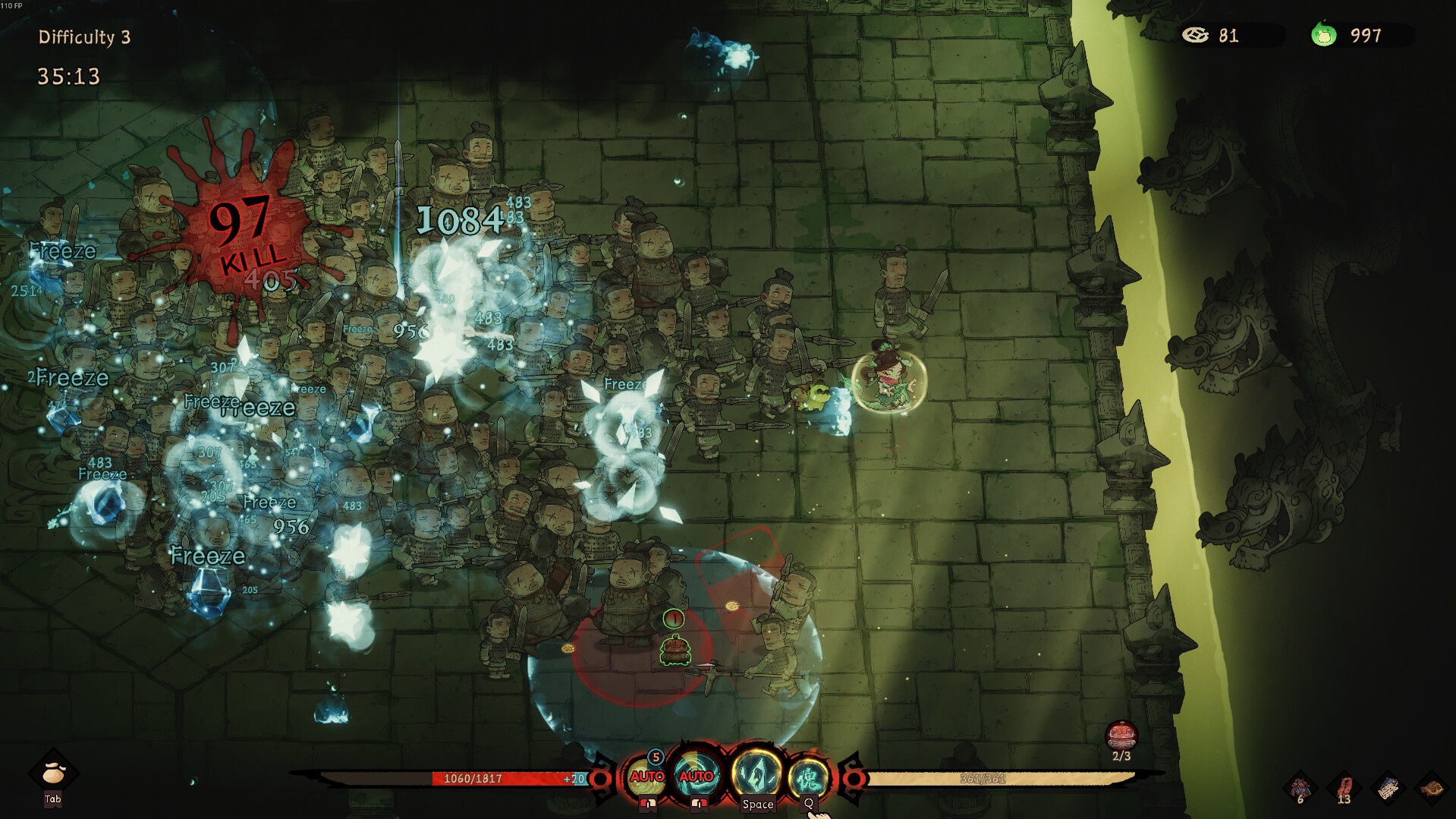
With hundreds of enemies and overlapping spell effects on screen, readability is a constant battle. YangZhong broke down the rendering pipeline required to keep the underworld from turning into an unreadable blur.
“ZY: That’s a deep question! Prior to launch, we spent considerable time tuning our rendering hierarchy, establishing a distinct priority pipeline: Ground $$\rightarrow$$ Enemies $$\rightarrow$$ Player $$\rightarrow$$ Visual Effects (VFX). Each ascending layer received gradient adjustments to both saturation and grayscale values. We also implemented settings for post-processing attenuation and effect transparency toggles.
That said, it’s still an ongoing iteration process. We are actively optimizing edge cases we didn’t initially account for—such as summon entities obscuring the view and heavy effect stacking causing overexposure issues.”
A clear screen only works if the enemy pacing is right. To nail the satisfying “mowing the lawn” power fantasy without losing tension, the team overhauled their spawn logic.
“ZY: We’ve been iterating on spawn mechanics since the start of the project, testing countless patterns and scaling curves for mob waves. Along the way, we hit on two key insights: First, the spawn curve must adapt to player pacing—it should start gently when a player enters the stage and steadily ramp up intensity as time goes on. Second, whenever a massive wave is inbound, we need to telegraph it in advance. Giving players a heads-up sets clear psychological expectations, signposting whether it’s time to play defensively or unleash pure carnage.”
A Lesson in Complexity
Building a highly modular action game over two years forces a studio to confront a lot of scrapped prototypes. Looking back, YangZhong shared his biggest piece of advice for developers trying to build cascading spell systems.
“ZY: Great question! This was actually a priceless lesson we learned during the development of Difu Is Busy. First, in a highly modular, cascading spell system, we observed that players pay far more attention to visual transformations in spell form—meaning design efforts should lean heavily into shape-shifting mechanics and impactful visual feedback.
Second, we made the mistake of creating certain modules that only synergized with specific skill types while being completely useless to others. Even if an upgrade was exceptionally strong, players still viewed it as loot pool clutter if it didn’t apply to their build. The more niche, overly conditional modules we introduced, the worse the player experience became—a point raised frequently by our community post-launch.
If we were to redesign this or advise developers working on similar systems, I’d suggest flipping our original approach. We initially built simple modules with complex base skills; in hindsight, it should be simple base skills paired with complex, highly compatible modules. Even when full compatibility isn’t feasible, every module should provide at least a minor global passive benefit. Ultimately, focusing design efforts on easily perceptible dimensions—like mechanical input or visual impact—is a much more effective path forward.”
It’s a clear lesson for the genre: complexity only works if players can actually use it. By leaning into simple bases and highly compatible modules, the team at Reap and Rush is figuring out exactly what makes the underworld tick.







Leave a comment