
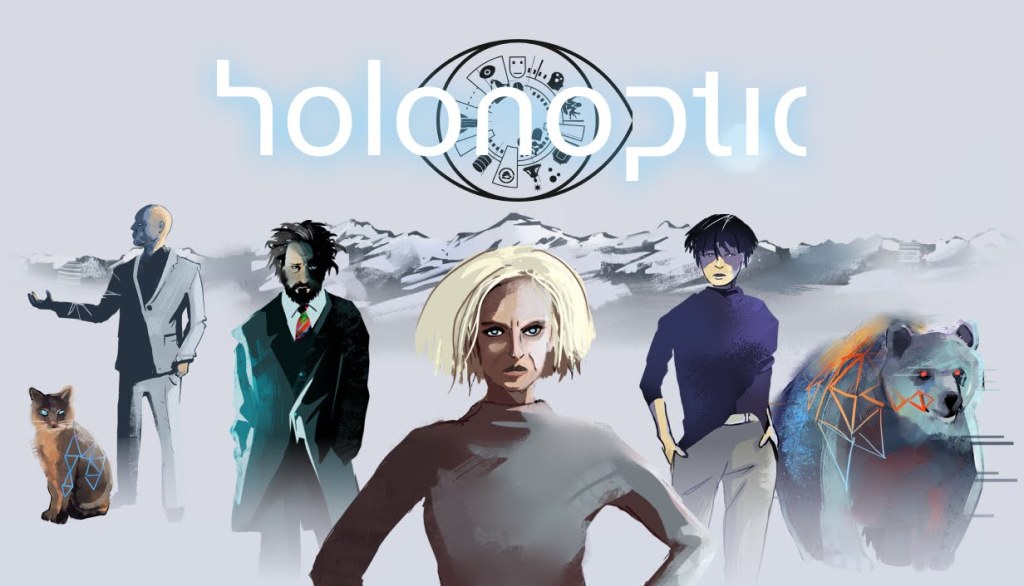
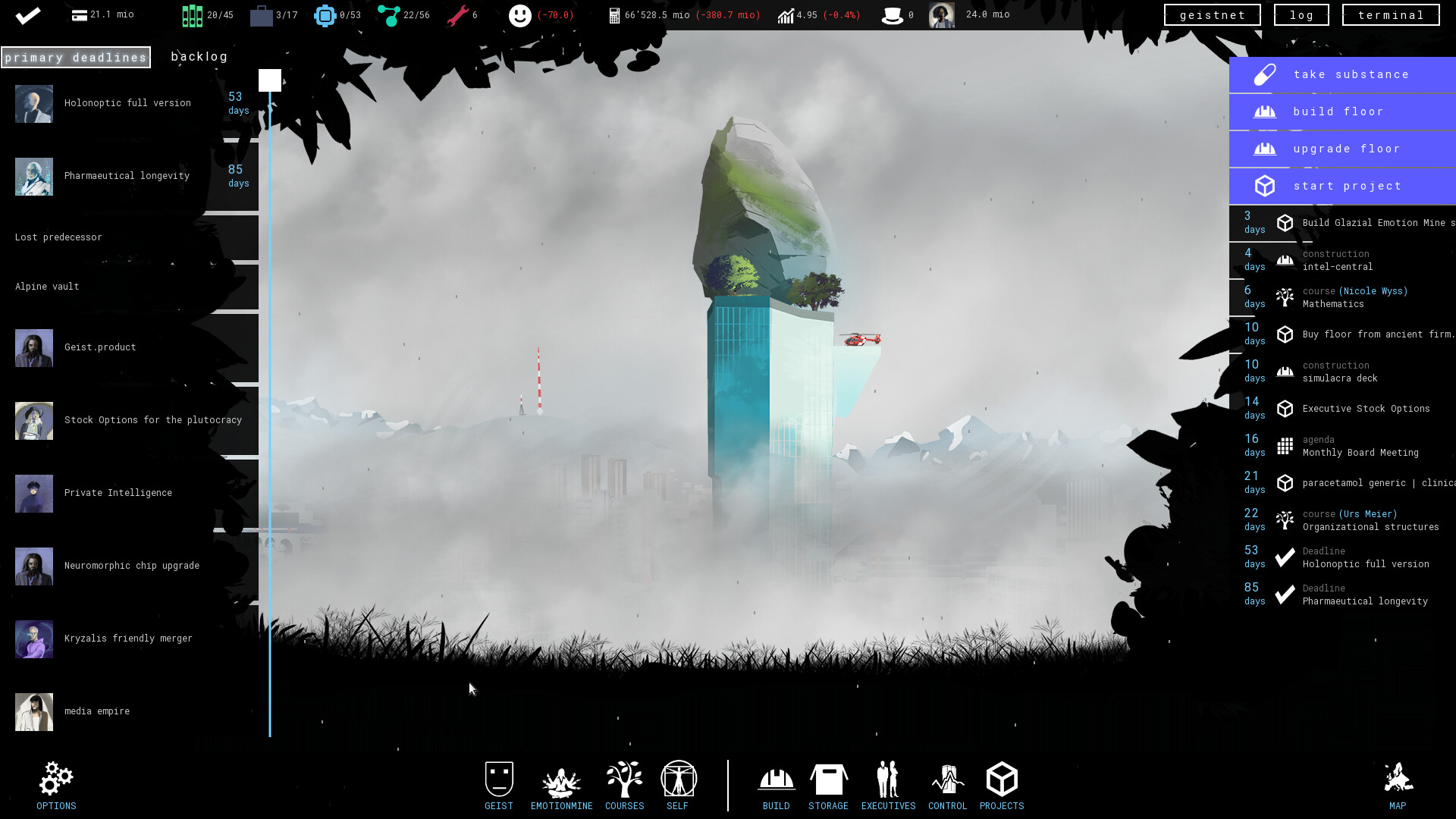
For the past six years, Kevin Bloch has been building Holonoptic almost entirely on his own. Developed under the studio name Glazial, the game combines an unusually detailed economic simulation—complete with supply chains and more than 50 companies—with a narrative-driven RPG set in an alpine cyberpunk world. Bloch handled the design, programming, writing, and artwork himself, while composer Annina Suter created the soundtrack and a small voice cast brought the characters to life.
That blend of systems is what immediately sets Holonoptic apart, but it also raises plenty of questions. How do thousands of dialogue lines coexist with a simulation full of interconnected businesses? How do psychological traits, ideology, and economics influence one another? And what does it take to finish a project of this scale as a solo developer? We spoke with Bloch about the technical foundations behind Holonoptic, the ideas that shaped its world, and the lessons he learned during a development journey that changed his own career.

This interview would not have been possible without the wonderful people at Bonfire PR. Many thanks Alex Moore!

From Copywriter to Software Engineer
At the heart of Holonoptic is the challenge of connecting two very different genres. Rather than treating the economic simulation and narrative as separate systems, Bloch wanted them to influence one another without creating an unmanageable codebase.
“What you are addressing here was exactly the hardest part, especially because I did not know anything about coding or architecture at first. Eventually I learned about software concepts like Entity-Component-Systems and decoupling, avoiding inheritance hierarchies and interdependencies. This means that, for example, I can add psychological traits that produce resources without having to change the way items or employees already produce resources. At some point I actually changed my day job from copywriter to software engineer, which provided me with a lot more knowledge to work on this project.”
That evolution in his technical knowledge shaped much of the game’s architecture and made it possible to keep adding new mechanics without constantly rewriting existing systems.

When Psychology Changes the Economy
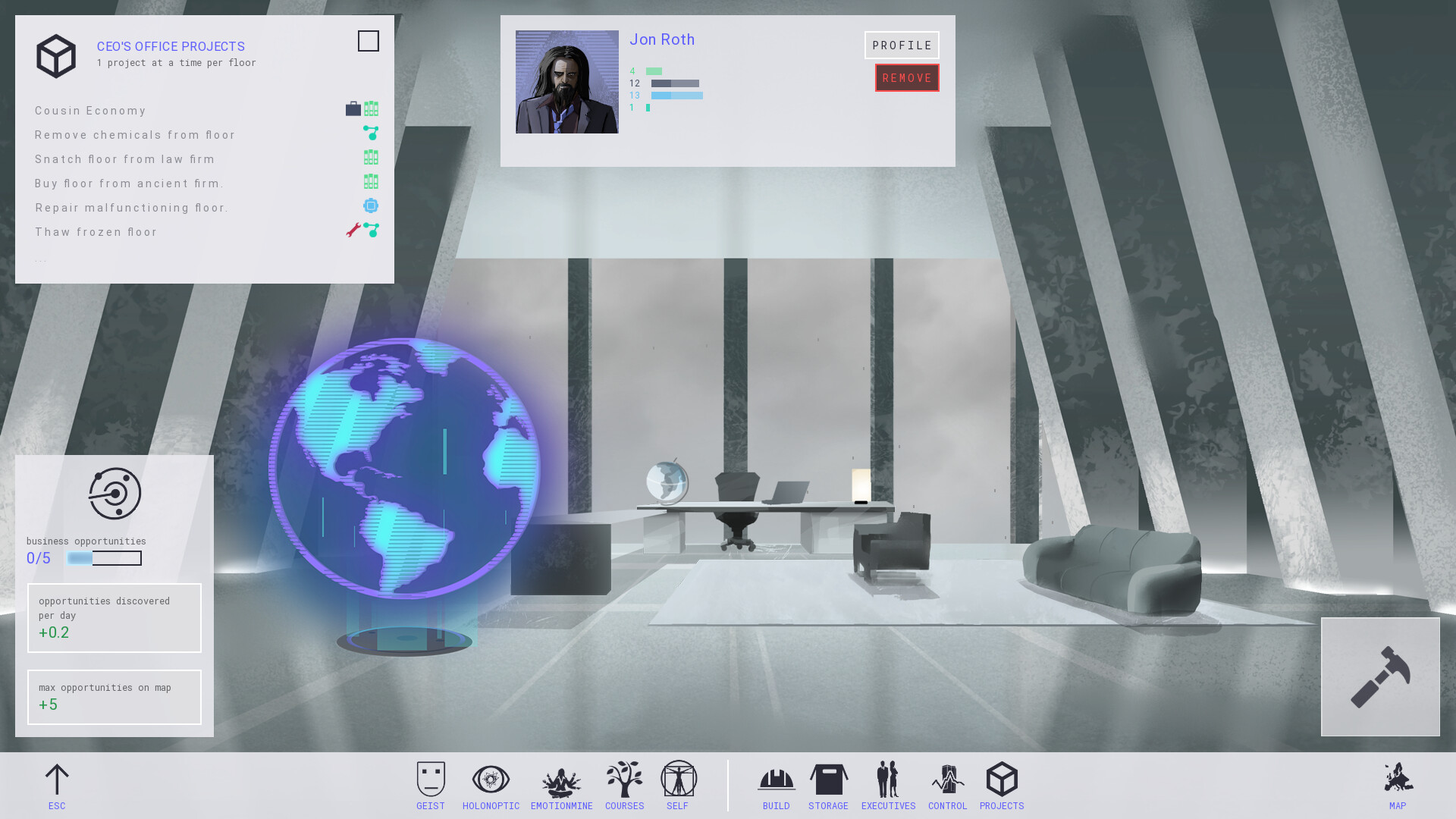
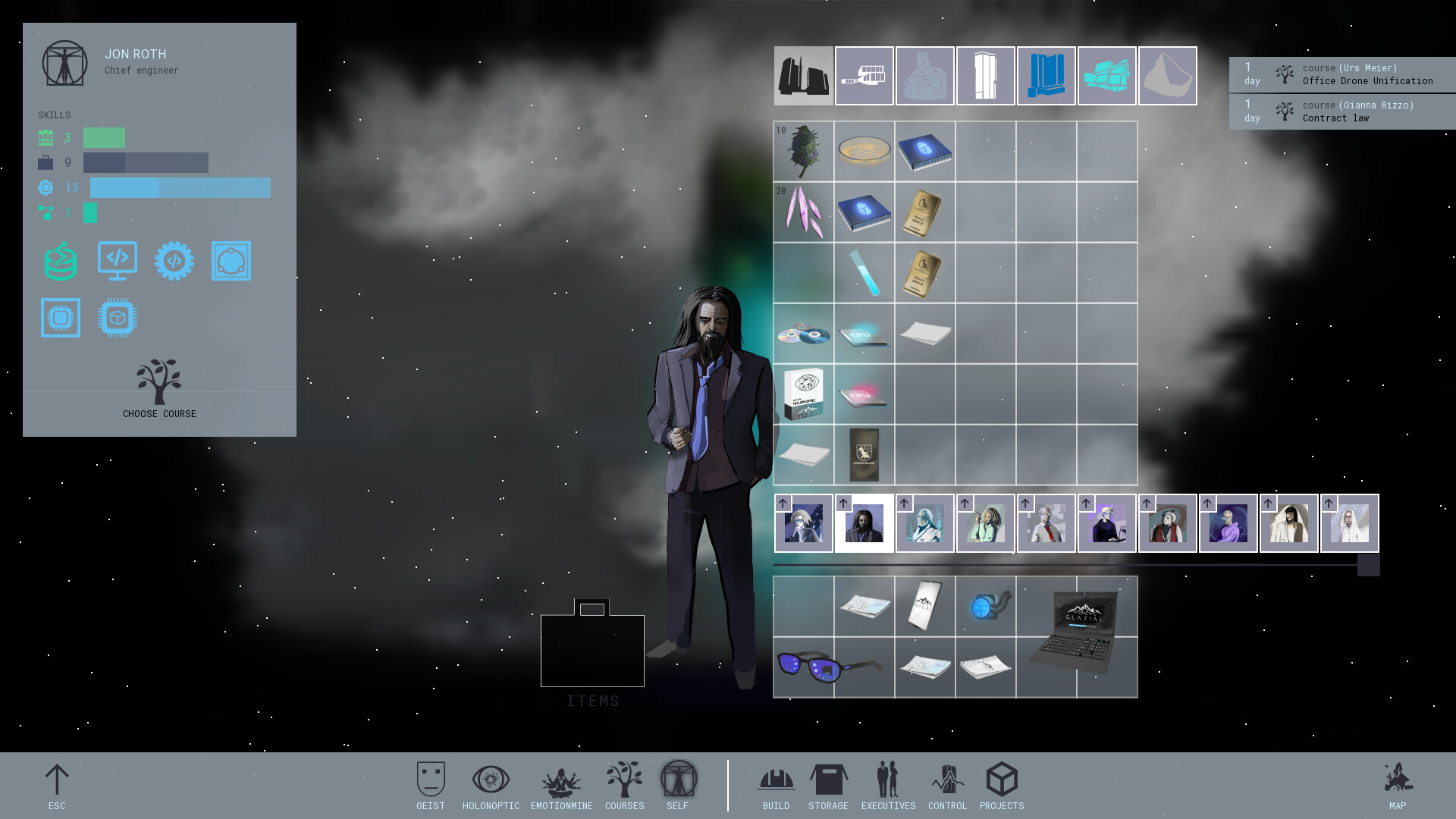
Negotiations in Holonoptic aren’t simply about choosing the correct dialogue option. Before entering conversations, players can modify their character through psychological traits and psychoactive substances, changing both gameplay mechanics and the direction of the story.
“Players can use the substances and psychological traits to get more dialogue options and stat buffs, yes. Beyond that, some story paths will demand a personal transformation from the player character which can be achieved with certain traits and substances. Furthermore, substances are cultural artefacts, and together with your mental states they push you towards certain ideologies in the game. For example, illegal drugs enhance your affinity towards the underground economy, while pharmaceutical products push you towards scientific materialism.”
Rather than functioning as isolated RPG bonuses, these systems feed directly into the game’s broader themes, linking personal choices with economic and ideological consequences.
Finding Cyberpunk in the Alps
The setting itself is equally unconventional. Instead of sprawling megacities, Holonoptic takes place in an alpine corporate landscape shaped by economic decline.
Bloch says the inspiration came from two very different parts of his own life.
“When I am not a corporate office drone in front of the computer, I spend a lot of time in the Alps hiking and climbing, and it was the stark contrast between these two worlds that created the one in holonoptic. Another crucial influence I would add was the book Animal Spirits by the Economists Shiller and Akerlof, outlining how emotions and irrational factors interact with the seemingly ‘cold and rational capitalism.’ This became the central theme of holonoptic, both in terms of mechanics and story.”
That contrast between economic systems and human behavior became the foundation for both the world and its mechanics.
Organizing Thousands of Narrative Possibilities
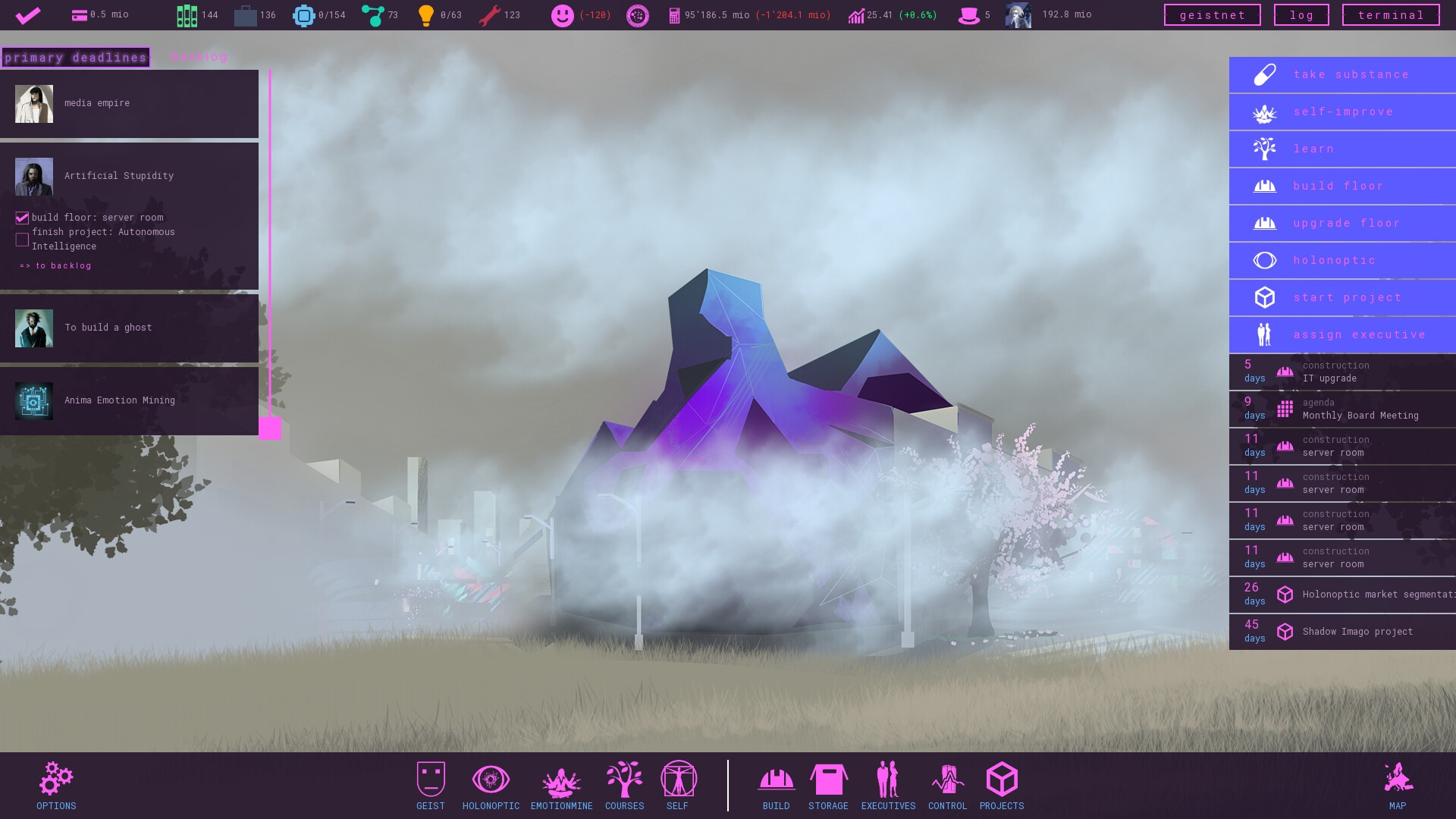
With more than 3,000 lines of dialogue, numerous executives, and multiple endings, simply keeping track of the branching narrative required its own workflow.
Bloch’s solution was refreshingly low-tech.
“I used the incredibly advanced tool of a large paper poster plastered with drawings and post-its. My girlfriend made fun of me because it looked like the work of a madman. But it was actually very useful to map out the main storylines and how they would interact with each other, and to have this as a mental, visual image when starting implementation. Similarly, in the codebase, each storyline has its own contained method that only contains high-level references to triggered events, like dialogues, new deadlines, or references to other storylines.”
The combination of physical planning and modular code allowed the game’s many storylines to remain manageable throughout development.
Building a Solo Pipeline That Included Music and Voice Acting
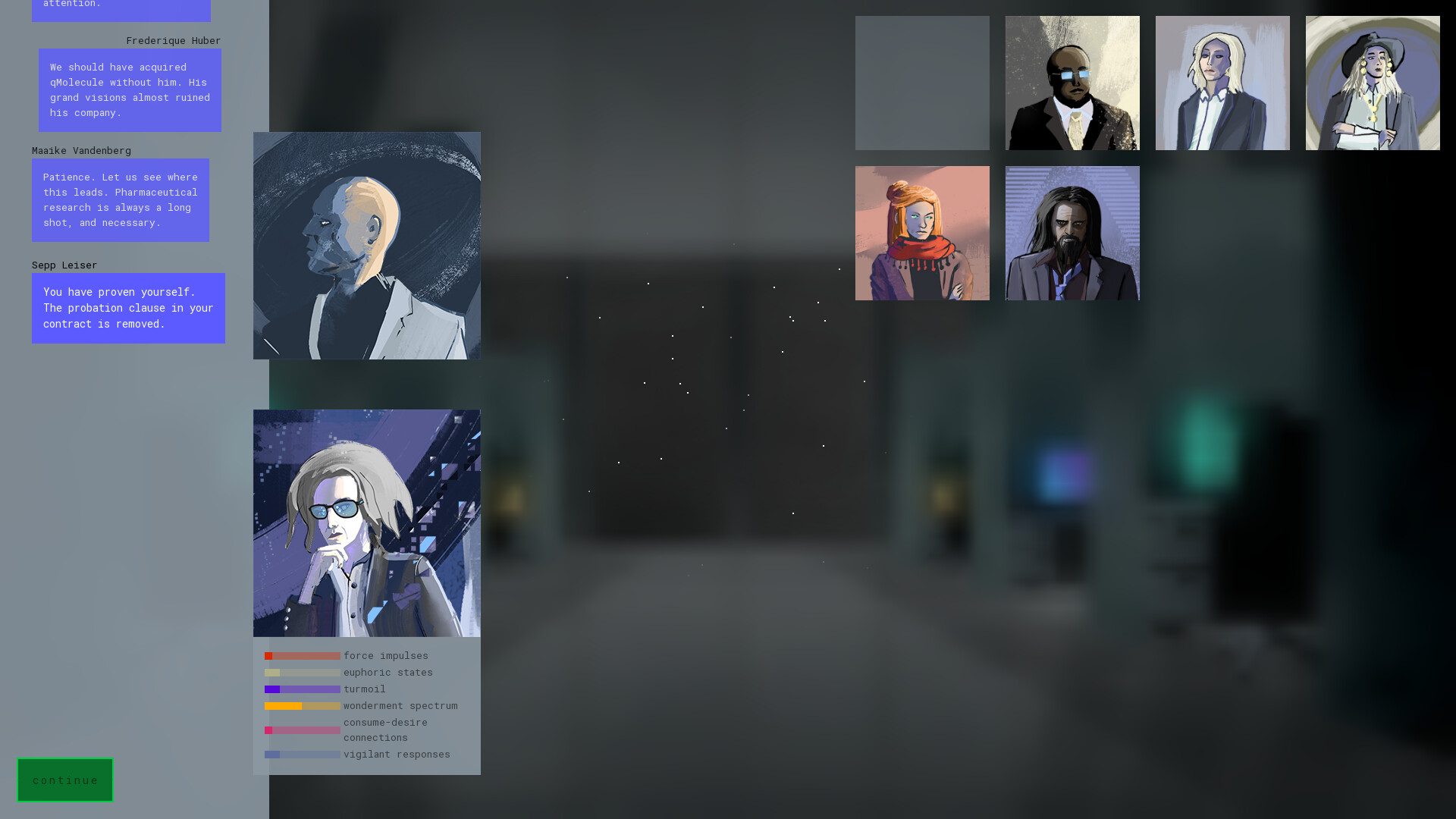
Although Holonoptic is largely a solo project, Bloch collaborated with composer Annina Suter and a cast of voice actors for more than 1,500 voiced lines.
Rather than tightly controlling every detail, he focused on clear communication.
“Creating clear briefings with references to existing examples (‘something like this would work’) was the key here. After that, I just let these talented pros do their thing without micromanaging them, and it worked out well. The score was composed early in the project, based on some early illustrations that set the mood. The voice acting was done towards the very end, where characters and dialogues were well defined.”
That timing allowed the music to establish the atmosphere early while voice recording happened once the narrative had settled into its final form.
Six Years, Plenty of Cuts, and No Fixed Schedule
Projects of this scale inevitably leave ideas behind, and Holonoptic was no exception.
“Oh yes, quite a few complex or even less complex systems were scrapped, like a whole logistics and warehouse system for the supply chains, or an approval and influence system based on ideologies and social interactions with other characters. As for the day-to-day pipeline: there was none. Holonoptic is more of a side-project that escalated. Sometimes I would have no opportunity to work on it for weeks, followed by intense phases that produced a new iteration. When I became a software engineer I almost abandoned the project, but in the end it provided me with the required skills to finish the game.”
The project evolved alongside his professional career, with periods of inactivity balanced by intense bursts of development.
Keeping Scope Under Control
After six years of solo development, Bloch’s advice for other developers centers on resisting the urge to implement every new idea immediately.
“The first trick that worked for me is to use a backlog. I have a backlog that is full of ‘brilliant’ ideas that luckily never made it into the game. As a solo developer, nobody is there to stop you, so the temptation to immediately try out or implement whatever comes to your mind is always there. Instead, if you have an idea, let it swim around in your backlog for a while. Does it still sound like a good idea a few weeks later, does it fit with the mechanics and world? Then decide whether it should be in the demo, the release, or some later patch.”
He also found motivation in thinking beyond the current project.
“The second trick might sound a bit contradictory, but what helped me was to dream of my next project. The only way to start working on it was to bring the current one over the finish line. This created the required focus to polish holonoptic, with the distracting creative energies contained in a notebook (‘my next project’) rather than producing more feature creep.”


Leave a Reply