
At one point during the development of Dungeons of Textmor, an enemy became so determined to survive that it barely wanted to fight. It’s an amusing problem for a game built around tense duels, and only one of the challenges facing this unusual roguelite. We spoke with its developer about hand-drawn ASCII art, enemies that learn our habits and the surprising amount of work involved in helping players understand what is happening.
A Dungeon Drawn in Characters
We have a soft spot for unusual art styles, but Dungeons of Textmor takes its choice particularly seriously. Its world and creatures are assembled from ASCII characters rather than conventional illustrations. That gives the game a striking identity, although every combat detail still needs to be easy to follow.
Working with ASCII in the past showed me how much personality you can get out of a few characters and symbols. With Textmor, I wanted to take that further. I like the idea of someone seeing a screenshot, wondering how this could possibly work, and then getting completely absorbed in a fight. We’ve had to get comfortable simplifying things. Sometimes removing a few characters does more for an enemy than adding another layer of detail.

For a game that can look almost minimalist at first glance, the combat has some ambitious ideas. The developer has been rethinking which parts of a fight deserve the most attention.
I like fights where one enemy can make you stop and think. You’re watching its next attack, looking at your resources, and deciding whether you can afford to take an opening. That gives even a relatively small encounter some weight. The earliest versions leaned more heavily on choosing the right ability. As we developed the combat, position became more important. An ability could be useful, but you still needed to create the right opportunity to use it.
That also made readability much more important. Once spacing and attack cues carry real consequences, you have to communicate them clearly. If a player takes a hit, I want them thinking, “I got greedy there,” and coming back with something they want to try.

When the Enemy Starts Paying Attention
We could learn an enemy’s attacks and stick with whichever ability seems strongest. Textmor has other plans, and some of those plans have required their own adjustments.
At a basic level, enemies track a short history of your actions and look for repetition. Certain enemies can then change how they respond, whether that means guarding against an approach, changing their spacing, or preparing a counter. Different enemies have different responses available. We want players to recognize what happened. If you keep doing something and the enemy adjusts, you should be able to connect those two things. We also want a strong build to remain useful, so adaptation needs limits.
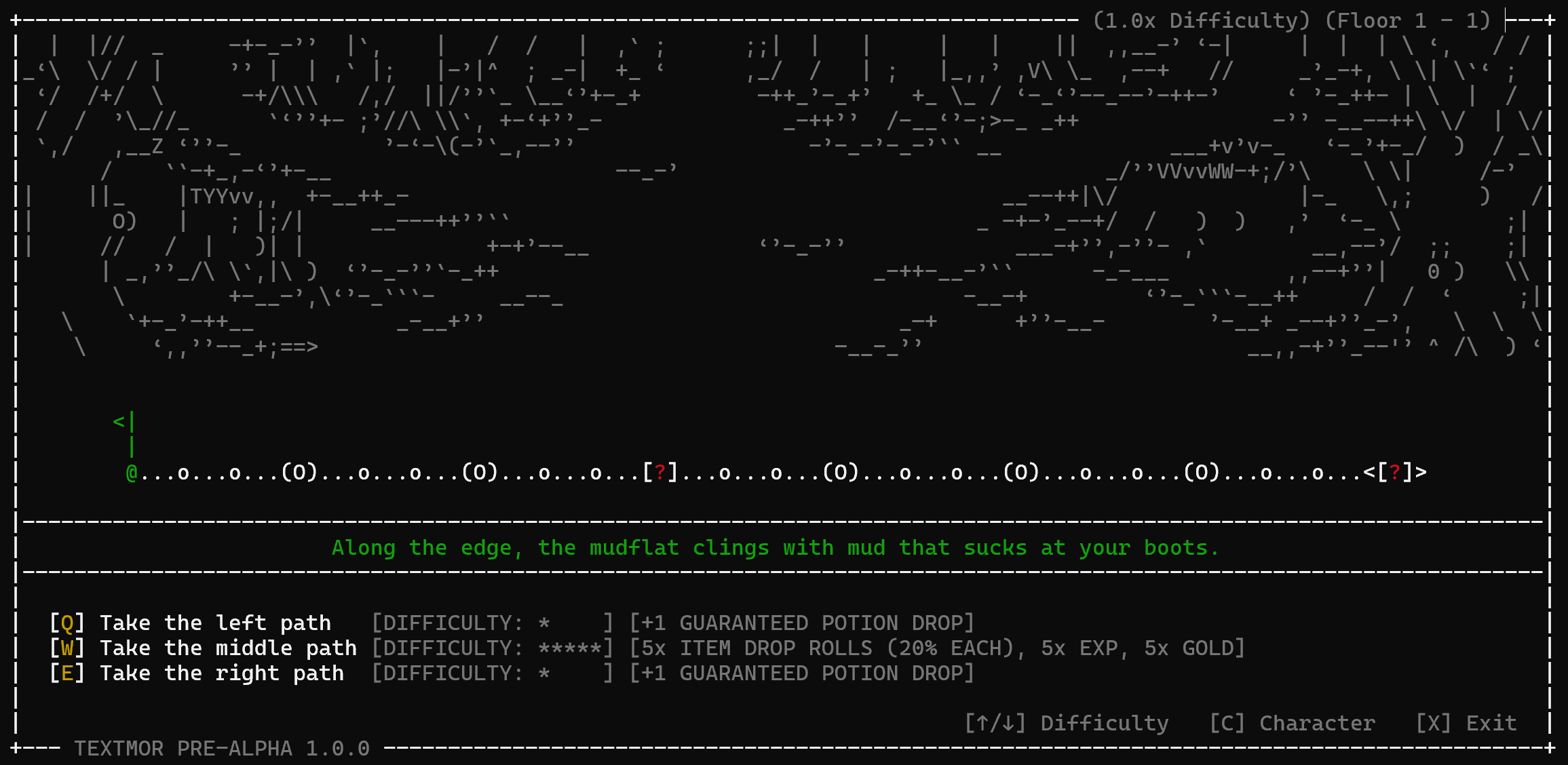
In theory, it sounds like a fair challenge. In practice, one early opponent apparently took its job description rather literally.
One early version produced an enemy that was a little too committed to keeping its preferred distance. You’d move closer, it would back away, and you could spend an embarrassing amount of time chasing it around. It had apparently decided survival was more important than participating in the game. Fair enough, but we adjusted it.
Players can be just as troublesome as the monsters, particularly once they start experimenting with all the ways abilities interact. The developer has been careful about how these discoveries get brought back into balance.
Yes, many! One interaction that needed attention involved resource refunds and extra actions. Each effect looked reasonable on its own. Together, they let a build keep generating enough resources to extend its turn much further than we intended. Those are fun discoveries, even when they create a lot of balancing work for us. Someone has understood the systems well enough to find an interaction we missed. Our first instinct is to look for the smallest change that preserves what made the combination interesting. In that case, limiting how often a refund could trigger made more sense than weakening every ability involved.

Getting Stronger Without Getting Comfortable
Builds don’t end when a run goes wrong. Between trips into the dungeon, players can return to town and unlock new possibilities for the next attempt. The challenge is deciding how much help they should be allowed to carry back with them.
I want players to feel good about returning to town, even after a failed run. Unlocking another option or improving your starting position gives you a reason to think about the next attempt. We’re more cautious with upgrades that simply let you ignore mistakes. A little extra survivability can give someone room to learn, but too much of it can make an enemy’s entire attack pattern irrelevant.
For example, expanding your starting equipment choices can help you put a build together earlier, but you still have to use that build well. That’s an appealing kind of progression because it gives players more control over their approach while keeping the encounters demanding.

Keeping the challenge intact is one job. Showing a newcomer how to approach it is another, and that has changed the way the developer thinks about feedback.
I underestimated how much work it would take to teach the game. Textmor has a lot of choices, and I know why they’re there because I’ve spent so much time working on them. A new player opens the character sheet and has to figure all of that out from scratch. Weapon swapping is a good example. Having several weapons available gives you more options, but we still need to explain when switching helps. Otherwise, we’ve given someone another thing to worry about before they understand the fight.
My advice would be to watch new people play earlier than you think you need to. Try to keep quiet, too, which is difficult when you’re sitting there thinking, “Please press the other button.” You need to see what they can figure out without you in the room.
Dungeons of Textmor‘s alpha build is available on itch.io while development continues, and we’re interested to see how these systems come together. We also hope that one particularly cautious enemy has finally found the courage to stand its ground.


Leave a Reply