
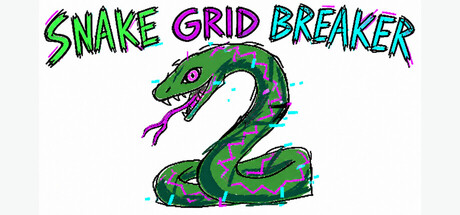
On the Steam page for Snake: Gridbreaker, developer Arkadiusz Włodarczyk makes a very clear promise that there is no tutorial. That confidence in players runs through a roguelite where our own tail can become a weapon and greed can be just as dangerous as the enemies. But while talking to the solo developer, we learned that trusting players has also meant learning some difficult lessons himself.
I think one of the biggest mistakes I made was releasing the official demo too early.
To understand why that demo turned into such a complicated lesson, we need to begin with a younger player who already knew his way around a game.
A Lesson from a Five-Year-Old
The idea actually came from playing games with my son when he was around four or five years old.
We played a game that was pretty simple, and in its original version, there was barely any tutorial. We jumped in, and within two or three minutes, we were already playing and having fun.
Then the developers released a new version, and suddenly there was a tutorial explaining absolutely everything. How to move up, how to zoom in and out, things like that. My five-year-old already knew all of this from other games! It felt like the game was treating players as if they’d never touched a keyboard or mouse before.
For Włodarczyk, that update raised a question about how much instruction players really need.
And that’s something that really bothers me. I think developers sometimes underestimate their players. If someone is buying an indie game, chances are they already understand basic gaming conventions. They don’t need someone explaining how WASD works. In fact, when I gave my own game to my son, he immediately figured out how to move the snake using WASD without me explaining anything.
My biggest concern with long tutorials is that players might quit before they even discover what makes the game fun. You want people to experience that hook as quickly as possible, not spend their first ten minutes following instructions for things they already know.
But of course, removing the tutorial doesn’t mean I expect players to figure out every mechanic on their own.
Doing away with a tutorial does create more work for the rest of the game. There are plenty of systems to understand, and not every player notices the same clues.
One thing I’ve done is introduce new content gradually through the game’s progression system. Instead of throwing every ability, mutation, and event at players right from the start, they unlock new things as they progress. This means the game keeps evolving, and almost every run can introduce something new, sometimes even unexpected secrets. Players get to learn naturally, without being overwhelmed.
The second thing, and probably the one I’ve spent the most time on, is the interface.
I’ve watched a lot of people play Snake: Gridbreaker for the very first time, paying close attention to what they understood immediately and where they got confused. Whenever I noticed a problem, I tried to improve the interface so it would communicate what to do without needing a wall of text. Sometimes that’s an animation, sometimes a visual effect, and occasionally even a line from the game’s narrator.
My goal isn’t to remove guidance. It’s to make that guidance feel like a natural part of playing rather than something that interrupts the experience.
I’d much rather have someone discover how the game works while they’re already having fun than force them to sit through a boring tutorial before the fun even begins.
The Snake Has to Listen
Movement might only require a handful of keys, but relying on those keys at high speed presents its own set of problems. Włodarczyk found that a familiar control scheme could still be surprisingly difficult to get right.
The biggest challenge actually wasn’t dealing with faster or more complicated snakes. It was finding the right balance between input buffering and responsiveness.
Snake: Gridbreaker can move incredibly fast, and when you’re navigating a grid at that speed, even small problems with how inputs are handled become noticeable.
I wanted players to be able to queue up their next moves, but without making the snake feel like it was reacting to commands from half a second ago. That’s a surprisingly tricky balance to get right.
Sometimes an input could be registered at the wrong moment, or even processed twice. And when you add walls, enemies, and all the other things happening on the grid, those little issues can quickly become frustrating.
The real test comes when a player suddenly changes their mind. A control system that dutifully follows yesterday’s instructions is of little use when an enemy appears directly ahead.
The hardest part was making sure the game could handle all these different situations while still letting players change their minds instantly. You might queue up a turn, then suddenly notice an enemy or an obstacle and decide to go somewhere else. I wanted the controls to respect that new decision instead of blindly following an outdated sequence of commands.
There are now quite a few conditions working behind the scenes to make that happen, but the player shouldn’t have to think about any of them.
After a lot of adjustments and debugging, I think I’ve finally reached the point I was aiming for. The snake feels responsive, inputs are handled consistently, and there’s no noticeable input lag in my testing.
And that’s really the goal. In a game like Snake, players should feel that when something goes wrong, it’s because of a decision they made, not because the controls didn’t do what they expected.
That care with movement matters because the rules of Snake have grown much more complicated here. A long body can still get us into trouble, but Włodarczyk has been exploring ways to make the very thing that threatens us useful.
Balancing this is actually still an ongoing challenge, and I don’t think I’ve completely solved it yet. It’s something I’ll continue watching and adjusting as more people play the game.
But I think I’ve managed to introduce enough interconnected mechanics that players can start building their snake around different strategies. And that’s important to me, because I want players to feel that the game is fair. Being longer should create problems, just like in the original Snake, but I also want to give players interesting ways to deal with those problems.
For example, there are abilities that activate when you shed parts of your tail. Losing segments might cause an explosion or heal your snake. So suddenly, something that would normally feel like a loss becomes part of your strategy.
Some upgrades can make the snake dangerous to itself, which creates room for another ability to change how that danger works.
Another example is Fire Tail. As you move, your tail leaves fire behind, which sounds great until you realize that the fire can hurt you too! But then you might find a special evolution that makes you immune to your own fire and even creates explosions when you move through it. What started as a dangerous ability can become the foundation of a really powerful build.
The same applies to having a long body. The longer you get, the more opportunities enemies have to attack you from the sides. But there are mutations that help you fight back, like lightning striking enemies around your body or abilities that damage enemies when they hit you.
I wanted players to look at these problems and think, “Okay, how can I turn this weakness into an advantage?”
Trimming the snake down whenever things get ugly would seem like the sensible approach. Włodarczyk doesn’t want that to be the answer to every problem.
At the same time, I didn’t want the obvious solution to always be keeping your snake as short as possible. There are mechanics that reward having a longer body, including opportunities to earn more points and climb higher on the leaderboards. So sometimes you actually want to grow longer, even though you’re making yourself more vulnerable.
There’s also another layer of risk and reward. The longer you stay on the grid, the more points you can earn, but the number of enemies keeps increasing. You can get greedy and stay a little longer to push your score higher, but eventually you have to decide whether it’s worth the risk or whether you should escape while you still can.
And I think that’s where a lot of the tension comes from. You’re constantly making decisions between safety and potential rewards.
The original Snake was all about the growing danger of your own body. I wanted to preserve that feeling, but add another question on top of it: what if the very thing making your life difficult could also become your greatest weapon?
I’m still balancing all of this, and I expect that process to continue. But that’s also what makes developing a game with so many connected systems interesting to me. A mechanic that looks like a disadvantage on its own can become incredibly powerful when combined with the right abilities.
A Little Greed and a Few Broken Walls
The same thinking runs through Cursed Mutations, where power comes with conditions we may deeply regret agreeing to. These choices are aimed at the sort of player who sees a risky upgrade and immediately starts calculating the possibilities.
I’m really glad you like the Cursed Mutations, because they’re one of the mechanics I was most excited to introduce, especially for players who love min-maxing their builds.
The idea is pretty simple: you get something really powerful, but there’s always a price to pay. And what I love about this kind of design is that the same mutation might be an amazing choice in one run and a terrible decision in another. It all depends on what you’ve already built and how much risk you’re willing to take.
His next example brings an entirely different meaning to the idea of paying for an upgrade.
Actually, here’s a little spoiler: there’s something players can unlock that introduces a special kind of shop where you can essentially spend your own life as currency. You might sacrifice some HP or deliberately make the game more difficult in exchange for additional abilities. You’re literally making your situation worse in one way to become stronger in another.
I’ve always loved mechanics like this because they create decisions that aren’t necessarily right or wrong. Sometimes taking that risk is exactly what your build needs. Other times, you’ll regret it almost immediately.
And that’s the feeling I’m trying to create with Cursed Mutations. That moment when you think, “Hmm, maybe I can get a little greedy here. Maybe this is the upgrade that will help me beat my personal record.”
And then, two minutes later, you’re dead and thinking, “Okay, maybe that wasn’t such a great idea after all.”
Of course, the possibility of a spectacular failure only works if the opposite outcome feels worth chasing.
But when it works? When you take a dangerous mutation, build your strategy around it, and actually manage to complete the run because of that decision? That’s incredibly satisfying.
I want players to feel that their decisions really matter. Not just because they picked the strongest upgrade, but because they took a calculated risk, understood the trade-off, and managed to make it work.
For me, that’s what makes Cursed Mutations interesting. It’s not just about making the game harder or giving players more power. It’s about tempting them to push their luck a little further than they probably should.
The risks are not confined to our choice of mutations. One upgrade, Grid Breach, changes the grid itself, allowing permanent shortcuts through certain walls. It sounds wonderfully convenient, although the code did not always agree.
Oh, absolutely! There were definitely problems when I first implemented Grid Breach. Sometimes it would create passages in places where they weren’t supposed to exist. Other times it worked perfectly fine, which made debugging even more interesting. But after spending enough time tracking down those issues, I eventually managed to fix them.
The thing is, I actually love implementing mechanics like this. They can take a lot of work, but they also give the game something distinctive.
I don’t want every upgrade to be just another 10% damage increase or a small stat boost. I love the idea of players reading an ability description and thinking, “Wait, I can actually do THAT?”
Grid Breach is exactly that kind of ability. It doesn’t just make your snake stronger. It changes how you interact with the level itself. And for me, those are some of the most interesting mechanics to design, even when they’re a headache to implement.
The difficult part is deciding how many surprises a fast-moving game can hold before learning them starts to slow everything down.
There is one thing I sometimes worry about, though. Snake: Gridbreaker is supposed to be a fast-paced game, and the more unusual mechanics I introduce, the more players have to read and understand. I don’t want someone to spend more time reading descriptions than actually playing!
So one of the ways I’ve tried to address this is through the game’s progression system. More complicated abilities, like Grid Breach, generally become available later, after players have already spent some time learning the basics.
By the time these mechanics start appearing, players should already be comfortable with the core gameplay and ready to experiment with something more advanced.
It’s a balance I’m still thinking about. I want the game to have surprising, unusual mechanics that genuinely change how you play, but I also don’t want that complexity to get in the way of what makes Snake fun in the first place.
The Price of a First Impression
Watching other people play helped Włodarczyk improve the interface, controls and more. The same decision that brought him valuable feedback, though, also made him rethink how a developer should approach an official demo.
Since this is my first game, I initially treated the demo almost like a public playtest. My thinking was pretty simple: people would download it, try it out, give feedback, and I’d keep improving the game. Especially since I was planning an Early Access release anyway.
But looking back, I don’t think that was the right approach. The game simply wasn’t polished enough at that point.
I think a public demo should already feel like a proper, enjoyable game, even if there’s still more content and balancing to come. And that’s much closer to where Snake: Gridbreaker is today. The core experience is there, the game is fully playable, and most of what remains is balancing, polishing, and perhaps adding a few more secrets.
The timing had consequences beyond how polished the game felt. He discovered another cost only after the demo was already out.
There’s also a marketing side to this that I completely underestimated. Steam gives developers an opportunity to notify players who have wishlisted their game about a newly available demo, within a limited window after its release. But when I launched mine, I barely had any wishlists! So I missed an opportunity to reach a much larger audience later.
If I were starting over, I’d definitely approach this differently. I’d spend more time testing privately, build up more wishlists, and only release the official demo when I felt the game was genuinely ready to make a strong first impression.
The missed opportunity wasn’t the whole story, though. Putting the demo out early gave him a clearer view of how unfamiliar players responded to his work.
But here’s the interesting part: I’m not entirely sure I’d call it a mistake from a development perspective.
Releasing the demo early meant I got to watch real people playing my game. I watched gameplay videos online, saw where players struggled, what confused them, what frustrated them, and which mechanics they actually enjoyed.
And that feedback was incredibly valuable. It helped me identify and fix so many problems that Snake: Gridbreaker is now a significantly better game because of it.
So from a business perspective, I probably made the wrong decision. But from a game development perspective? That early feedback might turn out to be one of the most valuable things that happened to the project.
Maybe all those improvements will eventually pay off, and players will appreciate how much the game has evolved. Maybe they won’t. It’s honestly too early to tell, and I’ll have to see what happens after release.
That leaves him with a distinction he wants other solo developers to understand.
If there’s one thing I’d tell other solo developers, it’s this: don’t confuse a demo with a playtest. They’re not the same thing.
Get your game into people’s hands early, absolutely. Watch them play, listen to their feedback, and don’t be afraid to discover that something you thought was great doesn’t actually work.
But when you release your official demo to the public, try to make sure it represents the experience you really want people to have. You only get one first impression, and I learned that lesson the hard way.
Włodarczyk trusts players to discover things for themselves, yet still pays attention when they struggle. Snake: Gridbreaker is currently scheduled to enter Early Access on November 3, 2026, and we’re curious to see how his ideas hold up. Knowing us, resisting one more dangerous upgrade might be asking a bit too much.


Leave a Reply