
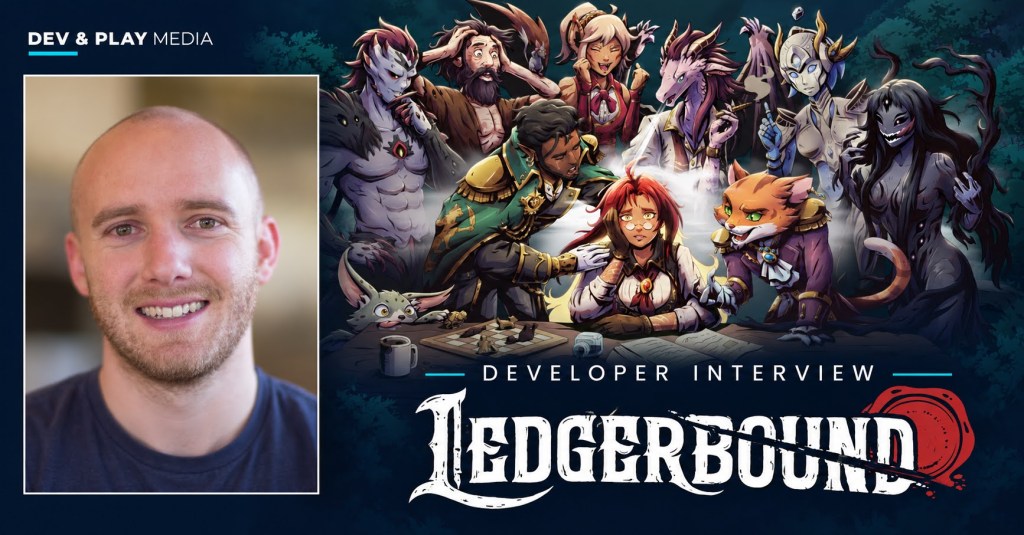
An insurance adjuster fighting an ancient evil so her employer can avoid paying life insurance claims is a promising start for a comedy. Ledgerbound takes the joke much further, mixing tactical combat, workplace romance and enough bureaucracy to make any hero reconsider their career. We loved the game so much we awarded it a 10 out of 10, praising every single aspect to the fullest. But when we spoke with game director Russ Nickel, the former Helldivers 2 lead writer and co-founder of OmniMegaSuperCorp, we discovered that one of the game’s most important ideas came from a very personal place.
You Can’t Fit Everything into One Life
There is a reason Ledgerbound won’t let Rayna squeeze every possible experience into a single playthrough. When we asked Nickel about the limits on how she spends her time, his answer took us beyond game design.
I love this question! Honestly, this design was born directly from personal experience. I am absolutely a workaholic, and I burned myself out on my previous game. When I finally came up for air, I realized that I’d been ignoring my relationships and my hobbies all in the name of perfectionism at my job. And one thing I think is amazing about games is their ability to impart themes in this really cool way, because the player experiences them first hand; they have to go through the agony of choice and decide what’s truly important to them.
Our goal was always to make a game that not only was hilarious (and horny), but also that really said something important about what it means to be human, and for me, that was the fact that any time we choose to do something, it comes at the cost of something else. It’s a lesson I’m constantly learning, and I have to work hard to prioritize the things that really matter to me.
Putting that idea into a game meant letting players make decisions they might later wish they could undo. Not everyone welcomed that restriction, even though others found it unexpectedly helpful.
But it’s true that not everyone loved this design. Most of the audience did really embrace it, and we got reviews specifically about how it helped people learn to let go of their perfectionism, which I found very touching. But some people simply wanted to do everything, so we’re considering adding more settings to allow people to either have the intended experience or to simply play the way that brings them the most joy.
The save system takes the same idea further, in a way that is bound to test anyone who likes keeping a backup before a difficult decision.
I think this very much relates to what I was talking about before—this idea that you can’t experience everything in life. We realized that if people could save scum, then they truly could experience everything in the game without consequence, so the only way to give people the feeling of having to manage everything with limited time was to create this really aggressive autosave system.
And yes, it one hundred percent felt meaningful to the team and frustrating to players. Which, again, is why we’re thinking about adding tools to give the community more ways to play in some of our upcoming updates. We’d still gently suggest the intended experience, but it would be a suggestion rather than a requirement.
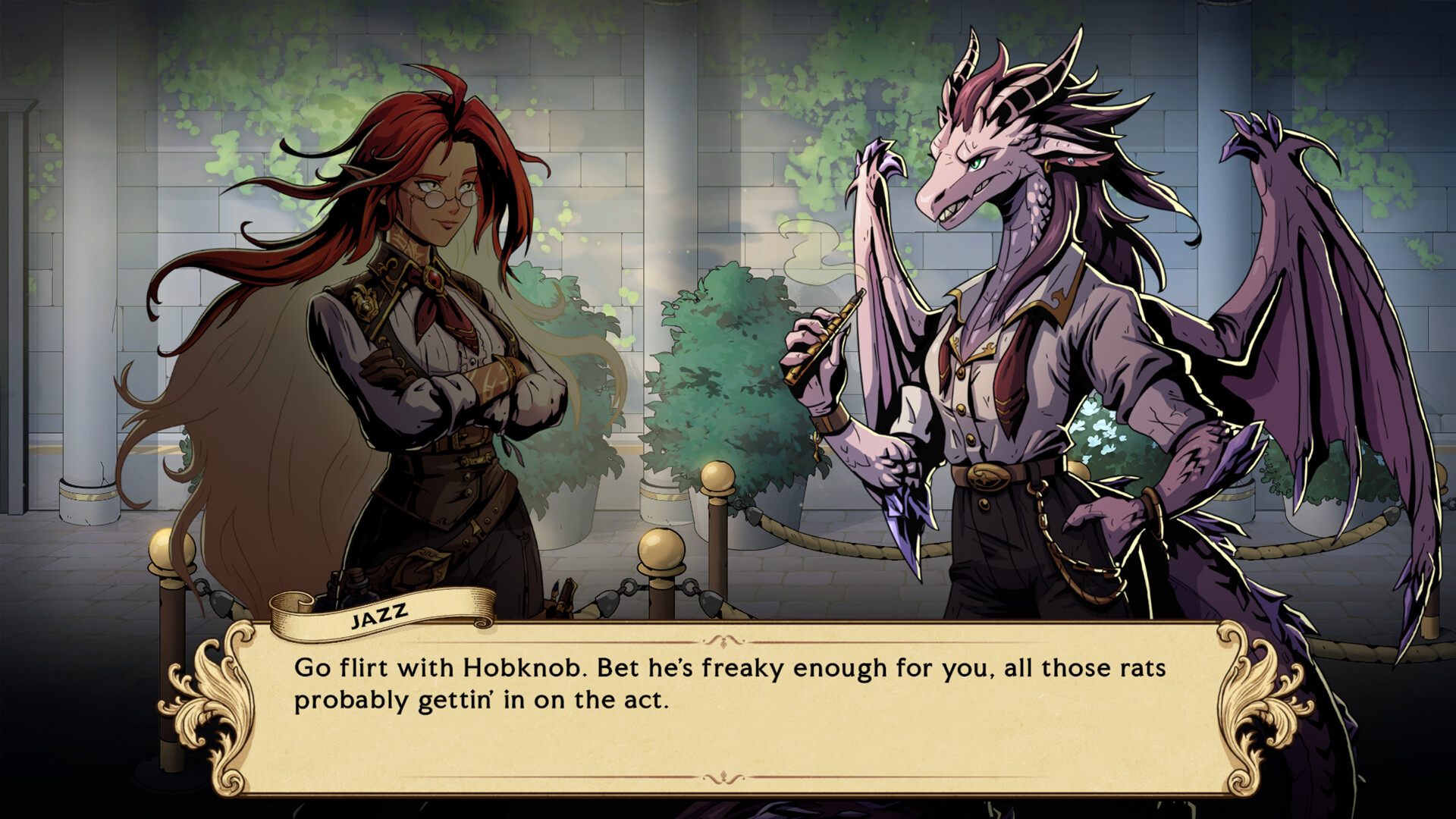
Romance presents a different temptation to hunt for a perfect result. Ledgerbound has a colourful cast to get to know, and Nickel was particularly interested in what happens when we stop treating conversations as problems to solve.
One thing we knew very early on was that we didn’t want to implement the standard branching design where characters react positively or negatively to dialogue choices. So many games will present two choices, and if you select one, you’ll get positive points with the character you’re talking to, and if you select the other, you’ll get negative points. Nothing against that design, but personally when I play games like that my relationships become less natural because I’m so focused on picking the “right” choice at any given time.
Not only that, but I end up playing with a guide open the whole time—can you tell that I’m a perfectionist just like Rayna? [laughs]. If I want to romance a certain character, for example, I simply check the guide and select the right answer. So I’m no longer making decisions really at all; I’m just reading a guide and doing what it tells me.
So for Ledgerbound, we decided to go all-in on roleplay. Branching dialogue exists to create immersion and allow you to decide how you want to react. There are no secret points behind the scenes; there’s simply the flow of conversation.
As for player response, we did redo Joy at one point. She was originally an April Ludgate emo type, but people found her to be a bit cliché, so we ended up creating the monstrous Joy that ended up in the game instead.
Please Complete the Necessary Paperwork
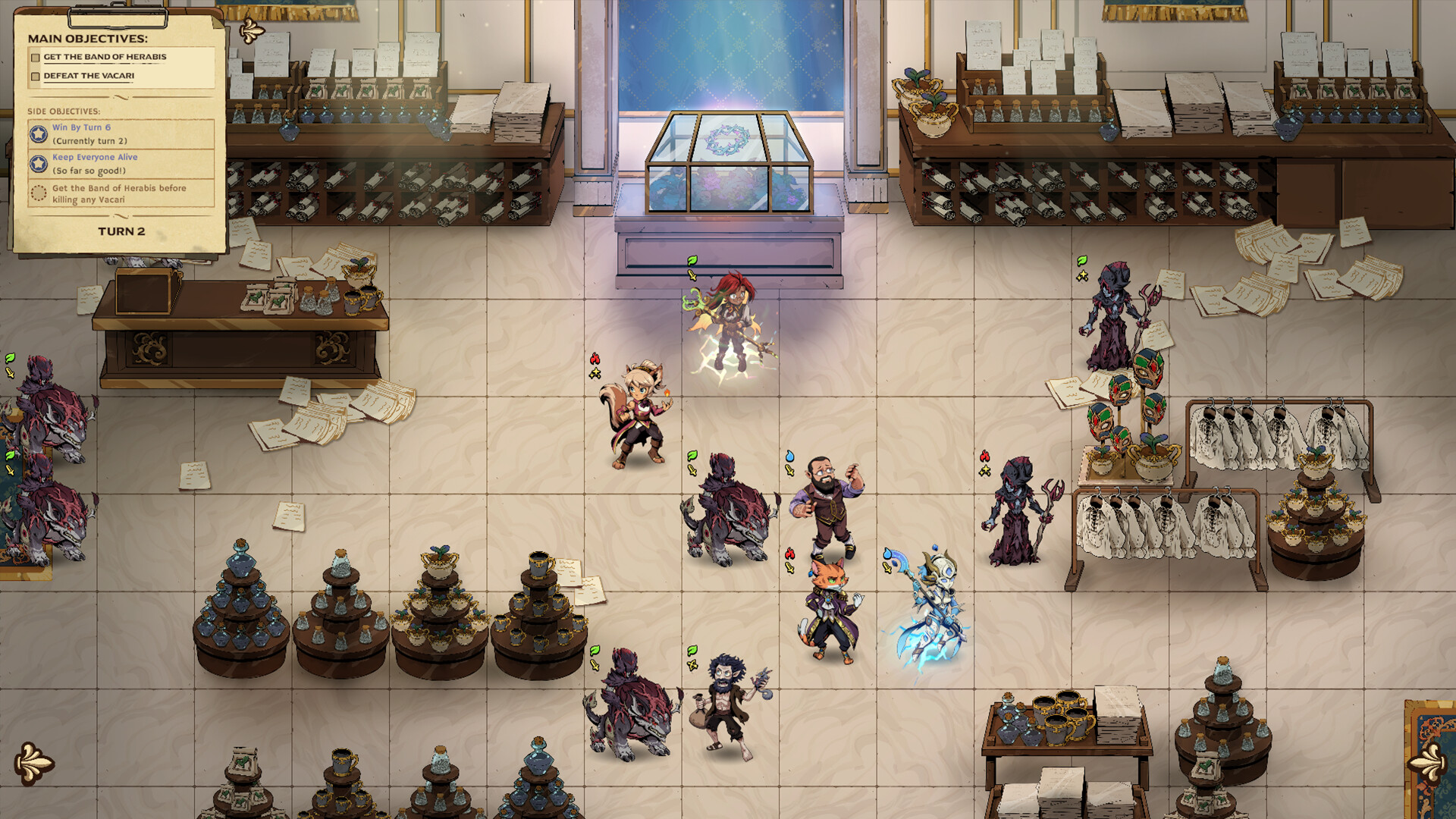
For all that talk of relationships and personal growth, we should probably remind ourselves that this is still a game about an insurance company trying to avoid a payout. Nickel and his team clearly enjoyed seeing how much of the corporate world they could squeeze into fantasy, though they did draw the line somewhere.
Let no one say this game is normal [laughs]. We did actually debate starting the game with a giant form at one point that would require you to input all sorts of information about Rayna that you couldn’t possibly know, and if you managed to get it all right, you’d just win simply for being a bureaucratic genius, but then we realized, probably better if the first 10 minutes of gameplay aren’t one huge form [laughs].
We also did originally have more claims during the prologue to really get you into Rayna’s headspace, but it just felt wrong to delay meeting the main cast any longer than we needed to. Mostly I’m just glad we got to put in as much bureaucracy as we did! It was so fun to include onboarding documentation when people join the team, incident reports when heroes are injured during battle, HR trainings to unlock new perks, etc.
That said, we are currently discussing DLC that would add even more paperwork to the game. Everyone’s favorite part!
Some jokes come from things the characters can see, while others need a little help. The game’s narrator has a useful job in that department, and Nickel credits much of that judgement to another member of the writing team.
The narrator existed largely to fill a void when we couldn’t show something on screen, either because we didn’t have the art budget or because it was too spicy. I mean, in addition to existing because he was hilarious [laughs]. We tried a few different versions of the narrator at the beginning, but we settled pretty quickly on the level of description we wanted from him, and then we pretty much stuck with it! I think Karlie Angelis, our Lead Writer, pretty much just had this magical intuitive sense of exactly how much narration to include, so I basically never removed anything.
When the Players Break the Plan
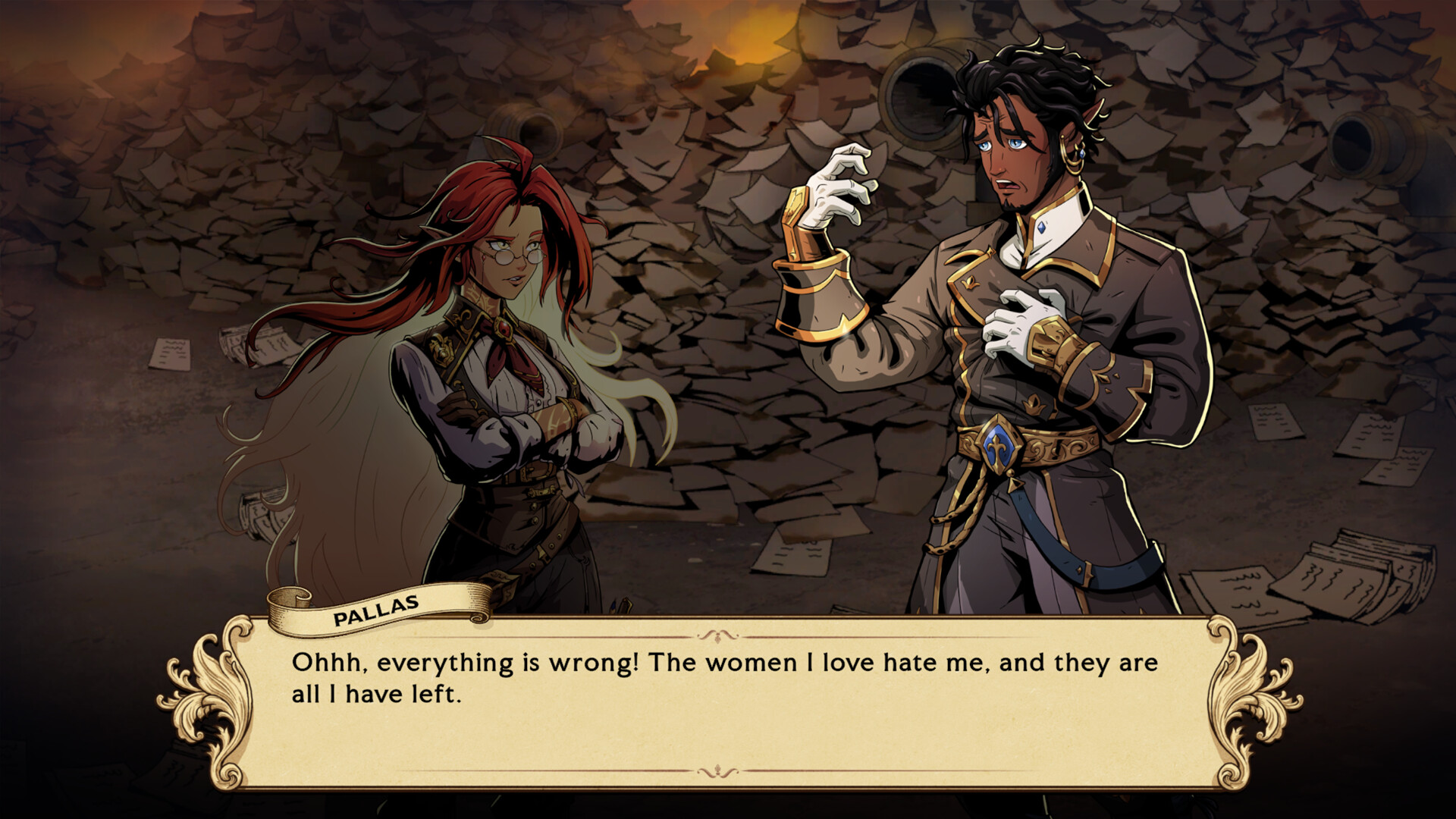
Paperwork might be the running joke, but the tactical battles have given the team plenty of headaches of their own. Some of the most entertaining problems came from players discovering just how far the game’s abilities could be pushed.
People definitely found combinations that completely broke encounters, so there’s probably still some balancing work to be done in a future patch [laughs]. One of the best ones is that you can actually kill the big bad in the very first battle, which completely breaks the plot. So…don’t do that [laughs].
Actually, my college roommate is a semi-professional speedrunner type, and he played the game and found all kinds of insane combinations that we never considered and that also completely broke the game.
But our creative vision for the battles was always “feel like a genius,” so I’m mostly just excited when people figure out something we never thought of. If you’re able to break the game by being creative, then I’m honestly just impressed. My only request is that you tell me about it so that I can marvel at your ingenuity! [laughs]

Replaying a battle created an entirely different challenge. Rather than treating a previous encounter as something that simply happens again, the team wanted the replay itself to feel like part of Rayna’s world. That led to one of the game’s more unusual comic flourishes.
From a couple of places. First, we wanted to justify replays in-universe. It doesn’t make sense to be able to replay a battle in general. What does that even mean? The people you fought are already dead. So we always knew we wanted it to be Rayna rethinking the battles in her head, but we weren’t sure how that should look exactly, and in early playtests, people were so excited to chat with their teammates that no one was replaying battles at all. Then one night our design director couldn’t sleep and mocked up Rayna’s hand-drawn battle board and it was perfect. Not only did we think it was hilarious, but it also felt super nerdy, which was perfect for Rayna. (Even then, people didn’t want to replay battles enough, so we had to add the Shareholders so that you got a romance reward for getting 3 stars on battles!)
In terms of the justification, it was actually a pretty easy sell to the team. I mean, yes it was definitely a massive undertaking. So much extra writing. So much extra VO. So much extra art. But the game is first and foremost a comedy, and we didn’t want battle replays to simply offer the same thing again. We knew we had to do something unique so that you’d get fresh comedy out of the replay experience. That was what we kept pushing ourselves to do with Ledgerbound: aim for “undeniable freshness!”
The Things That Looked Small on Paper
Some of the work that swallowed development time was not nearly as dramatic as an encounter breaking the plot. Even small additions came with surprises, as did the way the different parts of the team worked together.
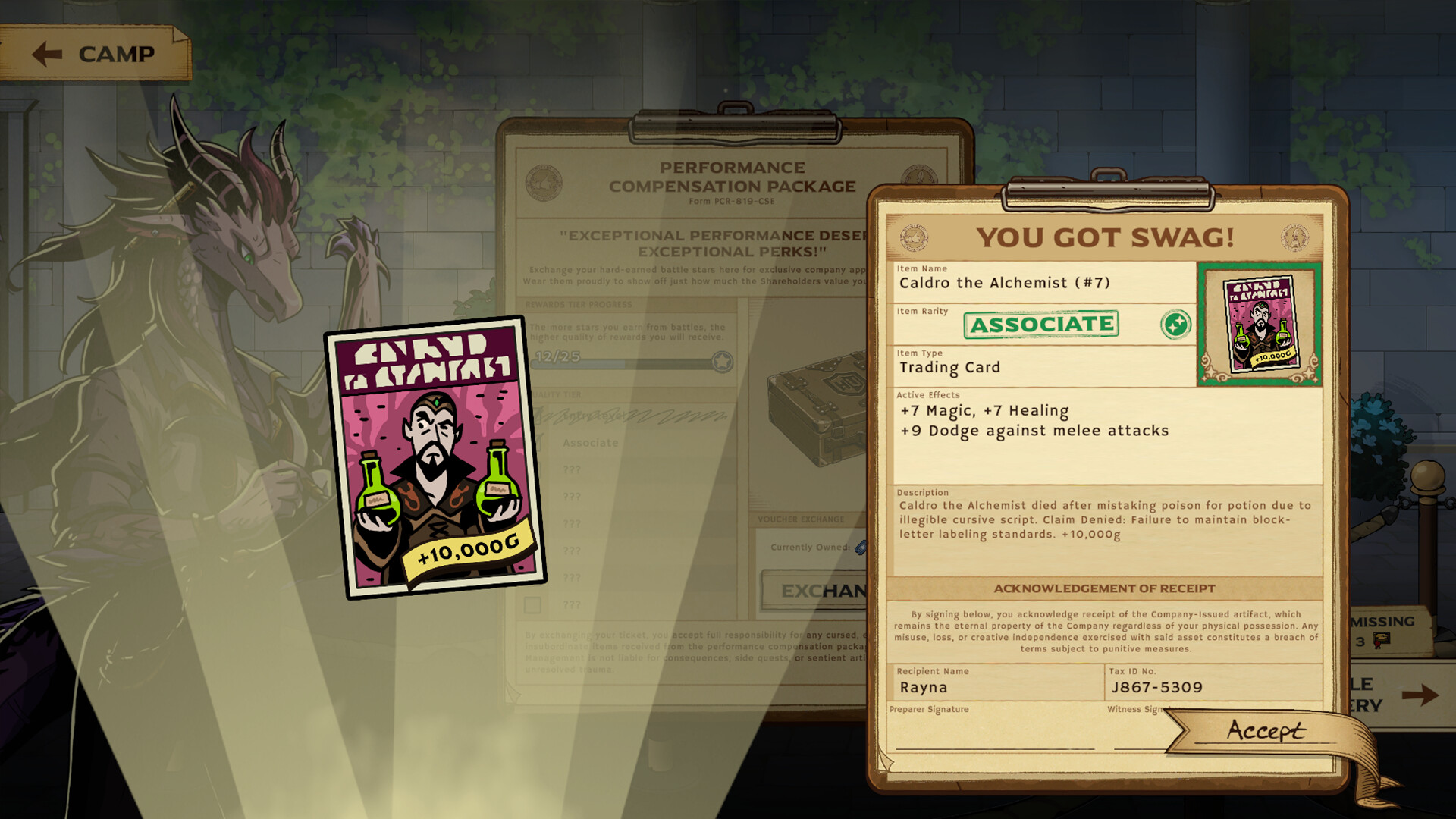
Oh my gosh I absolutely learned so much. So many things felt simple but became these huge features. Scope creep is real! [laughs] Even something like having newspapers during resterludes—we thought, oh this’ll be a cute little feature that’ll allow us to expand on the universe a bit. Boy did we underestimate how long it would take to write and format and art all those newspapers. And everything was like that.
For the next game, I’d try to get ahead on the writing and narrative of it all. We kept doing things backward, where the narrative team was behind the design team, so design would have to make battles without really knowing exactly what the narrative would be and then narrative would come in with all these ideas and then design would have to make adjustments, so it was not the most efficient process.
For all those complications, Nickel had a very different feeling about the experience of making the game as a whole.
As for what surprised me the most during development, I think it was realizing just how much I loved making this game. I went in not knowing how I’d feel, and I just fell in love with our team and the whole process. We found such incredible people, and getting to spend my days with all of them just being creative was a dream come true. The only downside is that I loved it so much that now I’m desperate to do it again!
We came to talk about an absurd insurance company and ended up having a much more personal conversation about work, relationships and learning to live with our choices. We love that Ledgerbound can be ridiculous without treating those ideas as a joke. And as for the possibility of even more paperwork in the future? We never thought we would look forward to filling out another form, but here we are. If you haven’t played this game yet, we’d like to encourage you once again to read our review, then head over to Steam and give it a try!


Leave a Reply