

After eight years in game development, Masha Svezhentceva realised that something was missing from her career. As a producer, she spent her days talking to developers, discussing milestones, resolving problems and making sure projects moved forward. Yet somewhere along the way, she began to miss the human side of those conversations. That realisation eventually led her into professional coaching, where she now helps experienced professionals deal with burnout, career uncertainty and difficult decisions about their future. We recently had the pleasure of speaking with Masha about her experiences in the gaming industry, the pressures developers face and why even successful professionals can reach a point where they’re no longer sure what they want.
From Game Production to Coaching
Before moving into coaching, Masha worked her way from project coordinator to producer, spending much of her career helping development teams deal with the everyday challenges of making games. Interestingly, it was her experience working with people that eventually convinced her to pursue a different professional direction.
You’ve worked in game production before moving into coaching, which seems like quite an interesting career journey. What prompted that transition, and how has your experience working with game development teams influenced the way you understand people’s professional struggles today?
The turning point came during my last year at my last job. I realised something important was missing. I was in contact with people all day long, but almost all of it was about the work: what’s the status of this task, what are we planning for the next milestone, what’s delayed and why. I was talking to people all day, but almost never about them. Something human was lacking: warmth, real connection.
One of my biggest values has always been to be useful to people, to help them change things and live a bit lighter. I’d known about coaching for a while, but I’d never pictured myself as a coach. At that moment, it suddenly all made sense.
I spent eight years in game development. I started as a project coordinator at a game outsourcing company and grew into a producer at a large corporation, and from the very beginning my job was mostly about people. It started with small things, like someone needing a desk lamp or someone sitting in a draught. Over time it grew into one-on-ones, resolving conflicts, and helping colleagues grow into new roles and learn to work with each other.
What it taught me is that people in games are deeply passionate and deeply sensitive about what they do. So when things change, whether it’s the project, the industry or the person themselves, and the work no longer brings the same joy, it can hurt a lot. In coaching, I want to help people look beyond their role. Not “I’m an artist” or “I’m a programmer”, but who you are as a person.

The Pressure Behind the Games We Love
We often hear about delayed releases, abandoned features and cancelled games, but rarely get to hear what these decisions mean for the developers themselves. Imagine spending months working on something you’re proud of, only to be told that it needs to be changed beyond recognition or removed entirely. Masha has witnessed the pressures of development from the production side, and her experience provides an interesting perspective on the emotional challenges that tend to go unnoticed.
The video game industry is built on creativity and passion, but behind the scenes, devs often deal with tight deadlines, demanding expectations, and considerable pressure. From your experience, what are some of the emotional and psychological challenges that people in game development face but rarely talk about openly?
Developers care enormously about their product. They worry about how it will turn out, and they want it to be perfect. Then reality kicks in. Deadlines are rarely set by the people doing the work. You estimate a task, and production tells you it needs to be done three times faster. So you cut corners. For people who care this much, delivering something that doesn’t meet their own internal standards is genuinely painful.
Then features get cut, or whole projects get cancelled. Imagine presenting your creation and being told: “You know what, it’ll be faster without an arm and a leg, so just do something about it.” That’s a real loss, but it’s rarely treated as one.
There’s also something that frustrates developers a lot, even if they don’t always say it out loud: feedback from people who aren’t hands-on. A director who drops by with changes that don’t make sense, or a producer who’s convinced they know better when they don’t. And I say that as a former producer.
Burnout or Time for a Change?
Dealing with that kind of pressure for years can leave even the most enthusiastic developer feeling exhausted. But how do we know whether we’re genuinely burned out or have reached a point where our current job no longer offers what we’re looking for? It’s an important distinction, especially for someone considering leaving a profession they’ve spent years building a career in. Masha believes that recognising the difference can help people understand what needs to change.
Many people enter the gaming industry because they love video games, yet that passion can gradually turn into exhaustion, frustration, or even resentment. How can someone recognise when they’re experiencing temporary burnout and when they’ve outgrown their current role or career?
Burnout usually starts when one of the basic things that make work meaningful is missing: autonomy, a sense of competence, connection with other people, or the feeling that your work has an impact.
You can love what you do, say, modelling characters, and still burn out if those characters never make it into the game. The project gets cancelled, the work goes into a drawer, and you can’t even put it in your portfolio. Or you deliver everything, the game ships, your work is in it, but you never really felt part of the team. That’s bittersweet. Or you’re an experienced professional who gets micromanaged all the time, and what you hear underneath is: we don’t trust you.
Burnout feels like powerlessness: “Why even try? It’ll get cut anyway.”
Outgrowing your role feels different. You’re full of ideas. You know how to do things better and faster, you want to use your experience, and you keep hitting a wall. You feel full, but you keep getting stopped.
I’ve been through both, and they’re easy to confuse. If you’re still passionate, still curious and still proud of what you do, that’s not burnout. It’s a sign you’ve outgrown the place, or at least the company. Start talking to other people, look around. Because if you stay too long, it can turn into burnout: no results starts to mean “my effort is useless”, then “I’m useless”, and that’s a very harmful place to end up.
One simple check: ask yourself, “If tomorrow I had full trust and freedom here, would I want to stay?” If yes, it’s the conditions you’ve outgrown. If even that wouldn’t help, it’s probably burnout.
Dealing With Uncertainty and Rebuilding Confidence
There is also the matter of job security. Studio closures, layoffs and cancelled projects have left many talented developers facing an uncertain future. Even professionals with years of experience can struggle to regain their confidence after losing a job, particularly when finding another position proves difficult. Losing a job can seriously affect how someone sees their own abilities, and when so many decisions are beyond our control, even figuring out what to do next can become difficult.
With studio closures, layoffs, cancelled projects, and an increasingly unpredictable job market, uncertainty has become a familiar part of working in games. How can experienced professionals regain their confidence and make important career decisions when they have very little control over what happens around them?
I’d start by figuring out what we actually can control: ourselves, our actions, our choices. It might not sound like much, but it’s a good start.
You know the rule from flying: put on your own oxygen mask first. That means taking care of the basics: rest, sleep, physical activity and healthy eating. Then the practical things: update your LinkedIn, refresh your CV, reconnect with people from the industry.
From everything I’ve seen, the most valuable resource in times like these is people. Friends, family, colleagues you trust, coaches, therapists, industry events, new acquaintances. Anything that involves other people and doesn’t involve sitting alone at home and stewing. Of course it’s okay to feel bad for a while. But don’t close yourself off, because so much of what we know about ourselves comes from how we’re reflected in other people’s eyes.
As for confidence, this is a good time to take stock: who am I, and what can I do? Not as an employee of this company or a member of this project, but as a whole person. Own your achievements. Name your strengths. And then take one tiny step that’s fully in your control, to remind yourself that you can still make things happen. It doesn’t have to be work. Finish a small project, pick up a hobby, make something with your hands, grow something. I hear this a lot, especially now that so much of our lives is digital: people love doing something physical where they can see and touch the result. A small, quick, guaranteed win that tells you: “I can still do this.”
None of us were prepared for layoffs, cancelled projects and this much uncertainty. It’s hard. But two things really help. The first is an inner foundation, a basic sense that “I’m okay”. The second is people. Any kind of networking counts, even a LinkedIn post saying “I’ve been laid off, it’s tough, and I don’t know what’s next”. It gives others a chance to step in.
The worst thing you can do is stay silent and hide it. That’s how you end up alone with your pain. And that pain isn’t your fault. Sharing it with people who are in the same boat is one of the best things you can do, for yourself and for them.
Big career decisions are much easier to make from that place: grounded in yourself and surrounded by people, rather than from fear and isolation.
The Comfort of Staying Where We Are
Losing a job is frightening, but voluntarily leaving a familiar workplace can be equally difficult. After spending years building relationships, earning the trust of colleagues and becoming comfortable with our responsibilities, the thought of starting over can be intimidating. We might be unhappy with our current position, yet the uncertainty of trying something new can be enough to keep us there.
Masha has been exploring these concerns through conversations with experienced professionals in the gaming industry. One particular belief keeps coming up, and it’s probably something many of us have told ourselves at one point or another.
You’ve written about how coaching isn’t necessarily about making people feel better, but about helping them confront questions they might have been avoiding. Can you share an example of a common belief or mindset that holds experienced professionals back, and explain how challenging that belief can change their perspective?
Over the past two months, I’ve been interviewing professionals from the games industry about how they live, what they struggle with and what keeps them going. One belief comes up again and again: “It’s familiar here, so it must be safe.”
People with established careers often don’t want to leave, because they’ve invested so much time. They’ve built a reputation. They know how the system works: what to do to get what they want, who to be friends with and who to avoid. Some of them want a challenge, but they’re afraid of failing somewhere new. Here they’re successful, even if there’s nowhere left to grow. It’s warm, calm and predictable. And roles in their company have settled so firmly that the only way up is to wait until the person above you gets promoted or leaves. You can wait forever for that.
Others are simply tired of what they do. Maybe only 40% of their work still feels meaningful, and they’d love to turn that 40% into 100% somewhere else, often outside games or tech entirely, in something of their own. But they stay too, because here everything is clear. Uncomfortable, but familiar.
When we talk about layoffs, we suffer from unpredictability. But staying too long in one place, without growth and without a sense of where you’re heading, traps us in a false kind of predictability. “I understand how things work here, so I’m safe here, so I’d better stay.” That’s not safety. It’s fear dressed up as common sense.
That’s why I like to challenge this belief with two questions. What is staying here actually costing you? And: if there were no fear of failing in a new place, what would you do? What would it look like? These questions often show people that the choice was never really between “safe” and “risky”. It was between growing and slowly fading.
And when we relax into that comfort, we stop training an important muscle: staying curious, staying employable, knowing we can do more. “More” doesn’t necessarily mean climbing the career ladder. It means choosing a path where you get to use your potential, rather than staying somewhere uncomfortable but convenient.
Who Are We Without Our Careers?
We saved a rather personal question for the end of our conversation. Imagine spending ten or fifteen years working in an industry, becoming good at your job and achieving many of the things you once dreamed about. Then, one day, you realise that you aren’t particularly excited about any of it anymore. Perhaps your priorities have changed, or you’ve become so accustomed to your routine that you’re no longer sure what you want.
Making a major career decision under those circumstances isn’t easy, particularly when you have no clear idea of what you’d like to do next. Masha believes that understanding how we reached that point is an important part of finding our way forward.
Imagine someone who’s spent ten or fifteen years working in the gaming industry. They’re good at what they do, they’ve achieved quite a lot, but they’ve reached a point where they no longer know what they want from their career. What would you encourage them to do first, and what mistakes should they avoid while trying to figure out their next chapter?
First, I’d want to understand how they got there. What came before that feeling of “I don’t know what I want anymore”? Often one of the basics I mentioned earlier has quietly gone missing: autonomy, meaning, connection with people.
Then comes the most important part: figuring out who you are without your career. Your career is a big part of your life, but it’s still only a part. If you look deeper than your job title, your influence, your reputation and your achievements, who are you? What qualities brought you this far? What do you value?
A few questions help here:
- What used to give me energy?
- When did that change?
- What am I missing now?
- What can I influence?
For ten or fifteen years, your career has been meeting some of your needs, maybe one, maybe several at once. It’s worth naming them. And it’s worth noticing that values change. At 25, many of us want to win, to conquer, to prove ourselves. Later, you may feel you’ve proved enough, and what you want is calm, stability, more time with family, maybe with kids who are almost grown up. You no longer want to fight for your place in the sun. Realising what doesn’t matter anymore is already progress. Exploring what does matter is the next step.
So “doing something first” doesn’t mean quitting your job or frantically applying for 50 new ones or disappearing on a month-long holiday. It means reconnecting with yourself, getting to know yourself again, outside of work.
And here are the two mistakes I’d avoid:
- The first is jumping into the next chapter without that understanding. Wherever you go next, you take yourself with you.
- The second is doing everything, everywhere, all at once. Instead, take focused, deliberate steps to test what you’ve learned about yourself. The answer won’t come from the outside. It comes from your values, how you feel now and how you want to feel in your next chapter.

To Better Things!
We’d like to thank Masha for taking the time to speak with us and share her experiences. We particularly enjoyed her thoughts on burnout, career changes and the importance of looking beyond our professional achievements. There’s plenty here to think about, regardless of whether we work in game development or an entirely different profession.
About Masha Svezhentceva
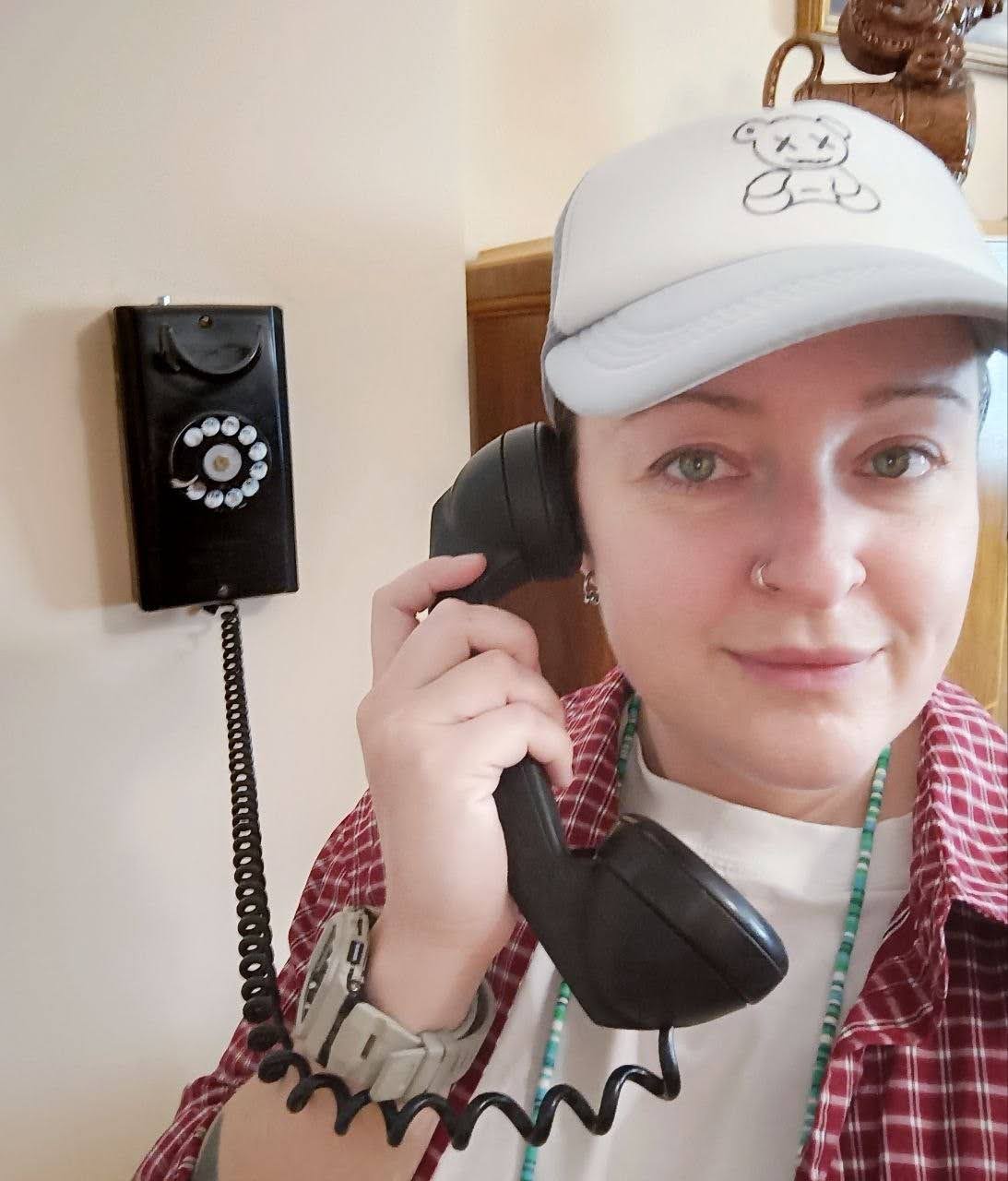
Masha Svezhentceva is a coach and game industry professional with eight years of experience in game development, including work as a producer. She helps experienced professionals navigate major career decisions, burnout and uncertainty, and better understand what they want from the next stage of their lives.
You can learn more about her work through her official website or connect with her on LinkedIn.

Leave a Reply