
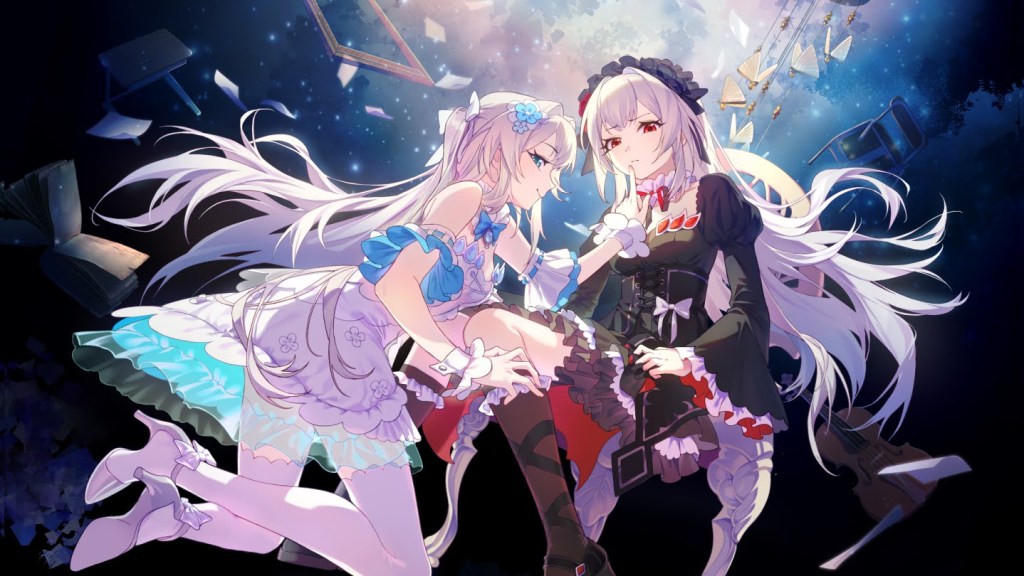
The Angel’s Devil Tail – One More Question 2, created by solo developer Yahu at OrangeSounds Studio, is a fascinating mix of a game where you have lateral thinking puzzles based on traditional “Hai Gui Tang” (Sea Turtle Soup) stories and a sweet Yuri romance. We caught up with Yahu to talk about how he built this unique mystery, the challenge of translating East Asian memes into English, and why wrong guesses shouldn’t feel like a punishment.

Taking the Pain Out of Guessing
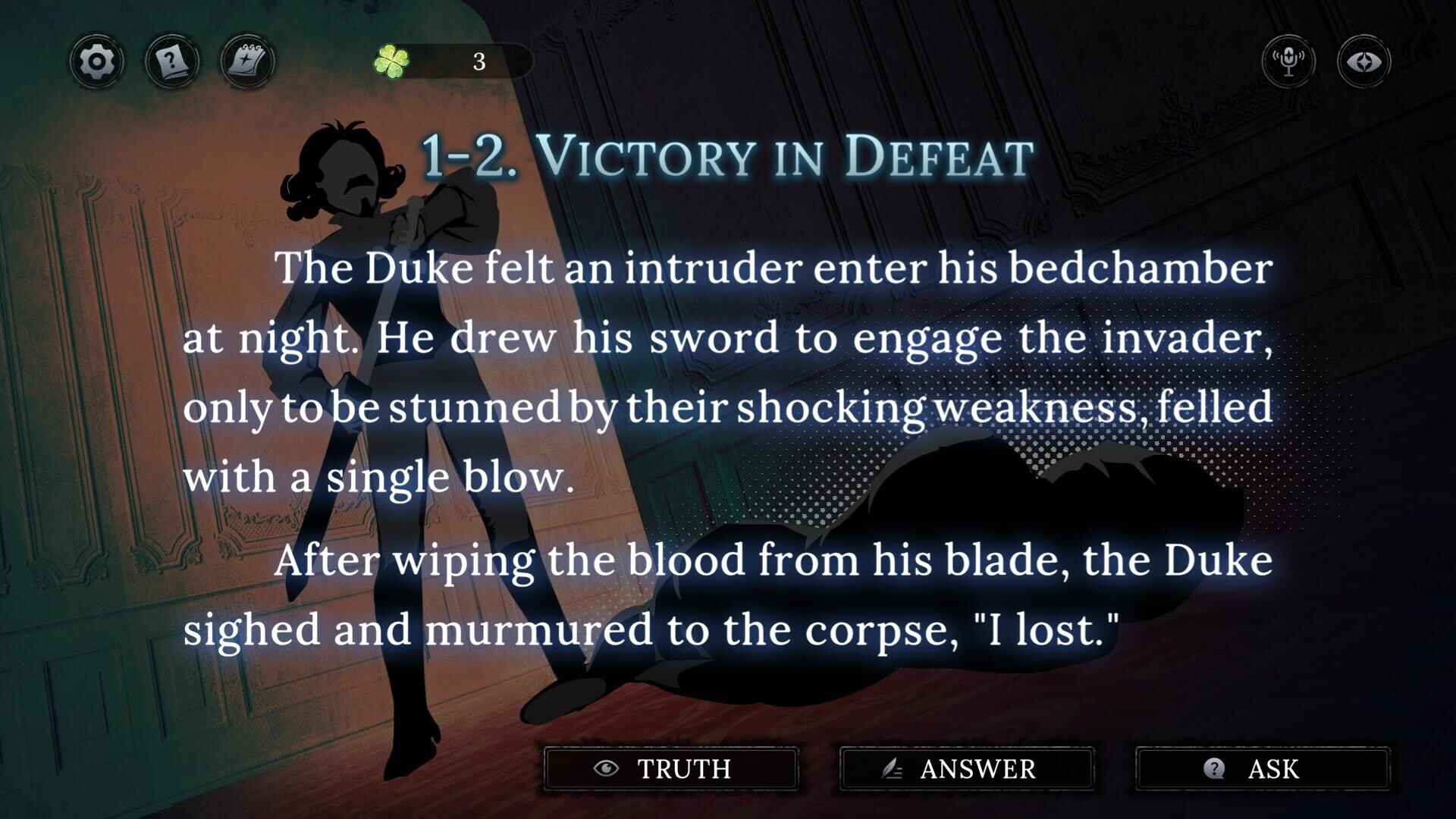
In The Angel’s Devil Tail you navigate a keyword selection tree, with zero penalties for choosing the wrong path. We asked Yahu how he managed to guide players through deductions without letting them just click through everything, and why he decided to drop penalties entirely.
“This game builds on and iterates on its predecessor, One More Question. The original idea was to create situation-puzzle stories that one person could play alone. From the outset, the content was therefore designed around deduction paths planned and written in advance, with the author providing a controlled set of possibilities.
I never intended to penalize players in the PC version. This type of puzzle is fundamentally a process of gradually narrowing down a wide range of imaginative possibilities. I don’t consider a player’s alternative hypothesis to be “wrong”; it simply isn’t what actually happened in that particular story.
To reduce the frustration of following a line of questioning that leads away from the solution, I added plenty of humorous comments and meme references along those branches. Even if players don’t ask a key question, they may still find something that makes them smile.”
Why Give the Main Character a Paper Face?
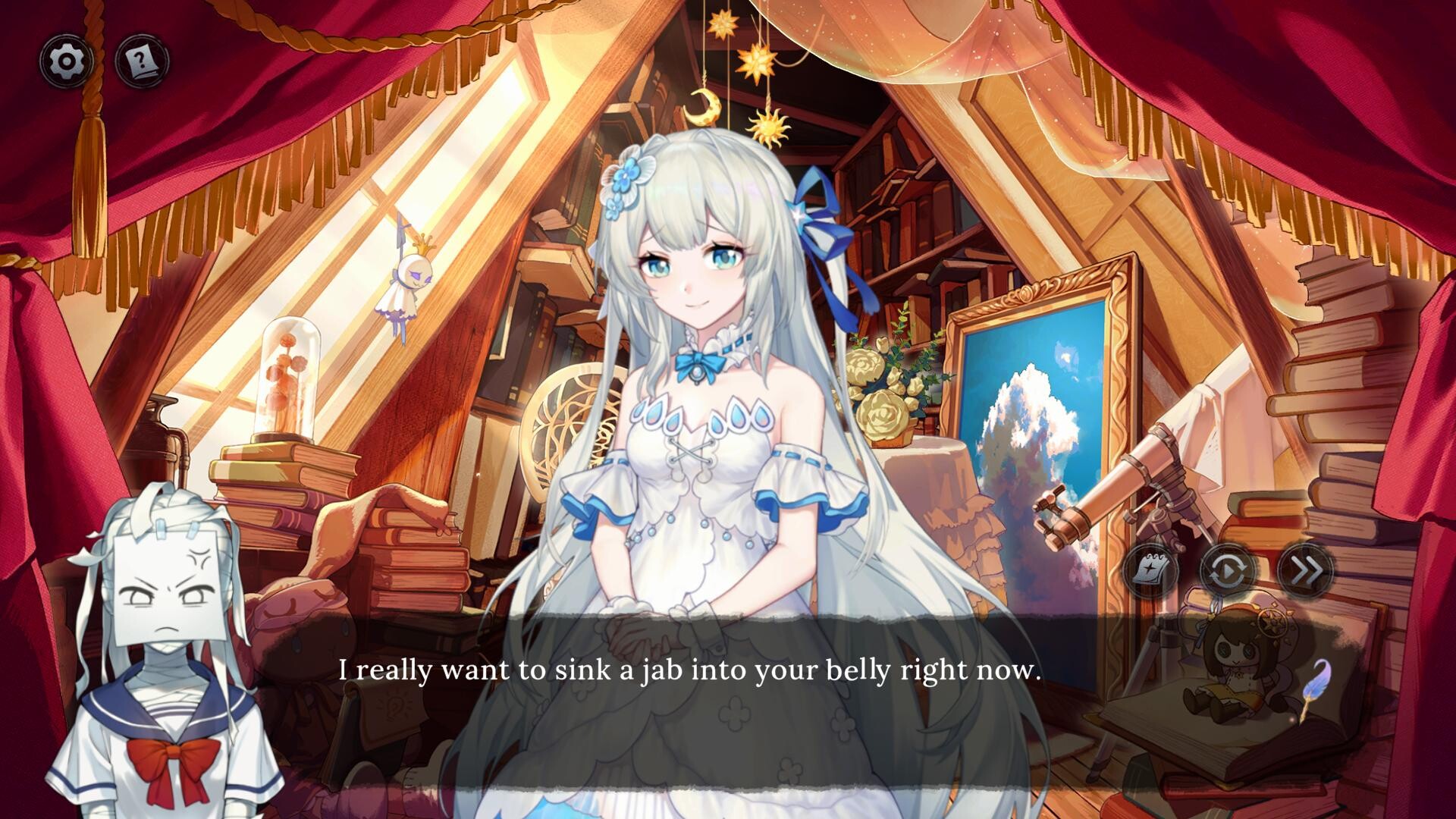
The main character wears bandages over their face with simple paper drawings for expressions. It’s a striking look, for sure and we had to ask whether this choice came from budget limits or a desire to skip complex face animations.
“This is also a recurring element of the series: every game includes a bandaged character. The protagonist’s paper face allows for exaggerated, cartoonish expressions and comic reactions. Since both female leads already have conventional beautiful anime-girl designs, the bandaged protagonist provides a distinct visual contrast.
The static expressions follow the character’s actual design. If a face drawn on a piece of paper could blink or open its mouth to speak, it might look rather frightening.”
Juggling Romance, Personas, and Pacing
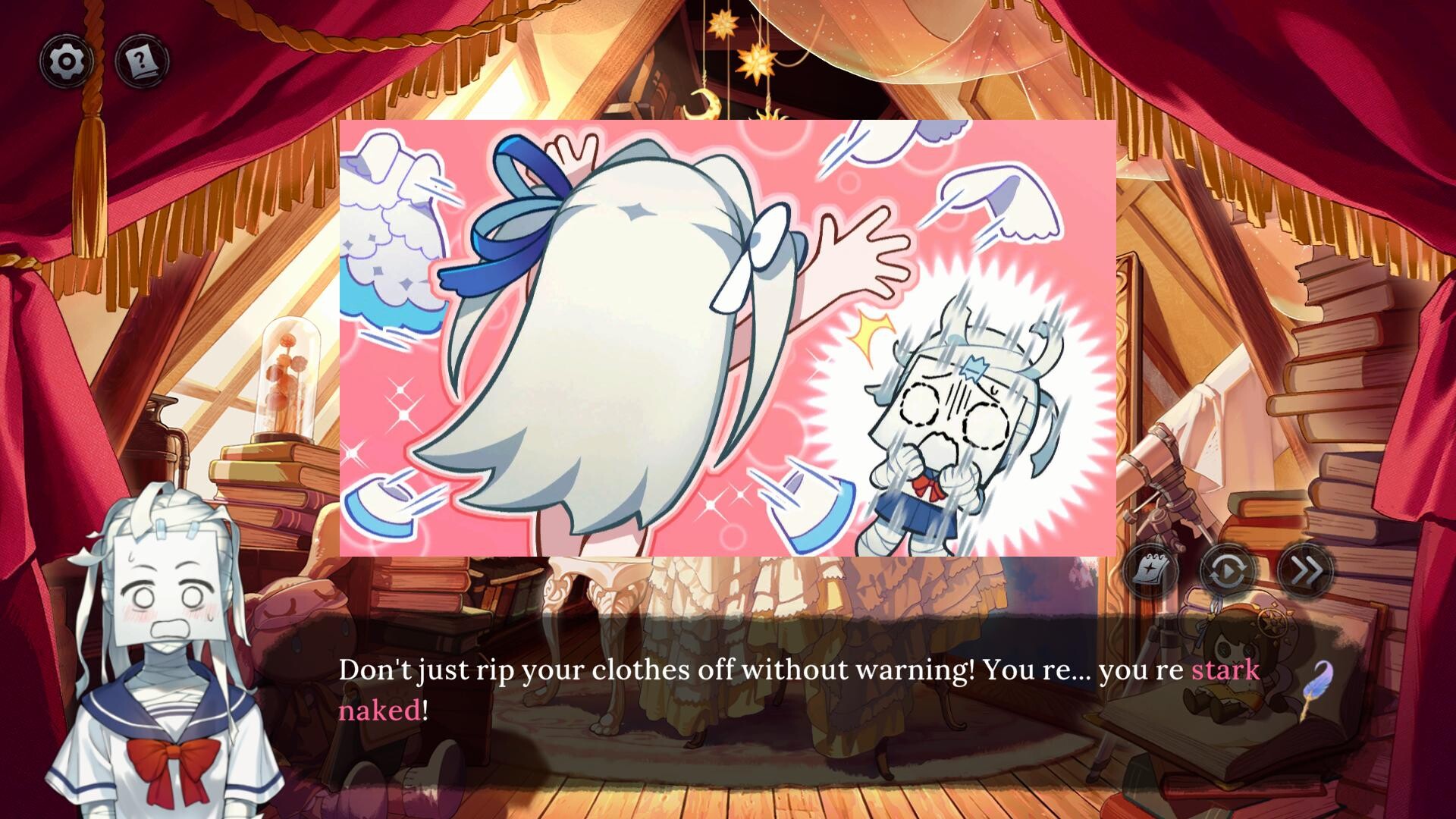
The game shifts between two sides of its lead character: the gentle “Day Eve” and the darker “Night Eve.” We’re sure that mixing sweet romance with eerie murder stories can’t be easy, especially across 64 levels where reading fatigue can set in fast. We asked Yahu how he kept these shifts natural and how he structured the game loop to keep players hooked.
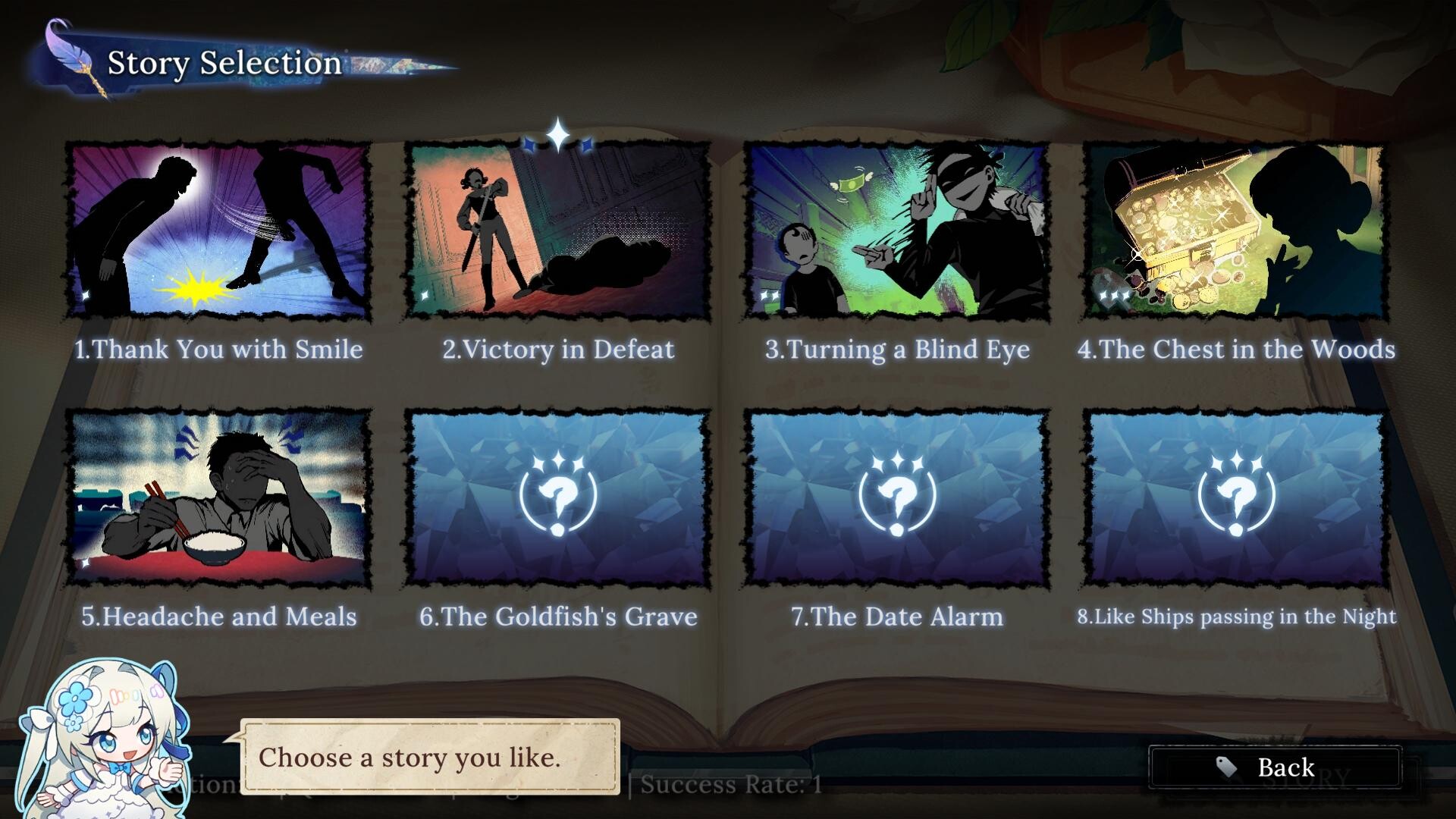
“Stories centered on two female leads have been a recurring feature of this series. My approach is to put small stories with twists inside the levels, and a larger story with narrative misdirection outside them. All three games—One More Question, Miss Perfect Miss Ending, and this game—follow that structure.
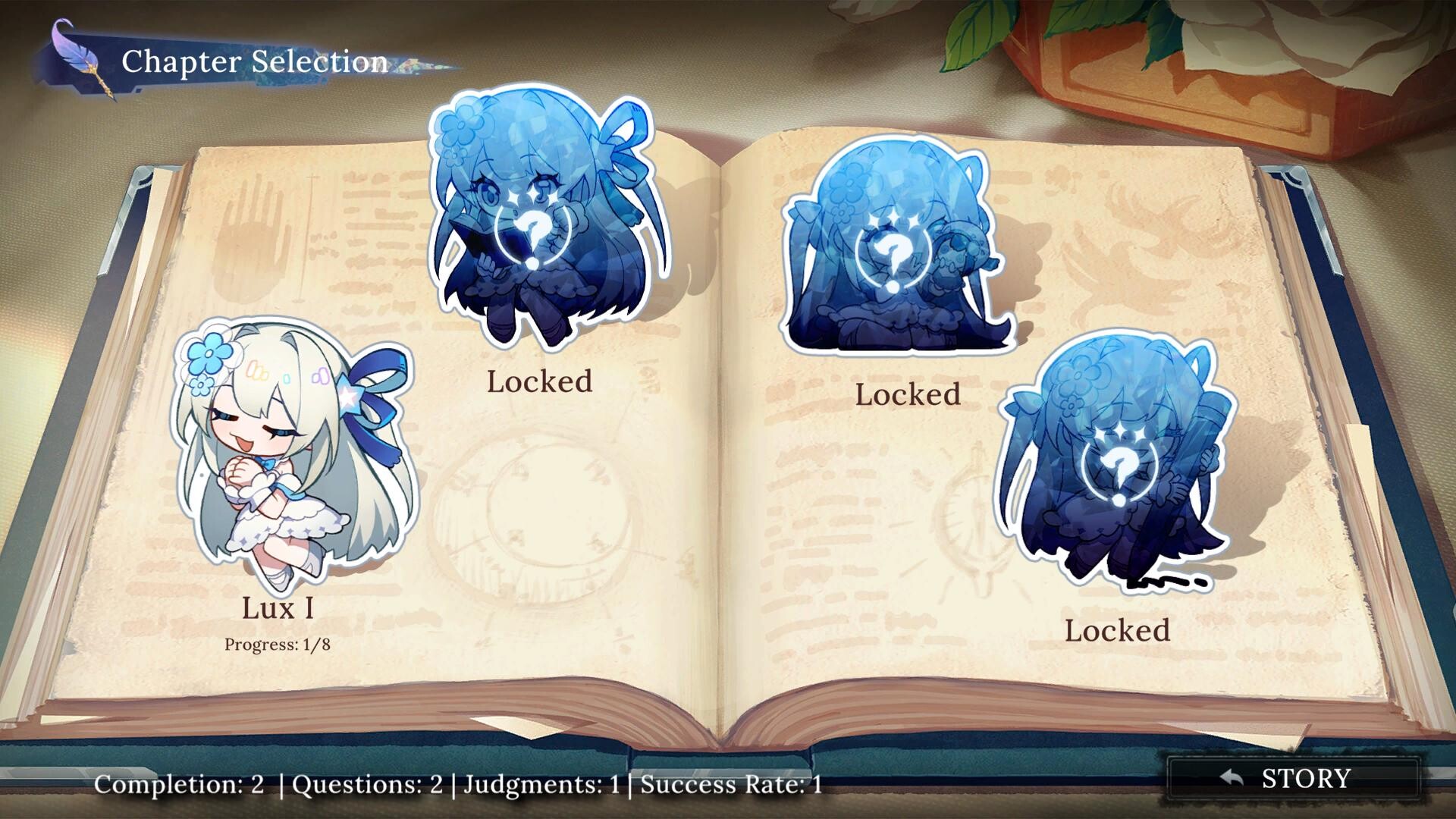
Each game has a main storyline alongside a collection of shorter stories and puzzle levels. Completing a group of levels advances the main story a little further. Most of the feedback I’ve received from the community has been positive: players find this structure interesting, and the shifts between the two give them a change of pace and something new to look forward to. That’s why I’ve continued using it.
As an independent creator, I haven’t deliberately shaped these games around marketable gimmicks.”
Moving from mobile roots to a full PC release also meant tweaking how the story unfolds for a more dedicated audience.
“The original game in the series began as a mobile title. A collection of short levels works well for casual players on a phone, but I do think the design has some shortcomings for PC players looking for a deeper or more involved experience.
I mainly adjust the pacing by switching between the short puzzle stories and the larger main story. That doesn’t fully make up for the limited variety in the gameplay, and I acknowledge that weakness. Even so, it seems to offer considerably more interactivity and enjoyment than a typical purely linear visual novel.”
Bringing Eve to Life
Voice acting carries a lot of weight in text-heavy games. Eve’s Chinese voice acting anchors the experience, requiring Day and Night personalities to feel distinct yet remain believable as the same person. Yahu shared how he directed the recordings to hit that balance.
“The voice acting took quite a lot of time. We approached it much like voice acting for animation. First, I recorded videos of all the story scenes and provided direction for each individual line. The voice actors then performed while watching the characters’ expressions and taking the surrounding dialogue and atmosphere into account.
The whole process took around two months of back-and-forth work. We iterated on thousands of voice files and made multiple rounds of revisions.
Since the two female leads are not actually human, we also chose vocal styles that are less conventional in Chinese voice acting. That made the performances particularly challenging.”

Crossing the Language Barrier (and Trusting the Community)
Localizing games built on East Asian culture and wordplay is a massive task. Puns and internet memes rarely translate directly into English without losing their punch. As long time translators we know this on a much personal level. So, we had to ask Yahu about the work behind bringing the game to English-speaking players.
“The English version involved much more than straightforward translation. The game contains many jokes and references drawn from East Asian culture and anime, and I was concerned that English-speaking players might not understand them.
I went through many of the descriptions, humorous comments, memes, and stories line by line, adjusting them into jokes and references that English-speaking audiences might also understand. However, I’m not a native English speaker, and I’ve received relatively little feedback from English-speaking members of the community, so I’m still not sure how well the humor lands.”
The game also offers Steam Workshop support so players can build their own deduction scenarios. When it comes to checking user content for quality, Yahu keeps things simple.
“In general, I only remove content that violates our community or creation guidelines, such as hate speech, pornographic or violent content, or unfinished levels uploaded to the Workshop. I don’t otherwise interfere with submissions.
The rankings are generated automatically using Steam’s Workshop algorithm, and the Workshop includes upvote and reporting functions. Good puzzles tend to rise to the top. As an individual creator, I generally don’t have the time or resources to closely moderate all user-generated content.”

Lessons for Indie Developers
Creating a digital version of tabletop deduction rules takes steady refining. To wrap up, we asked Yahu what big lesson he took away from making The Angel’s Devil Tail.
“I don’t think there is one particular “most valuable lesson.” My background is in programming, and the artist I work with is excellent. My approach has always been to keep iterating, refine the details, and make small, beautifully crafted games—trying to make each one better and its features more complete.
All three of my games feature a character called “Miss Perfect” who keeps working to improve herself. I suppose my own development process is rather similar.
If I had to identify one takeaway, it would be how significant the language barrier is for text-based games. My earlier games have accumulated several million downloads across platforms in Chinese-speaking markets, but have attracted very little attention outside those markets. In the future, I may try making games with a greater emphasis on gameplay.
Thank you for reading. The game has a great demo as well, if you’d like to check it out.


Leave a Reply