
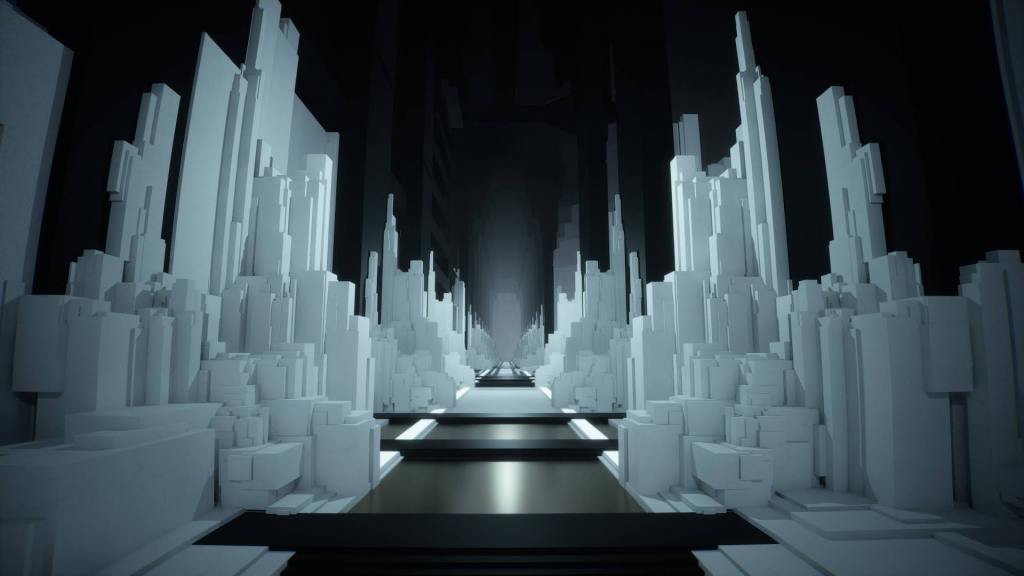
From the first few steps into Blackshard’s Labyrinth, we found ourselves staring at things that seemed impossible to explain. Enormous structures rise from empty spaces, walls lead nowhere, and strange combinations of geometric shapes create places that feel more like someone’s impossible dream than somewhere people were ever meant to live.
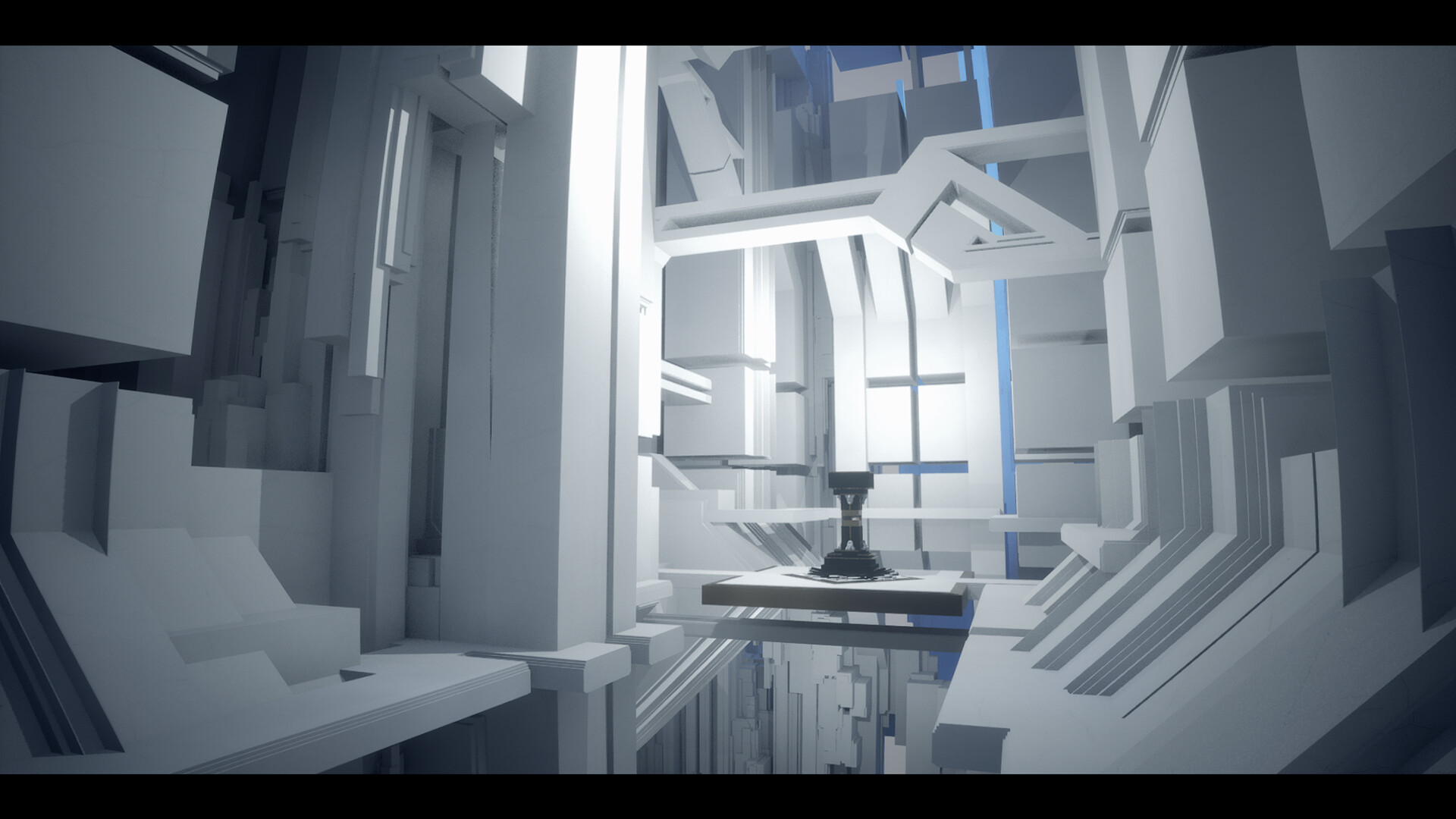
BLACKSHARD is a beautiful game, with constructions and designs that make very little sense to the logical mind, but are presented in such a captivating way. The clever use of chromatic colors and neon white makes even the strangest structures difficult to look away from. One moment you’re walking through an imposing alien structure, and the next you’re standing in what feels like an endless space with almost nothing around us.
Like meaningless guests, we pass through imposing alien worlds and humbling empty spaces. We walk and look, and can’t help but feel like a fly on cathedral walls, knowing that what we’re witnessing is majestic but being completely unable to comprehend it.

For a walking simulator, for a game with no traditional action, a mesmerizing sense of inaction is a must. We feel BLACKSHARD does that wonderfully. It gives us strange worlds filled with complex geometric simplicity and lets us simply exist inside them for a while.
We know that phrase, much like what we saw, makes very little sense. But that’s exactly what we thought while moving past intricate walls that seemed to go nowhere, dark mountainous structures standing in the middle of gray nothingness, and imposing combinations of white, gray and black buildings that seem to speak of design, technology and culture completely alien to us.
All the while, the deep alien music fills the spaces around us with an unsettling feeling that wherever we are is somehow larger than the universe itself.
The Labyrinth Doesn’t Explain Itself
BLACKSHARD is built around exploration and mystery rather than giving us a clear story to follow. The Labyrinth is a strange semi-open world, and we’re left to find our own way through it, with memory shards and environmental interactions helping us piece together what happened before our arrival. The game also gives us choices about how we interact with the Labyrinth, with our behaviour affecting where the journey eventually takes us.
We especially loved reading the quotes on the loading screens. They are smartly written and seem designed to make you search for meaning through obvious vagueness. They fit the rest of the game perfectly.
At the same time, we wished there was more narrative. More exposition. More of something to hold onto.
We understand that the mission here is to primarily be a silent observer and come up with our own conclusions. That works for most of the journey, but there were moments of long silence and deep abandonment when a voice, a character or simply a little more explanation would have done wonders.
Or perhaps it would have completely ruined the original vision.
Just like almost everything in BLACKSHARD, we could never know.
The Point of Getting Lost
The Labyrinth doesn’t always make navigation easy, and without the usual tools we have become accustomed to in exploration games, we’re often left looking at the environment and trying to figure out where we’re supposed to go next. That can be frustrating, but it also fits the game’s design. When a passage is hidden inside an enormous structure or a strange shape suddenly becomes the way forward, finding it can feel more satisfying precisely because the game didn’t point it out for us.
It’s a very specific kind of game, though. If you need constant progress, clear objectives or regular action, the quiet stretches of BLACKSHARD can feel like they’re asking too much from you.
A Beautiful Game With Some Ugly Problems
Unfortunately, not everything was great.
We tested BLACKSHARD on our PS5 Pro, starting with Quality mode. The game is, as we’ve said, beautiful, but we didn’t feel that the visuals justified being locked to 30 FPS on a PS5 Pro.
After struggling with the frame rate for a while, we decided to switch to Performance mode in the middle of the game.
That turned into a much bigger problem.
We were suddenly bombarded by visual artifacts and inverted colors. What had been a beautiful, mysterious endless space only seconds earlier turned into an absurd mess. Going back to Quality mode didn’t solve the problem. The visual glitches remained, only now they were happening at 30 FPS.
We eventually had to quit the session and start again.
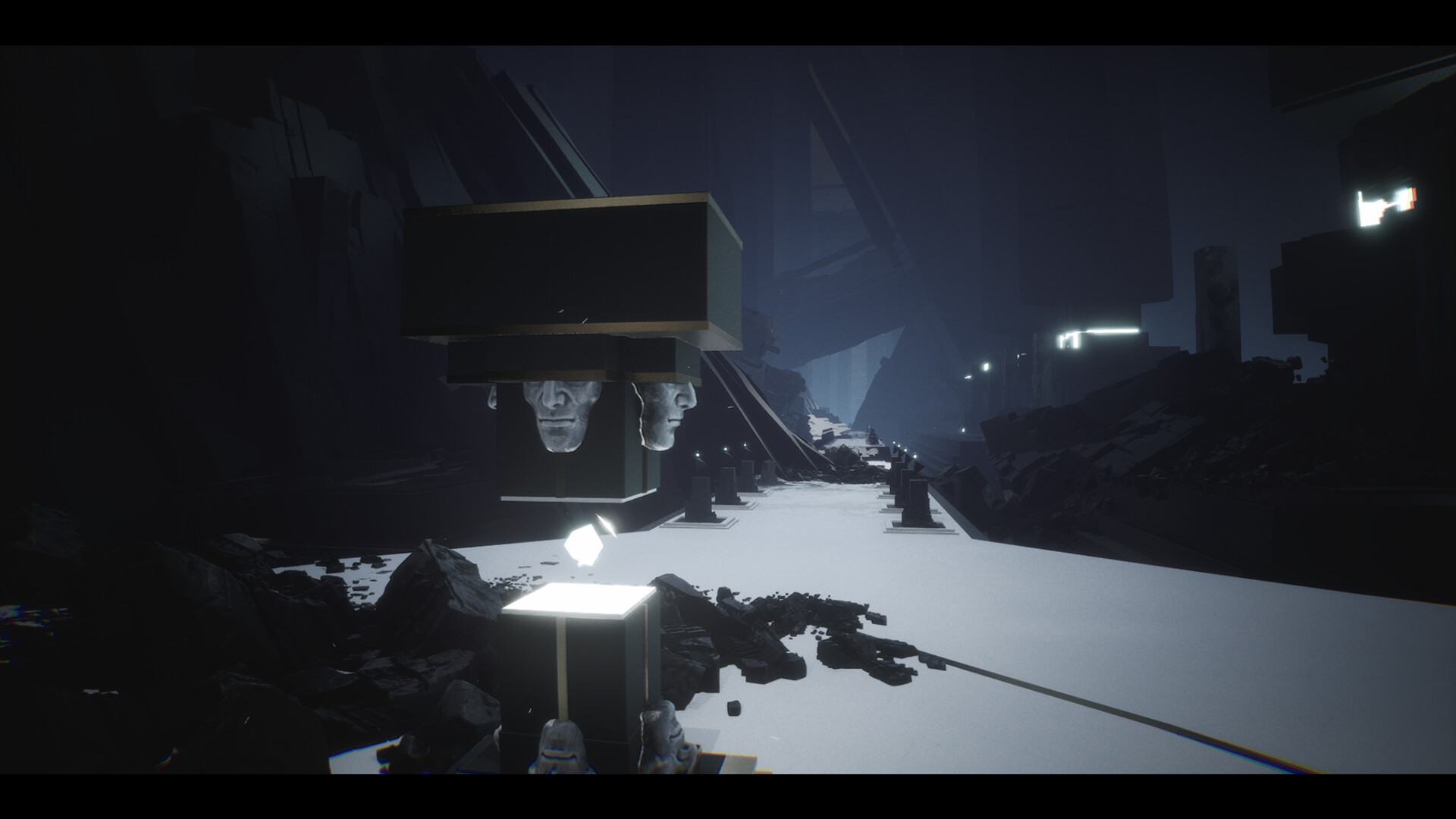
This time we also encountered strange audio popping. When we reached the same point, the same visual mess appeared again, forcing us to completely shut down the game and start over.
That’s a serious problem for a game like this and we hope the devs have already fixed this.
BLACKSHARD depends so heavily on its visual presentation that technical problems like these don’t simply make the experience less polished. They can completely destroy what the devs are trying to achieve. A player who switches between modes in a less demanding area might not notice anything immediately, only to reach one of these problematic sections later and suddenly have the entire atmosphere fall apart.
We also lost our progress when starting again, which was another headache because there is no manual saving.
And then there were the crashes.
Frustratingly often, the game would crash when we approached an object and pressed the button to interact with it. The devs have previously acknowledged crash and save-related problems with the game on PC, so hopefully the PS5 version will receive the attention it needs as well.
A Strange Experience That Nearly Gets Lost
The atmosphere, strange architecture, music and complete lack of familiarity create an experience that feels unlike most exploration games. The game knows that its world is difficult to understand and doesn’t seem interested in making it easier. BLACKSHARD creates a world worth getting lost in. We just wish the technical problems would let us stay there.

Leave a comment