
Hearth and Hamlet is a lovely and highly relaxing city builder that immerses you deep into medieval times, letting you start small but slowly rise to greatness. Join us after the trailer to find out together if this is a game for you!
Hearth and Hamlet gives us four different difficulty options, letting us decide just how much work we want to put into building our little kingdom. The first option opens up a much more relaxed building experience, while the hardest one is aimed at players who don’t mind keeping a close eye on their economy, population and defenses. There are two options between these extremes, giving us a little more room to find something that suits us.
Being the gentle souls that we are, we went with the second option. It still required us to pay attention to what was happening, but we weren’t constantly worrying about whether the next decision was going to bring the whole settlement crashing down.
It’s nice when we can take things at our own pace.
Starting with a campfire
The map we found ourselves on was a beautiful, lush place filled with trees, flowers and plenty of room for our settlement to grow. Near the river, we could hear a waterfall in the background, accompanied by gentle piano music that made the whole place feel rather peaceful.
We didn’t have much time to admire it, though. Our town wasn’t going to build itself.
Gathering resources is about as simple as it gets. We select the appropriate icon on the map and hold the button to collect what we need. Holding the wood icon gives us wood. Holding the fish icon gives us fish. Okay, okay, we’ll stop. You know where this is going.
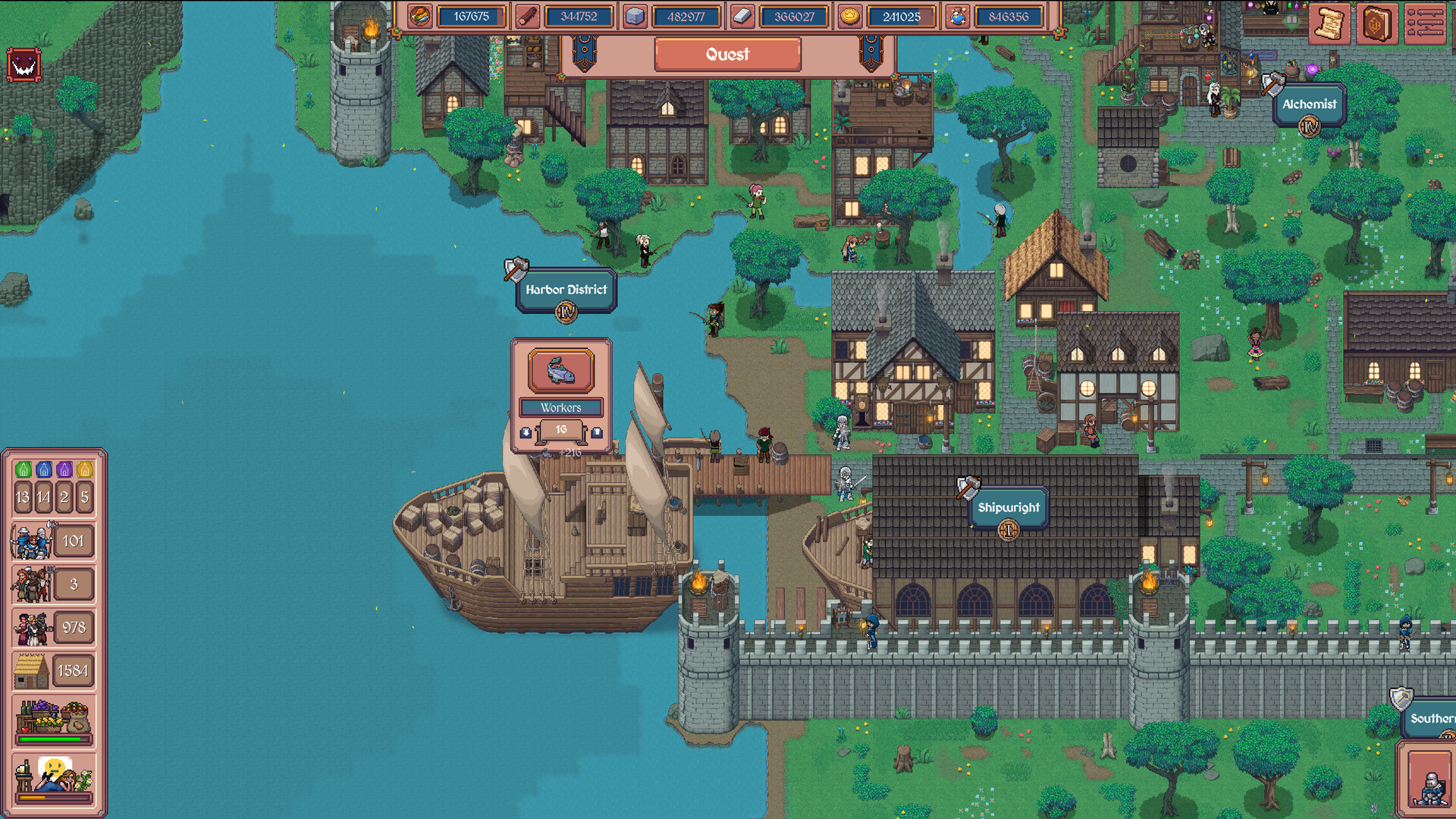
Once we have gathered enough resources, we can set up camp. Doing so gives us our first worker, who can then be assigned to a resource and left to do the job for us. As the settlement grows, so does the number of workers available to us. We begin by doing a most of the work ourselves, but slowly start handing those jobs over to our population.
Upgrading the camp gives us more people, but that also means more hungry mouths to feed. We therefore need to make sure our food production can keep up with the population before we start getting too ambitious.
From a few workers to a proper town
Our first fishing hut was one of the early buildings that helped us move beyond the basic gathering loop. Once we had enough food and wood, we could build it and unlock new research options.
Research is tied closely to the buildings we construct. Depending on what we have available, we can unlock things such as increased food storage, better fishing production, faster manual gathering, improved chances of critical gathering results, increased birth rates and improvements to happiness.
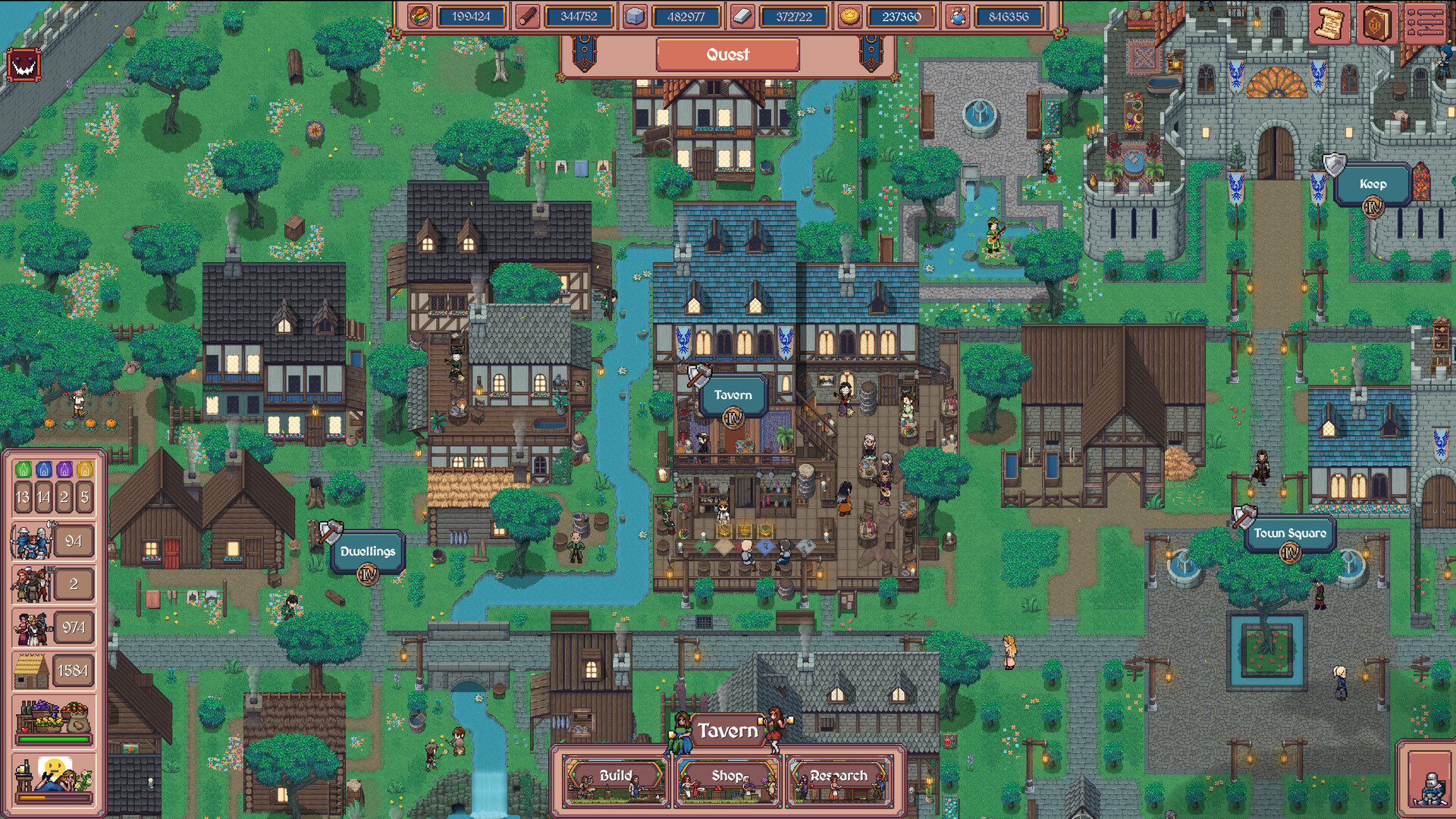
Buildings don’t simply sit there and look nice once we construct them. They become another part of the progression system. The amount of surplus food we have affects how quickly our settlement grows, so keeping the food coming in is one of those jobs that never really disappears.
More people mean more workers, and more workers mean we can start moving people around depending on what the settlement needs at that moment. If we’re short on wood, we can put more workers there. If food is becoming a problem, we can shift them somewhere else.
There isn’t much micromanagement involved. We don’t have to individually tell workers where to walk or watch over them while they work. We simply assign them to a task and they get on with it.
Some players might want more control, but we actually liked the simplicity.
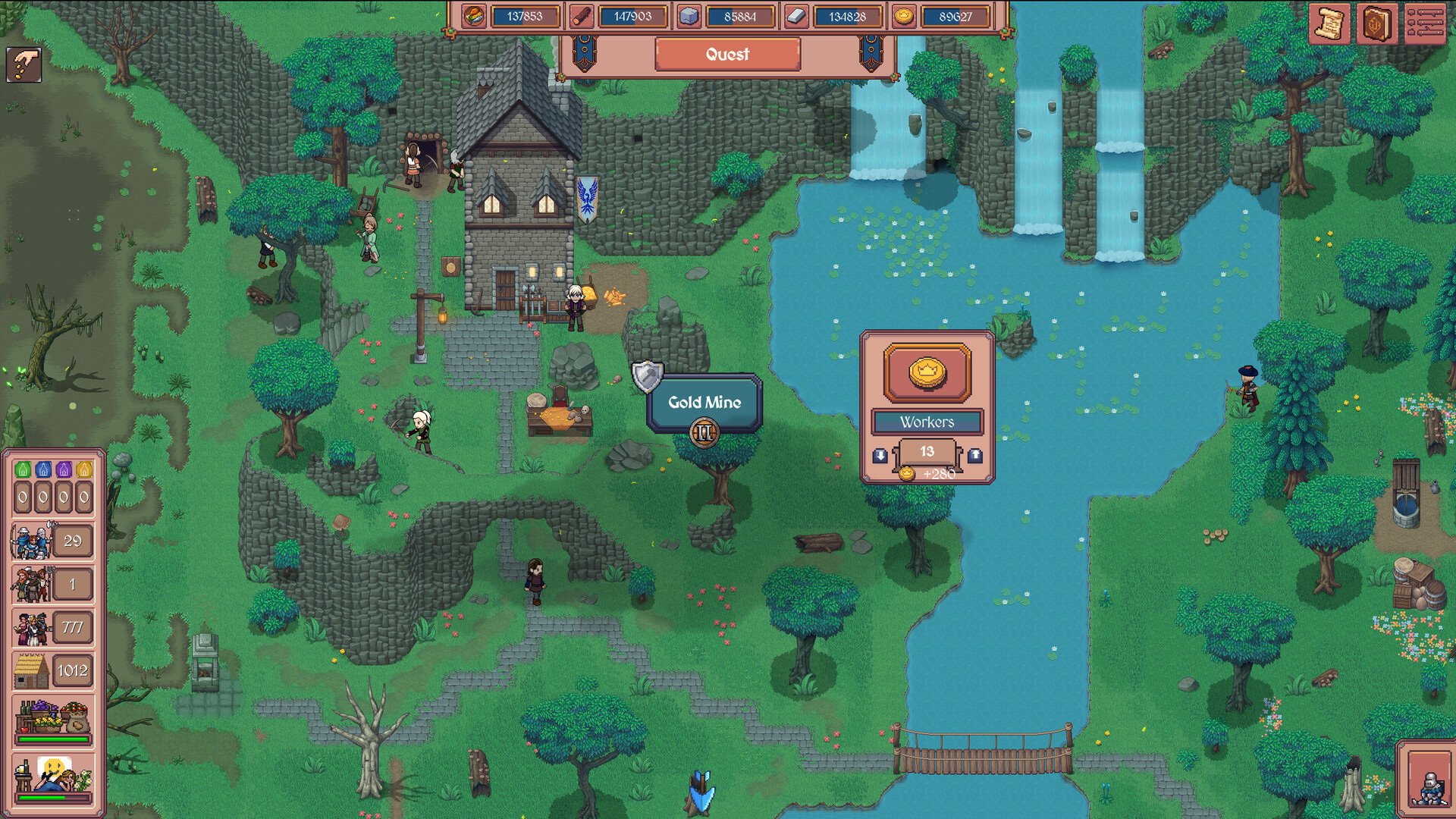
Watching the empty land fill up
The interface deserves high praise. We found it very easy to move around and, more importantly, to understand what we were looking at. Clicking on resources can take us directly to the building where they are used, while the relevant menus make it easy to see what we can upgrade or research.
There is a nice sense of progression here.
At first we’re staring at an almost completely empty piece of land. Then a few buildings appear. A public house follows. Then a chief’s house, a church, dwellings and other structures begin filling the map. Roads become a thing.
Before we realize it, there are people walking around where there was previously almost nothing.
The buildings also start feeding into one another. A new structure gives us access to new research, the research improves production or population growth, that gives us more resources, and those resources allow us to build something else.
The catch is that Hearth and Hamlet isn’t interested in giving us everything immediately.
Some upgrades require quite a lot of resources, and later progression can take a while. Patience is definitely required. If we’re the kind of player who wants to unlock everything as quickly as possible, the waiting may become frustrating.
We didn’t mind. In fact, we often minimized the game and let it run in the background while we answered some emails or worked on this review. We’d come back later, check what our workers had produced, make a few changes and see if we had enough to afford the next upgrade.
It was a fun activity that could easily be included into our multitasking circle.
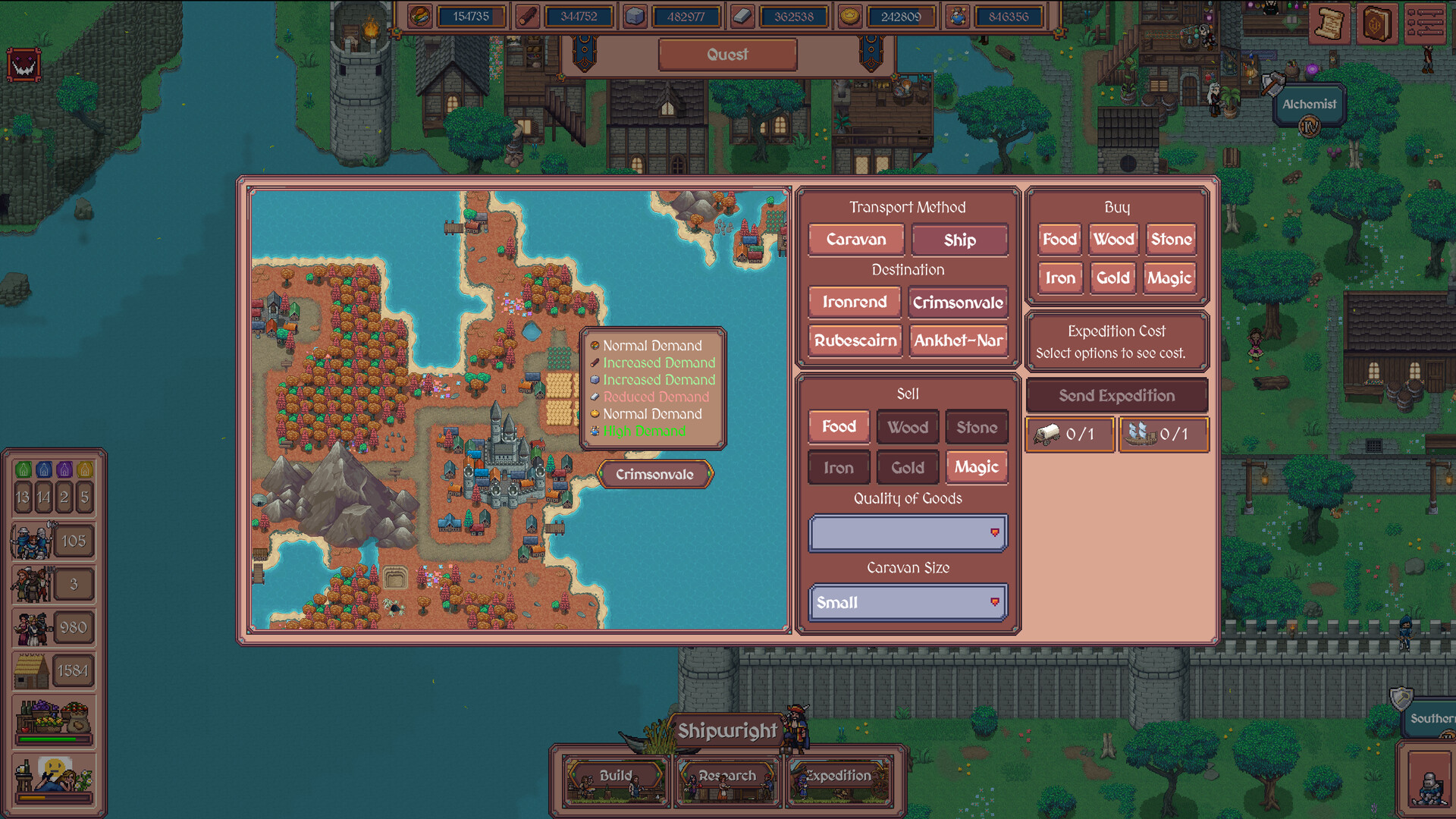
When the blacksmith changes things
Up until this point, most of our attention had been on food, wood, population and construction. The blacksmith opens the door to the military side of the settlement, which only means we have something else to worry about.
Hearth and Hamlet doesn’t turn into a traditional strategy game where we’re moving armies around a battlefield. Instead, defense is tied into the same economy we’ve been building from the beginning. We can recruit soldiers, train guards and invest in military improvements, while policies can also affect how we handle the town guard. The game also has defensive structures and raids to prepare for.
The military system is more about preparation than direct combat. Our soldiers need to be supported by the same economy that provides food for our population and materials for new buildings. Spending resources on defense means those resources aren’t being spent somewhere else. That gives the military side a place in the larger progression rather than making it feel like something bolted onto the game at the last minute.
It also changes the way we look at our workers. A settlement can be doing very well economically, but that doesn’t necessarily mean we’re ready for a raid. We have to keep an eye on our resources and make sure we haven’t spent everything on the next shiny upgrade. That was a nice change of pace from the earlier hours, where we could mostly concentrate on making the numbers go up.
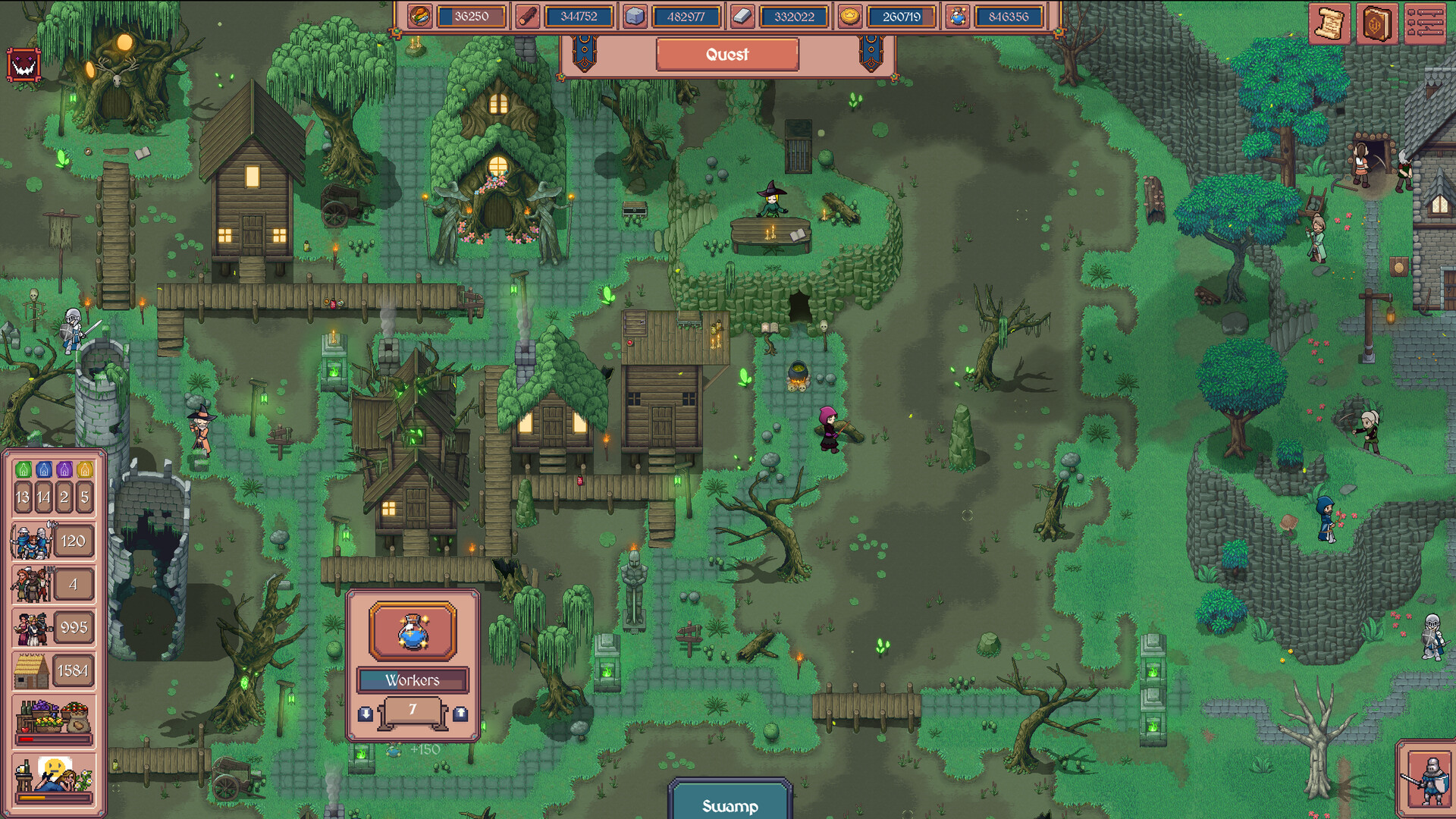
There is more to discover
The further we get, the more systems start appearing. Laws and policies allow us to influence things such as taxation, worker morale, happiness and the city guard. Trade lets us look beyond the resources available in our immediate surroundings, while the later stages introduce magic, alchemy and magical academies.
We like that the game doesn’t throw all of this at us from the beginning. The early hours are mostly about figuring out how to keep a small settlement alive. Once that becomes second nature, the game starts giving us more things to think about.
It also means that the research tree becomes increasingly important, especially choosing which improvement makes the most sense for what we’re currently trying to accomplish, whether that’s more food, expanded storage, or the next building that hides cool research or upgrades.
Focusing on the economy is all nice and dandy, but it’s probably a good idea to make sure our little kingdom can defend itself.
A slow game that knows what it wants to be
Hearth and Hamlet isn’t a city builder for players who want to spend hours placing individual houses and designing the perfect roads. Building locations are predetermined, and the workers don’t require constant supervision. The focus is much more on resources, research, population and watching the settlement gradually develop.
That’s also why we think the difficulty options work so well.
If all you want is a relaxing experience where we can build and watch the town grow, there is an option for that. If you want more pressure, the higher difficulties give you more to worry about.
For us, the appeal was somewhere in the middle.
We could gather resources ourselves when we wanted to, assign workers, research improvements, build something new and then simply sit back for a while. The music helped with that more than we expected. There were several moments when we were supposed to be doing something else and instead found ourselves watching our little settlement grow.
There isn’t a constant stream of excitement here, and there doesn’t need to be.
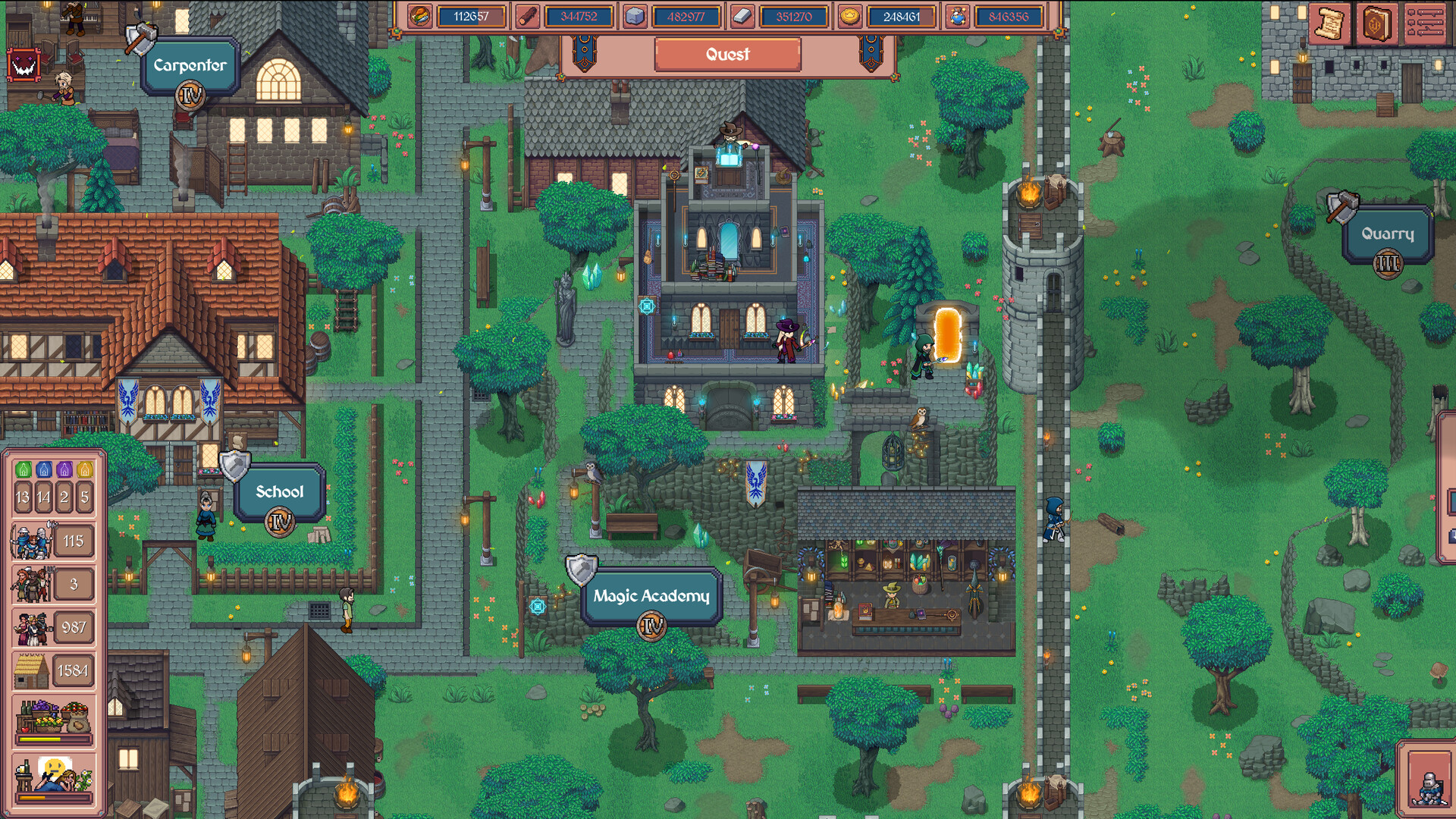
It’s a great feeling to stop worrying about how quickly we can reach the next building and simply let the settlement develop. What starts with a campfire, a few resources and a handful of people can eventually become a much larger kingdom, and seeing that transformation happen, enjoying that journey is why we ended up loving Hearth and Hamlet so much. After the long days we’ve been having, this is exactly the kind of city builder we want.

Leave a Reply