

Atomic Picnic is an action roguelite that thrives on the joy of the movement mechanic. From the moment we stepped into its bright, anime-inspired world, we found ourselves bouncing, grappling, and flying across arenas with an energy that never really faded.

Your main tools are the various Impulse Gears, and they’re much more than simple traversal abilities. The Dash Gear creates a grappling hook out of thin air, letting you zip across huge gaps in an instant, while the Jump Gear launches you high into the air whenever you need a quick escape or want to reach higher platforms. On paper these mechanics sound fairly straightforward, but once they start working together, the game opens up considerably. We quickly discovered that many of these abilities can be chained together, allowing for double jumps, extended grapples, and creative routes through each arena that constantly reward experimentation.
Instead of simply running in circles while enemies chase you, Atomic Picnic encourages you to think vertically. Every cliff becomes a shortcut, every ramp becomes a launchpad, and every battle feels a little more dynamic because positioning is just as important as firepower.
Fast Combat That Could Hit Harder
Eventually, all that exploring leads to combat, and the game keeps the action moving at an impressive pace. Monster hordes arrive in typical bullet heaven fashion, filling the screen while you dodge, dash, and unload everything you’ve got.
There’s a healthy selection of weapons to experiment with, each filling a different role, but we couldn’t shake the feeling that the shooting itself lacks impact. The guns work perfectly well mechanically, yet they rarely feel powerful. Enemies absorb bullets without much feedback, making firefights less satisfying than they should be. We kept wishing for a bit more weight behind every shot.
Fortunately, the active reload system goes a long way toward making combat more engaging. Similar to Gears of War’s Active Reload mechanic, pressing reload at precisely the right moment instantly refills your weapon, rewarding good timing without becoming intrusive. It’s a small addition, but one that keeps you engaged instead of simply waiting through reload animations.
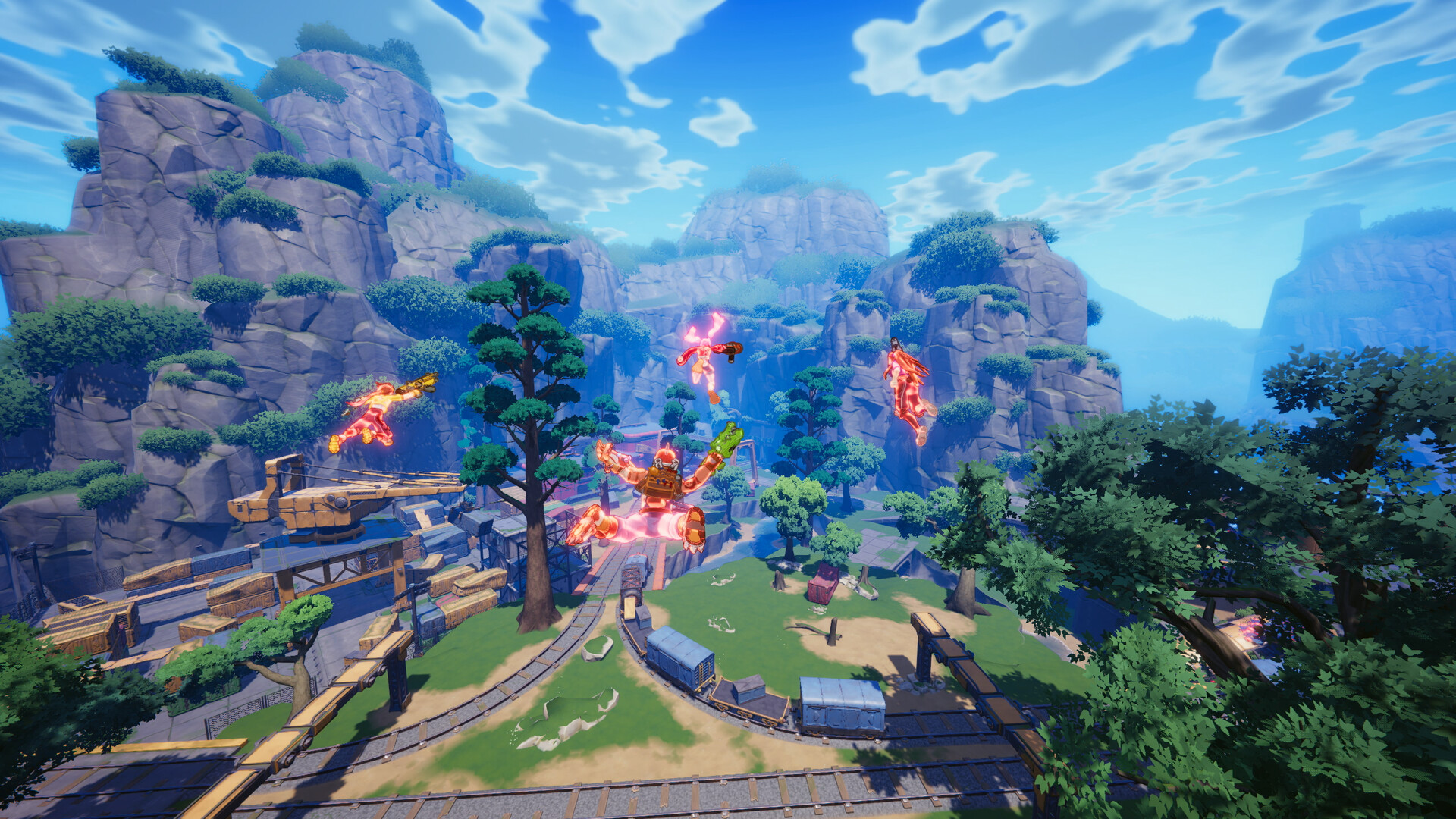
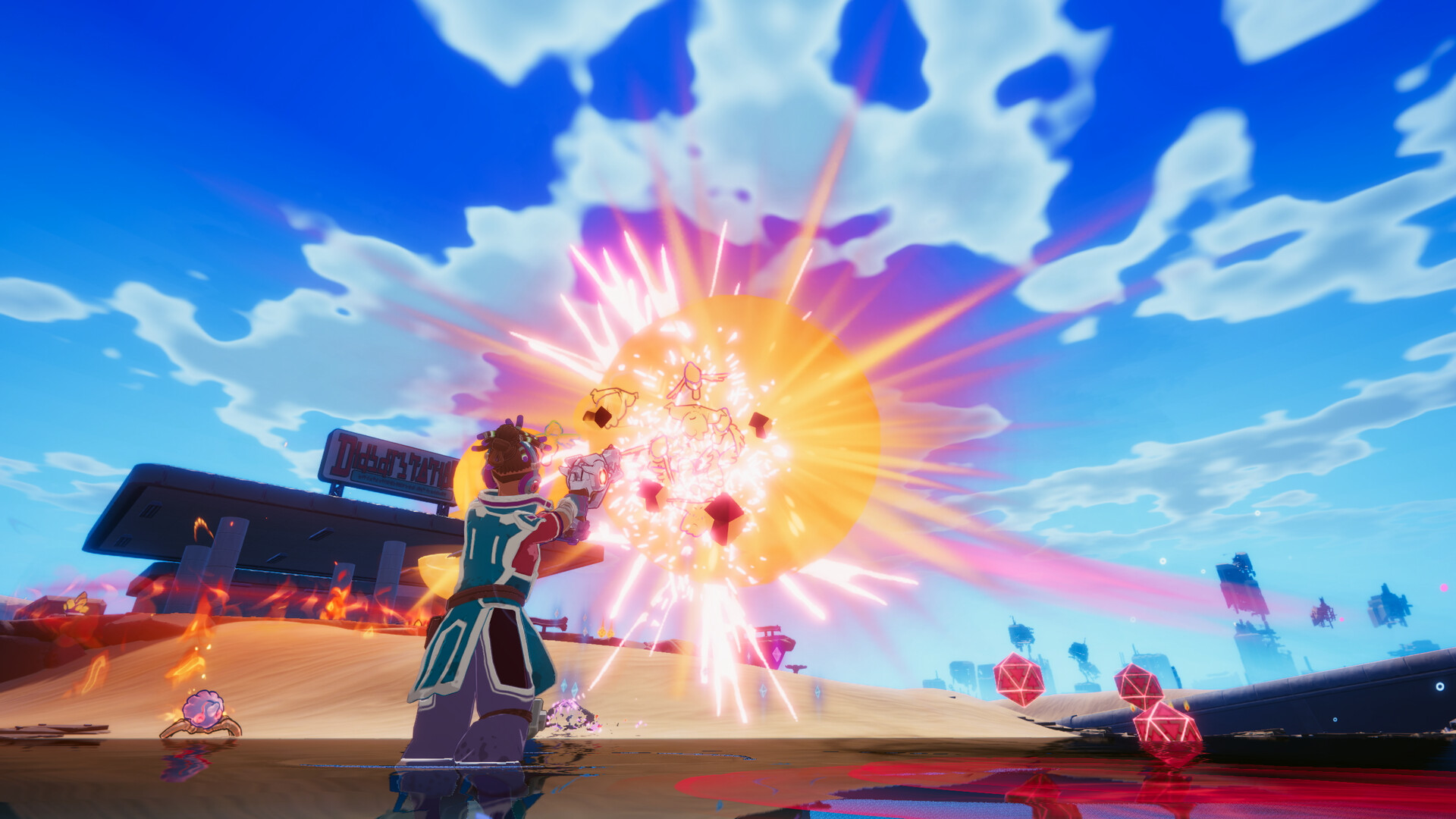
One of our favorite active abilities let us dash straight through entire groups of enemies, vaporizing everything in our path in seconds. Others provide crowd control, mobility, or devastating bursts of damage, making each run feel noticeably different depending on the abilities you discover.
If things start going sideways, resource nodes scattered throughout the map can be destroyed to recover health and collect Pebbles, the game’s primary currency. These are used to upgrade Mementoes between runs, giving permanent statistical improvements while also unlocking new skills and progression options for your characters. It isn’t the deepest progression system in the genre, but it gives every run a sense of purpose, even when you don’t quite make it to the end.
The Picnic Is Pure Chaos
Despite its cheerful name, there’s very little actual relaxing happening during an Atomic Picnic. Each run drops you onto one of several maps where survival is only part of the objective. While mowing through enemies for experience and materials, you’ll regularly choose between three upgrades that gradually define your build.
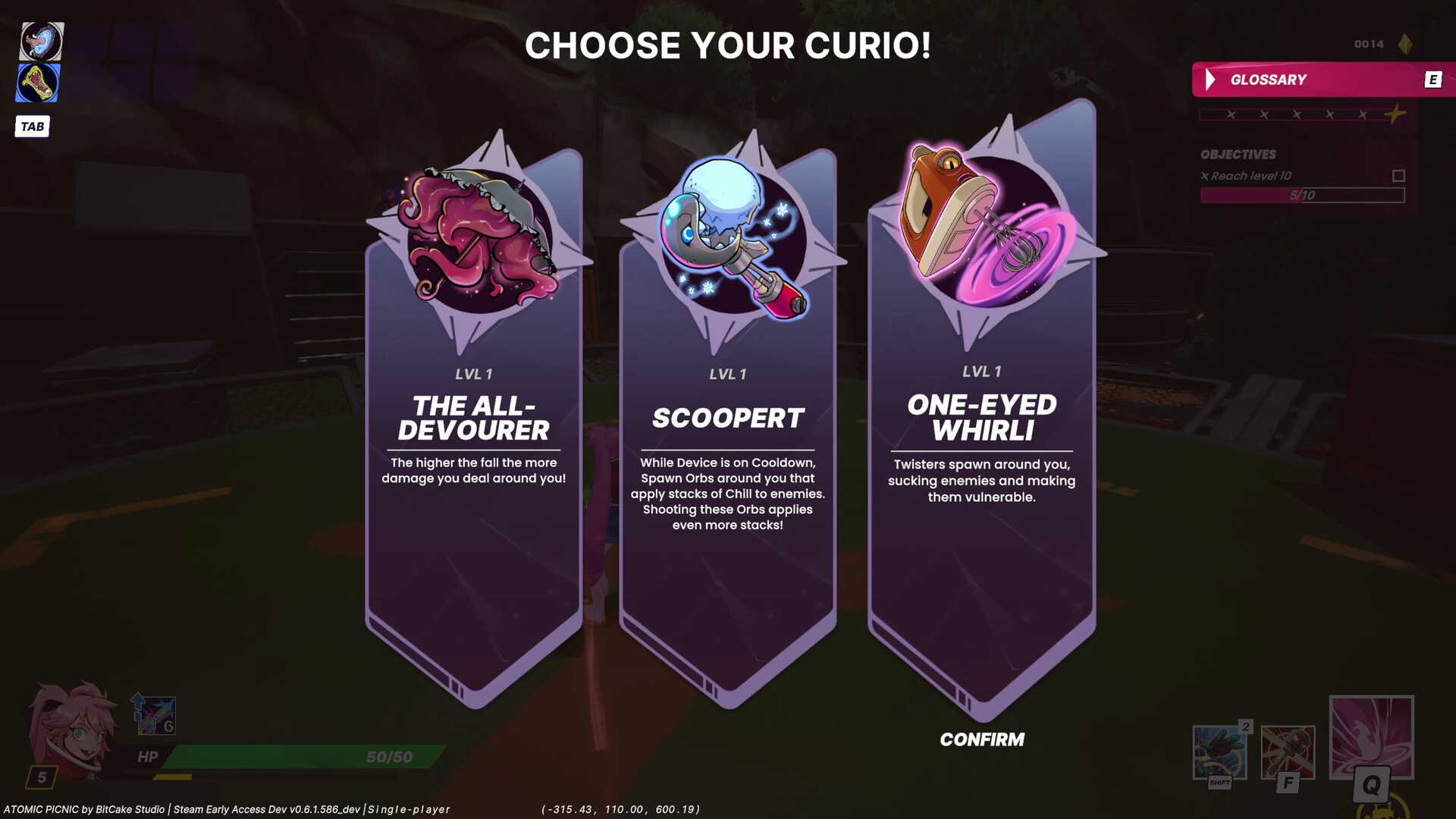
Some upgrades are fairly practical, increasing healing chances or improving damage output. Others are considerably more entertaining. We found ourselves summoning tornadoes that pulled entire enemy groups together, firing unexpected bullet volleys, covering arenas with traps, or combining multiple effects into wonderfully chaotic chain reactions. The more upgrades you stack, the more ridiculous the battlefield becomes, especially once rare evolutions begin transforming ordinary abilities into screen-clearing spectacles.
The objectives scattered across every map keep things from becoming repetitive. One moment you’ll be defending a booming speaker while waves of monsters close in from every direction. The next you’ll escort a rover after collecting enough energy, desperately trying to keep enemies away long enough for it to reach its destination. These events are often more challenging than simply surviving, but the additional rewards usually make them worth the risk.
Finish every objective, defeat the area’s boss, and you’ll be allowed to wrap up the run early after roughly fifteen minutes. It creates a nice rhythm that keeps sessions manageable while still encouraging “just one more run.”
Better Together
Although everything can be played solo, Atomic Picnic clearly shines brightest in online co-op. Teaming up with up to three friends adds another layer of strategy as everyone experiments with different weapons, upgrades, and character builds. Watching one player group enemies together with tornadoes while another rains explosions from above creates exactly the kind of over-the-top chaos the game is aiming for.
Even when things inevitably fall apart, the frantic mobility makes every desperate escape memorable, and surviving a difficult encounter with your team feels genuinely rewarding.
Still Growing, Already Fun
Atomic Picnic is still in active development. Some rough edges remain, particularly the lack of satisfying weapon feedback and a few systems that could use additional depth. Even so, the foundation is already remarkably solid. What kept bringing us back wasn’t necessarily the progression or the loot. It was simply how enjoyable it feels to move. Grappling across arenas, launching ourselves skyward, chaining abilities together, and finding increasingly ridiculous upgrade combinations made each run entertaining even when we failed.
Game: Atomic Picnic
Developer: BitCake Studio
Publisher: Mad Mushroom
Platform Reviewed: PC
Genre: Third-Person Roguelite / Bullet Heaven
Players: Single-player / Online Co-op (up to 4 players)
Release Status: Early Access

Leave a comment