
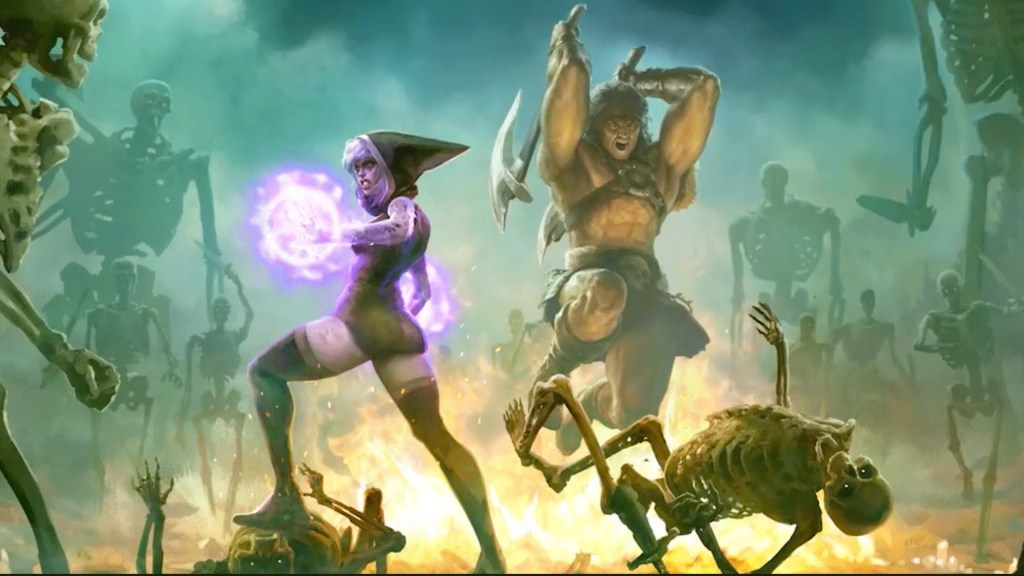
Conquest Dark borrows heavily from traditional action RPGs, giving every run a stronger sense of character progression than most of its competitors. It may look familiar at first glance, yet after a few runs it becomes clear that its real strength lies in how it lets us shape a hero from the ground up before unleashing them against overwhelming odds.
Set 237 years after the arrival of the mysterious Black Planet, humanity has already lost the war. Kingdoms have fallen and undead armies roam the land, awakening ancient cosmic horrors. Every run represents another Dark Ritual where champions willingly throw themselves into impossible battles in the hope of pushing back the darkness just a little further.
Before every ritual we choose from three races, five classes, and eleven different Origins (most of these unlock as you play the game). Races mostly provide statistical bonuses. Humans, for example, have stronger primal resistance and a higher chance of spawning a healing soul, while Origins determine which weapons, armor, and skills our character naturally excels with. These choices certainly matter, but mostly because of the numbers behind them. We couldn’t help wishing they had gone a little further, giving each race and Origin unique mechanics that would noticeably change the way they play instead of simply improving existing attributes.
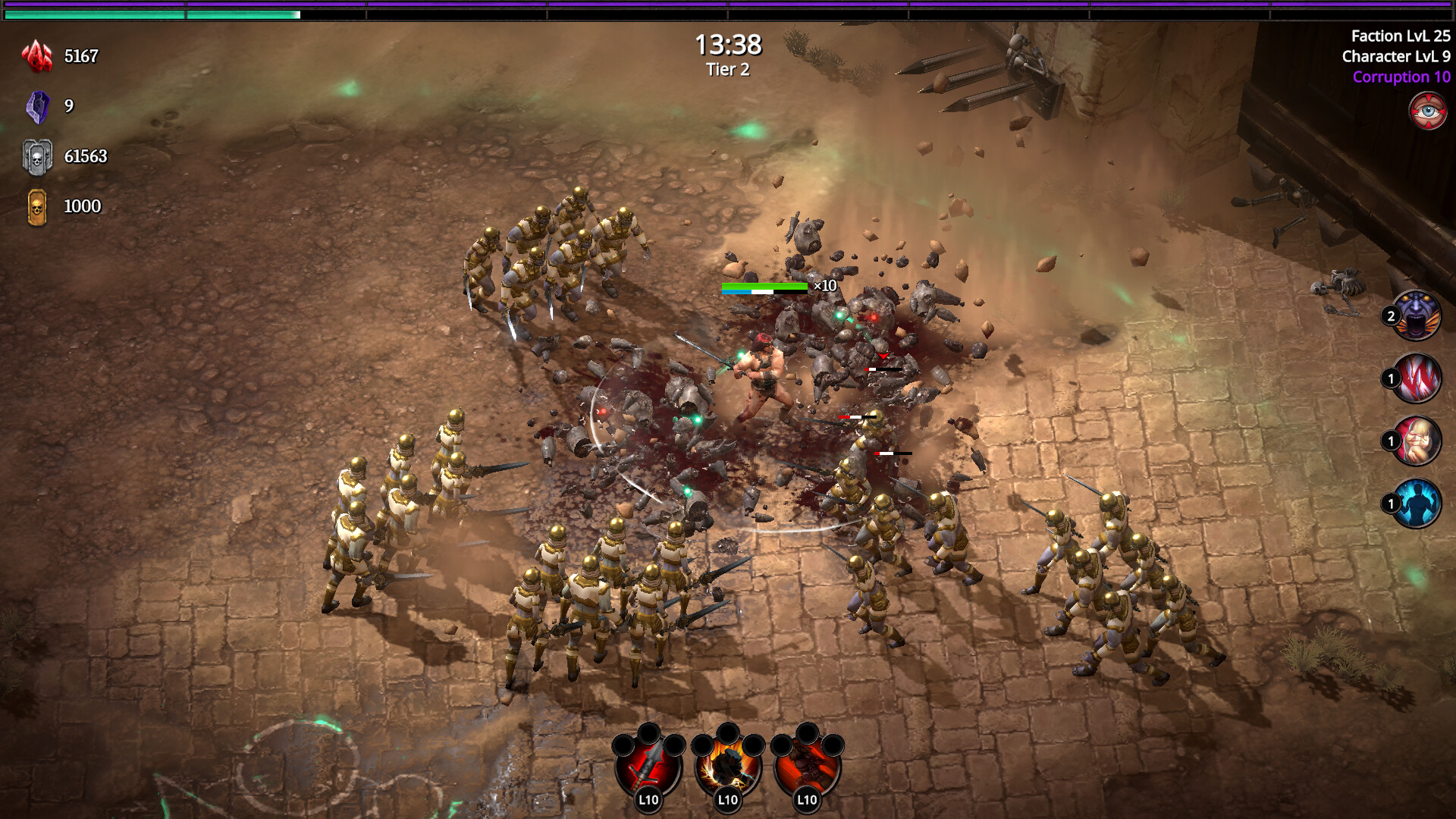
We spent most of our time with the Hunter, but after trying the Warrior it became obvious the developers weren’t interested in making minor variations of the same character. Every one of them feels distinct and encourages a completely different approach to combat. Our Hunter specialized in short and long bows, relying on speed, multishot attacks, mobility, and survival skills to keep enemies at bay. Switching to the Warrior completely changed the rhythm, replacing careful positioning with aggressive melee combat, heavy weapons, rage generation, and enough resilience to survive being surrounded. Instead of feeling like slight variations of one another, the classes genuinely invite experimentation.
No matter which hero we selected, every run began with ten lives. Losing one doesn’t simply bring us closer to defeat. Each death permanently inflicts another bleeding wound, making survival increasingly difficult. It’s a clever mechanic that constantly reminds us that defense is just as important as offense. Recklessly diving into crowds may clear a few enemies faster, but the long-term consequences quickly catch up.
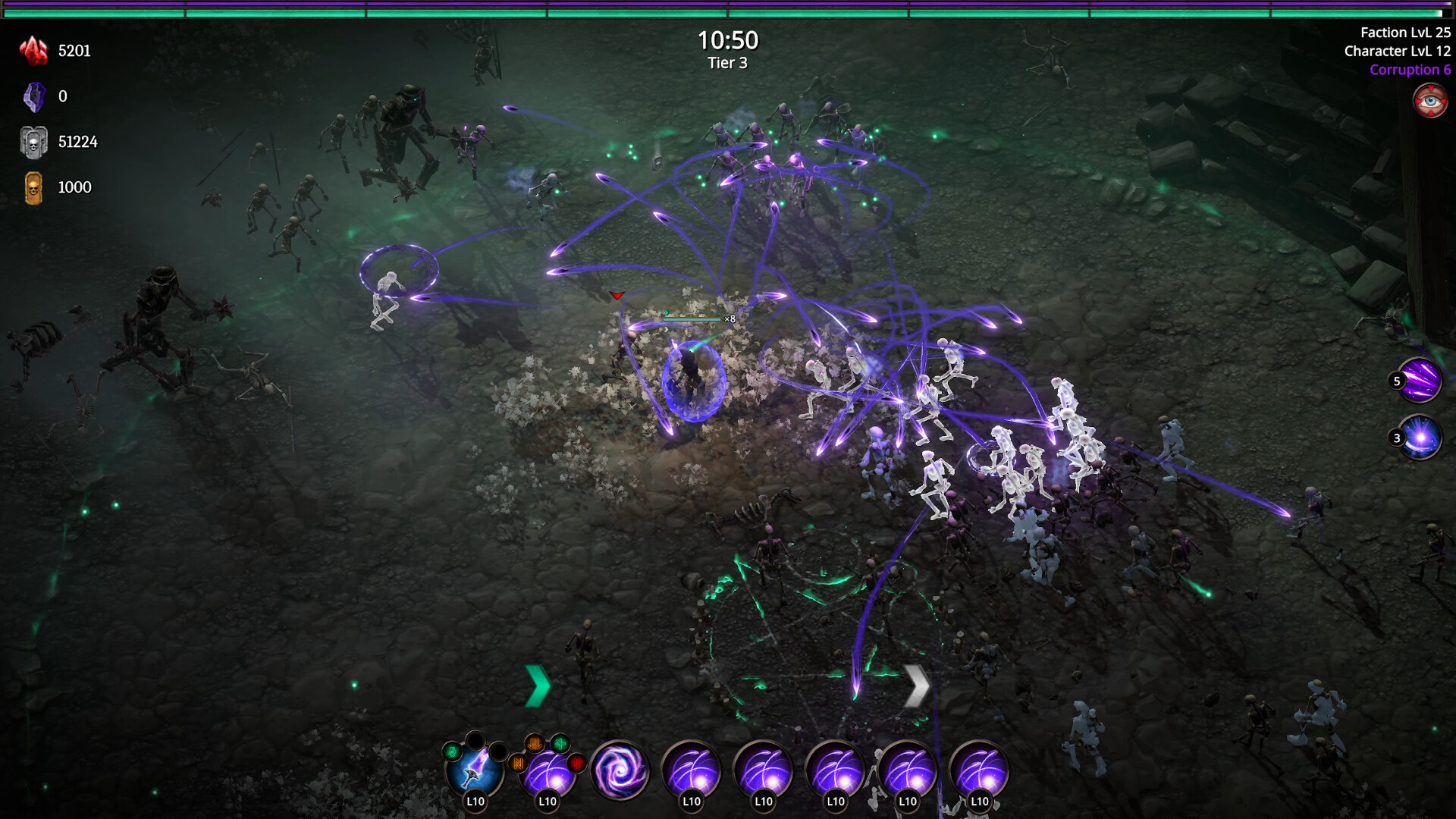
The individual maps are fairly compact, yet each manages to establish its own personality. One throws us into scorching deserts under the blazing sun, another takes place beneath the cover of darkness, while others introduce heavy winds that send sand sweeping across the battlefield. The maps aren’t very large. At first we thought we’d grow tired of them quickly, but because each one has its own lighting, weather, and enemy combinations, they rarely felt repetitive.
Like any good survivors-like, progression comes through experience. Every level rewards us with new abilities that gradually transform an ordinary fighter into an unstoppable force. Before long we were hurling spinning axes across the battlefield, slamming the ground with devastating seismic attacks, summoning magical powers, and combining abilities into surprisingly satisfying builds. Equipment adds another layer of customization, allowing us to collect increasingly powerful weapons, armor, clothing, and runes that dramatically improve our chances of surviving the later waves.
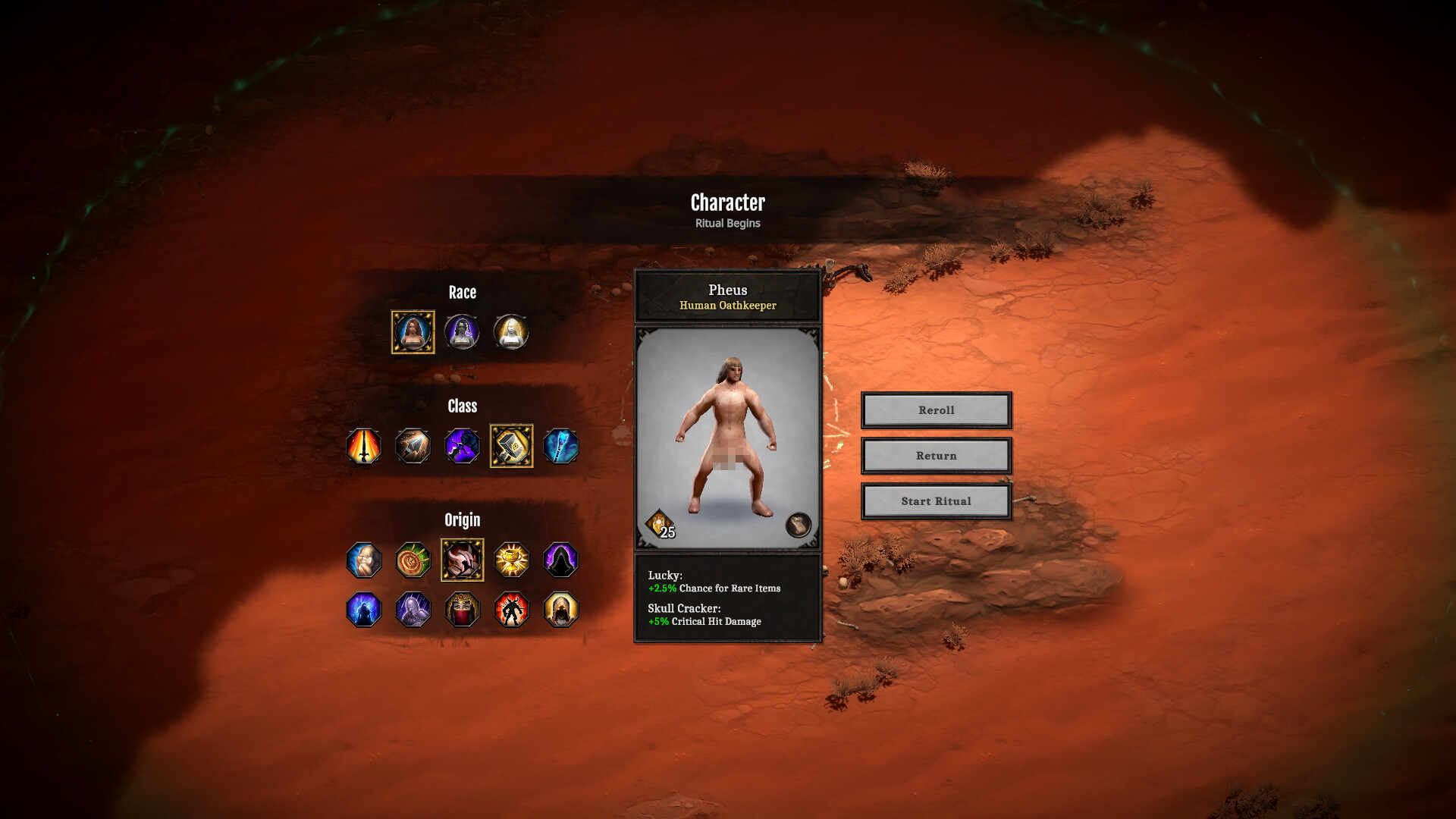
One of our favorite details is how visibly our character evolves throughout a run. As defeated enemies drop pieces of equipment, our nearly naked warrior slowly transforms into a heavily armed champion covered in armor. At the same time, taking damage leaves permanent scars. Flesh tears open, deep wounds become visible, and exposed bones begin to protrude from the body. Watching our hero become stronger while simultaneously looking more battered creates an unusual visual contrast that perfectly complements the game’s brutal setting. More than once we found ourselves desperately searching for an escape route while barely clinging to life, hoping the next healing soul would appear before another enemy landed the final blow.
Enemy variety remains consistently enjoyable throughout the experience. Every creature comes with its own limited but recognizable attack patterns, forcing us to pay attention rather than simply running in circles. Stronger elite enemies demand quicker reactions and far more careful use of the dash mechanic, while bosses provide some of the game’s most entertaining encounters. Their elaborate attack patterns constantly had us jumping, weaving between projectiles, and trying to carve out enough space to deal with both the boss and the growing horde surrounding us.

Every successful build can be saved and revisited later, making it easier to refine different playstyles instead of starting from scratch every time. The Archive gradually fills with everything we’ve discovered, while permanent upgrades ensure each new run feels slightly stronger than the last. Offering collected souls at altars to permanently increase damage output may sound like a small improvement, but after several rituals the difference between our first run and our tenth became impossible to ignore.
The presentation ties everything together nicely. The dark fantasy aesthetic is grim without becoming visually overwhelming, while the soundtrack constantly raises the tension through pounding tribal rhythms and aggressive orchestration. As the battlefield fills with dozens upon dozens of enemies, the music steadily builds alongside the chaos, creating exactly the kind of pressure a game like this needs.
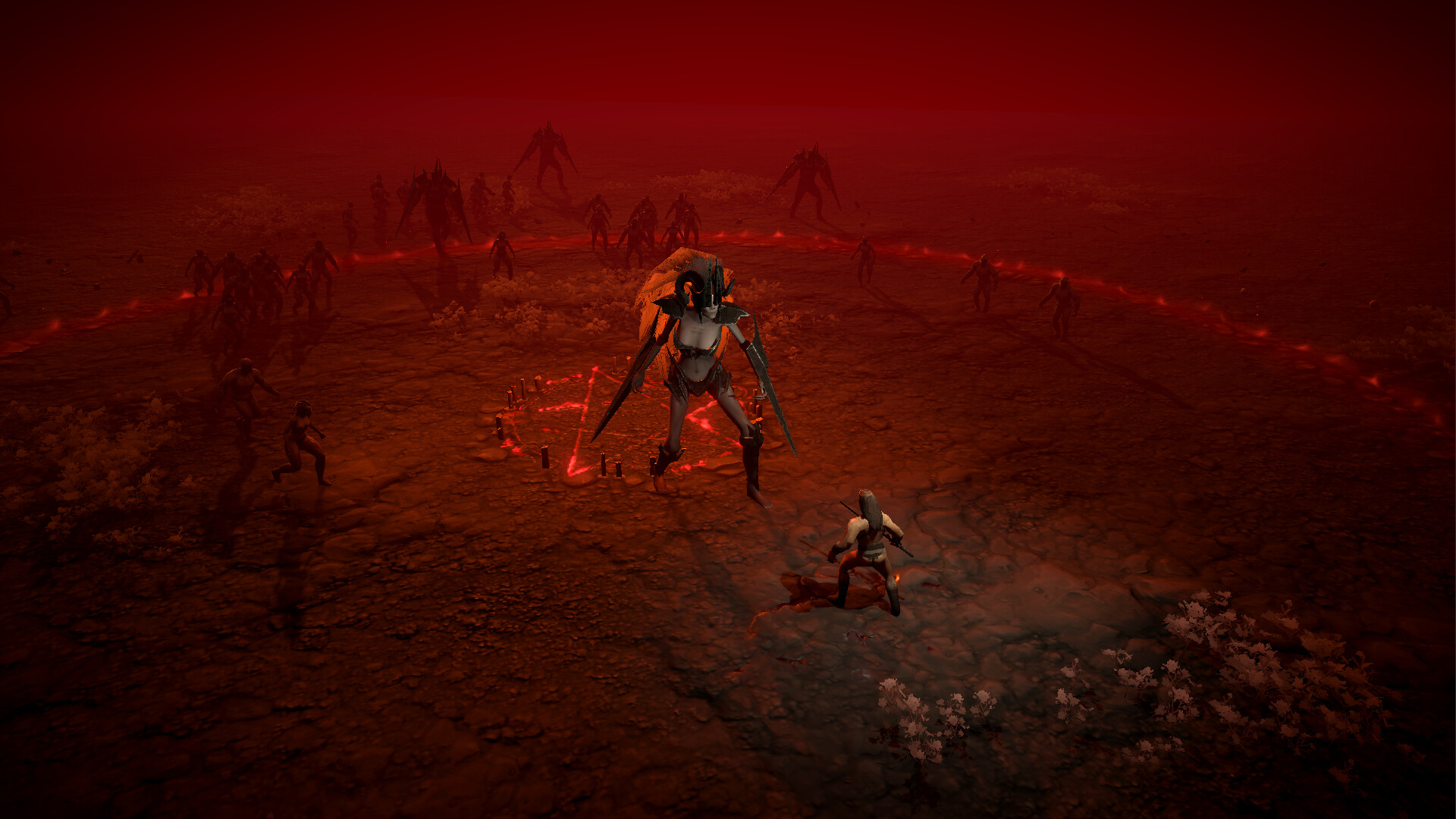
Conquest Dark has xcellent class variety, rewarding progression, satisfying build crafting, brutal visual feedback, and challenging boss encounters. This creates a gameplay loop that’s incredibly difficult to walk away from. If you’ve already exhausted the usual survivors-like library and want something that leans much harder into action RPG progression, Conquest Dark is well worth stepping into the ritual for.

Leave a comment