
History has inspired plenty of strategy games over the years, but, for the life of us, we can’t think of a lot of RPGs that throw us into the middle of a real conflict and let us shape its outcome ourselves. Set during Japan’s Sengoku period, Expeditions: Samurai lands us on Japanese shores and throws us in a civil war where politics and personal loyalties are equally dangerous as swords.
Being an Early Access release, there are still rough edges waiting to be polished, but after spending several hours with the opening chapters, it’s already clear that Campfire Cabal is evolving Logic Artists’ signature formula in exciting ways. The new stealth mechanics, stronger emphasis on player choice and satisfying tactical combat all combine into something that feels familiar to Expeditions veterans while still introducing enough fresh ideas to keep things interesting.
Review code provided by Dead Good Media PR

Choose Your Captain
Before setting sail, we choose our captain’s gender, make a few cosmetic adjustments and then decide both our difficulty level and starting class.
The classes couldn’t feel more different from one another. We initially settled on the Guardian and thoroughly enjoyed its sword-focused playstyle and survivability. Later we switched to the Marauder and found it just as enjoyable, thanks to its emphasis on perception and deadly rifle attacks from long range.
The Scoundrel and Tactician are noticeably trickier to master. Their mechanics demand more planning and positioning, making them better suited once you’ve learned the basics. Players looking for a greater challenge will probably appreciate what those classes bring to the table.
Each class generates its own unique resource during battle. Guardians build Superiority through clever positioning, Marauders gain Focus by dealing damage, while other classes reward teamwork or tactical planning. It gives every class its own rhythm instead of simply changing which weapon you’re carrying.
Every Conversation Matters
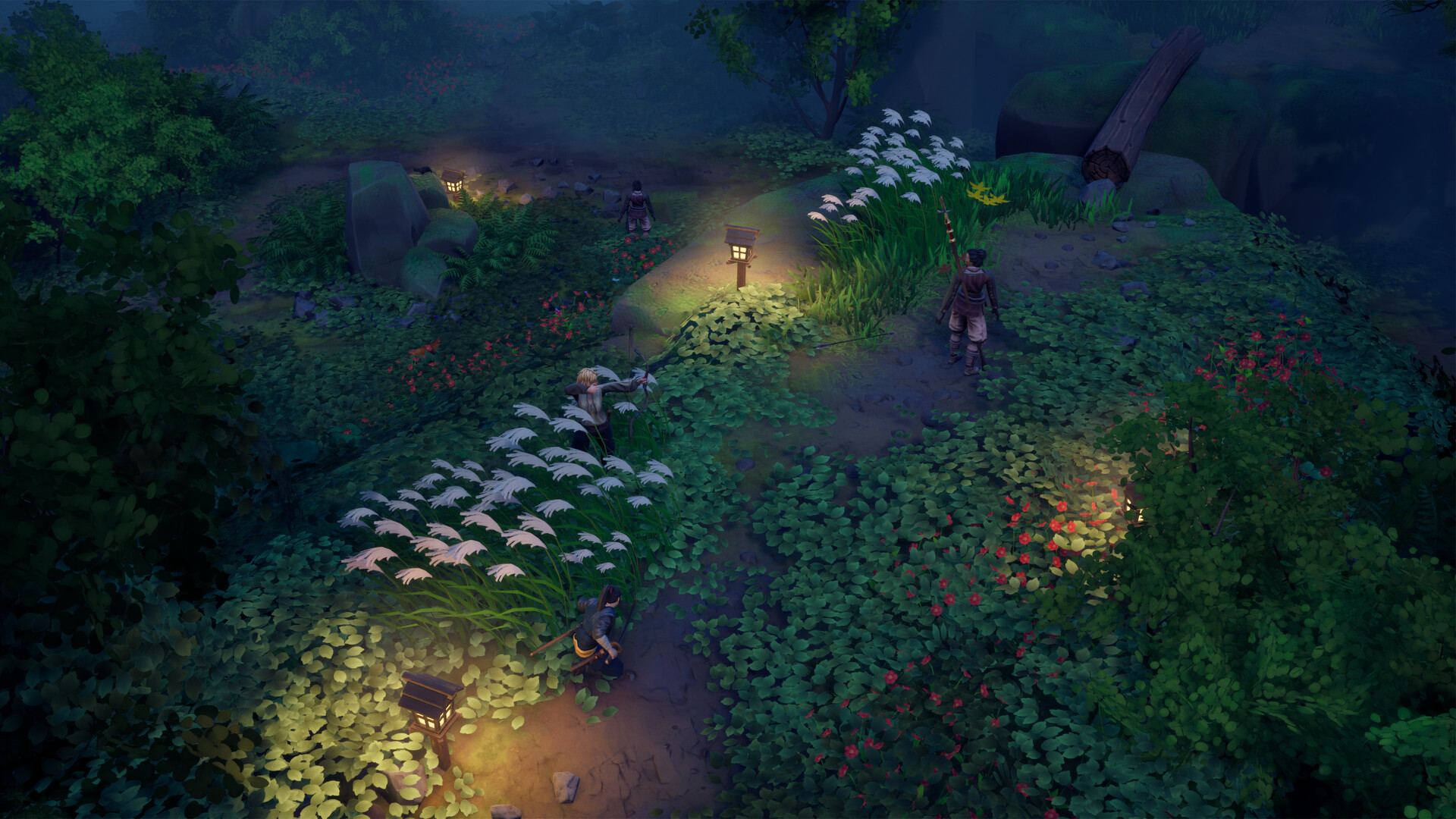
Expeditions: Samurai contains a surprising amount of dialogue, but unlike many RPGs, these conversations rarely feel like filler. We constantly found ourselves paying attention because almost every important discussion can lead somewhere unexpected.
Very early in the game we’re forced to decide who lives and who dies. The practical decision often isn’t the moral one, making these moments genuinely uncomfortable. Saving the person we disliked simply because it seemed like the smarter choice left us questioning ourselves afterwards, and that’s exactly what good role-playing should do.
Many dialogue options are also locked behind character skills such as Persuasion or Insight. If we aren’t convincing enough, certain solutions simply aren’t available. People remember what we say as well. Some grow closer to us, others become openly hostile, and in some cases innocent people end up paying the price for decisions we thought were justified.
What impressed us most was just how quickly we started seeing the consequences of our actions. Even within the first few hours the story had already begun branching in different directions, making another playthrough feel genuinely worthwhile.
Relationships extend beyond story progression too. Every companion has their own personality, opinions and history, and earning their trust gradually unlocks more of their personal stories. The game also hints at friendships, rivalries and even romance later on, giving us another reason to care about the crew beyond their combat abilities.
Combat That Rewards Good Positioning
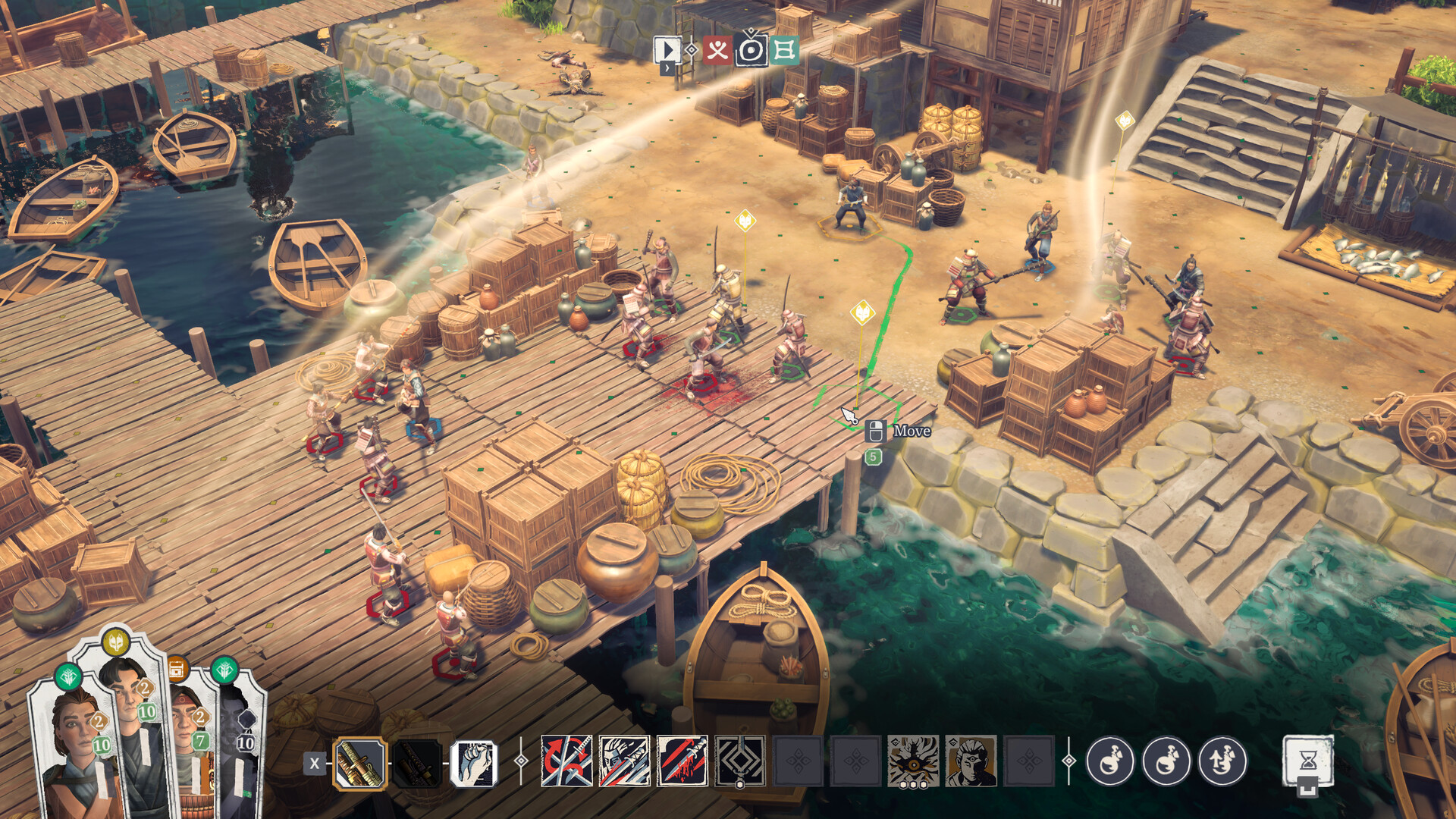
Whenever diplomacy fails, Expeditions: Samurai shifts into turn-based combat. Anyone familiar with tactical RPGs will immediately understand the basics. We spend movement points getting into position, use action points for attacks and abilities, then end our turn while the enemy responds. It doesn’t try anything new, but, then again, it doesn’t need to. The combat is consistently enjoyable because positioning matters almost every turn.
Morale plays an important role as well. Losing allies lowers the team’s morale, making careless mistakes much more costly than simply spending a healing item afterwards. It encourages us to protect every member of the party instead of treating them as expendable.
Equipment also carries meaningful weight. Armour provides protection against incoming attacks while different weapons unlock entirely different abilities. We especially liked the visual design of these skills. Every icon feels hand-crafted, almost like a miniature painting rather than a generic RPG ability icon.
Since firearms exist alongside swords and spears, line of sight becomes incredibly important. Standing in the open against enemy riflemen is rarely a good idea. Large objects completely block incoming shots while smaller cover offers partial protection, forcing us to constantly think about where we’re standing instead of simply rushing forward.
Stealth Is More Than An Afterthought
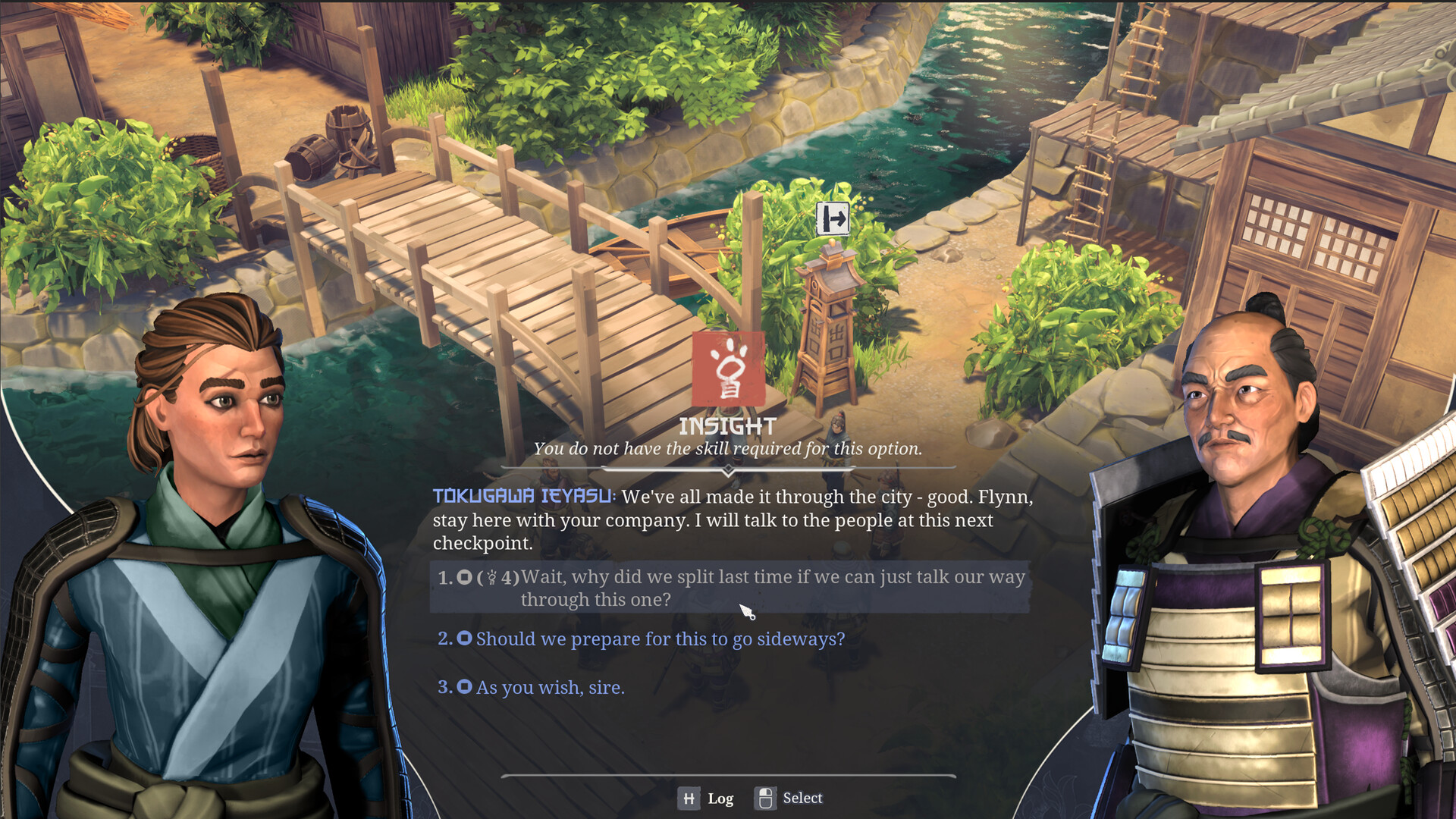
Rather than controlling the whole group as one unit, we can position every party member individually before combat begins. This allows us to create proper ambushes or quietly eliminate isolated guards before the fighting starts.
We quickly learned not to split the team too far apart. During one infiltration we wandered too far ahead with a single character, got spotted, and suddenly found ourselves fighting alone while the rest of the crew was too far away to help. It immediately made us rethink how we approached future missions.
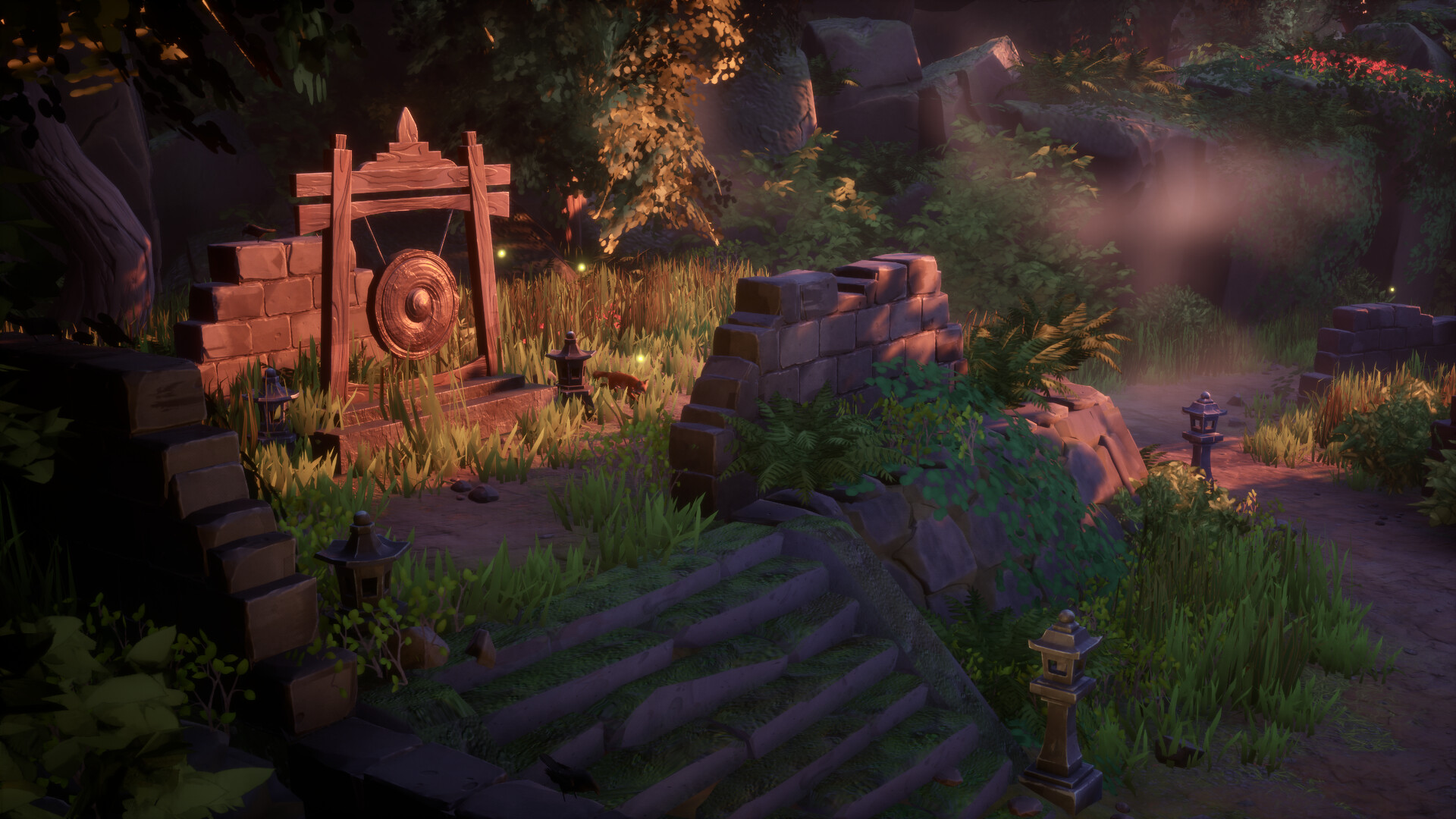
The stealth itself is straightforward, relying on sound and enemy vision cones, but it works well. Guards react intelligently whenever something seems suspicious and will actively investigate unusual activity instead of forgetting about it seconds later.
Silent takedowns never stopped being satisfying either. Sneaking through an entire area without raising the alarm became one of our favourite parts of the experience.
Skills continue to matter outside conversations. Locked doors require someone capable of opening them, while other obstacles demand brute strength or technical knowledge. If we lack the proper expertise, we can often force our way through, but doing so usually comes with consequences or simply creates unnecessary noise.
Building Your Character
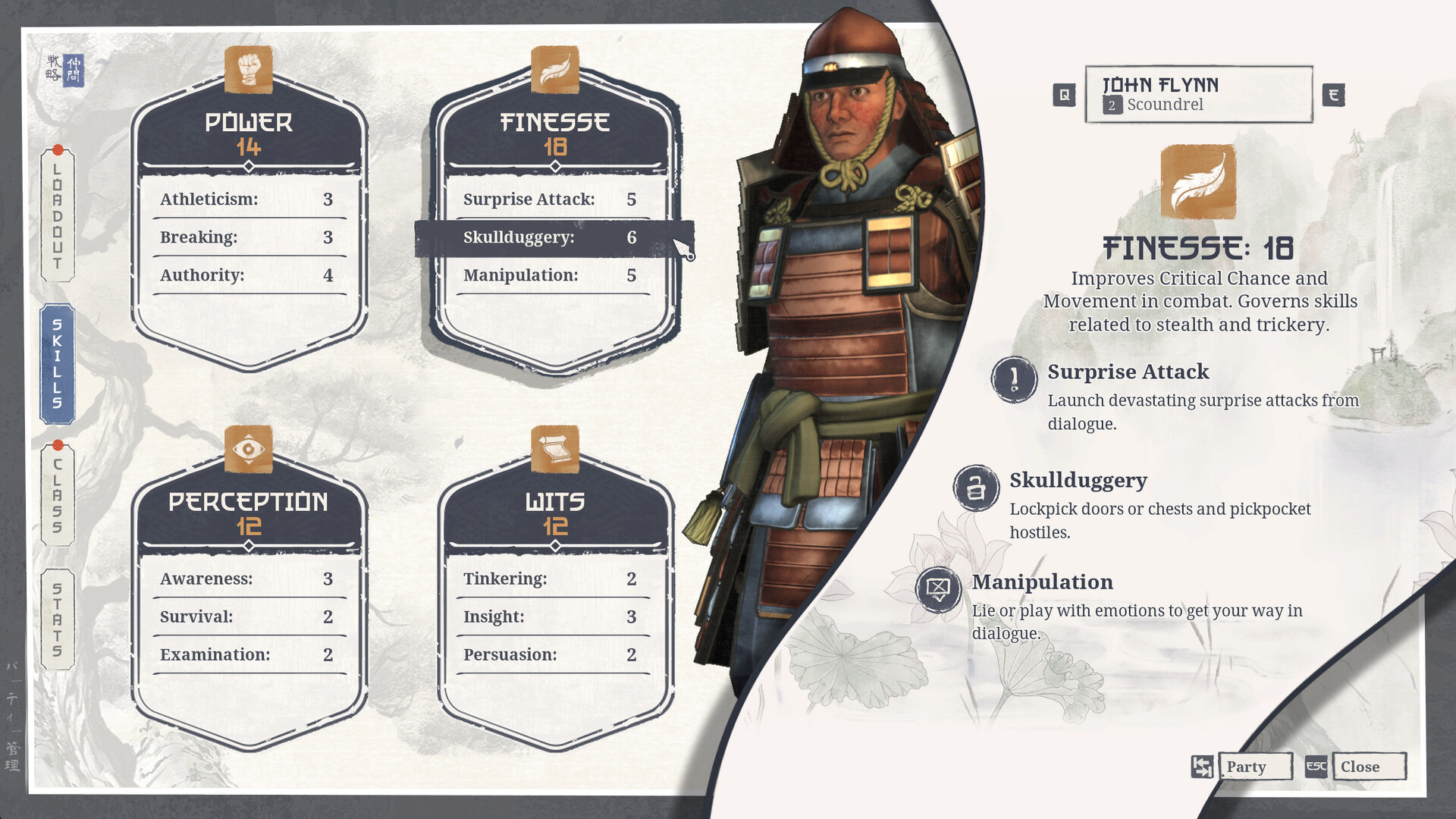
The four main attribute categories each contain several skills that influence both combat and role-playing. Some make us better negotiators while others improve physical strength, perception or technical expertise.
Almost every skill proved useful during our playthrough, which made spending points surprisingly difficult. We naturally leaned towards conversation-focused abilities since companions could often cover practical tasks like repairing equipment or breaking down obstacles, but other players may build their captain very differently.
Beyond skills, every class also unlocks new active abilities alongside passive perks that steadily improve overall effectiveness. It’s a progression system that seem founded on solid grounds for experimentation and it doesn’t overwhelm newcomers.
Presentation And Early Access Rough Edges
Controlling the game feels excellent. Although Expeditions: Samurai uses the traditional isometric perspective, we actually preferred playing with a controller over mouse and keyboard. Moving freely with the analogue stick while rotating the camera made exploration feel considerably more natural than endlessly clicking across the environment.
Animations are smooth, interactions feel responsive and the voice acting that is present does a great job selling the characters. Unfortunately, not every conversation is fully voiced.
The dialogue presentation is also one area that still needs work. Instead of animated character models during conversations, we mostly see static character portraits staring back at us. It feels oddly disconnected from the otherwise immersive presentation and occasionally pulls us out of the experience. Considering this is still Early Access, it’s exactly the sort of feature we hope receives additional polish before launch.
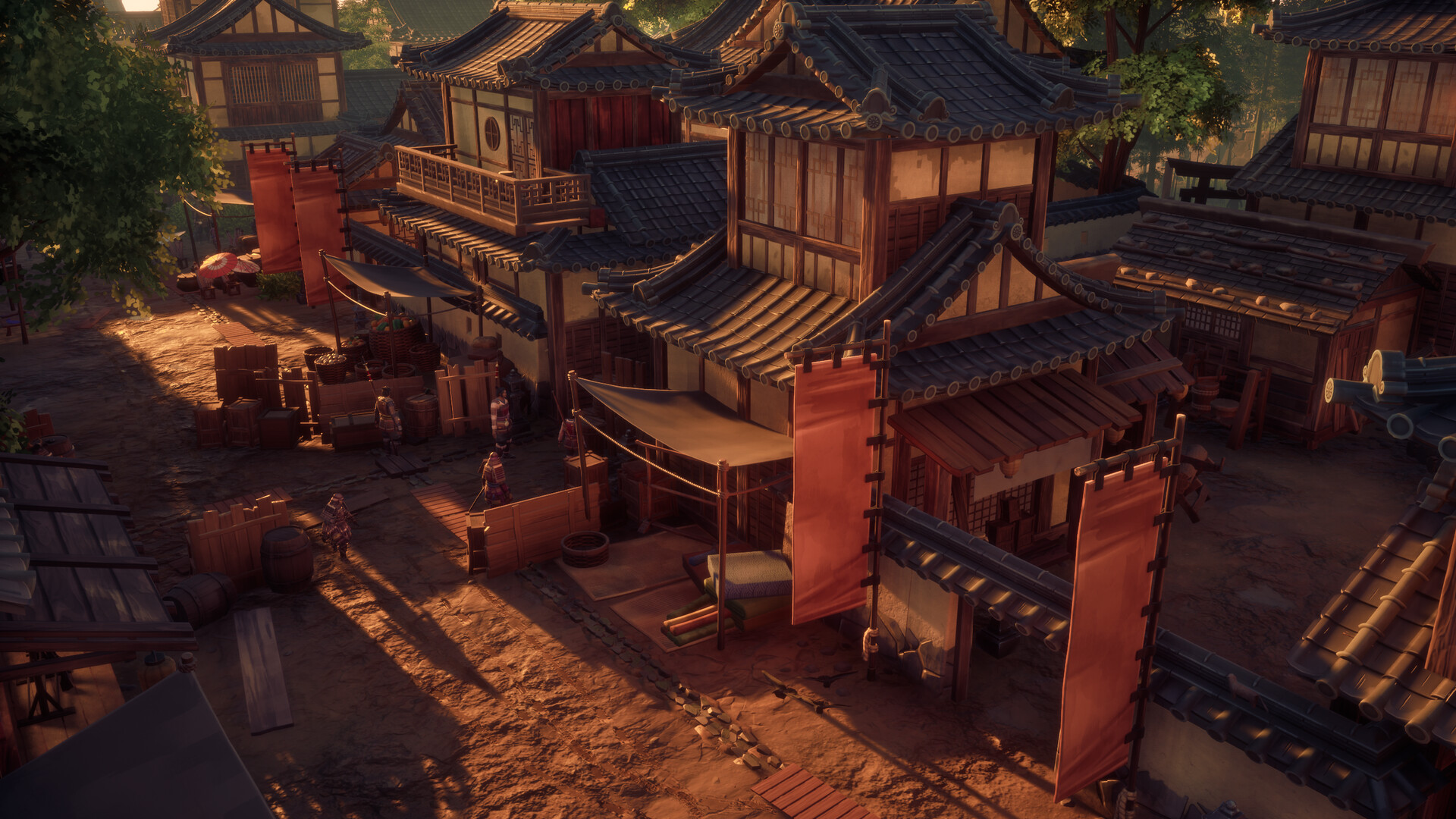
Outside of missions, the world map and travel system nicely reinforce the feeling that we’re moving through a country on the brink of war, while the historical backdrop gives every major decision additional weight without turning the game into a history lesson.
It’s also worth mentioning that Expeditions: Samurai introduces optional drop-in, drop-out co-op for the series. We focused on the single-player campaign, but the ability to coordinate stealth infiltrations and tactical battles with another player has the potential to make future playthroughs feel quite different.
A Promising Future
Even in its unfinished state, Expeditions: Samurai already shows tremendous potential. The tactical combat is consistently enjoyable, stealth fits naturally into the formula, character building offers meaningful choices, and the branching narrative constantly makes us question whether we made the right decision.
There are areas that clearly still need refinement, particularly the dialogue presentation and the inconsistent voice acting, but that’s exactly why the game is in Early Access. More importantly, the foundation already feels remarkably solid. We can’t wait to see how the developers continue building on what is already here. With delivering the promised content and polish, Expeditions: Samurai has every chance of becoming one of the strongest entries the series has seen.
Game: Expeditions: Samurai (Early Access)
Developer: Campfire Cabal
Publisher: THQ Nordic
Platform Reviewed: PC
Genre: Tactical RPG
Release Status: 7 Aug, 2026, Early Access

Leave a comment