
The Tally is a unique game that gives us roughly 90 minutes, bills to pay, strangers to meet, and a final accounting of how we behaved along the way. We spoke with solo developer Olivia Gonsher about turning everyday routines into meaningful decisions, the joys of a city full of familiar faces, and the rather serious problem of death failing to arrive on schedule.
A Whole Life in One Evening
There are plenty of games in which we can spend weeks building the perfect life. Gonsher wanted the opposite: something we could see through to its conclusion without putting it aside for another day.
I wanted a whole life to fit into one sitting. If a life takes a weekend, the ending turns into a save file you forget about. At about 90 minutes, you can live a full life on a weeknight, get THE RECEIPT, and immediately want to try again as a better (or much worse) person. That replay loop, basically speedrunning sainthood or damnation, ended up being the heart of the game.
For what made the cut, I kept asking one question: is this something a real person does on an ordinary day? So you try a coffee, find a job, pay rent, walk dogs, take photos and skate around Corvid City. I left out the big dramatic life events on purpose. The Tally is about the thousand small choices that feel like nothing in the moment, and those only stand out if the days themselves are ordinary. Death is scheduled for around day nine or ten, so everything has to happen before the crows start gathering.
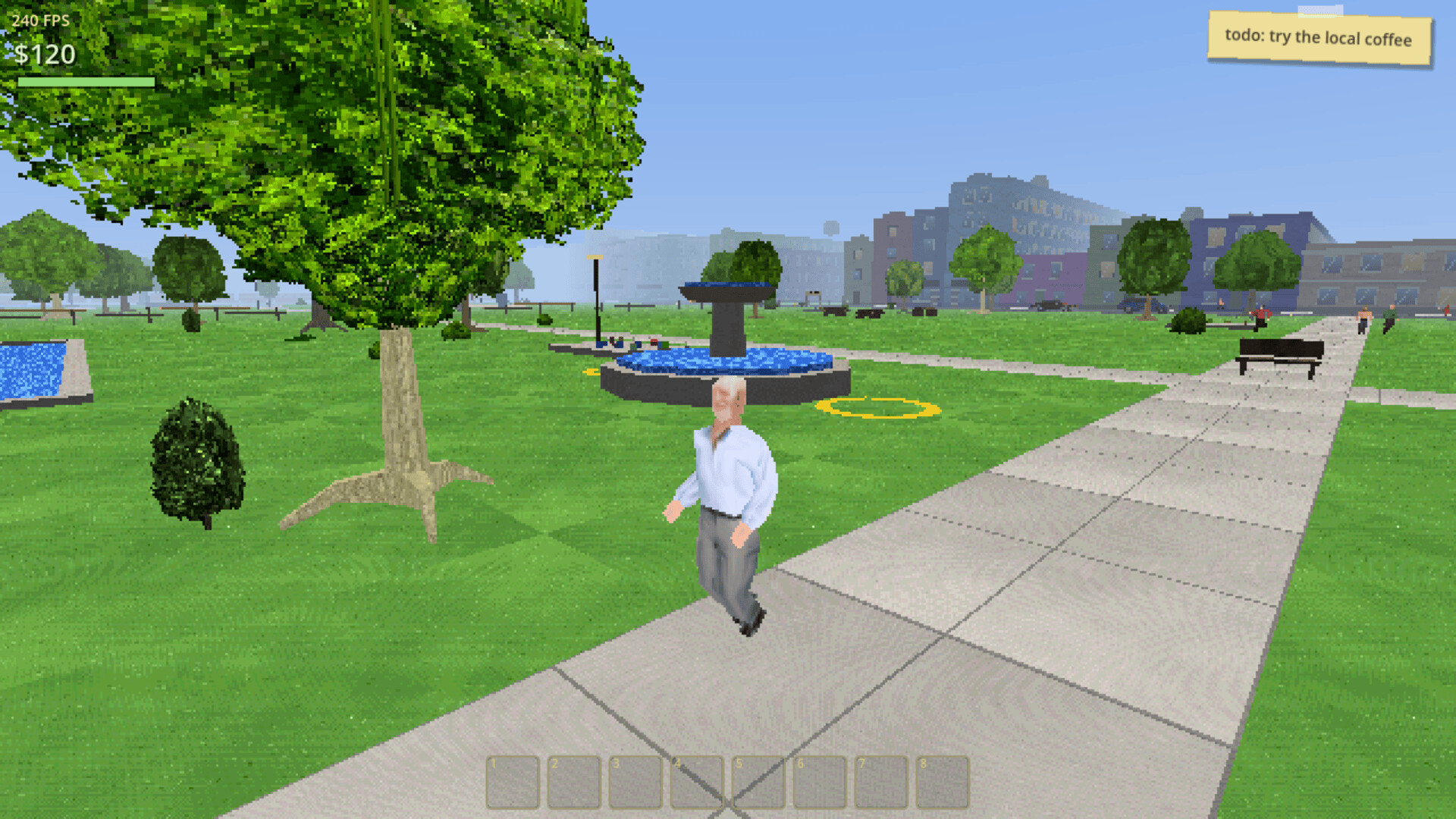
With such a limited amount of time, even earning a living has consequences beyond the money in our pocket. Corvid City has eight jobs to choose from, and their little complications sound considerably more entertaining than another ordinary shift.
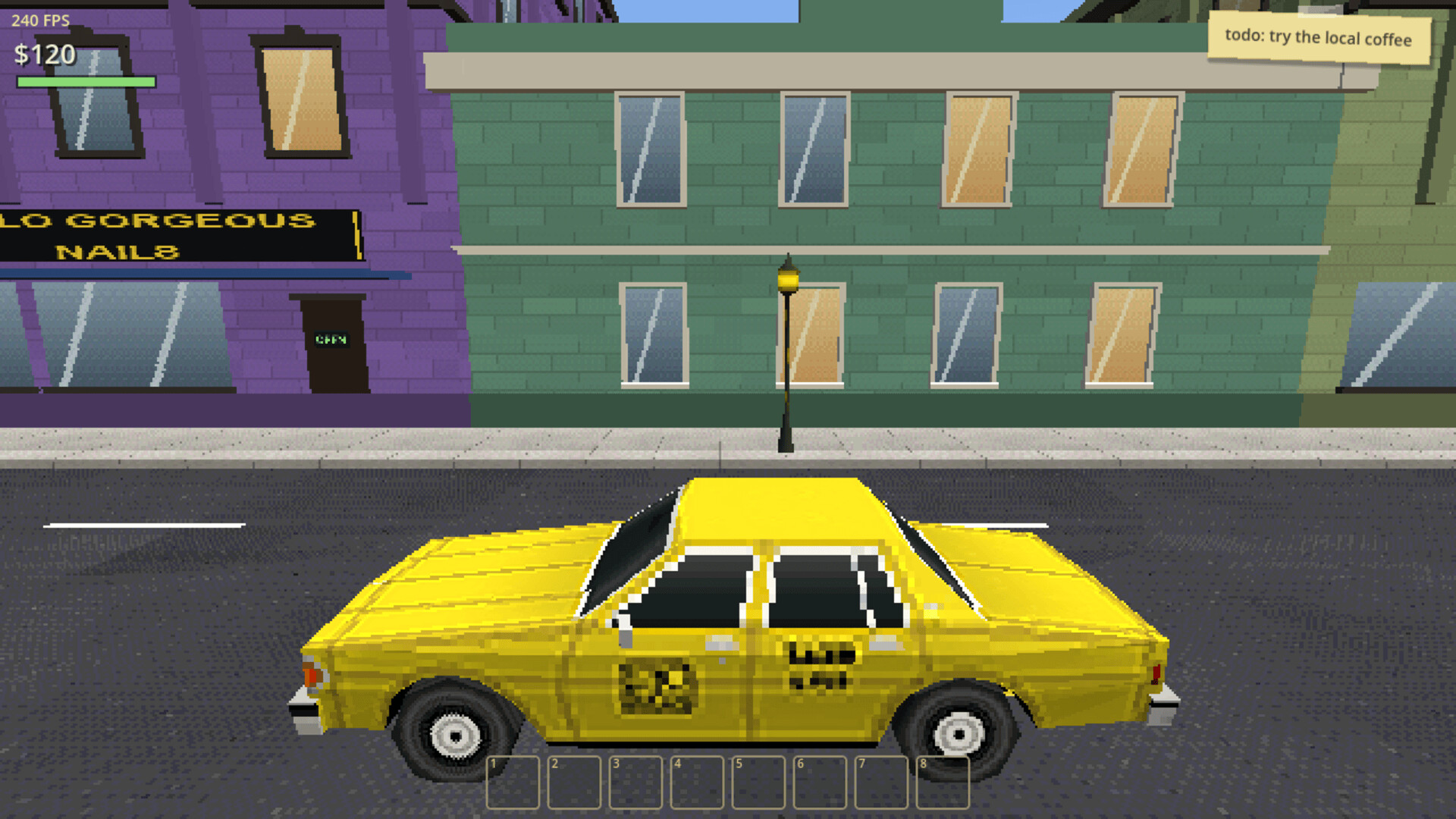
In a lot of ways, the gig economy is the game. Rideshare passengers have moods: the speed demon tips you for running yellows, and the nervous one screams quietly from the back seat and tips you for being gentle. Pizza runs have a hot bonus timer. Dog walking gets interrupted constantly because Biscuit has Found Something, and Biscuit is not moving. There’s even an office job where you fill out FORM 7-B.
Rent is the pressure that keeps you working, but I didn’t want work to be your whole life. Taking photos for the Tourism Board, skating around on a skateboard you maybe can’t afford, or stopping to pet a dog are all things you can choose instead of another shift. With such a short life, every hour at work is an hour you didn’t spend on something else, and players feel that tradeoff pretty quickly.
The People We Meet Along the Way
We might remember the jobs we take, but we’re just as interested in who we keep bumping into on the way to them.
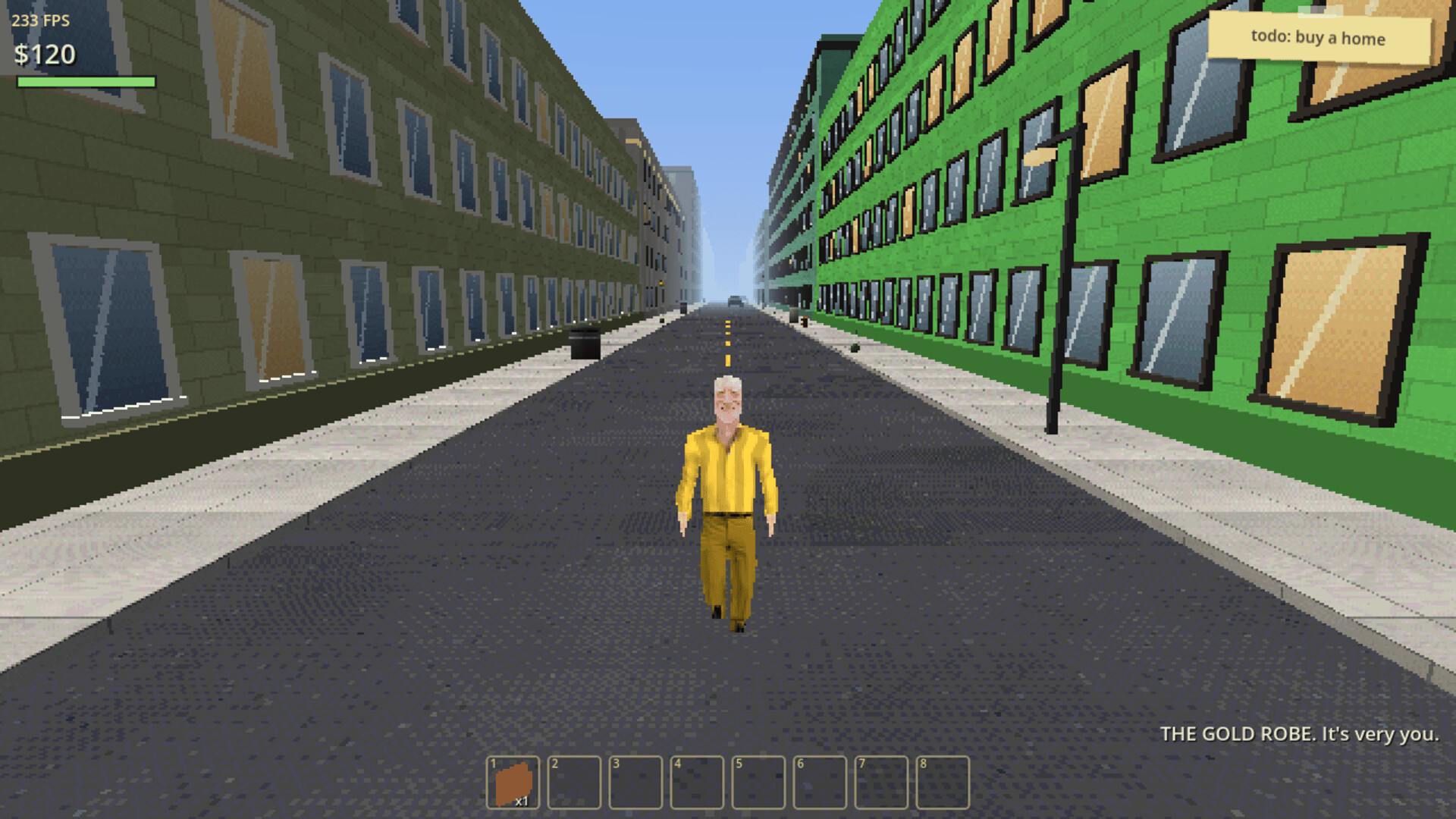
This was one of the harder parts, because a 90-minute life doesn’t leave room for long relationship arcs. My answer was to fill a small, hand-built city with regulars, so you keep running into the same people without trying. They remember you, so a small kindness or a rude moment early on can come back later.
I also kept interactions short. A regular doesn’t need a long questline to feel meaningful; they just need to react to who you’ve been. Since everyone spends their life differently, the people who matter in your run are the ones your routine happens to overlap with, and I like that every life ends up with a slightly different cast.
Of course, those familiar faces have something unusual in common. Quite unusual, in fact.
Also, every single person in the city, including you, is Hide the Pain Harold. No explanation is offered, and none is coming.

The Bill Comes Due
And then comes the matter of how we behaved. Gonsher didn’t want the game to offer a running verdict as we went along.
The rule I gave myself was that the game never tells you what it thinks. There’s no meter, no popup and no narrator wagging a finger. The game never once says it noticed what you did. It noticed.
Instead of grading people on abstract “good” or “evil,” the receipt itemizes specific things: held doors, kindnesses, shortcuts, lies, each with a number next to it. I think that’s what keeps it feeling fair instead of preachy. You can read exactly why you ended up where you did, and almost every line is something you remember choosing.
And Corvid City gives us opportunities to earn money in ways that might deserve a little more scrutiny than an ordinary shift. It is entirely up to us whether the extra cash seems worth it.
The best example is the two gigs that pay about triple and feel a little too easy: stealing packages off porches, and cold-calling old people for a charity called TOTALLY REAL CHARITY. Nothing stops you from taking them, and nothing says anything. Then the receipt prints.
The promise of a fixed ending sounds straightforward until the code decides otherwise. Gonsher had one particularly appropriate bug to deal with.
The immortality bug is still my favorite. In a game about how short life is, players found that if they slept past their scheduled death, it just never came. I fixed it in an update I called “1.0.2: death is punctual again.”

Making the Game, and Owning the Decisions
Making a small city with this many jobs, residents and consequences is a lot for one person to take on. We asked Gonsher about a part of the workflow she has chosen to discuss publicly rather than leave readers guessing.
I’ve tried to be really upfront about it. The Tally is a solo project, and I worked closely with an AI assistant on the code and the written content, always under my direction and review. All the 3D models and music are by credited human artists, the textures come from procedural scripts rather than image-generation models, and nothing is generated by AI while you play.
A little help with production doesn’t account for the peculiar personality of Corvid City, though.
The biggest lesson is that the vision has to come from you, because the tools will happily build whatever you describe. A PS2-style city loosely based on Kansas City, a pun on every shop, the receipt, the crows, the no-meter rule: those decisions are what make it The Tally, and nothing was going to make them for me.
She also has a useful warning for other solo developers considering a similar approach.
My advice to other solo devs: be specific about what you want, review everything as if you’ll have to defend it, and work with real artists and musicians on the parts that need a human touch. And disclose clearly what you used it for. Some curators won’t cover games with AI-generated art, voice or music, so being precise saves everyone time.
The Tally is currently scheduled for a November 2026 Steam release, with a free demo available now. We suspect the final receipt will be much more revealing than we’d like, although we’d argue that stopping to pet a dog ought to count for quite a lot.


Leave a Reply