
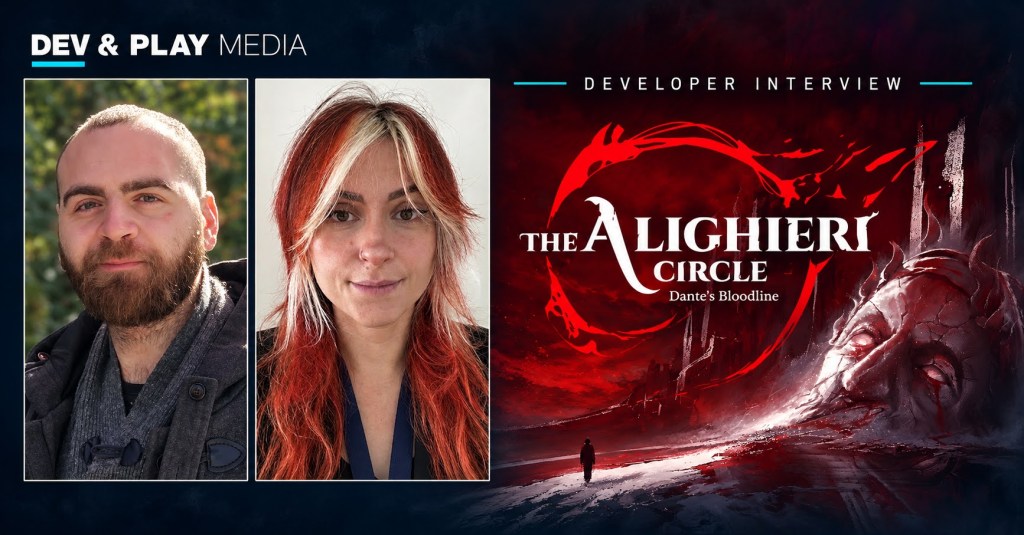
Gabriele Alighieri would rather have nothing to do with the nightmare waiting for him. Unfortunately, The Alighieri Circle: Dante’s Bloodline puts us in his shoes and insists on seeing things through his eyes. For ONE-O-ONE GAMES, the studio behind The Suicide of Rachel Foster, that reluctance is an important part of the horror. We spoke with creative director and writer Emanuele Miccianza, art director Federico Belingheri, and game director Gaia Richelli about making a world that feels hostile without anyone chasing us, and why Dante’s Hell became such a personal place.

This interview would not have been possible without the wonderful people at JF Games. Many thanks João Costa!
A Protagonist Who Wants Out
Games usually put the player and the protagonist on the same side. Miccianza was more interested in what happens when the two want very different things.
Absolutely: Gabriele wants to run away and opt out of the game altogether, whereas the player, on the contrary, picks up the controller precisely to play. Yet there is one thing that aligns them, a point where their desires converge: they both want to know what is going on. Interest is kept alive by a narrative that unravels slowly, step by step, hinting that answers are always just around the corner while simultaneously revealing that the more you uncover, the deeper the mysteries become.
This apparent dissonance between player and character is actually the very core of the game. We had a lot of fun deconstructing the concept of player agency. In videogames, it is standard practice to make the player feel like a hero, giving them the power to change the world and shape their own destiny. Gabriele is none of that: he is a man at the mercy of forces far greater than himself.
His terror stems precisely from being at the mercy of fate, having no control, and being unable to make choices about his own life. We want the player to feel the exact same way: trapped, suspended between dream and reality, experiencing firsthand what it means to be a cog in a much larger machine whose purpose is beyond comprehension. The player starts out completely at odds with Gabriele, but by the end, they will come to feel just like him. I don’t expect anyone to reach the end credits with a smile or feeling reassured by a conventionally rewarding experience. Instead, you are left staring at the screen with a sense of constriction and alienation, the game lingering in your thoughts for days afterward.

The team didn’t try to resolve that conflict by giving Gabriele a conventional enemy to defeat. Their approach to fear took a different turn early in development.
Fear Without a Pursuer
Miccianza describes a change in direction that began with the sort of horror game The Alighieri Circle was never going to be.
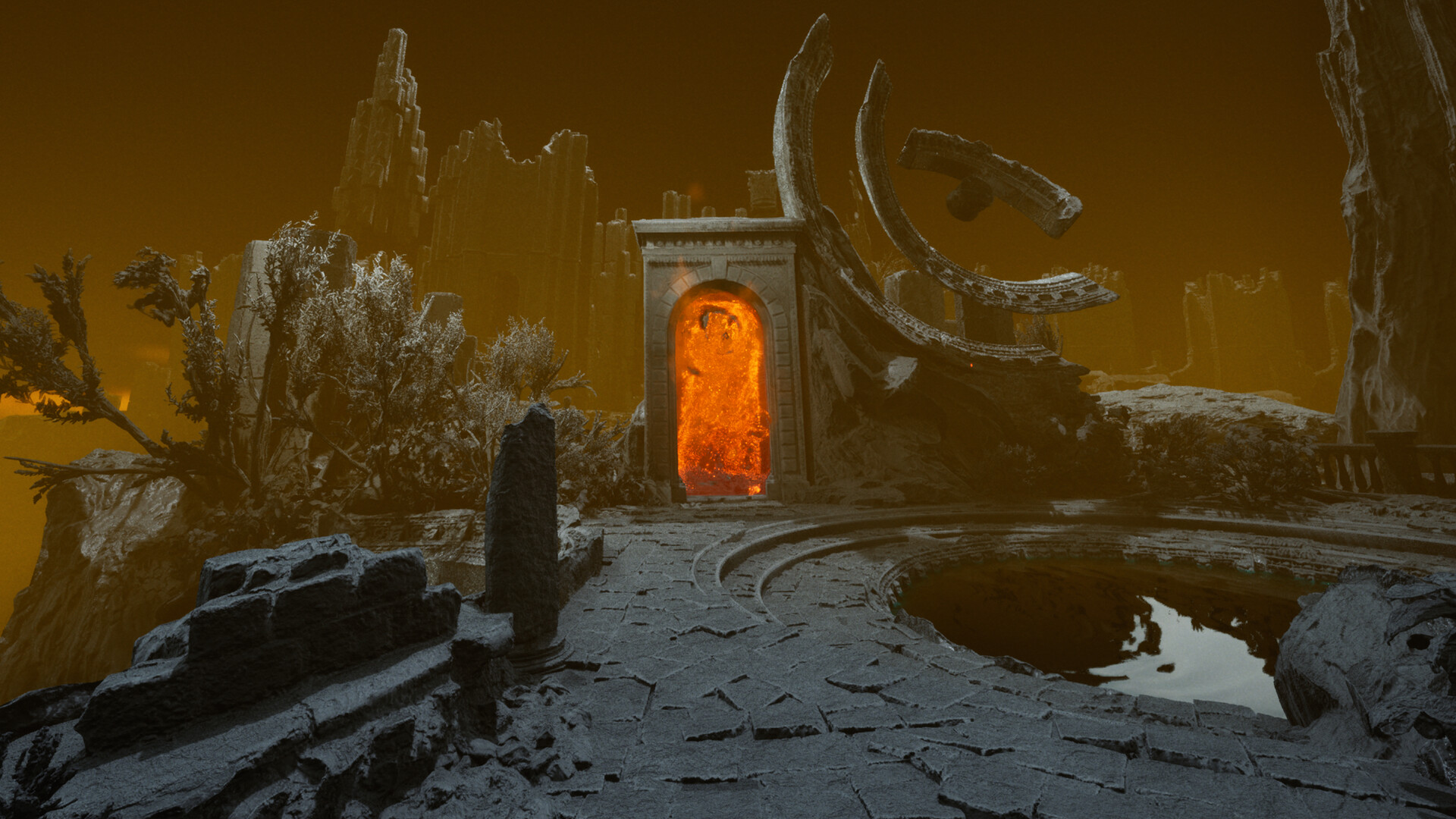
The game called for a completely different approach compared to The Suicide of Rachel Foster, in every single respect. Leaning into such an abstract, dreamlike setting opens up countless possibilities for instilling anxiety in the player in different ways and often with no filter whatsoever. It allowed us to experiment with sounds and colors you would never find in the real world, specifically crafted to evoke precise emotions. The entire game world is shaped down to the smallest detail to make you feel oppressed and lost.
Early on, we went down the idea of adding monsters that would chase the player, but we quickly realized that doing so would betray the core vision of the work. The fear we wanted to evoke isn’t the terror of dying, but the fear of exploring oneself. So, we took that sharp spike of panic you feel during a chase sequence and diluted it across the entire experience through sound design and environmental work, making every single step alienating in its own way. Throughout the journey, the player will have the constant, nagging sense that “something is off” around them, without ever being able to quite put their finger on what it is.
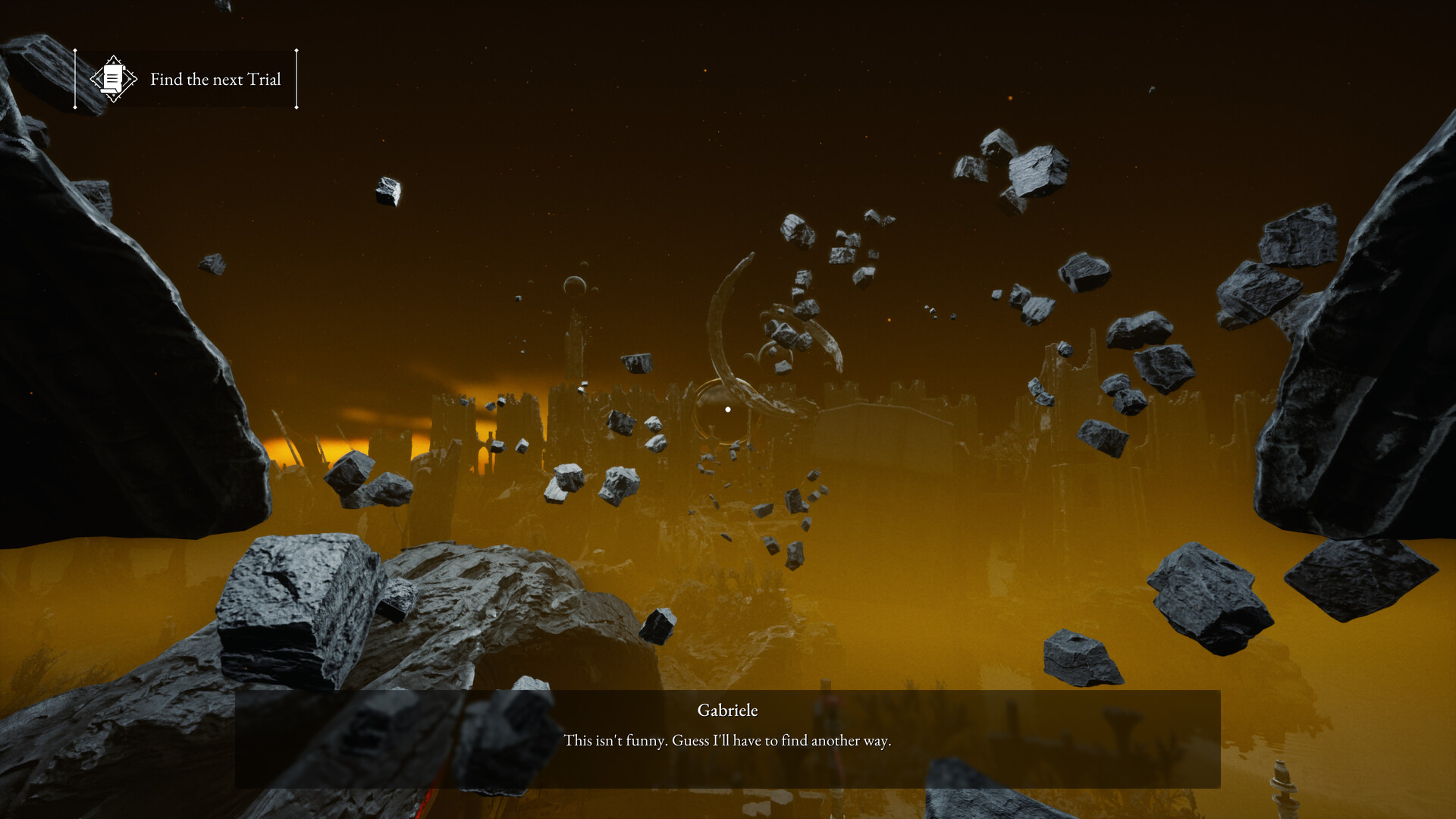
That decision also shaped the look of the infernal world. Art director Federico Belingheri and the team tried out images that would have been easy to recognise as Hell, before moving away from them.
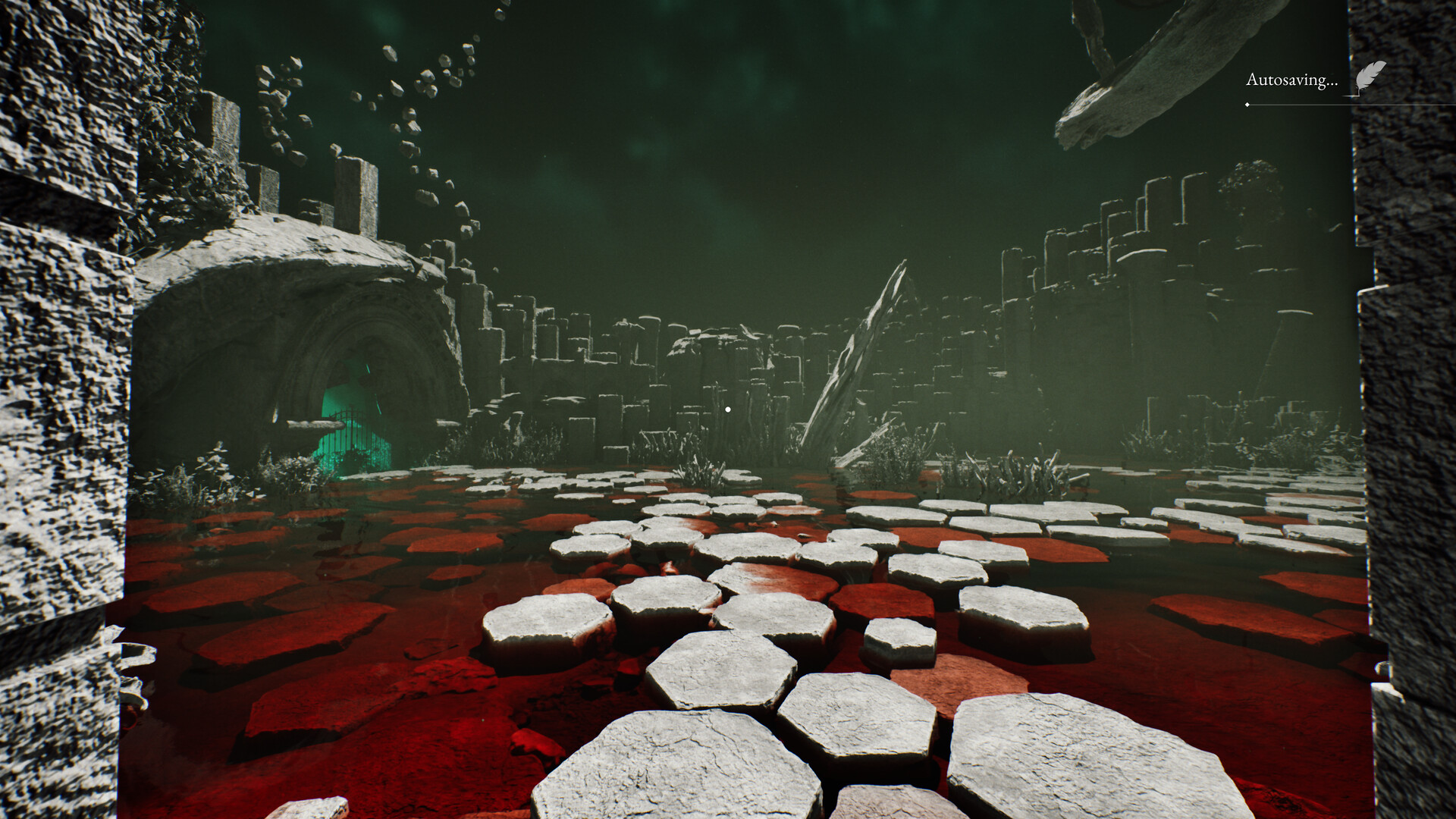
We initially explored more conventional horror concepts, including bone-covered landscapes, blood-red vegetation, grotesque organic structures, and environments dominated by explicit violence. We discarded these directions because they relied too heavily on traditional horror tropes, portraying Hell as a place of physical suffering rather than reflecting Gabriele’s specific trauma.
Instead, we developed a more psychological approach. In The Alighieri Circle, Hell is a dreamlike, non-linear dimension shaped by memories and perception. We used distorted natural forms, fractured landscapes, and unsettling contrasts to transform familiar environments into something unfamiliar and oppressive.
The goal was to create a world that communicates psychological unease through its visual language, rather than relying on obvious horror imagery.
A Villa, a Dive, and One Way Forward
The contrast also shows up in how we move through the two games. We asked Richelli about guiding the player without turning the screen into a trail of waypoints.
Our approach with The Suicide of Rachel Foster was very different, even though both characters ultimately find themselves trapped in their own personal hells.
In our previous game, the hotel was quite labyrinthine. You relied heavily on a map to navigate a network of corridors, and the progression was tied to backtracking and unlocking specific rooms over time.
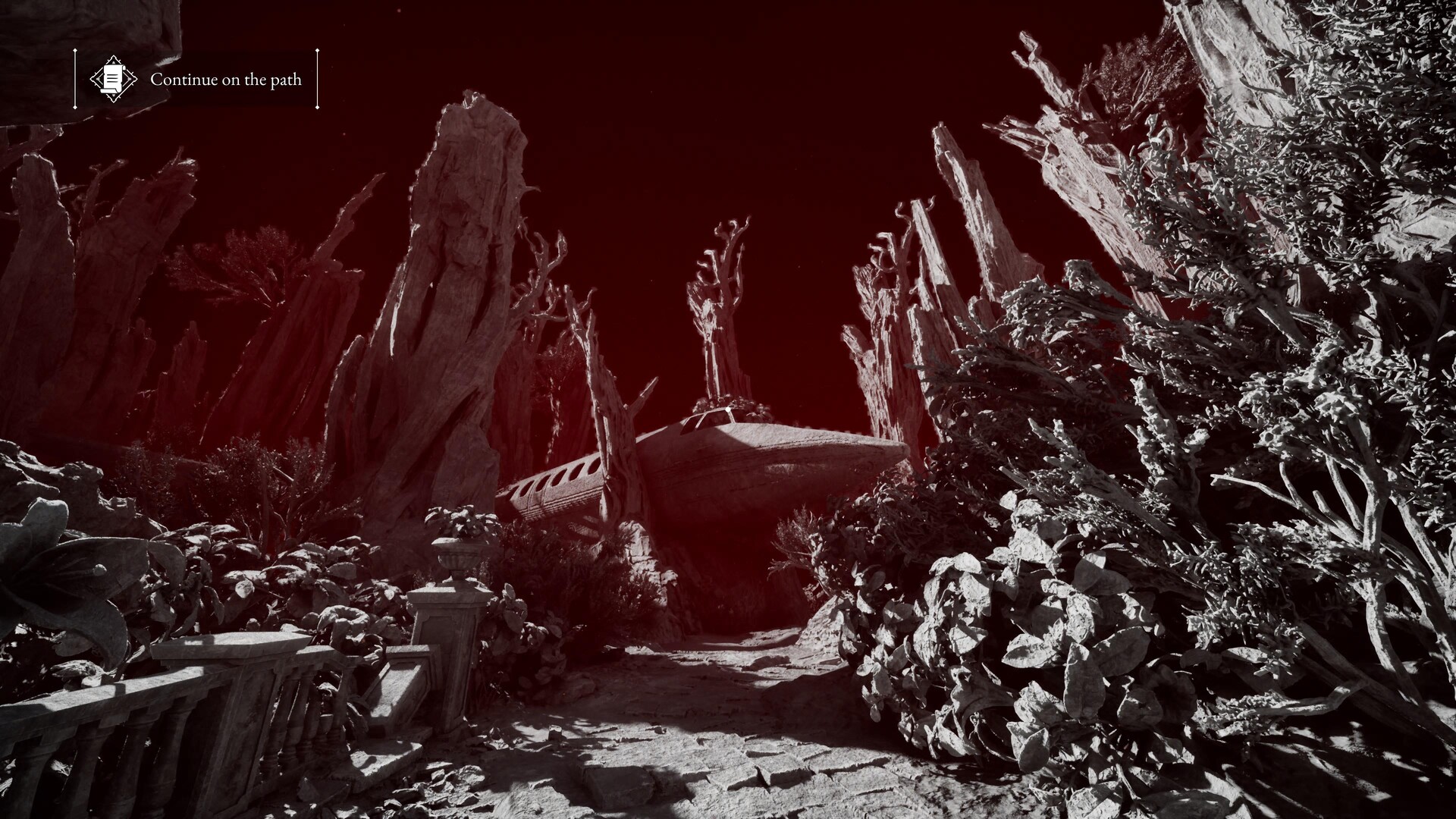
For The Alighieri Circle, we split the architectural experience into two distinct layers. In the real world of the Villa, we still use a map and minimal UI elements to help you understand your location and keep you grounded in reality. However, when you enter the Dive the design philosophy changes.
The Dive is deliberately linear. We removed the maze of corridors so we wouldn’t need to rely on intrusive waypoints. Instead of getting physically lost, we want the player to be entirely focused on the riddles in front of them. There are very few branching paths. Even when an environment opens up into a wider area, the architecture naturally funnels you back to the same inevitable path. You cannot get lost in the Dive because there is only one way forward, and that is deeper into the nightmare.

For Richelli, the physical work of solving a puzzle should tell us something about the person we’re controlling. That was one of the trickier aspects of adapting Dante.
Translating poetry into gameplay is never easy, but the most difficult philosophical concept to adapt was the concept of subjectivity, the idea that Hell is profoundly personal.
Dante’s original journey through Hell was personal. His trials and the demons he faced were entirely contextual to his own life. We embraced that core theme, the journey through one’s personal hell, but interpreted it through a surreal, dreamlike lens. Instead of a literal translation of Dante’s circles, the environment dynamically adapts to reflect the deepest fears of our protagonist, Gabriele.
While the player actively engages with physical 3D puzzles by shifting architecture and manipulating mechanisms, these trials are just the surface layer. The true puzzle is the emotional hurdle beneath them. We designed the puzzles so that the physical friction of solving a room represents Gabriele’s own psychological resistance. Finding the sweet spot where manipulating a 3D object feels like unlocking something inside Gabriele was our greatest challenge.
The Room Is the Threat
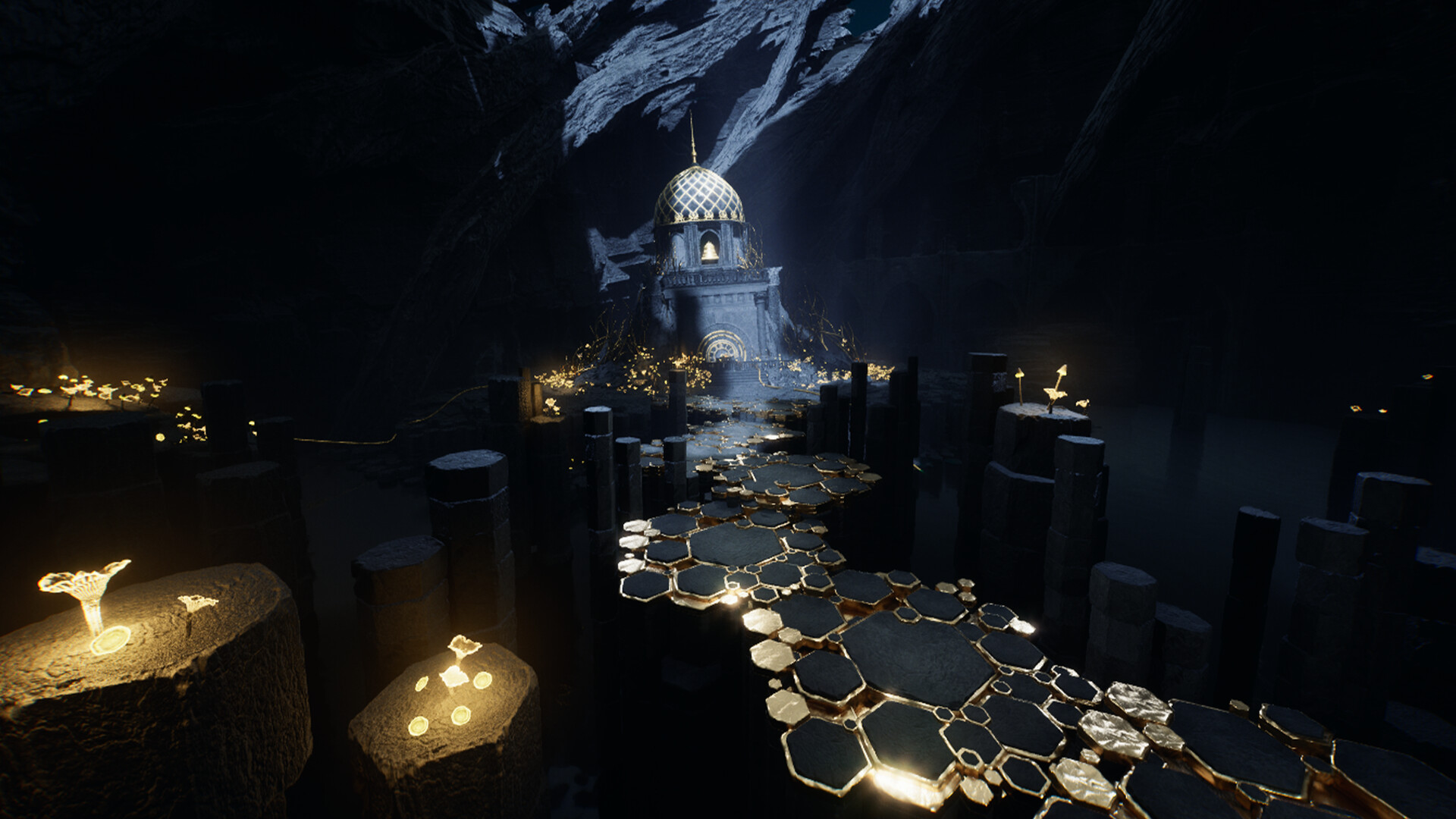
A puzzle can be satisfying to solve, but Richelli also wanted the time spent wrestling with it to feel uncomfortable. The room itself had to do some of the work that an enemy normally would.
We avoided traditional survival mechanics. There are no chase sequences, and no one is physically hunting you. Instead, the game induces panic through a sense of confinement and powerlessness.
The urgency comes from feeling trapped inside. We designed the puzzles to act as psychological cages, anchoring the player in a confined space while establishing that there is something happening on the outside, a place the main character desperately needs to reach but cannot.
Furthermore, the dread stems from a loss of agency. You are forced to solve puzzles in a world that actively reflects Gabriele’s deepest fears, yet you have zero control over the environment. The panic is psychological: it’s the claustrophobic realization that you are stuck in a space that knows your weaknesses, and every moment you spend struggling with a mechanism only prolongs your isolation from the outside.

One of the later puzzles, involving four doors and celestial symbols, has prompted questions about just how much experimentation the game expects. Richelli offers a useful glimpse of the thinking behind that room, including a small hint for anyone still wrestling with it.
To quote the vision of our Game Designer, Matteo Orecchio: Rather than abstract, we’d describe it as a bit of a smoke-and-mirrors situation.
The core idea is to get players to experiment, test their sense of direction, and gradually build a mental map of the place. Players may have encountered a similar predicament in the past, whether wandering through the caves of The Legend of Kyrandia or exploring the forests of Baldur’s Gate.
That feeling of being lost, trying to make sense of your surroundings, and wondering whether you’ve missed something obvious is very much part of the experience. The candles on the table are there to help. Sometimes, the best tool for solving a puzzle is simply a way to keep your thoughts organized.
Finding a Different Way Through Dante
There’s a broader lesson in the team’s choices, especially for developers approaching a famous work that audiences already think they know. Miccianza has some advice about where to begin.
The biggest lesson is that adapting a work doesn’t necessarily mean reproducing its most recognizable elements. There is no “right” way to adapt something like the Divine Comedy; someone will always say the result is too close to the original, while someone else will claim it strays too far. What I suggest is simply reading the source material to see what chords it strikes within you, developing your core idea from those chords, and gradually building bridges to everything else.
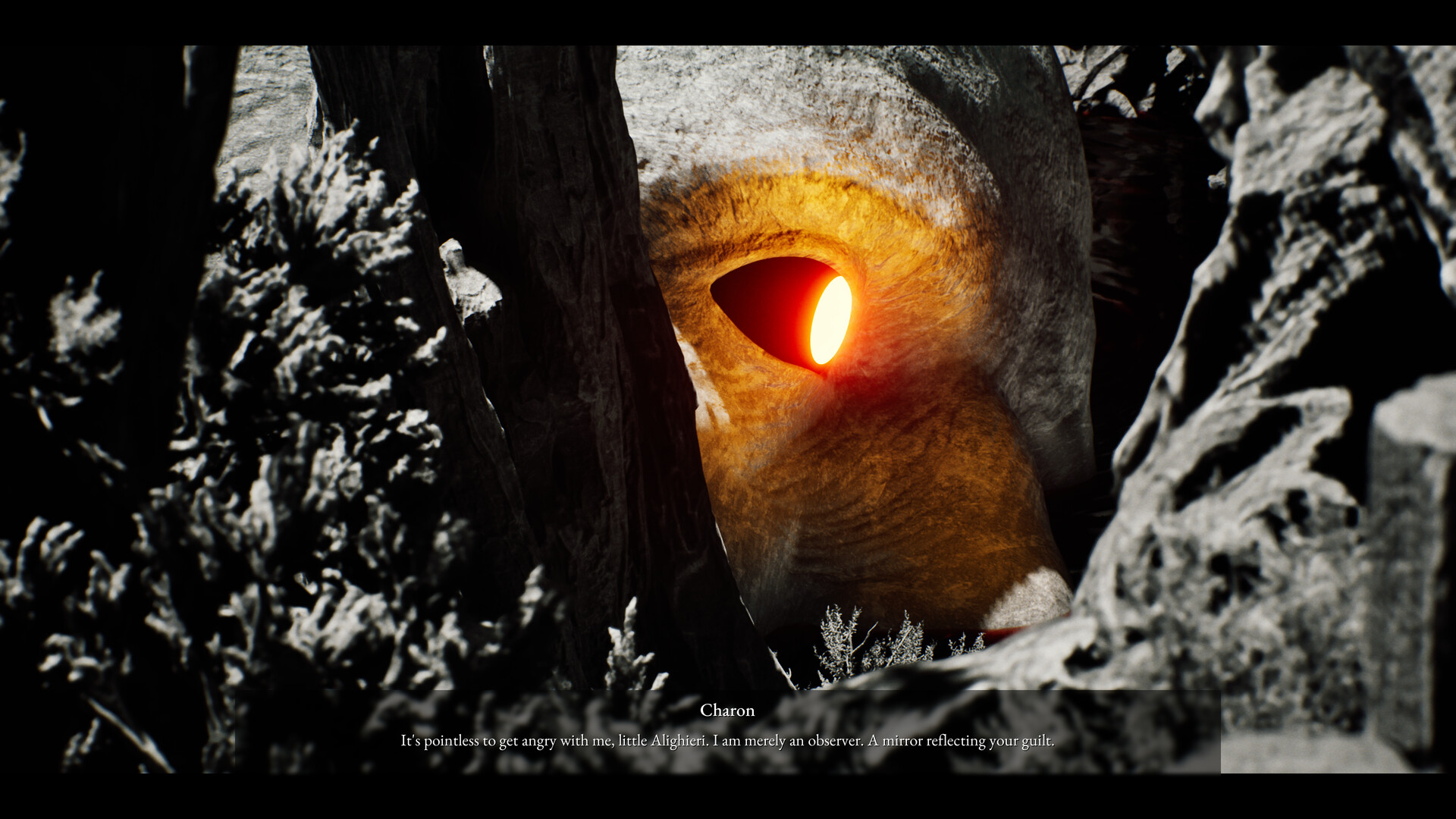
Dante’s Inferno is often treated as a precise geographical place, but we realized fairly early on that imitating or reusing the locations and characters of the Divine Comedy wouldn’t be the right path, because that story had already been told. What immediately stood out to us instead was the underlying structure of the narrative: losing your way, reaching the gates of another plane of reality, and walking through Hell in solitude, accompanied only by a guide who knows more than they let on, while descending deeper and deeper into the human soul.
At its core, the work is an account of a transformative, deeply personal journey undertaken by an individual, and we asked ourselves: why not try to do something similar? Suddenly, Hell was no longer just a physical place to be mapped out. Hell is internal.
Once we had unlocked that idea, the game design followed naturally. If Hell is the protagonist’s mind, then puzzles should become points of friction with his psyche. And if the protagonist is confronted with something incomprehensible, something far beyond his ability to understand or control, then the player should share that experience, finding their way through the dark as they struggle to solve the puzzles.When adapting a classic work into an interactive experience, I think it’s worth looking beyond its visual imagery and asking what makes the original story work in the first place. The principles we uncover through that process provide a far richer foundation for a game than a one-to-one recreation of the source material.
ONE-O-ONE GAMES didn’t feel obliged to populate its Hell with monsters just because the setting seems to invite them. The idea of a nightmare that knows Gabriele better than he knows himself is unsettling enough. We should know—we played it and awarded it 8/10! You can read our full review here.


Leave a Reply