
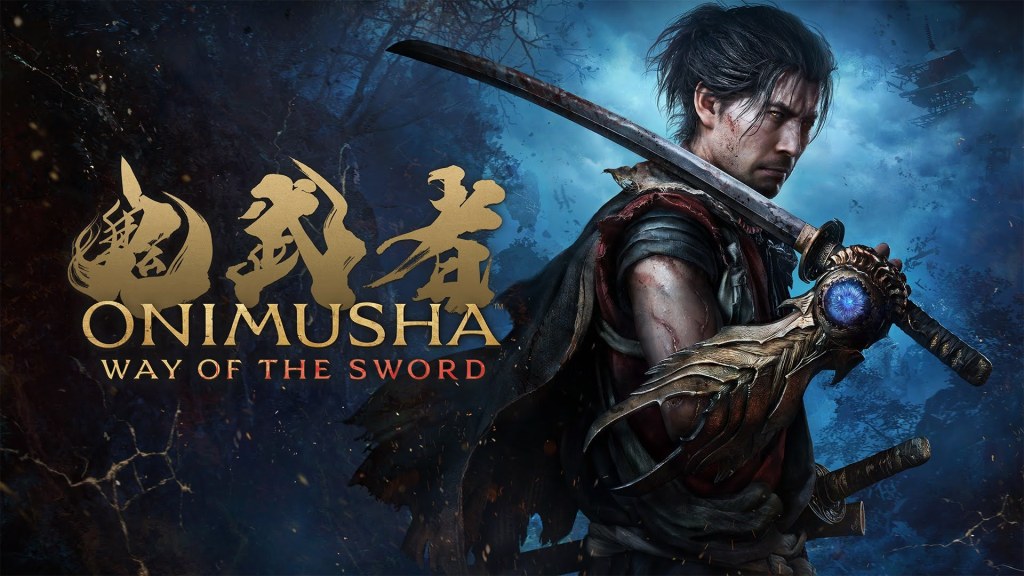
Onimusha is a well-known series, and if you were a PS2 gamer back in the day, you were blessed with not one, but five main games and two spin-offs. Those games were praised for their unique setting and insane amount of action, but what we loved most was that Capcom wasn’t afraid to experiment. The developers didn’t seem interested in making the same game over and over again. They kept trying new things and finding ways to make the next game feel bigger than the one before it.
As huge fans of the series, we were thrilled to finally try Onimusha: Way of the Sword. Twenty years is a long time to wait for anything, especially a game series you have such fond memories of. That’s also more than enough time to build up some unrealistic expectations.
Onimusha: Way of the Sword is an excellent return for the series, and one that feels far more confident than we expected after such a long absence. The combat is fantastic, Musashi is a joy to spend time with, and Kyoto is a wonderful place to get lost in.
Join us after the trailer to find out why!

Review code for this title was kindly provided by CD Media.
The Mentality
At first, Way of the Sword can look like a game where we simply run into a group of enemies and start swinging until everything stops moving. And, to be fair, we can do that during the early hours. It doesn’t last, though. The challenge gradually increases, and before long, you’re forced to start paying attention to what enemies. Mindlessly throwing attacks at them won’t cut it.
Enemies have a red health bar and a yellow stamina bar. By attacking them or blocking their attacks, we can wear down that yellow bar and exhaust them. Once that happens, we can perform a Break Issen, one of the game’s incredibly satisfying finishing attacks. The camera sometimes moves right into the action, giving us a much closer look at Musashi cutting down his opponent. Some of these executions are downright nasty, and watching one after we’ve spent the last few seconds trying to break an enemy’s stamina feels fantastic.
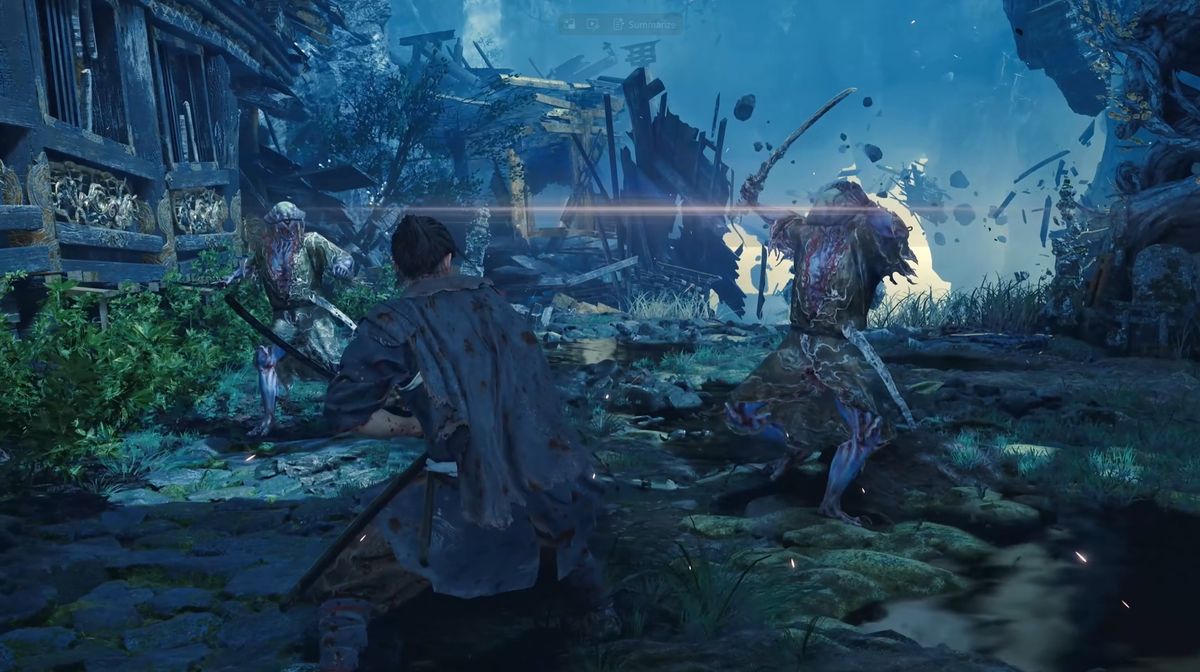
Every defeated enemy also leaves behind red souls that we can absorb with the Oni Gauntlet. These can then be used to strengthen Musashi and his abilities. The Gauntlet also gives us access to several Oni Armaments, each with its own purpose. Some are better for dealing damage, while others can help us manipulate enemy stamina or keep us alive. The Oni Bow is great for dealing with enemies at range, too, which becomes especially useful against certain enemies or in specific situations.
We can also find and equip different charms that provide various bonuses, such as increasing the power of follow-up or special attacks, reducing stamina loss, and enhancing other aspects of Musashi’s abilities. None of this feels especially complicated on its own, but once everything starts working together, it can become difficult to master.
The Parry, The Dodge, The Issen
We’ve played games where parrying is basically the entire combat system, and for the life of us, we could never become good enough at it. We’d see the attack coming, press the button, and somehow still end up hugging a sword. In Way of the Sword, the timing is still important, but the visual feedback makes it much easier to understand what we’re supposed to do. If we block just before an enemy attack connects, we can parry it and create an opening. The game makes as giddy and warm inside everytime we time it well. A better parry, for example, can create a larger opening and lead to more impressive effects, which gives us a little extra motivation to stop panicking and watch what the enemy is doing. Positioning matters too. We can use a successful parry to push enemies towards other enemies or nearby objects. This can cause serious stamina damage and leave them staggering or even kneeling while they try to recover.
One of our favourite things to do is grab a wheel cart and ram it into a group of enemies. It’s useful, stupid, and incredibly entertaining, making us jump at the opportunity every time we see something grabbable.

When an attack comes our way, however, blocking isn’t always the best choice. Often, depending on the nature of the attack,we’re better off getting out of the way completely. If we dodge just before an attack connects, we can trigger a counter and take a large chunk out of an enemy’s stamina. The same applies to grabs. Enemies will happily grab Musashi when given the opportunity, but if we pull away at just the right moment, we can reverse the grab instead.
Issen takes the timing fetish even further. Attack at just the right moment before an enemy hits us, and Musashi can perform a lightning-fast counter. Once we started getting these consistently, we found ourselves looking for opportunities to use them as often as possible since they are insane satisfying. Speaking of insanely satisfying things, successful parries also build Musashi’s Blaze meter. Once it fills, his sword enters a powered-up state, giving regular attacks more punch and changing how the soul system feeds back into our Oni abilities.
Put all of this together and you’re left with a combat system that asks us to pay attention, react quickly and make use of everything we’ve learned. It took some getting used to and once we did, we refused to go back to simply hacking away at whatever was standing in front of us.
So, you see, dear reader, we had to learn how to play and git gud. Button mashing wasn’t going to save us, and those rifts certainly weren’t going to close themselves.
The Difficulty
During the opening hours, you could be forgiven for thinking that we’re exaggerating when we talk about the difficulty. The game starts fairly gently, but things become much more demanding as we move through the campaign. The bosses, for example. Oh, gawd, the bosses! They have their own attack patterns and tricks, and some of them force us to use everything the game has taught us. We know Onimusha: Way of the Sword isn’t officially a Souls-like, but there were times when we were staring at a boss and thinking that it felt painfully like one.
That’s when the parry and dodge systems really prove their worth. Some of the later fights can be seriously demanding, especially if you’re not used to games where reaction time matters this much. The bosses are, without a doubt, some of the game’s strongest and toughest encounters, and it’s easy to entertain the thought of lowering the difficulty. We know we did that a lot when things became too much, and we wouldn’t blame anyone for thinking or doing exactly the same.
The Exploration
Kyoto acts as a sort of hub, and as we progress, we can return to earlier areas, open previously inaccessible paths, and find new things to do. There are rifts to close, secrets to find, residents to help, and various upgrades and resources hidden around the map. When exploring, we found that one of the best parts was the ability to wall-run, which allowed us to get around in a little more interesting and cool way. It also helped us reach areas that would otherwise be inaccessible.
We liked that the game doesn’t turn Kyoto into a massive open-world that’s filled to the brim with things to do over and over again. It’s much more manageable than that. We can explore, find something interesting, and then get back to the story. Some of the optional activities are enjoyable, while others feel like the kind of thing we do because we’re already there. The repeated rifts are the biggest example of activities that we didn’t want to do much, and we easily got tired of those. Closing them can be fun the first few times, but seeing similar encounters again and again can make the exploration sections lose some of their charm.
We also noticed that the normal enemies don’t always put up the same fight as the bosses. Once we became comfortable with the combat, many regular encounters became fairly easy, with the real pressure usually coming from stronger enemies and bosses. These are small things that didn’t stop us from wandering around, stopping to look around, even when we’d already been through an area before.

The Story
Miyamoto Musashi is a likeable protagonist. His voice acting and animations work particularly well together, and his reactions are sometimes exaggerated for comedic effect. Considering how awful things are around him, there’s something quite charming about the way he can still look at the world with curiosity and compassion. He’s not simply a miserable samurai walking through a miserable world. That personality gives the darker parts of the story a bit of breathing room, and we enjoyed spending time with him because of it.
The supporting characters are also easy to get attached to. They have their own personalities and reasons for doing what they do, and we found ourselves wanting to see where their stories would go. The game also does a good job of mixing its darker moments with lighter ones without making Musashi feel out of place in either.
You know how some games don’t really rely on their story to keep you hooked? That’s definitely not the case here. The narrative in Onimusha: The Way of the Sword shines just as bright as the rest of the game, delivering unforgettable moments that make you truly care about the characters.
The Beauty
We played Onimusha: Way of the Sword on PS5 Pro and were very happy with how well it runs. The game offers 30 FPS and 60 FPS options, as well as a 40 FPS mode for displays that support 120Hz. We stuck with the 30 FPS mode, but whichever one you choose, this is a impressive-looking game.
The locations are packed with little details, and Kyoto doesn’t feel like a collection of levels built around combat. It feels lived in. We could walk through a temple while hearing someone praying somewhere nearby and a woman crying in another part. The wind moves through the area while all of this is happening, almost indifferent to the suffering around it. It’s an eerie combination.
We love Japan, both as a place and as a culture, so maybe we’re more likely than some players to stop and look around, but there is so much detail here that we couldn’t help ourselves. Even grass growing through cracks in a neglected staircase, partly hidden underneath yellow leaves, caught our attention.
The roads are muddy. The shrines are sometimes falling apart. People are struggling. And yet, there’s beauty everywhere. Except when there isn’t.
The Ugly
Way of the Sword isn’t perfect, but it comes pretty darn close. The biggest problem for us is that the game is at its best when we’re in a proper fight. The combat is so good that some of the quieter activities can feel like they’re slowing us down.
Fighting the same enemies isn’t necessarily bad, especially when the combat is this enjoyable, but there are moments when we wished the game had given us something else to do instead. In the later sections, there’s this feeling like we’re moving through a painful number of recycled encounters that lean too heavily on boss fights.
It also didn’t help when the camera occasionally got into awkward positions around scenery. It doesn’t happen often enough to ruin the game, but when it happens during a difficult encounter, it can be annoying.
Please don’t think that it bothered us much. As we’ve said, we waited so long for this game, and the fact remains that it has one of the best combat systems, amazing animation, great world design, and a solid narrative. We just wish these small bits could have been handled a little better.

The Proper Return
There was always going to be pressure on Onimusha: Way of the Sword. Twenty years is a very long time, during which fans have had plenty of opportunities to imagine what a new Onimusha could look like. There’s no way Capcom could have satisfied every possible expectation. We learned a long time ago to be okay with this. We never want a game to be perfect because it can’t be, especially for everyone. We just wanted it to feel like Onimusha again, and in that regard, Way of the Sword absolutely does.

9/10 – This is Onimusha. After twenty years, that’s more than enough!
Game: Onimusha: Way of the Sword
Developer: Capcom
Publisher: Capcom
Platforms: PS5, Xbox Series X|S, PC, Nintendo Switch 2
Genre: Action / Adventure
Release Date: September 4, 2026
Version Reviewed: PS5 Pro
Review Copy: Provided for review by CD MEDIA

Leave a comment