
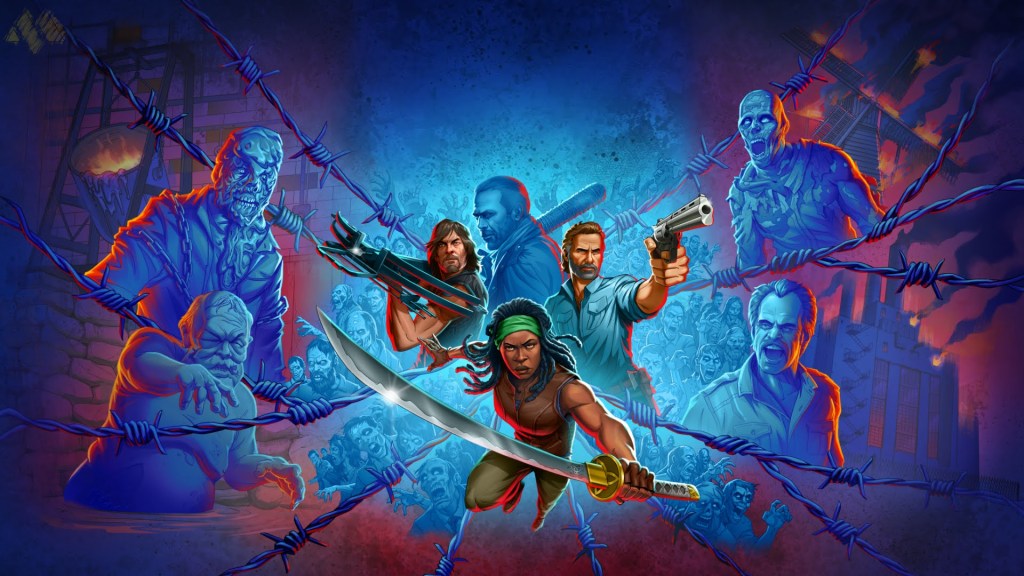
We loved The Walking Dead show. We spent years following the group through one horrible situation after another. We also love old school beat ’em ups and we have a lot of fond memories from our arcade days. The Walking Dead: Streets of Survival is a game that manages to offer the best of those two worlds and to offer an unforgettable and deep experience.
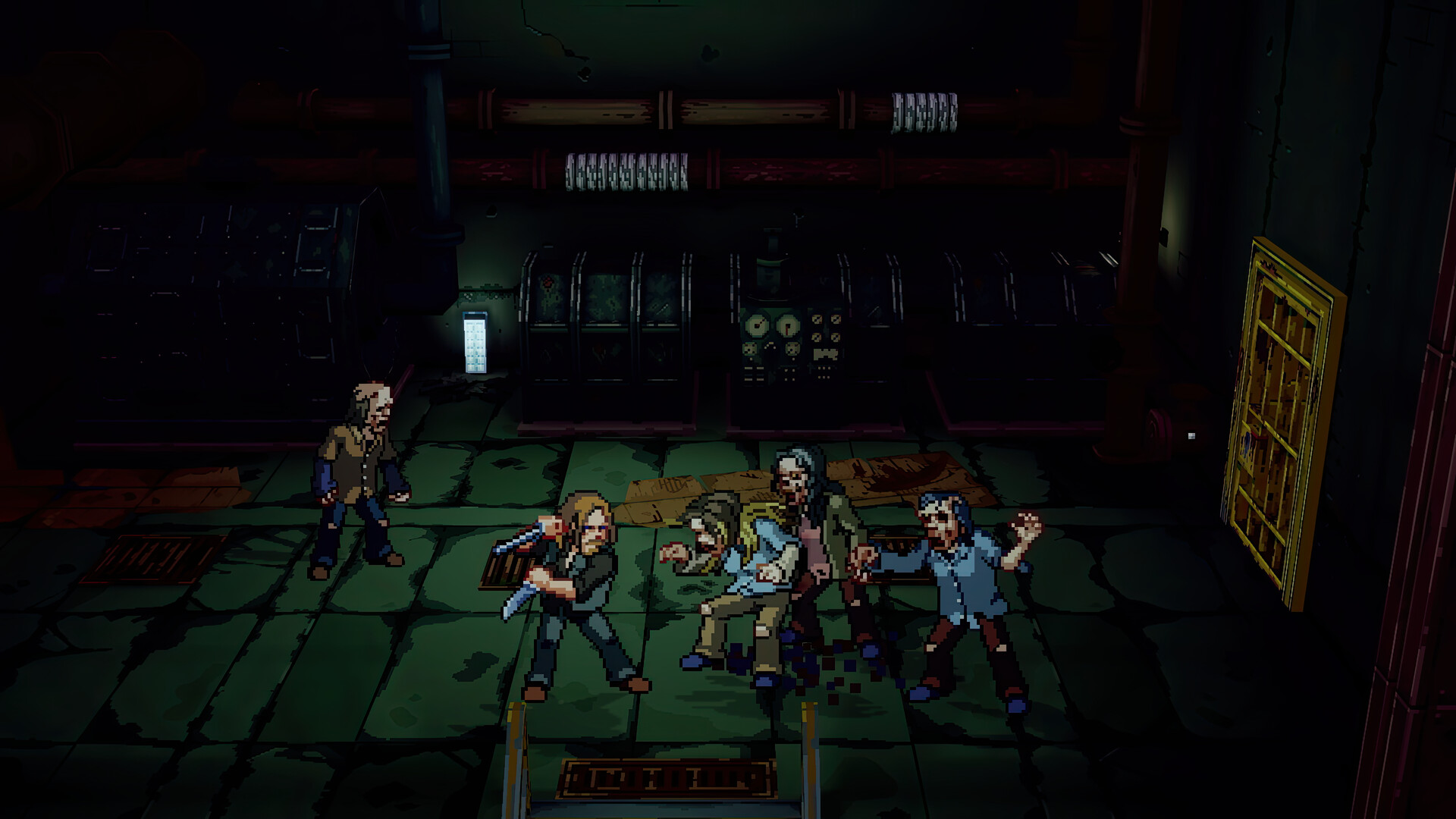
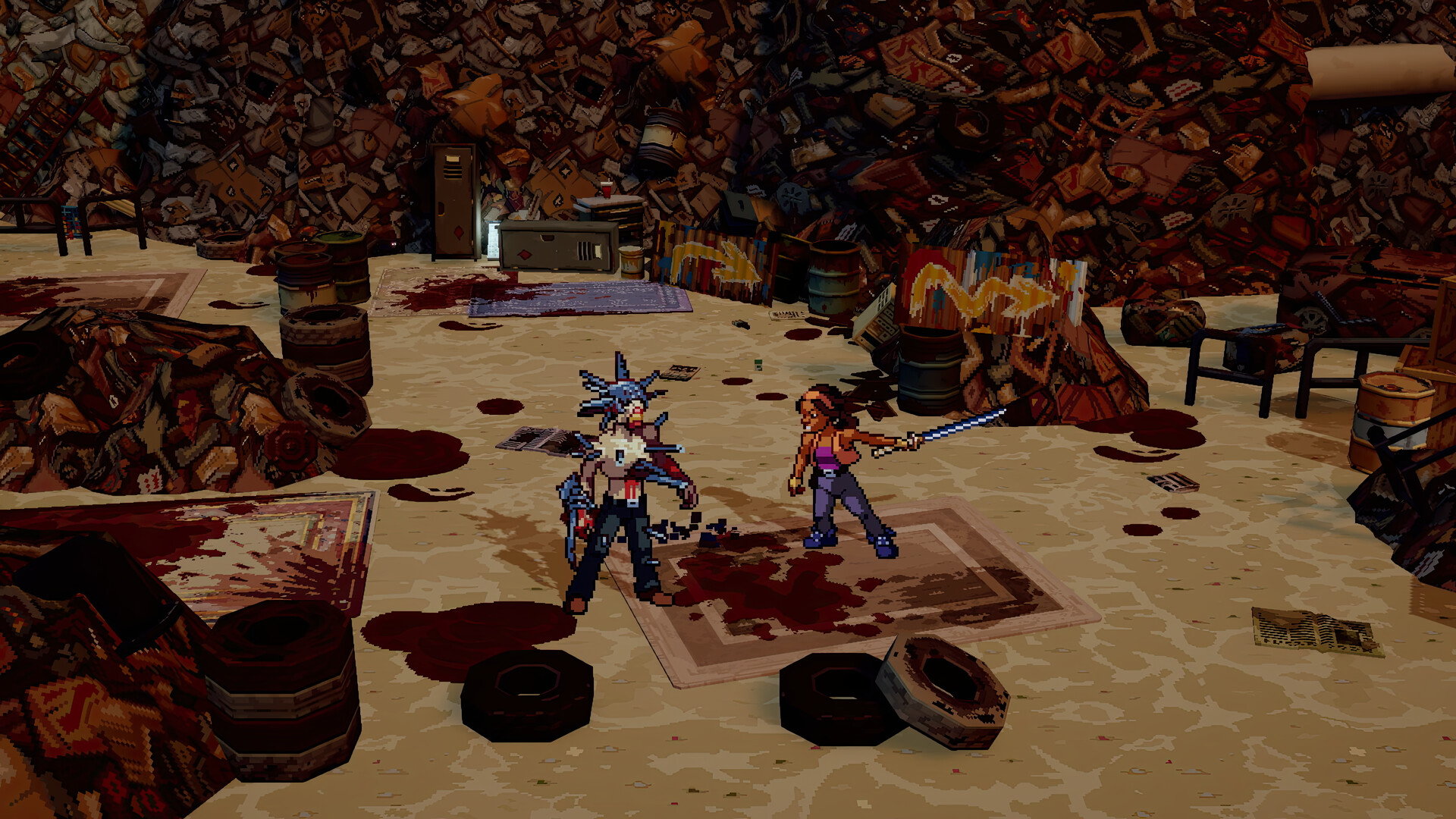
As a pixelated goodness, it’s one of the best-looking retro-inspired games we’ve played in a while. Everything is crisp, animations are smooth and there are so many little visual details that it’s hard not to stop and appreciate them. Even something as simple as flames dancing in the background looks great. With the characters and locations, the pixel art gives Streets of Survival its own identity, especially when you start punching your way through the apocalypse.
Old-School Brawling, Modernized
Streets of Survival is clearly inspired by beat ’em ups from the 80s and 90s, games like Cadillacs and Dinosaurs and Final Fight. You move from left to right, enemies keep coming, and your job is to get through them and reach the other side. It’d be a mistake to think that this is an old beat ’em up dressed in The Walking Dead pixel art.
The controls are slicker, the animations are much smoother and there are more systems sitting underneath the basic punching and kicking. As we moved through the streets, we could search containers for useful supplies, including healing items and weapons. Healing isn’t instant either. It takes a little time, and if you get interrupted, you only receive part of the healing while still losing the item.
That sounds like a small thing, but it changes how we approached fights. When there are enemies around, using a healing item becomes a decision rather than something we can casually do whenever our health drops. Sometimes it was better to keep moving and look for a safer moment.
Movement is also more fluid than we expected. You can run and vault over objects in your path, which makes getting around the levels much faster and dynamic than the usuall walking from one side of the screen to the other. You don’t always fight. Sometimes you run away from the horde, destroying obstacles in your way. Other times, you sneak and avoid them completely. When sneaking, you can shift the camera to either side and learn the enemy’s movement patterns. You can sneak through, open doors with zombies and activate alarms that will clear the room.
When the Streets Get Crowded
The combat has weight behind it, and the game doesn’t make its attacks feel soft, far from it. Hits have a satisfying impact, enemies react to attacks and chaining moves together makes clearing groups of enemies feel great.
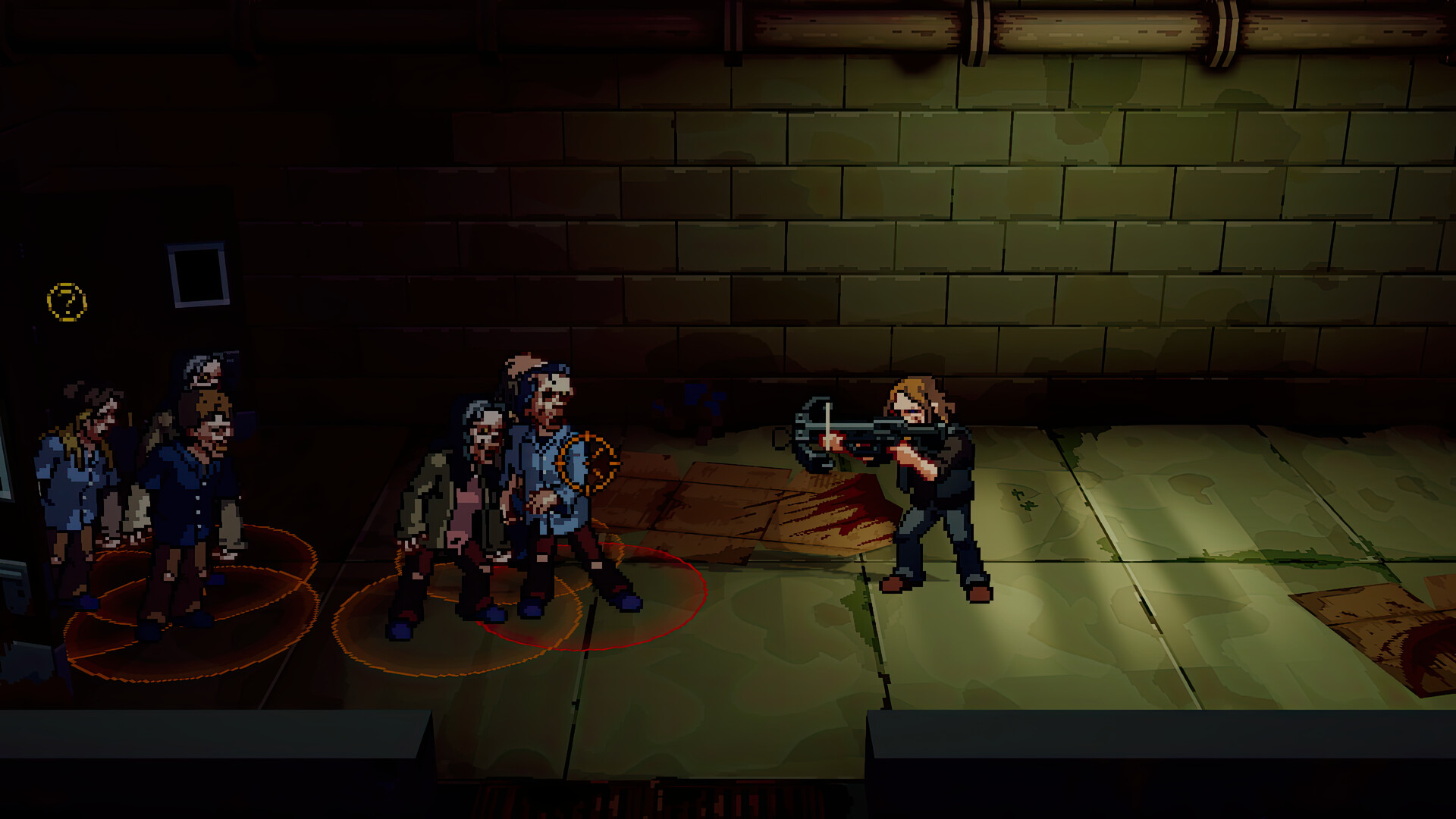
There is also a nice rhythm to switching between different attacks and abilities rather than simply hammering the same button. Ranged weapons give you another option when enemies start piling up, but ammunition is limited, so we couldn’t just rely on them whenever things got difficult.
When enemies start attacking from different directions, rolling out of danger and finding an opening can make a big difference. If you time things properly, you can turn a defensive move into an opportunity to deal serious damage.
Some enemies make this even more important thanks to what the game calls hyper armor. These enemies won’t simply flinch from normal attacks, so you need to use a heavier attack to break through it. The fact that these stronger attacks have cooldowns stops us from using them whenever we want and adds another little thing to keep track of during the more chaotic encounters.
Four Survivors, Four Ways to Fight
Aside from Rick, you can play with three other characters, which are Daryl, Michonne and another one. Hey, the game doesn’t want to tell you that fourth character, so why should we ruin the surprise. The thing that matters is that they’re more than cosmetic swaps.
Their attacks, movement and abilities make them feel different to use, which gave us a reason to spend time with each character instead of finding one we liked and sticking with them for the entire game.
Each character also has their own skill tree. The trees contain different tiers of abilities and stat boosts, but unlocking everything takes more than collecting enough experience. You’ll need knowledge and character-specific materials as well, so progression happens gradually rather than giving us a new ability every few minutes.
We liked that pace and enjoyed our prologed time. It might feel like a grind, but it was a fun grind where our characters felt noticeably stronger as we moved through the campaign.
Keep Playing the Campaign
Outside the main missions, there is the Walker Pit, where we can take on endless waves of enemies and see how long we can survive. It’s a nice extra for those moments when we simply want to fight without worrying about progressing through the story, or just experient and see what each character can bring to the table.
The streets and locations change enough to keep things moving, new enemies are introduced at a sensible pace and the difficulty gradually increases instead of throwing everything at us immediately. We enjoyed that slow progression. It gave us time to get comfortable with a character, learn what worked and then notice the difference when our abilities started opening up.
There are also boss encounters that give the larger fights a very different feel. They can be quite challenging, but they’re also insanely fun because they demand quick reflexes and a bit more thinking than we usually need when dealing with standard groups of enemies. That doesn’t mean the regular enemies are just there to fill the screen, either. They have their own movement patterns, attacks and defensive behaviours, so learning how each type behaves still matters. The bosses, however, push us to be much more careful with our approach. We have to stay on the move, find openings and chip away at their health, almost like a piranha that keeps circling, biting and never giving its target much time to breathe.
More Fun for Fans Than for the Story
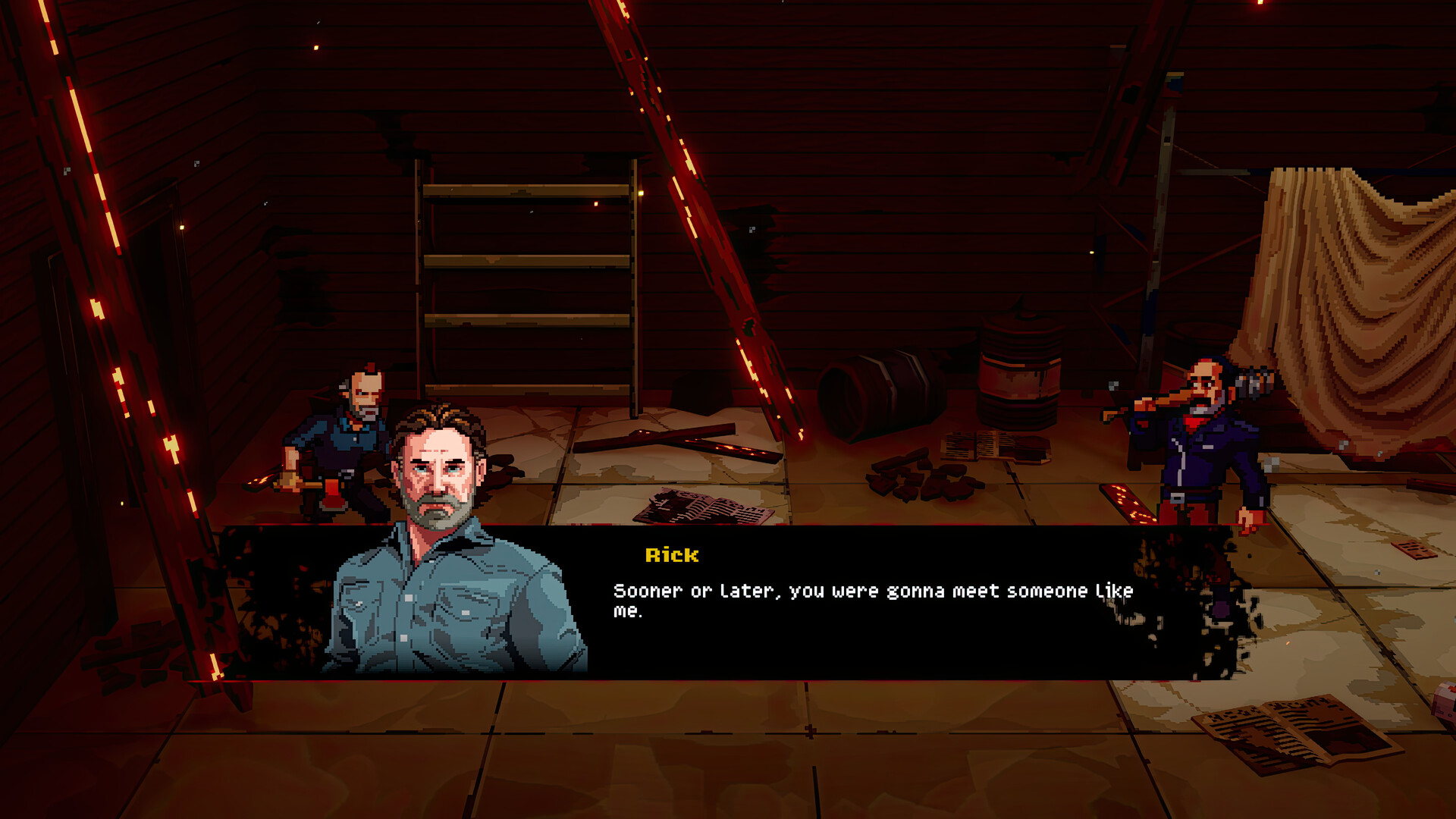
For fans of the show, though, there are some nice moments. Familiar events, locations and references brought back memories for us, and seeing certain characters and situations recreated in this pixel-art style was a lot of fun. There are also quotes that fans will recognize, and those were probably the moments that worked best for us.
We loved the show, so some of those little references landed much harder than they probably would have for someone coming in without that connection.
Outside of those moments, however, the writing feels weak. A lot of the dialogue comes across as something that’s there simply to move us from one street to the next. There isn’t much substance behind it, and some of the conversations feel generic rather than like something these characters would actually need to say.
The good thing is that this is a very small, almost unnoticeable thing and it didn’t ruin the overall vibe and fun factor.
A Good Time in the Apocalypse
The Walking Dead: Streets of Survival has fantastic pixel art, punchy combat, varied characters and steady progression. It’s a game we played for days on end, and one that made us forget about all the other games fighting for our attention. It wonderfully brought back some of the memories we have of watching the show. It may not add much to The Walking Dead story, but as a fan service-filled beat ’em up with plenty of satisfying combat, you won’t go wrong. And if you don’t trust us, just check out the demo. It’s a wonderful showcase of what awaits you further down the line.
Game: The Walking Dead: Streets of Survival
Developer: Odaclick Game Studio
Publisher: Trailmark Games
Genre: Beat ’em up / Action
Platforms: PC, PlayStation 5, Xbox Series X|S, Nintendo Switch, Nintendo Switch 2
Players: Single-player
Release Date: September 18, 2026

Leave a comment