
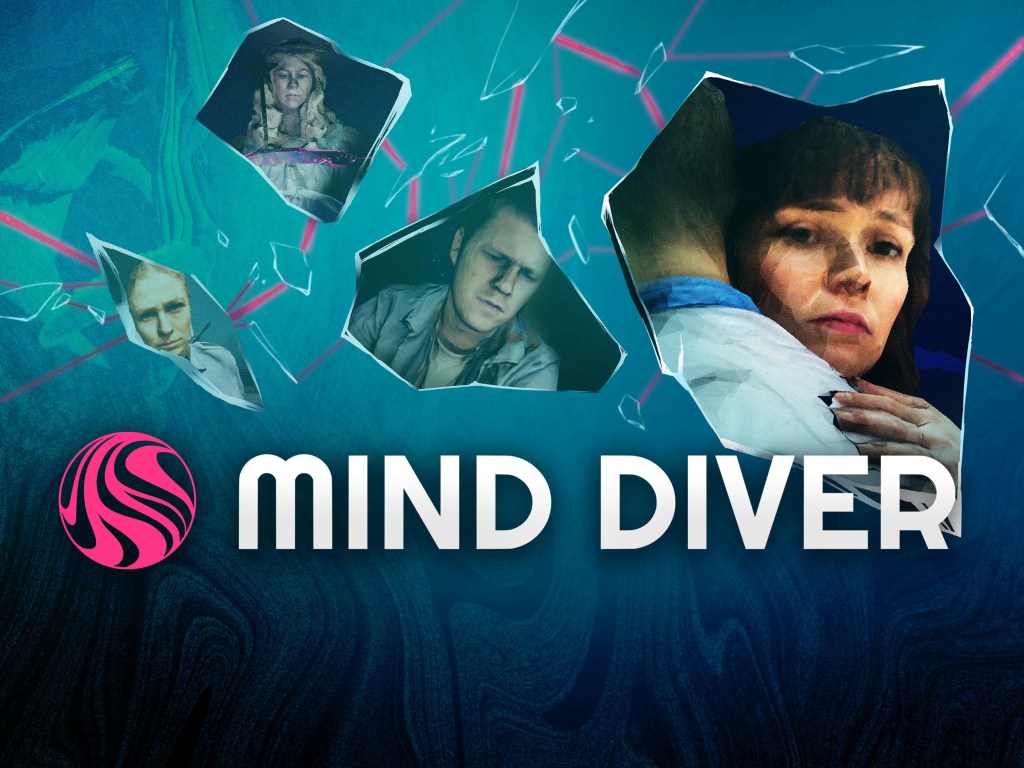
In Mind Diver you aren’t investigating a crime scene in the traditional sense but are diving into someone’s memories. You’re swimming past fragments of events and pieces of a life that no longer fit together properly. The deeper you go, the more apparent it becomes that the mind isn’t a place you’re supposed to understand.

Welcome to Lina’s mind. She’s losing her memories while Sebastian, the person she loved, has gone missing. Something happened at a party, and the answers are buried somewhere inside Lina’s fractured subconscious. We enter her mind using experimental technology and we try to repair damaged memories in an attempt to understand what happened.
During the investigation, we’re swimming through abstract corridors made from deteriorated memories, looking for important fragments and following the trail deeper into Lina’s mind. When we reach a significant memory, the diving gives way to something much closer to traditional first-person exploration. We walk through these reconstructed moments, investigate objects and people, listen to echoes of the past and try to work out what belongs where.
We need to fix the memory, understand what happened and, in doing so, help our client. This, as it turns out, is harder than it sounds.
A world that feels wrong for all the right reasons
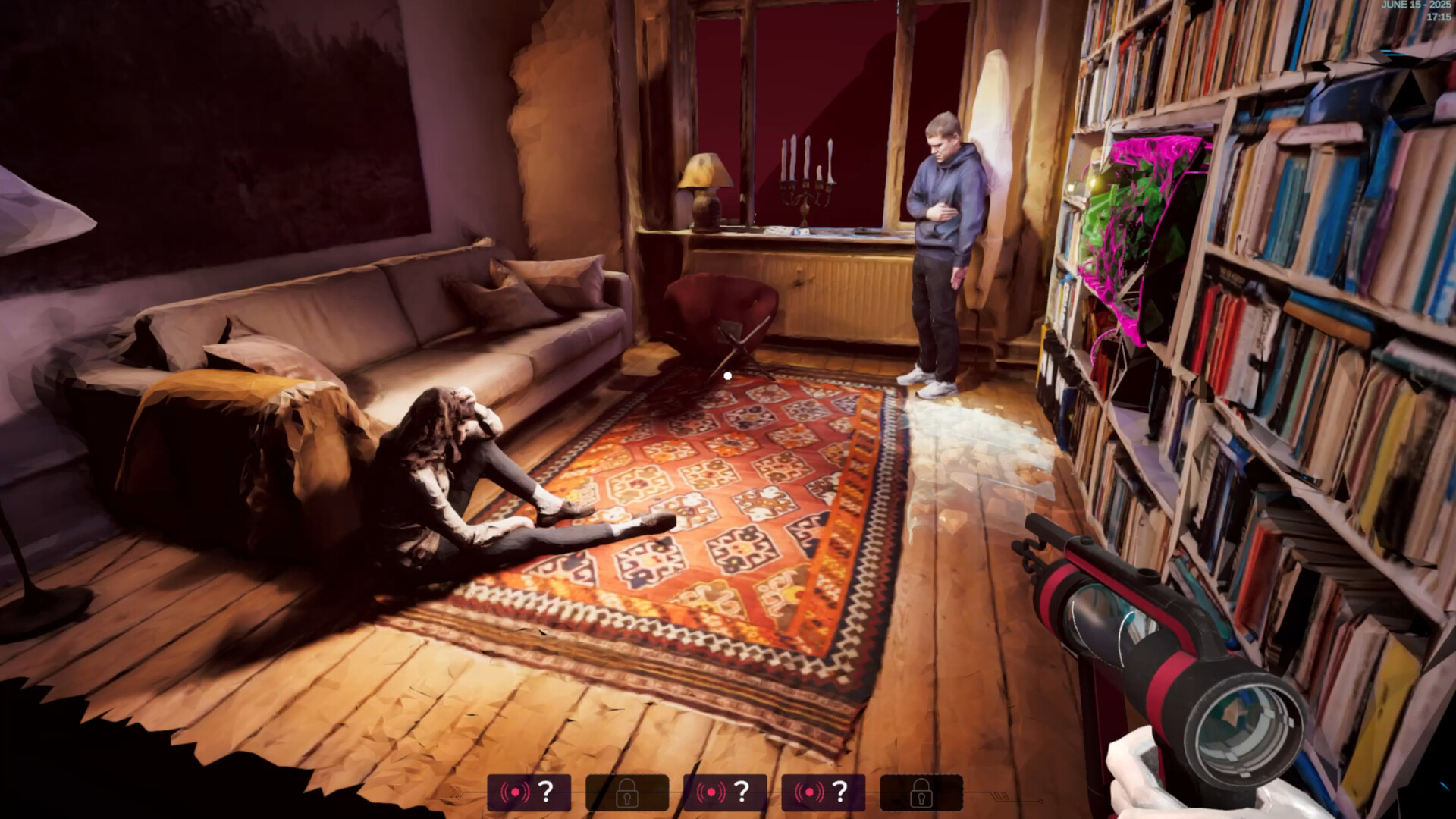
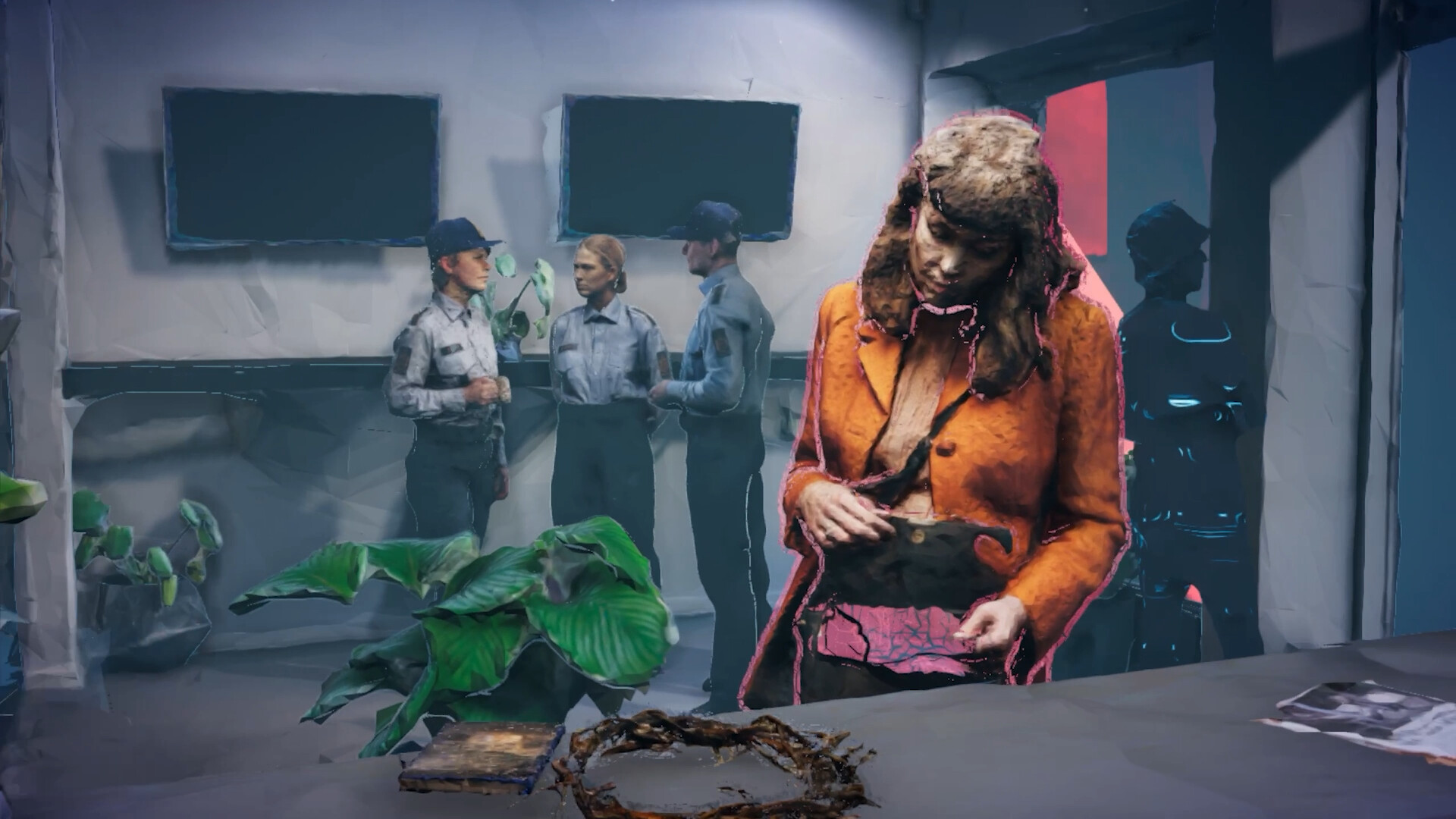
The game’s visual design has this muddy, 3D-scanned appearance that’s creatively combined with low-poly techniques.
Walls can begin somewhere and seemingly end nowhere. Rooms don’t always make architectural sense. People can still look recognisably human but they’re standing completely motionless and expressionless. It gives the impression that we are looking at a snapshot of a situation or rather how the situation is remembered. These aren’t perfect recordings of the past. They are memories that have deteriorated.
That idea also comes through in the way time works. People remain frozen in place even while we hear the sounds of what they were doing. A person may be standing completely still while their voice plays in the background. An object might look insignificant until interacting with it suddenly produces an echo from the past.
There isn’t a huge amount of animation or visual spectacle here. Mind Diver puts considerably more emphasis on sound. Voices, environmental noises and small audio cues often do more work than the visuals themselves. When we interact with an important object or person, we hear an echo connected to that particular memory.
The effect can be surprisingly convincing. The audio begins abruptly and ends just as quickly, almost as if somebody has ripped a fragment of the past out of a damaged recording and handed it to us.
Listening is only half of the investigation
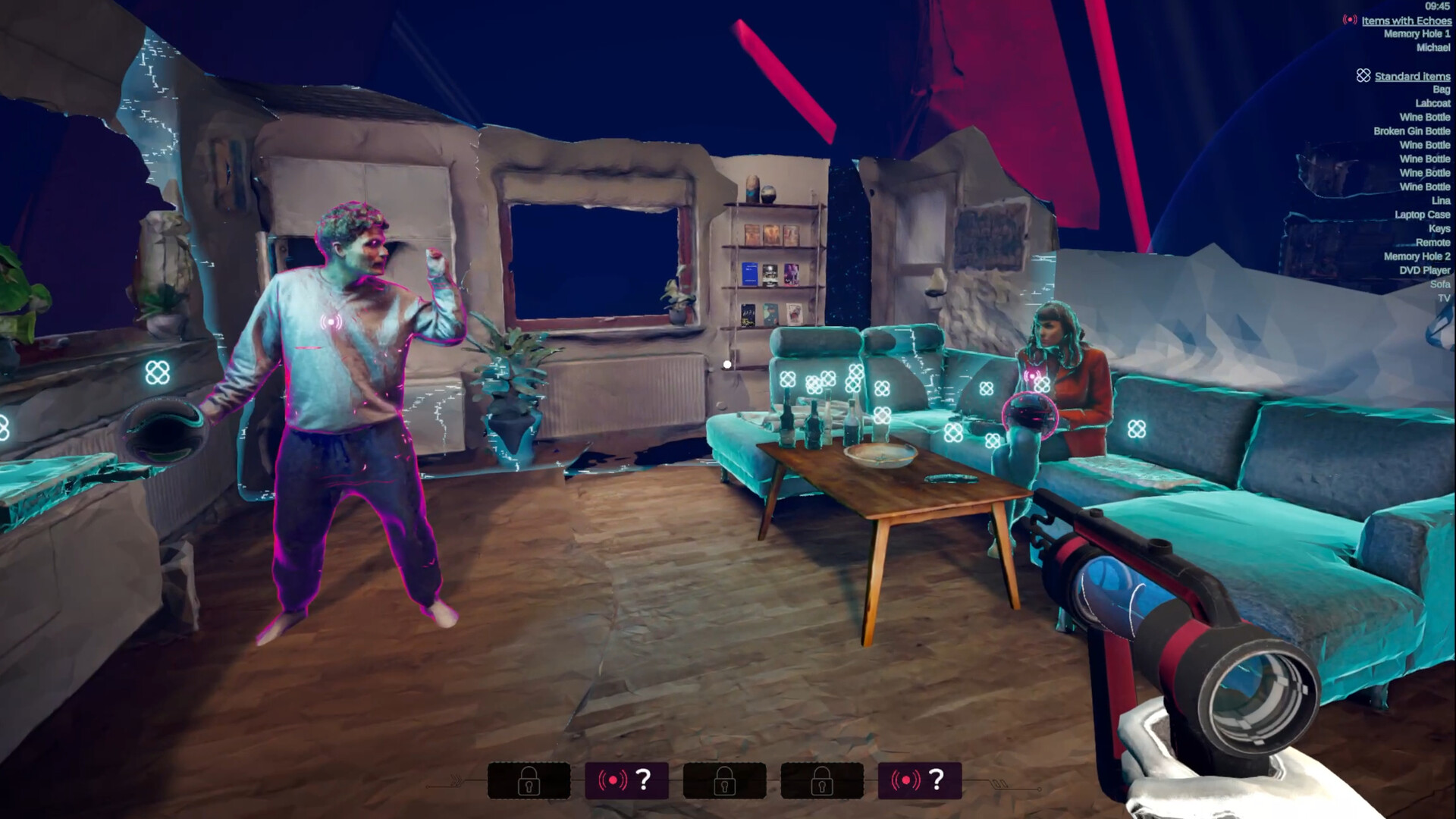
As we explore a memory, we find objects that can be collected and later placed into memory holes scattered around the environment. Each hole is missing a particular piece of the memory, and the challenge is figuring out which object belongs there.
Get it right and the memory continues, revealing more information.
Get it wrong and the mind simply rejects the object.
Fortunately, a rejected object isn’t necessarily useless. There may be another memory hole elsewhere where it belongs, so the game encourages us to keep everything in mind rather than simply treating an incorrect answer as a dead end.
In theory, the logic sounds straightforward. In practice, it can be considerably harder.
The important clues are hidden in the echoes, and those conversations are deliberately fragmented. We rarely receive a nice, convenient explanation telling us exactly what happened and which object belongs to which memory. Instead, we have to listen, remember details, observe the environment and connect pieces of information that may initially seem unrelated. It can work beautifully.
We might notice a small detail in an environment, hear something in an earlier conversation and suddenly understand exactly what the game wants us to do. Those moments are satisfying because the solution feels earned rather than handed to us.
Other times, we found ourselves completely stuck. When the available information is fragmented and the context isn’t immediately clear, it becomes tempting to start guessing. We would pick up objects and try them in different memory holes, hoping that something would work. That’s a particularly tedious way to progress, especially after we’ve already spent considerable time listening and relistening to the available echoes and inspecting everything we can find. And even after doing that, there were moments when we simply weren’t sure what the game expected us to do next. This is definitely us, as we’ve never been much of a detective.
Patience is part of the challenge
Mind Diver a difficult game to recommend universally. There is logic behind the design. The game wants us to feel like we’re actually poking around inside someone else’s mind. Human memories aren’t neat databases where every event is filed under the correct heading. They’re messy and incomplete, which, as a result, makes them difficult to interpret without context.
The problem for us was that the same design decision that makes the experience interesting can also make it frustrating. When everything fits, the game makes us feel clever, granting us immense ego boost. When things go sideways, it can feel as though we’re running around in circles with no useful direction.
The game expects us to pay attention to conversations and make connections for ourselves. We don’t want to sound harsh about this as we understand that there are players who will find this gameplay look fullfiling. Regardless, we fully appreciated how its entire experience is built around these compact memory dives and the mystery connecting them, even though we spend a good chuck feeling like we were stuck in an eternal limbo.
That being said, dear reader, you probably now know whether Mind Diver is your kind of game.
Deep inside someone else’s mind, nobody is holding your hand.
The question is whether you’re patient and smart enough to keep diving.
Developer: Indoor Sunglasses
Publisher: PLAYISM
Genre: Mystery / Puzzle / First-person adventure
Platform reviewed on: PS5
Length: Approximately 4–5 hours
Voice acting: Fully voice acted
Visual style: 3D-scan-inspired environments
Core gameplay: Memory reconstruction, exploration, listening and deduction


Leave a Reply