You know how most, if not all point-and-click adventure games have dialogue tree and when you click a character you get this massive wall of text? Well, the team behind Theropods decided to scrap that entirely. We caught up with Kostas Skiftas, Sarah Duffield-Harding, and Matt Frith to talk about building a prehistoric puzzle game where nobody actually speaks, and how that single choice changed their entire design process.
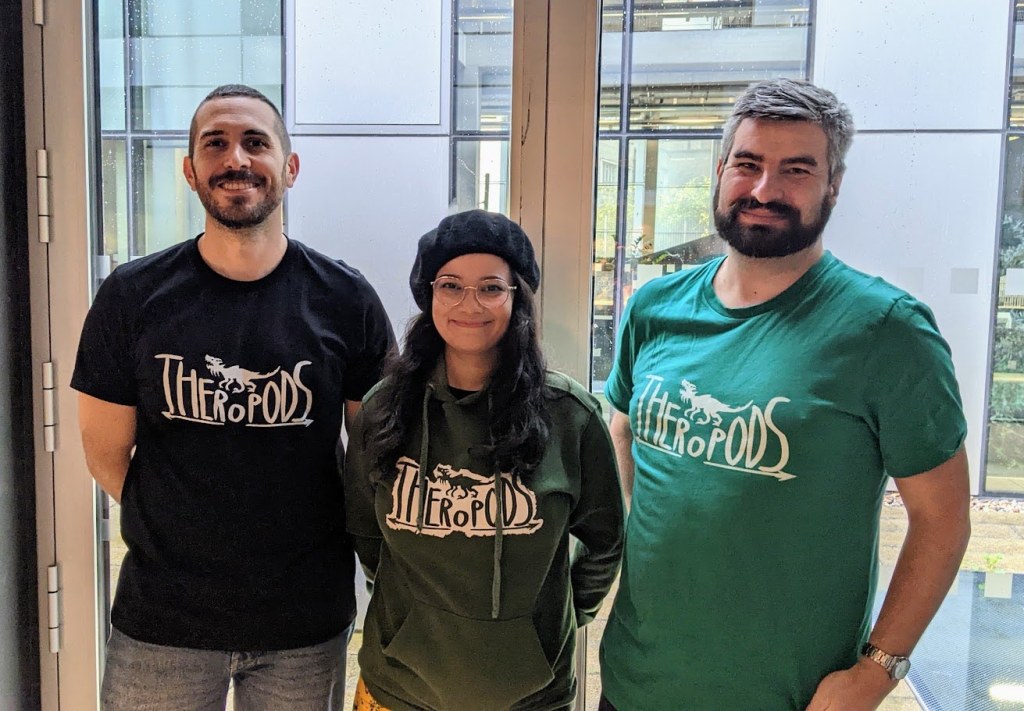
Meet the Team:
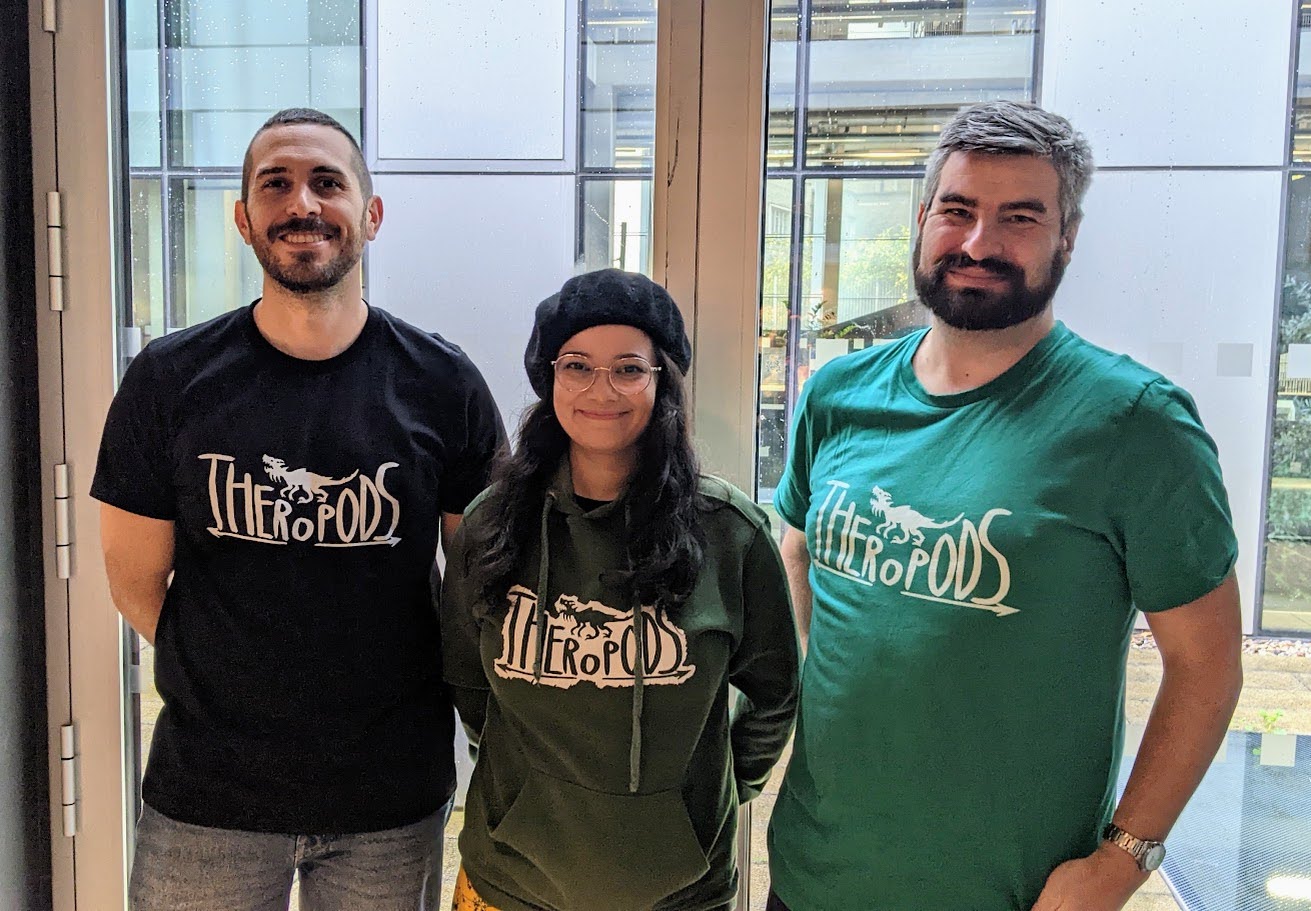
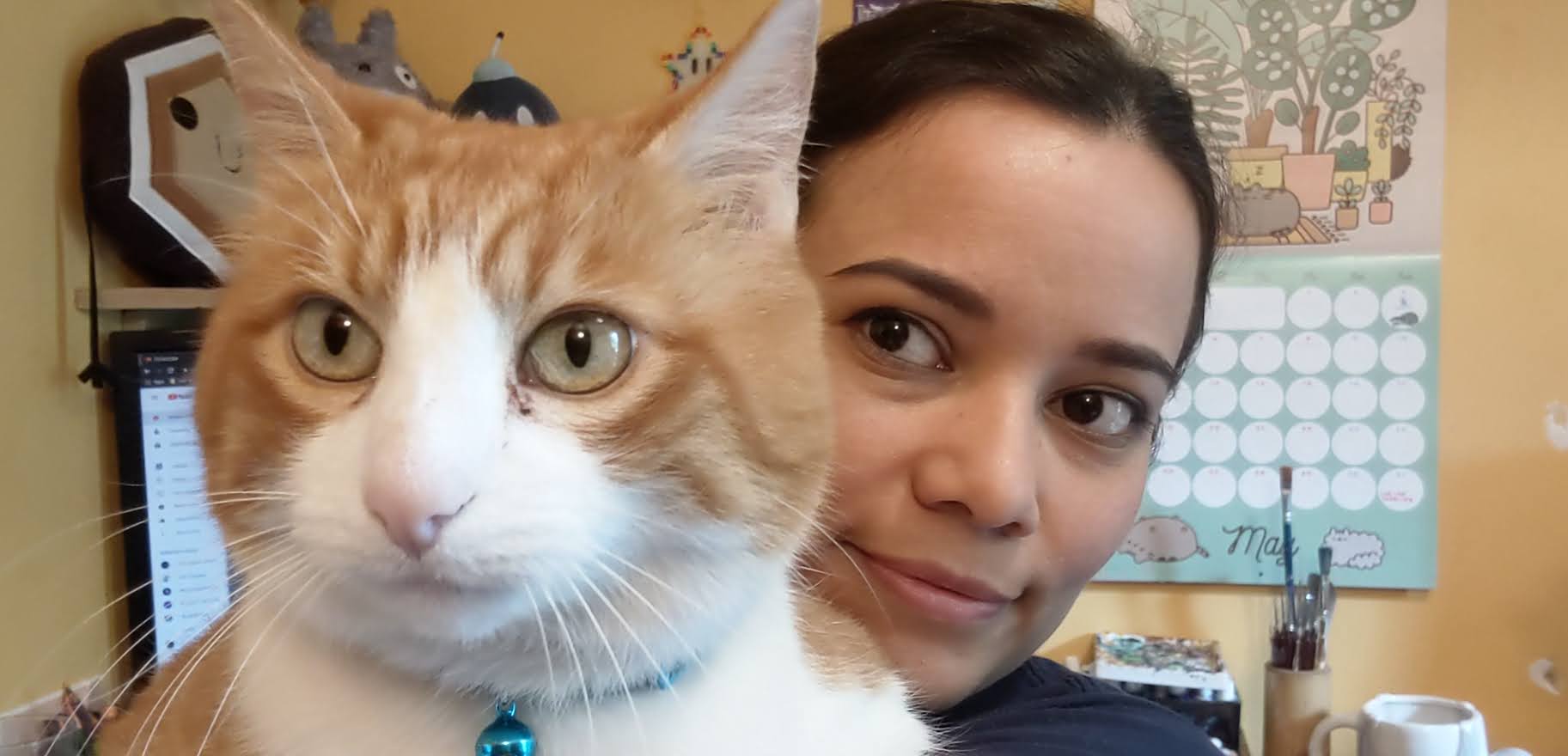
Kostas, Sarah and Matt (left to right)
Kostas Skiftas – Story & Animation
Sarah Duffield-Harding – Pixel Art & Programming
Matt Frith – Pixel Art & Programming
This interview would not have been possible without the wonderful people at Critical Hit PR. Many thanks Achilleas Soumpasitis!
Designing in the Dark
Throwing out text sounds great until you realize you still have to teach people how to play. Without explicit instructions, the team had to completely rethink how they handle hints, feedback, and fail states.
“Stripping away text and dialogue was a design choice. We played games like Machinarium and Limbo or Inside and were inspired by wordless storytelling and worldbuilding. Since our setting was a prehistoric world with cavemen, the premise seemed to fit.
Design-wise, having no text or dialogue meant that all feedback had to be given visually. We had to create unique animations for each situation to help guide the player as to what their objective is and help nudge them in the right direction. Lack of dialogue didn’t mean lack of voice acting – the characters communicate in grunts that also help the player.
The character can say an outright no in the form of a ‘uh-uh’ when there is no interactability and a ‘hmmm’ when the player is on the right track but needs to do additional steps. It’s all about exploring and testing things and watching the reactions of the character.
Other than that, we tried to keep things fairly contained to avoid confusion and overstimulation. Each puzzle is in a contained area in the form of a mini-escape room and the entire game is a chain of smaller puzzles like that. We included a hotspot system to help players so that they wouldn’t have to pixel-hunt and the fail states are non-existent, the worst you can do is be stuck for a few minutes, thinking your way out.”
Character grunts and unique animations replace text hints, while bite-sized puzzle areas keep players from getting lost.
Since the characters are mostly just grunting, the soundtrack and audio effects have to pick up the slack. The audio design directly replaces on-screen text to let you know what’s happening.
“Our composer, Petros Kaloritis, did an amazing job at creating a soundscape that immerses the player into the Theropods world. He used tribal sounds to represent the prehistoric tribes, drawing heavily from influences such as Monkey Island and Donkey Kong.
For the sci-fi element, it seemed fitting to blend synths with the tribal music in order to introduce those themes and from a story-telling perspective have a representation of our two main characters: the huntress and the spaceman.
In order to replace text prompts, animation and sfx had to blend together. When you get too close to a dinosaur that is minding their own business, they will snap their jaws and growl or they will stomp and snort. You can also use items together to distract dinosaurs to look the other way, like using a spear on a skull to produce a hollow sound that turns dino-heads so you can steal some eggs. It’s all about observation and trial and error.”
Audio serves as a direct feedback loop, using specific sound effects to communicate danger and puzzle mechanics.
Visual Cues and Pixel Art Puzzles
Audio is only part of the puzzle. Without flashing UI text telling you where to go, the developers had to find natural ways to pull your eye to the right spot on the screen.
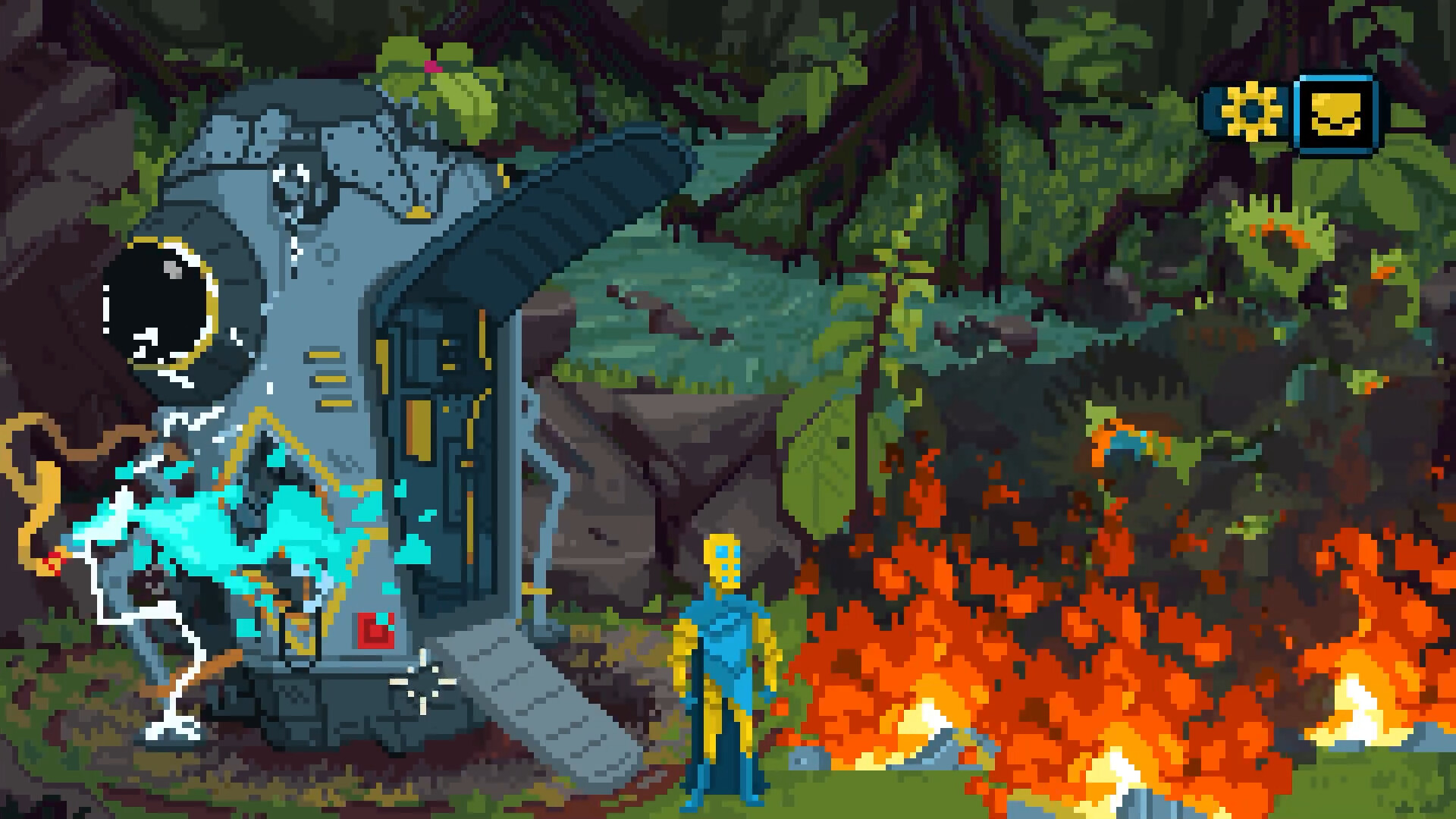
“We do use hotspots but those are optional. Point and click adventure games usually encourage exploration, so it’s all part of the game. That being said, as designers we have to guide the player’s attention. Exits and entrances of new areas need to draw the eye and be inviting. Your goals have to be clear, such as a dinosaur blocking the way or the skyline of your village in the background. Since text is absent, we started designing each level with the question ‘is the objective clear here?’ and worked our way backwards.”
Level design relies on clear, inviting visual cues to pull the player’s attention toward the main objective.
That visual challenge gets even harder when you’re working with chunky pixel art. Figuring out what an item actually is without a text label is a huge design hurdle.
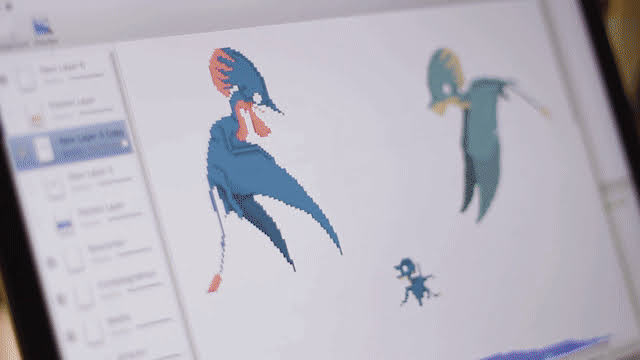
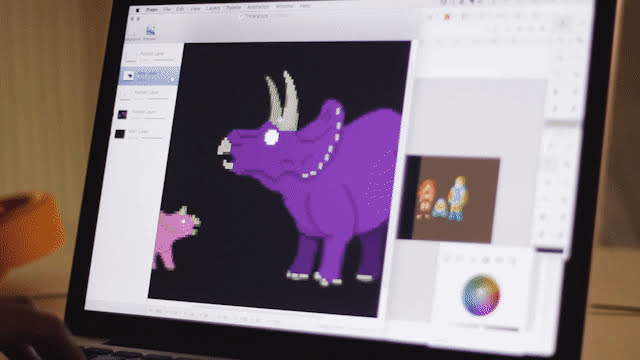
“For objects, no text was an issue a lot of times. Since we are using a low resolution and a pixel art style, some items were almost impossible to tell what they were. We always have 3 different versions of the items drawn: on the background before you pick it up, in the inventory when you do and on the cursor when you are about to use it on something.
Sound effects sometimes help to tell what the items are (like sap on a tree makes gooey sounds when you touch it). We just did our best with the art and animations to tell what each item is or does.
An example of an item that was hard to tell was a wooden stake used to make a dinosaur trap. In pixel form, it’s a brown rectangle. We had a playtester who asked us ‘oh is that what you use to kill vampires?’. Eventually though, people will figure out what it does when they actually get to make the trap, so in this case the problem was temporary and solved itself.”
Drawing items in three different states and pairing them with specific sounds helps players identify tools without text labels.
The Playtesting Reality Check
You can plan these things perfectly on paper, but handing the game over to real players always reveals blind spots. Playtesting forced the team to rethink how they give negative feedback.
“Since we developed the game, we are horrible at playtesting it. We will solve it exactly as intended when testing and not deviate from it. Playtesters don’t care about that, they will try everything as is their job. So we could do our best to anticipate frustrations but playtesting always shined in uncovering issues. Things like an item being too obstructed to be discovered in the background, or players not clicking left enough on a screen to reveal a hotspot.
For the actual puzzles we decided to start the player feedback by the characters reacting by just saying ‘no’ to wrong responses and only triggering feedback animations on the correct ones.
Gradually, we created more animations to replace the ‘no’ responses so that we would nudge the players that they are on the right path and they need to keep going. For example, the main character clicks on a vine on the ground. She pulls it up but it’s attached to a plant and won’t budge. This feedback hints that this vine is important, but the player needs to do an additional step to pick it up. Hence when the player uses their spear on the vine, the character cuts the vine and picks it up.”
The team evolved their feedback system from a simple “no” to custom animations that actively push players toward the right answer.
Once players actually figure out what an item is, they have to know how to use it. The game relies heavily on chain reactions, which means making sure a puzzle feels logical instead of like a random accident.
“As mentioned earlier, everything is trial and error and focuses on observation. Solutions need to feel logical and earned. Using inventory items is part of the prodding and poking. It tells the player what the issue is before you find the right ‘tool’ to fix it. I am sure that playtesters weren’t always sure what the right solution would be as they were solving each puzzle, but the ultimate goal is for that puzzle to feel like it made sense when it was solved.
You have a dinosaur protecting her babies, or a dinosaur trying to eat you. Yet you are a human and smarter than them. Are you going to bait them? Distract them? Trap them? It all comes down to outsmarting creatures more powerful than you and beating the odds.
One of the hardest puzzles to design in that case was a puzzle with zero dinosaurs. Our main character is trapped in a cage along with other villagers and will have to ask them to perform the actions for her since she can’t interact with anything. Getting this to feel organic and like villagers are actually collaborating with each other was a big challenge but we think after a lot of trial and error (and playtesting!) it worked out.”
Puzzles focus on logical observation and outsmarting threats so that finding the solution always feels earned.
Trusting the Player
Stripping away all the standard UI crutches changes the whole relationship between the developer and the player. We wanted to know what this approach taught them about trusting their audience and telling a story without words.
“Putting yourself in the shoes of the player is the first step. Tim Schafer, the designer of legendary games like Full Throttle, Grim Fandango and Psychonauts, said that the designer needs to be like a big brother to the player. Watch them play and nudge them to the right solution. ‘You almost got this, you just need to do one more thing and you solved it’. We tried to do the same thing and then playtest as much as we can and get feedback since we can’t anticipate everything. Hopefully that back and forth dance eventually ends up with an enjoyable game.
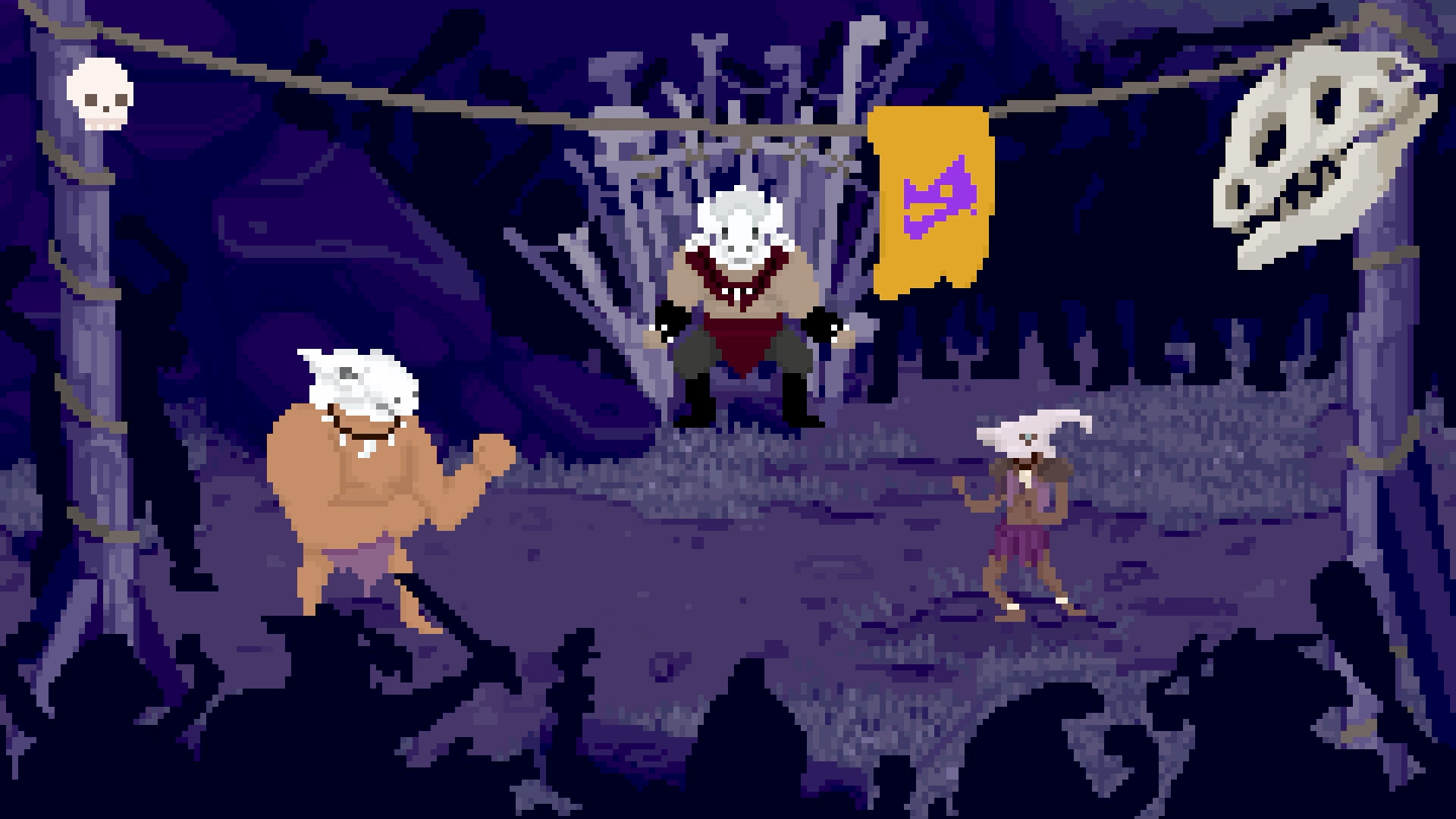
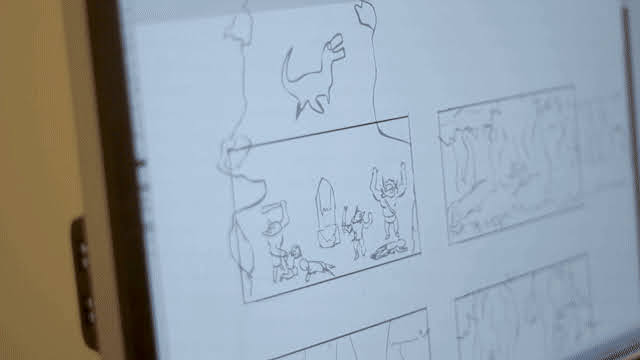
Other than that, telling a compelling story through all this has been the biggest challenge without dialogue. For this we decided to use cutscenes and a cinematic language to be able to fill in the gaps that the puzzles leave, story-wise. Close ups, wide shots, music. When your character has two pixels for eyes it’s hard to emote everything. Therefore, the story would inform our game development decisions. Some puzzles were cut because they didn’t offer more to the story and added months of development time. We had to make sure the characters and their motivations were clear before we got to the actual puzzles.”
Mechanics have to serve the narrative first, relying on cinematic camera work to tell the story when dialogue isn’t an option.




Leave a Reply