

Sovereign Tower is one of the best examples of how a visual novel can evolve beyond the genre’s usual expectations. The walls of text are supported by striking artwork, subtle yet memorable visual and audio effects, and a soundtrack that draws us deeper into its narrative. It all comes together to create an experience that stays with us long after making those tough choices and dealing with the consequences.
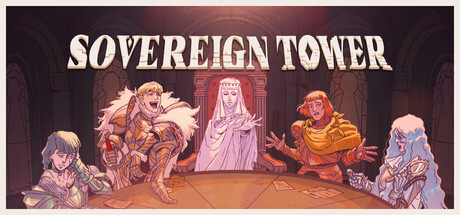
Welcome to the Throne
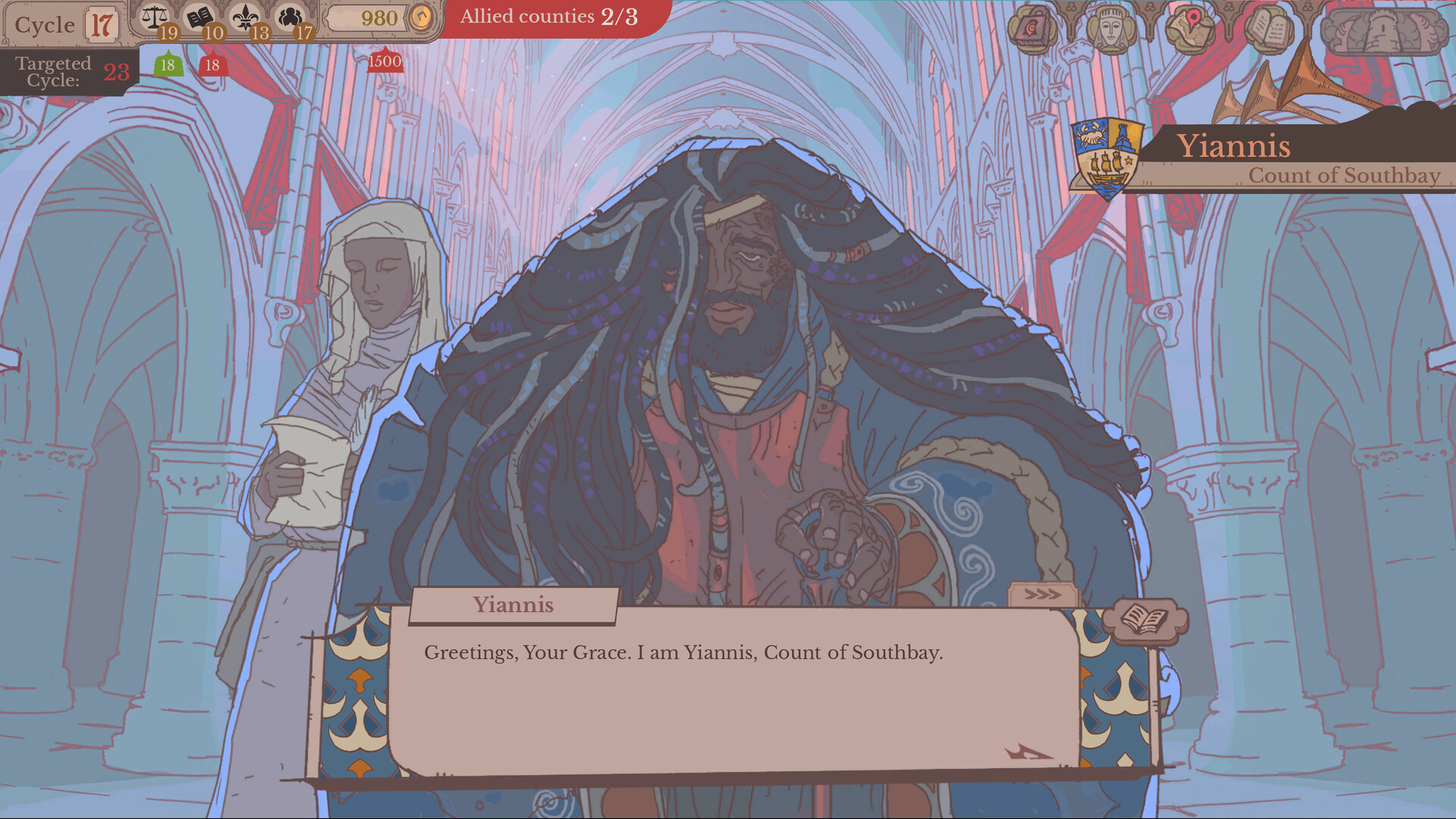
We step into the role of a newly appointed Sovereign, guided by our ever-talkative advisor, who introduces us to the routines of ruling a magical kingdom. Every day begins on the throne, listening to requests from citizens, nobles, merchants and other factions before deciding how to respond. At first, these requests seem straightforward, but it doesn’t take long to realize that almost every decision has consequences somewhere else.
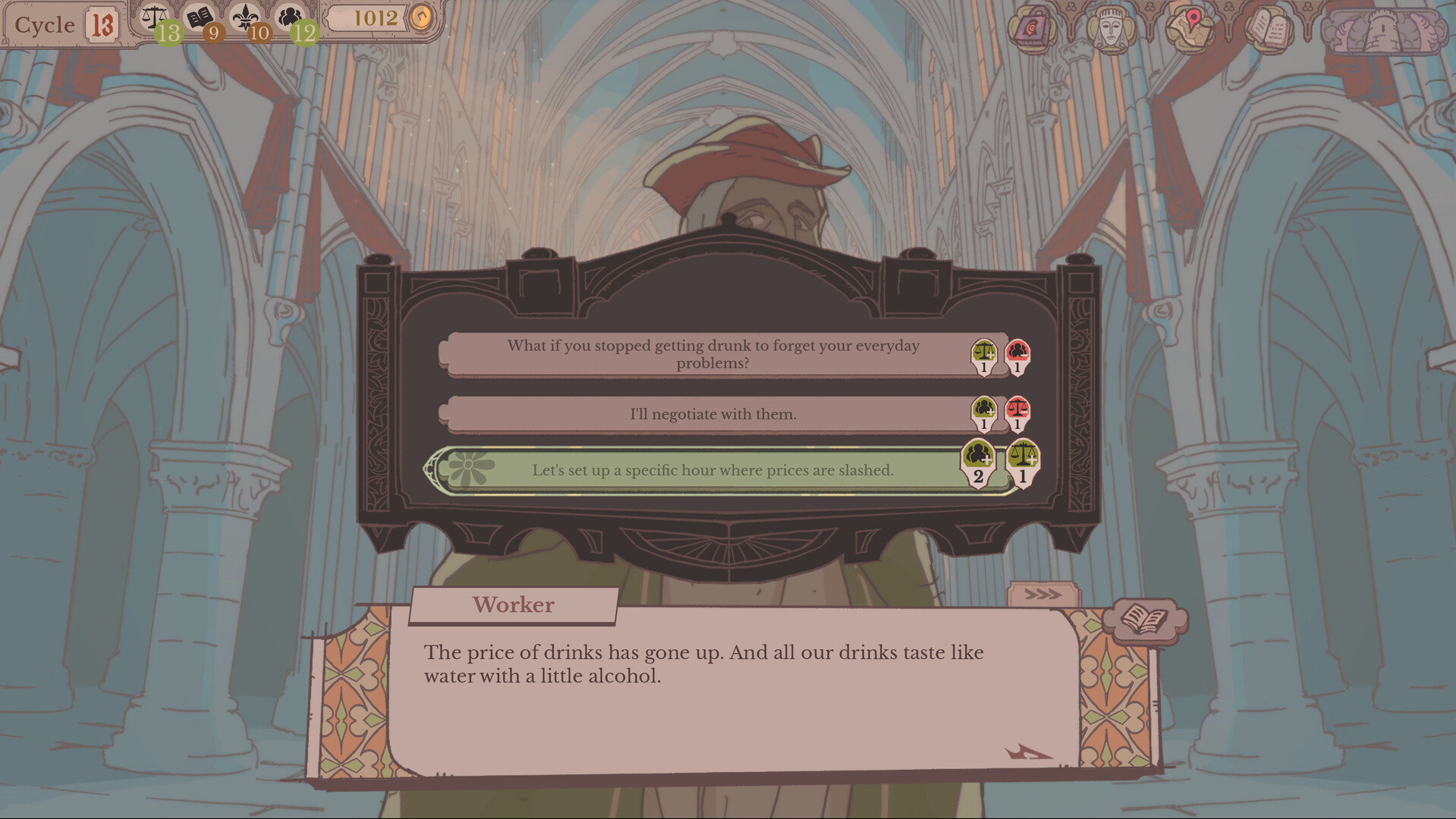
Everything feels interconnected, and helping one group will almost always come at the expense of another. Spend too much money solving today’s crisis, and you’ll leave the treasury struggling to deal with tomorrow’s. Very few decisions leave everyone—including us—happy.
The more we played, the more convinced we became that Sovereign Tower is built around the old saying, “You can’t please all the people all the time,” and that’s exactly what makes its day-to-day decision-making so engaging.
The Round Table
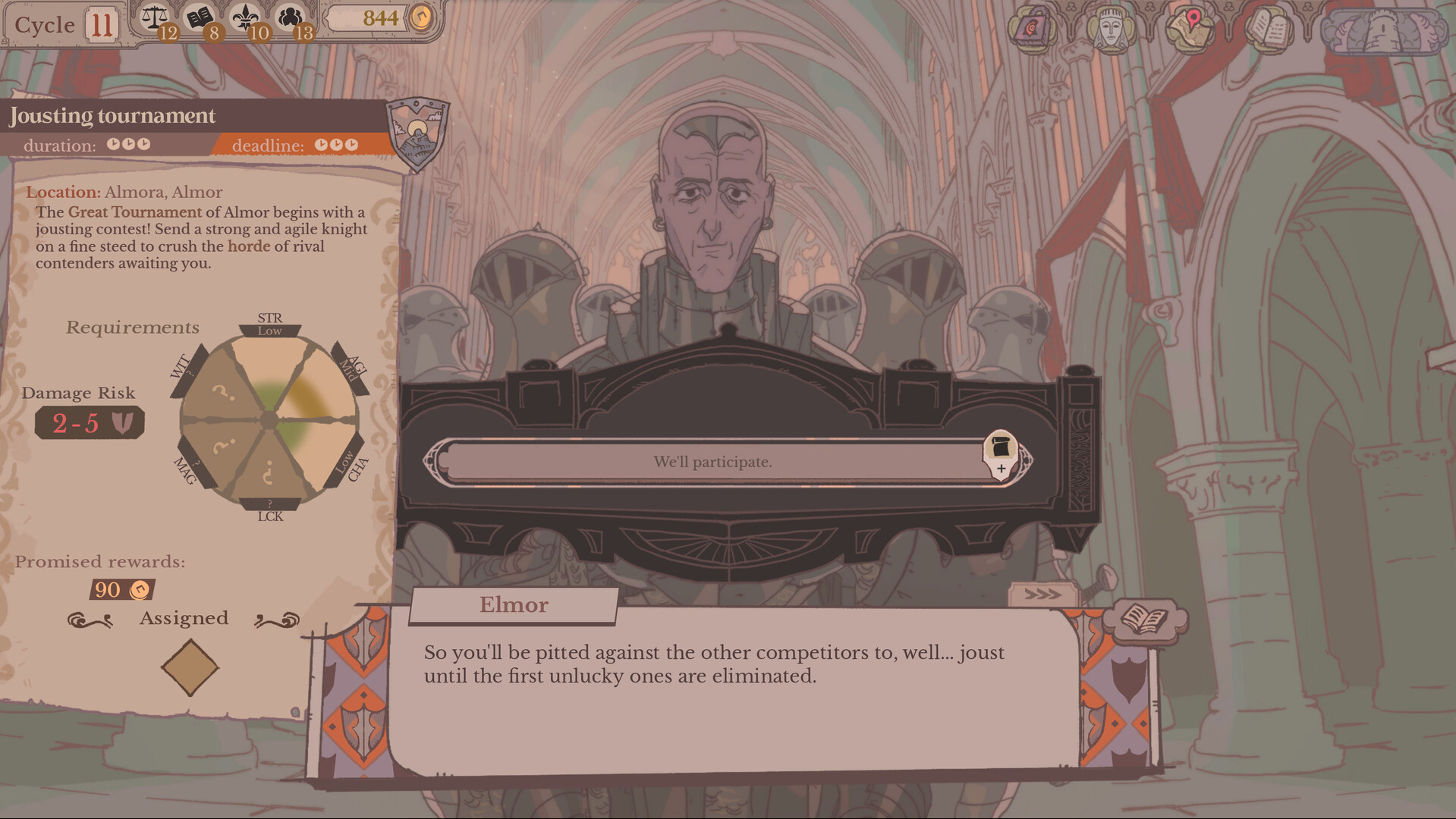
Once the day’s audience is over, don’t expect a chance to relax. If you thought that was stressful, think again, because the focus now shifts to the Round Table, where the kingdom’s requests become quests for our growing roster of Knights.
We’re responsible for deciding who gets sent where, matching each Knight’s abilities to the challenges ahead. Strength, Agility, Magic, Wit and Charisma all play a role, and sending the right person can significantly improve the chances of success.
It sounds simple. You’d think that, anyway.
Personalities complicate everything, as is often the case in real life. Knights develop opinions, rivalries and relationships, and sometimes they create as many problems inside the Tower as they solve outside it. Keeping everyone satisfied becomes part of the job because unhappy companions can eventually leave your court entirely.
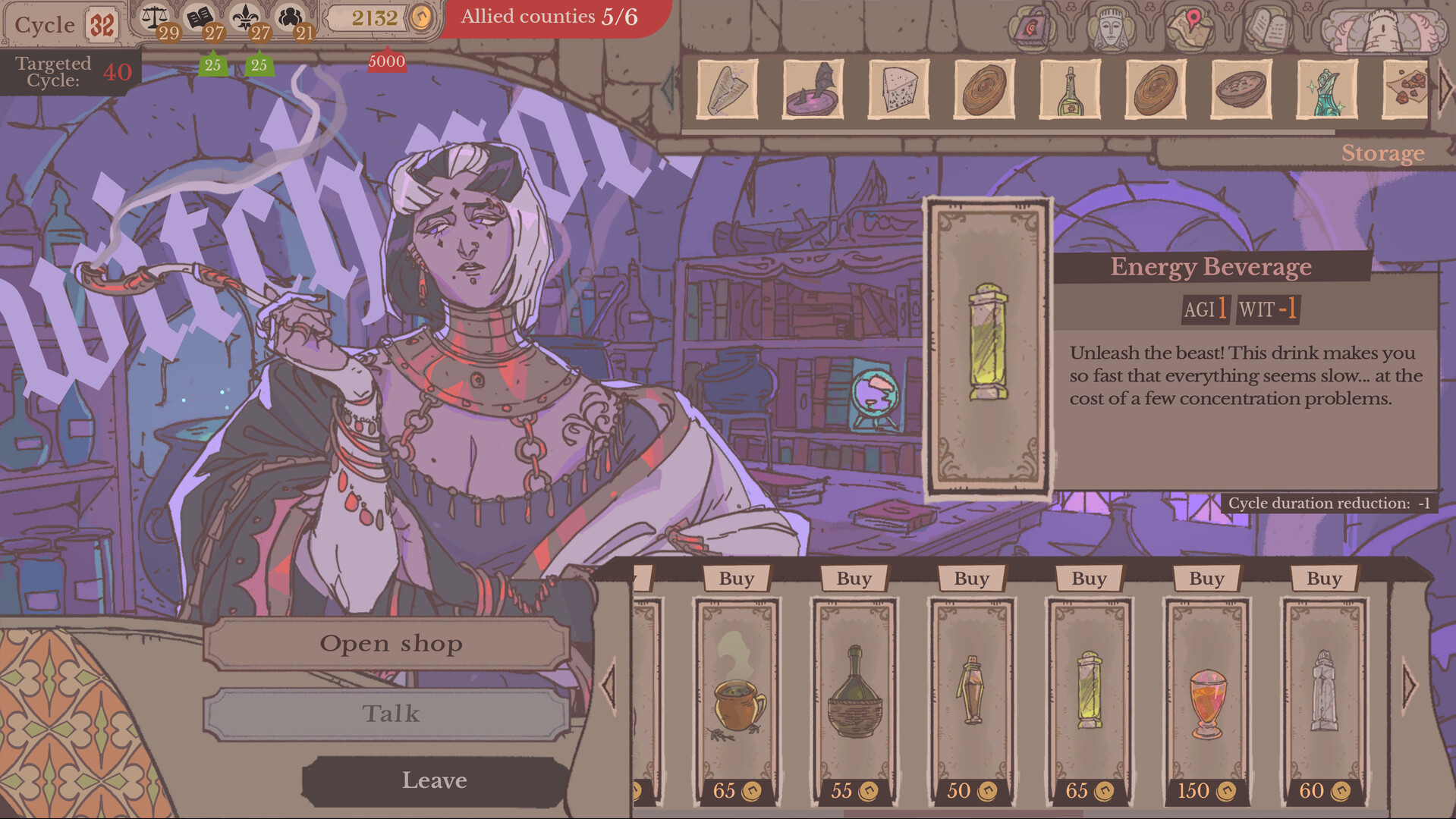
It doesn’t take long to realize that our Knights are much more than collections of statistics. Finding the strongest warrior isn’t always the answer. We have to consider the Knight as a whole and think about how their personality will fit with the rest of the group.
It’s a mess, but in a good way.
We had a ton of fun watching how even carefully planned assignments didn’t always end the way we expected. The game constantly reminded us that having the right numbers on paper doesn’t guarantee the right outcome.
And if only those damn Knights would stop keeping their secrets to themselves. :)
They have hidden likes, dislikes and traits that we gradually uncover through observation or by using advisors such as the Intendant. Learning who enjoys certain tasks, who dislikes particular situations and who works well with others becomes almost as important as equipping them.
That made getting to know our Knights feel like part of the game rather than something sitting on top of the statistics.
Every Choice Leaves a Mark
Before you even dare think that’s that, we have to tell you how morning decisions can affect faction relationships, which in turn influence future events. Quest outcomes change the resources available to you and can affect your Knights’ morale. Expanding the Tower unlocks new facilities, better equipment and more opportunities for future missions.
Feeling overwhelmed yet?
There were times when we had to get up and pace around our desk, trying to make sense of the choice paralysis that had taken hold. It’s almost impossible to predict how a decision made several in-game days earlier might come back to haunt us in a way we never expected.
Then it happens.
We stare at the consequences of our decisions and realize what is about to unfold, and suddenly, it all makes sense.
Nothing is arbitrary. It’s all our fault, in one way or another.
That’s one of the most satisfying things about Sovereign Tower. The game doesn’t simply throw random problems at us to keep things interesting. Decisions made earlier can come back much later, sometimes when we’ve almost forgotten about them.
A Second Chance
It’s not all doom and gloom, despite how we may have made it sound. To encourage experimentation, Sovereign Tower lets us rewind time. We used it to make risky political choices or side with questionable characters just to see how things would unfold before deciding whether that was really the future we wanted.
And surprisingly, knowing we could turn back the clock didn’t take away the tension. Far from it. It actually made us more curious.
Sometimes we wanted to see just how bad a decision could get before deciding whether to live with the consequences or try a different path. The ability to rewind doesn’t make choices meaningless. If anything, it made us more willing to experiment with them.
A Colorful Kingdom With a Dark Side
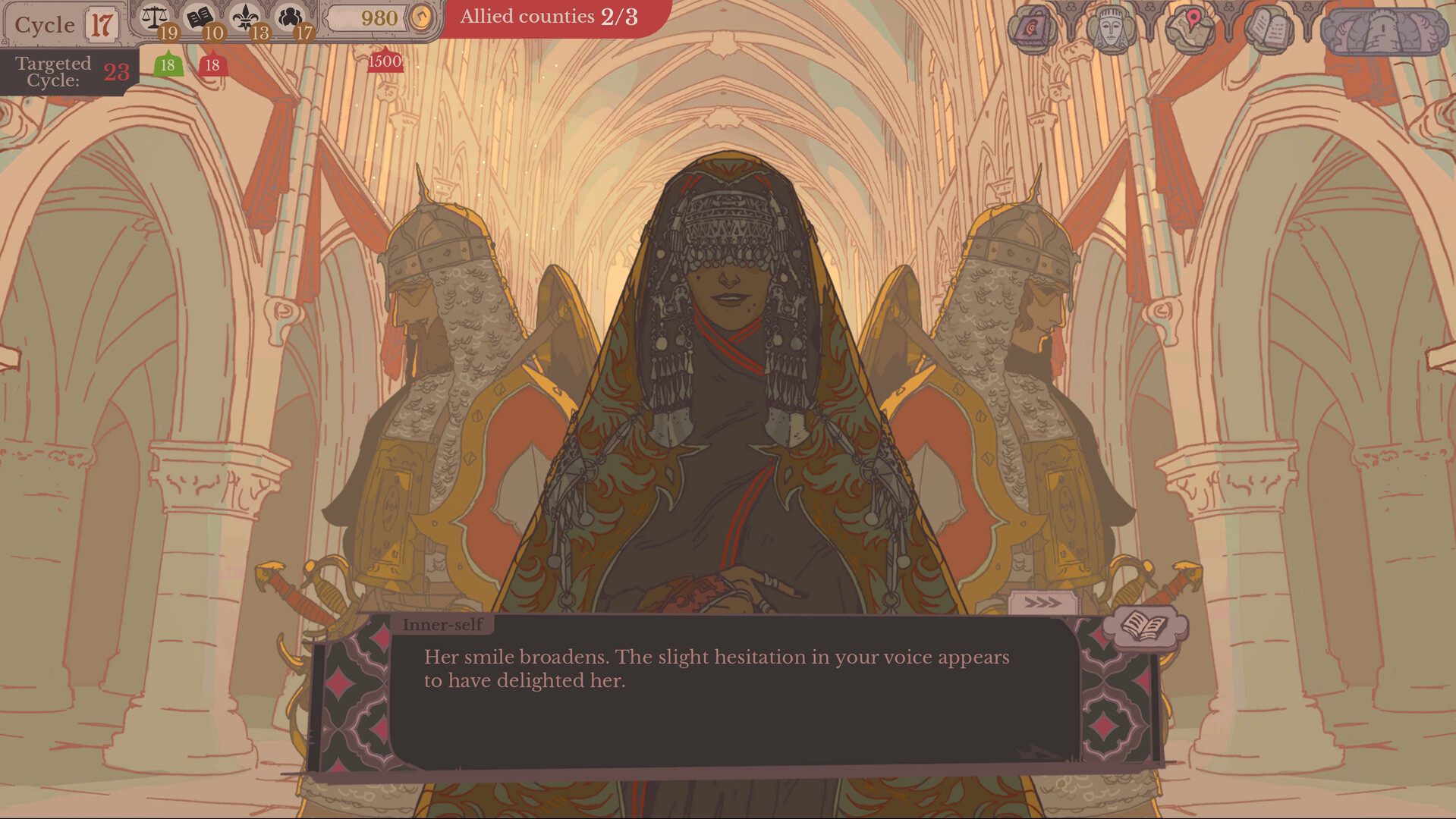
For all its colorful presentation, Sovereign Tower can become surprisingly dark. Political intrigue, murder and morally difficult choices become increasingly important as the story progresses, creating a nice contrast with the game’s often charming presentation.
The soundtrack also knows when to stay out of the way. It sits comfortably in the background during quieter management sections before becoming more energetic when major events unfold. The artwork does much of the heavy lifting as well, giving the characters and important events a visual identity that works alongside the large amounts of text.
The presentation isn’t flashy for the sake of being flashy. It supports the story and helps keep the long stretches of reading from becoming too static.

The Routine Can Become Repetitive
Just like any game, things can become repetitive, especially if you try to do too much in one sitting. Every day follows a familiar structure of hearing requests, assigning quests and reviewing the outcomes. New events, story developments and Tower upgrades help break up that rhythm, but although the consequences of our decisions are unpredictable, the gameplay routine isn’t.
It didn’t bother us in the slightest, but we know there are gamers who will want more than narrative surprises. Much of the gameplay revolves around menus and decision-making rather than direct action.
Again, that’s exactly what we wanted, but consider this a warning before jumping in: Sovereign Tower is a visual novel first and foremost.
If you’re looking for constant action or hands-on combat, this probably isn’t the game for you. If you’re happy spending your time reading, weighing options, managing characters and wondering whether the decision you just made is going to come back and ruin your week, there’s a lot to enjoy here.
The satisfaction comes from watching carefully planned decisions slowly shape the kingdom over time.
Every Ruler Tells a Different Story
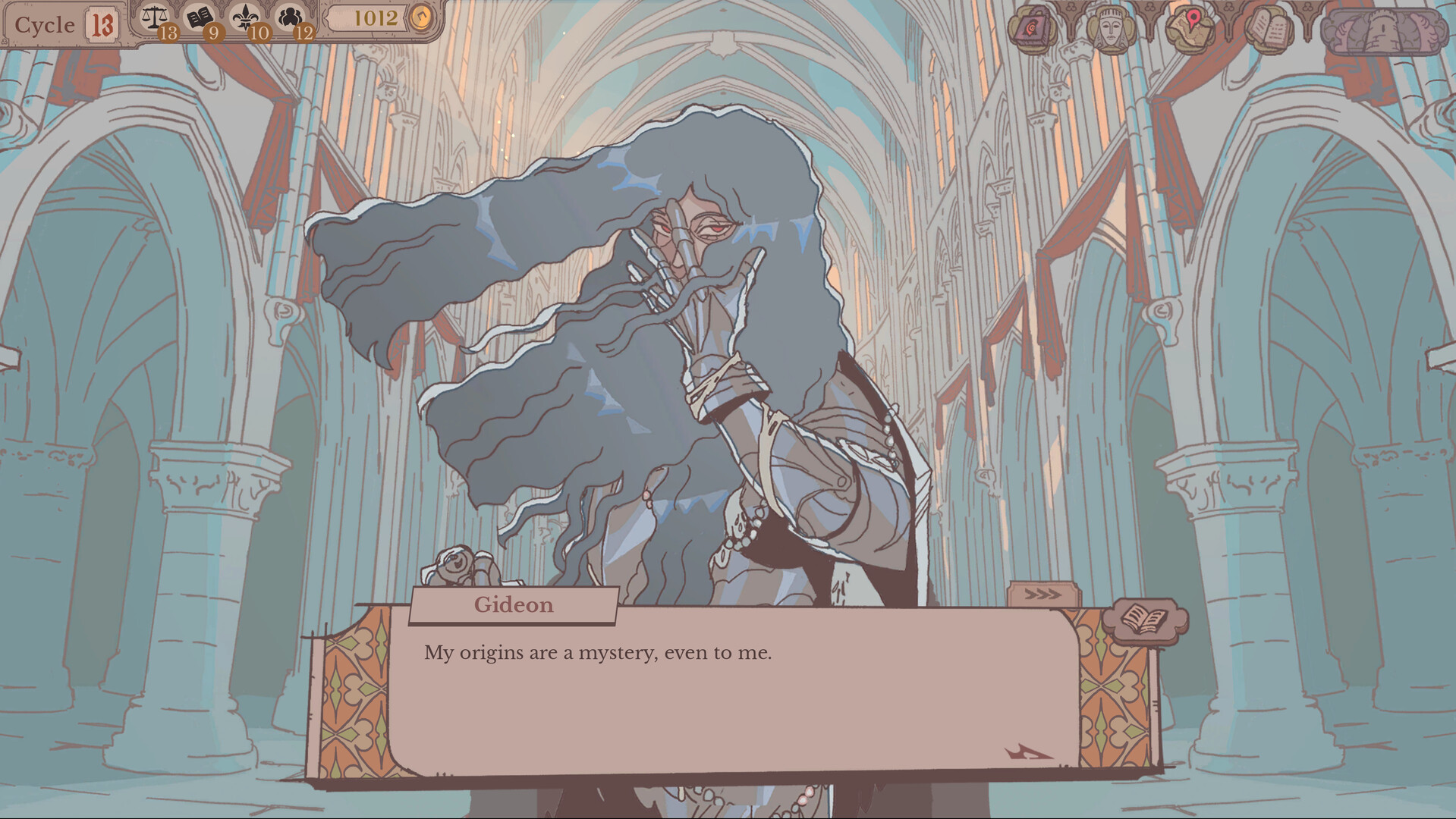
If there’s one thing we’ve learned from Sovereign Tower, it’s that every ruler tells a different story. Some kingdoms will be built on diplomacy, while others will be shaped by selfish ambition. Plenty, however, will collapse under the weight of bad decisions before being rewritten through another trip back in time.
Sovereign Tower understands something that many choice-driven games forget: sometimes the most interesting decision is the one where there is no good answer.
At the end of the day, one thing remains true: you can’t please everyone.

Leave a comment