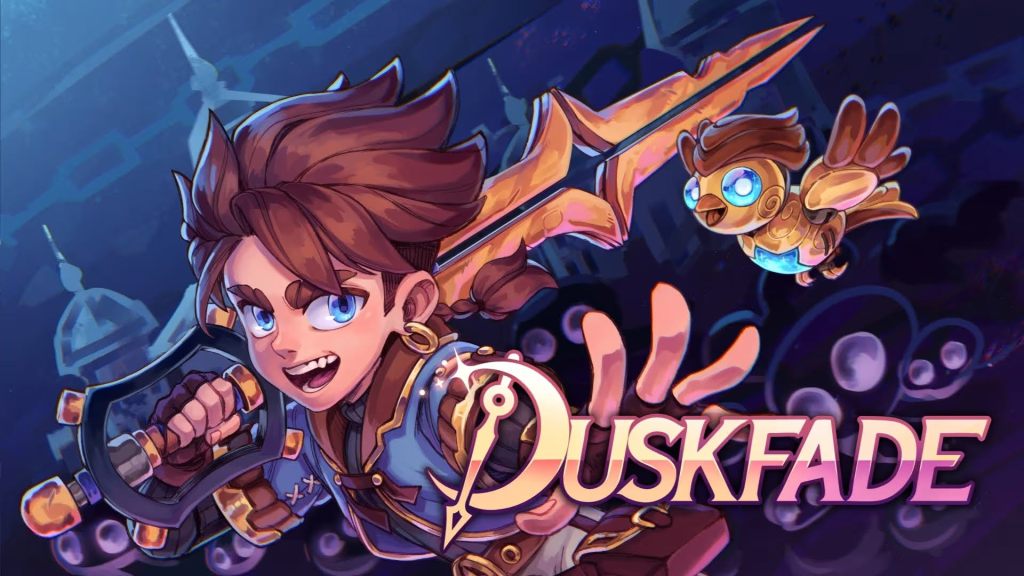
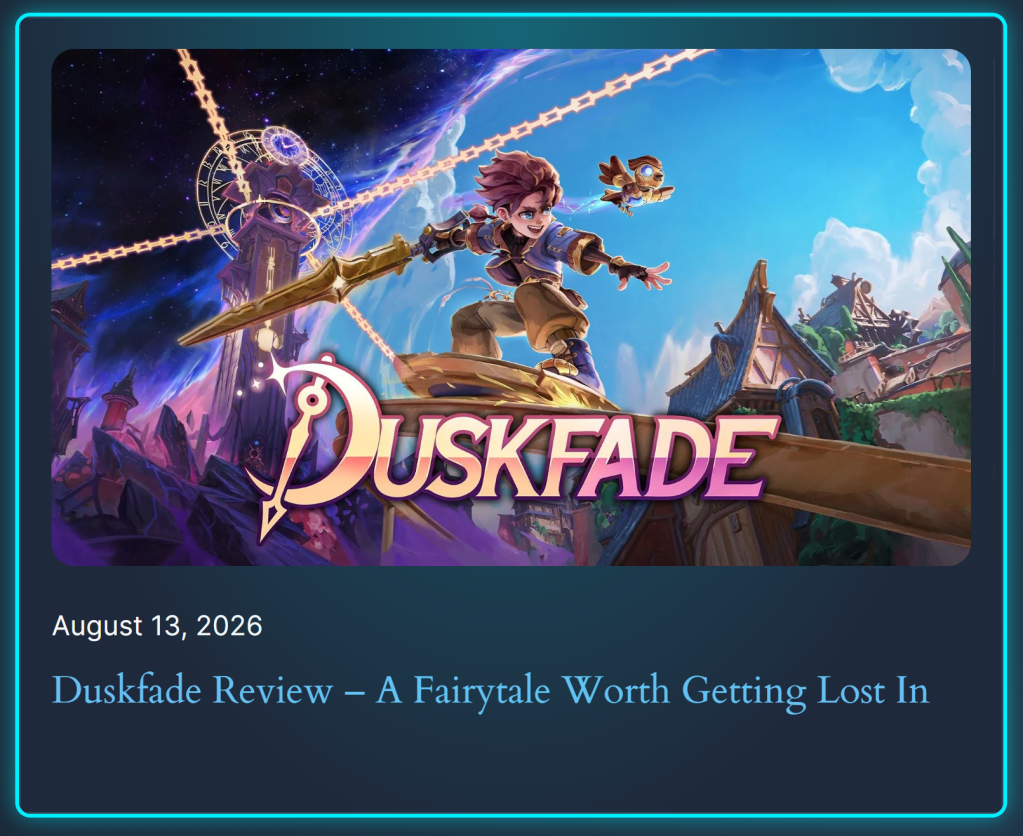
Weird Beluga made their debut with Clid the Snail, a top-down twin-stick shooter. Their new game, Duskfade, shifts to a full 3D action-platformer set in a sunless, clockpunk world. Moving from a locked camera to a fully player-controlled 3D environment requires a complete overhaul in how a team designs levels, combat, and movement.
We spoke with the Weird Beluga team about leaving their top-down habits behind, designing a mechanical bird companion, and the hidden tricks needed to make a 3D platformer feel just right.
This interview would not have been possible without the wonderful people at JF Games. Many thanks João Costa!
Making the Jump to 3D
We started by asking about the shift in perspective. Moving to a full 3D action-platformer is a huge change in engine logic. We wanted to know what design habits from their top-down workflow the team had to actively unlearn to make Duskfade work.
“One of the biggest things you have under control in a top-down twin-stick shooter is the camera. At any given moment, you know exactly what the player can see, which makes things much easier both in terms of performance and when it comes to dressing and building the environments.
Once you move to a fully player-controlled camera, that changes completely. You have to think much more carefully about how you design levels, combat encounters, attacks, and spaces so that everything remains readable and understandable no matter where the player is looking from.“
Building a Bond with Cuckoo
In Duskfade, the main character, Zirian, isn’t alone. Instead of just giving Zirian built-in traversal powers, the team introduced Cuckoo—a mechanical companion. We asked how Cuckoo works under the hood and why they chose the companion route.
“We really wanted to create a world where you could feel that a major catastrophe had happened and that time had passed, with life continuing to move forward despite everything. But to keep that world from feeling too cold or lonely, we wanted Zirian to have a companion to share the adventure with.
From a design perspective, we considered many different possibilities for Cuckoo, from letting the player control him directly to giving him commands during combat. In the end, we decided to keep things simpler. The player can upgrade Cuckoo’s attacks throughout the adventure, but he has his own AI that decides when to attack and which enemies to target.
And from an experience design, we also wanted players to build an emotional bond with the Cuckoo so that the narrative would have a greater impact as they progressed. Part of building that bond is that the Cuco helps you in combat during the gameplay.”
Designing Legible Combat
Since Cuckoo helps out in fights, we were curious about the enemies you face. Good combat needs good AI, so we asked how they designed enemy behaviors to evoke specific feelings during a fight.
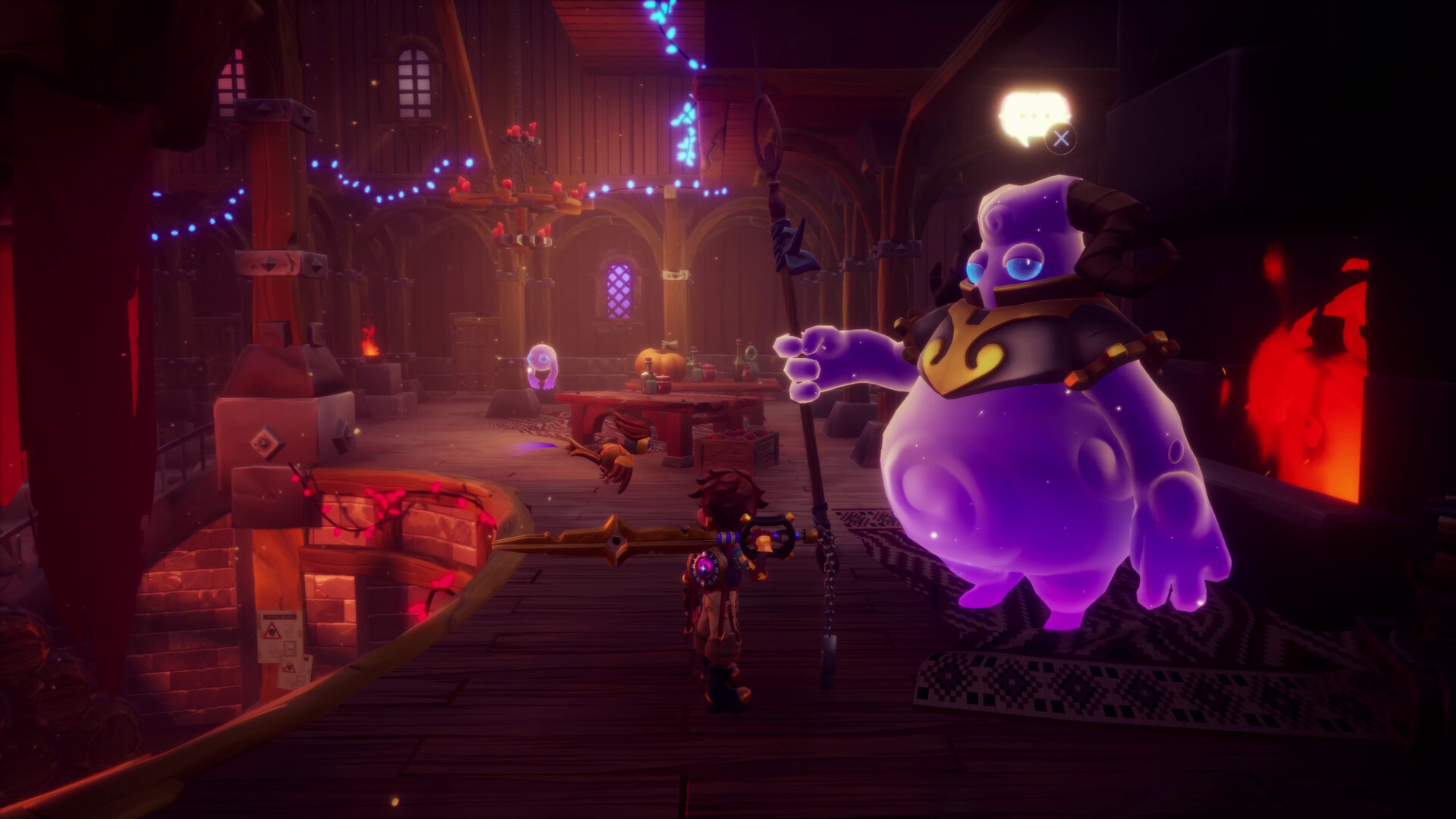
“With the enemies, one thing we were very clear about from the beginning was that we wanted combat encounters to involve several enemies at the same time. We also wanted each enemy type to have different abilities and characteristics, so the player would have to think about how to approach each fight.
By doing this, every encounter can require a different strategy depending on the combination of enemies we place together, which helps keep the combat varied throughout the game.
For us, good combat AI isn’t necessarily about making enemies unpredictable. It’s about making their behaviour legible and expressive. We want players to feel that they’re fighting characters with distinct personalities rather than simply fighting different collections of attack patterns. The visual design establishes the first impression, but the AI is what makes that personality come alive once the fight begins.
That led us to give enemies very different rhythms and intentions. Some enemies are deliberately aggressive and constantly try to close the distance, creating pressure and making the player feel hunted. Others are more cautious, keeping their distance, waiting for an opening, or reacting to what the player does. Their attack patterns, anticipation times, movement and recovery windows were all tuned around those emotional goals.”
Painting a Sunless World
Duskfade stands out visually with its hand-painted style. This aesthetic can sometimes make depth perception tricky in a 3D platforming space. We asked the art team how they kept the game looking like a painting without confusing the player’s eyes.
“Every asset in the game was created with a hand-painted style from the very beginning. On top of that, we developed custom shaders specifically to reinforce that painterly aesthetic, while our lighting setup plays an equally important role in achieving the final look.
Color is another key element. We carefully control saturation and contrast to avoid drifting into a realistic appearance and instead maintain a vibrant, stylized world. One of the biggest challenges was making enemies stand out clearly against the environments without breaking the visual cohesion. To achieve this, we relied on subtle techniques such as rim lighting, outlines, and careful color composition, deliberately avoiding enemy color palettes in combat arenas so that silhouettes remain instantly readable.“
The game’s setting adds another challenge: the sun doesn’t actually exist in this world. We wondered why the team locked themselves into such a tough lighting challenge and how they handled environments like sunlit dunes and ethereal forests.
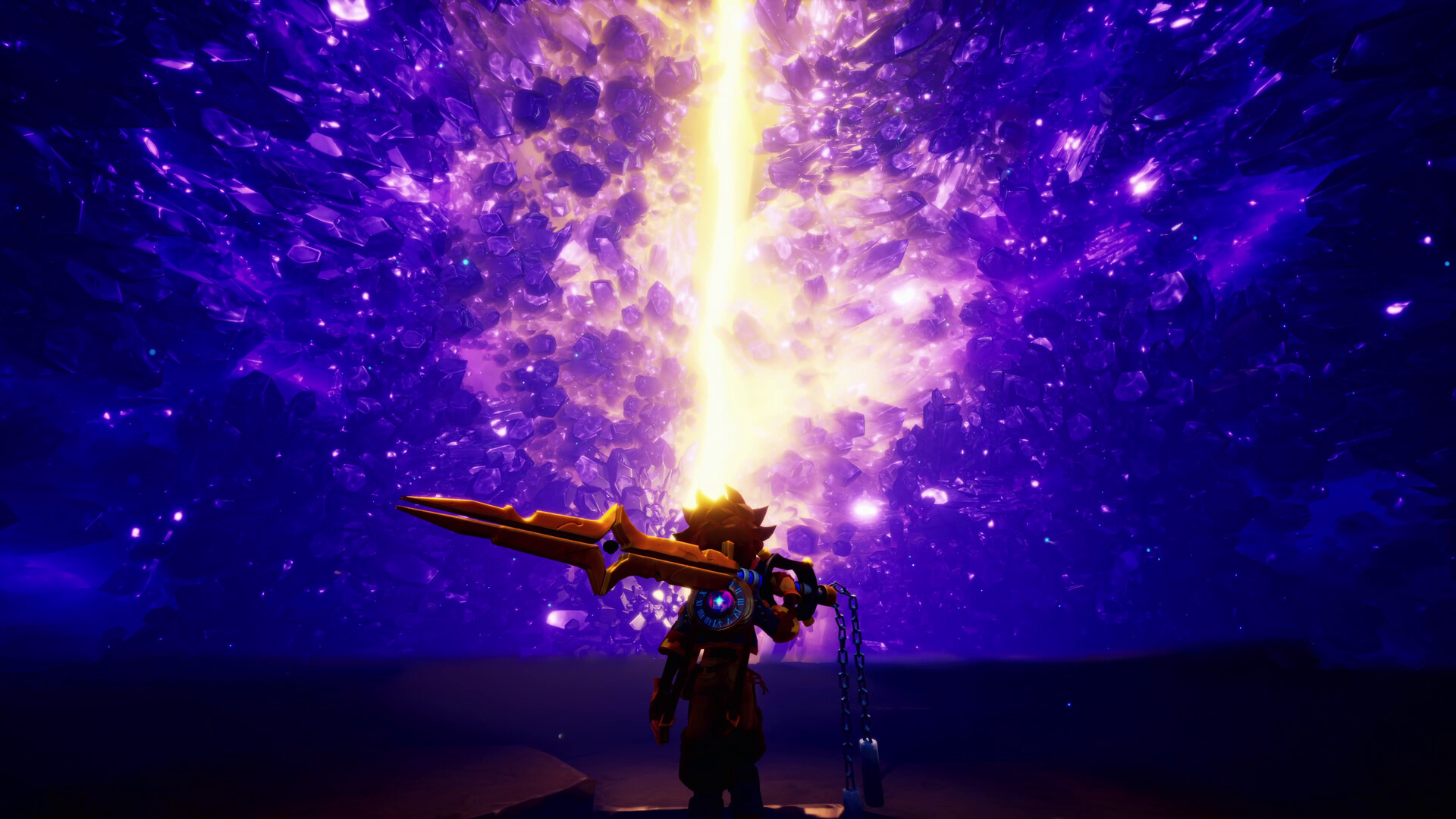
“One unique aspect of Duskfade is that as the story progresses, players can revisit previous areas and discover that their lighting and color palette have completely changed. That meant designing up to five different lighting setups for every major environment in the game, which was a significant artistic challenge.
The biggest secret is simply having great references. We spent a lot of time studying real-world photography, artwork, other games, and even films to understand the mood and atmosphere we wanted to achieve. Those references became the foundation for every lighting decision, helping us create environments that feel magical while remaining visually consistent.”
Hardware Hurdles and Cut Content
Handling that many lighting setups takes a toll on hardware. We asked about the struggle to keep the physics and framerate steady across platforms, and if handheld constraints forced them to shrink any of their larger clockpunk environments.
“Maintaining stable performance across every platform was one of the biggest technical challenges of the project, especially on handheld systems. In some cases we had to make platform-specific optimizations or reduce environmental complexity in certain areas, but our priority was always to preserve the artistic vision. Whenever we removed or simplified something, we did it in a way that players would hopefully never notice, allowing every version of the game to feel complete.
The most difficult part was optimizing for Nintendo Switch 2 before the hardware was even available to us. Our strategy was to first target Steam Deck as a performance benchmark, which forced us to optimize the game early. That approach paid off later in development, making the transition to Switch 2 much smoother and helping us avoid unpleasant surprises near release.”
Game development always involves ideas that get left on the cutting room floor. Given the clockpunk theme, we asked if any time-based puzzles or mechanics were prototyped but ultimately scrapped.
“At one point, we considered mechanics that would allow the player to rewind time, making the enemies, the environment, and the player themselves move backwards. However, because of the complexity involved, and because we felt it was a mechanic better suited to puzzle-focused platforming, it didn’t fit particularly well with the rest of the game’s systems, even though it fit perfectly with the setting and theme.”
The Secret to a Good Platformer
Cutting the clutter let the team focus on the core of any good 3D platformer: the movement. Finally, we asked about their biggest takeaway when tuning jump arcs and character weight, and what advice they’d give to other indie developers trying to build their first 3D platformer.
“The most important lesson we’ve learned is that, for a platformer to feel good, it needs to be full of small tricks and assists that help the player play better without them even noticing. That’s why it’s really important to play a lot of games in the genre and analyze all those little things happening behind the scenes.
It’s also important not to focus only on the best examples. Playing some more amateur platformers can be just as useful, because when those small details are missing, it becomes much easier to notice them and understand why they’re so important.”
Want to see how all these pieces came together? Check out our full review of Duskfade right here to find out if Weird Beluga stuck the landing! (spoiler: it did! So much that we gave it a 9/10!)







Leave a comment