

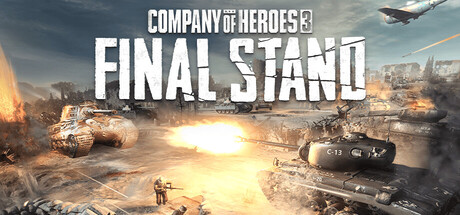
Company of Heroes is one of those games that has followed certain formula for years, not wanting to get out of a certain comfort zone and insisting on making territorial control just as important as battlefield tactics. Company of Heroes 3: Final Stand shakes things up by asking us not to conquer the battlefield, but to survive it.
In this standalone release there’s no addtional campaign or multiplayer mode. Relic Entertainment has built a roguelite wave-defense experience that can be played solo or with a friend. It feels almost strange seeing Company of Heroes abandon one of its defining mechanics, but after a few rounds it becomes clear that this isn’t simply a side mode stretched into its own release. It has been carefully redesigned around a completely different style of play.
Forget Territory. Hold the Line.
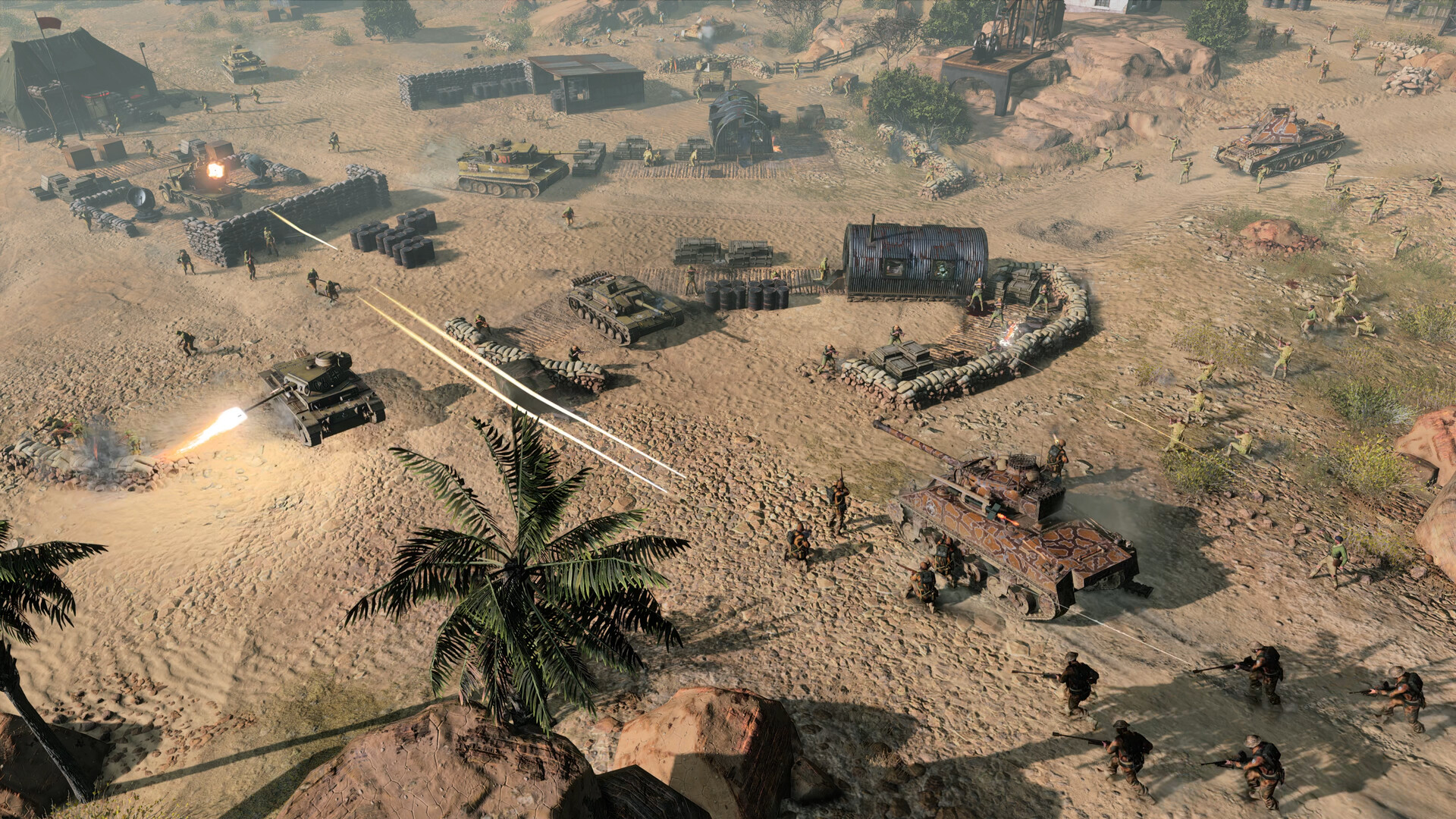
Every match revolves around the objective of keeping your headquarters standing. Enemy forces arrive in increasingly dangerous waves from multiple directions, leaving us scrambling to establish defensive positions before the next assault begins. Machine guns cover open approaches, anti-tank guns protect key roads, infantry plug the remaining gaps, and engineers spend almost every quiet moment repairing damaged defenses before everything starts again. it’s intense.
Unlike the main game, there are no sectors to capture or fuel points to fight over. Resources are awarded automatically and increase after every wave, removing one of the biggest sources of pressure found in traditional Company of Heroes matches. We actually enjoyed this change far more than expected.
Without constantly worrying about manpower, fuel, or munitions income, we found ourselves paying much more attention to positioning, defensive planning, and reacting to whatever the game decided to throw at us next. Staring at the resource bar was replaced with studying firing lanes and wondering where the next armored assault would appear. It makes the entire experience feel more focused, even if longtime fans may initially miss the classic tug-of-war over territory.
A Familiar Battlefield with New Rules
Although everything looks and sounds like Company of Heroes, many of its systems have been adjusted to better fit this new format.
Units are recruited exclusively through barracks rather than the usual production structure progression, while many of them feature altered statistics and balance changes designed specifically for Final Stand. These aren’t dramatic enough to make veterans relearn the game, but they are noticeable enough to reinforce that this isn’t simply Company of Heroes with waves added on top.
Commander abilities are now free to use instead of consuming valuable munitions, although they’re balanced by significantly longer cooldowns. It changes how we approached difficult situations. Rather than saving every ability for the perfect moment because of resource costs, we became more concerned about whether an important cooldown would be available when the next boss arrived. It’s another small adjustment that ends up changing the rhythm of every battle.
The Roguelite Structure Works Surprisingly Well
Perhaps the biggest surprise is how naturally the roguelite progression fits into Company of Heroes. At the end of every wave, we’re presented with randomized upgrades. These can introduce entirely new unit types, unlock powerful abilities, or improve existing forces through passive technologies. Every decision lasts for the remainder of the run, gradually shaping an army that often looks very different from the one we started with.
Some runs lean heavily into infantry, while others become armored powerhouses or artillery-focused defensive lines. Since the choices are randomized, adapting to what the game offers becomes part of the strategy.
Outside individual matches, Final Stand also includes persistent progression for each faction. Unlockable upgrades, faction-specific perks, and new abilities provide a reason to keep returning even after successful runs. It isn’t overly complicated, but it offers enough long-term progression to make repeated attempts feel rewarding.
Built for Replayability
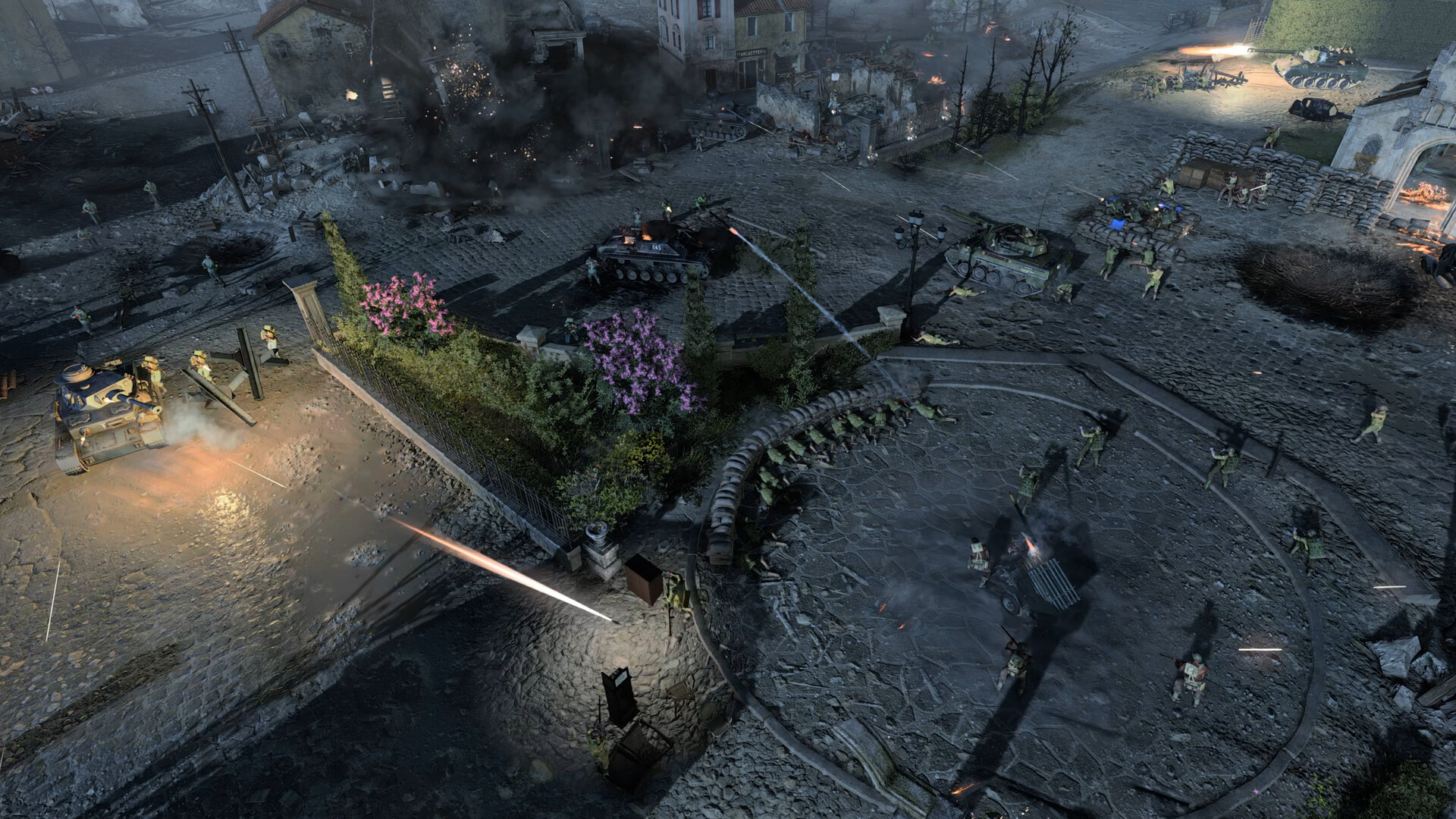
Four playable factions each encourage different strategies, while five dedicated maps feature unique layouts that constantly force us to rethink our defensive setup. Dynamic battlefield events can suddenly change the flow of combat, and dozens of boss encounters ensure that later waves rarely play out the same way twice.
If you look for an even greater challenge you can move through eight difficulty levels or jump into Endless Mode once the standard twelve-wave structure no longer feels intimidating.
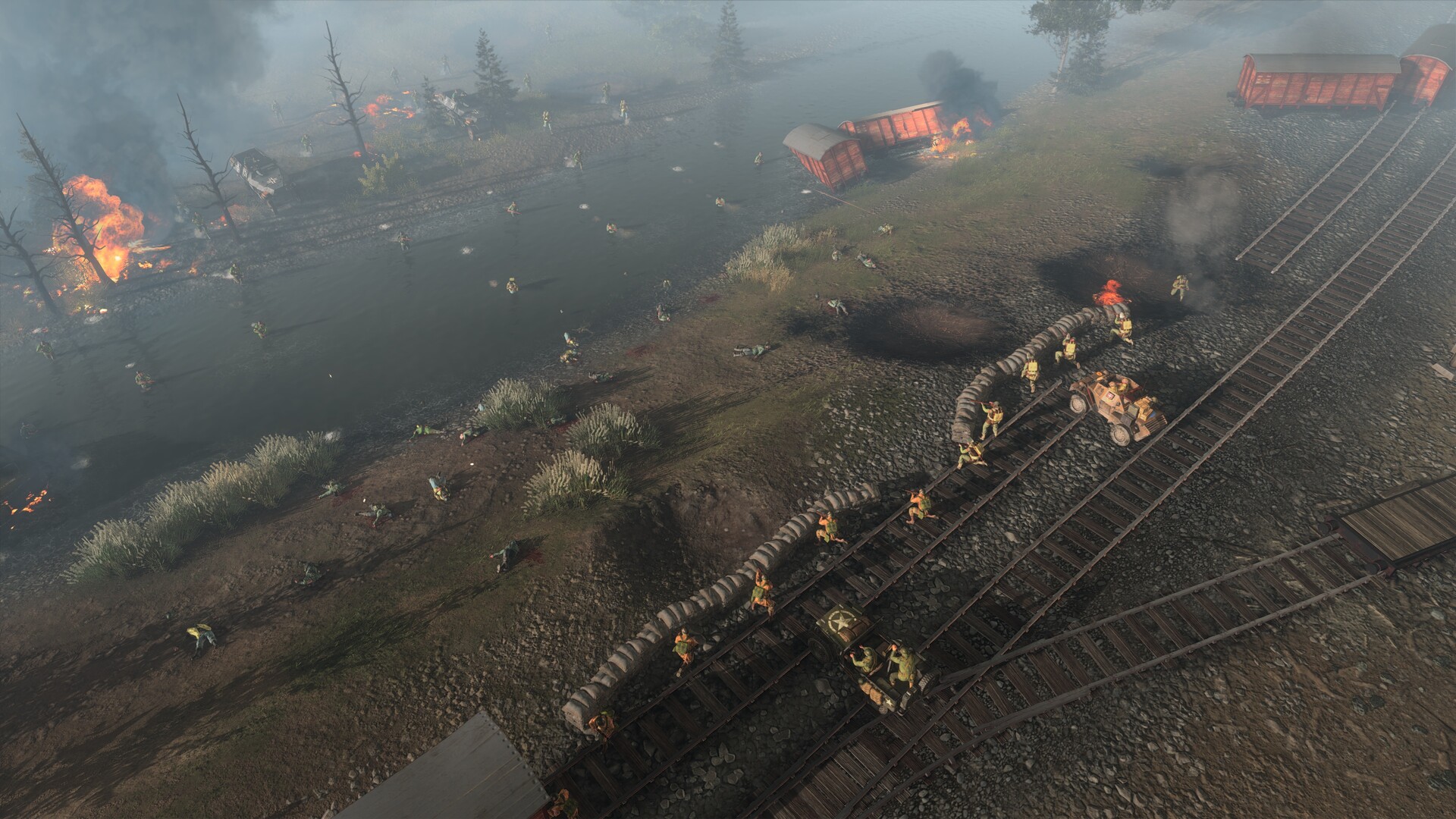
Playing cooperatively is where the mode arguably shines brightest. Coordinating defenses with another player naturally creates those memorable moments where one flank collapses while the other desperately holds on just long enough for reinforcements to arrive. Solo play remains enjoyable thanks to the streamlined economy, but sharing responsibilities with another commander adds another layer of tactical decision-making.
Not for Everyone, but Worth the Experiment
As huge fans ever since the first game, it was joy to see how Company of Heroes 3: Final Stand takes familiar mechanics, strips away much of the traditional RTS management, and rebuilds them around preparation and adaptation, with strong focus on survivability. It’s still preserving enough of Company of Heroes’ tactical combat to satisfy players who are into proper positioning and cover.
We do strongly believe that some series veterans may dismiss the simplified economy and wave-based structure as being too different from what they expect. For us, though, that’s exactly what makes it interesting.
8/10
Game: Company of Heroes 3: Final Stand
Developer: Relic Entertainment
Publisher: Relic Entertainment
Platform Reviewed: PC
Available On: PC
Genre: Real-Time Strategy, Roguelite, Wave Defense
Release Date: 2026
Players: Solo / Online Co-op (2 Players)

Leave a comment