

Mining, roguelites, bullet-hell combat, and co-op aren’t exactly a rare combination these days. Plenty of games mix those ingredients together, hoping they’ll stumble onto something memorable. MineGeon: Renegades looked like another one of those games when we first booted it up. After spending several hours descending into the depths of PAIMO, though, we found something that separates it from the crowd. Instead of relying on one standout mechanic, it succeeds because nearly every one of its systems complements the others.
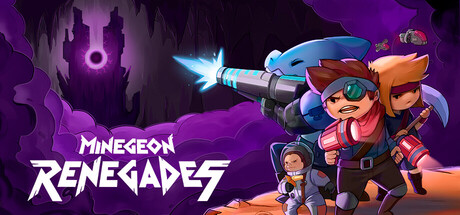
The story begins after a failed heist leaves our crew stranded on the mysterious planet PAIMO. Our tank and gunslinger are badly injured, leaving us, playing as the Engineer, to head underground in search of valuable minerals that might eventually buy our freedom. The opening moments had us thinking of Terraria. We grabbed a weapon, cleared a few slimes, picked up a pickaxe, and started smashing rocks. That comparison doesn’t last long, however. Once the game’s progression systems reveal themselves, MineGeon: Renegades quickly establishes its own identity.
Every rock you mine contributes toward your next level, and each level rewards you with a Gadget. These function much like roguelite upgrades, letting you gradually shape your build throughout a run. Some increase your survivability by regenerating health after clearing rooms, others improve crowd control with stun effects, while utility-focused Gadgets can even refund keys after opening treasure chests. Not every choice feels equally exciting, but there are enough meaningful combinations that experimenting with different builds remains satisfying.
Progression itself revolves around mysterious Monoliths scattered throughout the underground. Activating one presents several possible routes deeper into PAIMO, each hiding a different collection of rooms. Combat encounters, exploration segments, resource-heavy areas, and mini-games are mixed together in a way that rarely feels repetitive. Better still, none of the paths seem like obvious mistakes. We often found ourselves simply choosing whichever sounded the most interesting rather than trying to solve an optimal route.
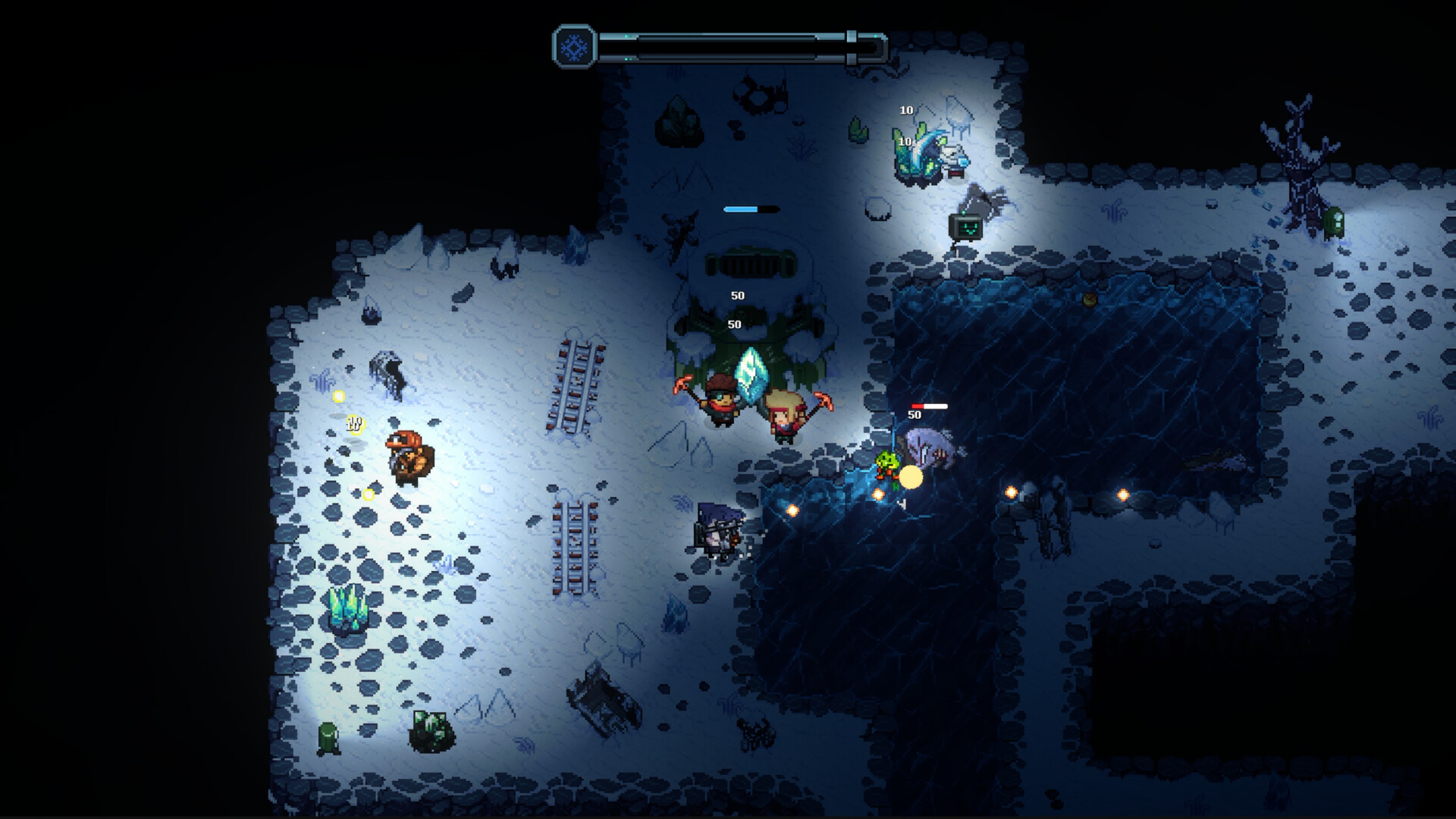
Once inside a room, the pace immediately shifts into high gear. Combat demands constant movement as enemies blanket the screen with projectiles. Some leave pools of poison behind, others fire rapid spreads in multiple directions, and stronger enemies happily fill nearly every safe space with bullets. Dodging becomes just as important as shooting, especially since healing opportunities are fairly limited. Whenever a Gadget offering passive health regeneration appeared, we rarely hesitated to grab it.

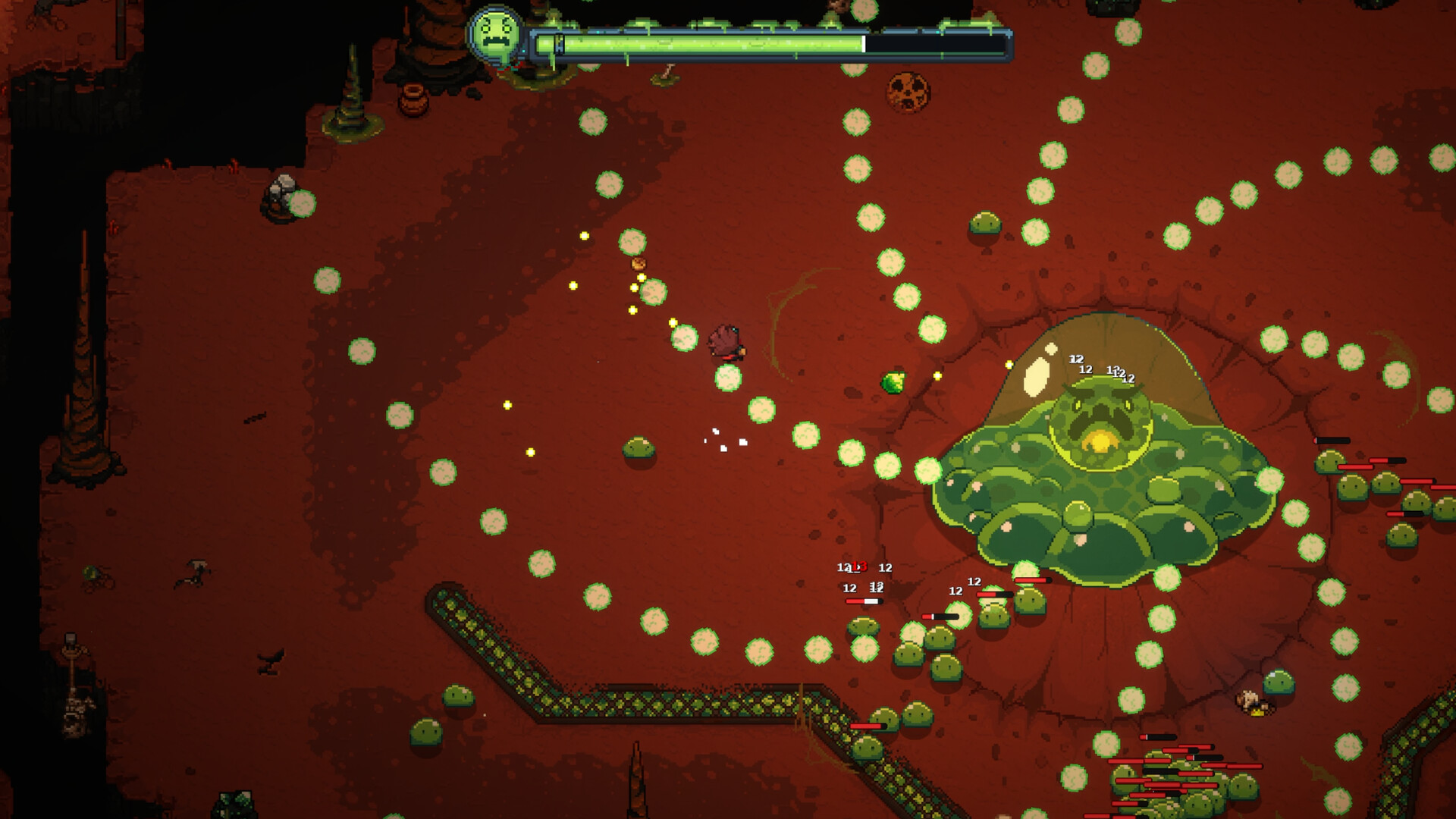
The bosses crank that intensity even further. Each biome ends with a battle that feels closer to a proper bullet-hell shooter than a traditional action roguelite. Success depends less on your damage output and more on reading attack patterns while carefully weaving through impossible-looking walls of projectiles. They’re demanding encounters, but they rarely feel unfair. Every defeat left us feeling like we simply needed another attempt rather than blaming the game itself.
Combat becomes even more entertaining once your arsenal starts expanding. Standard rifles, shotguns, and other firearms all feel responsive, but the Ultimate abilities steal the spotlight. Playing as the Engineer gave us access to a destructive drone that ricochets around rooms carving through enemies, deployable turrets that hold defensive positions, freezing grenades, and even the ability to duplicate companions. Those abilities dramatically change how encounters play out and encourage experimenting with different approaches instead of relying on basic gunplay.
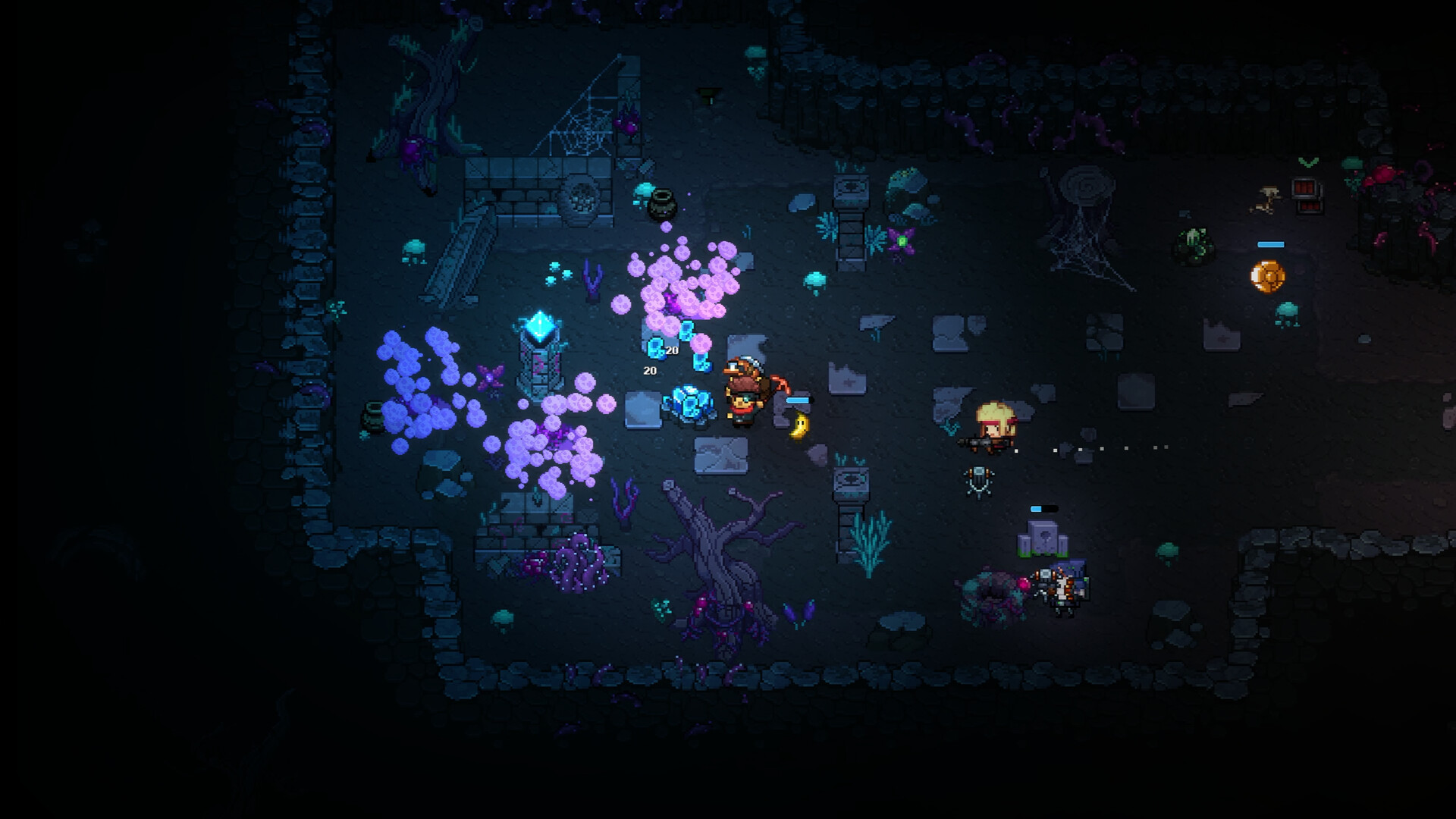
Those companions deserve special mention. Rather than feeling like cosmetic pets, they’re active participants in every fight. Our space monkey happily unloaded its banana blaster into anything that moved, while the ninja rabbit darted through enemies with quick melee attacks. New companions unlock steadily as you progress, each bringing their own combat style and personality. It’s one of those systems that could have easily been an afterthought but instead becomes something you’ll constantly tweak between expeditions.
The game also breaks up its combat surprisingly well through several objective-based mini-games. One has you collecting nearby minerals and feeding them into a furnace before defending it against incoming enemy waves. Another sends you sprinting through obstacle courses packed with traps, mines, and flying projectiles. Neither overstays its welcome, and both offer welcome variety whenever you need a short break from constant firefights.
Outside of combat, MineGeon: Renegades rewards exploration in subtle ways. Hidden passages often conceal bonus resources or experience, encouraging you to poke around suspicious corners instead of rushing toward the exit. We stumbled across what initially looked like a dead end before discovering a narrow hidden corridor leading to a dangerous room packed with valuable materials. Moments like that make exploration consistently worthwhile.
One mechanic we particularly appreciated is how the game handles greed. Valuable minerals fuel your permanent progression, but holding onto them for too long comes with obvious risks. Sending resources back to your ship secures them, while pushing deeper with a full inventory leaves far more at stake if everything falls apart. It adds a layer of tension beyond simply trying to survive the next encounter.
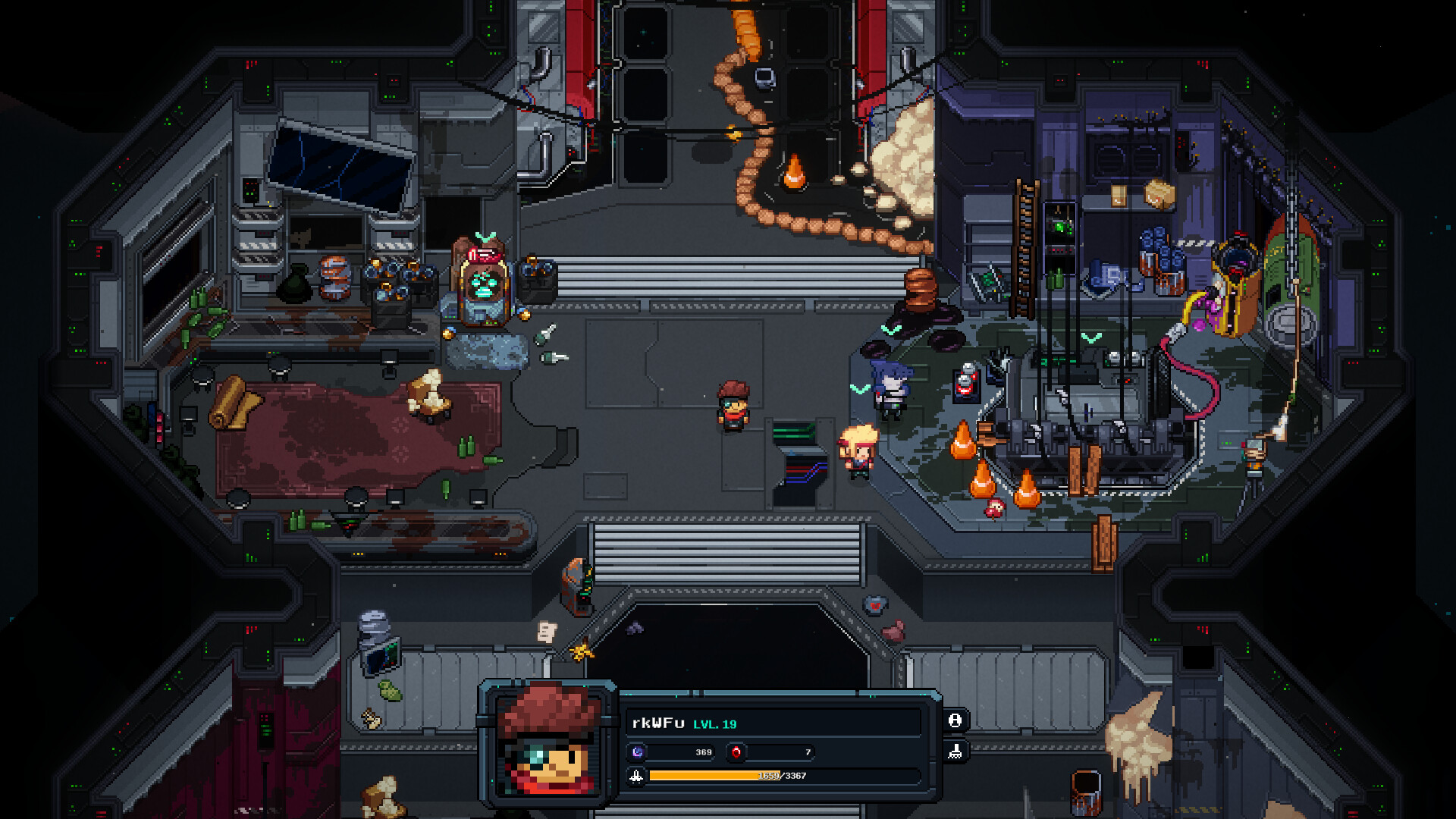
Between expeditions, your spaceship serves as an enjoyable hub. This is where permanent upgrades are purchased, companions are swapped, new Renegades become available, lore entries can be read, and difficulty modifiers can be activated for players looking for an even tougher challenge. There’s also an extensive decoration system with hundreds of unlockable items that lets you personalize your living space. The editor itself is fairly basic—we would’ve liked options to rotate furniture and had a little more room to work with early on—but it’s still a pleasant distraction between runs.

Although we primarily played solo, it’s obvious MineGeon: Renegades was designed with cooperative play in mind. Up to three players can descend together, combining different classes, sharing upgrades, voting on routes through Monoliths, and occasionally splitting up to maximize rewards. Even alone, the systems remain enjoyable, but we couldn’t help thinking some of the later encounters would become wonderfully chaotic with friends.
Visually, the game consistently impressed us. The pixel art is packed with personality, character animations are expressive, lighting effects subtly react to your surroundings, and every biome introduces fresh textures, enemies, and environmental details. Small touches—like console lights reflecting across your character while interacting with terminals—give the world far more life than you’d expect from its retro-inspired presentation.
The soundtrack deserves praise as well. Exploration themes create a relaxed atmosphere while mining, only for energetic combat tracks to seamlessly kick in once enemies appear. Before long, we found ourselves settling into an enjoyable rhythm of exploring, gathering resources, surviving frantic firefights, and preparing for one more descent.
MineGeon: Renegades succeeds because every part of its design feeds naturally into the next. Mining supports progression, progression improves combat, exploration rewards curiosity, and permanent upgrades always give you another reason to head back underground. Whether you’re playing alone or bringing a couple of friends along for the ride, it’s a roguelite that understands how to keep each run engaging without constantly throwing new mechanics at the player.

Leave a comment