
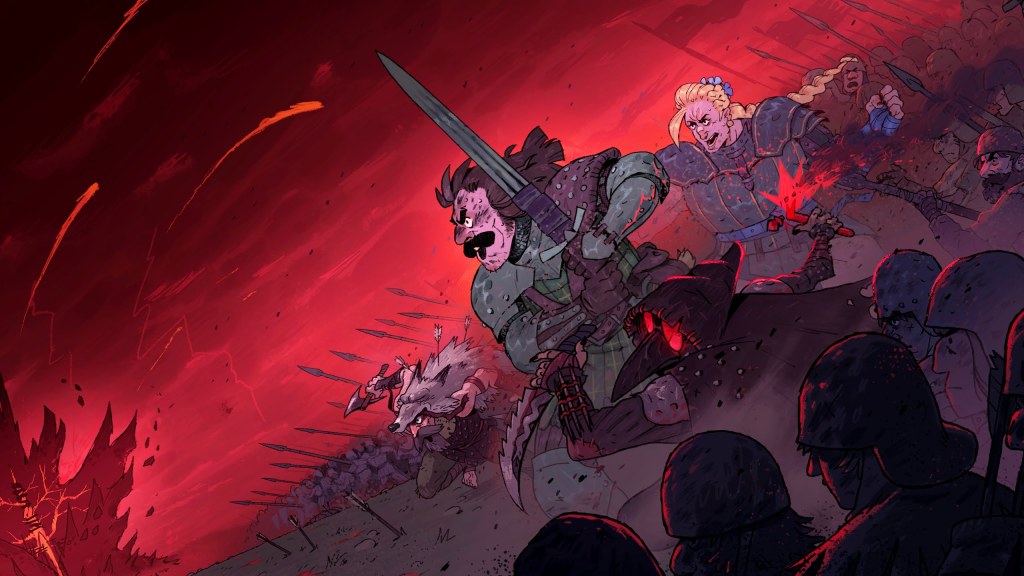
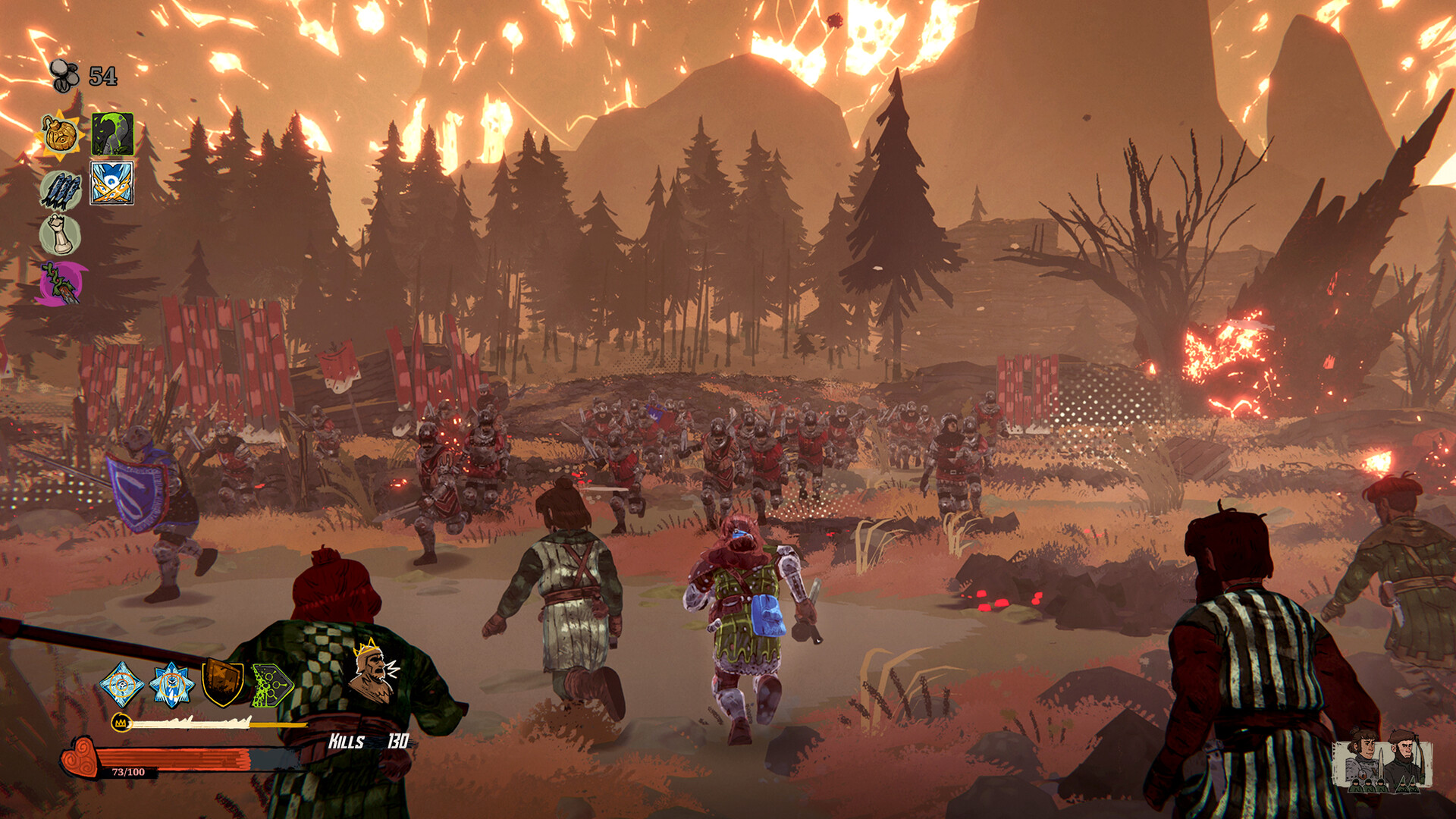
In some games, all you need is a sword, a few dozen loyal soldiers, and hundreds of enemies foolish enough to stand in your way. Tears of Metal embraces that idea from the very first battle, throwing us into large-scale skirmishes that feel somewhere between Dynasty Warriors and a roguelite.
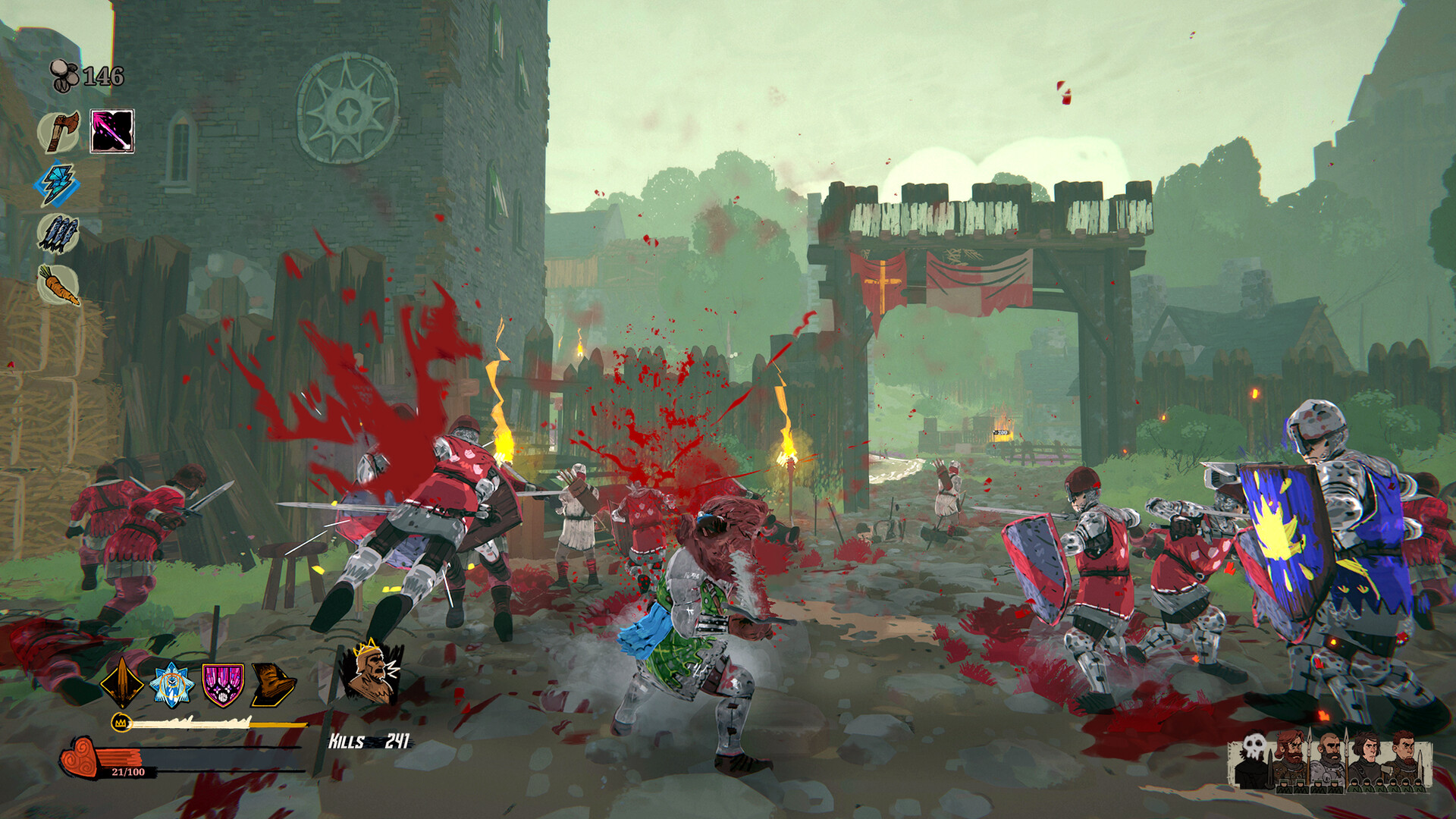
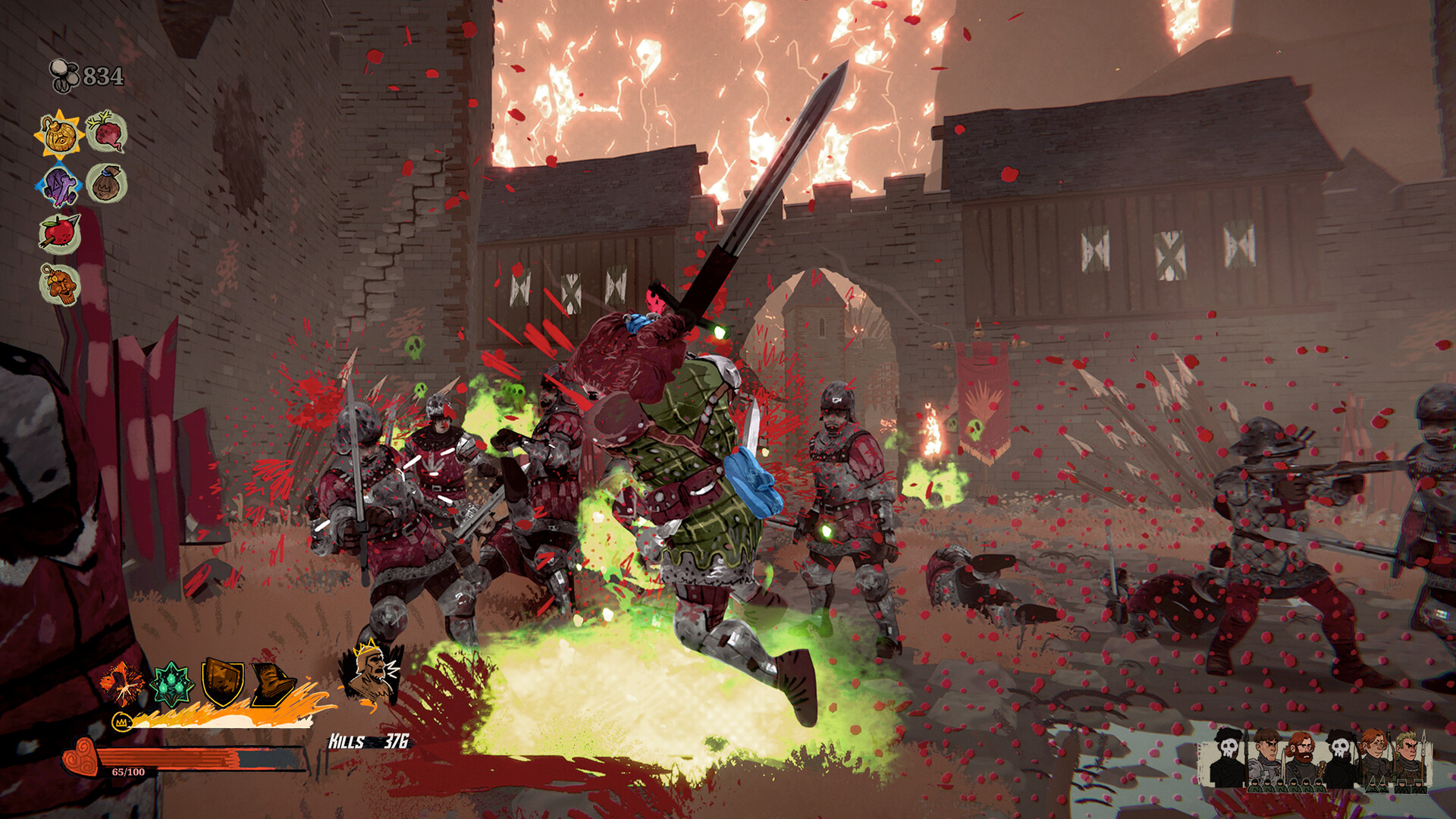
You’re usually thrown onto a battlefield with your army, where you need to clear a set of objectives. While doing so, you cut and slash through enemy lines using light and heavy attacks, as well as blocking and dodging. We were pleasantly surprised to discover that you can also perform combos by pressing buttons in a certain order. The animations are well done and the blood splashing is a true sight to behold, especially when you’re surrounded by enemies and start pulling off those combos. Sights like these made us scream “Freedom!” more than a few times. Yes, you can completely loosen up and button-mash your way out of most battles, but the real joy comes from combining attacks and seeing an enemy fly as if hit by a bull, a train, or probably both.
The best part about Tears of Metal is that you don’t have to be alone and the battlefield will welcome up to 3 of your friends.
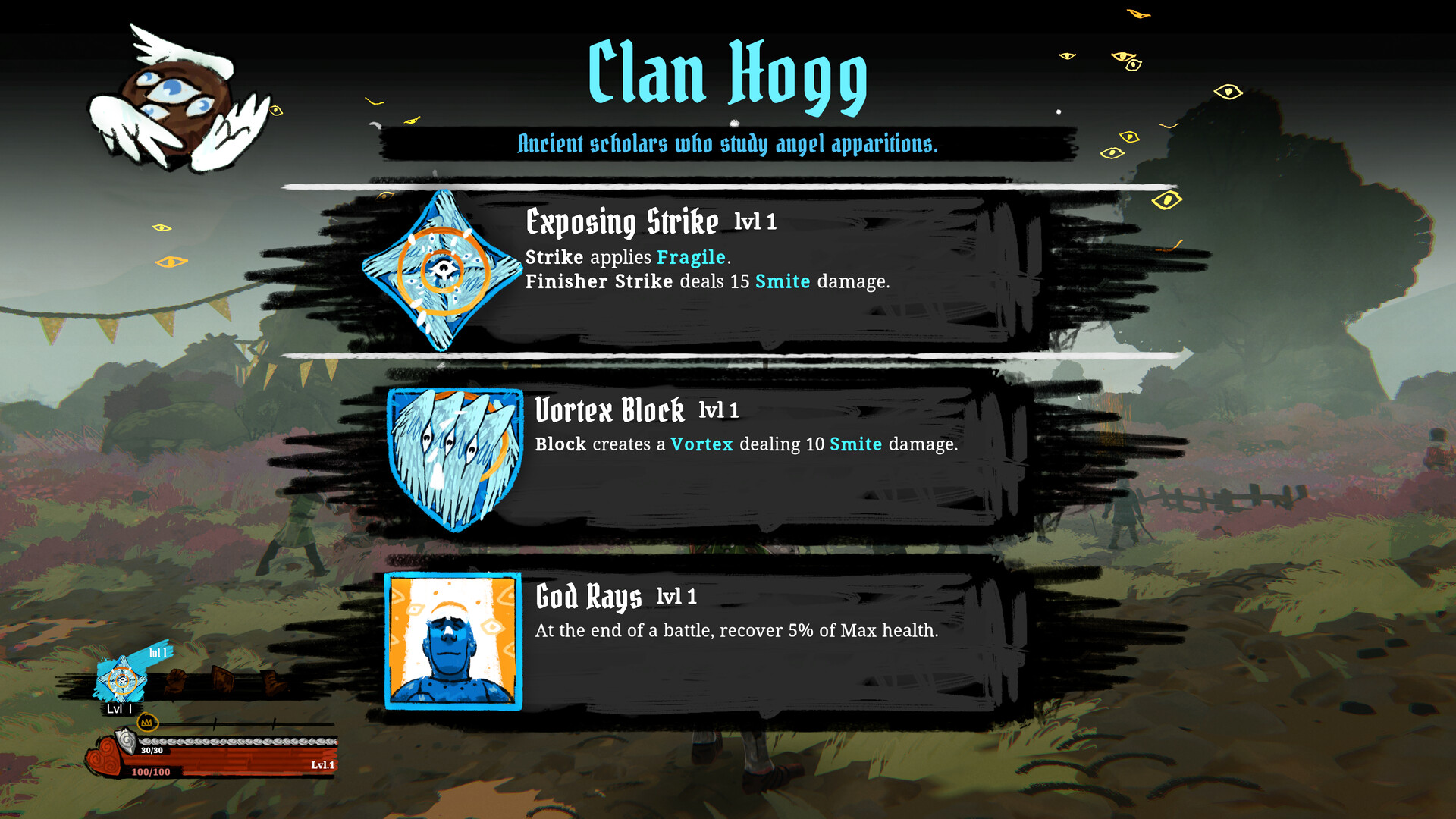
There’s also a special gauge that fills as you slaughter enemies. Once filled to the brim, you can spend it to unleash an ultimate attack that’s far more devastating than anything else on the battlefield. Tears of Metal isn’t big on realism, and soon you’ll also have to pick a clan. The Alchemist clan, for example, lets you spread toxic flames, whereas another clan lets you create a pulling vortex. Utilizing an ultimate or any of the magic abilities is a sight to behold, and we never got tired of seeing them in action. To add even greater depth, your clan rewards victory by letting you choose an emblem, which you can attach to an action slot. It’s a nice boost to our strength that adds a series of finishing effects, such as longer and stronger burning (since we chose the Alchemist clan).
Don’t be fooled into thinking Tears of Metal starts out easy. Your failures aren’t rewarded; if you fail an objective, the threat level rises, paving the road toward a hazard that makes things a lot harder. If you do complete an objective, you earn coins to heal yourself or open a chest with gear right on the battlefield. On our first run, we didn’t take the difficulty seriously enough and paid the consequences dearly later down the line—the longer the path we chose, the stronger the enemies became. Tears of Metal has a well-balanced risk-and-reward system, and it’s up to you to decide how greedy you want to be. The enemy variety is solid, though standard foes seem a tad too dumb and far too eager to throw themselves onto your blade. Some superior enemies will encourage you to employ different tactics, but the biggest challenge ultimately comes from sheer numbers rather than smart tactics.
The soundtrack is distinctly Scottish, featuring bagpipes and a faster rhythm that borders between a cheery dance and a troublesome premonition. It strikes a fun balance that, combined with the grunts and screams of the armies, adds wonderfully to the overall chaos.
The visual style resembles watercolors, with clever uses of comic strips and visual effects to add depth to the action. The locations, although small, are well thought out and designed to appeal to fans of the period, letting you fight among Stonehenge-like structures, ruined castles, idyllic houses, and imposing windmills.
While moving between battles, you might be dropped into a segment of the world map where you have to make a choice, such as joining in a bet or declining an offer. We decided to gamble 74 coins and were lucky enough to get 176 in return. Those coins certainly helped when, on another part of the map, we came across a traveling merchant who increased our strike damage and slightly healed us.

Alas, no matter how well things are going, every campaign eventually catches up with you. At the end of a campaign, you can grant a lasting boon to your soldiers. While we appreciate these upgrades, we didn’t love that they were purely statistical—such as 5% more of this or 10% less of that. Greater creativity or an additional, more substantial boon would have made progression much more interesting. In between campaigns, you spend time at your home base visiting various structures. Your castle allows you to review all your achievements, charms, locations, and enemies, while your home lets you manage weapons, skills, and equipment for your hero. The skill system is the real game-changer: unlocking the ability to issue special commands to our soldiers instantly made our second campaign feel entirely different. There are other equally interesting skills to unlock, though many are locked behind a gold grind and plenty of—you guessed it—statistical boosts. The barracks is another useful spot where you can upgrade and expand your army, as well as enhance the commands you issue.

The core mechanics are already well developed. The main thing we hope to see improved in future iterations is the story. Right now, narrative substance is light, relying mostly on short briefings connected to quests (which allow you to recruit stronger allies) and letters found at home. As you progress across the world map, these allies can greatly assist you with unique offensive and defensive abilities. Otherwise, the loop mostly boils down to getting thrown onto the battlefield to make an absolute slaughterhouse of things. It’s great fun, but a bit more story depth would definitely be appreciated.
Even though Tears of Metal is still in Early Access, the combat feels good, the magic abilities look great, and managing your risk during a run keeps you on your toes. It definitely needs work on the story side, and we really hope the developers add more creative upgrades instead of just small stat increases. It’s one of those games where every successful run leaves you wondering whether you should push your luck just a little further. Even in Early Access, that temptation alone kept pulling us back for another battle.
- Developer: Paper Cult
- Publisher: Paper Cult
- Platforms: PC (Steam)
- Release Date: July 22, 2026
- Genre: Hack and Slash/ Roguelite


Leave a Reply