
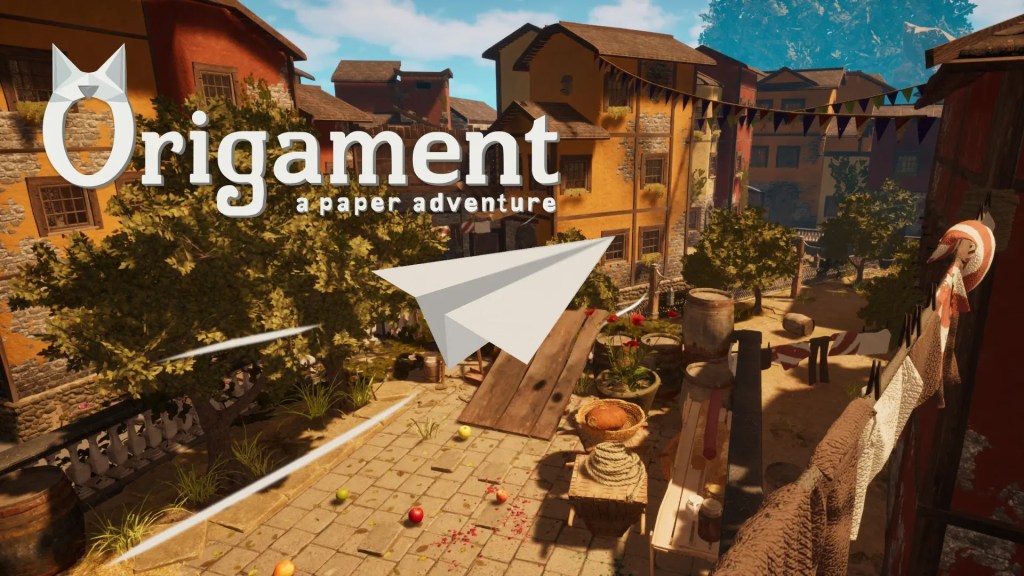
It seems like indie gaming is currently dominated by pixel-art roguelikes and massive metroidvanias. You might think that a game where you play as a defenseless piece of paper sounds like a tough sell. Yet, Origament: A Paper Adventure manages to make floating on a breeze feel incredibly compelling. If you don’t believe us, just check out the review we wrote a while back (hint: the game is awesome).
We spoke with the team behind the game to find out how they pulled it off, how they dealt with custom physics nightmares and the brutal reality of selling indie games today.
This interview would not have been possible without the wonderful people at PR Hound. Many thanks Derek Reeve!
A Fragile Protagonist
There are no power fantasies in Origament .You’re fragile, and a stiff breeze is a legitimate gameplay mechanic. We asked the studio’s founder where this vulnerable approach came from, and how a simple visual gimmick evolved into a full game.
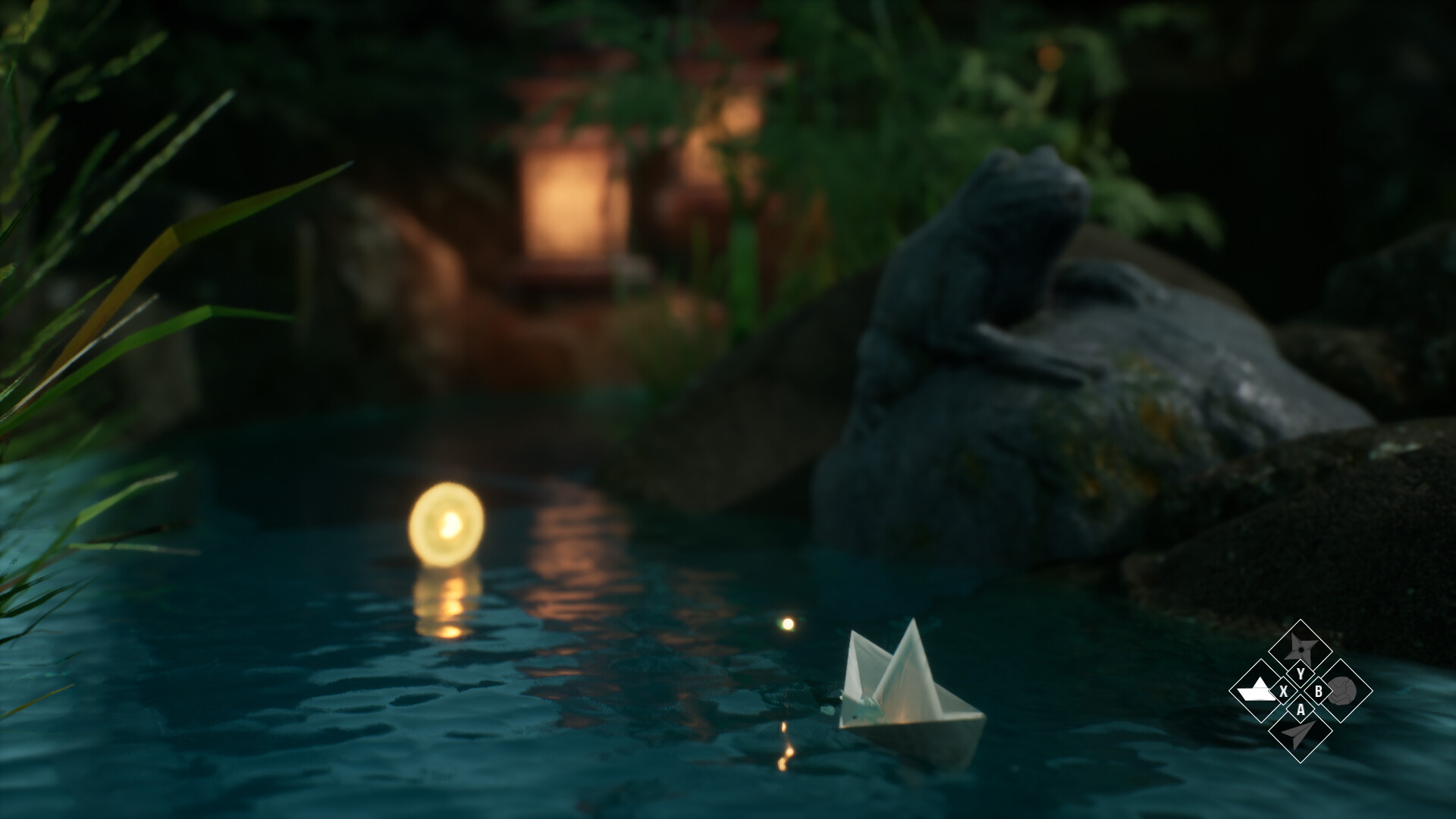
It all started with a very simple image: a tiny paper boat drifting down a stream, with the player seeing the world through its “eyes.” Suddenly, the ordinary world felt huge, unfamiliar, and full of wonder. We loved the idea of looking at everyday things from an unusual perspective.
From there, we started thinking about other simple origami shapes. Just floating around as a boat would probably have become boring for players pretty quickly, so we came up with transformations into a paper plane and a ball – familiar, simple forms that feel instantly satisfying. The shuriken came later.
We built a prototype quite early on, and almost immediately realized we had found a very interesting gameplay formula.
The next step was creating the first demo. We needed to decide on a location: something with a strong visual style and atmosphere, but also something that fit the origami concept. Naturally, Japan felt like the obvious choice.
So we created a mysterious, atmospheric Japanese moonlit garden.
At that stage, I was funding development myself with money earned from outsourced 3D graphics work – which is still the foundation of my studio today. The budget was very limited, so we had to figure out how to make an engaging game without expensive animations, cutscenes, or heavily scripted sequences.
We decided to focus on interesting gameplay through level design and light puzzles. That’s how we came up with obstacles like red grass, doors, buttons, upward air currents, and so on. The way the level itself is built plays a crucial role here. Since the game has no enemies or other characters most of the time, we had to make sure that simply floating, flying, and rolling through the world felt interesting and fun. In this game, movement itself had to be enjoyable.
And it worked. The demo came together and helped us secure funding from a publisher.
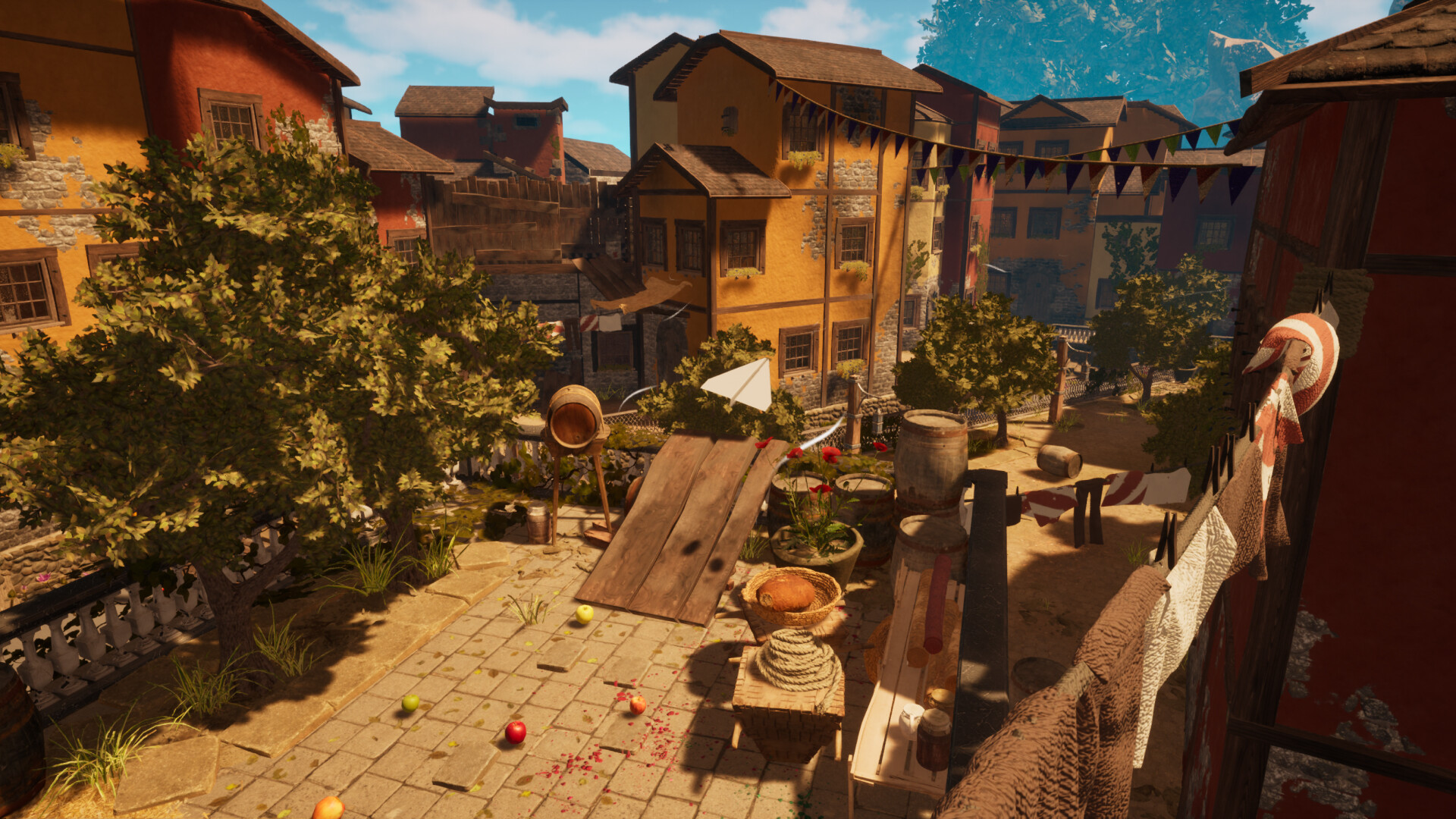
In the next level, Medieval Venice, we added more characters and even tried to push the game beyond the usual platformer structure by experimenting with non-linear progression. But players kept getting lost, and that kind of genre-blending didn’t really make the game better, so we eventually abandoned the non-linear approach.
Still, with every new level, we added new ideas, surprises, and playful moments. In the Wild West, a horse kicks you and you dodge cowboys. In the dungeon, you stumble upon pirate treasure.
In the end, the story of our paper letter became a journey through seven different worlds. At first glance, they all seem very different – but by the end, it becomes clear why the journey had to happen this way.
Balancing the Breeze
Getting the movement right is only half the battle. Building challenges around a character that can literally float away requires serious iteration, especially when trying to balance a cozy aesthetic with actual platforming difficulty.
It came down to a lot of testing and iteration.
We ran playtests, collected and analyzed detailed feedback, and took part in showcases. What we saw most often was that hardcore players barely noticed the obstacles, while more casual players could get stuck for quite a while on challenges that seemed simple to us.
After every event like that, we would adjust something, compare the results, and test again.
Right up until the end, we kept asking ourselves whether we had added too many hints, or whether the challenge levels had become too difficult.
In our opinion, the final balance turned out quite well. Players who want to test themselves can push through the challenge levels, while those who just want to relax can skip the optional challenges and simply enjoy the journey. That said, they’ll still need to solve a few small puzzles along the way.
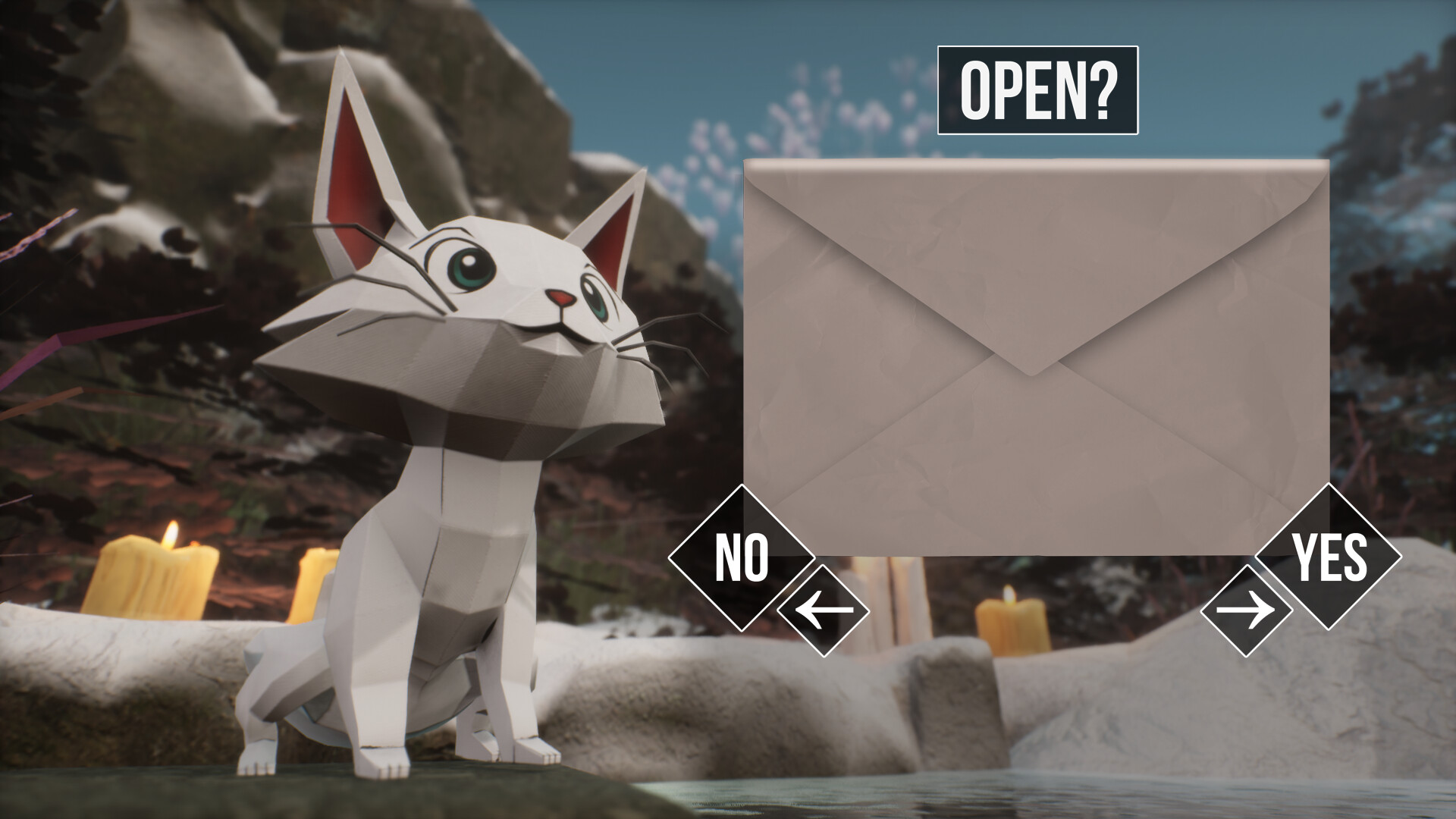
Despite the lighthearted platforming, Origament carries a surprisingly melancholic undertone, framed around themes of “fading thoughts and unsent words.” It turns out that vibe stems from a real-life inspiration.
There is one story worth sharing.
My wife, who is also the co-founder of the studio, was into postcrossing. One of the most incredible postcards she ever received from a random sender had two stamps on it, each featuring a photograph – one of a man and one of a woman.
The sender explained that they were close relatives of hers. They had loved traveling, and after they passed away, stamps with their photographs became a new way for them to continue that journey.
This story isn’t reflected directly in the game, but it definitely left a mark. And those kinds of emotional traces are often what help create the kind of quiet magic that truly touches people.
As for the game’s lore, we originally tried to include a lot of dialogue and story scenes. We even worked with several writers, but we quickly realized that this approach didn’t really fit our gameplay.
After all, you’re playing as a piece of paper.
At some point, I decided to write the foundation of the story myself. For a game like this, it’s not only important to know how to write a story – and I wouldn’t call myself a professional writer – but also to understand how that story will function within the gameplay, the visuals, and the technical limitations. That part I’m much more confident about.
I’m very happy that many people connected with the story. Some streamers even chose not to stream the ending so that players could experience it for themselves.
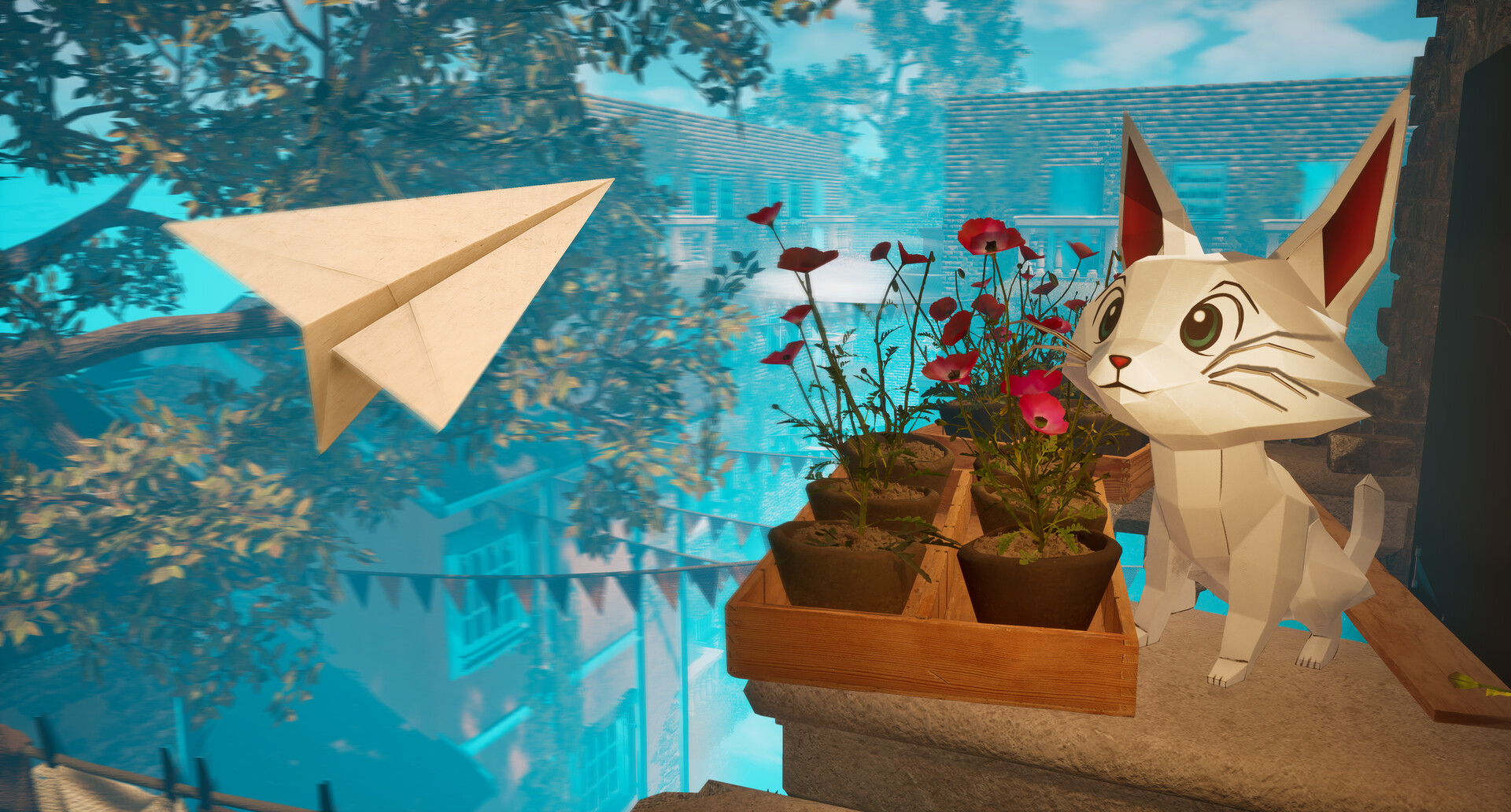
Custom Code and Visual Glue
Switching between a boat, a plane, and a shuriken sounds great conceptually, but standard game engines don’t have presets for “origami aerodynamics.” Lead Programmer Arthur broke down the custom math required to make it work.
Yes, this was one of the most interesting and challenging problems on the project. The transformation mechanic was there from the prototype stage and kept growing along with the game.
Our physics system is custom-built: we handle gravity, air resistance, buoyancy, and other forces ourselves. Each form has its own set of parameters for different states – in the air, on the ground, and in water.
The most difficult form turned out to be the paper boat because of how it interacts with water. The minecart races were also a separate challenge, with their own unique physics.
The game changed a lot over the course of development. Originally, we imagined wide, open spaces without strict boundaries, but later the levels began to include many tighter areas where the dynamic character would constantly bump into walls. That meant the physics had to be adapted.
On top of that, the controls were never fully deterministic, and our level designers worked miracles by managing to build a proper platformer around such “floaty” physics.
There were also issues with scale. I had to add a multiplier parameter that scales both the character’s size and all physical interactions. As a result, we effectively have two types of levels with different scales – but the player doesn’t notice it.
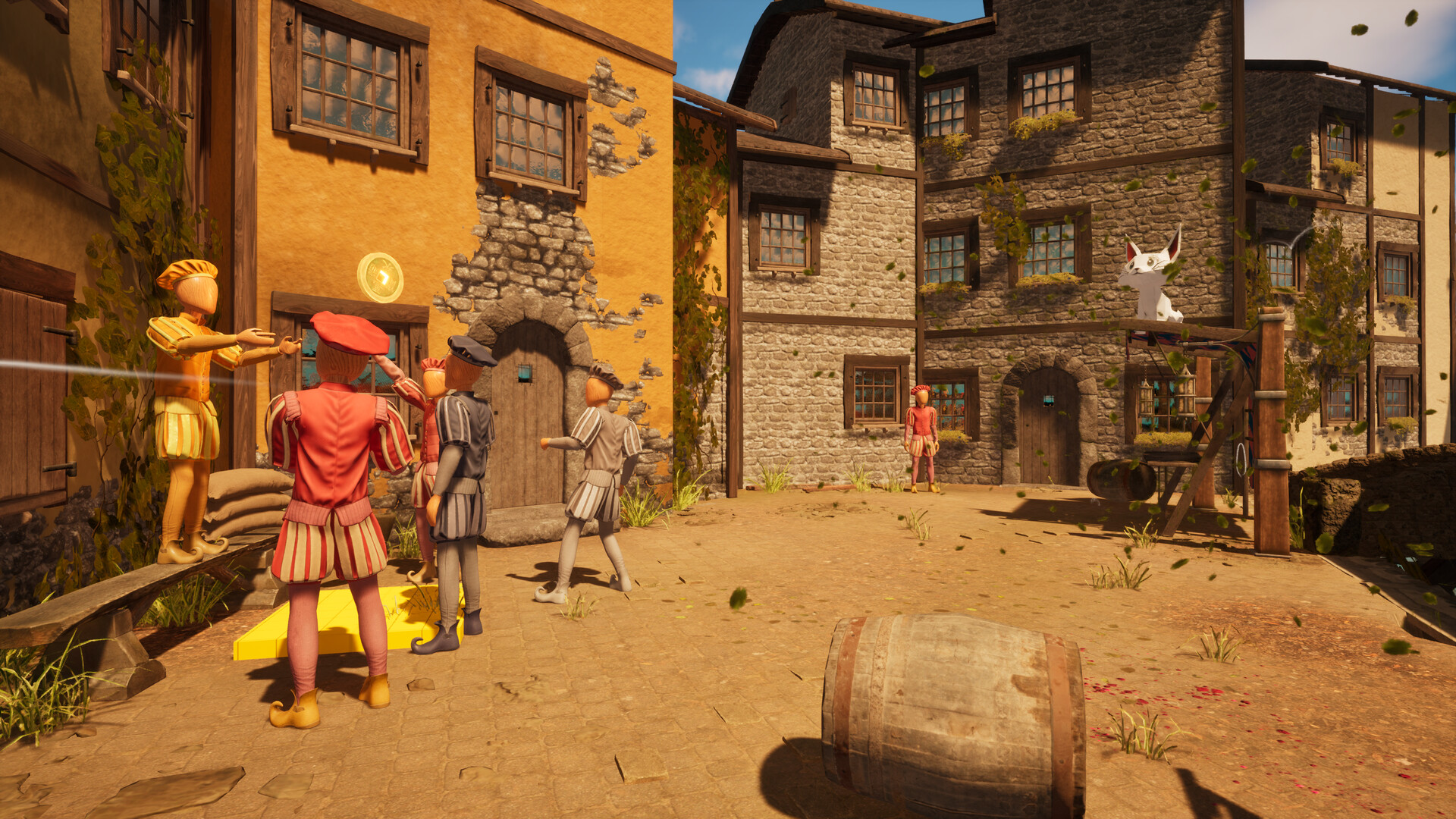
Floaty physics can easily frustrate players if the levels push back too hard. Anatoly, the game’s Level Designer and Artist, explained how they kept players on track without relying on heavy UI.
In my view, the secret lies in balancing environmental readability with visual guidance. We tried not to overload the game with UI, so the environment itself became not only a source of obstacles, but also the thing that guides the player.
Through lighting and carefully placed points of emphasis, the player can intuitively understand where to go next.
Each level always offers something new – often even new mechanics. That is what makes the levels feel engaging and exciting.
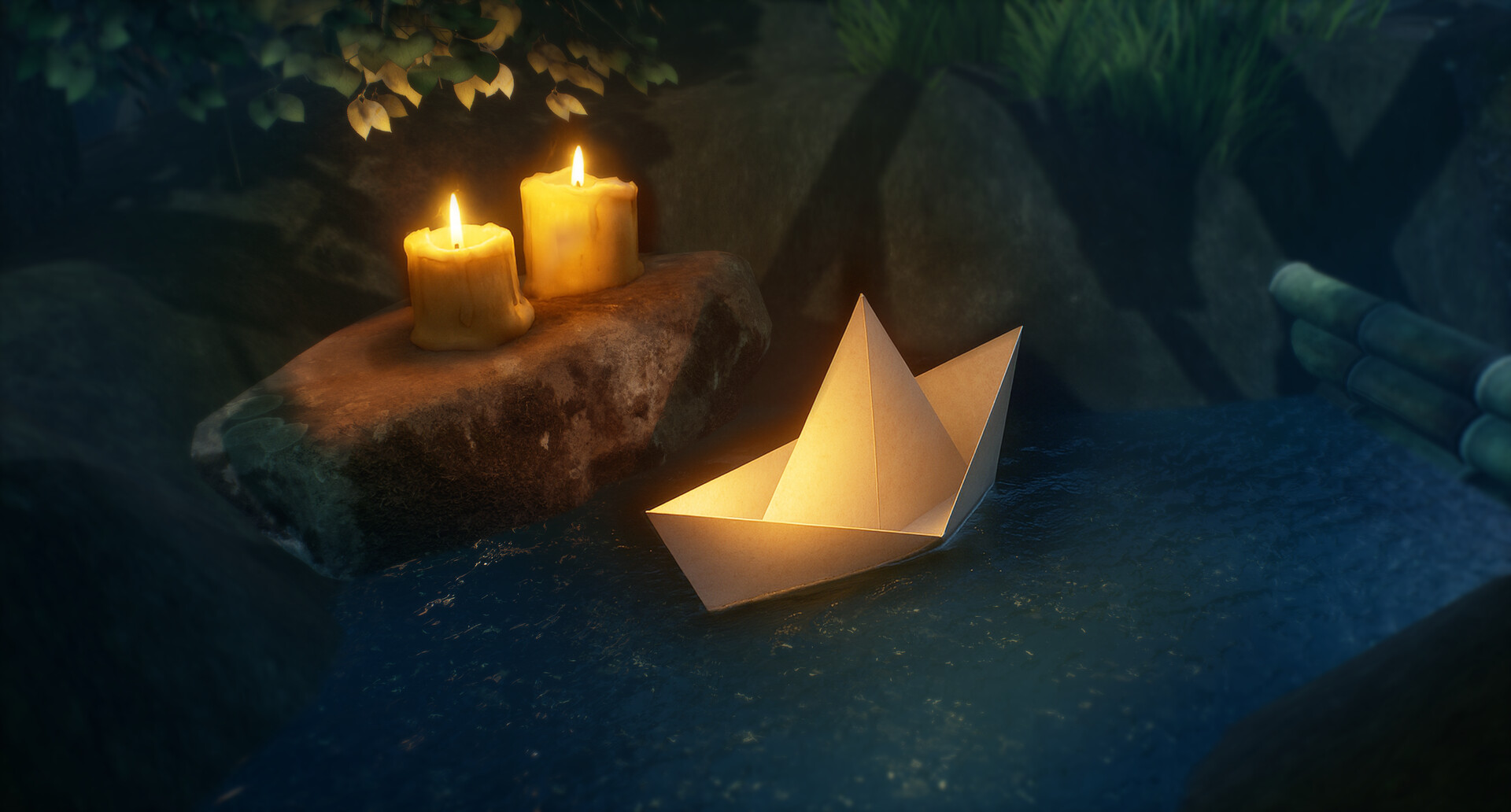
With levels jumping wildly in theme—from quiet Japanese gardens to chaotic Wild West scenarios—maintaining a cohesive look was critical to prevent the game from feeling disjointed.
Early on, we developed a clear visual vision for the game. We thought through the effects we wanted, worked on shaders and water, and spent time testing everything until we felt we had found our style.
Once that foundation was in place, the later levels were created according to that established standard. When you already have a clear approach to color, lighting, and shaders, the result becomes much more predictable.
But the most important thing was the team’s cohesion and involvement. It was everyone’s enthusiasm, professionalism, and experience that allowed us to create such colorful and varied levels. Every team member made a huge number of creative decisions, and many of those decisions were picked up by others and helped improve the game.
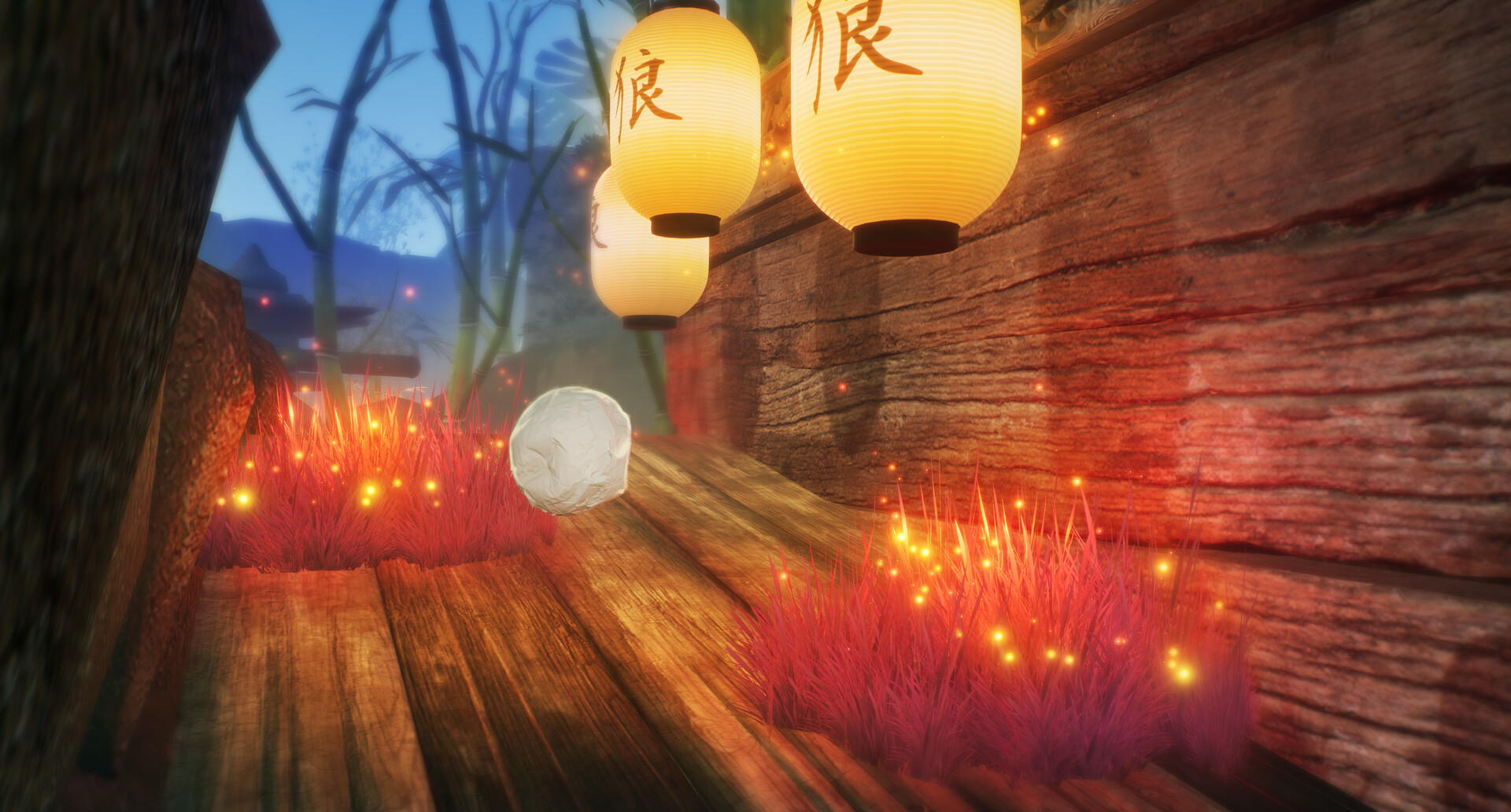
The Marketing Reality Check
Eventually, most indie projects need a publisher’s push. Assemble Entertainment stepped in near the finish line to help get the game across the line.
We signed with Assemble Entertainment almost at the very end of the project.
Even so, they still made an important contribution to development by providing excellent testing for the game. Their QA team are true professionals, and thanks to them, the game launched in a polished state and without any major issues.
But even with publisher support, the studio hit major roadblocks. The biggest challenge had absolutely nothing to do with programming or art.
The biggest challenge for us was probably marketing. Not only did we have no real experience with it, but we also started thinking about it too late – definitely not at the beginning of development.
First, we chose the genre and started making the game. Only later did we begin asking ourselves how we were actually going to promote it.
Finding a good marketer also turned out to be a major challenge. We didn’t manage to find the right person, but the mistakes we made along the way taught us a lot, so we’re not complaining.
Finding an external writer was another challenge. We realized that writing the story for our game – where the narrative is delivered through gameplay – required someone deeply involved in the development process. It wasn’t something we could successfully solve with an outside writer alone.
There was also one unexpected moment near the end of the project.
We had put a huge amount of effort into polishing the game. At some point, it felt like the polishing would never end. We kept improving and improving things. Then one day we launched a build and suddenly realized the game had started to feel completely different – much better than we had expected.
Everything finally came together.
Before wrapping up, the founder offered some blunt advice for aspiring developers thinking about jumping into the industry.
In my opinion, it’s important to understand from the very beginning whether you can connect your idea with the realities of the market – especially if your dream project goes against current trends.
Start your project by planning its marketing. Simply making a good idea is not enough. The competition is too high – higher than ever. That’s why it’s critical to think from the very beginning about how you’re going to promote your game.
How big is the niche for your project? Do you truly understand what your player wants? Are you different enough from thousands of other games? Or is your project so unusual that it might scare players away? How will your game look on TikTok? Will it be interesting to streamers?
These are basic questions, and you need clear answers to them while you are still developing the concept.
Be realistic about your own capabilities and the capabilities of your team. There’s no point spending five years building your dream project only to sell 100 copies because your marketing was weak or because you misjudged the genre or niche.
Your first few projects are your real-world launch experience. They are a chance to understand how Steam algorithms and social media work, and to learn how to work with influencers and communities.
Even if you have a publisher, that does not remove the need for you to understand and do these things yourself. As it turned out, the hardest challenges we faced were not technical ones.
Don’t start with something too complex. Take a simple project all the way from idea to release, make your mistakes, learn from them, and then move on to bigger goals.
Thank you for reading, please check our review as well:


Leave a comment