
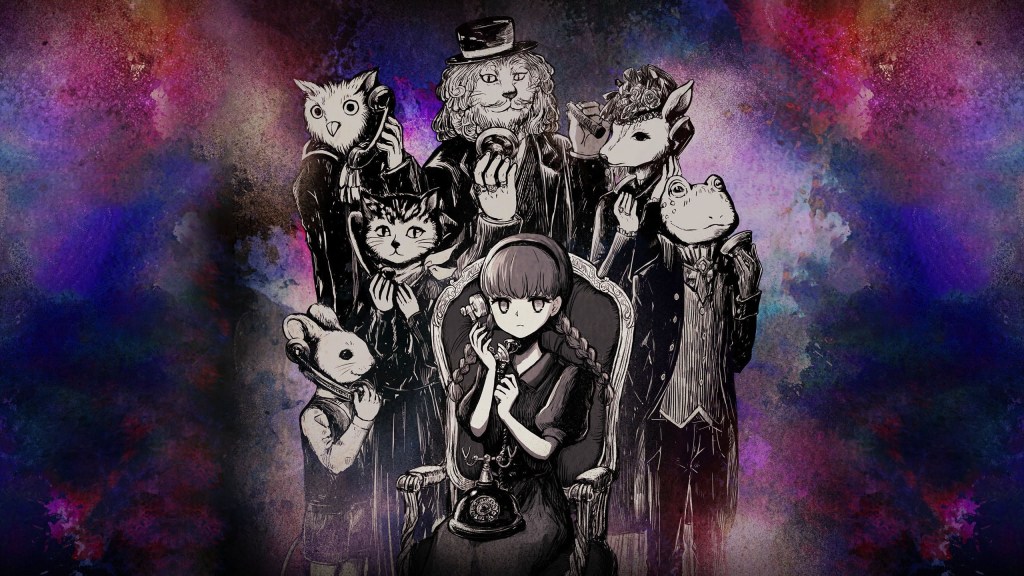
Whenever the apocalypse is presented in a game, it is usually a loud explosion or a series of loud explosions. Dramatic effect and all that, we totally get it. But, do you know what’s louder than that? A ringing phone you don’t want to answer.
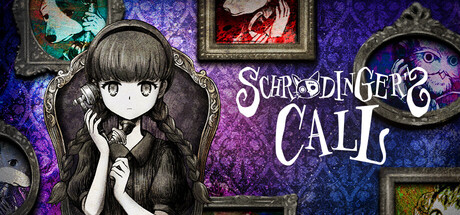
Review written by: Martin Jovanchevski
When the wonderful people at Plan of Attack dropped Schrödinger’s Call into our laps, we honestly didn’t know what to expect from a tiny three-person indie team out of Kyoto. Acrobatic Chirimenjako, the team behind this game, tackled the end of the world not with bombs. They did it with an antique rotary phone.
There are no anime tropes in this visual novel. There are no complex, branching dating sim mechanics. What you find here are the final 21 nanoseconds before the moon obliterates the Earth. What we found here was an absolute masterpiece. This is a game that emotionally broke us. 21 nanoseconds. That’s how much is needed to see an eternity of sadness, painfully intertwined with loneliness, bitterness, and helplessness. Trapped in that microscopic fraction of time are a girl named Mary, a talking cat named Hamlet, and a rotary phone connecting the living to the dead. Grab a drink, dear reader. This one gets incredibly heavy.

The Detective Work of Grief
Schrödinger’s Call is a visual novel. There’s no mechanical complexity, but there is a lot of reading. The complexity comes from the narrative. It makes you think. Every single line has been carefully worded. Every single line is meant to evoke something and to make you think about life, the people we let in, the people we push away, and the consequences of our actions.
Brilliant Audio Work That Roots You in the Room
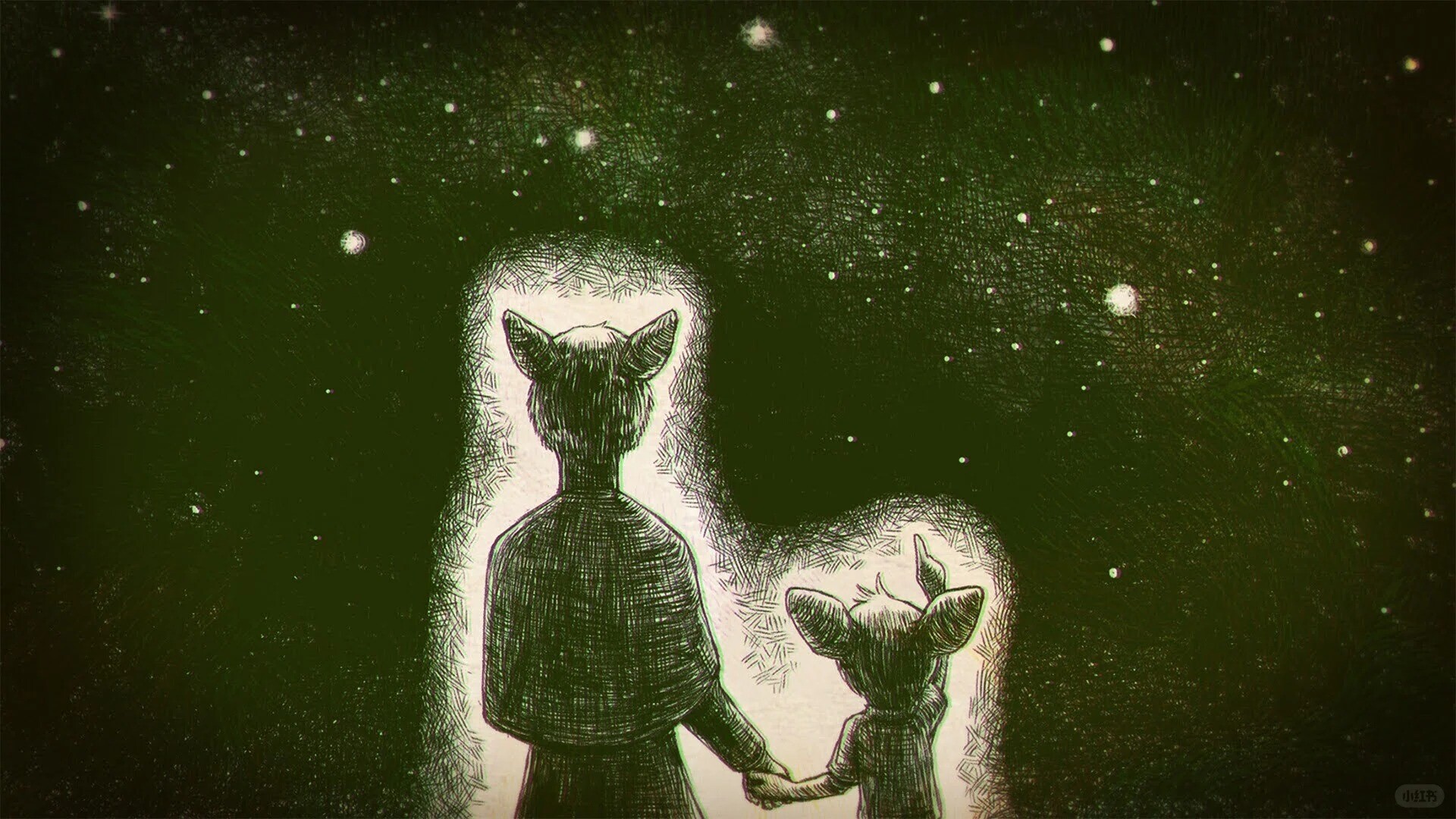
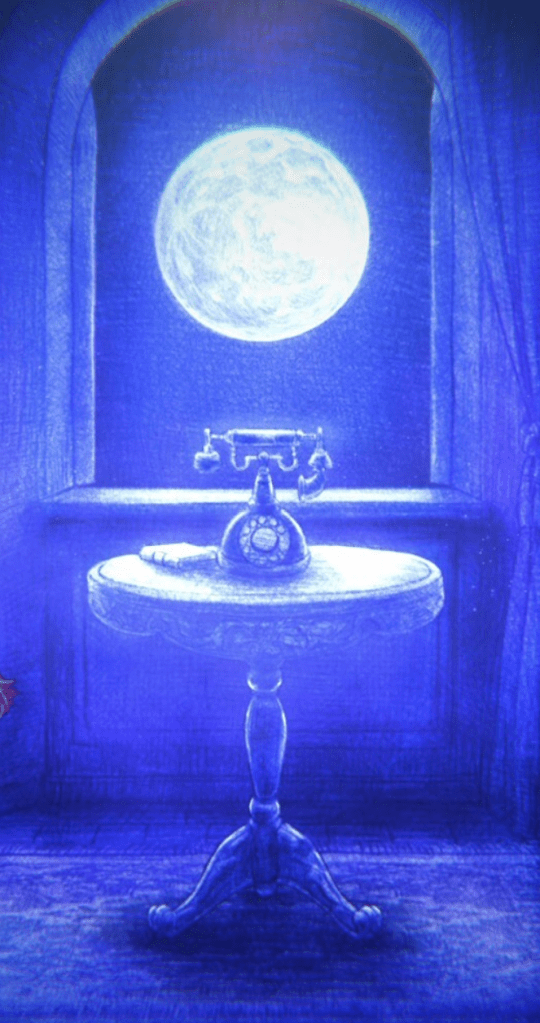
You play as Mary, a girl with amnesia. You sit in a windowless room. In that room is an old, heavy telephone, and your job is to answer it. It’s a simple thing, really. And yet, it’s the most difficult one. We felt the actual weight of the game in its audio design. The mechanical whir of the rotary dial when the numbers are turned. The sharp, decisive snap when a choice is locked in. The sudden, violent sound of glass shattering when a scene transitions or a conversation collapses. The lines that we read tell a story. The sounds that we hear paint it. It sears untold things into our minds.

The characters aren’t fully voiced. And yet, their mumbled, rhythmic tones convey raw emotion that words are unable to. Then there’s the art style—this unique picture-book aesthetic that, again, no words could do justice to. It all feels like a dream, and yet it screams of something deeply rooted in past events, of something that got drowned in nostalgia and resurrected by uncompromising desire.
So, back to the room. And the phone. The notebook.
When is a Call Not a Call?
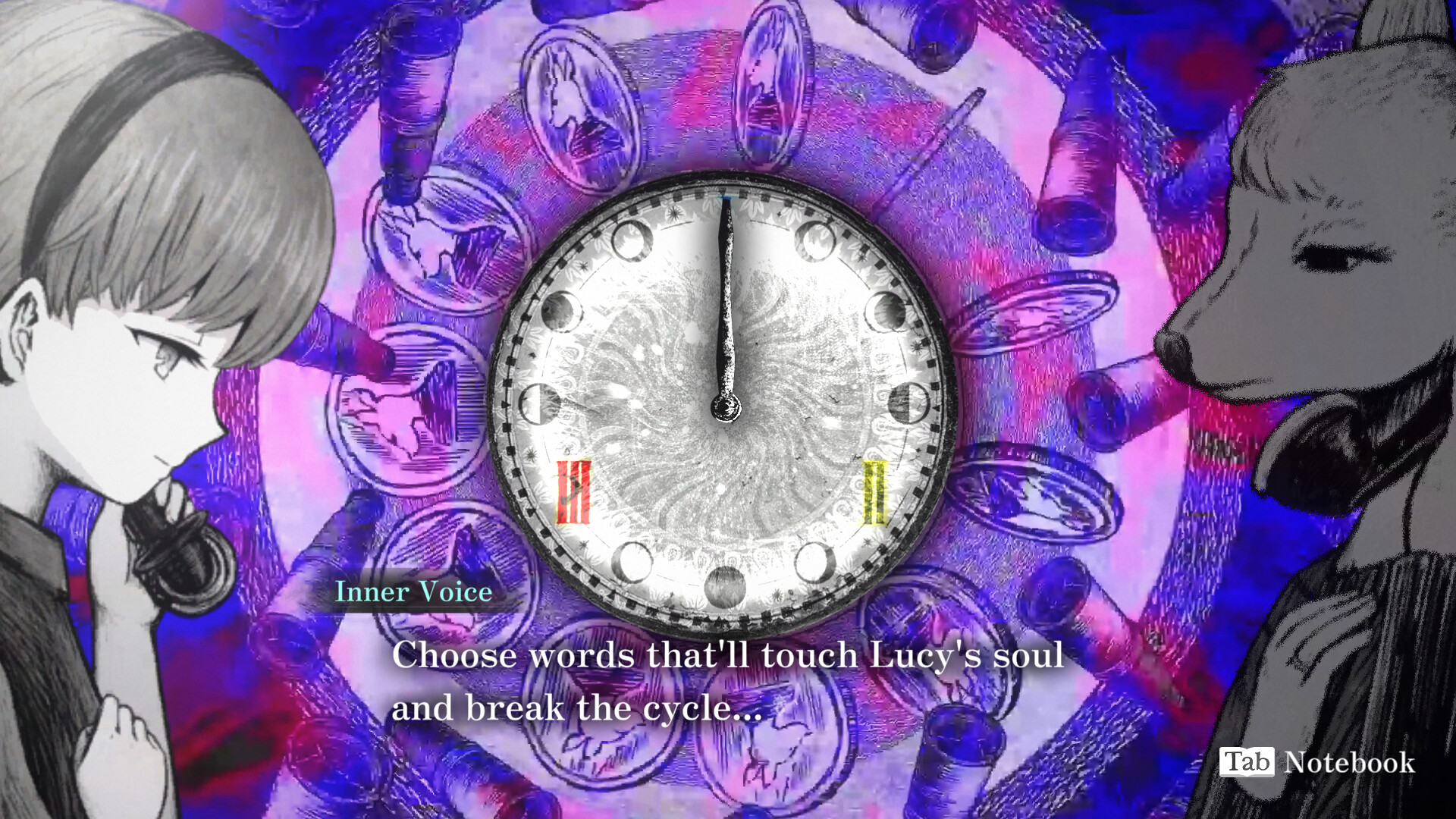
You listen to the regrets of anthropomorphic animal characters. Each represents a trapped soul who was on the phone exactly when the moon fell. You listen to what they have to say, and you jot down clues in Mary’s notebook. Then, when the cacophony of noises is cut by insufferable emotion, you anxiously peruse the notebook. You flip through rough, pencil-drawn pages, lose yourself in the gorgeous design, and look for key phrases underlined in red. The callers are unpredictable. Sooner or later, they spiral into denial, anger, or grief. In moments like these, only the right information can ground them.
If only it were that easy, right? What if it was?
There are frequent dialogue choices, but is an illusion of choice still a choice? You will make choices, but they will not alter the story’s path. Picking the “wrong” piece of evidence or the “wrong” dialogue option simply results in the game pausing, staring at you, and making you pick again. We understand that some might absolutely hate this. But, we have learned that in a state of limbo, all possible choices are meaningless. And your job is not to change things, regardless of how things are presented and offered.
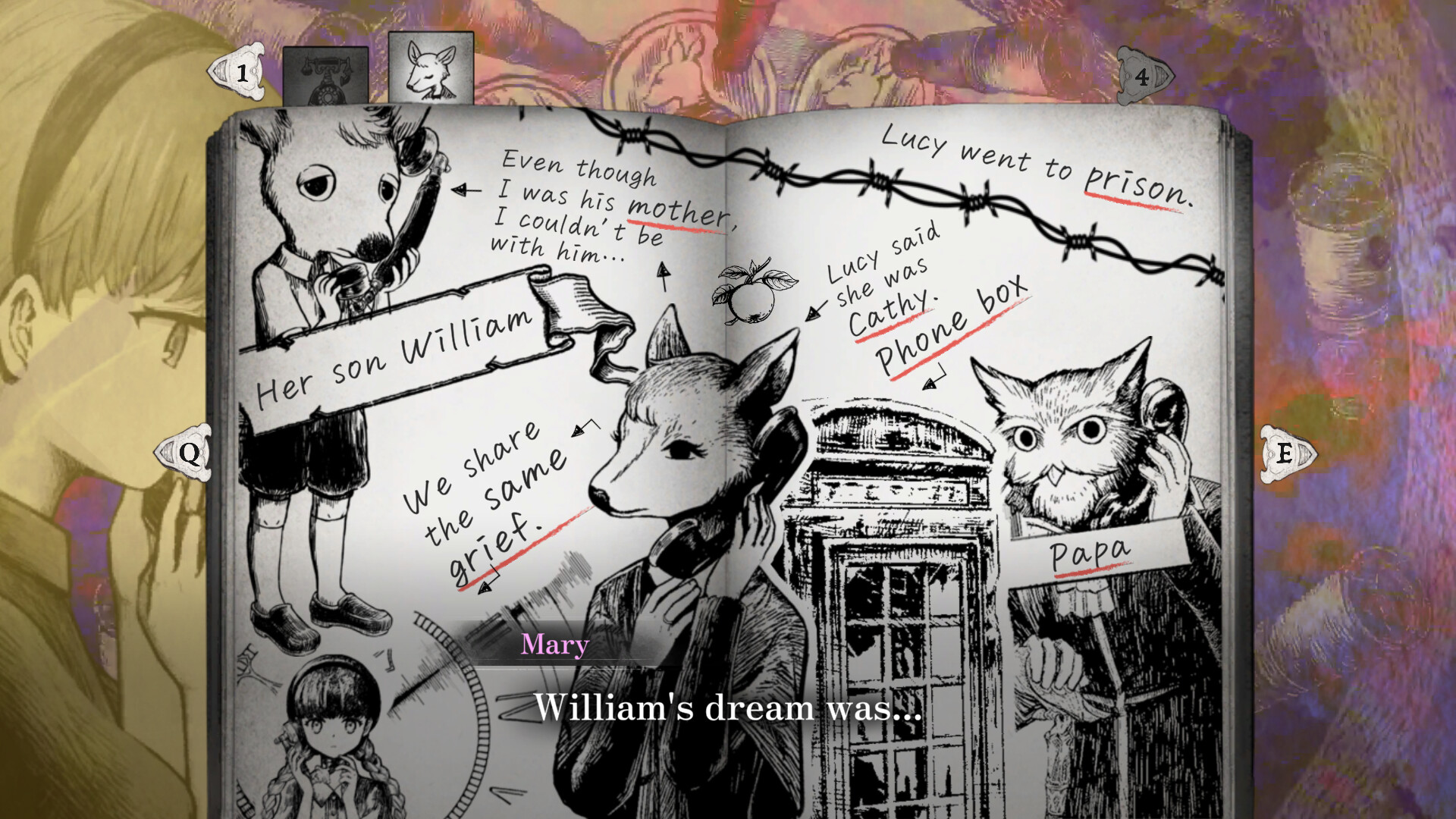
Your job is to be in that room, near that phone. Your job is to sit with the uncomfortable, choking silence of a conversation going nowhere. Doing other things like jotting things down and picking options is nothing more than a prelude to your main and only job: holding that damn phone. And listening.
Eventually, moments of trauma will cut things short. They will violently strangle all of the cuteness and drain away the last drop of the picture-book aesthetic, assaulting you with abstract, flashing imagery and harsh white lines against absolute black. In that blackness, only one thing thrives—the panic of the caller on the other end of the line. And after that? Nothingness. After that? The room. The phone. And the expectation of the next caller.

Hanging Up
We never thought we’d give a visual novel a 10 out of 10. And yet, here we are. Schrödinger’s Call is a beacon of sheer emotion. A masterful execution via breathtaking sketch-art visuals and stellar audio design. It’s a game that calls you softly, like a gentle, incoherent whisper of things unsaid. Schrödinger’s Call is not a game. This is not a review. This is a plea, a call to you to check out the game for yourself and to see all the possible shapes and forms of isolation incarnate. We hope you answer.
- Developer: Acrobatic Chirimenjako
- Publisher: Shueisha Games
- Platforms: Nintendo Switch, Windows (PC)
- Release Date: May 28, 2026 (Demo released February 10, 2026)
- Genre: Adventure, Indie, Visual Novel


Leave a comment