
Written by: Martin Jovanchevski
Video game longevity is rarely an accident. As Dying Light 2: Stay Human approaches its twilight years of official developer support, Techland isn’t just winding down—they are handing the keys over to the players. With the rollout of “The Breach,” a massive update centered entirely around User-Generated Content (UGC), and Patch 1.28, which fundamentally alters the game’s opening hours, the studio is making a bold move.
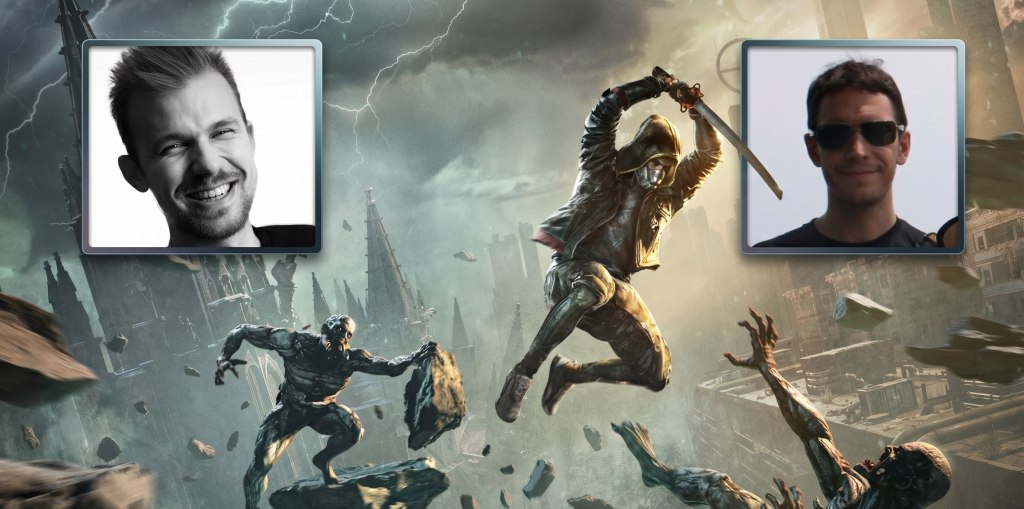
We sat down with Rafał Polito, UGC Program Manager, and Alexandre Breault, Associate Game Director, to unpack how integrating modders directly into the core console experience might just be the ultimate survival tactic for this zombie-infested sandbox.
This interview would not have been possible without the wonderful Paulina Dziedziak, PR Manager at Techland! Thank you so much, Paulina!
The Power of Player-Driven Worlds
Treating mods as a fully integrated, cross-platform feature is a monumental shift for a franchise built heavily on curated, developer-led narratives. Many studios treat mods as a separate, PC-only sideline. We asked Polito what exactly drove this long-term strategy for Dying Light 2. His answer pointed straight to some of the industry’s biggest titans, highlighting that community content acts as an “early access” testing ground to keep the game alive long after official DLCs stop rolling out.
Rafał Polito: We have some very strong examples, such as Skyrim and Fortnite. Skyrim has maintained and even grown its audience for over 10 years without major game updates, largely thanks to mods and UGC. The community continues to support and expand the game without new DLCs or gameplay features from Bethesda.
Fortnite is another great example. During some weekends, more players engage with UGC experiences than with Epic’s core modes, including Battle Royale. In some cases, UGC can account for around 60% of the entire audience.
We’ve always wanted to stay closely connected to our community, and Dying Light 2: Stay Human already has a very active modding scene. This update can only increase interest in the game and create even more content for players to enjoy.
UGC is also a great platform for new ideas and experimentation. In a way, it gives us an “early access” environment for fresh concepts in a four-year-old game. If certain mods or maps prove especially successful, we can consider integrating similar ideas into the main game in the future.
We’re also entering the final year of official support for Dying Light 2: Stay Human. Through UGC, we can extend that support in a new way by collaborating more closely with the community.

Curating the Chaos
Opening the floodgates to community content is one thing, but maintaining quality control requires a delicate touch. Techland has adopted a two-pronged approach, mixing raw community submissions with featured maps co-developed alongside the studio. When we pressed Polito on how they decide who gets the official “Techland stamp,” it became clear that scouting talent and early collaboration are just as crucial as the underlying code.
Rafał Polito: We selected some of the best-performing creators who were interested in collaborating with us.
At the same time, we’re trying to support as many creators as possible. If your content stands out, you might even receive a direct message from me on Discord.
The Techland stamp is reserved for content that we co-create with modders from a very early stage. A good example is the Reloaded Edition update. We knew we were planning to introduce firearms and approached creators with the idea of building maps designed around that new feature, so players would have new experiences to enjoy alongside the update.

With creators running wild with official tools, the potential for bizarre, game-breaking gameplay variants is incredibly high. we were curious to know what internal modifiers shocked the team enough to warrant shipping them. Surprisingly, Polito’s response bypassed the weird and went straight for the jugular of competitive play.
Rafał Polito: We’d love to have a PvP mode in Dying Light 2: Stay Human!
Retooling the Core Experience
While UGC looks to the future, Techland is still hyper-focused on the present. Patch 1.28 arrived with a surprisingly heavy hand, rebalancing the game’s opening hours and tweaking early loot. However, streamlining the tutorial meant cutting beloved narrative beats—specifically, the character Spike. It’s a classic development trap: optimizing for onboarding metrics sometimes means accidentally sacrificing the game’s soul. Breault candidly admitted that the team is actively scrambling to fix this misstep after hearing the community’s outcry.

Alexandre Breault: We did it with all best intentions, as newcomers to the game felt it took too long to get into the actual open world content or co-op with friends, and was a major cause of new players dropping out – and we had reams of data that backed this up.
But by making the edits to tighten things we understand we went too far. We are very lucky to have a character base that generates such loyalty and affection, but the reaction to the loss of Spike in prologue has been huge.
We are now looking into how we can implement the Spike content in a post-Summer update.

The tinkering didn’t stop at the onboarding pacing. The patch also dialed in on environment elements, lighting, and color balance to resurrect the grittier, darker atmosphere of the original Dying Light. For veteran players, this was a massive win, and Breault confirmed it was a direct response to longstanding franchise fans.
Alexandre Breault: Yes, we have seen how the community and fans talk about how Dying Light 2: Stay Human has a different tone to the other entries of the franchise. It was important for us to bring Dying Light 2: Stay Human back closer to the overall franchise and make sure it resonates with Dying Light fans.
Empowering the Creators
Atmosphere and onboarding tweaks will keep players around, but sustaining a UGC ecosystem means keeping the creators happy. Building a rolling schedule of themed worlds is a marathon. Polito explained that the secret to their rolling schedule isn’t just about providing good software—it’s built on deep trust, direct communication, and bringing modders behind the curtain with NDAs.
Rafał Polito: We are in very close contact with our creators and maintain regular communication with many of them. In fact, I personally reach out to creators from time to time to discuss their feedback, ideas, and experiences with the game.
We value these relationships highly and see creators as an important part of our community. To support more open and meaningful conversations, we often sign NDAs with selected creators. This allows us to share insights into our development process, discuss upcoming plans, and gather feedback on ideas that have not yet been announced publicly.
These conversations help us better understand what resonates with players, what concerns the community may have, and how we can continue improving the experience. It is a two-way exchange that gives creators an opportunity to better understand our vision while providing us with valuable perspectives from people who are closely connected to our audience.

Shrinking Terabytes into Megabytes
Of course, good intentions and NDAs mean nothing if the tools are broken. Integrating deep modding capabilities into Techland’s proprietary engine is a vastly different beast compared to using standardized software. For fellow developers looking to empower their own communities, Techland’s biggest technical victory was spending nine months translating an overwhelming 1TB developer environment into a lightweight, console-friendly kit.
Rafał Polito: The biggest lesson is making the tools accessible for creators who don’t have professional development experience. We essentially prepared a simplified version of our internal editor for the community. It’s still an advanced tool, but much easier to use than the version our developers work with.
Our situation was particularly challenging because we’re using our own proprietary engine. Studios working with Unity or Unreal often have a more straightforward process.
To give some perspective, we spent around nine months improving the Developer Tools to make them easier to use and fully compatible with the game.
One of the biggest challenges is that internally we work with source files and assets that can take between 500 GB and 1 TB of storage. With the Developer Tools, creators only have access to compiled assets prepared by our DevOps and Release teams. These assets offer less editing flexibility, but they make the entire setup roughly ten times smaller.
Scott, the CEO of mod.io, once told me he was impressed that community maps typically take only 50-100 MB rather than several gigabytes. That’s especially important on consoles, where storage space for user-generated content is limited.
We’re able to achieve this because community creators reuse assets that already exist in the main game.
As Dying Light 2 steps into its final year of official support, the passing of the torch seems to be in incredibly capable hands. By blending candid developer feedback with the boundless creativity of their community, Techland are letting the game evolve. We can’t wait to see in what ways!
A while back, we also did another interview with the one and only Tymon Smektala:
Thank you for reading!

Leave a comment