
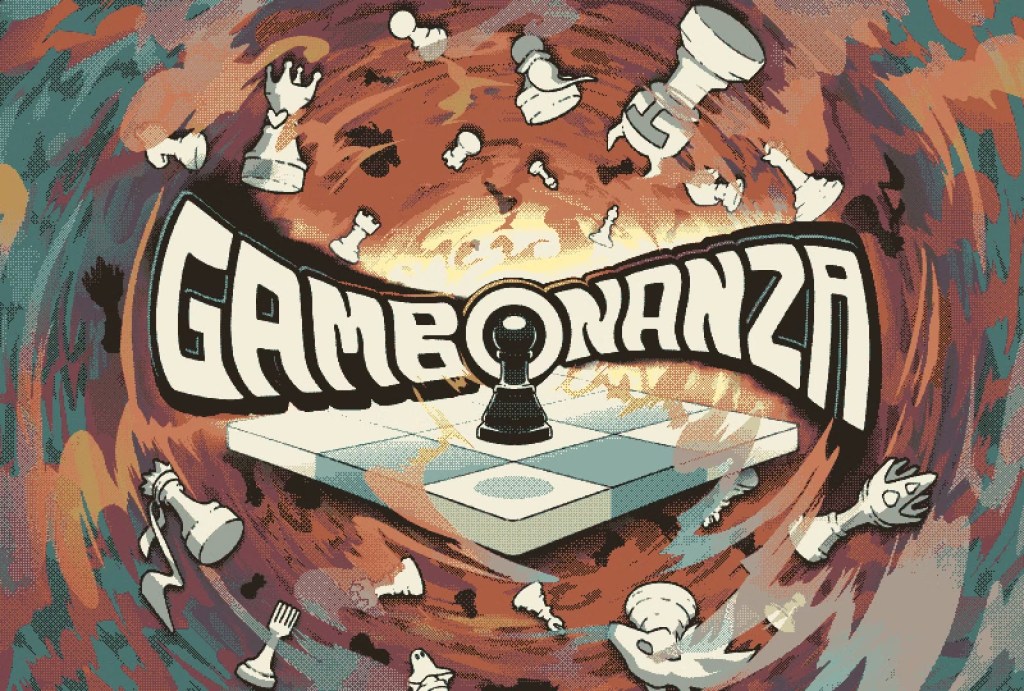
We admire chess. But we don’t like it. You make one bad move at the start and you just sit there, slowly losing for the next half hour. We have our spouse for that.
We also have this old blender at home. Sometimes, just for the heck of it, we throw all kinds of stuff in it and mix it all up. It never works.
Gambonanza doesn’t care about the rules of chess. It throws the pieces in a blender with a slot machine. We spent the last few days getting absolutely wrecked by it. It hurts, but in a good way—just like, well, we’ll stop there.
Victory requires destroying all enemy pieces, not just cornering the king.
Pawns act like checkers pieces; reaching the opposite end lets you promote them to much stronger pieces for the round.
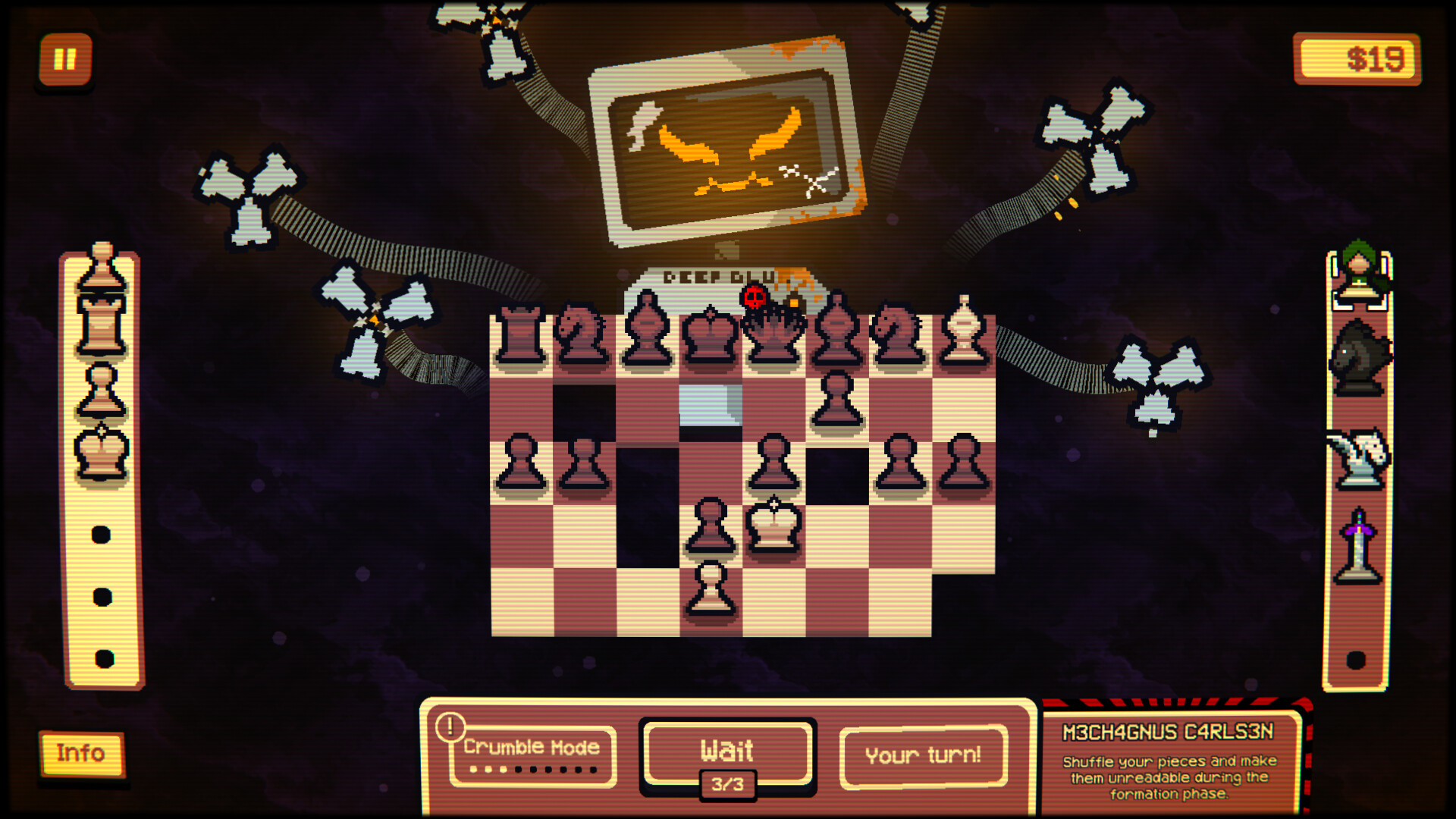
Turn-limit mechanic where the edges of the board fall away, forcing close-quarters combat to prevent stalling.
Hold pieces off the board and deploy them onto empty squares on future turns at the cost of skipping their turn.
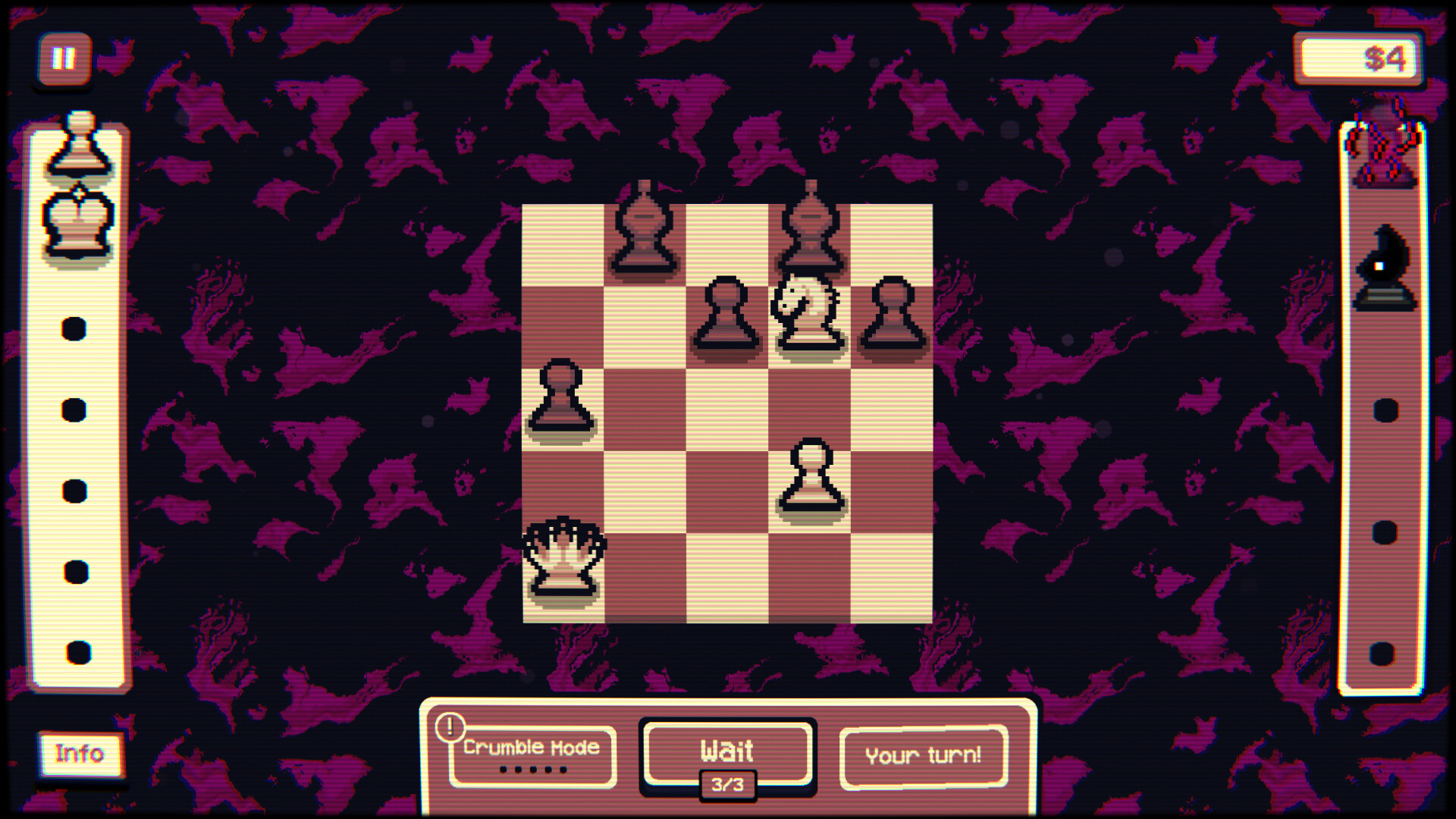
The game uses a thick CRT filter that gives off a grimy, retro arcade vibe.
Trapped in a Phone Booth with Pawns
In Gambonanza, we’re fighting for survival in a very tiny space. To win, however, it’s not enough to simply take out the king. You actually have to kill every single enemy piece.
Here’s how things work: you start on a cramped 5×5 grid. It all looks so simple since the game gives you just three pawns at first. You think to yourself that you can definitely do this—that chess, despite all the ego bruising in the past, maybe is for you and this game is your time to shine.
You manage to drag a pawn to the other side and, lo and behold, it promotes. You can turn it into almost anything. And then, things slowly start to fall apart. You can’t just sit back and plan a perfect trap. If you waste time, the floor literally falls away. The board shrinks. You get cornered. Then you die. All those bitter memories of lost matches resurface, and you’re surprised they still hurt just as much.
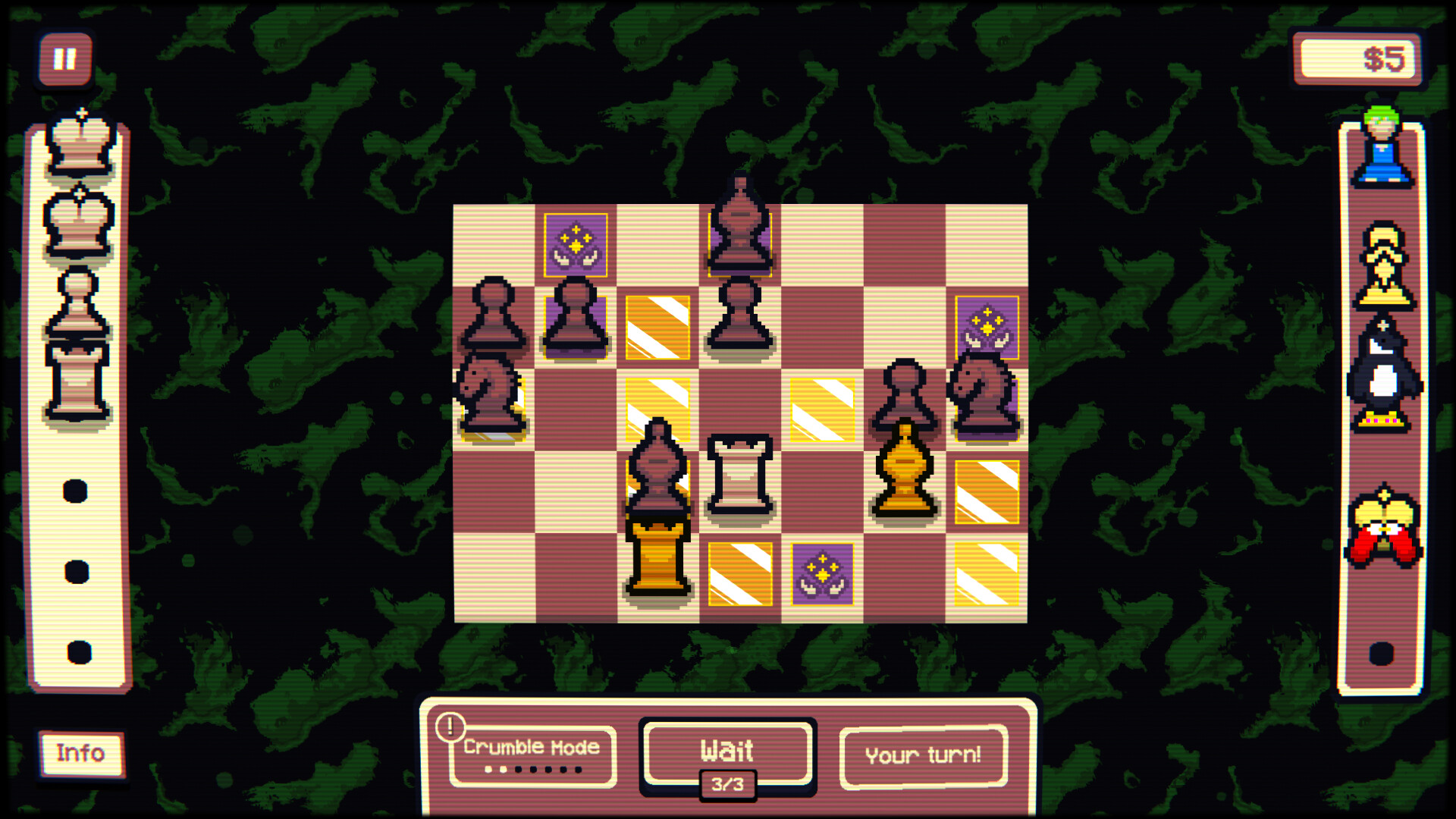
Because we aren’t quitters, we try again. The thing that gives us hope and pushes us forward is the time between rounds. That’s when we buy modifiers called Gambits. This mechanic is solely responsible for making us completely adore the game.
In one run, we accidentally built an army of supercharged bishops. Another time, we figured out how to force the enemy to skip turns. You can even hold pieces off the board and drop them in later; it costs a turn, but it feels incredibly dirty and satisfying. There’s also the ability to turn tiles to gold for cash. We always wondered what beautiful chaos looks like, and Gambonanza finally gave us that answer.
We do want to point out that the game didn’t turn us into geniuses—far from it. We still lost, but it was fun having random boss mechanics completely obliterate us.
Hey, did you also know that:
The game was built by a solo developer, Blukulélé, who managed to snag publishers Sidekick and Stray Fawn to push it to PC and mobile.
The board actually starts as a tiny 5×5 grid, but dynamically adds a new row every time you defeat one of the game’s bosses.
The 1.0 launch added a secret eighth boss to the roster, bringing in completely new modifiers.
The Last Move
By disrespecting a classic game in the best way possible, Gambonanza turns into something incredibly fun. It’s one of those games with a real “high and low” effect—where you sometimes lose runs to pure bad luck, but other times win because of some wild, broken combo that barely makes sense. We just can’t put it down. And we don’t even like chess.
Score: 8/10
ID Card:
- Developer: Blukulélé (Mobile Port by Ateo)
- Publisher: Sidekick Publishing, Stray Fawn Publishing
- Platforms: PC, macOS, Linux, Android, iOS
- Genre: Roguelike Deckbuilder / Strategy
- Release Date: May 1, 2026

Leave a comment