
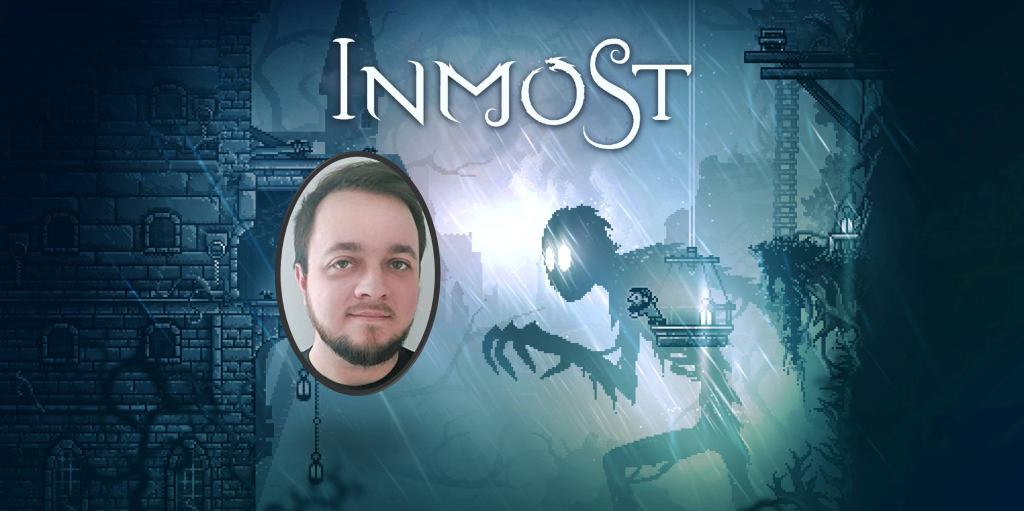
Games bearing player discretion warnings for heavy themes rarely arrive in the form of bite-sized pixel art. But INMOST, the puzzle platformer from Hidden Layer Games, delivers a quiet, agonizing gut punch by weaving together the tragic lives of a knight, a child, and a wanderer.
This interview would not have been possible without the help from the wonderful people at Chucklefish, many thanks Alexis!
Curious about how so much melancholy fits into a retro aesthetic, we spoke with Alexey Testov, the game’s co-creator and lead designer. The game’s creeping dread, he revealed, stems from a very real, personal nightmare.
“When I started writing the story for INMOST, my daughter was two years old,” Testov explains. “Around that time, I decided to move to Lithuania and had to leave my family behind to sort out all the paperwork. Due to some ridiculous bureaucratic issues, it dragged on for several months. I couldn’t leave Lithuania, and my family couldn’t come to me. I took the separation very hard and kept thinking about my family, my daughter’s future, and the kind of world she would have to live in. It was a pretty depressive time. I kept replaying my fears over and over in my head, and at some point decided to pour them onto paper just to get at least some relief.”

He’s quick to clarify that the game isn’t autobiographical. “This is not a story about me, my loved ones, or anyone I know. It’s about my feelings that the world can be a very cruel and dark place, and my hope that even in such a world, there is still room for love.“
Given that emotional weight, the game’s brisk three-to-five-hour runtime—designed to be played in a single, moody evening—feels almost like an act of mercy. Did this shorter window free him up creatively, or did it make pacing the narrative more difficult?
“The story was always the foundation of the game,” he notes. “It was important to preserve the pacing of the narrative. I really didn’t want to stretch it out with gameplay mechanics, and I made sure there was just enough space between key story moments for the player to process what was happening and begin anticipating the next part of the story.“
He adds that the length wasn’t an arbitrary mandate. “At some point, we simply put everything together, and it resulted in exactly that runtime. It felt very organic as a process.”
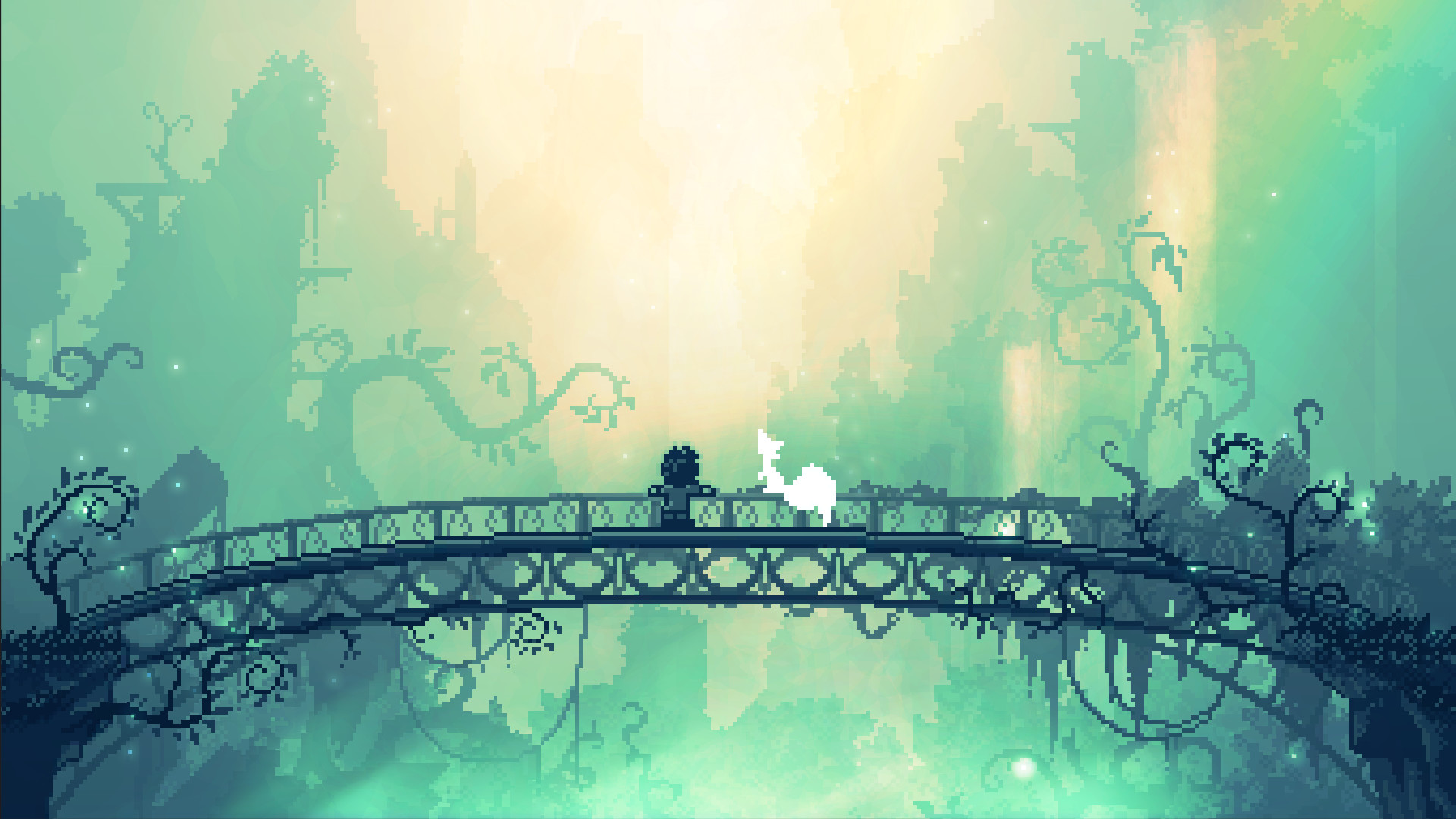
Pacing a short game is hard enough, but INMOST also juggles three distinct playable characters. The child, the knight, and the wanderer have completely different mechanics, creating a massive design challenge: how do you shift perspectives without breaking immersion?
“Technically, the most complex part was the wanderer’s gameplay,” Testov admits. “He has a large world, puzzles, and the ability to return to almost any part of the map. There were several major design challenges, like allowing the player to explore freely without getting lost, and guiding them toward the right path at the right moment.”
The other two protagonists served a very different function. “The knight and the girl had more narrative-driven roles. For each of their episodes, the goal was to provide a new piece of the story which hinted at their nature while still leaving clear questions for the player. The goal was to pull them further along.“
Having a solid blueprint early on was their saving grace:
“Toward the end of development, some smaller story details changed, but the core structure was already clear. That made it possible to map out exactly what the player would learn and when, and to place those moments correctly within the gameplay.”
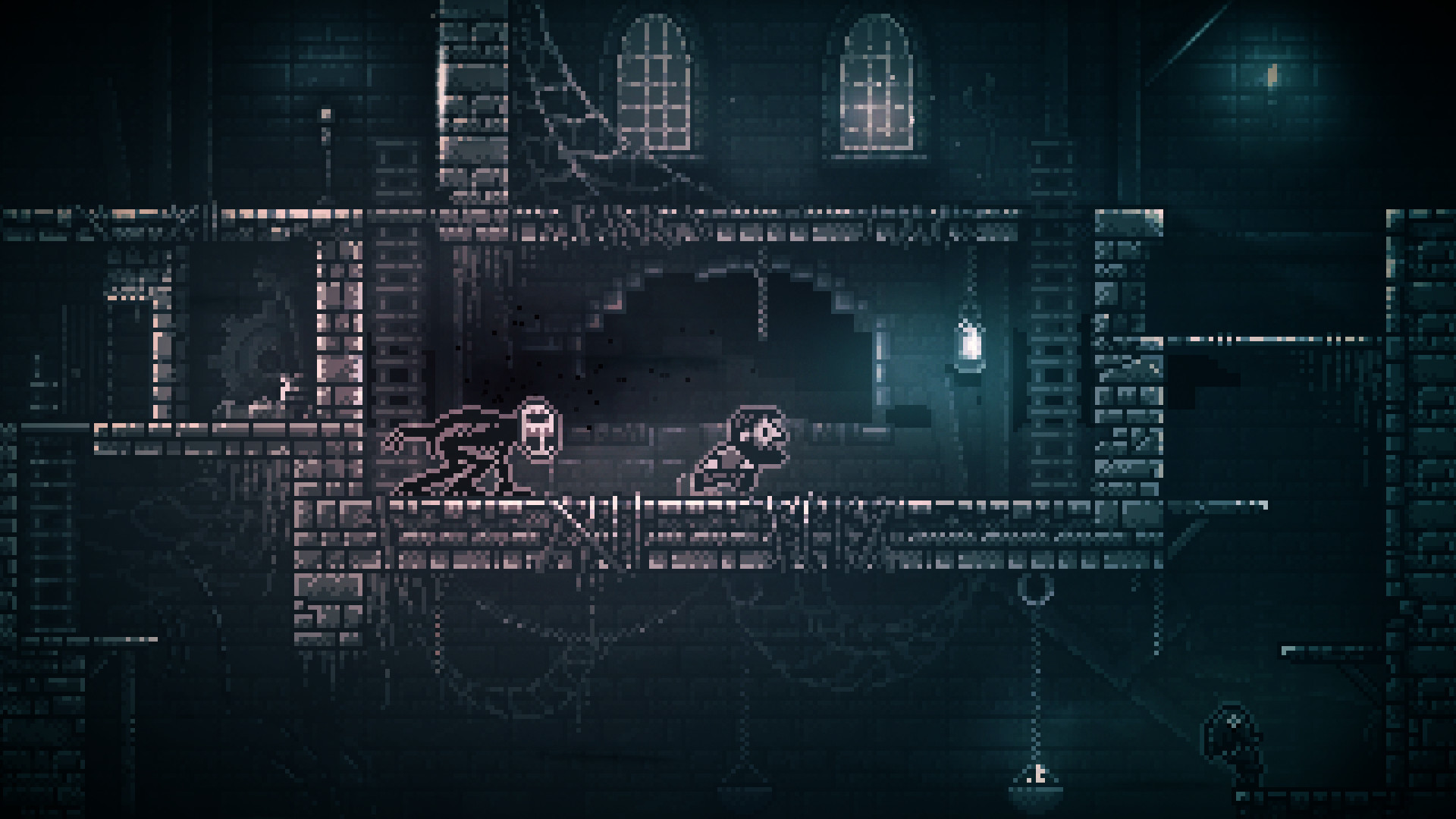
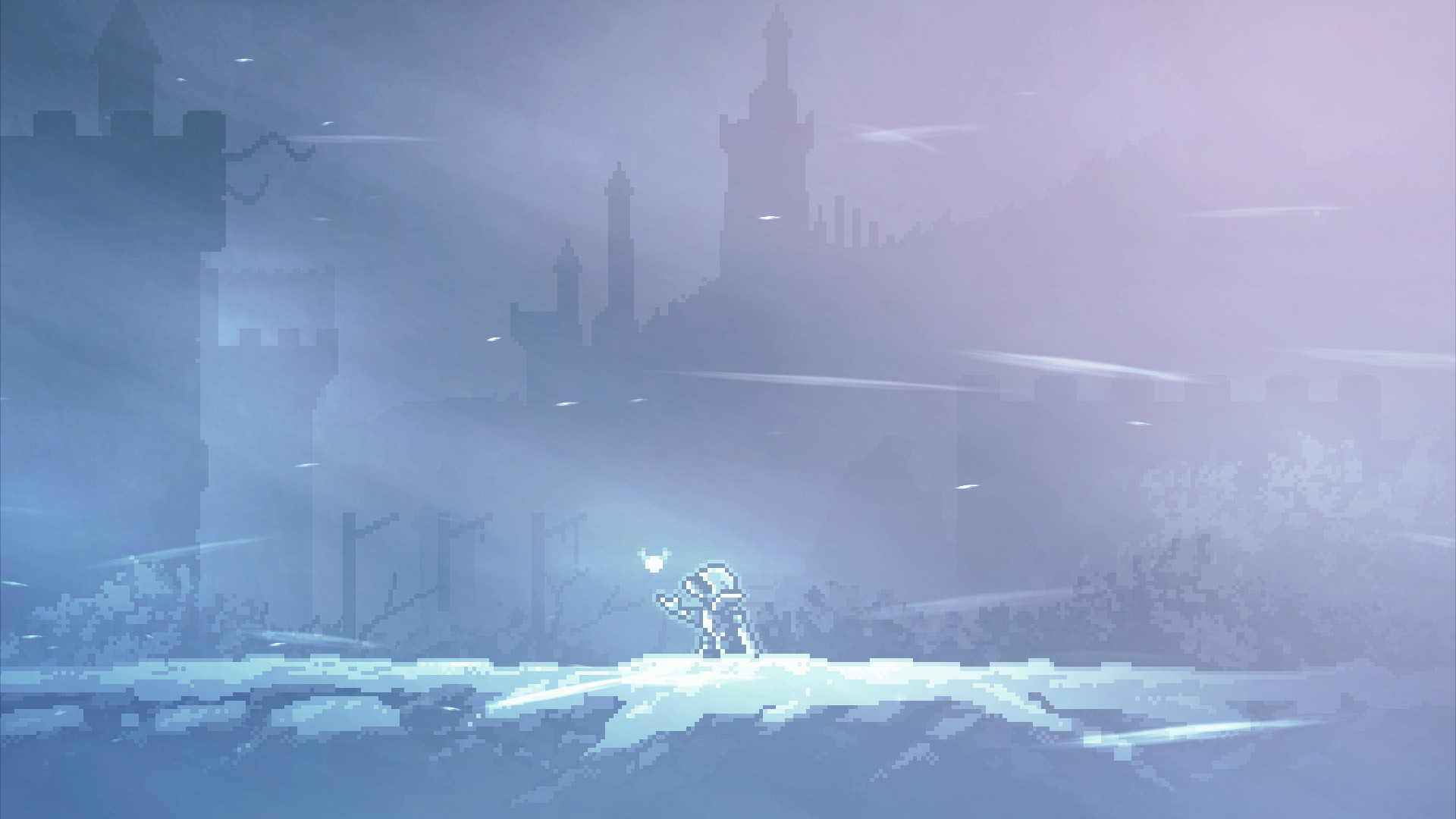
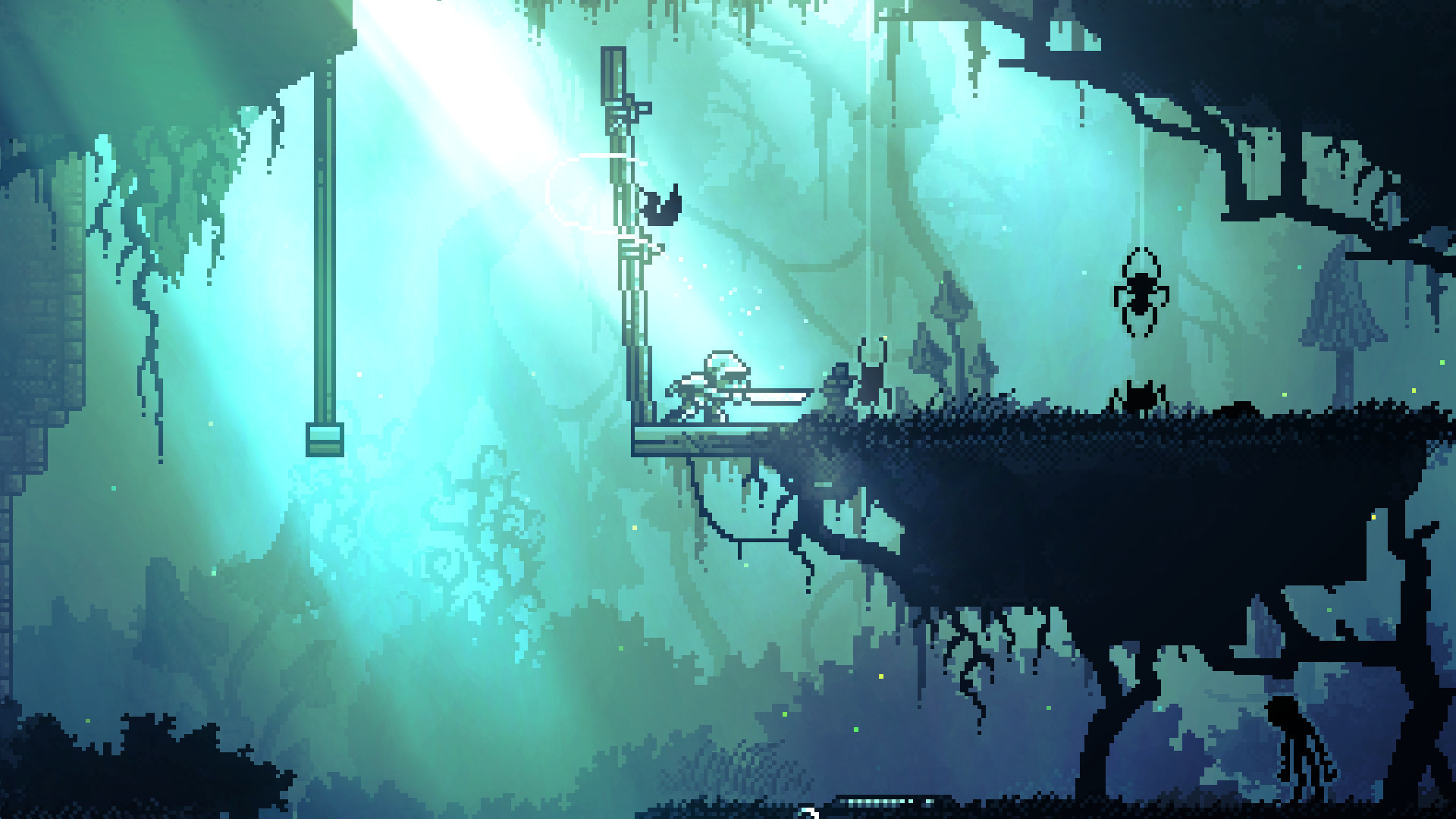
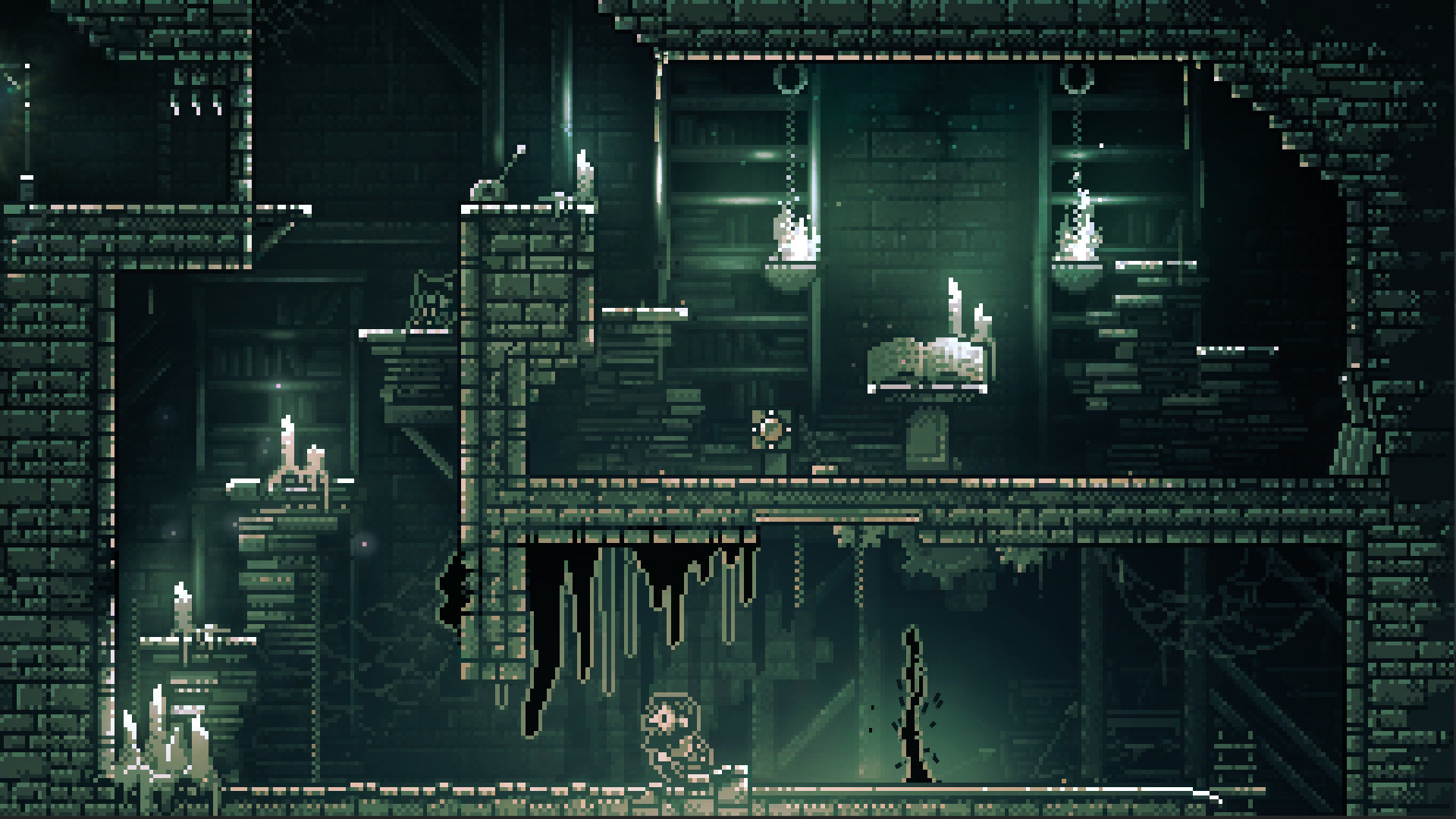
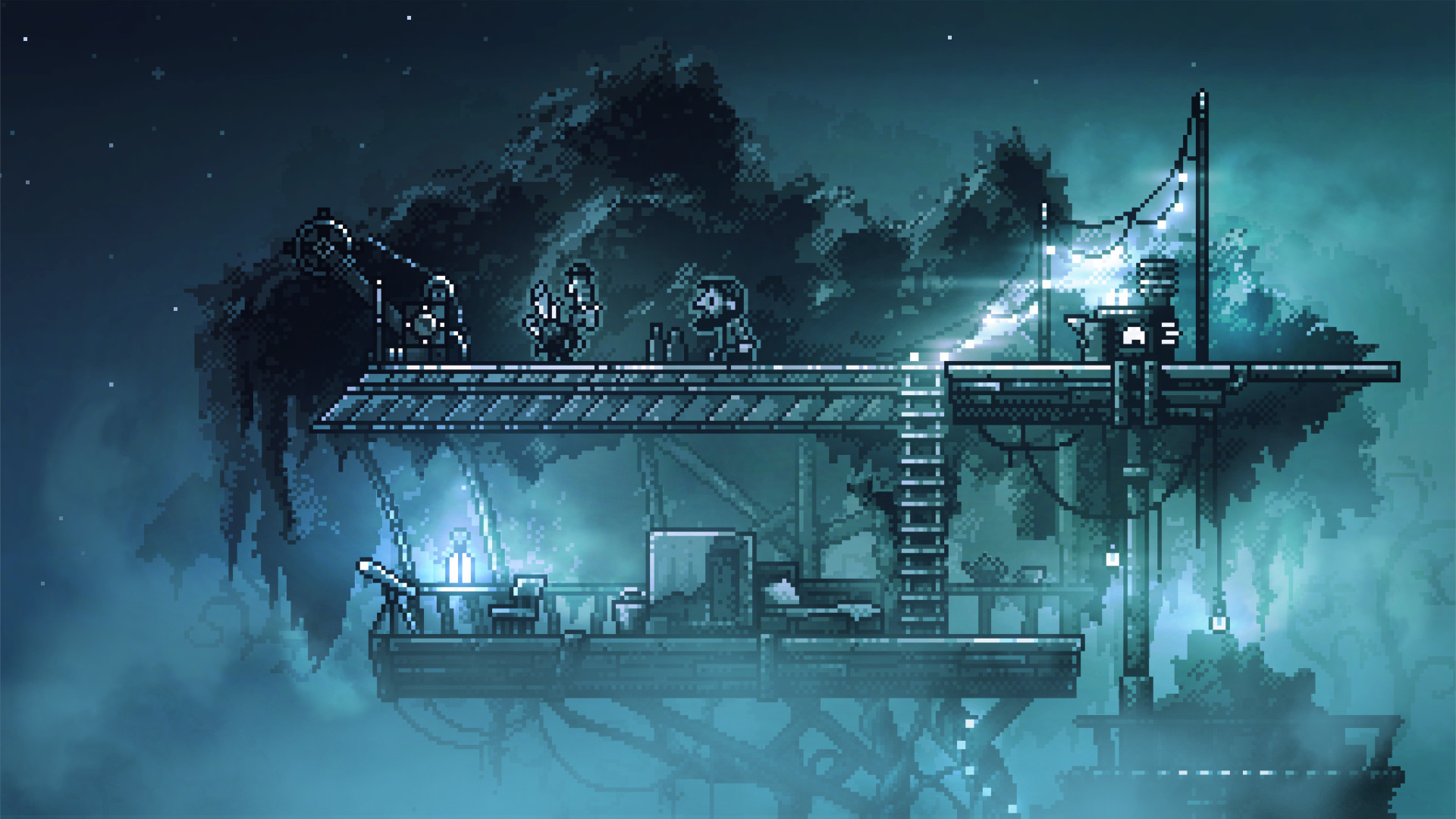
None of these narrative tricks would land if the world didn’t feel both beautiful and suffocating. The cinematic lighting applied to the pixel art elevates INMOST far beyond a standard retro homage. When we mentioned the obvious care put into the art direction, Testov was appreciative.
“Thank you! As an artist, it’s really lovely to hear that,” he says. “It was an iterative process. I started with pure retro—something very much in a Game Boy style, just with blue tones instead of green. Then I began experimenting by adding soft colored gradients on top. I tried things like adding a subtle pulsing halo around pixel torches. Step by step, the visual style of the game emerged through many iterations.”
Interestingly, this striking visual identity was a happy accident. “It wasn’t planned from the beginning. It grew naturally out of experiments with technology and limitations.“
This organic growth extends to the studio’s relationship with its community. Following a recent, severe health emergency involving composer Alexey Nechaev (who is thankfully recovering), fans rallied around the team. Testov notes that the outpouring of support reminded him why he makes games in the first place.
“The player support is one of the most incredible things any developer can experience,” Testov reflects. “It’s hard to imagine a stronger motivation to keep making games. There’s always a fear of not meeting expectations, and a fear that if something goes wrong, no one will be there to support you. But our experience shows that the world is full of amazing people, and I’m incredibly grateful for that.“
Nechaev’s soundtrack is the circulatory system of INMOST, pumping melancholic dread through every scene. Syncing the audio perfectly with the narrative’s specific tone required a unique collaborative process.
“Alexey is an incredibly talented composer. What always amazed me was that while most composers ask, ‘What style are we going for? Give me references,’ Alexey would ask about the character’s backstory and the emotional context of the scene. He wasn’t trying to copy anything, he was trying to understand and create.“
This emotional synchronicity defined their workflow.
“The narrative was structured around clear emotional highs and lows, and he has a great sensitivity to that. I tried to ensure that at every moment there was a precise understanding of what emotion needed to be conveyed, and the soundtrack was built around that. The best part is that there was almost no control or major revisions from our side. No lists of required sounds or planned number of tracks. We would just finish a new 15-minute section of the game, upload it to the shared repository, and tell Alexey, ‘We made a new segment, please take a look.’ A week later, he’d come back with something like, ‘I made a background track, added sounds here, now this crunches, that plops, and when this thing falls, it really hits! Check it out!’”
He smiles. “And it was always beyond our expectations.”
Before we wrapped up, we asked Testov for his best advice for new developers trying to craft emotionally impactful narratives.
“Write about what matters to you—that’s the main thing,” he begins. “But to go a bit deeper and more technically: storytelling is a discipline, one of the oldest, in fact. And like any discipline, it has a body of knowledge and a set of rules. They’re not always very strict, and some of them can definitely be debated, but to challenge them, you first need to understand them.“
He points to his own preparation as proof.
“I had ideas and rough concepts. I’ve been reading one or two books a week since childhood, and so I thought I had a general sense of how stories are built. But before fully committing to writing the narrative, I spent a month intensely studying screenwriting materials for films and TV shows. Reading articles, watching interviews, absorbing every piece of advice that seemed credible.”
For those intimidated by the cost of game development education, Testov offers a reassuring reality check:
“You don’t need expensive courses for this, and you don’t even need free ones! There’s plenty of information available online. You just need to sit down and study it systematically. I don’t like relying on terms like talent or giftedness. In reality, it’s all about gradually developing skills, combined with persistence, and a genuine love for the process. If you don’t enjoy what you’re doing every day, then what’s the point?“


Leave a Reply