
There is a unique kind of heartbreak familiar to veteran PC gamer. You dust off a beloved CD-ROM from the late 90s. You slot it into a modern rig. And, finally, before you even get to try your favorite snack, you are met with a wall of compatibility errors. For decades, preserving digital history has been a battle against decaying physical media. But, then there’s the lost source code. And what about the rapidly advancing operating systems. For the team at SNEG, it’s a battle worth fighting.
Rescuing the Grimdark Past
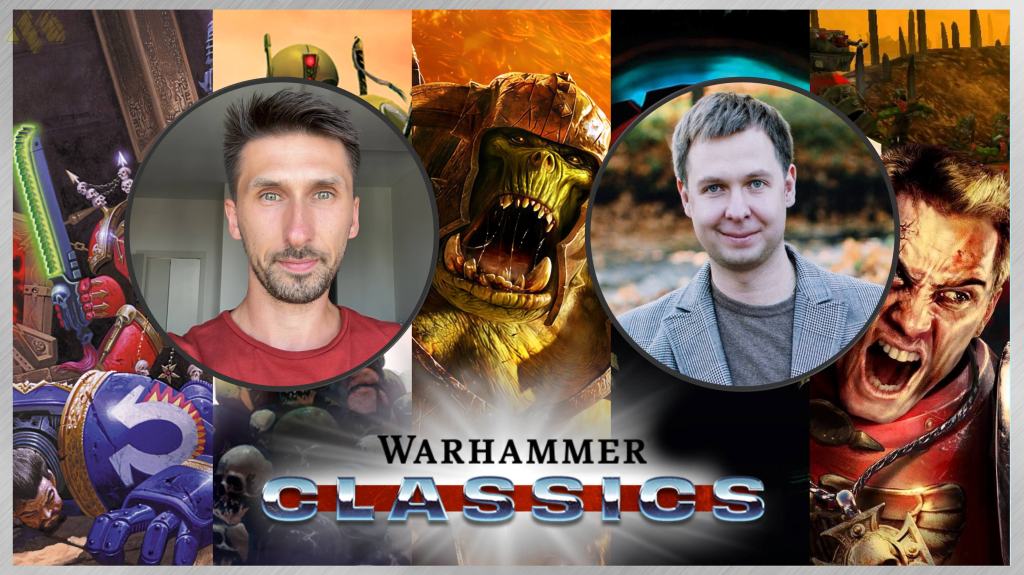
Founded by industry veterans Artem Shchuiko and Oleg Klapovskiy, SNEG is a publisher fully focused on the painstaking art of game preservation. Both co-founders cut their teeth at GOG, the storefront famous for rescuing classic titles. Now, they’ve partnered with Games Workshop to launch the Warhammer Classics label—a monumental effort to modernize and re-release over 20 legacy titles spanning everything from real-time strategy to digital board games.
This interview would not have been possible without the wonderful people at Plan of Attack, many thanks Laura Pauzolyte!
Sitting down with Shchuiko and Klapovskiy, it becomes immediately apparent that this is an act of digital archaeology.
The Foundation of Trust and Curating a Legacy
Partnering with a titan like Games Workshop for a project of this scale isn’t something that happens overnight. When asked about the specific catalyst that allowed SNEG to take the reins on such a massive catalog, Klapovskiy points to their shared history.
“We would not want to speak on behalf of the Games Workshop team, so we can only answer from our side,” Klapovskiy explains. “We believe the main factor was trust built over many years. We had known each other for a long time, worked together on several projects back in our GOG days, and shared a real belief in the importance of game preservation. That kind of relationship matters. When you combine that trust with a shared appreciation for these games and their legacy, I think it creates the basis for a partnership like this.”
With a green light secured, the next challenge was curation. Bringing back over two dozen games is a logistical mountain to climb. But according to Shchuiko, picking the titles wasn’t about indulging personal nostalgia.
“There was no single factor behind it,” Shchuiko notes regarding the selection process. “What matters the most is reflecting the legacy of Warhammer games and bringing together a group of titles that show its breadth and history. As for personal favorites, naturally everyone has them, but this is not really about it.”
The Technical Nightmare: Lost Code and Software Renderers
If you want to make a game developer wince, ask them about 90s-era source code. The harsh reality of the early PC industry is that code preservation was rarely a priority. Servers crashed and studios shuttered. Sooner or later, hard drives were thrown in the trash. We asked Klapovskiy if they had to rely on custom emulation to get these games running, and his answer was a sobering look at the reality of their work.
“In reality, source code preservation is a major problem,” Klapovskiy admits. “Of the 10 games we have re-released ourselves, we only had access to the source code for 2. In all the other cases, the work relied on reverse engineering, wrappers to address specific issues, and a great deal of testing. We did not use emulation for these titles. And to be honest, the work would have been significantly easier if even partial source code had been available.”

The lack of preserved source code is the single biggest bottleneck in retro game restoration, forcing developers to rely on complex reverse engineering.
He follows up with a direct plea to the industry: “So if I could make one request to developers and publishers, it would be this: please preserve your source code. Future generations will thank you for it :).”
This lack of source code made porting some of the debut titles agonizingly difficult. When pressed on which of the games presented the biggest technical headache to modernize for 64-bit systems, Klapovskiy didn’t hesitate to single out a notorious 1995 tactical RPG.
“From my perspective, the biggest technical headache was probably Warhammer: Shadow of the Horned Rat,” he says. “It is the oldest title in the group and also one of the most difficult on a technical level. The game uses a software-based 3D renderer, relies heavily on registry paths spread across multiple folders, has game logic split across different libraries, and originally shipped with a very problematic Windows 98-era installer, just to name a few of the issues.”
Overcoming this wasn’t a matter of finding a magic bullet, but rather enduring a grueling war of attrition.
“As for how the team overcame those problems, there was no single breakthrough. A lot of it was simply careful, detailed work,” Klapovskiy details. “Reverse engineering one issue after another, understanding how particular parts of the code behaved, tracing the source of specific problems, and then finding a way to make them function properly on modern systems. With games like this, progress often comes from solving many small problems rather than one big one. And even now, it is probably the title we are least satisfied with compared to the others, simply because of how many underlying technical challenges it still carries.”
Walking the Tightrope: Authenticity vs. Modernization
Restoring a game is a delicate balancing act. Change too little, and the game is unplayable on modern hardware. Change too much, and you erase the historical authenticity of the experience.
“We always start from respect for the original game and the vision behind it,” Shchuiko explains when discussing their philosophy. “For us, that means trying to stay as close to the original experience as possible.”
“When we make improvements, we focus on the areas that help modern players actually access and enjoy the game – things like compatibility, bug fixes, modern hardware support, accessibility, and some quality-of-life improvements. At the same time, we try to keep the core of the experience intact, including the challenge, the character, and the things players remember most. The goal is not to turn these games into something new, but to help them feel playable today while still remaining true to themselves.”
SNEG actively collaborates with modding communities, using decades of fan-made patches as a foundational guide for official re-releases.
Of course, in the decades these games sat dormant on official storefronts, they weren’t entirely abandoned. Dedicated fans and modders have kept many of these titles on life support through custom patches. SNEG is acutely aware of this, and rather than ignoring the community’s hard work, they actively embrace it.
“Absolutely. Even before we start work on a re-release, we spend time looking closely at community needs, the work modding communities have already done, and the fixes that fans have created over the years,” Klapovskiy confirms. “In some cases, we work closely with modding groups directly. In others, we focus on gathering their feedback and making sure our re-release is compatible with the work they have already done. It really depends on the title. But in every case, community feedback and the dedication of modders matter a lot. Their work is not only helpful, but also is a real source of inspiration for us.”

Lessons from the Past for the Future of Gaming
The late 90s and early 2000s were a “Wild West” era for PC gaming, particularly for licensed properties like Warhammer. Developers were throwing everything at the wall to see what stuck. Looking at the hyper-polished, often homogenous landscape of modern AAA gaming, we asked Shchuiko what today’s developers could learn from these retro titles.
“I think one of the biggest lessons those older games offer is that developers should not be afraid to experiment,” Shchuiko observes. “Many titles from that era were not built around a safe template. They tried unusual ideas, mixed genres, took risks, and often felt very different from one another. That is a big part of why people still remember them.”
“Today, a lot of big games are extremely polished, but they can also feel similar to each other. Players notice when something is built by the template. What many of those older Warhammer titles show is that strong identity often comes from creative decisions, even imperfect ones, not from playing it safe. For modern developers, that might be an important lesson. If you want players to stay with a game or a franchise for years, you need to give them something distinctive. That usually means being willing to experiment, trust original ideas, and create experiences that do not feel interchangeable with everything else on the market.”
As men who spend their days untangling the messy, forgotten code of the past, their final words of advice for the developers of today are both profound and protective. When asked what a modern indie developer should do to ensure their game survives until 2050, Klapovskiy kept it brief but poignant:
“Be creative and don’t be afraid to experiment.”
Shchuiko expanded on this sentiment, directing his final thoughts toward the studios and publishers currently sitting on older, dormant intellectual properties that have vanished from modern storefronts.
“My advice would be simple: please let your IPs live,” Shchuiko urges. “If you do not have the internal resources to support an older title or bring it back yourself, then be open to working with partners who genuinely care about it. And if that is not possible, at least leave room for the community to help keep it alive. Without that, IPs slowly disappear and lose relevance. But when they remain available, they can continue to build loyalty, inspire new ideas, and keep bringing players joy for years.”

Thanks to the efforts of teams like SNEG, at least a portion of our digital history is doing exactly that: living on, and bringing joy to a whole new generation.

Leave a Reply