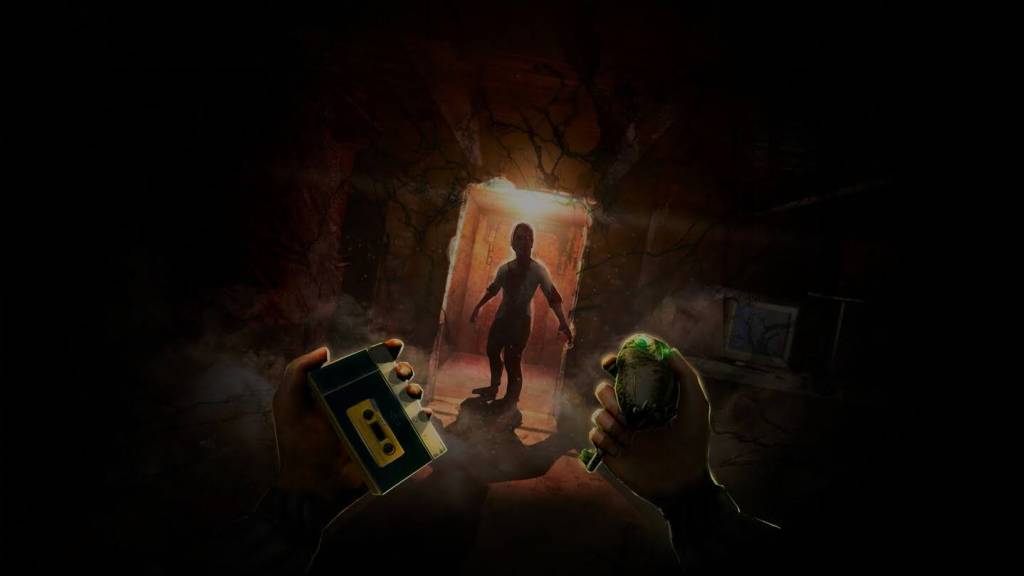
The Transference is an upcoming first-person mystery thriller developed by Kuraishisama and published by JanduSoft. The game combines elaborate escape-room challenges, stealth, and a story involving family secrets and betrayals. From what we’ve seen, there are some rather unusual ideas about how horror should work. We recently had the opportunity to speak with Alex, the developer behind the project, about everything from designing a believable house and experimenting with unconventional puzzles to optimizing for older hardware and the lessons learned from developing such an ambitious game largely on his own.
A House That Feels Like Home, Until It Doesn’t
The idea behind The Transference is an interesting one. Our own home becomes our prison, and finding a way out involves exploring familiar-looking rooms, solving puzzles, and occasionally hiding from an unwelcome visitor. But designing a house that serves as both a believable living space and an elaborate escape room must be quite a challenge. Rooms need to make architectural sense while still providing opportunities for exploration, backtracking, and stealth. We wanted to know how Alex managed to balance all those requirements without turning the house into an obvious collection of gameplay obstacles.
I started by designing the level layout with the idea that it had to function as a real house, with interconnected rooms and spaces that encouraged exploration. Then I worked on making the layout feel believable, adding hallways and rooms you’d naturally expect to find in a home. Finally, I went through another polishing pass to make sure everything fit together naturally. As for stealth, I alternated between areas where players can crouch and hide behind environmental objects and others where they can hide inside wardrobes. This way, the house itself also becomes part of the survival mechanics.
Puzzles with a Purpose
Each challenge has a connection to the person responsible for trapping us inside the house, meaning there’s more to solving these puzzles than figuring out how their mechanisms work. Naturally, we wanted to know how Alex approached such unusual concepts without expecting players to arrive with a degree in computer science or an extensive knowledge of Spanish card games.
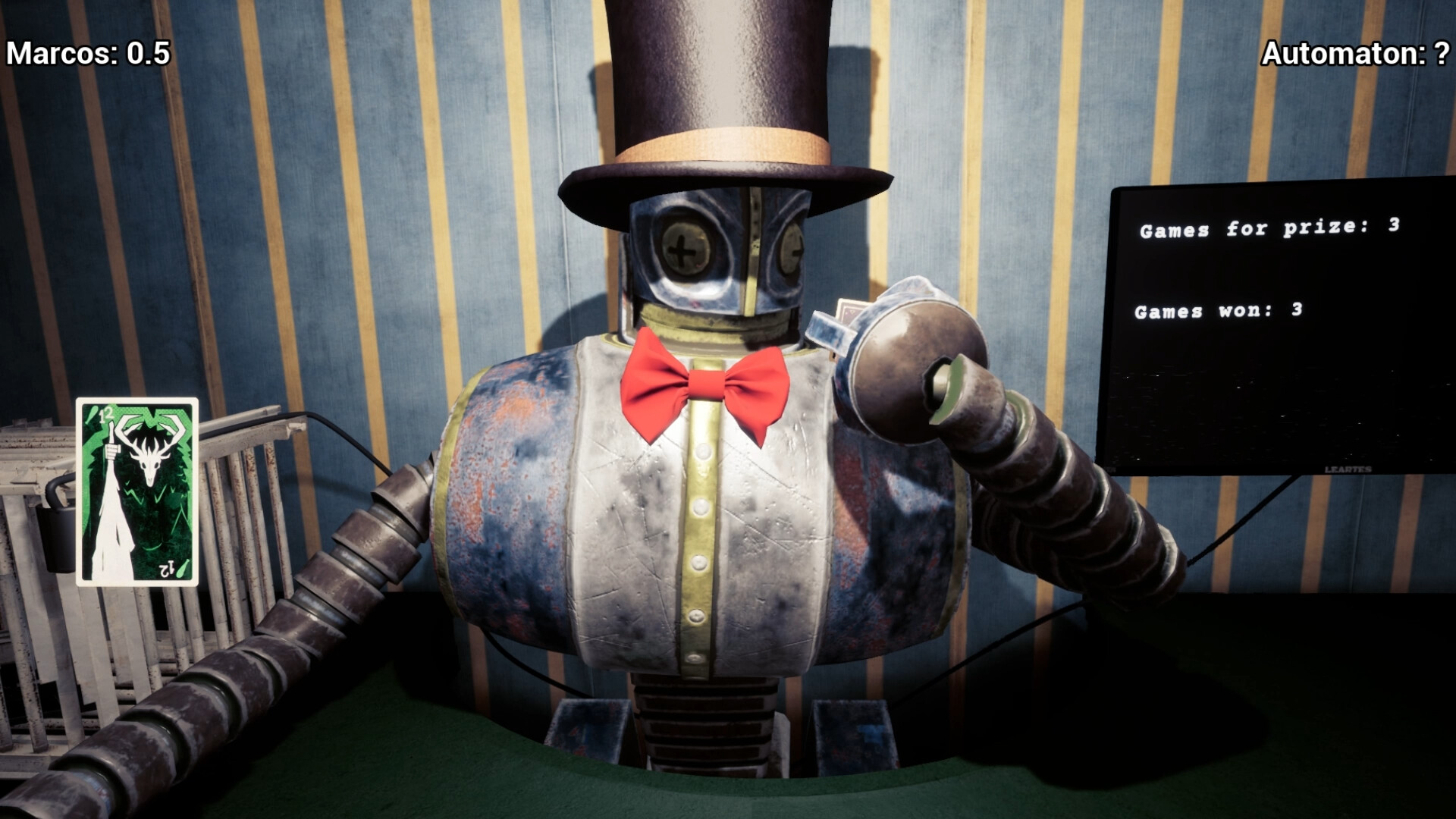
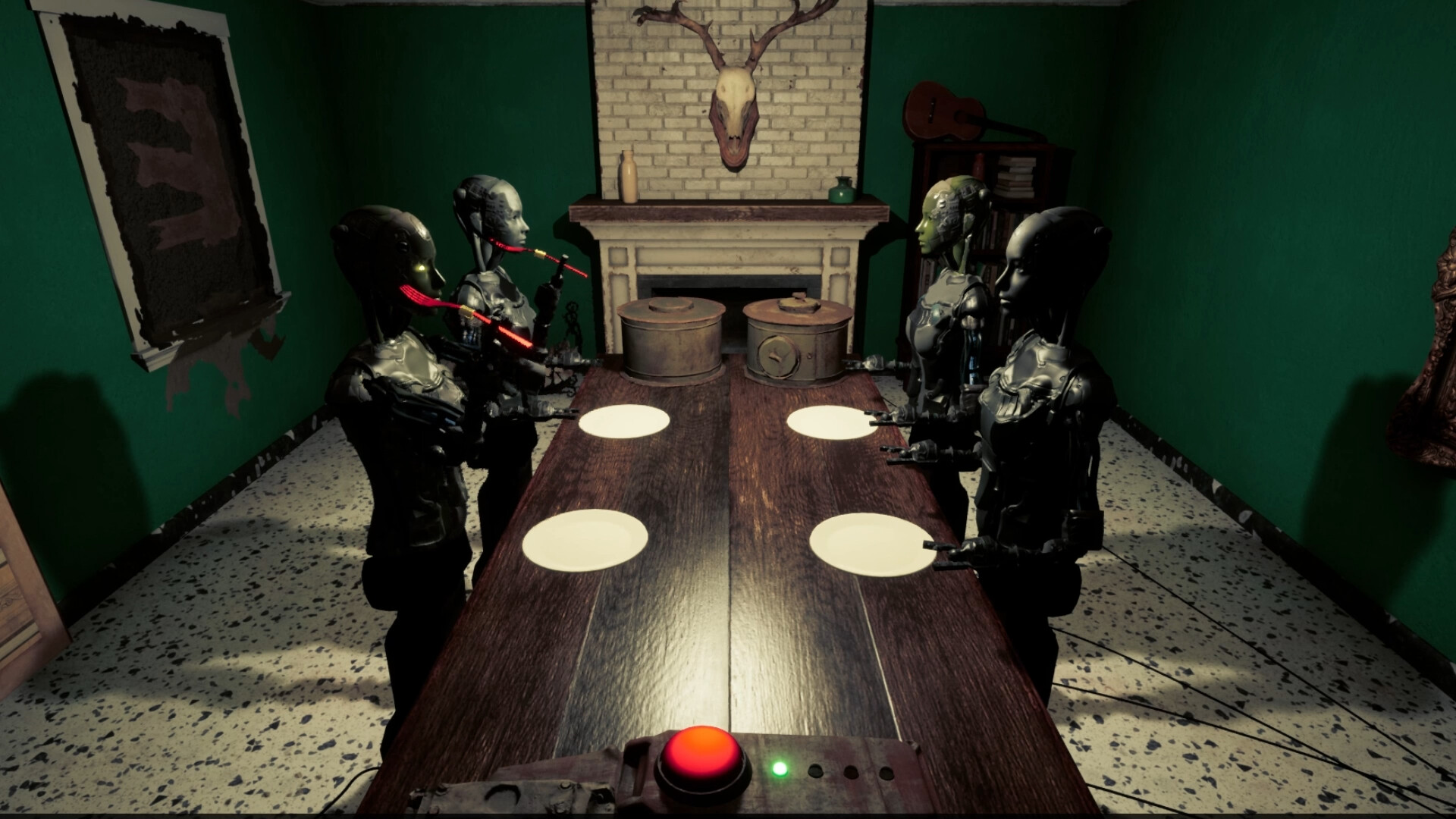
The puzzles draw from unusual sources, including the Dining Philosophers problem and the Spanish card game Seven and a Half. How did you approach making these challenges understandable to players unfamiliar with their origins?
The first thing to understand is that the puzzles have a narrative purpose. The person who has trapped you inside the house designed these challenges based on their own tastes, hobbies, and interests. So, in a way, every puzzle tells you something about that person.
Without getting into spoilers, I can say that this person has a certain interest in Spanish and Andalusian culture, computer science, poetry, and other subjects. That’s why you’ll find puzzles inspired by such different sources.
And just as the puzzles themselves are varied, so are the ways I try to explain their mechanics and provide clues.
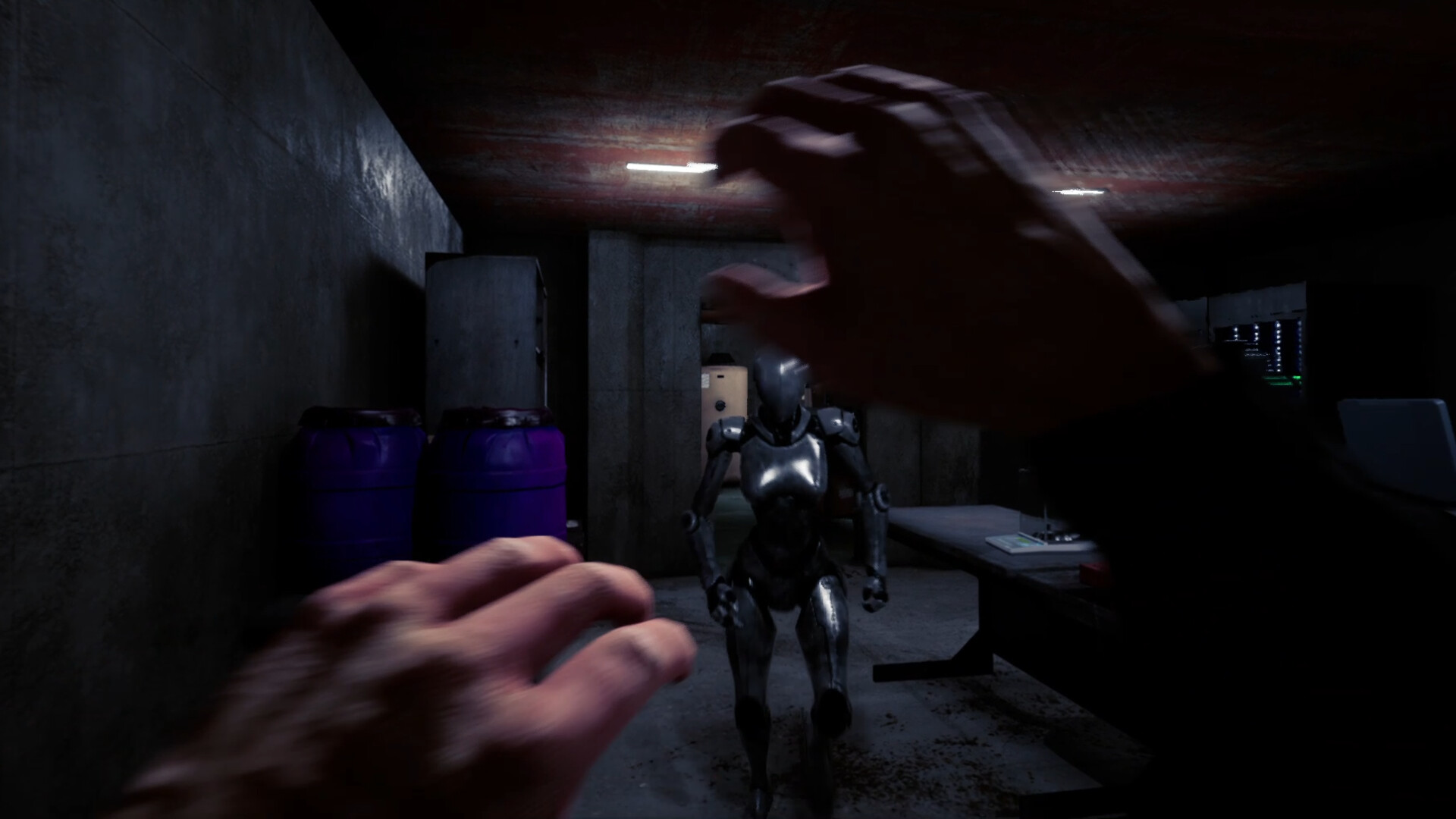
For example, in Seven and a Half, the automaton you play against explains the rules in a very simple way. In fact, it’s a simplified version of the traditional Spanish card game.
With the Dining Philosophers puzzle, you can read a document explaining the origins of the problem, or you can simply observe how the arms move and try to solve it. At some gaming events and conventions where I’ve showcased the game, I’ve seen players solve this puzzle without reading that document at all, since it serves more of a narrative purpose than an explanatory one. The clues needed to understand the actual mechanics are provided through other documents and visual references.
Ultimately, my goal is to make the challenges understandable regardless of whether you’re familiar with their original inspirations. And even if you do know those references, the puzzles always introduce an extra twist that goes beyond the original concept.
Horror Without the Cheap Tricks
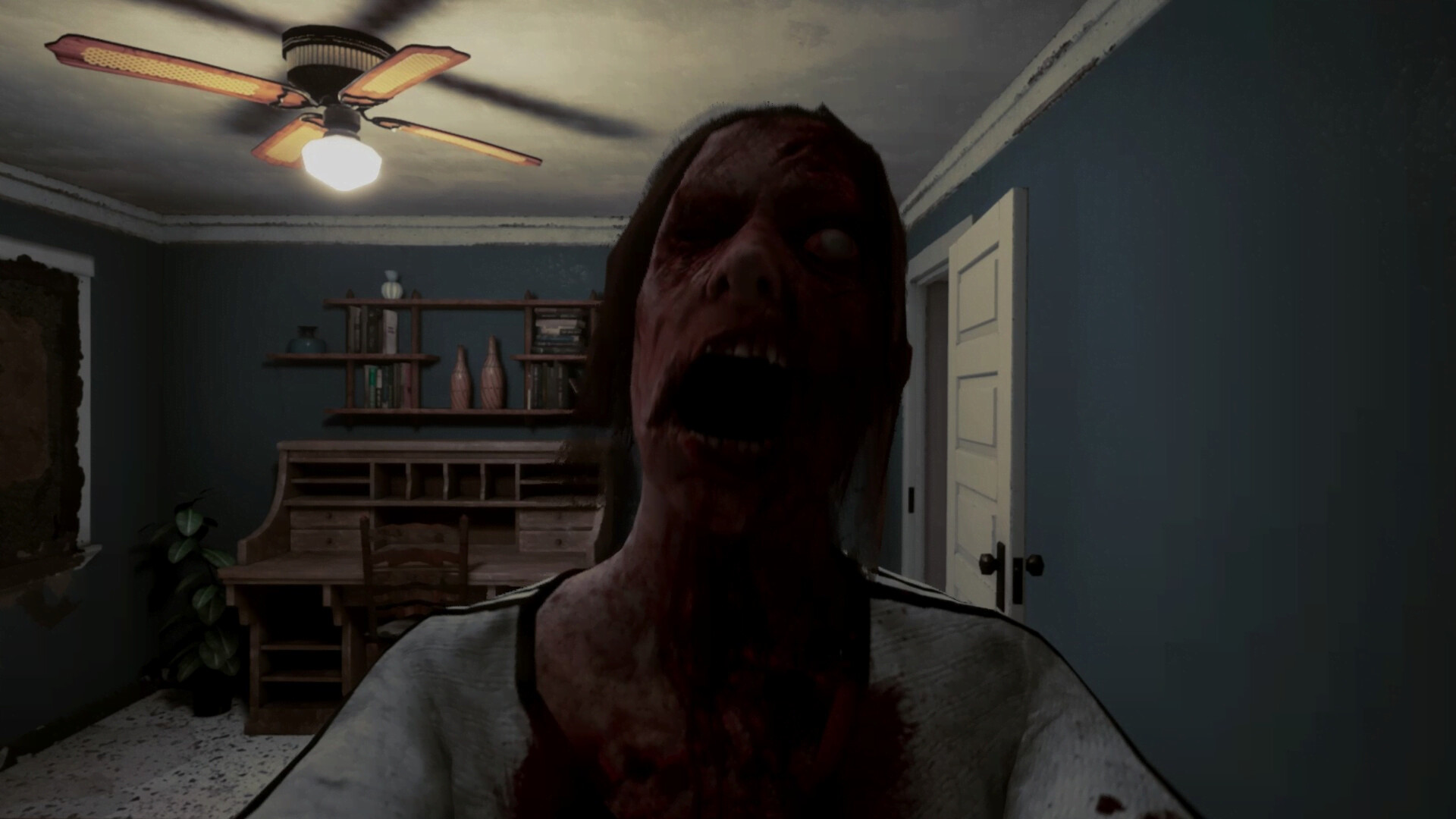
The Transference doesn’t appear particularly interested in making us jump out of our chairs every few minutes. Alex has deliberately moved away from traditional jumpscares, preferring a more controlled sense of tension.
There’s even the option to adjust how frequently the pursuing entity appears. Players who enjoy the pressure can keep it, while those who would rather concentrate on the puzzles can choose a less intrusive experience. It’s a welcome idea, particularly for a game that asks us to think carefully about our surroundings. And as Alex explained, the decision came directly from watching people play the game at conventions.
My initial idea was to create an escape room with a strong narrative. I was tired of coming across games in this genre on Steam that were essentially just a collection of puzzles with little connection between them and barely any story to justify why they were there. Similarly, I didn’t want to rely on typical jumpscares.
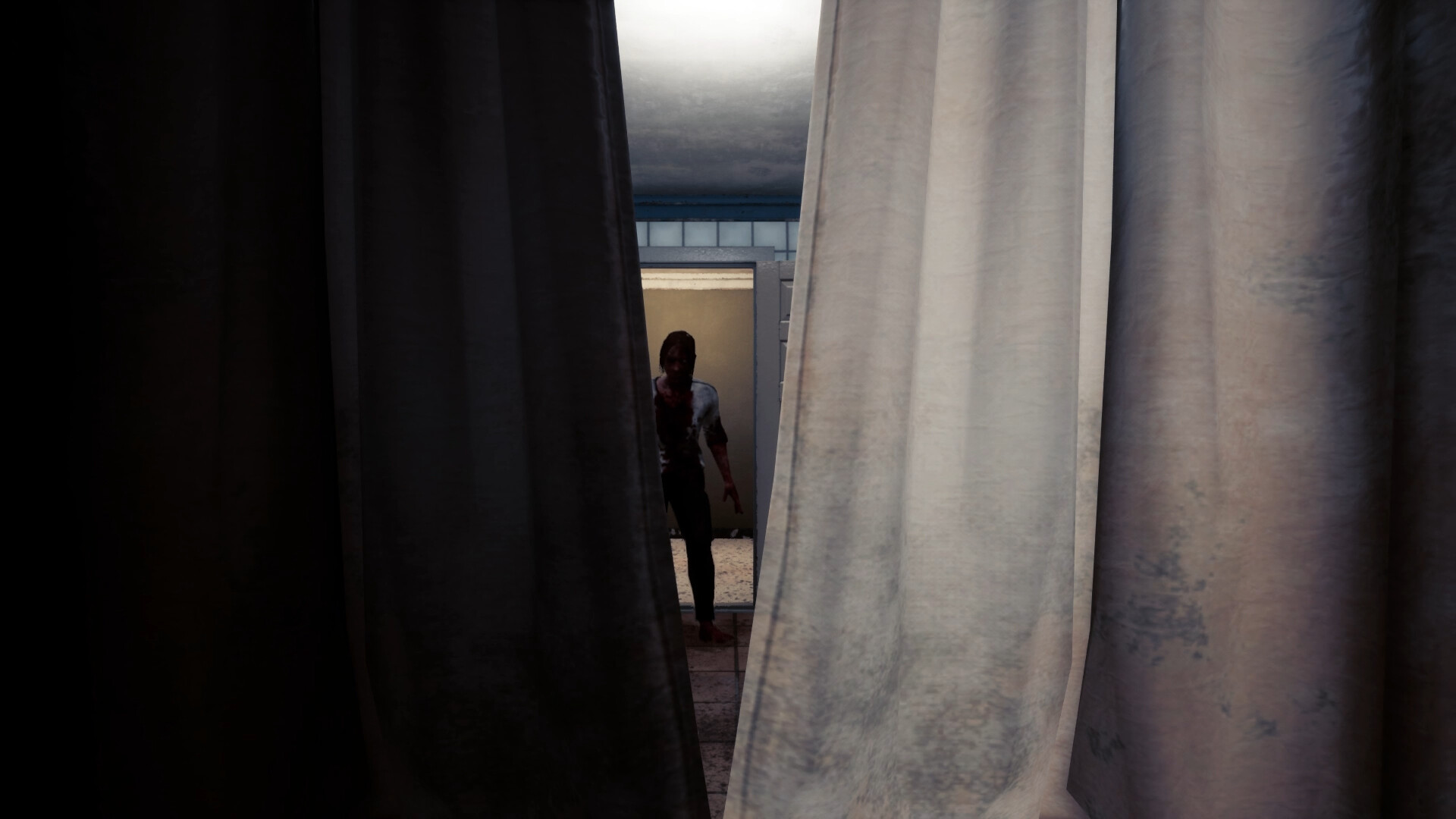
That’s why The Transference isn’t really a traditional horror game. It’s more of a mystery thriller with a very clear escape room identity. The mystery comes from the story, while the thriller aspect comes from the moments of tension created by the entity pursuing you.
The idea of making that tension adjustable actually came from showing the game at gaming events and conventions. I noticed that some players really enjoyed the experience but didn’t necessarily want the constant pressure of having a threatening presence around them while solving puzzles.
So I decided to introduce two options: one where the entity appears at its normal frequency, creating a more constant sense of tension, and another where its appearances are limited to specific story moments. There are still quite a few of these encounters, but they’re more contained.
This way, players looking for a more traditional escape room experience can focus on solving puzzles without constantly worrying about someone showing up to kill them, while those who enjoy a more intense experience can keep that sense of danger.
Every Little Detail Tells a Story
Rather than relying entirely on dialogue and cutscenes, the game encourages us to investigate the house, examine objects, listen to recordings, and piece together the events that led to our rather unfortunate situation. The amount of planning that goes into this kind of storytelling is easy to underestimate, though. Some details need to be immediately obvious, while others should reward those willing to spend a little more time investigating. As we discovered, Alex had a fairly detailed plan for distributing information throughout the game. He even found an unexpected source of inspiration while renovating his own home.
Before starting development, the first thing I worked on was the script and, even before that, a kind of narrative outline. I wanted to be very clear about what information the player should know at each point in the story.
Based on that structure, I started placing documents, recordings, and other narrative elements throughout the game, allowing players to gradually uncover what was happening.
To decide how to deliver each piece of information, I established a sort of hierarchy. I reserved the moments with the greatest emotional or narrative impact for cinematics. The next level would be the recordings, which feature professional voice acting in both Spanish and English, giving those moments more dramatic weight. Then come the written documents, which provide additional information and allow players to dig deeper into the story.
But there’s also a final, more subtle layer: environmental storytelling. Some details aren’t explicitly mentioned by the protagonist through voice-over, but players can notice and interpret them on their own. For example, the types of keys found on the upper floor, the paintings scattered throughout the house, or certain details in the puzzle mechanisms.
There are also books with missing pages. If players pay close attention to their contents and understand the clues they contain, they may be able to find those missing pages elsewhere in the house. Some of them are even incorporated into the puzzles themselves, creating a direct connection between the narrative and the gameplay mechanics.
I actually spent quite a lot of time taking care of small environmental details, such as making sure cables, switches, and mechanical connections were placed realistically. Interestingly enough, during part of development, I was renovating my own house, including working on its electrical installation, so I used some of what I learned to make these elements feel more authentic.
Ultimately, I wanted the story to be told not only through dialogue and documents, but also through the house itself, leaving details that more observant players could connect without needing everything to be explained directly.
Getting the Most Out of Older Hardware
For The Transference, Alex spent considerable time optimizing the experience for older graphics cards and less powerful hardware. Considering how important lighting and environmental detail are to the game’s atmosphere, we were particularly interested in the compromises involved. His answer offers a fascinating little glimpse into the technical work behind the scenes, including the surprisingly complicated relationship between baked lighting, movable furniture, and visual consistency.
For the PC version, which I developed myself and which served as the foundation for the publisher to create the console versions, I spent quite a lot of time on optimization. In fact, I remember spending roughly a month last summer almost entirely focused on making sure the game could run on as wide a range of PCs as possible.
Unlike consoles, where you know exactly what hardware you’re working with on PlayStation 5, Xbox, or Nintendo Switch, PCs come in an enormous variety of configurations. It’s a bit like developing an Android app, where you have thousands of different devices, compared to a more limited ecosystem like the iPhone.
That’s why I wanted to make The Transference accessible to as many players as possible, including those using older hardware.
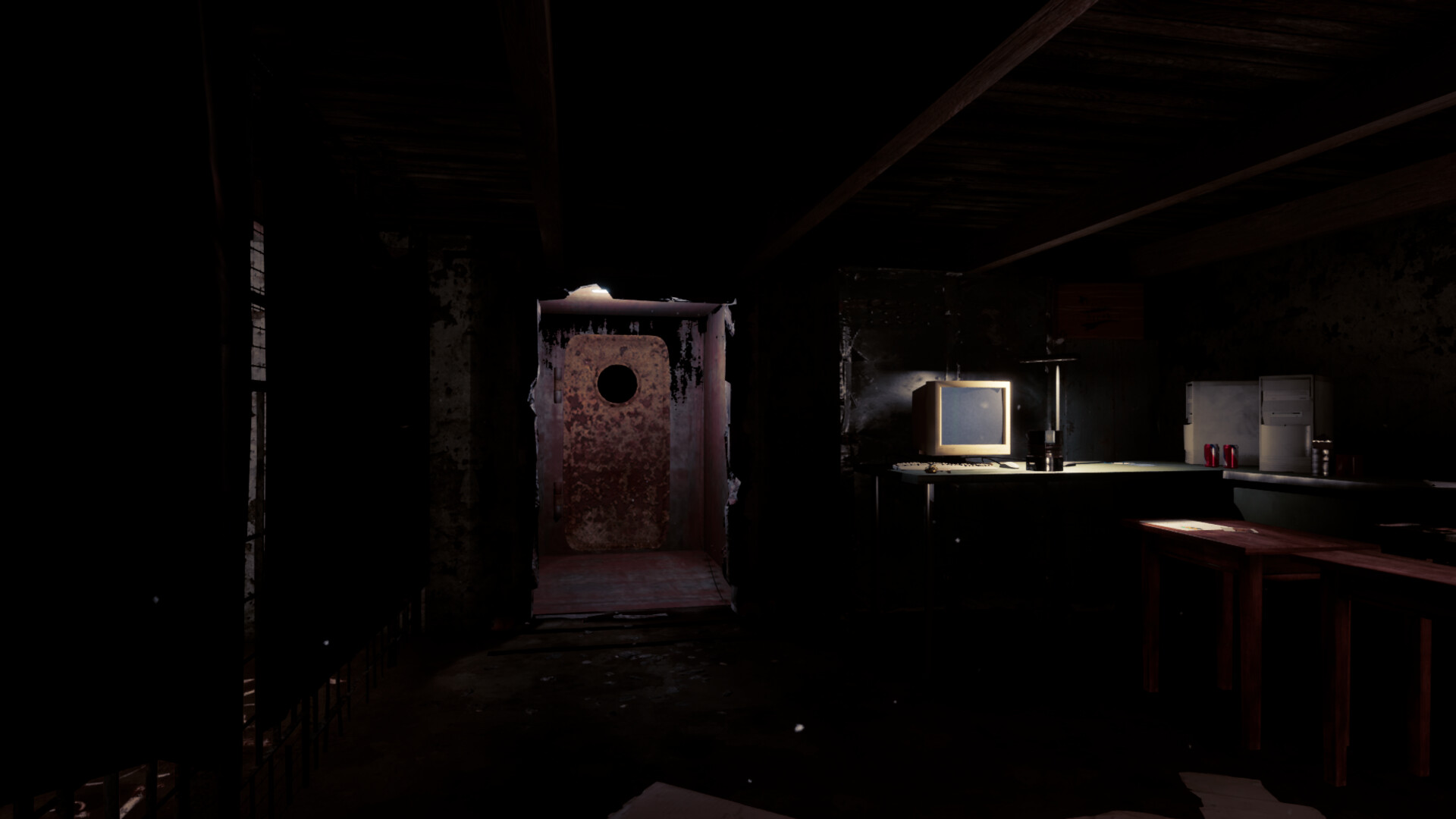
The biggest challenge was preserving the visual quality, especially the lighting, while optimizing practically every element of the environment. This involved working with baked lighting, merging object meshes, adjusting their levels of detail (LODs), grouping elements based on what was visible from different viewpoints within each room, and optimizing textures and materials. It was a process of making lots of small improvements that, together, made a significant difference.
One particularly interesting challenge came from furniture that combined static and movable parts. For example, a wardrobe might use baked lighting for its main structure, while its drawers, which can be opened and closed, require dynamic lighting.
This sometimes caused slight differences in brightness between the materials used for the static and movable parts. I had to manually fine-tune many of these elements, one by one, to make sure the entire piece of furniture looked consistently lit.
In the end, I think that was the real challenge: optimizing as much as possible without players noticing the technical differences between environmental elements or losing the atmosphere I wanted to create.
Lessons from Going It Alone
Before wrapping up our conversation, we wanted to explore the development process itself. The Transference started as a personal project without any commercial ambitions, but gradually grew into a much more substantial undertaking. As anyone who has worked on a long-term creative project will probably understand, decisions that seem perfectly reasonable early on can become rather inconvenient several years down the line.
For Alex, the biggest lesson had less to do with puzzle design or storytelling and more with the underlying architecture of the game. His experience is particularly relevant to solo developers who find themselves juggling programming, design, and content creation without the luxury of a larger team.
More than a game design decision, I think what I would approach differently is related to technical design and the architecture of the game’s systems.
Early in development, I started building the different systems I needed, such as inventory, dialogue, cinematics, and interaction mechanics. With the puzzles, for example, I developed the first three in one way, but later decided to create a common template with a set of reusable methods and interfaces for future puzzles.
This made a huge difference to my workflow because, from that point on, creating a new puzzle became much faster. A large part of the programming was already taken care of, so I could focus mainly on the puzzle’s specific logic and visual elements.
If I were starting again, I would spend more time from the very beginning developing technical tools to speed up content creation and building a cleaner, more efficient, and modular architecture.
It’s also worth remembering that The Transference started as a personal project, with no commercial ambitions whatsoever. It was simply something I was developing for fun. Because of that, many of my early technical decisions were made to solve immediate needs, without imagining how much the project would eventually grow.
Although all those systems have worked properly, I think any programmer looking back at their own code after finishing a project will find plenty of things they would approach differently.
My advice to other indie developers, especially solo developers, would be to identify as early as possible which systems and patterns are going to be repeated throughout the game and invest time in building reusable tools within the engine.
In that sense, I think it’s worth approaching development a little more like a technical designer rather than focusing exclusively on game design. Spending time building good tools early on can save you an enormous amount of work later, especially when you’re the same person responsible for designing, programming, and implementing every element of the game.
We’d like to thank Alex for answering our questions and wish him all the best with the upcoming release. The Transference is scheduled to launch on October 29, 2026, for PC, PlayStation 5, Xbox, and Nintendo Switch. In the meantime, those interested in investigating the mysterious house themselves can check out the demo on Steam.


Leave a Reply