
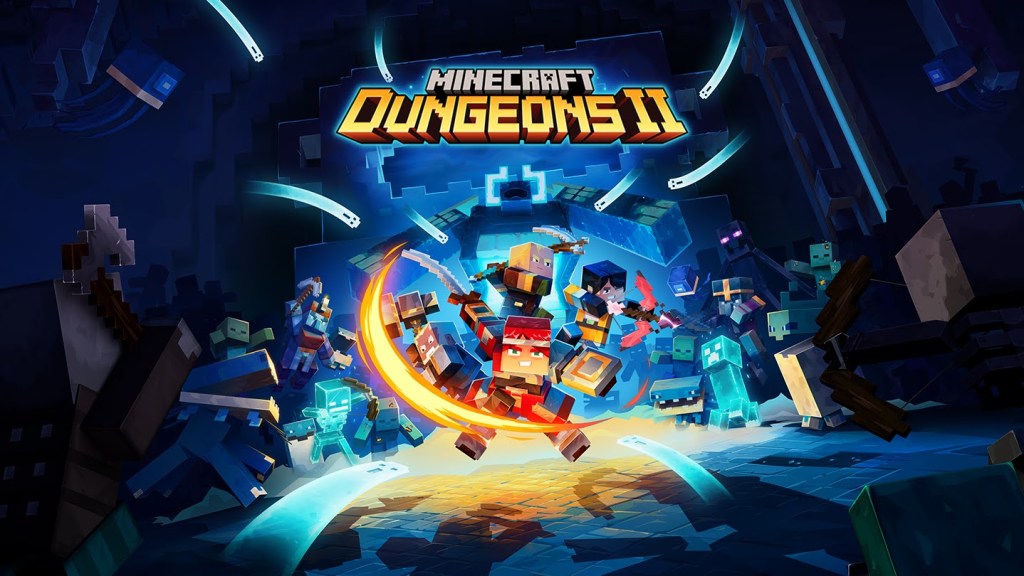
The first Minecraft Dungeons gave us a different way to experience the Minecraft universe and, most importantly, proved that taking the basic idea of Diablo could work remarkably well in the recognizable blocky world. We enjoyed our time wandering through Minecraft-inspired environments, fighting illagers and all sorts of other creatures and collecting weapons we didn’t need but, weirdly enough, absolutely wanted. When Minecraft Dungeons II came along, we were hoping to get more of what made the first game so much fun, along with enough new toys to make another adventure worthwhile. Did we?
In Minecraft Dungeons II we’re still controlling a blocky little hero, running through blocky environments, beating the living daylights out of illagers and other creatures with swords, bows and various magical-looking artifacts. The combat remains accessible and there is still that wonderful temptation to ignore the objective and investigate everything.
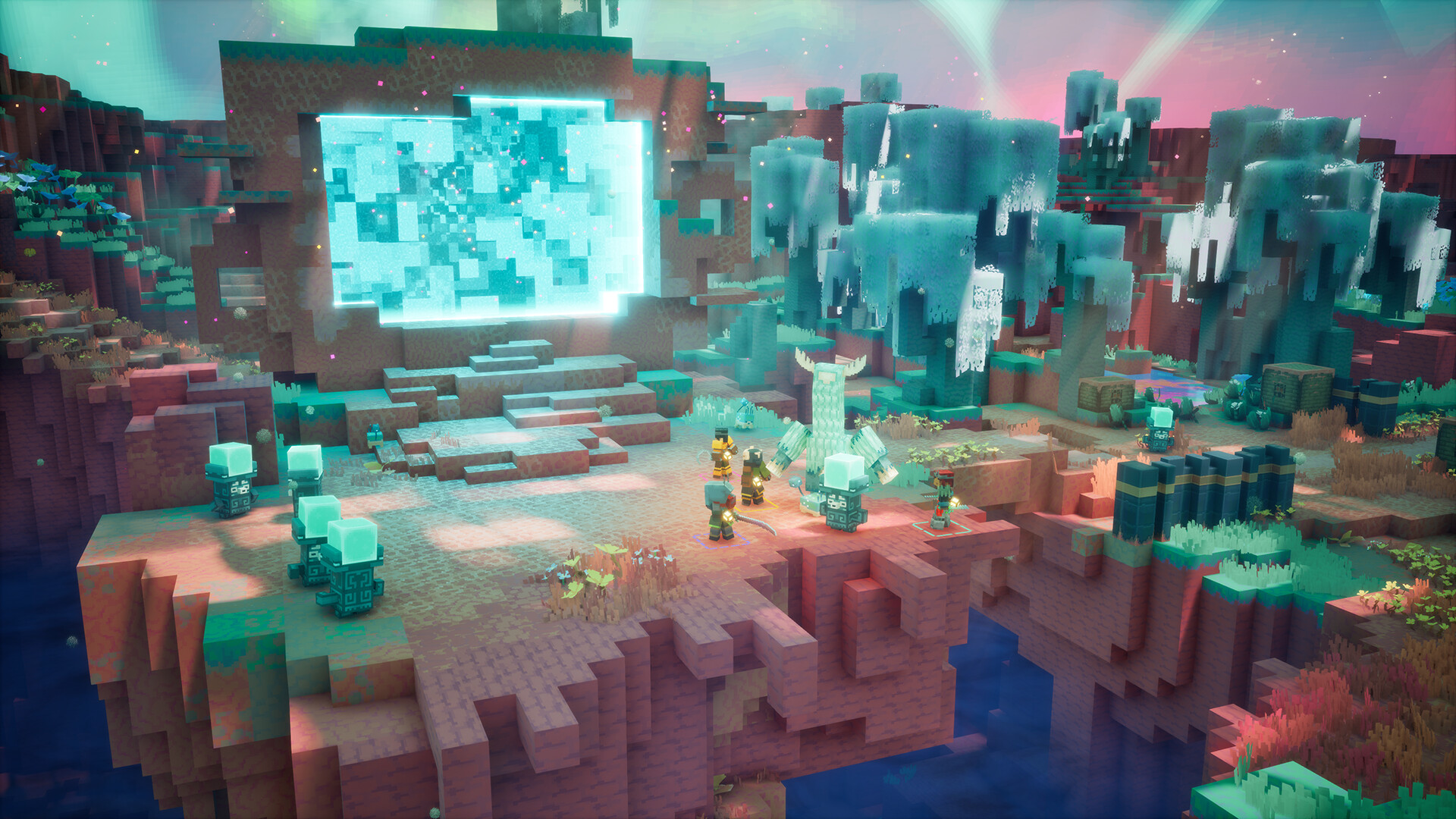
The world around all of this, however, has grown considerably has an interconnected world and an Overworld connecting different locations and activities. Rifts can also lead us into the Sift, a completely new dimension filled with strange environments and new enemies. It’s a lot bigger game and and what follows after the trailer are plenty of reasons why you should give it a chance!
If It Moves, Hit It
The basic combat formula hasn’t changed dramatically, and we don’t think it needed to. We have straightforward attack combos, melee weapons, bows, artifacts, dodging and, now, jumping. The combat is still very much about getting in there, hitting things, getting out of the way before something hits us back and then deciding which of our many toys we’re going to use when the situation gets a little too crowded.
Jumping might sound like a tiny addition, but it changes movement and combat in some great ways. We can jump and attack, use it while moving around the environment and generally have a little more freedom in how we approach an encounter. Combined with dodging, it gives combat more movement than the first game had, and it also makes exploration feel less restricted. After jumping like crazy around the map, we couldn’t believe this wasn’t part of the first game.
We no longer need to constantly collect arrows for our bow either, because ammunition regenerates over time. It’s fun to pick off an enemy from a distance, switch back to melee when things get close and then return to the bow when we get some breathing room. The weapons themselves also have different attack patterns and animations, which makes finding something that fits our preferred style worthwhile. A sword behaves pretty much as you’d expect a sword to behave. The greatsword, on the other hand, requires both hands and spins us around in a circle, attacking enemies coming from different directions. We hated the greatsword at first, but it was the best weapon we had and we had no choice but to use it. After spending more time with it, we found a really nice combination between it and the bow. We’d use the bow to deal with archers and enemies at a distance, watch what the other enemies were doing, dodge at the right moment and then let the greatsword do its thing when they got close enough. Once we got the timing right, the weapon’s slow animations made a lot of sense. Our favourite weapon, though, was the double sickles. They’re fast, efficient and look super cool. Chipping away at bosses made us feel like deadly piranhas.
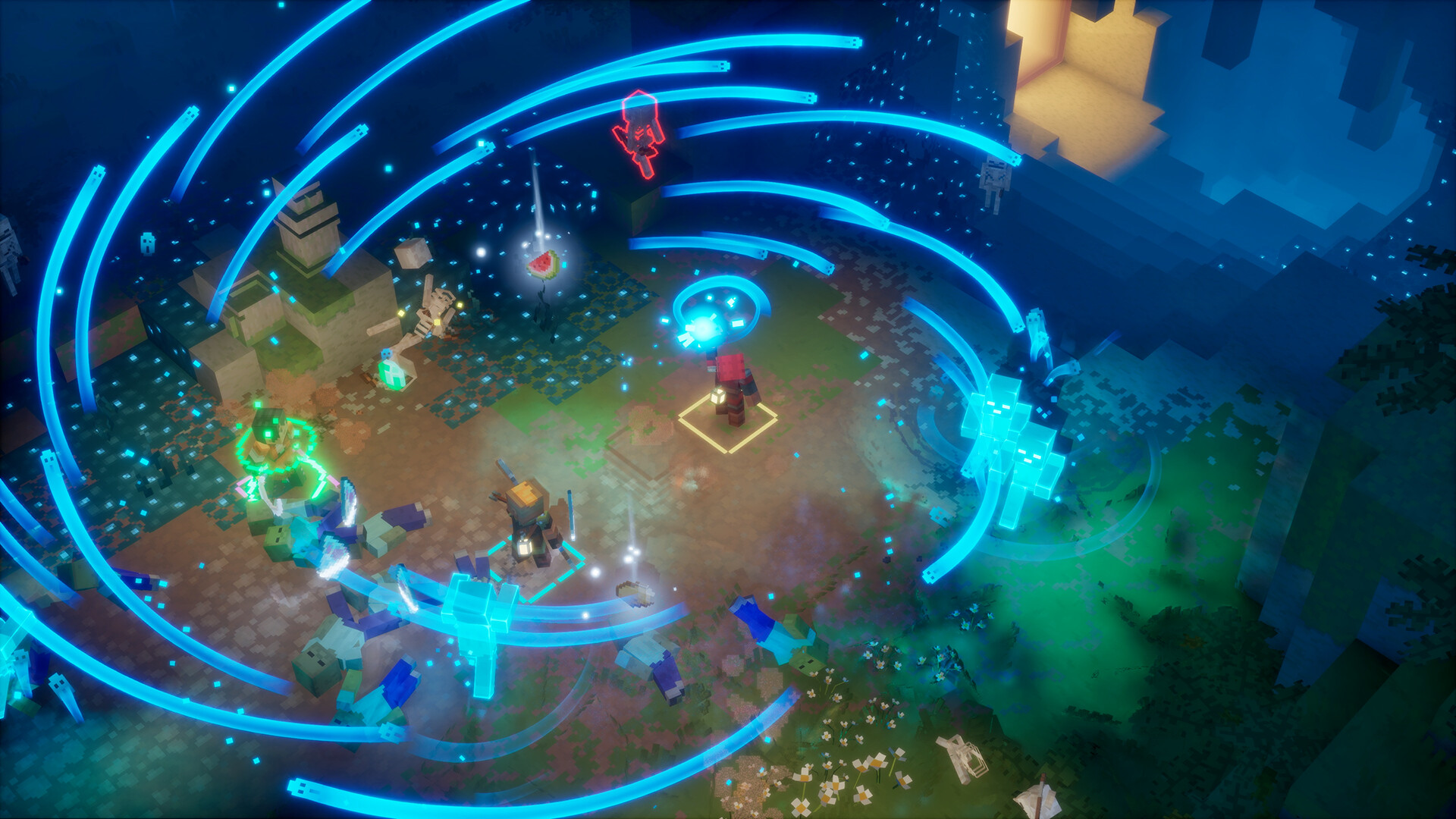
The enemies are varied and generally don’t require some complicated attack pattern, but please don’t think that we can completely switch off. Different enemies coming at us from different directions can quickly turn a quiet little encounter into a mess of dodging, attacking and trying to work out which target needs to disappear first. When the bosses arrive, they don’t waste any precious time reminding us that the game can be less forgiving when it wants to be.
The fights with the superior opponents require more attention, particularly when we’re dealing with several things happening around us at once. We can’t always run in and mash the attack button until something dies. Watching what’s coming at us, timing our attacks, dodging when necessary and making better use of the equipment we’ve spent all that time collecting is a must. Defeating them means grabbing some Echo Shards, which can be used to upgrade merchants and equipment or play an important role in the game’s expanded enchantment system.
Exploration at Its Best
The maps were one of the things we liked about the first game, and they’re still one of our favourite parts here. There’s still that feeling that Diablo somehow found a home inside Minecraft. Now, though, there is more room to wander around. There’s a guidance trail showing us where the main objective is, which we happily ignored until we thought there was absolutely nowhere else to go. Between us and that objective are plenty of enemies, side activities and hidden areas. You try following the trail in a straight line with all that looty temptation! It’s a lovely distraction.
The side quests help with this enormously. We expected the usual collect-this, investigate-that or kill-these-enemies kind of tasks, but some quests are more involved and can require several steps before we’re finished. Some even lead us into areas we couldn’t access earlier. When we were solving one quest, we accidentally solved another one at the same time. We weren’t even trying to do both. We just happened to be in the right place at the right time and ended up killing two flies with one blow. You have to love it when games do that.

The rewards can also have a nice connection to what we’ve just been doing. Helping the bees gave us a bee-looking legendary cap, while extinguishing Creeper candles rewarded us with a useful artifact capable of blowing away everything nearby. Those little connections make the loot more memorable, and they make us want to explore even more.
The Sift is the biggest new location that we enter through the strange rifts appearing throughout the world. It’s very different from moving from one Minecraft-inspired location to another. The Sift is a completely new dimension, with its own environments, creatures and threats, giving the sequel a new and exciting way to freshen things up with unpredictable situations.
Another noticeable change is connected to the armour system. Armour is now divided into separate pieces. There are more individual equipment slots to work with and, in addition to that, we can combine weapons, armour, artifacts and talismans in interesting new ways. Talismans are also a thing, and you can equip up to three. Their abilities are passive, meaning they’re working in the background while we’re busy hitting things. Something as straightforward as a health bonus can make a difference, sure, but the system gets much more interesting when we start finding talismans that support different ways of playing. The talismans also gain XP and become more powerful the longer we keep them equipped. We found ourselves switching between them and trying to level up the ones we liked rather than immediately abandoning them whenever something new appeared. The ones we loved the most were those that summon friendly creatures to help us in combat.
Pets exist too, and we love them for what they are. These cute little creatures follow us around and generally look adorable. But when a group of enemies is trying to turn us into blocky soup, a pet isn’t going to help us much. A companion, on the other hand, gets involved in the fight.
The first artifact we found in MD II was also the first artifact we found in the original game: the Firework Arrow. By spending souls to activate it, we attach TNT to an arrow and then fire it into a group of enemies. Watching a bunch of creatures disappear in a spectacular explosion never really gets old.
We can have three artifacts active, and they don’t all behave in exactly the same way. Some are activated and then go on cooldown, while others can channel their effects continuously. There are also abilities that build up and release their power after charging, giving us some considerably more impressive moments when everything lines up.
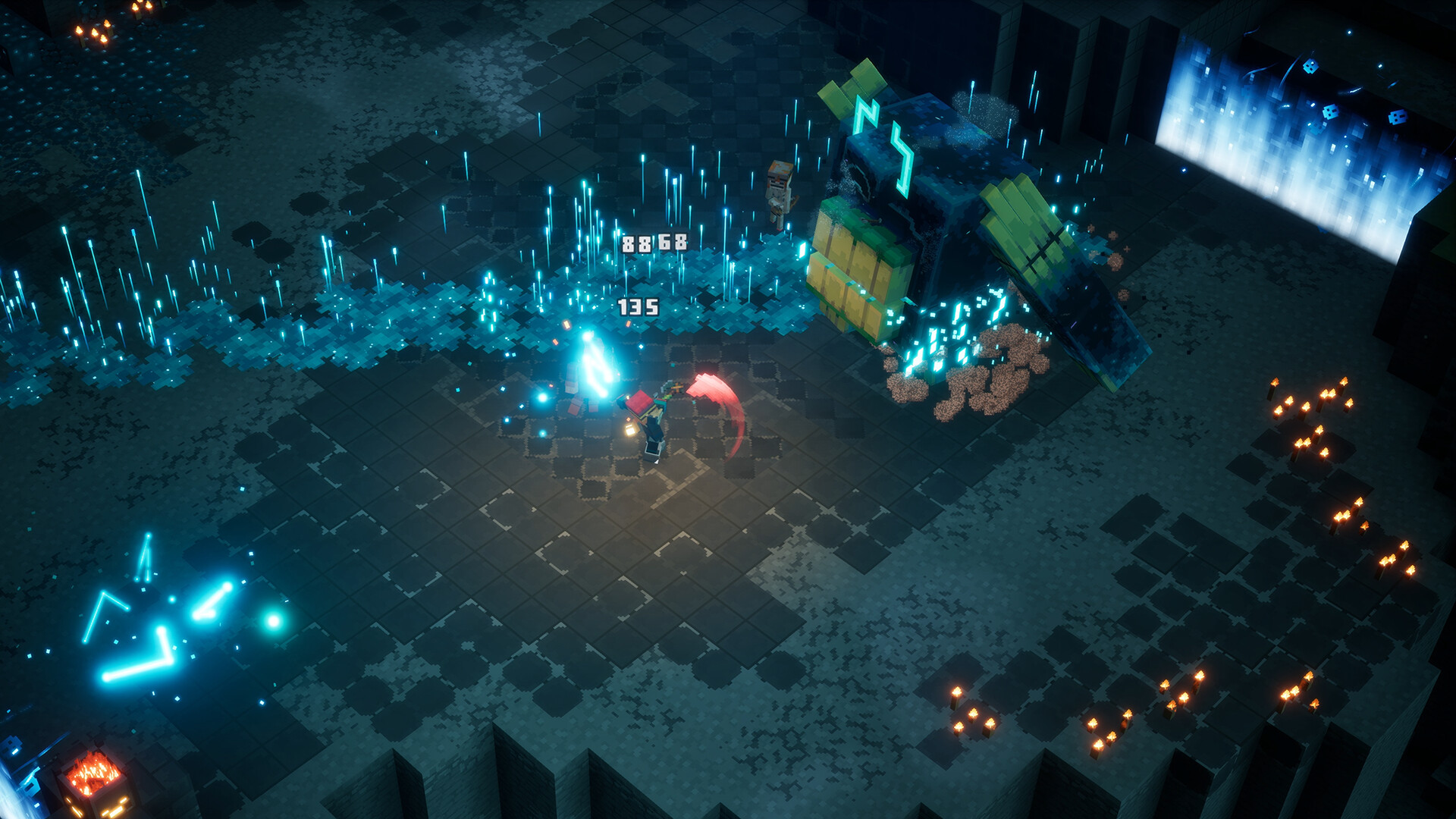
We felt that the first game could sometimes be a little stingy with artifact and arrow usage. Here, we seemed to have more opportunities to use these things, which made us much less inclined to sit on them forever while waiting for the perfect moment.
As we earn XP from killing enemies, we level up, gain enchantment points and improve our equipment. If we find something we really like, we can invest in it, make it stronger and keep using it. If something better comes along later, we aren’t throwing all of that investment away. It’s pretty much the same system as the first game, and we already loved this philosophy.
Enchantment Books, however, can be found throughout the world and added to our collection, after which the Enchantsmith lets us apply those effects to our gear. Enchantments can also be upgraded, giving us more control over how our equipment develops. Gone are the days when we had to rely on whatever enchantments happened to appear on a piece of loot.
The Blacksmith also helps with this philosophy by giving us a way to keep favourite pieces of equipment relevant instead of immediately abandoning them whenever their power starts falling behind.
Most of the above-mentioned things are done at Brave Haven, which is our hub between adventures, somewhere to return to, spend emeralds and deal with the various systems we’ve accumulated along the way. Not much to do here, sadly. After we’re done sorting through our stuff, improving equipment and checking what the vendors have available, we’ll easily continue our adventure and think little of it until the need for improvement appears again.
Minecraft Dungeons II supports up to four players through local and online co-op, including mixed co-op and matchmaking. The game is clearly built with group play in mind, and we can imagine the combination of different weapons, artifacts, armour and talismans becoming particularly entertaining when everyone is bringing a different build into the same fight.
We played solo and had a ton of fun, even though games like this can sometimes feel as though they’re reminding solo players that they’re missing out on a better experience. Minecraft Dungeons II didn’t give us that feeling. We had plenty to do, plenty of room to experiment and plenty of opportunities to get ourselves into trouble without needing a group around us.
We didn’t encounter many technical problems during our time with the game, although there was one amusingly persistent issue where an animal or enemy would occasionally get stuck around the edge of the map. It would be unable to climb up or down, so instead we’d get to watch it walking around in circles as though it had suddenly forgotten what it was doing. We can’t say we encountered anything else that bothered us enough to become a significant part of our experience. To be fair, better to have one confused sheep than a game full of problems.
More of What We Loved
We didn’t need Dungeons II to throw away everything that made the original enjoyable and replace it with something completely different. We wanted the same satisfying hack-and-slash combat, the loot, the ridiculous weapons, the artifacts, the exploration and that constant temptation to see what is hiding around the next corner. It was quite the treat to discover that we got all of that and a lot more.
The first Minecraft Dungeons was a game we didn’t expect to love as much as we did. Minecraft Dungeons II didn’t have that element of surprise, but it does have confidence. It takes everything that worked in the first game, removes or improves the things that could have been sore points for fans, and fills everything in between with cool additions.
10/10
Game: Minecraft Dungeons II
Developer: Mojang Studios & Double Eleven
Publisher: Xbox Game Studios
Genre: Action RPG / Dungeon Crawler
Players: 1–4
Modes: Single-player, local co-op, online co-op, mixed co-op, matchmaking
Platforms: PC, Xbox Series X|S, PlayStation 5, Nintendo Switch, Nintendo Switch 2
Review platform: PC
Score: 10/10

Leave a comment